"put a big star by this"
components of language
language has specific components:
lexicon - the words of a given language, a language’s vocabulary
grammar - the set of rules that are used to convey meaning through the use of lexicon </aside>
phoneme - sounds, basic unit of a given language, different languages have different sets
words are formed bo combining various phonemes that make up the language </aside>
morphemes - smallest units of language that convey some type of meaning
“I” is both a phoneme and a morpheme </aside>
semantics and syntax are part of a language’s grammar, use them to construct language
semantics - the process by which we derive meaning from morphemes and words
syntax - the way words are organized into sentences </aside>
the 5 universal stages:
cooing
babbling
one-word utterances
two-word utterances
basic adult structure
cooing - universal, reproduce single letter sounds (phonemes)
lose ability to distinguish sounds not relevant to parent langauge around 8 months
“a-a-a”, “o-o-o”, “k-k-k”
<aside> 💡
babbling - combining phonemes into meaningful units
babble in phonemes of parent language
repitition of similar / identical syllables first
“ba-ba-ba”, “ma-ma-ma”
end of stage: varied babbling using non-repeated phonemes </aside>
<aside> 💡
one-word utterances - combining morphemes into words
“blankie”, “shoe”, “book”
single words conveying thought
“holophrases”
concerned with semantics </aside>
<aside> 💡
two-word utterances - combination of one-word utterances
emerges around 18-24 months
2,3, or more words
“want juice”, “mommy sit”
“telegraphic speech”
utterances determined by semantic, non syntactic, concerns </aside>
<aside> 💡
basic adult structure - combining one and two-word utterances into complete sentences
syntactically and semantically corrent
emerges around 4-5 years
“i want more juice”, “i don’t want to go to school” </aside>
multiple intelligences theory - each person possessed at least 8 intelligences
made by Howard Gardner, (most recent intelligence theory) studied under Erik Erikson
heavily critizized for lacking empirical evidence
continue to study this theory
8 intelligences:
linguistic intelligence
logical-mathematical intelligence
musical intelligence
bodily kinesthetic intelligence
spatial intelligence
interpersonal intelligence
intrapersonal intelligence
naturalistic intelligence
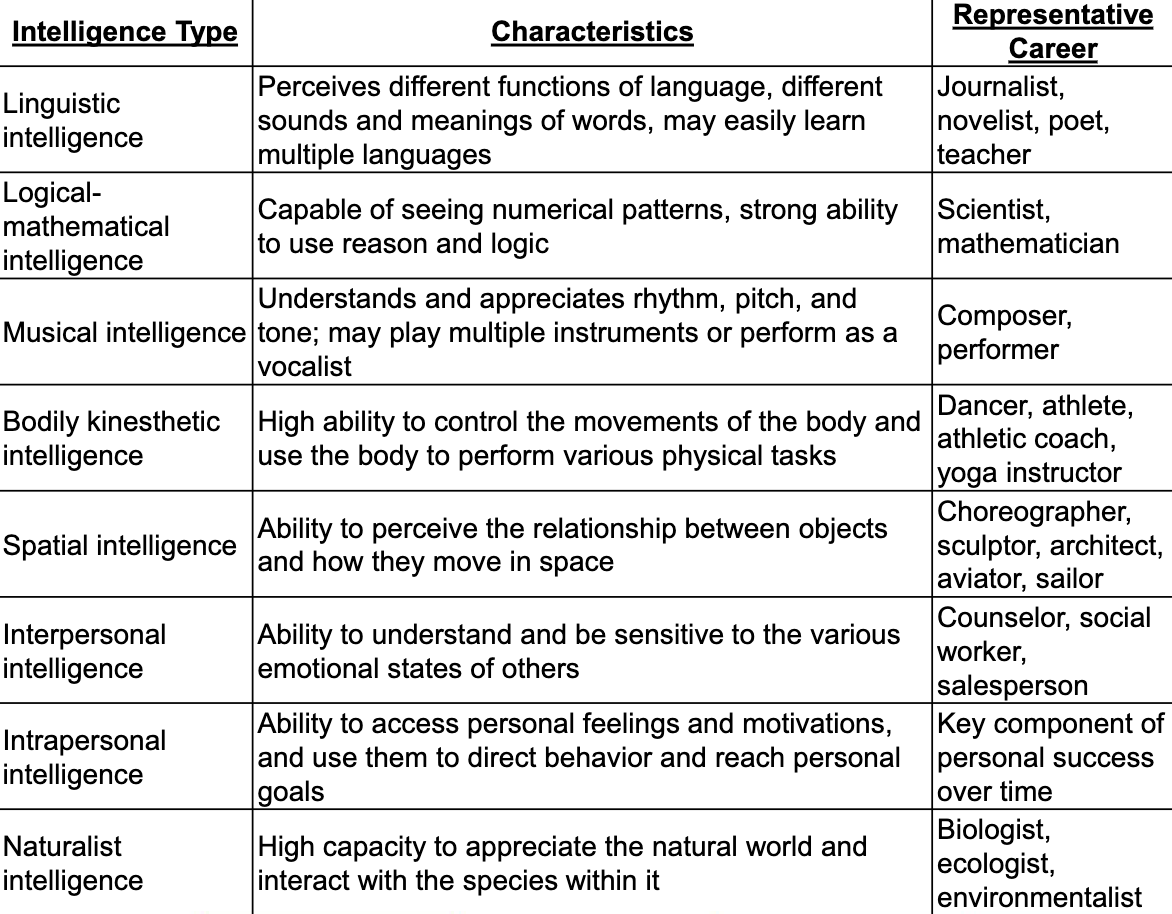
Intelligence Type | Characteristics | Representative Career |
Linguistic intelligence | Perceives different functions of language, different sounds and meanings of words, may easily learn multiple languages | Journalist, novelist, poet, teacher |
Logical-mathematical intelligence | Capable of seeing numerical patterns, strong ability to use reason and logic | Scientist, mathematician |
Musical intelligence | Understands and appreciates rhythm, pitch, and Musical intelligence tone; may play multiple instruments or perform as a vocalist | Composer, performer |
Bodily kinesthetic intelligence | High ability to control the movements of the body and use the body to perform various physical tasks | Dancer, athlete, athletic coach, yoga instructor |
Spatial Intelligence | Ability to perceive the relationship between objects and how they move in space | Choreographer, sculptor, architect, aviator, sallor |
Interpersonal intelligence | Ability to understand and be sensitive to the various emotional states of others | Counselor, social worker, salesperson |
Intrapersonal intelligence | Ability to access personal feelings and motivations, and use them to direct behavior and reach personal goals | Key component of personal success over time |
Naturalist intelligence | High capacity to appreciate the natural world and interact with the species within it | Biologist, ecologist, environmentalist |
Cattel-Horn-Carroll (CHC) theory of cognitive abilities - most comprehensive theory of intelligence to date
abilities are related and arranged in a hierarchy, general abilities at the top, broad in the middle, and narrow / specific at the bottom
narrow abilities - only ones that be directly measured, integrated within other abilites
general level - intelligence
broad level - general abilities like fluid reasoning, STM, and processing speed
heirarchy continues, the narrow level includes specific forms of cognitive abilities
ex: STM would further break down into memory span and working memory capacity
theory of cognitive development - our cognitive abilities develop through specific stages, which exemplifies the discontinuity approach to development
as we progress to a new stage, there is a distinct shift in how we think and reason
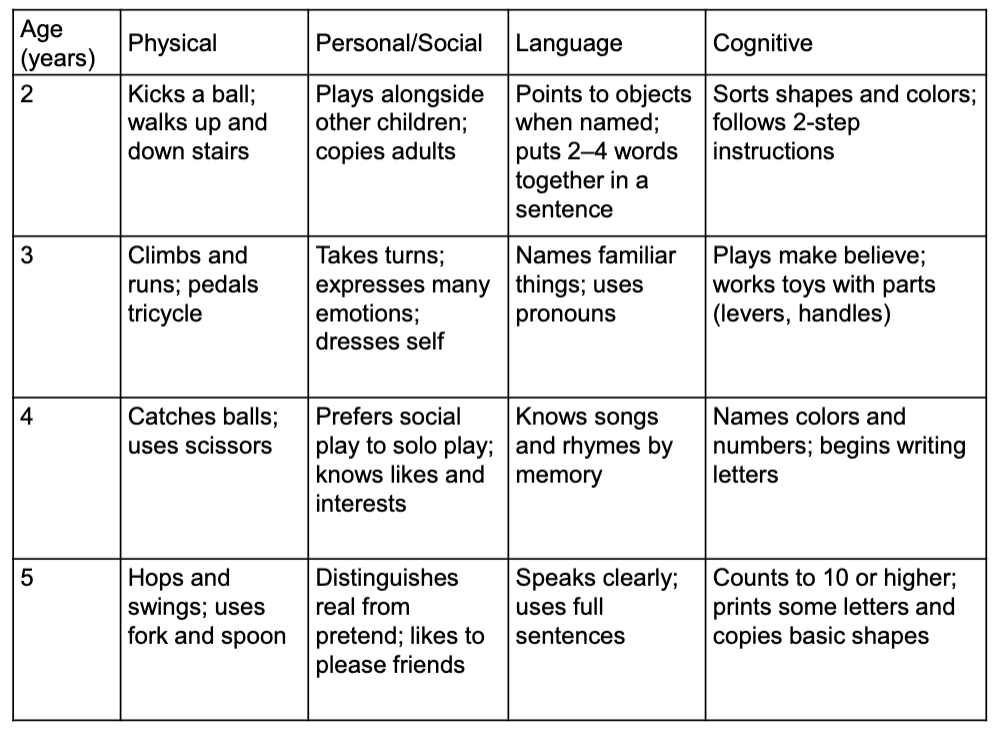
Age (years) | Physical | Personal/Social | Language | Cognitive |
2 | Kicks a ball; walks up and down stairs | Plays alongside other children; copies adults | Points to objects when named; puts 2-4 words together in a sentence | Sorts shapes and colors; follows 2-step instructions |
3 | Climbs and runs; pedals tricycle | Takes turns; expresses many emotions; dresses self | Names familiar things; uses pronouns | Plays make believe; works toys with parts (levers, handles) |
4 | Catches balls; uses scissors | Prefers social play to solo play; knows likes and interests | Knows songs and rhymes by memory | Names colors and numbers; begins writing letters |
5 | Hops and swings; uses fork and spoon | Distinguishes real from pretend; likes to please friends | Speaks clearly; uses full sentences | Counts to 10 or higher; prints some letters and copies basic shapes |
identified parent-child attachments:
secure attachment
a toddler prefers his parent over the stranger
most common
avoidant attachment
child is unresponsive to parent, does not use the parent as a secure base, does not care when the parent leaves
reacts to the parent in the same way as a stranger
most likely to have a caregiver who was insensitive and inattentive to their needs
resistant attachment
children tend to show clingy behavior, reject attachment figure’s attempts to interact with them
do not explore the toys, too fearful
became disturbed and angry with the parent
when parent returns, the children are difficult to comfort
result of caregivers inconsistent level of response to their child
disorganized attachment
the freeze, run around, or try to run away when the caregiver returns
most often in kids who have been abused
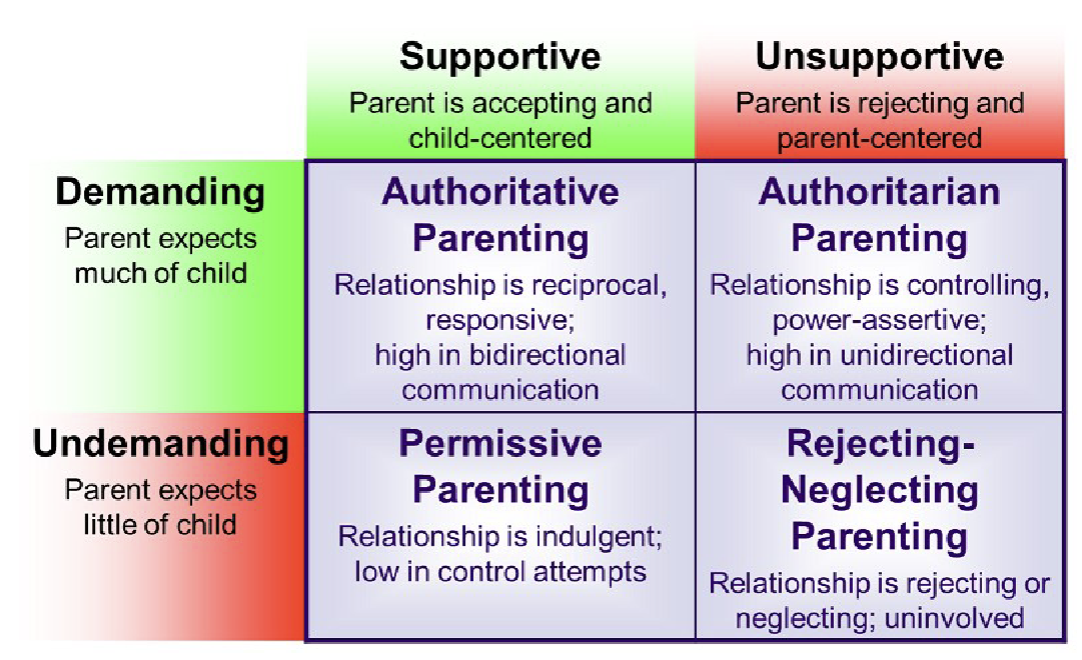
four parenting styles:
authoritative
parent gives reasonable demands and consistent limits
expresses warmth and affection
listens to child’s point of view
set rules and explain their reasoning
flexible, willing to make exceptions in certain cases
most encouraged in modern american society
tend to have high self-esteem and social skills
not preferred/appropriate in all cultures
authoritarian
parent places high value on conformity and obedience
strict, tightly monitor thier children, express little warmth
can create anxious, withdrawn, and unhappy kids
permissive
kids run the show, anything goes
parents make few demands, rarely use punishment
very nurturing and loving
play the friend role and not the parent
children tend to lack self-discipline, negatively associated with grades
uninvolved
parents are indifferent, referred to as neglectful
do not responds to child’s needs, make relatively few demands
may provide for child’s basic needs, but little else
children are usualyl emotionally withdrawn, fearful, anxious, perform poorly in school, increased risk of substance abuse
Freudian slip - slips of the tongue are actually sexual/aggressive urges, accidentally slipping out of consciousness
very common
normally happens when we are tired, not at optimal level of cognitive functioning
defense mechanisms: believed that feelings of anxiety resilt from the ego’s inability to mediate the conflict of the id and superego
believed the ego seeks to restore balance through various protective measures known as defense mechanisms
the individual’s unconscious mind uses ego defense mechanisms - unconscious protective behaviors that aim to reduce anxiety
the ego, usually conscious, resorts to unconscious strivings to protect the ego from being overwhelmed
unaware when we are using them
operate in ways that distort reality
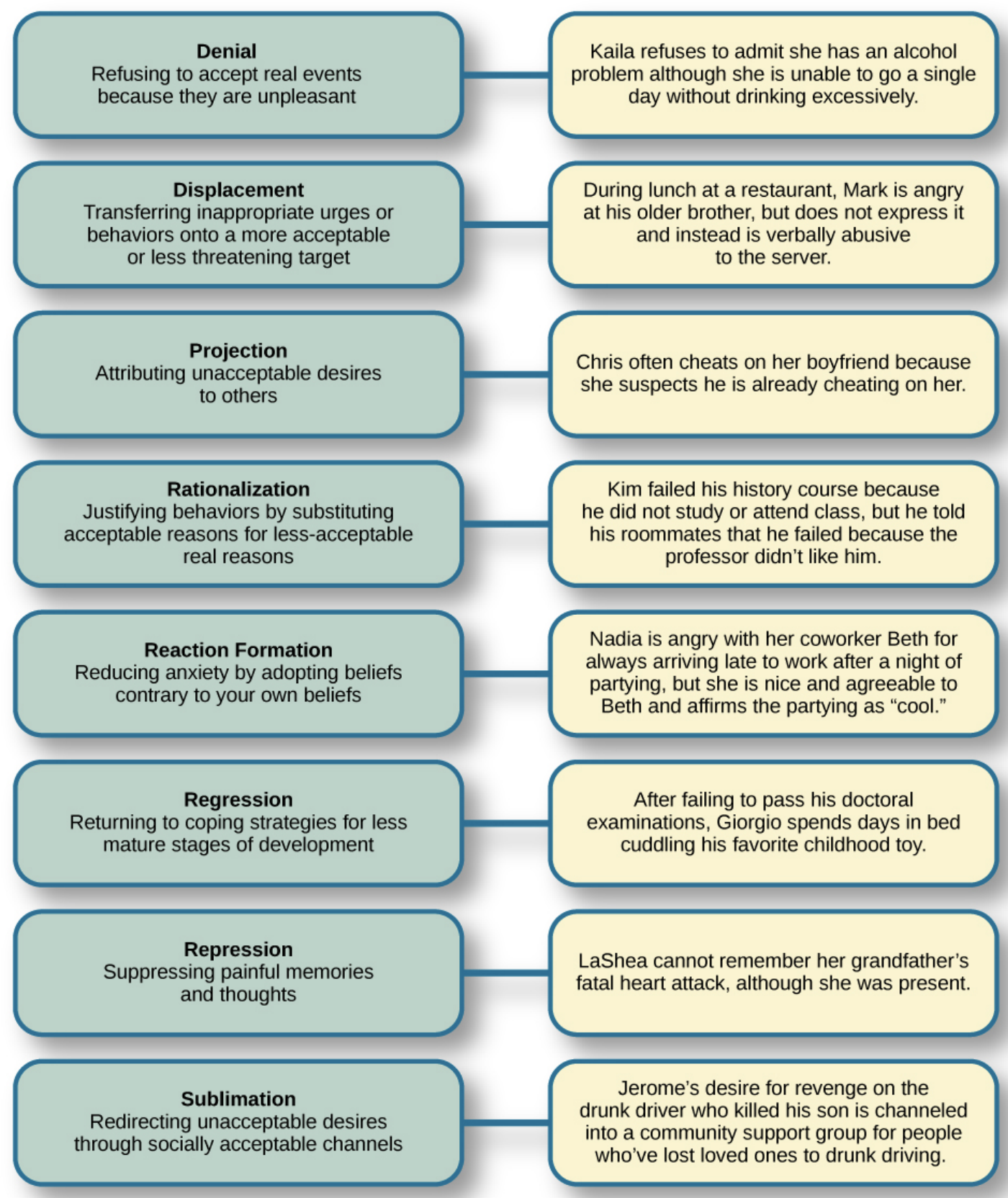
Denial Refusing to accept real events because they are unpleasant | Kaila refuses to admit she has an alcohol problem although she is unable to go a single day without drinking excessively. |
Displacement Transferring inappropriate urges or behaviors onto a more acceptable or less threatening target | During lunch at a restaurant, Mark is angry at his older brother, but does not express it and instead is verbally abusive to the server. |
Projection Attributing unacceptable desires to others | Chris often cheats on her boyfriend because she suspects he is already cheating on her. |
Rationalization Justifying behaviors by substituting acceptable reasons for less-acceptable real reasons | Kim failed his history course because he did not study or attend class, but he told his roommates that he failed because the professor didn't like him. |
Reaction Formation Reducing anxiety by adopting beliefs contrary to your own beliefs | Nadia is angry with her coworker Beth for always arriving late to work after a night of partying, but she is nice and agreeable to Beth and affirms the partying as "cool." |
Regression Returning to coping strategies for less mature stages of development | After failing to pass his doctoral examinations, Giorgio spends days in bed cuddling his favorite childhood toy. |
Repression Suppressing painful memories and thoughts | LaShea cannot remember her grandfather's fatal heart attack, although she was present. |
Sublimation Redirecting unacceptable desires through socially acceptable channels | Jerome's desire for revenge on the drunk driver who killed his son is channeled into a community support group for people who've lost loved ones to drunk driving. |
Horney’s Coping styles:
suggests 3 styles of coping:
moving toward people
relies on affiliation and dependence
children become dependent on their parents and other caregivers in an effort to recieve attention and affection
provides relief from anxiety
when they grow up they tend to use same coping strategy in relationships, expressing an intense need for love and acceptance
moving against people
relies on aggression and assertiveness
children find that fighting is the best way to deal with a unhappy home situation
deal with their feelings of insecurity by bullying other children
as adults they tend to lask out with hurtful comments and exploit others
moving away from people
centers on detachment and isolation
children handle their anxiety by withdrawing from the world
need privacy, tend to be self-sufficient
when they grow up the continue to avoid love and friendships
adults tend to gravitate towards careers that require little interation with others
self-regulation - the process of identifying a goal or set of goals using internal and external feedback to maximize goal attainment
will power or delaying gratification
self-regulation marshmallow test
placed a preschool child in a room with one mashmallow on the table
children were told they could eat the marshmallow now or wait until the researcher came back to the room, then they could have two marshmallows
found that young children differ in their degree of self-control
<aside> 💡
followed this group of preschoolers to high school, children who had more self-control in preschool (waited for two marshmallows) were more successful in high school
higher self control
higher SAT scores
had positive peer relationships
less likely to have substance and abuse issues
as adults they had more stable marraiges
poor self control
not as successful in high school
found to have academic and behavioral problems </aside>
TRAIT THEORISTS
identified 16 factors / dimensions of personality
warmth, reasoning, emotional stability, dominance, liveliness, rule-consciousness, social boldness, sensitivity, vigilance, abstractedness, privateness, apprehension, openness to change, self-reliance, perfectionism, and tension
developed an assessment on these factors called the 16PF
each dimension is scored on a continuum from high to low
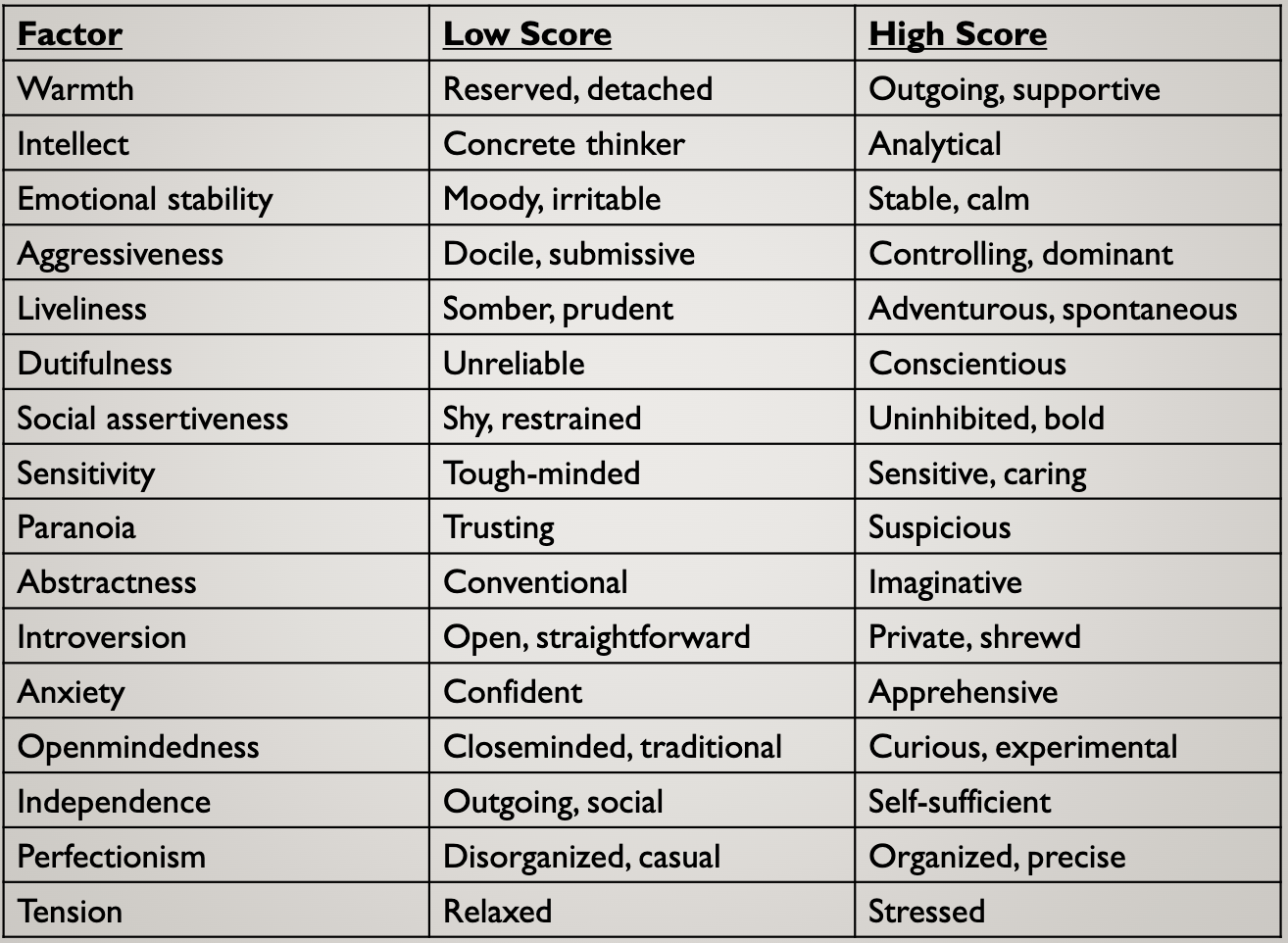
Factor | Low Score | High Score |
Warmth | Reserved, detached | Outgoing, supportive |
Intellect | Concrete thinker | Analytical |
Emotional stability | Moody, irritable | Stable, calm |
Aggressiveness | Docile, submissive | Controlling, dominant |
Liveliness | Somber, prudent | Adventurous, spontaneous |
Dutifulness | Unreliable | Conscientious |
Social assertiveness | Shy, restrained | Uninhibited, bold |
Sensitivity | Tough-minded | Sensitive, caring |
Paranoia | Trusting | Suspicious |
Abstractness | Conventional | Imaginative |
Introversion | Open, straightforward | Private, shrewd |
Anxiety | Confident | Apprehensive |
Openmindedness | Closeminded, traditional | Curious, experimental |
Independence | Outgoing, social | Self-sufficient |
Perfectionism | Disorganized, casual | Organized, precise |
Tension | Relaxed | Stressed |
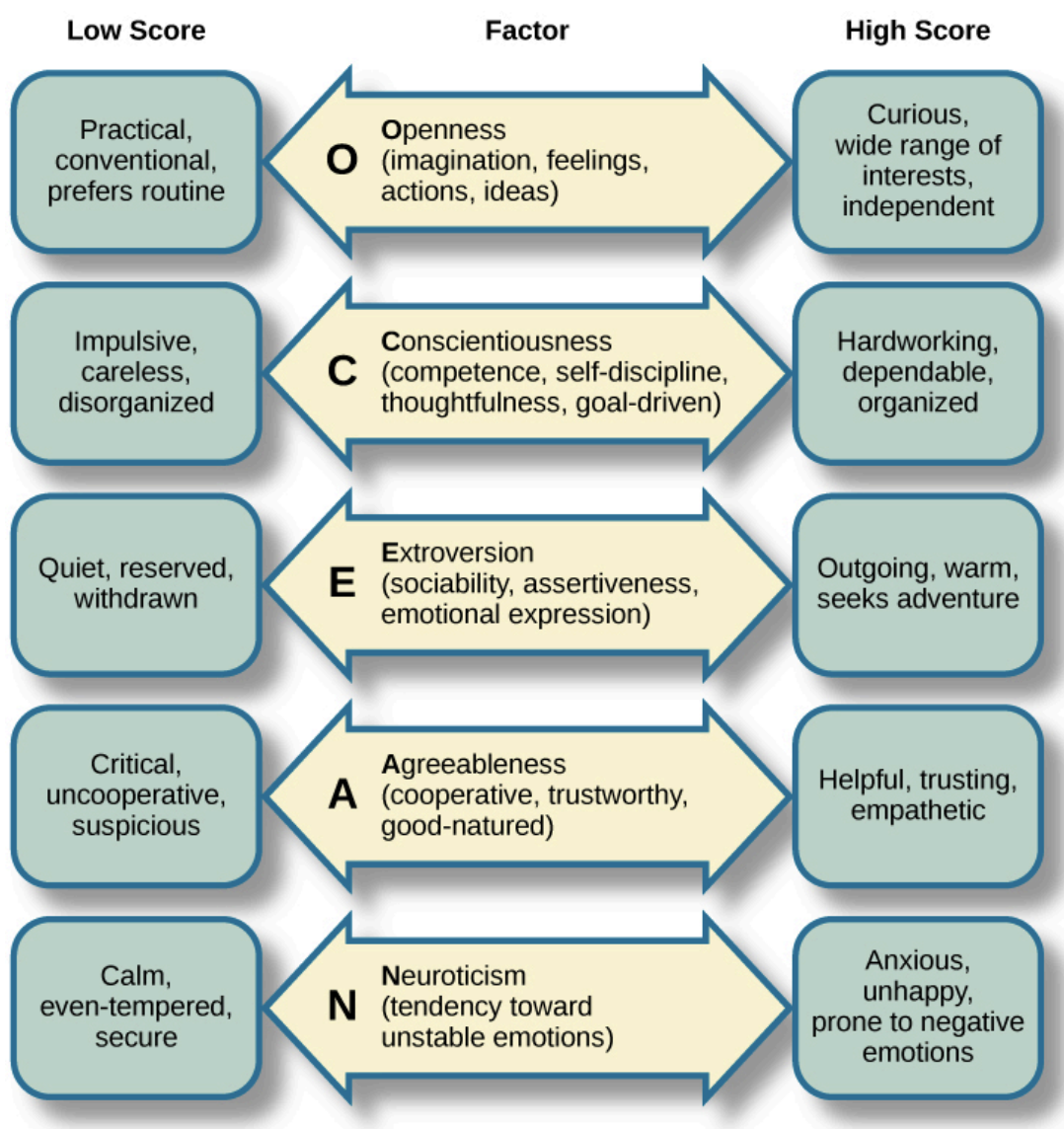
5 FACTOR MODEL
the 5 factor model - hits a middle ground, referred to as teh Big Five personality factors
most popular theory in psych today, most accurate approximation of basic personality dimensions
the five factors:
openness to experience
imagination, feelings, actions, and ideas
high on this = curious with a wide range of interests
conscientiousness
competence, self discipline, thoughtfulness, and achievement-striving (goal-directed behavior)
high on this = hardworking and dependable
positive correlation between conscientiousness and academic success
extroversion
sociability, assertiveness, excitement-seeking, and emotional expression
high on this = usually outgoing and warm
ig high on extroversion and openness = more likely to take adventures and do risky sports
agreeableness
pleasent, cooperative, trustworthy, good-natured
low on this = described as rude, uncooperative
study showed men low on this earn more money than more agreeable men
neuroticism
tendency to experience negative emotions
high on this = emotional instability, characterized as angry, impulsive, and hostile
found people high on this report feeling anxious and unhappy
people found low on this tend to be calm and even-tempered
mnemonic = OCEAN
each person has each factor but along a spectrum
most tend to lie midway of each factor rather than at the polar ends
these factors are relatively stable across the lifespan, some tendency to change slightly
factors shown to exist across ethnicities, cultures, and ages
may have substantial biological and genetic components