Finals Cheat Sheet
Numbers
3 Domains of life:
- All 3 domains of life use double-stranded DNA to store genetic information
- Can have DNA and RNA in the same cell
- DNA used to store genetic information RNA used for protein synthesis
Vrisuese & Prions are NOT classified under the 3 domains of life.
- The 3 domains of life, cells: bacteria archea and eukarya, can independently, replicate (reporduction) and maintain homeostasis
- Viruses and Prisons CANNOT do that
____________________________________________________________________________________________________________________________________________________________________________________________________
Letter A
AB Toxin mechanism with two components
- Binding component, allows the pathogen interact with the human host and entry, once inside the Binding component is released and the Active component wrecks havoc inside the cell.(protein synthesis and cell death)
- Active component,
Acycloyin: medication
Acetic Acid, obesogenic, promotes weight gain! Hlow? Acetate gets aborobed in the liver and induces Hipocuytes to produce fatty acids and combine them to glycerol to produce triglyceride, neutral fat, that will be trasnported adiplocytes fat cell for storeage a
- Allows promotoes and releases hormone, ghrelin, appietate stimulating hormone , makes you hungry bad side of the acetic acid
Acute cytocidal infection: Kills the cell through cell lysis Eukayotic Cell Infections
Acid Mantle - Skin Secretions, ie. Acid Mantle 1st Line of Defense of the Immune System
- The pH 3-5 in the skin, slightly acidic
Acne Vulgaris S. Epidermidis can inhibit the growth of a nonpathogeinc agent, Cut bacterium Acnes, this species caused Acne Vulgaris skin condition
Adaptive Immunity (aquired or specific immunity)
- Unique? It has a memory component, (both, but not the innate immunity)it remembers the antigen it encountered.
- When we are born we do not have adaptive immunity, only the nonspecific, defesnes mechanisms in Innate Immunity
- It has 2 subdivisions
- Cellular Immunity: cell-mediated immunityeffective when non-self entity has infiltrated INSIDE the cell, intracellular
- Humoral Immunity: also known as antibody-based/ antibody mediated immunity, effective only if the intruder is outside of the body cells, its used for non-self entity, extracellular
Adhesion: Protein Protein Intercation between pathogen and host, and how the Pathogen first gets inside the host cell it needs to interact with the cell, via receptor see Transmission & Host Entry
Airborne Transmission: See Transmission
- Direct mechanism - (1 meter or less) between the host, transmitted via Droplets visible (2mm size) and
- Example: Salvia, Mucus, or body fluid
- Indirect Mechanism
- Droplet nuclei that come from Droplets, evaporation (microscopic 1-5 Mm) can be airborne for hour and days way more than 1 meter
- Examples: Measles, Chicken poxes, Tubercules
- Dust, caring endospores, a problem in hospital
- Example: Nosocomial Infection: infections acquired in the/during hostpital care.
- Droplet nuclei that come from Droplets, evaporation (microscopic 1-5 Mm) can be airborne for hour and days way more than 1 meter
Antibiotics:
- 4 Main Modes of Action
- Inhibitors of cell wall synthesis, is the most selective against bacteria because it targets structures such as peptoglycans and cell wallsand functions not found in Eukarotic cells even in human cells
- The very first naturally occurring antibiotic, Penicillins, inside they have Beta Lactam Ring, most crucial critical feature of the molecule, essential for antibioitc affect, inhibits transpeptidation, blocking cell wall formation (called Transpeptidetation, formation of cross links in peptidolycan molecules) causing leakages(destorying this structure, Penicillin will not work)
- Many bacterial acquired resistance towards penicillin, called Beta Lactamase, Pencillianse, hydrolizes the bond of Beta Lactam Ring rending Penicillin in active.
- Penicillins is only effective to bacteria that are actively syzntheizing NEW peptidolycan,
- The very first naturally occurring antibiotic, Penicillins, inside they have Beta Lactam Ring, most crucial critical feature of the molecule, essential for antibioitc affect, inhibits transpeptidation, blocking cell wall formation (called Transpeptidetation, formation of cross links in peptidolycan molecules) causing leakages(destorying this structure, Penicillin will not work)
- Protein synthesis inhibitors, high theruptoic index (not as high as cell wlal inhibitors) why? Protein ysntehsis in bacteria, they use slightly use ribozomes
- Metabolic Antagonicts
- The difference between Metabolic and the first 2 are, the cell wall synthesis and prteoin systnehsis kills the pathogenic agaent, metabolic antagonicts they just inhibit the growth they are called static
- Static: as long as the medication is there it will prevent the growth of the atohgenic but once gone growth will grow that is the difference
- The difference between Metabolic and the first 2 are, the cell wall synthesis and prteoin systnehsis kills the pathogenic agaent, metabolic antagonicts they just inhibit the growth they are called static
- Nucleic Acid Syntgesis inhibition, DNA & RNA replicaiton and trancsrption, all 3 domains of life have similar enzymes to synthesis Nucleic Acids, this causes the medication to be not effective and LOWEST therapeutic agent, not desirable
- Narrow Sepectrum (Drugs) - only effective to limited pathgoens
- Example Pennicillum G
- Broad Spectrum (Drugs)Targets many different kinds of abcteria
- Example: Tetrocycline
Antibody: is shaped like a Y, and inside the ANtibody there are 4 protein subunits Humoral Immunity
- Variable: is where it allows the antibody to bind to multiple different etops
- 2 Heavy Chain (Inside Y)
- VH: variable region of the heavy chain
- CL: Constant region of the heavy chain
- 450 amino acids
- 2 Light chains (Outisde Y)
- VL: Variable region of the light chain
- CL: Constant region of the light chain
- 212 amino acids
- Each Antibody has 2 Fab domains & 1 Fc Domains
- Fab: Antigen, binding fragment, binds the compatible eptipoes and antigen determienane, the involving the variable region ONLY
- Fc:: Crystalabilze fragment, where the human immune cell interact with the region
- Antibodies or Immunoglobuins
- Basic Antibody structure
- Major Antibody classes are Igm, IgA, IgD, IgE, IgG
- Antibody or Immunoglobulin (Ig) Classes
- IgG: the only antibody that can cross the Placenta, provides immunity to the Embreyo/ Fetus
- Has 4 isotypes
- IgG 1+3 targets the bacterial viral opsonization
- IgG 2 + 4 Neutralize Toxins
- IgM: exists as two possibilities, THE DEFAULT MECHANISM/ANTIBODY
- IgG: the only antibody that can cross the Placenta, provides immunity to the Embreyo/ Fetus
- Pentamer (5)
- Monomer: at the surface of a cell
- Function:
- Bacterial Agglutination
- Complement Activation via Classical pathway
- Enhancing phagocytosis
- 5-10% in the immunoglobulin pool
- A weak antibody only few antigens can start a B cell without the help of T Cells
- Is always the first to be produced because of the shotcut doesnt not take a week for new antibodies to be made
- IgG & IgM are the only antibodies can activate the complement through the classic pathway, which requires the pathogenic agent becovered and bound by antibodies (IgG or IgM)
- IgM, has the west affinity
- IgA released and found in breast milk 12% released in the blood stream BUT is the most abundant
- WHy most abundant?
- A: Because it is released on to mucus memebane a mucus secretion, yes it is part of the vasciualr bed, but when it is released it is a mucus secretion called MALT
- Found in tears, salvia, intestinal mucus, and all mucus membranes! And digestive tract
- The difference is that IgA when released as a mucus it is a (dimer) unlike a Y
- SIgA is a Dimer and found in the mucous membrane, which has HIGH affinity IgA,
- WHy most abundant?
- IgD & IgE:
- IgD: B Cell surface
- IgE: used to activate MAST cells and other white blood cells like Eosinophils, Basophils. Becuase it activates MAST cells it under goes Degranulation: releases inflammatory mediatedors, promotes inflammation.
- And if MAST cells Histamins it will release and allergic reaction.
Antibody-Mediated immunity:
- Paper Cut, exposed to the outside world, microorganisms go inside , rbeaching the physical barrier it encounter the dendritic cell, which will use phagocytosis to bring the bactria/virus, phagozome lysosome and digests presents the peptides on the surface, the dendrictc cell leaves the epidermies using the lymphatic vessel and goes into a lymph, inside the lymph node is where T-Cell Dependent B-Cell is activated
- T-Cell-Dependent B- Cells Activiation.(happens in a lympho node)in order for the body to generate antibodies that are efficient that have high binding infinity to an antigen it needs to be induced by the helper T Cell, a B-cell can produce antibodies without the T Cell activation but the antibodies produced is only limited to one class of antibodies.
- Covat it takes about to 1 week, meaning you have 1 week without antibodies. This is where the B-cells come in and produce lesser
- Located with the Dendrictic cell
- Involves 2 Signals: this a safeguard to prevent antibodies that can recognize cell tissues and destroy the cell tissues
- Between the ANtigen and B -Cell receptor (found in the surface of the B-CEll that uses a surface antibody called IgM or IgD are a
- For B Cell Profiferation and differentiation due to b Cell growth factors, will induce division and cytokines from activated T Cell
Antigens I/IV: COMPLETE nonself entity,
- Complete Antigens, it has:
- Immunogenicity: ability to cause proliferation/production of T-cells AND antibodies
- Reactivity: ability to react with activated T-cells and the ability to react with released antibodies, not only is it capable of inducing the production of T-cells and antibodies, but it is also capable to react with the T-cells and antibodies
- Antigenic Determinants (Epitopes): recognition domains in the surface of antigens,
- Each complete antigens can display thousands of Antigenic Determinants
- Ex: Our whole body is a complete Antigen, Nose and Ear is an antigenic determinant
Antigen II/IV: INCOMPLETE:: also known as Haptens, does not have/know immunogenicity, reactivity and Antigentic Determinants because it is too small?
- Unless it is a primitive pattern (NAG-NAM) it will alert the immune system without the need of the 3 above
- Small Molecules going Unnoticed by the Immune System, it is blind to its presence
- Examples of Incomplete Antigens: Nucleotides, peptides, Hormones
- All does unnoticed by the immune system
- Free Haptens are HARMLESS
- Why harmless? Because
- Lacking Immunosenicity
- Lacking reactivity
- However there is a problem: They will not be left alone,thye will be tagged by the immune system so that it can see the Haptens
- How do they tag them? Through the antibodies binding themselves to the Incomplete antigens and thus it will alert the Immune system.
- This causes Alergies
- Hapten-Self Protein Complexes: , self protein means - Antibodies
- 1st Encounter Allergen - Symptom free
- Ex: Seasons,
- 2nd Encounter Allergies - the bodies way of reacting to a Hapten/ Incomplete Immune system.
Antigens III/IV - Endogenous Antigens, proteins in the surface of our cells, displayed by the plasma membrane of our cells, called Class 1 MHC, it came from the body cell
- Major Histocompatibility Complex: MHC
- Found in MOST surface body cells
- Class I MHC surface Glycoporteins (meaning, located in the surface of the plasma membrane) (Glycoproteins = Transmembrane (across the entire transmembane protien) proteins with attached sugar groups)
- Display(Expose) these peptides at Surface
- Small Peptides are Generated by Proteases that will breakdown bacteria, virtual, cancer, fungal proteins to present to the surface
- These peptidesThey will only be left alone if they display a healthy human cell
- Otherwise it will be killed by the mechanism
- Most Body cells are Class 1 MHC EXCEPT:
- Red Blood Cells,they do not use Class 1 MHC
- APC antigen presenting cells: they use Class 2 MHC
- Interactions between immune cells and Antigens are weak noncovalent interactions (different electricities) it requires exquisite
Antigens IV/IV - Exogenous Antigens: specifically brought in by the endogen cells
- Major Histocompatibility Complex: Class II MHC Surface Glycoproteins: on the surface of Antigen-Presenting Cells (APCs)
- 14-17 amino acid in length
- Proteins with sugar groups attached
- Display (Expose) these Peptides at Surface
- Small Peptides are Generated by Proteases
- Small Peptides called Exogenous Antigens
- Becuase these Antigens came from outside of the APCs, they are brought in by the mechanism Receptive Mediated Endocytosis, the will tag the intruders and alrt the immune system that we have an infection.
- Receptive Meditated Endocytosis: one of the most expensive active transport mechanisms at the disposal of the human cell, transporting a VIP, specifically insulin
- Insulin which will help the cell absorb the glucose.
- Small Peptides called Exogenous Antigens
- Few Body Cells display Class II MHC Proteins: on the surface of Antigen-Presenting Cells (APCs)
- 3 Different Types of APCs -
- Dendritic Cells (DCs): the most effe tive APCs, located in the epdiermides, also presnet in connective tissues, all epithelial are superficial to connect tissue
- Activated Macrophages: located in lymphatic tissues and lymphatic organs,
- Mature B Cells: lymph nodes
Antigenic Drift: RdRP (RNA Dependent, RNA polymerase), this enzyme lacks proofreading causing lots of mutations, this i way it caledd Antigenic Drift
- This is why we need the yearly flu vaccine
- As long as we have the yearly vaccine no cause for Pandemics
Antigenic Shift : Proteins coming from the Avian flu are the surface proteins, while the inside are the human virus, like a trojan horse, this is what Antigenic shift means
when two viruses from two different species combine together allowing to infect other species (check Virus: “Crossing the Host Barrier Range”
- New virus that contains genes from the human virus
- Also containing surface proteins
- New Virus contains genes from the human virus that also contains the surface proteins from the avian flu, HA/NA
- This is what makes it deadly, because through evolution the human body has never been in contact with the surface proteins
- This causes PANDEMICS
Antigen-Presenting Cells (APCs) - 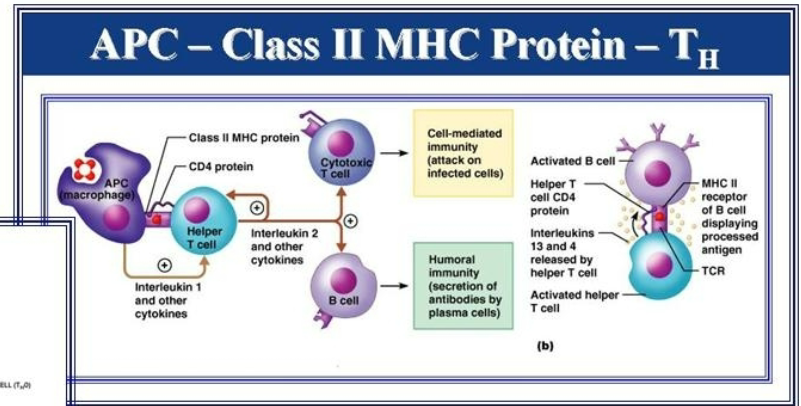
- Both the Dendritc cell and Macrophage uses phagocytoics to bring in the non-self entity, bacteria, viruses fungi, basically intruders
- Receptor Mediated Endocytosis: Most expensive active mechanism at the disposals of all human cells, reserved for transporting important carog, such as insulin at the cost of a human cel
- 3 Different Types of APCs -
- Dendritic Cells (DCs): the most effe tive APCs, located in the epdiermides, also presnet in connective tissues, all epithelial are superficial to connect tissue
- Activated Macrophages: located in lymphatic tissues and lymphatic organs,
- Mature B Cells: lymph nodes
Antibody Dependent Cell mediated Cytotoxicty - ADCC - they bind to a cell that became a cancer cell, it will take a piece, then it can recognize the cell
(AMPS)Antimicrobial Peptides
- Broad Spectrum: targets Bacteria, viruses, fungis, eukaryotic parasites
- Mechanisms of Action
- Block cell wall synthesis
- Forms pores in the plasma membranes
- Destroy RNA and DNA of the intruders.
- Bacterial interference, AMPs - Bacteriocins, are Enzymes that destory Proteins (Protease), they degrade adhesions,
- they are required by S. Aureus to bind to the host cells, they are pathogenic. The S. Epidermidis is preventing the same genus but different species form colonizing and infecting the human skin. By degrading/adhesions the surface protein that is used by S. Epidermidis the S. Aureus can start the
- Interference molecules they disrupt and derail quorum sensing, molecules released by microorganisms living in a community, disrupting can cause disrupt how they survive.
- S. Epidermidis can inhibit the growth of a nonpathogeinc agent, Cutibacterium Acnes, this species caused Acne Vulgaris skin condition
Antimicrobial Proteins (1 of 3)
- Interferons (IFN- Alpha, IFN - Beta, IFN - gamma)
- They alert neighboring cells that have not been infected, that the infected are coming
- When the infected cell gets infected by a virus it will begin gene expression, producing the proteins called Interferons
- Both IFN - Alpha & IFN - Beta; induce healthy cells to generate/ produce antiviral proteins to inhibit viral replication.
- IFN - Gamma : mobilzing more neutrophils and macrophages into the crime scence to phagotcyotiss those intruders.
- STING receptors: They are free floating in the cytoplasm nucleus
- The difference between ` receptors and STING receptors : the Toll-Like are physically located on the membranes, Sting Receprots are not on the membranes, they are free floating in the cytoplasm or nucleus
- Both STING and Toll-Like Recptors: are under the umbrella that PRRs- Pattern Recognizing Recpotorsrecognize the patterns, and also induce the production of Interferons
- Neutrophils activating Macrophages and Mobilizing Neutral Killer Cells, Pitbull cells
- They alert neighboring cells that have not been infected, that the infected are coming
Antimicrobial Proteins (2 of 3)
- Iron Binding Proteins (IBPs) & Antimicrobial Peptides AMPs
- Bacteria require Large Amounts of Iron and Zinc
- Fever, Liver, & Spleen
- Iron Binding Proteins (IBPs)
- Ex:Transferrin: found circulating in blood and tissue fluid.
- Ex: Lactoferrin: found in breast milk, and mucus
- Ex: Ferritin: produced and found in liver, red bone marrow, spleen
- Ex: Hemoglobin: protein found in red blood cells, that carry oxygen throughtout the body
- EACH Hemoglobin transports 4 oxygen molecules.
- red blood cells contain 3 million hemoglobin
- Antimicrobial Peptides AMPs
- Broad Spectrum: targets Bacteria, viruses, fungis, eukaryotic parasites
- Mechanisms of Action
- Block cell wall synthesis
- Forms pores in the plasma membranes
- Destroy RNA and DNA of the intruders.
- Iron Binding Proteins (IBPs)
Antimicrobial Proteins (3 of 3)
- Complement - Positive Feedback Mechanism
- The single MOST POWERFUL positive feedback mechanism in the human body
- Group of More than 30 Plasma Proteins
- 3 outcomes once Complements are turned on (NO turning Back)
- Can cause Opsonization
- Inflammation
- Cell Lysis (most powerful mechanisms)
- Of all three create the One important complement protein: C3 (no turning back)
- Another is C5
- Alternative Pathway: Is attacivated based on the LPS, LipoPolyscarrides (surface antigens of the microbes) this pathway will lead the activation of C3
- Lectin Pathway:is activated by bacteria, fungal cells, viruses with cell envlopes - cells mano sugars, which are not present on the surface of human cells, as they do not use those types of sugars will activate Lectin Pathway
- Classical Pathways: unique, it requires the intervention acquired immune system it requires the antigen antibody complex, meaningthe microorganisms is surrounded/bound by antibodies and if that is the case it will activate the classical pathways and start C3
- All 3 will lead to C3 which will then be cleaved into C3B and C3A
- C3B will causes Opsonization and will then be cleaved into C5B and C5A
- C5B is crucial and mobilze other proteins: C6, C7, C8, C9…. Causing Membrane Attack Complex (MAC)
- C3A +C5A causes inflammation
- C5B + C6+C7+C8+C9 causes Cell Lysis
- C3B causes Opsonization
- Remeber: More than 90% of all feedback mechanisms in the human body are Negative Feedback mechanism, UNLESS we have diseases, this causes a failing of those negative feedback mechanisms and starting positive feedback mechanisms and starting hell
- Why does hell break lose when Postive Feedback loop begins?
- Answer: Because Negative Feeback loop can stop itself, the Positive does not, it requires a external factor to stop it, that is why Positive feedback will kill the body
- Ex: of postive feeback loops: Child Labor,Generation of an action potential, Blood clotting
- However none is as powerful as Complement
- Why does hell break lose when Postive Feedback loop begins?
Anti-HiV Drugs:
- Nucleoside Reverse Transcirptaase Inhibitor- prevents the HIV viral particulaer form repicating itself, causing chain termentaiton, dirstupting the reverse transcription, RNA genome being prevented from generating its DNA product
- Mimics the nucelsoside anolauge ends the transcription provcess
- Example: AZT or zidovudine looks like a building block and tricks the production line and cloggs it
- Nonnuceloside Reverse Transcrptiaase Inhibitor- targeting the reverse transcirptiase, prevents and binds the viral reverse transcriptase directly
- No Anaolgue just ends it right there
- Protease Inhibitors (PIs) Blocks the activity of the HIV protease needed for the production of viral proteins needed for forming capsid. HIV cannot package itself in a viral particle.
- Example: Ritonavir
- Integrase Inhibtors: prevents the incorporation of HIV genome into the host chromosomeme,
- Once that happens the DNA, if HIV genome will reside permanently inside the Human nucleus, cell and Chromosome and will never leave. iOnce it integrates inside the chromosome it will kill the Host
- Fussion Inhibitors - prevents the HIV entry into the cell
HIV Process and ANTI-HIV SUmmary
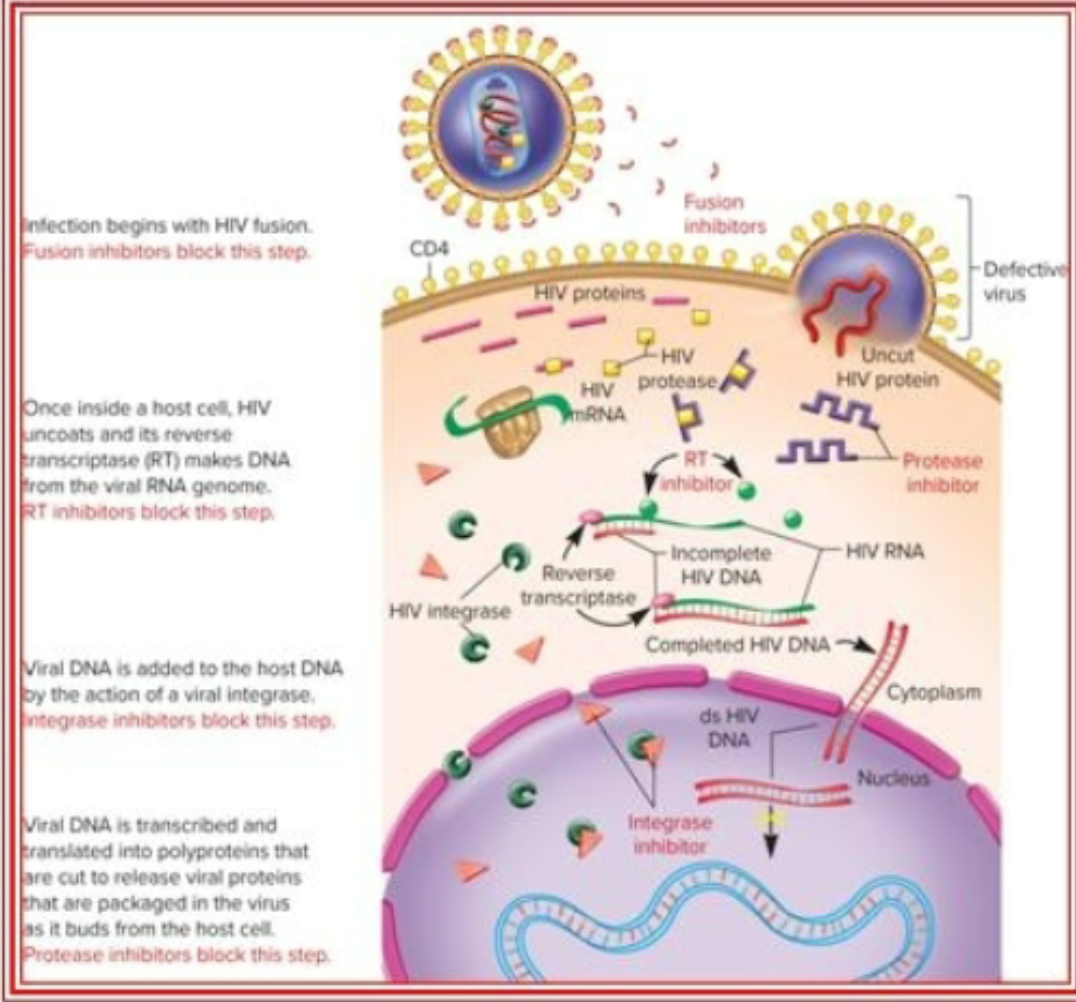
- Streptomyces: bactrialcital, used against Gram-Neg, disrupts Peptide elongation and translation, targets and binds with 30s Ribozome subunit, interferes with messenger RNA reading casing early termination and peptide synthesis
atheroacherosis, causing a narrowing of the diameter of blood vessels, by forming plaques, deposting neutral fatty fats, cholestoral, and calcium clogging blood vessels
- One of the 3 outcomes from Lipio Saccari (LPS)
- Will oxidize the TMAs into TMAO that promotes atherosclerosis
Autophagy: Similar to Phagocytosis, when the infected cell can neutralize the incoming the intruder,
- Again similar to Phagocytosis, however, the intruder is eaten by a Phagoctye NOT the cell. (think of the Phagocyte as the police and Autophagy is the homeowner that neutrizlied the threat by itself.
Inside that infected cell is a Phagophore
- Phagophore: free floating cell membrane (c shaped) that can recognize an intruder inside that cell.
- It will surrounded, completing the c-shaped, fussing the phagophore, the intruder, when this surrounding of the intruder it is called Autophagosome
- The Autophagosome: will fuse with a lysosome to produce an Autolysosome
- Within that Autolysosome: we have the digestion of the viral/intruder cell
- This is called Autophagy
- Ubiquitin-Coating Microbe - Phagophore Fusion Autophagosome
Alpha Toxin - See Extracellular Pathogens
Alergies: originates from incomplete Antigens, they are harmless However there is a problem: They will not be left alone,thye will be tagged by the immune system so that it can see the Haptens
- How do they tag them? Through the antibodies binding themselves to the Incomplete antigens and thus it will alert the Immune system.
- This causes Alergies
- Hapten-Self Protein Complexes: , self protein means - Antibodies
- 1st Encounter Allergen - Symptom free
- Ex: Seasons,
- 2nd Encounter Allergies - the bodies way of reacting to a Hapten/ Incomplete Immune system.
Alternative Pathway: Antimicrobial Proteins (3 of 3) Complement - Positive Feedback Mechanism
- Is attacivated based on the LPS, LipoPolyscarrides (surface antigens of the microbes) this pathway will lead the activation of C3
Apoptosis - when Granzymes enter the cell and tells the cell to commit sucide, how? basically granzymes just shred the cell DNA
- All 3 domains of life, when the DNA is shredded to pieces ALL commits sucide.
Avian Flu: also called H7N7
____________________________________________________________________________________________________________________________________________________________________________________________________
Letter B
B- cells from the Adaptive Immunity turn into plasma cells, which will in turn produce and release antibodies
- Can only have 1 antibody either IgM or IgD but not both
- IgM weak antibody only few antigens can start a B cell without the help of T Cells
- B Lymphoctyes or B Cells: similar to the T cell
- Antien challenge
- What is the difference between B Cell and T Cell immunity?
- Antien challenge
A: B Cells are Humoral Immunity, while T cells are cellular response
Bacteriocins (lantibiotics, released by Gram-Positive Bacteria to kill other Gram-Positve Bacteria,part of the Direct Microbiota pathogen,Interference Immunity, in Host Metabolism, Host Homeostasis requires Micobiome
Bacteriostatic, taking out the Tetracylines out the bug resumes its growth, also targeting the 30s subunt, it inhibits protein synthesis
Bacteriophages or Phages: Viruses that infect bacteria they are called
If the virus has envelope it means that it will exit the host by a mechanism called Budding
- This mechanism MIGHT not kill the host cell, unlike cell lysis
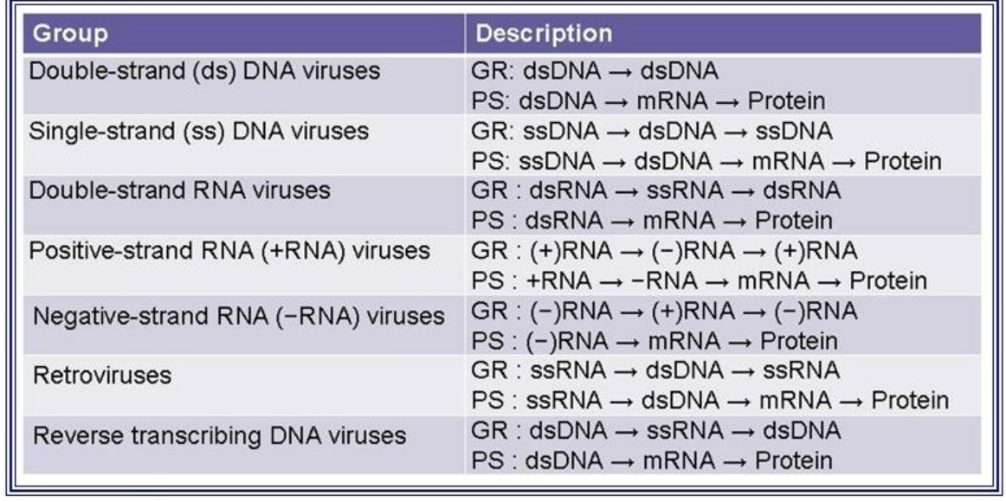
Baltimore System (Viral Texonomy - Viral Realm) No Evolutionary Relationships
Beta Lactam Ring: The very first naturally occurring antibiotic, Penicillins, inside they have Beta Lactam Ring, most crucial critical feature of the molecule, essential for antibioitc affect, inhibits transpeptidation, blocking cell wall formation (called Transpeptidetation, formation of cross links in peptidolycan molecules) causing leakages(destorying this structure, Penicillin will not work)
- Many bacterial acquired resistance towards penicillin, called Beta Lactamase, Pencillianse, hydrolizes the bond of Beta Lactam Ring rending Penicillin in active.
Biofilms provide Microbial Protection and next step for the pathoginc agent to survive inside the host cell
- Are extremely hard to get rid of, have to be carefully because trying to get rid of biofilms can kill our own healthy living human cells
- That is why biofilms are a problem, not problem to get rid of but friendly fire!
- Planktonic bacteria, that live freely and not with biolfims are called ←-
- Example Pseadomonas Aeroginosa will be killed by antiboditics, anitbodies, by phaogycitic white cells because they live alone and not with biolfim community, however once living inside that community they will be able to resists all.
- Biofilms can also
- Exchange plasmids, help them survive in biofilm community
- Exchange corme sensing molecules, used to communicate
- They can increase the activity of the multi drug eflux system
Broad Spectrum (Drugs)Targets many different kinds of abcteria
- Example: Tetrocycline
Butyric Acid, they induce coloncytes, that line our stomach,to vaporize all the absorbed fuel molecular, carbon based, called Monosaccharides to CO2
- Both Butyric Acid and Propionic Acid increase intestinal hormones to supress hunger
____________________________________________________________________________________________________________________________________________________________________________________________________
Letter C
CagA can upregualte genes of the simple colomunar cells in the lining of the stomach, producing proteins that promote cell prorfilation, cell survival, cell migration, inducing endogensis, blood vessel formation, all leading./ promoting cancer cells
- created from Helicobacter Pylori
- Targets bacteria, Cells with envelopes and Fungi
- Paneth Cells:
- Produces antimicrobial peptides and lysozyme - cationic peptides has a net positive charge thus attracting the negative charge on the surface of microoriganisms., one of the most important examples of catonic peptides is….
Capsomes: Structural Units of Capsids - called -
COVID 19 (SARS-CoV-2)
Cellular Immunity - T Cells and B-Cells
- When an APC (Antigen-Presenting Cells) comes in and presents the antigen, who does it present it to?
- Answer: Cellular Immunity.
- T-Cell Development:
- Helper T Cells (TH)
- Cytotoxic T Cells (TC)
- Red Bone Marrow producing CLP Common Lyohoid Progenitor Cells they migrate to the thymus, t cells have receptors called
- Alpha & Beta protein receptors in the T Cells surface. These are the Majority
- They will endure two tests:
- Alpha & Beta protein receptors in the T Cells surface. These are the Majority
- Called the Postive Selection: the immature T-Cells will have CD Co-receptors - CD4 and CD8, when underoging the test, the immature T cell will be forced to choose either CD4 or CD8 but not both.
- Negative Selection: Any T-Cells either with CD4 or CD8 and they recoginze a self-antigen they will be killed. Undegoing apoptosis (kills its self) This is where the 90% killed happens
- Gamma Delta receptors there are the Minority
- Both will leave the Thymus and go to the lymphoid tissue, skin, and mucus membrane.
- Thymus educating T Cells
- Thymus is a harsh teacher 90% of the T Cells (BOTH) die due to the Thymus and its two tests.
- Negative Selection: Any T-Cells either with CD4 or CD8 and they recoginze a self-antigen they will be killed. Undegoing apoptosis (kills its self) This is where the 90% killed happens
Cephalosporins: strucutally and functionall similar to Pencillians prevent and ihibit Transpeptidation
- 3 Different Generations
- First Generation Cephalopsporins - Very effective against Gram Post Bacteria
- Second Generation Cephalosporins - Both are Effeective against Gram Post and Neg
- Third Generation Cephalosporins - Effective against Gram Post and Neg,
- 3rd Generation is best against Gram Negthan 2nd
- Despite 2nd and 3rd Generation - being effective against Gram Post and Neg they are not as effective as the First Generation against Gram Post
Cutaneous Membrane: the skin the largest organ of the human body
- Ex: of a resident microorgaism that profides humans benefits is the staphocococus epidermidermis, an essential compeontent for healthy skin
- S. Epidermidis forms 2 functions, and also produce and release short chain fatty acids (SCFAs) that bind to Toll-Like Receptor 2 and Kertinocytes
Modulate, Keratinocytes gene expression and releases Antimicrobial Peptids (AMPs) they limit inflammation and infections & also promote wound healing
Bacterial interference, AMPs - Bacteriocins, are Enzymes that destory Proteins (Protease), they degrade adhesions,
- they are required by S. Aureus to bind to the host cells, they are pathogenic. The S. Epidermidis is preventing the same genus but different species form colonizing and infecting the human skin. By degrading/adhesions the surface protein that is used by S. Epidermidis the S. Aureus can start the
- Interference molecules they disrupt and derail quorum sensing, molecules released by microorganisms living in a community, disrupting can cause disrupt how they survive.
- S. Epidermidis can inhibit the growth of a nonpathogeinc agent, Cutibacterium Acnes, this species caused Acne Vulgaris skin condition
Coagulopathy: Causing Leakage so severe that the host can not colligate its blood, Coagulopathy (continues blood flow)
- Caused by Ebola, viral hemorrhagic fever (VHF)
Contact Tranmssion See Transmission
Congenital Infections - babies born with infectious disease are called Congenital Infections
Complement - Positive Feedback Mechanism
- The single MOST POWERFUL positive feedback mechanism in the human body
- Group of More than 30 Plasma Proteins
- 3 outcomes once Complements are turned on (NO turning Back)
- Can cause Opsonization
- Inflammation
- Cell Lysis (most powerful mechanisms)
- Of all three create the One important complement protein: C3 (no turning back)
- Another is C5
- Alternative Pathway: Is attacivated based on the LPS, LipoPolyscarrides (surface antigens of the microbes) this pathway will lead the activation of C3
- Lectin Pathway:is activated by bacteria, fungal cells, viruses with cell envlopes - cells mano sugars, which are not present on the surface of human cells, as they do not use those types of sugars will activate Lectin Pathway
- Classical Pathways: unique, it requires the intervention acquired immune system it requires the antigen antibody complex, meaningthe microorganisms is surrounded/bound by antibodies and if that is the case it will activate the classical pathways and start C3
- All 3 will lead to C3 which will then be cleaved into C3B and C3A
- C3B will causes Opsonization and will then be cleaved into C5B and C5A
- C5B is crucial and mobilze other proteins: C6, C7, C8, C9…. Causing Membrane Attack Complex (MAC)
- C3A +C5A causes inflammation
- C5B + C6+C7+C8+C9 causes Cell Lysis
- C3B causes Opsonization
- Remeber: More than 90% of all feedback mechanisms in the human body are Negative Feedback mechanism, UNLESS we have diseases, this causes a failing of those negative feedback mechanisms and starting positive feedback mechanisms and starting hell
- Why does hell break lose when Postive Feedback loop begins?
- Answer: Because Negative Feeback loop can stop itself, the Positive does not, it requires a external factor to stop it, that is why Positive feedback will kill the body
- Ex: of postive feeback loops: Child Labor,Generation of an action potential, Blood clotting
- However none is as powerful as Complement
- Why does hell break lose when Postive Feedback loop begins?
Classical Pathways: Antimicrobial Proteins (3 of 3) Complement - Positive Feedback Mechanism
- unique, it requires the intervention acquired immune system it requires the antigen antibody complex, meaningthe microorganisms is surrounded/bound by antibodies and if that is the case it will activate the classical pathways and start C3
- CLP Common Lyohoid Progenitor Cells: Red Bone Marrow producing CLP Common Lyohoid Progenitor Cells they migrate to the thymus, t cells have receptors called
- Alpha & Beta protein receptors in the T Cells surface. These are the Majority
- They will endure two tests:
- Alpha & Beta protein receptors in the T Cells surface. These are the Majority
- Called the Postive Selection: the immature T-Cells will have CD Co-receptors - CD4 and CD8, when underoging the test, the immature T cell will be forced to choose either CD4 or CD8 but not both.
- Negative Selection: Any T-Cells either with CD4 or CD8 and they recoginze a self-antigen they will be killed. Undegoing apoptosis (kills its self) This is where the 90% killed happens
- Gamma Delta receptors there are the Minority
- Both will leave the Thymus and go to the lymphoid tissue, skin, and mucus membrane.
COVD 19: see SARS-CoV-2
Chronic: Eukayotic Cell Infections Host cell is SLOWLY releasing viral particles without cell death
Cytotoxic T Cells or (Tc) Antigen Presentation to Tc Cells + Clonal Selection
- Display CD8 Surface Glycoproteins
- Bind to MHC I Proteins
Cytopathetic Effects (CPEs): Eukayotic Cell Infections Host cell is infected and will be transformed into a malignant cell. (cancer cell)
- Ex: Hepatis B Virus: Causes Liver cancer
Cytokines: that produces, relies, and secrets are proteins that code by genes and when activiated we call it gene expression
- When you have an infection they are realeased and ring the alarm for the entire body that we have an infection
Cytokine Storm: a life threatening condition, will lead to fever massive fluid lost, drop of blood pressure, lead to shock and death,
Cytolysis: breaks apart the cytosol and cytoplasm
- Cytolysis is done by releasing Preforins, that create pore formation, and Granzymes, go through these pores and causes Apoptosis
___________________________________________________________________________________________________________________________________________________________________________________________________
Letter D
Dendritic Cells :When they reside in the skin they are called Langerhand cells,
- When they line all body organ system that are exposed to the outside world, Respiratory, Digestiate, Urinary, Reprodutive Tract, they all have Dendritic Cells
- Both Dendritic and Macrophages can function as a anti-gen presenting cells
Degranulation: releases inflammatory mediatedors, promotes inflammation.
- And if MAST cells Histamins it will release and allergic reaction.
- Part of the IgE: used to activate MAST cells and other white blood cells like Eosinophils, Basophils. Becuase it activates MAST cells it under goes
diet induced change in resistant microbes - See Dybiosis - Disease Connection
- Example: Rotaviruses: Severe Diarrhea in Children
Double Strand (ds) DNA Viruses: Means you have BOTH the Coding and Noncoding DNA and Genemo replication —> Transcription (performed by RNA polymerase of the host)—-> Translation (peformed by human ribozomes (host)) (Both Transciption and translation called Gene Expression)
- Replication: performed by DNA polymerase
- This means the Viral DNA the protein and through ASSEMBLY you get the viral particle
- GR &PS are similar to cells of the 3 domains of life (see chart at Viral taxonomy)
- Largest Virus Group
- Target(I)Archaea
- Target (II) Bacteria
- Target (III) Eukarya
- All three have Double Stand DNAs in there genomes
- Double Strand DNA viruses do not need half of the required orgnelles as they can use there host cells to help them replicate such as ribozomes for protein synthesis
- Examples of Double Strand DNAs - T4 & Lambda & Herpes & Variola Viruese
- T4: is a complex phage
- Lambda : icosacahedral (20 triangle slides)
- Herpes:
- Small Pox
Diptheria Toxin - see Exotoxins
Drug Resistance
- 4 Mechanism
- Modify the Target of the Antibiotic -implies the target of the antibiotic is a protein
- Protien meaning, is encoded by a gene/random mutation
- 95% mutation will be deadly
- Protien meaning, is encoded by a gene/random mutation
- Drug Inactivation - also implies proteins based enzymes, encoded by genes, through plasma
- Minimzing the Concentration of the antibiotic in the Cell by two mechanisms
- Preventing antibiotic entry
- Actively pumping out antibiotics - Cytomosis - kicks out antibiotics
- Folic Acid- Required by human and bacterial cells, and if it is blocked prevents the sysntehis of Nucleic Acids for Building blocks for DNA and RNA
Dysbiosis - Disease Connection - homeostatic imbalance
- Metabolic Syndrome
- Insulin resistance, systemic body cells fail to pick up insulin, that will directly affect the ability to get in glucose. Preventing glucose to pass through the transmembrane, glucose will then stay in the vascular bed and overwhelm the urinary system and hamper the ability to take in the glucose. thus excreting glucose in the urine (diabetic condition)
- It increases stroke and heart disease, induced by the diet induced change in resistant microbes leading to:
- Dysbiosis: homestatic imbalance, and cause mucus memrbanes to be leaky
- Healthy condition there are no spaces of neighboring similar colomunar lining the digestive tract, as soon as as it is leaky the liposaccharide (LPS)from the outer membrane start breaching the mucus, leading to LPS leading to 3 outcomes
- Dysbiosis: homestatic imbalance, and cause mucus memrbanes to be leaky
- Low level coranic inflammation
- Promoting insulin resistant
- Promoting atheroacherosis, u causing a narrowing of the diameter of blood vessels, by forming plaques, deposting neutral fatty fats, cholestoral, and calcium clogging blood vessels
- Cardiovascular Disease
- Eating alot of red meat or high fat foods diet = changes the microbiotat within the digestive tract, why?
- Because Red Meat has a specific amino acid called L-Carnitine, enrivched in red meat as well as
- High Fat foods, eggs seafood contains a phospholipid called Phosphatidylcholine
- Both are metabolized by the microbiota and produce a compound called TMA, trimethylamine, gets absorbed and going through the plasma membrane lining mucus membrane of the digestive tract and go to the liver, and the liver cells Hepatocytes will oxidize the TMAS into TMAO,
- However the problem TMAO promotes atherosclerosis
- Both are metabolized by the microbiota and produce a compound called TMA, trimethylamine, gets absorbed and going through the plasma membrane lining mucus membrane of the digestive tract and go to the liver, and the liver cells Hepatocytes will oxidize the TMAS into TMAO,
- Eating alot of red meat or high fat foods diet = changes the microbiotat within the digestive tract, why?
- Cancer
- Helicobacter Pylori some produce protein called CagA gene protein, and promotes tumor formation that will be malignant, cancer found in the lining of the stomach leading to stomach cancer.
- CagA can upregualte genes of the simple colomunar cells in the lining of the stomach, producing proteins that promote cell prorfilation, cell survival, cell migration, inducing endogensis, blood vessel formation, all leading./ promoting cancer cells
- Malignant Cancer Cells, cells start to migrate and invade other locations,
- CagA can upregualte genes of the simple colomunar cells in the lining of the stomach, producing proteins that promote cell prorfilation, cell survival, cell migration, inducing endogensis, blood vessel formation, all leading./ promoting cancer cells
- Helicobacter Pylori some produce protein called CagA gene protein, and promotes tumor formation that will be malignant, cancer found in the lining of the stomach leading to stomach cancer.
____________________________________________________________________________________________________________________________________________________________________________________________________
Letter E
Ebola, viral hemorrhagic fever (VHF): lethal virus affecting MULTIPLE organs/cells in the human body called vascular damage = Vascular beds = the blood vessels
Endogenous Antigens- See Antigens III/IV
Endotoxins
- Are not protein based coming fromoutmembrna eof gram negative bacteria called LPs, Lipopoly sarrchrides, massive molecules outer side of the gram negative bacteria. It is also an Endotoxins
- Released only when the gram negative bacteria but when they undergo cell division, with MAJORITY coming from the DEATH of the gram negtaive bacteria
- Toxic to mamalas and humans in even small amounts! (nanograms)
- Why toxic? Because of Lipid A, complex Ara, if lipid residues not one single molecule, doesnt matter if what gram negative bacteria it is the outcome is the same (Exotoxins outcome depends on the species)
- Will lead to septic shock will have two outcomes leading to recovery or death. No drug therapy to stop the cytpic cascade, affeting the ehart, vascular bed and all organ systems, death is because of the shutting down of the organ systems
- This is also a problem if giving antibiotics to a paptient and if the antibiotics contain LPs it will lead to septic shock and death.
EPV = Salk Vaccine, Famalin
Extracellular Pathogens - reside outside of cells, in tissues, fluids (blood, lymph,) interstituial fluid
- Part of Pathogenicity
Exotoxins Host Damage
- Once inside the host cell and suving inside the biolfims they can start doing damage
- Exo: the toxins are released by the pathogen, protein based molecules that are posin to human cells
- AB Toxin mechanism with two components
- Binding component, allows the pathogen interact with the human host and entry, once inside the Binding component is released and the Active component wrecks havoc inside the cell.(protein synthesis and cell death)
- Active component,
- Mechanisms : Diphtheria, toxin kills the cell by inducing/ prevenitng protein synthesis
- Mechanisms:Alpha hemolysis toxin is produced by the Staphoocccuss aureus that punchies holes in the cell membrane
- SuperAntigen toxin, they will cause the APCs to bind to the Tcells without the help of the antigen, will also induce the release of chemical messengers of rhe immune systems. Called cytokine Storm, a life threatening condition, will lead to fever massive fluid lost, drop of blood pressure, lead to shock and death,
- Similar to Endotoxins
____________________________________________________________________________________________________________________________________________________________________________________________________
Letter F
Facultative Pathogens - normally they grow inside a human cell, HOWEVER they can also grow INVITRO, they can grow in a growth plate See Pathogenicity
- Example: Fungus - Histoplasma Capsulairum -growth depends on temperature, thriving in macrophages
Fussion Inhibitors - prevents the HIV entry into the cell
- See Anti-HIV Drugs
FOMiTe: inanimate objects transferring pathogens to beings
- Examples: Vehicle Transmission
- Examples: Surgical instruments, drinking vessels, stehosptoccups, bedding, eating intestienals, clothing or sharing needles
Folic Acid - is required for the sysntehsis of Pureins- specific bases that are used as building blocks of Nucleicotide, and building blocks for DNA and RNA
____________________________________________________________________________________________________________________________________________________________________________________________________
Letter G
ghrelin, appietate stimulating hormone , makes you hungry bad side of the acetic acid
____________________________________________________________________________________________________________________________________________________________________________________________________
Letter H
HA - 18 variants, proteins
H1N1: a virus that is an influenza viruses that caused the Spanish Flu
H7N7: also called the Avian Flu;
- Not only are does it infect birds but they can JUMP to pigs because of its surface proteins
- H & N are specific surface proteins on the virus Contains multiple genomes
Haptens: also / see Antigens
Histatins- targets fungi, catonic peptides
- Example of a Polyhedral Virus
- Both Polio Virus & Hepatitis A are: +RNA Viruses, icosacahedral (20 triangle slides), both no envelope
HIV Process and ANTI-HIV SUmmary
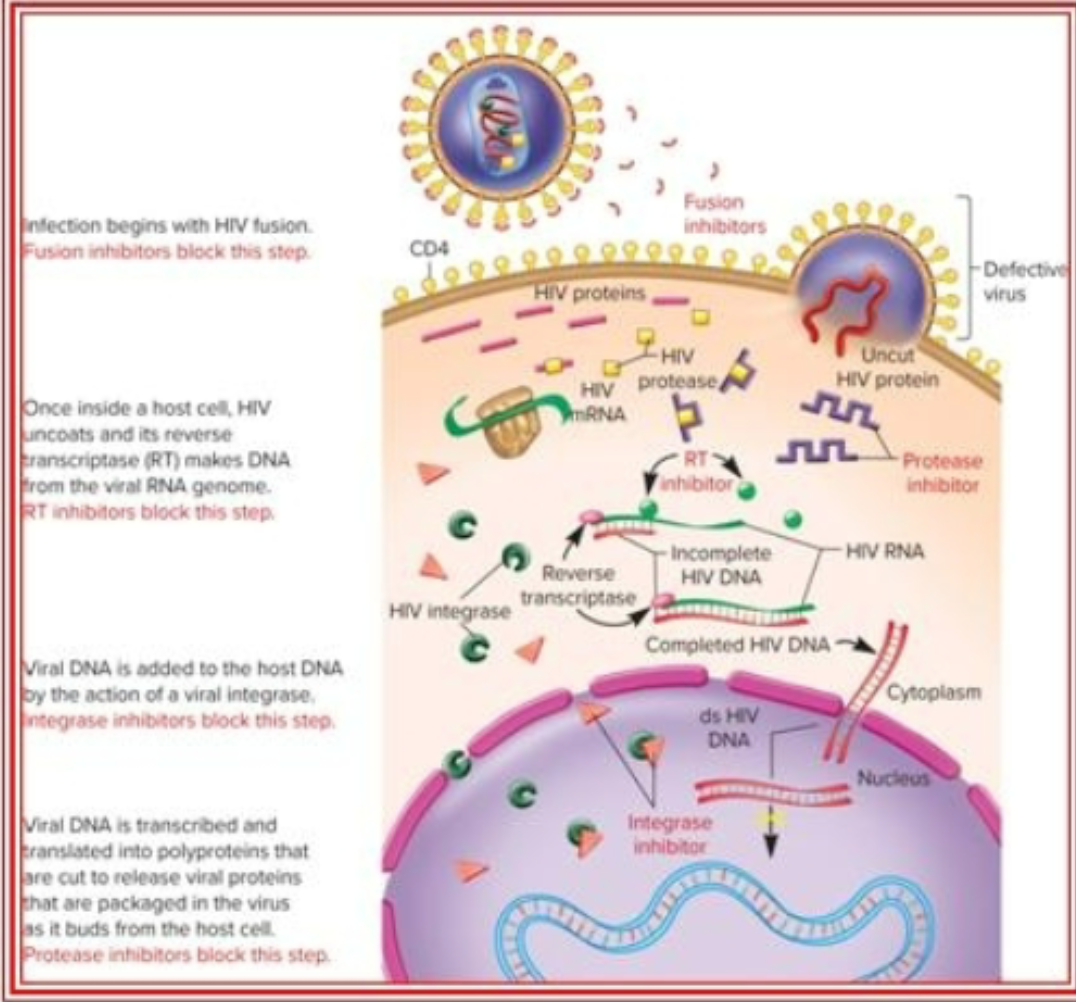
See Anti-Hiv Summary
- The ONLY DNA Viruses, the rest are RNA Viruses
- It is a Double Strand DNA, however there is a gap, this is because when it infect a host, the polymerase that contains and produces more double DNA strand, will be cut off and the Hepatits B DNA will come in and fill in the gap and become part of the host cell
- Thisviral Double Strand DNA will produce 2 different RNA moelcules
- Pregenome positive strand RNA: it is used as a template by polymerase P (also has the reverse transcribtase to use the positive RNA to produce DNA) to produce negative strand DNA, NO RNA primersand the reverse transcibetor/transcribtase uses that negative strand DNA to produce double strand DNA (this is a digested pre genome + RNA as primer)
- mRNA: it creates viral protein
- Both will go inside the cytosol and undergo
Example of Cytopathic Effects (CPEs): Host cell is infected and will be transformed into a malignant cell. (cancer cell)
- Reverse Transcribing DNA Viruse
- 3.2 kb Circular dsDNA
- What is so Unique Here?
- Answer: We have not been able to cultivate it in a lab culture, not possible to grow it in a culutre
- The first ever vaccine using recombinant DNA technology was to produce a Hepatitis B vaccine
- Answer: We have not been able to cultivate it in a lab culture, not possible to grow it in a culutre
- What is so Unique Here? PART II
- A: it displays 3 different particles
- Filamentous and Spherical particle do not contain nucleic acids, they are useless and DECOYS
- Spherical particle
- Dane particle: the ONLY bonafide viral particle, with nucleic acids and infect the host cells
Herpes Virusus:
Example of Latent (Persistent) infection: In two different possibilities (Eukarotic Cell Infections)
- Latent: Host cell is not harmed, UNLESS the viral particles are activated
- They can be part of the host for a long time
Ex: Herpes Viruses
- If the viral particles are activated, there would be rapid multiplication and causes cell death and the viurs is released.
Examples of Double Strand DNAs
- They also exhibit an envelope
- They also exhibit pleomoprhic: allows there morphology to changeHIV: causes AIDS (Human Immunio Deffeciency Viruses)
- Has an envelope
- +RNA is NOT used as a template for protein synthesis.
- Reverse Transcription: it replicates and creates the double strand DNA
- It is a critical step for protein synthesis
- Reverse Transcriptase: RNA —-> DNA (CRUCIAL!)
- Rember USUALLY it is DNA —> RNA
- Not found in 3 Domains of Life
- Geneome has two copies of positive RNA strand molecules at 10 nucleiotides each
- Targets: Dangerous/Amzing about HIV is that it targets the TH cells (T helpeer cells) this killing the acquired specific immune system and only leaving the nonaquired specific immune system to defend the body, which is not enough to hold back other viruses (a simple cold can kill an AIDs + patient
- TH cells surface contains surface proteins / recognition protein called CD4
- TH cells are important because it directs both the acquired and nonaquried immune system
- Can insert itself into the human chromosome thus called it a Provirus
- What is the difference between the Provirus and the ProPhage?
- Answer:The Provirus : never leaves the host chromosomes, thus allowing it to be safe from the human immune system. The Prophage will leave the bacterial chromsome
- What is the difference between the Provirus and the ProPhage?
Host Metabolism,Host Homeostasis requires Microbiome
- Require the help from the microbiome, the microorganisms thriving inside the lining of the digestive tract of the human host
- Example; we cannot metabolize complex carbohydrates, so we need the help of the microorgnaism form the microbiome inside the digestive tract
- These microorganisms will break the the complex carbohydrates into Monosaccharides that human can absorb
- Some of the Gut Monoscchardies and through fermentation, they will generate 3important short chain fatty acids SCFC
- Example; we cannot metabolize complex carbohydrates, so we need the help of the microorgnaism form the microbiome inside the digestive tract
- Acetic Acid - Converted to fatty acids and triglycerdies
- Propionic Acid - Inhibits cholesterol synthesis
- Butyruc Acid- Fuels cellular activity; oxidized to CO2
- The 2 most beneficial human hot are
- Butyric Acid, they induce coloncytes, that line our stomach,to vaporize all the absorbed fuel molecular, carbon based, called Monosaccharides to CO2
- Propionic Acid: they are abosorbed and go to the liver shut down Hipocytes (liver cells) to produce cholesterol, i hibiting cholesterol
- Both Butyric Acid and Propionic Acid increase intestinal hormones to supress hunger
- Acetic Acid, obesogenic, promotes weight gain! Hlow? Acetate gets aborobed in the liver and induces Hipocuytes to produce fatty acids and combine them to glycerol to produce triglyceride, neutral fat, that will be trasnported adiplocytes fat cell for storeage a
- Allows promotoes and releases hormone, ghrelin, appietate stimulating hormone , makes you hungry bad side of the acetic acid
- Immunity: two ways
- Direct Microbiota pathogen interaction (Interference)
- Involves the release of Toxic peptides,
- Bacteriocins (lantibiotics, released by Gram-Positive Bacteria to kill other Gram-Positve Bacteria,
- microcins, released by the resident enterobacteriaceae, they kill bacteria that is toxonimically related
- Colicins released by E, Coli
- Involves the release of Toxic peptides,
- Indirect Mechanism Microbe-Host Pathogen interaction, inducing the host to deal with the nonresident pathogenic agents
- Releases
- Peptidoglycans
- Short chain fatty acids
- When released these compeontetns induce the human cell to releases 2 components
- AMPS (Antimicobial Peptides (AMPs)
- C-Type Lectins - Kill nonresident gram-positive bacteria
- When released these compeontetns induce the human cell to releases 2 components
- Releases
- The release of secondary bile acids, modified bile acids, with 2 benefits
- They limit inflammation of the lining of the digestive tract and inhibit nonreisdient pathogenic growth
- GALT (i.e Specific Type of MALT) Gut Associated Lympatic Tissue
- Pyer Patch
- Lymphatic Follicles
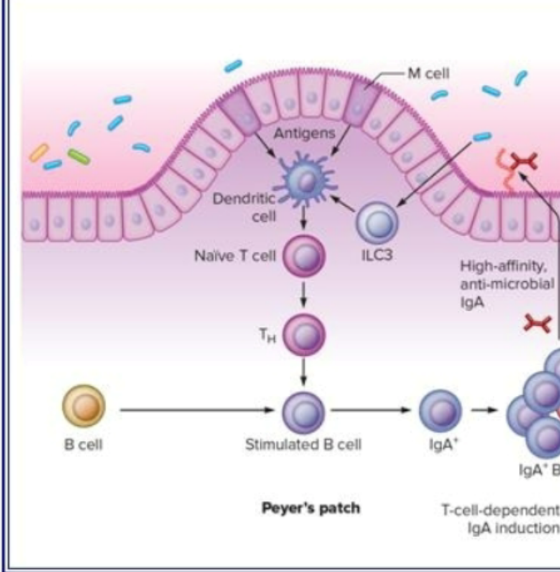
- SIgA is a Dimer and found in the mucous membrane, which has HIGH affinity IgA, with the lowest affinity being IgM
Host Enetry vs Departure Mechanisms
- Roles of Transmembrane Proteins
- Viral Entry Mechanisms
- Fusion, requires envelope, that contains the plasma membrane
- Endocytosis active transport,
- Endocytosis For viruses without Envelope
- Viral Exit mechanisms
- Influenze exitis the host cell virus
Humoral Immunity
- B Lymphoctyes or B Cells: similar to the T cell
- Antien challenge
- What is the difference between B Cell and T Cell immunity?
- Antien challenge
A: B Cells are Humoral Immunity, while T cells are cellular response
- Only the lymphocyte that has surface antibody that can bind to the antigen will be activated
- Antibodies or Immunoglobuins
- Basic Antibody structure
- Major Antibody classes are Igm, IgA, IgD, IgE, IgG (See AntiBody)
- Memory Component of Humoral Immunity
- Antibody Kinetics
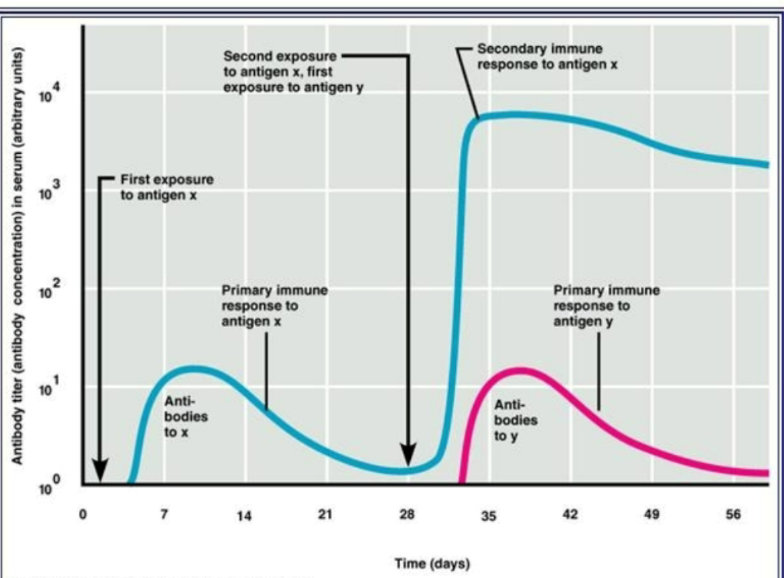
What is the difference between the primary and secondary immune response
A: The total antibody production is nearly 1,000 times higher between the secondary response vs the first This is due to the Memory Component of Humoral Immunity
- Active Versus Passive Humoral Immunity
- Immunological Memory
- Under Acquired Immunity, acquire it Naturally or Artifically
- Active Humoral (antibody mediated or antibody based immunity) Immunity:
- Natural Active: YOU HAVE TO GET SICK
- Artifically Active: YOU get a VACCINE
- !!! Under both ACTIVE cases: it involves antigen chanllenges
- Passive Humoral Immunity
- Naturally: Antibodies pas from mother to fetus via placenta
- Passively: Inject of Immune serum (gamma globulin)
- !!! Under both Passives THERE ARE NO MEMORY, thus meaning no challenges (or the other way around)
- Active Humoral (antibody mediated or antibody based immunity) Immunity:
- Under Acquired Immunity, acquire it Naturally or Artifically
- Immunological Memory
Host Range
- Exquisite selectivity
- Viruses cannot not infect other domains, meaning a bacteria viruses cannot infect a human or archea cell etc. etc.
- Spectrum of Host Cells the Virus can infect
Question: what undeleis that cell type specificity-
A: They rely on a ligand-receptor interactions (protein-protein interactions)
Ligand comes from the surface of the viral particle
Receptor: comes from plasma membrane of the cell of the host
Hydrolases: they cut by using hydrolysis (the foreign particles)
- Ex: Lyzozyme
- Lyzozyme: also contains reactive oxygen species (ROS)
- Ex: Phospholipase: Cuts lipids
- Ex; Ribonuclease: Cuts RNA
- Ex: Deoxyribonuclease: cuts DNA
- Ex: Protease: Cuts Protein
- Ex: of ROS = Superoxide radicals
- Ex: of ROS, Hydrogen Peroxide
- Ex: of ROS, Singlet Oxygen (very reactive)
- Ex: of ROS, Hydroxylradicals
Hypersensitivity
- Type 1, mediated by antibodes called allergies
- Type 2mediated by antibodes
- Type 3 Arthrosis, mediated by antibode
- Type 4 mediated by T Cells not humoral but cellular,
- Ex: Tuberculosis Test
____________________________________________________________________________________________________________________________________________________________________________________________________
Letter I
Indirect Mechanism Microbe-Host Pathogen interaction, inducing the host to deal with the nonresident pathogenic agents, Immunity from Host Metabolism , Host Homeostasis requires Microbiome
- Releases
- Peptidoglycans
- Short chain fatty acids
- When released these compeontetns induce the human cell to releases 2 components
- AMPS (Antimicobial Peptides (AMPs)
- C-Type Lectins - Kill nonresident gram-positive bacteria
- When released these compeontetns induce the human cell to releases 2 components
- The release of secondary bile acids, modified bile acids, with 2 benefits
- They limit inflammation of the lining of the digestive tract and inhibit nonreisdient pathogenic growth
Infection
- Process of Infection in 4 stages
- Incubation
- The time between pathogenic agent entry and the development of signs and symptoms, no clinical manifestion no signs or symptoms this is called a Lag but still being infected
- Prodromal Stage
- You start to have mild non-specific sings and symptoms, however no clear diagonisic, however the patient is CONTAGIOUS
- Illness
- THe most severe displaying characteristics and symptoms and during this stage the adaptive, acquired, and specific immunity is activated
- Convalescent period
- Signs and symptoms begin to disapper and the patient is getting period
- Signs? = The pobjective changes that the physician can directly oobvserve and measure
- Example: Blood pressure, Temp (objective changes)
- Symptoms? = Subjective no way for the physician can observe and measure
- Example; pain and lost of appetite
- Syndrome (Disease Syndrom): a set of signs that includes both Signs and Symptoms
Influenza: Negative-Strand RNA Viruses
- Enveloped
- How many segments of RNA - 8
- Genome —> contains multiple genoes 8 in total! (8 separate segments) nucleic molecules
- Example of: Negative-Strand RNA Viruses
- Requires -RNA to turn into +RNA to obtain the protein
- -RNA to turn into +RNA is caused by RNA- Dependent RNA polymerase
- Not seen in the 3 domains of life ONLY IN VIRUSES
- -RNA to turn into +RNA is caused by RNA- Dependent RNA polymerase
- HA: induces a very specific transport mechanisms called, the Receptor Mediated Endocytosis: (most expensive active transport out there) Entry inside the host cell
- Antigenic Drift: RdRP (RNA Dependent, RNA polymerase), this enzyme lacks proofreading causing lots of mutations, this i way it caledd Antigenic Drift
- This is why we need the yearly flu vaccine
Inhibitors of cell wall synthesis, is the most selective against bacteria because it targets structures such as peptoglycans and cell wallsand functions not found in Eukarotic cells even in human cells
- The very first naturally occurring antibiotic, Penicillins, inside they have Beta Lactam Ring, most crucial critical feature of the molecule, essential for antibioitc affect, inhibits transpeptidation, blocking cell wall formation (called Transpeptidetation, formation of cross links in peptidolycan molecules) causing leakages(destorying this structure, Penicillin will not work)
- Many bacterial acquired resistance towards penicillin, called Beta Lactamase, Pencillianse, hydrolizes the bond of Beta Lactam Ring rending Penicillin in active.
- Penicillins is only effective to bacteria that are actively syzntheizing NEW peptidolycan,
- See Antibiotics, 4 Main Modes of Action
Intracellular Pathogens - resids physically inside the human host cell 2 ways
- Facultative Pathogens - normally they grow inside a human cell, HOWEVER they can also grow INVITRO, they can grow in a growth plate
- Example: Fungus - Histoplasma Capsulairum -growth depends on temperature, thriving in macrophages
- Obligate Pathogens - Cannot grow in a growth plate, they require a host cell for growth.
- Example: Viruses cannot growth in growth plate need a host.
Interferons (IFN- Alpha, IFN - Beta, IFN - gamma)
- They alert neighboring cells that have not been infected, that the infected are coming
- When the infected cell gets infected by a virus it will begin gene expression, producing the proteins called Interferons
- Both IFN - Alpha & IFN - Beta; induce healthy cells to generate/ produce antiviral proteins to inhibit viral replication.
- IFN - Gamma : mobilzing more neutrophils and macrophages into the crime scence to phagotcyotiss those intruders.
Integrase Inhibtors: prevents the incorporation of HIV genome into the host chromosomeme,
- Once that happens the DNA, if HIV genome will reside permanently inside the Human nucleus, cell and Chromosome and will never leave. iOnce it integrates inside the chromosome it will kill the Host
- See ANti-Hiv Drugs
Innate Immunity (1st Line of Defense): Nonspecific Defenses also called Innate Immunity: Also has two lines of defenses
- Intact skin cutaneous membrane
- Physical barricade (Lyzogome, reales sweet glands, breaking down NAG-NAM glycosidic bond)—> Intact Skin (sebum, produces by sabtaious gland containing toxic chemicals) —> Normal Flora —> Mucosae
- Langerhans cell (dendritic cell) - acting function is a antigen presenting cell, it brings (through phargocytosis) - antigen, viral particle, bacteria cell, fungal cell, parasite. Once inside the cell it will nuterizalize it and secrete the destroyed particles outside the cell and also lets the body know if our body has an intruder
- Keratin at the Surface of the Cutaneous Membrane
- Remeber we have 4 types of membrane
- Membrane that lines the body surface
- Keratin at the Surface of the Cutaneous Membrane
- Cutaneous
- Mucuous
- Serous
- Lines body cavities that are not open to the outside world, only closed
- Synovial Memrbane
- Lining also closed and lines the synovial joint, the most flexible joint in the human body (elbow, knee, hip etc.)
- All systems are lined by membranes
- Skin Secretions, ie. Acid Mantle
- The pH 3-5 in the skin, slightly acidic
- Mucous Membranes - Acidic secretions, pH 1-2
- Lining Open-End Organ Systems
- Respiratory, Digestive, Reproductive, and Urinary Tract
- Only the Digestive Tract is open in both ends
- `Goblet cells is a unicellular gland
- The Goblet secrete Mucin, a glycoprotein that when mixed with water it creates mucus
- Paneth Cells:
- Produces antimicrobial peptides and lysozyme - catonic peptides has a net positive charge thus attracting the negative charge on the surface of microoriganisms.
- Cathelicidins: catonic peptides that targets, bacteria, Cells with envelopes,
- Histatins- targets fungi, catonic peptides
- Lysozyme: found in our salvia and in tears
- Proteolyitic Enzymes: enzymes that cleaves peptide bonds
- Sticky Mucus
- Respiratory, Digestive, Reproductive, and Urinary Tract
- Glandular Secretions
- Lining Open-End Organ Systems
- Normal Microbiota or Flora: also called: commensal microbiota/flora
- Microbial Antagonism, also called Resident Microbes: helping in neutralizing non-resident pathogens, they outcompent non resident pathogens
- Also produce harmful substances to combat non-resident pathogens
- They can change, modify, altering their pH of their environment
- Change outer O2 availability
- Example: Vaginal flora, they antagonze C. albicans (prevent yeast)
- Example 2: E.Coli in the intestine, releases intestinal bacteriocins
- Microbiota-geneterated Antimicrobial peptides: they can antagonize all non-resident pathogens
- Examples: bacteriocins
- Examples: Lantibiitcs: Gram-postivive genus, Streptococcus, Baccilus, Lactulcoccus, Stapholococcus
- Highly relevant at surface lining of Mucous Membranes
- Microbial Antagonism, also called Resident Microbes: helping in neutralizing non-resident pathogens, they outcompent non resident pathogens
Innate Immunity (2nd Line of Defense): are made of cells and proteins (antimicrobial proteins)
- When 1st Barricade Breaks Down, due to cutts etc. etc. it responds by inflammation
- Inflammatory Response the same response regardless of injury
- Pathogens are Detected Via Unique surface carbohydrates, “signatures”
- Remember: ONLY bacteria cells have peptoglycans ,this is an EXAMPLE of a signature
- Stages of Imflmmation: Redness —> Heat—-> Edema Swelling & Pain —-> Lost of function
- 3 Main objectives of Inflammation:
- Pathogens are Detected Via Unique surface carbohydrates, “signatures”
- Inflammatory Response the same response regardless of injury
- Sealing the Scene/ Containing: to prevent the spread of pathogenic agents
- Cleaning process
- Tissue Repair
- Rids of Pathogens, Dead Tissue Cells, other Debris
- Sets the Stage for Tissue Repair
- Kallikrein & Bradikinin: will activate/ make the blood capillaries near the damaged site “leaky”/ more pores are opened
- Bradikinin: will also induce Mast cells which will release Histamine: makes the capillaries walls even more leaky, allowing the immune to kick start, the inflammation process the cleansing, repair.
- Also activities endotheral cells, the cells that are lining the capillary walls releasing another chemical, Prostaglandins: promotes tissue swelling
- Cellular Barricade
- Arrives FIRST @ the “crime scene”
- Phagocytes using Direct Attacks
- Neutrophils kill via Phagocytosis, but they die soon after… The faster they eat the faster they die
- Macrophages(Monocytes: when they travel inside the blood vessels they are called…. However as soon as they leave the blood vessels and get inot system tissues (space between blood vessels and tissue cells) they become Macrophages they become professional phagocytis they kill.
- The difference between Marcophages& Neutraphil?
- Answer: Macrohpahges can continuously kill without being affected by the processs of phagocytosis, while the neutrophil can.
- The difference between Marcophages& Neutraphil?
- Dendritic Cells :When they reside in the skin they are called Langerhand cells,
- When they line all body organ system that are exposed to the outside world, Respiratory, Digestiate, Urinary, Reprodutive Tract, they all have Dendritic Cells
- Both Dendritic and Macrophages can function as a anti-gen presenting cells
- Cells that can avoid Phagocytosis
- When they line all body organ system that are exposed to the outside world, Respiratory, Digestiate, Urinary, Reprodutive Tract, they all have Dendritic Cells
S. pyogens | |
Kill Phagocytes, Leukocidins | Stapho. Aureus |
Escape phagosome | Shigella of Rickettsia |
Preventing - Phagosome- Lysosome Fusion | HIV and M. Tuberculosis |
- NK Cells using INdirect Attacks
- Phagocytosis: The Phases:
- Chemotaxis and adherence of microbe to phagocyte
- Ingestion of microbe by phagocyte
- Formation of a phagosome with a lysosome to from a phagolysosome
- Digestion of ingested microbe by enzymes
- Formation of residual body containing indigestible material
- Discharge of waste materials
- Antimicrobial Proteins
- Interferons using Indirect Neutralization Mechanisms
- Complement using Direct attacks
- INDIRECT ATTACKS, Cellular Barricade
- Indirect attack “Pit Bulls” - Nautral killer cells
- Natural Killer Cells (NK) - Pit Bulls that kill via Cytolysis
- Cytolysis: breaks apart the cytosol and cytoplasm
- Cytolysis is done by releasing Preforins, that create pore formation, and Granzymes, go through these pores and causes Apoptosis
- Apoptosis - when Granzymes enter the cell and tells the cell to commit sucide, how? basically granzymes just shred the cell DNA
- All 3 domains of life, when the DNA is shredded to pieces ALL commits sucide.
- Antibody Dependent Cell mediated Cytotoxicty - ADCC - they bind to a cell that became a cancer cell, it will take a piece, then it can recognize the cell
Interleakin 2: T-Helper Cells is activated and induced t0o release, interleakin 2 an important cytokine, and acts as a chemical messenger that has 3 targets: It can go back and amplify the T helper cell to produce more interleakin 2 will activate the B cells and Cytotoxic T Cells.
Invasion disseminates Pathogens, once the pathogen binds (via Adhhesion to the host cell it invades See Transmission & Host Entry Invasion
- Infectivity:ability of orgnaisnm establish a discret forcal point of infection, the location of the body surface that infect
- Invasiveness - the ability of an organ to spread to ajegent tissues once it goes inside
- Examples: To spread they can use the circulatory system (blood vessels/ vascular beds) and or lhmphatic castles to spread to tissues
- Invasins:used by the Salmonila genus it ruffles the cell membrane so it can get inside
INVITRO, they can grow in a growth plate and grows in human host
- See Pathogenicity
- Example: Fungus - Histoplasma Capsulairum -growth depends on temperature, thriving in macrophages
Immunity: in Host metabolism Host Homeostasis requires Micobiome See It
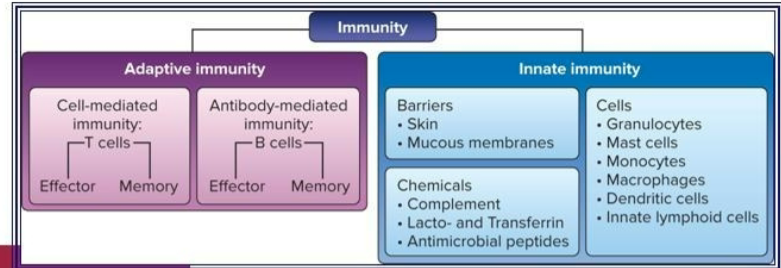
Immune System: broken down into two sections: Innate Immunity & Adaptive Immunity
- Nonspecific Defenses also called Innate Immunity: Also has two lines of defenses
- 1st Line : See Innate Immunity
- 2nd Line: See Innate immunity (2nd Line)
- Innate Immunity doesnt have a memory component
- We are BORN with the Innate immune system
- Specific Defenses also called Adaptive Immunity
- Adaptive Immunity HAS a memory component
- Aquired AFTER birth
- Bacteria require Large Amounts of Iron and Zinc
- Ex:Transferrin: found circulating in blood and tissue fluid.
- Ex: Lactoferrin: found in breast milk, and mucus
- Ex: Ferritin: produced and found in liver, red bone marrow, spleen
- Ex: Hemoglobin: protein found in red blood cells, that carry oxygen throughtout the body
- EACH Hemoglobin transports 4 oxygen molecules.
- red blood cells contain 3 million hemoglobin
____________________________________________________________________________________________________________________________________________________________________________________________________
Letter K
Kirby-Bauer Method → Disk Diffusion Tests
- determining which specific antibiotic can affect a unique bacterial species,
- See in a Disk with samples - The larger the clearing the more ponent that antibiotic is to the bacteria.
- Often used to analzying rapiding growing bacteria within 24 hours, each disk is containing a specific antibiotic, each disk is placed on growth plate which is inoculated with one specific bacterial species.
Ketoconagole- is a antifungal medication
____________________________________________________________________________________________________________________________________________________________________________________________________
Letter L
Langerhans cell (dendritic cell) 1st Line of Defense - Innate immunity
- acting function is a antigen presenting cell, it brings (through phargocytosis) - antigen, viral particle, bacteria cell, fungal cell, parasite. Once inside the cell it will nuterizalize it and secrete the destroyed particles outside the cell and also lets the body know if our body has an intruder
Lambda : icosacahedral (20 triangle slides)
Ex: Double Strand DNA Viruese
Latent (Persistent) infection: (Eukayotic Cell Infections) In two different possibilities
- Latent: Host cell is not harmed, UNLESS the viral particles are activated
- They can be part of the host for a long time
- Ex: Herpes Viruses
- If the viral particles are activated, there would be rapid multiplication and causes cell death and the viurs is released.
- Ex: Herpes Viruses
L-Carnitine - Because Red Meat has a specific amino acid called L-Carnitine, enrivched in red meat as well as
- See Dysbiosis
Lectin Pathway: Antimicrobial Proteins (3 of 3) Complement - Positive Feedback Mechanism
- is activated by bacteria, fungal cells, viruses with cell envlopes - cells mano sugars, which are not present on the surface of human cells, as they do not use those types of sugars will activate Lectin Pathway
Liposaccharide (LPS): Healthy condition there are no spaces of neighboring similar colomunar lining the digestive tract, as soon as as it is leaky the liposaccharide (LPS)from the outer membrane start breaching the mucus, leading to LPS leading to 3 outcomes
- Low level coranic inflammation
- Promoting insulin resistant
- Promoting atheroacherosis, u causing a narrowing of the diameter of blood vessels, by forming plaques, deposting neutral fatty fats, cholestoral, and calcium -clogging blood vessels
- massive molecules outer side of the gram negative bacteria. It is also an Endotoxins
- This is also a problem if giving antibiotics to a paptient and if the antiboiotcs contain LPs it will lead to septic shock and death. See Endotoxins
Lysogenic Infections: Viral Infections
- that targes both Archael Cells and Bacterial Cells
- Also Called Temperate/ Lysiogenic Lambda Phage
- It is a Bacteriophage
Lytic Infections Viral Infections
- Lytic Infections: that targets both Archael Cells and Bacterial Cells
- Target is E Coli
- - T4 - (double strand DNA) virulent(lytic) phage
- Step 1: Interaction
- Step 2:: ENtry
- Step 3: Synthesis/ Replication for 3! More steps
- Step 4: Assembly for 2 more steps
- Step 5: Exists - but it dies because it lysis
Lyzozyme: also contains reactive oxygen species (ROS)
- Part of Hydrolases: they cut by using hydrolysis (the foreign particles)
____________________________________________________________________________________________________________________________________________________________________________________________________Letter M
Macrophages Kill via Phagocytosis: Phagocytes using DIrect Attacks/ Cellular Barricade/ 2nd Line of Defense
- (Monocytes: when they travel inside the blood vessels they are called…. However as soon as they leave the blood vessels and get inot system tissues (space between blood vessels and tissue cells) they become Macrophages they become professional phagocytis they kill.
Macroldies:
- Erythromycin- used to to strep throat infection and is allergic to penicillin
- It is bacterioal static, broad spectrum, targets the 50s Subunit of the ribsoome and inhhibits protein formation/elongation
Malignant Cancer Cells, cells start to migrate and invade other locations,
- See Cytopathetic Effects (CPEs): Host cell is infected and will be transformed into a malignant cancer cell
Mefloquine - protozoan, treating malaria
Membrane Attack Complex (MAC)
- Transmembrane Pore Formation
- C5B is crucial and mobilze other proteins: C6, C7, C8, C9…. Causing Membrane Attack Complex (MAC)
- C5B + C6 +C7 –moblizies C8 and together will Moblize 10-16 C9s
- PM or Outer Membrane of Pathogens
- Good at Gram-Negative Bacterial membranes, basically poking holes in gram negative bacterial membranes,
- Not effective against Gram Postive Bacterial membranes and fungal cells, both have THICK walls
- Bacteria that can evade Complements thus avoiding Membrane Attack C`omplexes
- C5B is crucial and mobilze other proteins: C6, C7, C8, C9…. Causing Membrane Attack Complex (MAC)
- Some bacteria have Capsules that prevent complement activation
- Surface lipid-carbhogydrates prevent MAC formation
- Enzymes that digest C5a
Metabolic Antagonicts
- The difference between Metabolic and the first 2 are, the cell wall synthesis and prteoin systnehsis kills the pathogenic agaent, metabolic antagonicts they just inhibit the growth they are called static
- Static: as long as the medication is there it will prevent the growth of the atohgenic but once gone growth will grow that is the difference
- See Antibiotics, 4 Main Modes of Action
Microbiota or Microflora: meaning Resident microograngims that are living on body surfaces of the human cost. Considered as a additional \ organism system.
Microbial Signatures: Foreigness recognition before Phagocytosis
- Microbial Macromolecules with repetitive structural Pattersn
- Pathogen-Associated Molecular Patters PAMPs
- This repetitive Microbial signature is called PAMPs
- Ex of PAMPs;
- LPs (Lipo polysarrchides of the outer membrane of - gram neg bacteria)
- Peptidoglycan - in cell walls of gram positivee bacteria
- Flagellin (protein) found in flagela
- Fungal cell wall components
- Bacterial DNA
- Viral Nucelic Acids, DNA & RNA
- These PAMPs have to be recognized by the surface receptors in the human cell, TLRs
microcins, released by the resident enterobacteriaceae, they kill bacteria that is toxonimically related, part of the Direct Microbiota pathogen interaction (Interference)
=Monosaccharide : Host Metabolism,Host Homeostasis requires Microbiome
- These microorganisms will break the the complex carbohydrates into Monosaccharides that human can absorb
- Butyric Acid, they induce coloncytes, that line our stomach,to vaporize all the absorbed fuel molecular, carbon based, called Monosaccharides to CO2
____________________________________________________________________________________________________________________________________________________________________________________________________Letter N
NA - 11 variants, proteins
Narrow Sepectrum (Drugs) - only effective to limited pathgoens
- Example Pennicillum G
Negaztive- Strand RNA Viruses: Examples: Influenza
Neutrophils Phagocytes using DIrect Attacks/ Cellular Barricade/ 2nd Line of Defense
- kill via Phagocytosis, but they die soon after… The faster they eat the faster they die
Nucleic Acid Syntgesis inhibition, DNA & RNA replicaiton and trancsrption, all 3 domains of life have similar enzymes to synthesis Nucleic Acids, this causes the medication to be not effective and LOWEST therapeutic agent, not desirable
- See Antibitoics 4 Main Modes of Action
Nucleoside Reverse Transcirptaase Inhibitor- prevents the HIV viral particulaer form repicating itself, causing chain termentaiton, dirstupting the reverse transcription, RNA genome being prevented from generating its DNA product
- Mimics the nucelsoside anolauge ends the transcription provcess
- Example: AZT or zidovudine looks like a building block and tricks the production line and cloggs it
- See Anti-HIV Drugs
Nonnuceloside Reverse Transcrptiaase Inhibitor- targeting the reverse transcirptiase, prevents and binds the viral reverse transcriptase directly
- No Anaolgue just ends it right there
- See Anti-HIV Drugs
____________________________________________________________________________________________________________________________________________________________________________________________________
Letter O
Obligate Pathogens - Cannot grow in a growth plate, they require a host cell for growth. See Pathogenicity
- Example: Viruses cannot growth in growth plate need a host.
- E.Coli,
- S aurerus
- S. Epidermids
- E. Faecelis
- P. aeruginosia
____________________________________________________________________________________________________________________________________________________________________________________________________
Letter P
P-Aminobenzaic acid (PABA)- is substrate that is a substrate that is required for the synstheiss of Folic Acid - is required for the sysntehsis of Pureins- specific bases that are used as building blocks of Nucleicotide, and building blocks for DNA and RNA
- See Sulfonamids or sulfa drugs
PAMPs: the repetitive microbial signatures Recognition before Phagocytosis
- Ex of PAMPs;
- LPs (Lipo polysarrchides of the outer membrane of - gram neg bacteria)
- Peptidoglycan - in cell walls of gram positivee bacteria
- Flagellin (protein) found in flagela
- Fungal cell wall components
- Bacterial DNA
- Viral Nucelic Acids, DNA & RNA
- These PAMPs have to be recognized by the surface receptors in the human cell, TLRs (Membrane- Bound Toll-Like Receptors (TLRs)
Pathogenicity - Ability to Cause Disease
- Extracellular Pathogens - reside outside of cells, in tissues, fluids (blood, lymph,) interstituial fluid
- Intracellular Pathogens - resids physically inside the human host cell 2 ways
- Facultative Pathogens - normally they grow inside a human cell, HOWEVER they can also grow INVITRO, they can grow in a growth plate
- Example: Fungus - Histoplasma Capsulairum -growth depends on temperature, thriving in macrophages
- Obligate Pathogens - Cannot grow in a growth plate, they require a host cell for growth.
- Example: Viruses cannot growth in growth plate need a host.
Pattern-Recognition Receptors (PRRs); Recognition before Phagocytosis
- Membrane -Bound Toll-Like Receptors (TLRs)
- Found in the plasma membrane of the human host cell
- Found in membrane of organelles,
- PM & Membranous Organelles with in Macrophages & DCs
- Both STING and Toll-Like Recptors: are under the umbrella that PRRs- Pattern Recognizing Recpotorsrecognize the patterns, and also induce the production of Interferons
Parvoviruses: also a Negative strand DNA: Childhood Skin Rash
- Example single Strand (ss) DNA Viruses
Peniciilin: The very first naturally occurring antibiotic, inside they have Beta Lactam Ring, most crucial critical feature of the molecule, essential for antibioitc affect, inhibits transpeptidation, blocking cell wall formation (called Transpeptidetation, formation of cross links in peptidolycan molecules) causing leakages(destorying this structure, Penicillin will not work)
- Many bacterial acquired resistance towards penicillin, called Beta Lactamase, Pencillianse, hydrolizes the bond of Beta Lactam Ring rending Penicillin in active.
- Penicillins is only effective to bacteria that are actively syzntheizing NEW peptidolycan,
- Structure and Differences
- 6 Aminopenicillanic acid: The core of Penicillin
- And what changes is Penicillin G
Penicillin G: targets Gram-postive bacteria, low against Gram Neg; destroyed by acid and penicillinase meaning you cannot give it by mouth, and instead injected
Penicillin V: Samespectrum but more acid resistant than penicillin G, can take it by mouth
- The difference between Penciilin G and V in the structure is the ‘O’, and it is only present in ‘G’
- BOTH Penicillin G and V ARE NATURAL OCCURING PENCILLINS!!!
- BOTH Display Narrow spectrum drugs, efffective against Gram Pos pathogens
- Almost immediately after Penicillin treatment Bacteria already began becoming resistant to it, that is why there is a need for Semi synthetic Pencillin
Pencillianse: attacks the Beta Lactam Ring rending Pencilin in active, some bacteria gain this enzyme, targeting the Ring and making Pencillian useless
Phylogenetic Relationships: Genetically Related to each other
Phages or Bacteriophages : Viruses that infect bacteria they are called
Pandemics caused by viruses:
- 1918- 1919: Spanish flu - 50-100 million deaths world wide
- Caused by an :infleunza viruses called H1N1
- 2019 - COVID 19
Ingestion & DIgestion:
- Hydrolases: they cut by using hydrolysis (the foreign particles)
- Ex: Lyzozyme
- Lyzozyme: also contains reactive oxygen species (ROS)
- Ex: Phospholipase: Cuts lipids
- Ex; Ribonuclease: Cuts RNA
- Ex: Deoxyribonuclease: cuts DNA
- Ex: Protease: Cuts Protein
- Ex: of ROS = Superoxide radicals
- Ex: of ROS, Hydrogen Peroxide
- Ex: of ROS, Singlet Oxygen (very reactive)
- Ex: of ROS, Hydroxylradicals
- Ex: Lyzozyme
- Phagosome Formation
- Phagosome- Lysosome Fusion → Phagolysosome ( location of digestion of the foreign microorganism)
- Autophagy - similar to Phagocytosis
The Phases:
- Chemotaxis and adherence of microbe to phagocyte
- ngestion of microbe by phagocyte
- Formation of a phagosome with a lysosome to from a phagolysosome
- Phagolysome is where Digestion of ingested microbe by enzymes
- Formation of residual body containing indigestible material
- Discharge of waste materials
- Cells that can avoid Phagocytosis
Inhibit adherence M protein, Capsules, FLESH EATERS | S. pyogens |
Kill Phagocytes, Leukocidins | Stapho. Aureus |
Escape phagosome | Shigella of Rickettsia |
Preventing - Phagosome- Lysosome Fusion | HIV and M. Tuberculosis |
Phagocytosis: Recognition BEFORE Phagocytosis
- Microbial Signatures: See
- Pattern-Recongition Receptors (PRRs) See
Phosphatidylcholine - High Fat foods, eggs seafood contains a phospholipid called See Dysbiosis Disease Connection
Planktonic bacteria, that live freely and not with biolfims are called ←-
- Example Pseadomonas Aeroginosa will be killed by antiboditics, anitbodies, by phaogycitic white cells because they live alone and not with biolfim community, however once living inside that community they will be able to resists all.
- Examples: COVID 19 & the Zika Virus
Prions- infectious proteins
Protease: are Enzymes that destory Proteins (Protease),
- Ex: Bacteriocins in KEratinocytes, See Cutaneous Membrane
Protease Inhibitors (PIs) Blocks the activity of the HIV protease needed for the production of viral proteins needed for forming capsid. HIV cannot package itself in a viral particle.
- Example: Ritonavir
- See AntiHiv Drugs
Protein synthesis inhibitors, high theruptoic index (not as high as cell wlal inhibitors) why? Protein ysntehsis in bacteria, they use slightly use ribozomes
- See Antibiotics 4 Main Modes of Action
Propionic Acid: they are abosorbed and go to the liver shut down Hipocytes (liver cells) to produce cholesterol, i hibiting cholesterol
- Both Butyric Acid and Propionic Acid increase intestinal hormones to supress hunger
ProPhage - Lysiogenic Lambda DNA is inserted into the host cells DNA this is called
- EPV = Salk Vaccine, Famalin
- Jonas Salk: creates the polio vaccine
- Example of a polyhedral Virus
- Altnerative for Polio Virus: Sabin
- Both Polio Virus & Hepatitis A are: +RNA Viruses, icosacahedral (20 triangle slides), both no envelope
Provirus - Can insert itself into the human chromosome thus called it a
- What is the difference between the Provirus and the ProPhage?
- Answer:The Provirus : never leaves the host chromosomes, thus allowing it to be safe from the human immune system. The Prophage will leave the bacterial chromsome
- Found in HIV/AIDS
Prion Diseases - Proteinaceous Infectious Particles
- Tansmissible Spongiform: called encephalopathies
- Fatal neurodegenerative disorders caused by proteins
- Unique?: There are no genes involved yet infectious,
- Cellular Prion Protein (PrpC)
- PrPcs: scrapie-associated Prion Proteins: misfolodedproteins
- Unique: misfoldded proteins have the ability to intract with the normal folded proteins and induce normal cellular proteins folded proteins to be misfolded, found in alzhemiers patients
- PrPcs: scrapie-associated Prion Proteins: misfolodedproteins
- SYmptoms: dementia lasting months to year to death, NO EFFECTIVE treatment!
- There are 6 different prion disease and 5 of those are infecting humans
____________________________________________________________________________________________________________________________________________________________________________________________________
Letter R
reactive oxygen species (ROS)
- Ex: Phospholipase: Cuts lipids
- Ex; Ribonuclease: Cuts RNA
- Ex: Deoxyribonuclease: cuts DNA
- Ex: Protease: Cuts Protein
- Ex: of ROS = Superoxide radicals
- Ex: of ROS, Hydrogen Peroxide
- Ex: of ROS, Singlet Oxygen (very reactive)
- Ex: of ROS, Hydroxylradicals
Receptor Mediated Endocytosis: (most expensive active transport out there) Entry inside the host cell, HA: induces a very specific transport mechanisms called, the
- Receptive Meditated Endocytosis: one of the most expensive active transport mechanisms at the disposal of the human cell, transporting a VIP, specifically insulin at the cost of ahuman cell.Exogenous Antigens: Class II MHC Surface Glycoproteins: on the surface of Antigen-Presenting Cells (APCs)
- Small Peptides are Generated by Proteases
- Small Peptides called Exogenous Antigens
- Becuase these Antigens came from outside of the APCs, they are brought in by the mechanism Receptive Mediated Endocytosis, the will tag the intruders and alrt the immune system that we have an infection.
- Small Peptides called Exogenous Antigens
- Ex: Cutaneous Membrane the that profides humans benefits is the staphocococus epidermidermis, an essential compeontent for healthy skin
- S. Epidermidis forms 2 functions, and also produce and release short chain fatty acids (SCFAs) that bind to Toll-Like Receptor 2 and Kertinocytes
Modulate, Keratinocytes gene expression and releases Antimicrobial Peptids (AMPs) they limit inflammation and infections & also promote wound healing
Bacterial interference, AMPs - Bacteriocins, are Enzymes that destory Proteins (Protease), they degrade adhesions,
- they are required by S. Aureus to bind to the host cells, they are pathogenic. The S. Epidermidis is preventing the same genus but different species form colonizing and infecting the human skin. By degrading/adhesions the surface protein that is used by S. Epidermidis the S. Aureus can start the
- Interference molecules they disrupt and derail quorum sensing, molecules released by microorganisms living in a community, disrupting can cause disrupt how they survive.
- S. Epidermidis can inhibit the growth of a nonpathogeinc agent, Cutibacterium Acnes, this species caused Acne Vulgaris skin condition
- Microbial Antagonism, also called Resident Microbes: See Innate Immunity
Retroviruses: Examples HIV
Rotaviruses: Severe Diarrhea in Children, 125,000 deaths per year!
- Example: Double Stand RNA Viruses
Reverse Transcription: it replicates and creates the double strand DNA
- It is a critical step for protein synthesis
- Reverse Transcriptase: RNA —-> DNA (CRUCIAL!)
- Rember USUALLY it is DNA —> RNA
- Not found in 3 Domains of Life
- Found in HIV/AIDS` and Hepatitis B:
Rickettsia ,Lysteria, shigellaspp
- All three can polymeraize actin proteins belonging to the human host allowing them to move frome cell to cell without it being exposed to the human immune system
____________________________________________________________________________________________________________________________________________________________________________________________________
Letter S
Sabin - also called the poval polio vaccine (oPv) Alternative for Polio Virus, Trivalent
Single Strand (ss) DNA Viruses
- Example: Parvoviruses also a Negative strand DNA
SARS-CoV-2 (also called COVD 19); Positive-Strand RNA Viruses
- ITs genemo is known to be the largest RNA genome known
- Consiting of 30,000 nucleotides (30Kb)
- Glycoprotein: sugar group attached to protein, used to interact with human cells , through a specific receptor
- Spike Protein: interacts with a human receptor called Human ACE2: found in the lining within blood vessels.
- Other protein is TMPRSS2 (Transmembrane protease serine 2), it is a proteas, meaning it cuts proteins, speciallyl it cuts off the Spike Protein, cutting it off allows the envelope to come in close contact and fuse with the human cell, cell membrane. THus dumping all virus contents inside the cell
- Entry Point
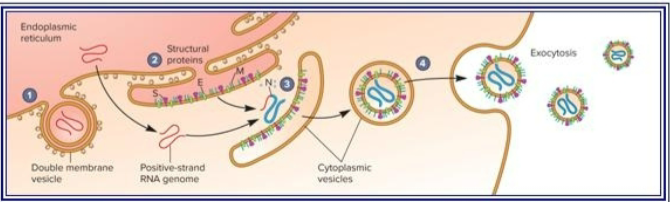
- Enveloped Virus
- Exits:via :exocytosis, similar to budding
- Example of: Positive-Strand RNA Viruses
- Life Cycle
- Remeber: +RNA —Translation—-> proteins
- -RNA is the intermediate
- Methicillin
- Aminopenicillins- effective against Gram Pos and Neg
- Ampicillin
- Amoxicillin
- Figure 12.10
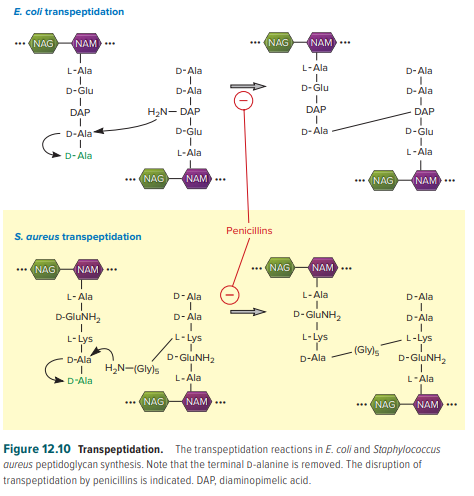
Small Pox - Has been eradicated since 1977, only success story, through vaccination programs
- Uses vaccinie virus is used to educate the human immune system, to help prepare the body for the real deal
- Ex: Double Strand DNA Viruses Largest Virus Group
Sulfonamids or Sulfa Drugs
- Figure 10,17
- P-Aminobenzaic acid (PABA)- is substrate that is a substrate that is required for the synstheiss of Folic Acid - is required for the sysntehsis of Pureins- specific bases that are used as building blocks of Nucleicotide, and building blocks for DNA and RNA
- Sulfanilamide- structure is very similar to natural substrate of the enzyme PABA, prevents PABA from binding to the enzyme, high theraptiupcital index and very successfully
- Why? So succusessful? Human cells do not produce Folic Acid must obtain via from our food/diet the patient taking the drug will not be affected only the bacteria pathogens.
- Examples: Sulfanilamide. Sulfamethoxazole, P-aminobenzoic acid → Folic Acid
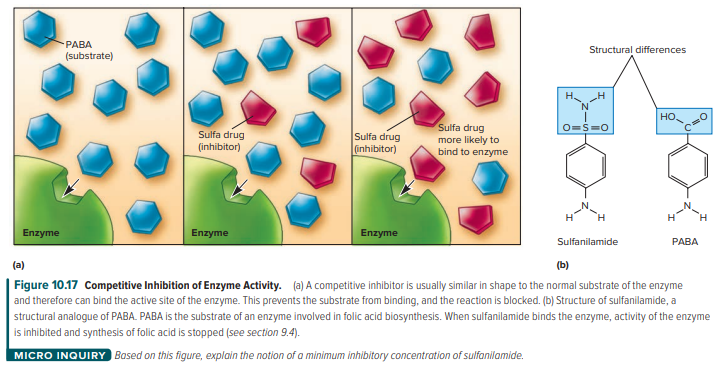
SuperAntigen toxin, they will cause the APCs to bind to the Tcells without the help of the antigen, will also induce the release of chemical messengers of rhe immune systems. Called cytokine Storm, a life threatening condition, will lead to fever massive fluid lost, drop of blood pressure, lead to shock and death,
STING receptors: They are free floating in the cytoplasm nucleus
- The difference between Toll-like receptors and STING receptors : the Toll-Like are physically located on the membranes, Sting Receprots are not on the membranes, they are free floating in the cytoplasm or nucleus
- Both STING and Toll-Like Recptors: are under the umbrella that PRRs- Pattern Recognizing Recpotorsrecognize the patterns, and also induce the production of Interferons
Streptomycin - Treamtn For both mycobacteria and Gram-Neg Bactera, Treatments
Syndrome (Disease Syndrom): a set of signs that includes both Signs and Symptoms see infection
____________________________________________________________________________________________________________________________________________________________________________________________________
Letter T
T4
- an APC (Macrobf=phage, B Cell, dendetirc cell) presents to exogenous peptide to the Helper T CElls, because the Helper T Cells has a compatible core receptor called CD4 and that intteractions activates the Helper T Cells, which then the Helper T Cells will then activate both the cellular and humeroal immunity
- Examples of Double Strand DNAs
T-Cell (also see Cellular Immunity)
- Cellular Immunity - T-Cell Development
- Helper T Cells (TH): Cytotoxic T Cells (Tc)
- Red Bone Marrow producing CLP Cells
- Thymus educating Tc Cells
- Helper T Cells (TH): Cytotoxic T Cells (Tc)
- Presentation to T Helper Cells + Clonal Selection LOCATED/DONE IN THE Lymph Node
- Helper T Cells or TH
- Display CD4 Surface Glycoproteins
- CD4 <-> Class II MHC
- One of the cells (CD4) will be a memory cell Or generates clones the helper T cells this is called Clonial selection
- Helper T Cells or TH
- Cytotoxic T Cells or (Tc) Antigen Presentation to Tc Cells + Clonal Selection
- Display CD8 Surface Glycoproteins instead of CD4
- Difference is the body cell, presents itself on the surface
- Bind to MHC I Proteins and when activated the T C Cells Direct attack to kill
- Activate Tc Cells
- Lethal Hit to Targets is called Cell lysis-based mechanism: released chemicals to attack to kill
- Chemicals released by T Cells
- Perforin Porformation
- Granulysin Porformation
- Granzymes Proteases ←– Apoptosis
- Lymphotoxin DNA Fragmentation also call Apoptosis
- gamma -IFNs Promotes macrophages to become even
Deadlier
- 4 types of Hypersensitivity
- Type 1, mediated by antibodes called allergies
- Type 2mediated by antibodes
- Type 3 Arthrosis, mediated by antibode
- Type 4 mediated by T Cells not humoral but cellular,
Tetracyclines - Treatment for Gram Negative, Gram Pos, and Obliqute Intercellular Parasites (Chlamydias Rickettsias)
- Bacteriostatic, taking out the Tetracylines out the bug resumes its growth, also targeting the 30s subunt, it inhibits protein synthesis
T-Helper Cells is activated and induced t0o release, interleakin 2 an important cytokine, and acts as a chemical messenger that has 3 targets: It can go back and amplify the T helper cell to produce more interleakin 2 will activate the B cells and Cytotoxic T Cells.
- B Cell is slightly different chemical messengars but the concept still applies - an APC (Macrobf=phage, B Cell, dendetirc cell) presents to exogenous peptide to the Helper T CElls, because the Helper T Cells has a compatible core receptor called CD4 and that intteractions activates the Helper T Cells, which then the Helper T Cells will then activate both the cellular and humeroal immunity
Therapeutical Agent: Microbiome as Therapeutical Agent
- Probiotics
- embracing Gut Flora why? Because there are some recurring infections/ diarrhea
- Fecal Microbiota Transplant: taking feces from a healthy human being and inject the feces in a patient suffering diarrhea, (mixed with saline) go through your nose down to your stomach or through anal. Immeiatley works in 24 hours
Thymus educating T Cells (See Cellular immunity -Cells and B- Cells.
- Thymus is a harsh teacher 90% of the T Cells (BOTH) die due to the Thymus and its two tests.
- Negative Selection: Any T-Cells either with CD4 or CD8 and they recoginze a self-antigen they will be killed. Undegoing apoptosis (kills its self) This is where the 90% killed happens
Toll -Like Receptors
- These PAMPs have to be recognized by the surface receptors in the human cell, TLRs (Membrane- Bound Toll-Like Receptors (TLRs)
- Membrane -Bound Toll-Like Receptors (TLRs)
- Found in the plasma membrane of the human host cell
- Found in membrane of organelles,
- STING receptors: They are free floating in the cytoplasm nucleus
- The difference between Toll-like receptors and STING receptors : the Toll-Like are physically located on the membranes, Sting Receprots are not on the membranes, they are free floating in the cytoplasm or nucleus
- Both STING and Toll-Like Recptors: are under the umbrella that PRRs- Pattern Recognizing Recpotorsrecognize the patterns, and also induce the production of Interferons
Toxcity of Antimicrobial Drugs
- we chemicals that can kill all 3 domains of life, however the issues is when applied to medicine we need to kill ONLY the pathogenic agent however the human cells can get killed, that is the tricky part
- Selective toxicity - ability of a medication or drug to kill or inhibit a pathogen while damaging the host as little as possible.
- Therapeutic Dose - The drug level required to treating an infection
- Toxic Dose- drug level that which the agent is too toxicfor the host
- Therapetuic index - the higher the therapeutic index the safer the medication, the relationship better or safer the chemotherapetuical agent will b in general
- Having a large therapteuic index increases the chances having medication being approved and through the market.
- Airborne Transmission See
- Direct mechanism - (1 meter or less) between the host, transmitted via Droplets visible (2mm size) and
- Example: Salvia, Mucus, or body fluid
- Indirect Mechanism
- Droplet nuclei that come from Droplets, evaporation (microscopic 1-5 Mm) can be airborne for hour and days way more than 1 meter
- Examples: Measles, Chicken poxes, Tubercules
- Dust, caring endospores, a problem in hospital
- Example: Nosocomila Infection: infections acquired in the/during hostpital care.
- Direct mechanism - (1 meter or less) between the host, transmitted via Droplets visible (2mm size) and
- Contact Tranmission
- Direct touching of the source or reservoir of the pathogen
- Example: Touching, kissing, sex, Gonorrihea STD
- Example: Oral Secretion: Herpes STD
- Example: nurisng mothers: through milk: HIV and crossing the placenta: Syphilis STD
- Indirect Contact:
- FOMiTe inanimatie objectstransferring pathogens to host
- Direct touching of the source or reservoir of the pathogen
- Vechicle Tranmssion part of FOMiTe see
- indirectly passing the pathogens
- Vector-Borne Transmission
- Vectors: living organisms that can transmitte pathogenic agents. Most vectors are arthopods , but some are also Vertebrates
- Vectors are generally healthy and not affected (ie dying) from the pathogenic agent or healthy UNTIL the transmission.
- Examples of Arthopods, insects, ticks, mits, fleas,
- Examples of Vertebrates: Dogs, cats, Skunks, Bats
- Malaria what would be the vector of Malria transmission? The specific vector?
Answer: Anopheles mosquito
- Vertical Transmission: when an unborn child acquiring and pathogen from an infected mother, babies born with infectious disease are called Congential Infections
- Examples: Gonorrihea, Syphilis, Herpes
Transpeptidation blocking cell wall formation (called Transpeptidation, formation of cross links in peptidolycan molecules) causing leakages(destorying this structure, Penicillin will not work)
Transmission & Host Entry (PII)
- ID50 versus LD50 Concepts
- Infectious Dose 50, the required number of microorganisms causing disease in 50% of the inoculated host
- Lethal Dose 50, number of pathogens killing 50% of the infected host
- Virulent: has the easistest time to infect 50% of inoculated host
- The Lower the ID50 the more virulent it is
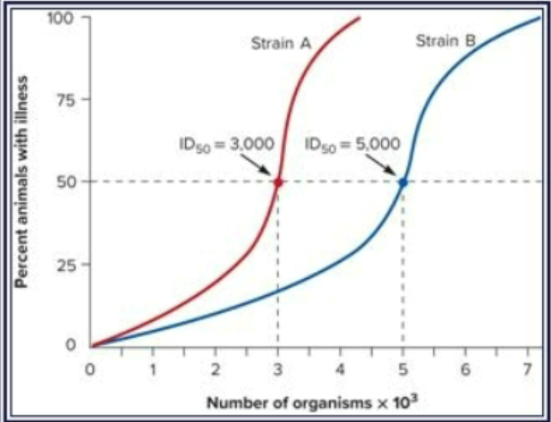
- Adhesion Entry & Adhesion establish Colonization
- Adhesion: Protein Protein INtercationbetween pathogen and host and how the pathogen first gets insid ethe host cell via receptor
- Portal of Entry, each specific species has a preferred port of entry. Both non and pathogenic.
- Example: Skin, Recpertoary system, Gastrointestenial system, uGs, Conjugtiva
- What is the link. Recurring them theme of the RS, GS, uGs, COnjugitva
- Answer: They all have mucous membrane, while the skin is only cutaneous membrane.
- What is the link. Recurring them theme of the RS, GS, uGs, COnjugitva
- Example: Skin, Recpertoary system, Gastrointestenial system, uGs, Conjugtiva
- Interactions between surface: Protein Protein interaction is called Adhesion
- Glycoportiens: Proteins with Sugar groups attached
- Proteins
Transmission & Host Entry - Invasion
- Invasion disseminates Pathogens, once the pathogen binds (via Adhhesion to the host cell it invasdes
- Infectivity:ability of orgnaisnm establish a discret forcal point of infection, the location of the body surface that infect
- Invasivness - the ability of an organ to spread to ajegent tissues once it goes inside
- Examples: To spread they can use the circulatory system (blood vessels/ vascular beds) and or lhmphatic castles to spread to tissues
- Next step is to survive See Biolfims - Surviving Host Defenses
- Invasins:used by the Salmonila genus it ruffles the cell membrane so it can get inside
- See Figure 34.5 page 722 as it shows the pathogenic agent is using actin proteins from a macophrages and polymerases actin. Lystera
- Active mechanism of Entry: they release lytic substances, can destroy subcutaneous nand mucous membranes, disrupt the carbohydrates protein complex between cells or deistrupt plasma membrane
- Passive entry, the bug gets a free frid due to a cut, Compound fracture (if the bone goes through the skin)
triglyceride, neutral fat See Host Metabolism,Ho
st Homeostasis requires Microbiome
- Acetic Acid
- Allows promotoes and releases hormone, ghrelin, appietate stimulating hormone , makes you hungry bad side of the acetic acid
TMA, trimethylamine created by L-Carnitine & Phosphatidylcholine metabolized by the the microbiota and creates TMA
- gets absorbed and going through the plasma membrane lining mucus membrane of the digestive tract and go to the liver, and the liver cells Hepatocytes will oxidize the TMAS into TMAO,
- However the problem TMAO promotes atherosclerosis
____________________________________________________________________________________________________________________________________________________________________________________________________
Letter V
vaccinie virus is used to educate the human immune system, to help prepare the body for the real deal
- Ex: Best example - Small Pox
Vanncomycin: is a drug not targeting the enzymes, targeting the substrate (N-acyl-o-Ala-D-Ala) all the other drugs target enzymeseven though it is still targeting affecting cell walls,
- Even if the bacteria has a Beta Lactam resistance Vancomycin - is still effective
- Produced by Streptomyces Orientalis
- Important for treatment of antibiotices resistant for Staphylococcal and EnteroCoccal Infections,
- Largest genome - 186,000 nucleotides
- Large Size
Ex: Double-Strand DNA Viruses
Vascular beds /vascular damage = Vascular beds = the blood vessels,
- Causing Leakage so severe that the host can not colligate its blood, Coagulopathy (continues blood flow)
- Caused by Ebola, viral hemorrhagic fever (VHF)
Vechile Transmission: See Transmission and Host Entry
Vector Borne Transmission: See Transmission and Host Entry
Vertical Transmission: See Tranmission and Host Entry
virulent(lytic) phage - T4- (double strand DNA)
- Ex: Targets E Coli
- Step 1: Interaction
- Step 2:: ENtry
- Step 3: Synthesis/ Replication for 3! More steps
- Step 4: Assembly for 2 more steps
- Step 5: Exists - but it dies because it lysis
Viruses-
- Are Obligatory Entracellular Pirasties - they NEED a HOST
- Characterized by a distinct feature: can use different types of nucleic acids
Ex: Viruses can have Double strand DNA, Single strand DNA, Double strant RNA, Single strand RNA= as their respective genome
- General Characteristics of Viruses I
- Viruses use 4 different possible possibility in storing genetic information (geneomes) see example above
- All Consists of - Nucleic Acids, Protein coat, and some also have an envelope
- But not all viruses have an envelope
- When Viruses replicate the enzymes that allow replication they lack the ability to proofread.
- The Viruses cannot correct there mistakes, thus they can have more MUTATIONS in greater amounts
- Outpacing our technology and reconizable to the human immune systems
- The Viruses cannot correct there mistakes, thus they can have more MUTATIONS in greater amounts
- Latin: meaning Poison
- Can only have 1 type of nucleic acid: (The entire virual particle contains either…) either a DNA viruses or RNA virus
- But BEVER BOTH
- They do not display plasma membrane: they have a protein coat (capsit) or envelope (however not a plasma membrane
- They do not go through binary fission
- They are so small you cannot filter them
- General Characteristics of Viruses II
- Host Range
- Display exquisite host selectivity (extreme selecctivity)
- Viruses cannot not infect other domains this where Host Range means
- General Characteristics of Viruses III
- Crossing the Host-Range Barrier
- Ex: influenza (FLU)
- Important Carrier —> Pigs can be infected by the Avians virus (H7N7) that usually is only supposed to be in brids (birds)
- Influenza Virus Genome —> contains multiple genoes 8 in total! (8 separate segments) nucleic molecules
- H7N7: also called the Avian Flu;
- Crossing the Host-Range Barrier
- Not only are does it infect birds but they can JUMP to pigs because of its surface proteins
- H & N are specific surface proteins on the virus
- MORE TO IT —>
- H3N2 virus —> found in human but they an also jump species, like pigs
- Once inside the Pig = CHAOS
- H7N7 & H3N2 once inside the pig, they can exchange genetic material
- Leading to a new genetic virus
- That New genetic virus is now combatable to infect humans
- Causing H7N7, which our immune system doesnt recognize to successfully attack our immune system
- That New genetic virus is now combatable to infect humans
- This will always lead to an EPEDEMIC OR GLOBAL PANDEMIC!!!!!
- This mechanism is called Antigenc Shift
- New Virus contains genes from the human virus that also contains the surface proteins from the avian flu, HA/NA
- This is what makes it deadly
- Proteins coming from the Avian flu are the surface proteins, while the inside are the human virus, like a trojan horse
- HA - 18 variants, proteins
- NA - 11 variants, proteins
- General Characteristics of Viruses III
- Viral Size
- Viral Sizes are determined by Electron Microscopy
- Viruses Range in Size from 20 to 1,500 nm in length
- Viruses that infect bacteria they are called Bacteriophages or Phages
- Slightly larger than ribozome (remeber its an organelle)
- Or as large as the possibility of seeing it in a microscope
- Ex: Poxvirus can be seen in a microscope
- Viral Size
- List of Virus
- Bacteriophage T4
- Rabies virus
- Bacteriophage M13
- Viroid
- Ebola Virus
- Prion
- Poliovirus
- Bacteriophages
- Adenovirus
- Rhinovirus
- Tobacco mosaic virus
- ALL are acellular pathogenic cells (acellular = not cells)
- Viral Structure I/VII
- Nucleic Acid
- Viruses can exhibit DNA as genetic Material
- Either Double Strand DNA or Single Strand DNA
- Viruses can Also exhibit RNA as Genetic Material
- Either Double Strand RNA or Single Strand RNA
- Can BE EAITHER OR linear or circular
- REMEBER: Bacteria has Circular nucleic acid structures While Eukarya has Linear
- Consists of 4,000 over 2 million nucleotides VERY LITTLE
- Viruses can exhibit DNA as genetic Material
- Nucleic Acid
- Viral Structure II/VII
- Capsid?
- Capid function - is a protective protein code, protects the nucleic acids
- Structural Units of Capsids - called - Capsomes
- A Polyhedral virus
- Viral Structure III/VII
- Envelope
- If the virus has envelope it means that it will exit the host by a mechanism called Budding
- Combination of Lipids, Proteins and Carbs
- Both the Lipds and the Carbs came From the proton motor force of the host cell
- Hover the Proteins are VIRAL PROTEINS
- It is superficial to the capsid = meaning it is outside of the capsid surrounding it
- Evelope are encoded by VIRAL GENES OR VIRAL NUCLEIC ACIDS
- Ex: Is Helical but Ebola only has a Capsid
- However, Rabies Virus is also a Helical but has both a Capsid and envolope
- Surface Proteins: called spikes that dot the entire envelope
- Ex: HA/NA from influenza these are the HA/NA
- Only influenza has these HA/NA
- Ex: HA/NA from influenza these are the HA/NA
- Viral Structure IV/VII
- General Morphology
- Helical Viruses are Rigid or Flexible Long Rods
- Cylindrical Capsid exhibits Helical Structure
- Ex: Is Helical but Ebola only has a Capsid
- Cylindrical Capsid exhibits Helical Structure
- Capsid?
However, Rabies Virus is also a Helical but has both a Capsid and envolope
- Ebola, viral hemorrhagic fever (VHF): lethal virus affecting MULTIPLE organs/cells in the human body called vascular damage = Vascular beds = the blood vessels
- Coagulopathy: Causing Leakage so severe that the host can not colligate its blood, Coagulopathy (continues blood flow)
- Ebola, viral hemorrhagic fever (VHF): lethal virus affecting MULTIPLE organs/cells in the human body called vascular damage = Vascular beds = the blood vessels
- Viral Structure V/VII
Both Polio Virus & Hepatitis A are: +RNA Viruses, icosacahedral (20 triangle slides), both no envelope
- Viral Structure VI/VII
- Viral Structure VII/VII
- Viral Structure VII/VII
- Not a Human Pathogen but worth mentioning
- All T-even bacteriophages
- T-even: T2, T4, T6 phages
- T4 targets: Ecoli
- Complex Viruses: capsids with complex symmetry
- Targeting/infecting
- Not a Human Pathogen but worth mentioning
- Viral Life Cycle → 5 steps
- Protein-Protein Interactions
- Attachment/absorbtion
- Based on Protein -Protein interactions
- Host Entry: two pathways, either
- Nucleic Acid Enters
- Or Virus Enters
- Host entry can not happen without attachment
- Host Enetry vs Departure Mechanisms
- Roles of Transmembrane Proteins
- Viral Entry Mechanisms
- Roles of Transmembrane Proteins
- Fusion, requires envelope, that contains the plasma membrane
- Endocytosis active transport,
- Endocytosis For viruses without Envelope
- Viral Exit mechanisms
- Influenze exitis the host cell virus
- Replication and Gnee Expression
- Synthesis, two ways
- Replication of nucleic acids
- Or Protein synthesis
- Assembly
- Viral nucleic acids
- Viral proteins - capsid
- Host Departure Mechanisms
- Viral particle exits the cell host
- Cell Lysis versus Budding
- Viral Infections
- Lytic Infections: that targets both Archael Cells and Bacterial Cells
- Target is E Coli
- - T4 - (double strand DNA) virulent(lytic) phage
- Step 1: Interaction
- Step 2:: ENtry
- Step 3: Synthesis/ Replication for 3! More steps
- Step 4: Assembly for 2 more steps
- Step 5: Exists - but it dies because it lysis
- Target is E Coli
- Lysogenic Infections: that targes both Archael Cells and Bacterial Cells
- Also Called Temperate/ Lysiogenic Lambda phage
- 2 Stages:
- Lytic Infections: that targets both Archael Cells and Bacterial Cells
- Lysogenic Cycle (Friendly Version): The host cell is NOT killed
- Lysiogenic Lambda DNA is inserted into the host cells DNA this is called ProPhage
- The ProPhage/ Lambda DNA that has inserted with the Host DNA will continue to Replicate thus continuing a new generation that is together with the virus and host cell
- This will either continue the replcaition of new generations or it
- Lytic Stage:(Deadlier Version) Cell death
- Eukayotic Cell Infections
- Acute cytocidal infection: Kills the cell through cell lysis
- Latent (Persistent) infection: In two different possibilities
Latent: Host cell is not harmed, UNLESS the viral particles are activated
They can be part of the host for a long time
- Ex: Herpes Viruses
- If the viral particles are activated, there would be rapid multiplication and causes cell death and the viurs is released.
Chronic: Host cell is SLOWLY releasing viral particles without cell death
Cytopathetic Effects (CPEs): Host cell is infected and will be transformed into a malignant cell. (cancer cell)
- Ex: Hepatis B Virus: Causes Liver cancer
- Viral Taxonomy
- Equivalent to Domains of Life
- Phylogenetic Relationships vs No Evolutionary Relationships
- No Evolutionary Relatoinships: Baltimore System
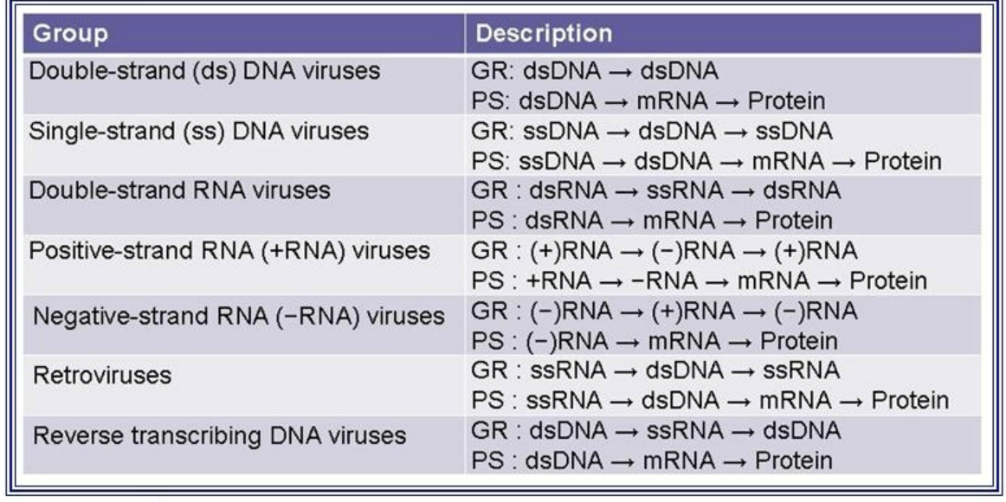
- Single Strand (ss) DNA Viruses
- Example: Parvoviruses also a Negative strand DNA
- Double Stand RNA Viruses
- Example: Rotaviruses: Severe Diarrhea in Children
- GR: Gene Replication
- PS: Protein Synthesis
- Double Strand (ds) DNA Viruses GR &PS are similar to cells of the 3 domains of life(see chart at Viral taxonomy)
- Single Strand (ss) DNA Viruses
Ex: Double-Strand DNA Viruses
viral particle
- Double Strand (ds) DNA Viruses: Means you have BOTH the Coding and Noncoding DNA —> Transcription —-> Translation (Both Transciption and translation called Gene Expression)
- This means the Viral DNA the protein and through ASSEMBLY you get the
- Largest genome - 186,000 nucleotides
- Large Size
Ex: Double-Strand DNA Viruses
____________________________________________________________________________________________________________________________________________________________________________________________________
Letter Z
Zika Virus Positive-Strand RNA Viruse
- Envelope
- Example of Positive-Strand RNA Viruse
____________________________________________________________________________________________________________________________________________________________________________________________________
Questions:
Is there a way for Viruses to create ATP on their own?
A: NO! That is why they are obligatory parasites .
Do viruses have ribosomes to carry out protein synthesis
A: NO! Again thet are obligatory
Are viruses senstive to Antibiotics
A: NO! Anitbiotcs cannot treat virtual infections, but to treat viral infections you need Interferons
What usually starts an epeidmic or world global pandemic?
A: When viruses are able to cross the Host-Range Barrier
Can Viruses exhibit (show) both RNA and DNA (nucleic acids)?
A: Hell No!
What is so Unique About Hebatits B
A: We have not been able to cultivate it in a lab culture, not possible to grow it in a culture
- The first ever vaccine using recombinant DNA technology was to produce a Hepatitis B vaccine
The difference between Marcophages& Neutraphil?
Answer: Macrohpahges can continuously kill without being affected by the processs of phagocytosis, while the neutrophil can.
Can you list relevant examples of complete antigens?
A: Bacterium, virus, Fungal Cell, Parasites, Cancer cell (used to be a healthy cell that became malignant) Transplanted cell
What would be a specific Eukaroytic parasite in the context of complete antigens?
A: Plasmodium, Trypanosoma cruzi, Leishmania, Toxoplasma gondii, Giardia Lamblia
What are Allergies?
A: The bodies way of reacting to a Hapten/Incomplete Immune System
What are the differences between Allergen and Allergies?
A: Allergies- The bodies way of reacting to a Hapten/Incomplete Immune System, Allergen - Symptom free.
What is the difference between B Cell and T Cell immunity?
A: B Cells are Humoral Immunity, while T cells are cellular response
How do we explain Antibody diversity
A: 22,000 genes —> generate 10^13 unique antigens
A: 4 ways to explain/ generate diversity
- The first 3 mechanisms occurs in the red bone marrow
- The last (4th) occurs in the lymph nodes
- Combintorial joining; rearrgening genes in the DNA level
- Cut and paste mechanism DNA not RNA
- Splicing is RNA not DNA
- Cut and paste mechanism DNA not RNA
- Adding additional New nucleotides between different section in the genes
- Terminal Deoxycnucleotidte transforce this enzyme can specifically add new nucleotides to change the sequence and provide diversity
- Splice Site Varibility, splicing DNA can change the DNA sequence permanently between the V and J regions
- Somatic Hypermutation: the only step antibody class switching occurs, where an IgN can becomes to other Ig’s
- This is possible by enzyme AID activation something something.