17. Biofuels I
Fracking changed the hydrocarbon landscape
Fracking released vast amounts of hydrocarbons for human use
Established industrial process which is getting cheaper
The United States is now the biggest global oil producer
Hydrocarbon production could be high for a long period of time
What can biofuels be produced from?
A. Sugars from plant crops
B. Lipids from plant crops and cooking oil
C. Plant cell wall material like stems, leaves etc
D. Algae
One country learnt from the 1976 oil crisis
The Brazilian government instituted the National Alcohol Program to institute a switch from gasoline to ethanol from sugar cane
Mandatory blending of 10-22% ethanol fuel with gasoline
Took about 10 years to obtain decent levels of ethanol production
Brazil has vast areas of arable, tropical land (which was once rainforest)
Established sugar cane industry
Producing ethanol from sugar cane- why it works
Sugar is very cheap- 10 cents a pound for refined sugar
Yeast naturally produces ethanol under anaerobic conditions
You can keep re-using the yeast in the next batch
Lowers cost
Producing ethanol from sugar cane- yields
Very high yields
Yield of sugar cane (Brazil) ~ 74 T/ha/year → 58 T raw cane
1 T raw cane → 740 kg juice (135 kg sucrose, 605 kg water) + 260 kg bargasse
135 kg sucrose → 70 L ethanol (therefore sugar to ethanol efficiency = 76%)
Thus 1 ha → 4000 L ethanol per year
Producing ethanol from sugar cane - the environmental costs
Inputs (all require some form of energy input)
Land (may have once been rainforest)- tillage and planting
Water
Fertiliser (energy intensive to produce)
Labour (planting and cutting)
Transport
Outputs (pollution and fertiliser run off)
Brazil still uses far more oil than biofuels
Brazil consumes nearly all the ethanol it produces
This still fulfills only a small percentage of its energy requirements
Producing ethanol from starch crops
Enzymatic Transformation to sugar (Starch (Corn)) → Fermentation → Distillation → Ethanol
Extraction (Sugar (Sugarcane)) → Fermentation
The biodiesel production system
Crushing ((Oil bearing seeds (Rape, soy, jatropha, palm)) → Esterification (Fats (vegetable oil, animal fat)) → Separation (Glycerol Biodiesel)
Synthesis of biodiesel
Neutralization of free fatty acids
The levels of free fatty acids are assayed and quantity of base required to neutralize the acid is determined.
Transesterification
An amount of base (usually NaOH or KOH) slightly in excess of that required for neutralisation is dissolved in the alcohol (methanol or ethanol). The alcohol/base is reacted with the oil at elevated temperature (typically 50oC) for several hours (4 to 8 typically).
Processing
The lower layer of the process is composed primarily of glycerol and other waste products. The upper layer composed of biodiesel and alcohol is separated away and the alcohol removed (by distillation or extraction with water - the latter requires that the product is dried). Often there are several washes with water to remove alcohol, hydroxide and soap.
Food vs fuel
Should we be using agricultural land to grow crops to produce biofuels?
Especially given the rising population
Palm oil is particularly destructive
Cutting down rainforest is not good for the environment
174 tons of carbon emissions are generated per hectare of rainforest converted to palm oil plantation (roughly equivalent to 530 people flying from Geneva to New York in economy class)
Provides livelihoods for local people (In 2017, US$18.5 billion for Indonesia; $9.7 billion for Malaysia)
Half of the EU’s palm oil imports were converted to biofuels in 2017
Bad EU policy drove deforestation
The EU mandated that 10% of transport fuel in every European country should be biofuels
Biodiesel made from Argentinian soy beans and Asian palm oil is cheaper than that made from European rape seed
Massive amounts imported
In terms of emissions, biodiesel is 80% worse than oil, palm oil is three times as worse (Transport and Environment, NGO)
The EU has stated it will phase out using palm oil in biodiesel by 2030 (Watch this space)
2nd generation biofuels
Plants predominantly consist of carbohydrates which if broken apart into sugars could be used for ethanol production
In theory the non-food parts of the plant could be used
Wheat straw
Sugar cane bagasse
Agave and other cacti
Corn stover
The complex structure of plant cell walls prevent simple conversion to sugars
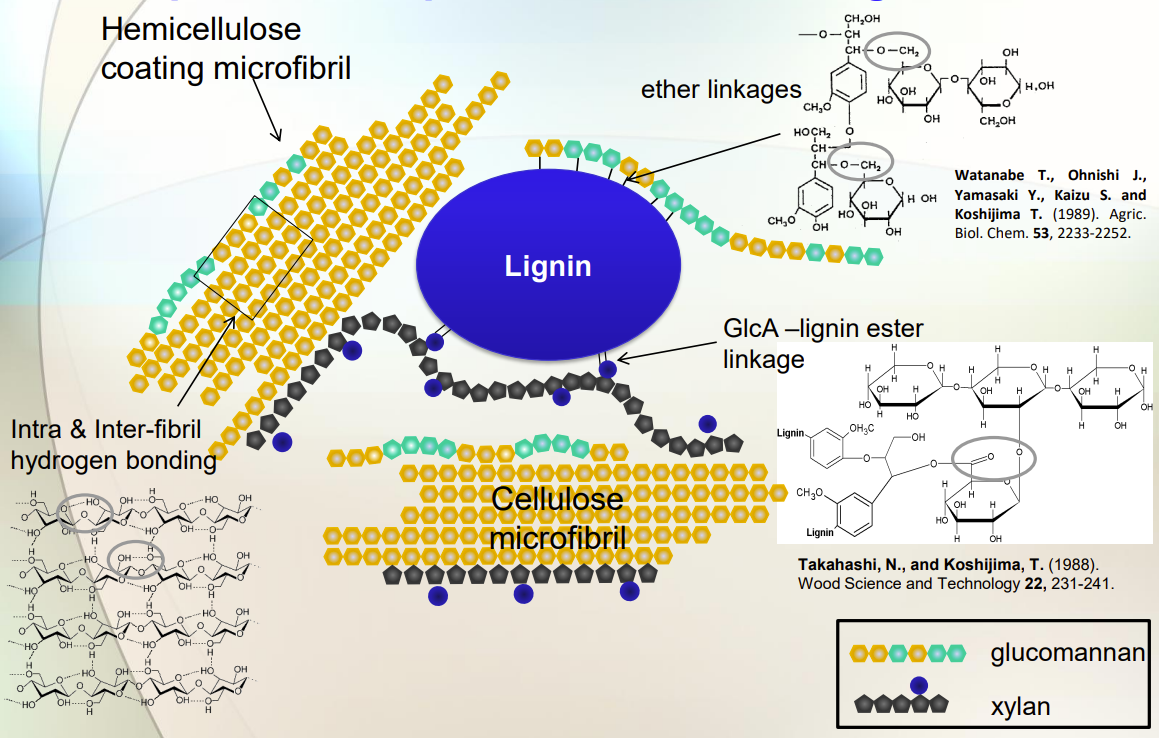
Enzymatic deconstruction of plants
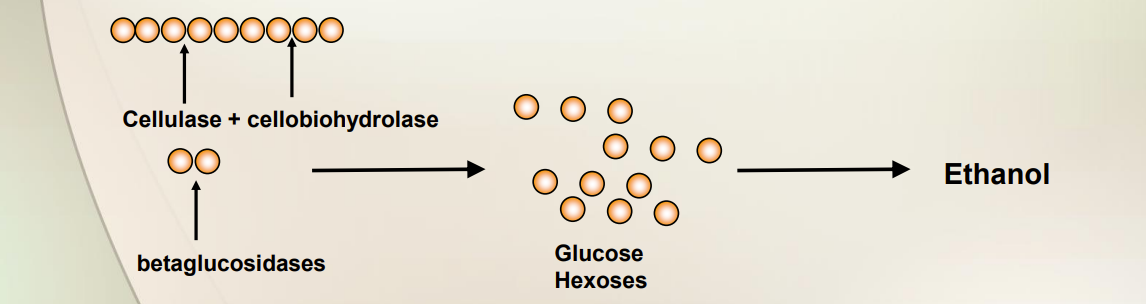
Cellulose breakdown by cellulases, cellobiohydrolases and beta-glucosidase
They are the cheapest mass produced enzyme, but still substantial cost
Opportunities for improvement of enzymes
EVERY PLANT HAS A DIFFERENT TYPE OF CELL WALL
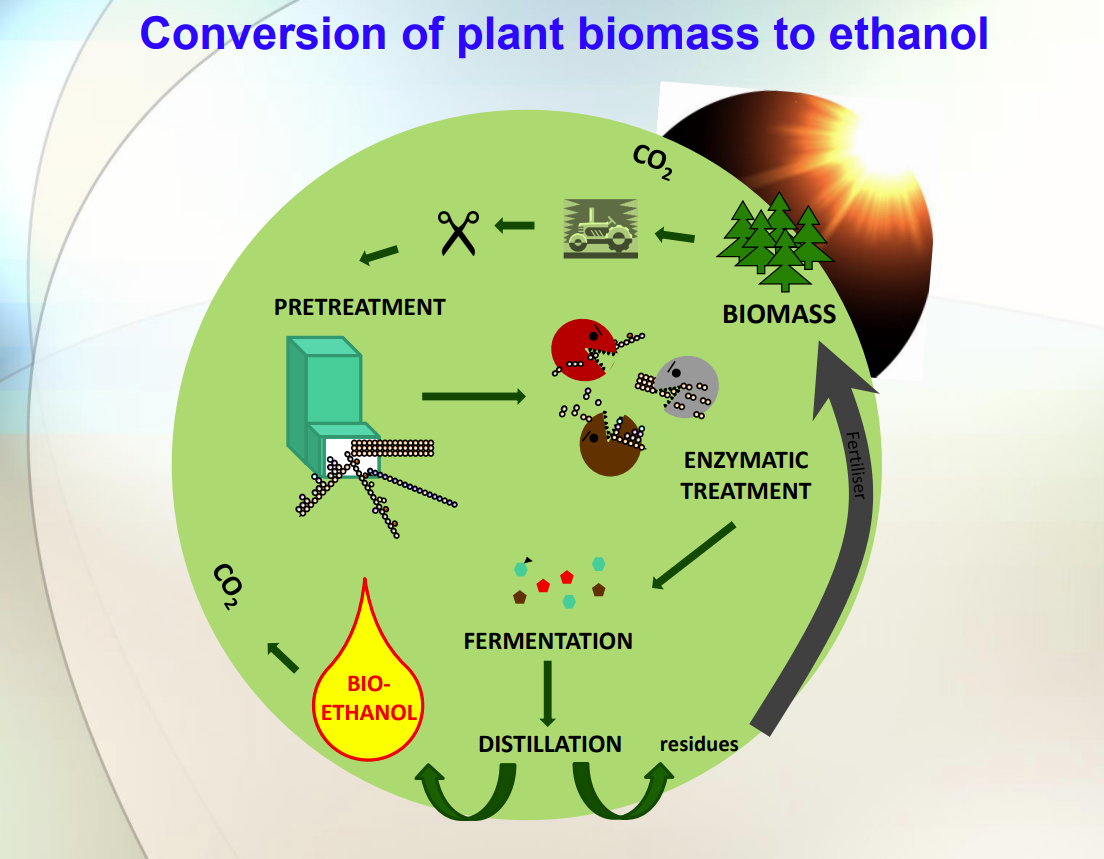
Inbicon wheat straw pilot plant, Copenhagen
Pilot plants are expensive
4 Tonnes Straw/ hour, produces 800 litres of ethanol
(New plant- 5.4 million litres of ethanol (enough for 6120 cars annually), 8250 tonnes of biofuel, 11,100 tonnes of animal feed from 30,000 tonnes of straw)
6 hours saccharification along tube
Supposedly a profitable, sustainable process that is being licensed to other companies
2 nd generation biofuels companies have had mixed success
Kior (United States)
Low yields
Shut down
Cello Energy (United States)
Fraud
Red Rock Biofuels (United States)
Still going
Dupont (United States)
Sold their Nevada plant
Being converted to make natural gas
Algae biofuels companies have all failed
Difficulties in growing high amounts of algae, dewatering it, breaking it apart, purifying the oils (all expensive or difficult to perform)
Biofuels are not a high value compound