Unit 8: Renewable Energy, Conservation, and Waste - Module 1: Renewable Energy
Module 1: Renewable Energy
Energy Conservation and Efficiency
Efficiency
The percentage of used energy in a system that does useful work.
Efficiency (%) = useful energy out / energy in * 100
Ex. In an incandescent light bulb, only 5% of the energy is converted to light. The rest is heat.
Fluorescent lights are about 22% efficient
LEDs are about 85% efficient
What is LED lighting?
Transportation
The internal combustion engine (gasoline car) is only 10% - 15% efficient.
Cogeneration
The production of two useful forms of energy from the same fuel source.
Alternative Energies (PP)
What are Alternative Energies?
Energies that are not fossil fuels. Most are renewable.
Nuclear is NOT renewable but IS an alternative
The following are renewable: hydropower, solar, wind, geothermal, biomass, tidal, and wave.
About 14% of today’s energy in the U.S. is renewable (not including nuclear).
Why did we start to research alternative energies?
Research toward alternative energies started in the 70s due to the oil embargo and are continuing today due to foreign oil dependency and environmental concerns.
Alternative Energy Overview
Hydropower
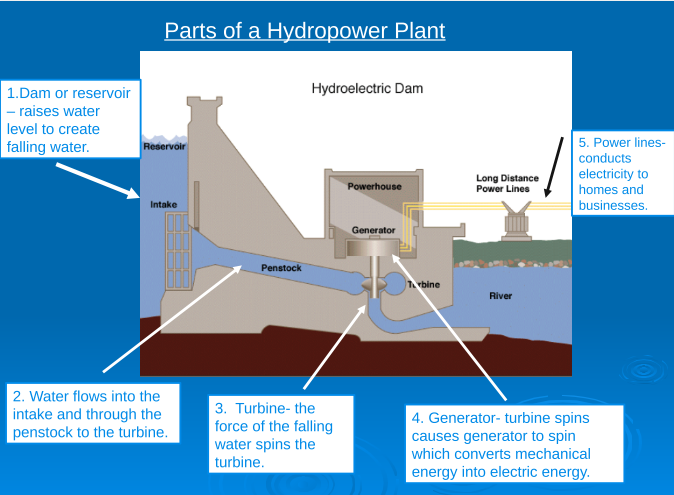
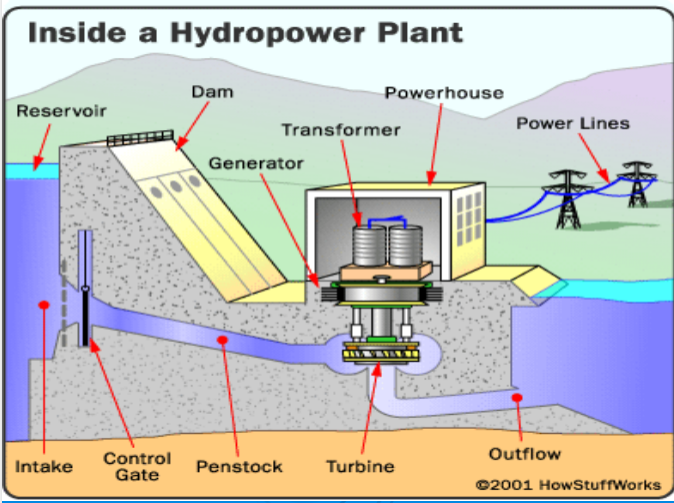
This uses the mechanical power of flowing water to generate electricity. Power depends on the amount of water (flow)and the distance it falls(head).
Accounts for 44% of U.S. renewable energies and is the largest renewable source for electricity – 7% of total.
Why can’t we increase hydroelectric usage?
Will not increase in the U.S. because most suitable sites have been used
Impacts
Renewable, nonpolluting, and reliable, BUT….
Costly to build and funds to build new dams have not been approved in more than a decade.
Dams disrupt the environment and create different habitats.
Block fish migration (fish lifts)
Dams can fill with sediment becoming useless if not maintained.
Hydropower is on the decline
Advantages
Renewable, nonpolluting, and reliable.
Dams last longer than fossil fuel plants
Very cheap once dams are created
Dams create reservoirs that provide water for drinking, agriculture, industry, and recreation.
Disadvantages
Changes the flow of a river and reduces water flow disrupting and changing habitats
Area above the dam is flooded which displaces peoples (40 to 80 million people worldwide)
Dams can fill with sediment becoming useless if not maintained.
Dams could fail and burst
Costly to build large dams, and funds to build
New dams have not been approved in more than a decade in the U.S.
Less nutrients travel downstream so the land is less fertile\
Block fish migration (fish lifts have been installed in some areas)
Wind
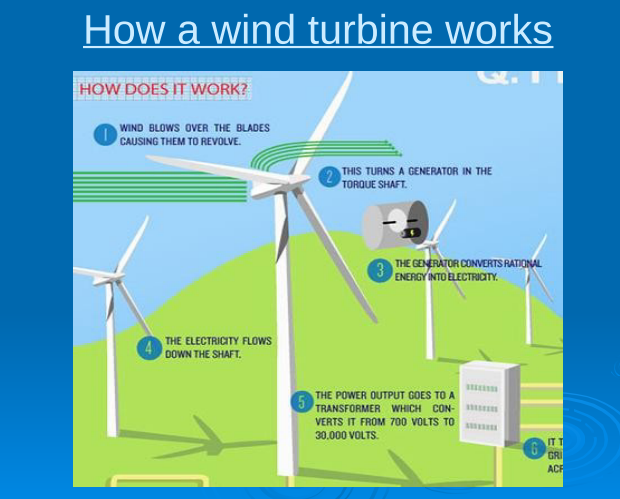
Use of wind to spin turbine to generate electricity.
Researchers are looking for ways to store energy and reduce cost.
Fastest growing energy source in the world. (costal Europe)
Electricity is almost as cheap as fossil fuel in areas with strong winds.
Most effective on coasts, mountains, and open plains
Winds farms now exist in PA, West Virginia, and New York
Accounts for 8.4% of our Electricity, and 26% of renewable energy.
Impacts
Few environmental impacts (noise, space, damage to bats and birds)
Some argue they are not aesthetically pleasing
No air pollution
Why is wind energy limited?
Due to varying winds
Advantages
No air pollution
Becoming more available in many areas (many farmers have them on their property – takes up little space)
Electricity is almost as cheap as fossil fuel in areas with consistent winds.
Most effective on coasts, mountains, and open plains but now found in many areas
Could be used to make hydrogen fuel from water in the future.
Disadvantages
No way to store the energy – winds may not be constant, needs a backup system.
Difficult to transport the electricity from rural areas where there is wind, to urban centers.
Isolated incidents of damage to birds and bats.
Some noise but have become quieter with insulated designs.
Biomass
The burning of wood, agricultural wastes, sewage, algae, and processed trash. Also includes fuels made from organic matter.
Various methods are used to create fuels that can be used for heating or transportation (could possibly replace petroleum).
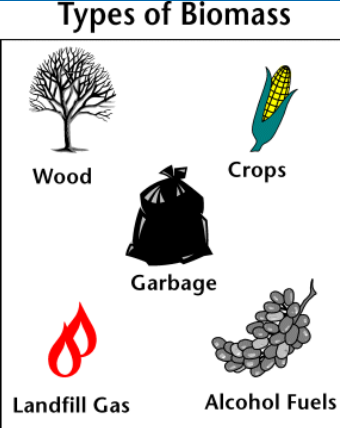
Use is increasing with new technologies.
Accounts for 40% of alternative energy in this country. Major source for Hawaii.
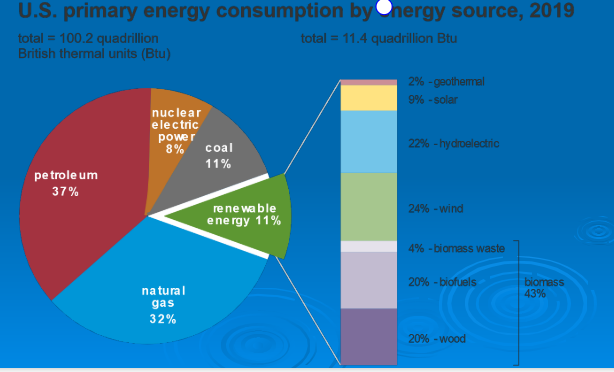
Biomass Fuels - Ethanol
Corn, Sugar, and grains can be converted through fermentation by yeast to produce ethanol. (can be blended with gasoline)
Usually put more energy into making it then you get out of the product itself!!!!
Biomass Fuels - Biodiesel
Biodiesel is a substitute for diesel engines and is made from animal fat or vegetable oils.
Energy intensive to make
Bagasse - Hawaii
Bagasse – residue from crushed sugarcane that can be burned as a fuel
Impacts
Some air pollution.
Processing of some organic wastes releases hazardous chemicals.
Responsible for forest destruction and soil erosion in rainforests. (burning of wood)
Geothermal
Uses the natural heat (dry heat, steam, or hot rock)tapped in the earth to heat homes or produce electricity
Power plants must be near the source because too much energy is lost during transportation.
Only Hawaii, Nevada, Utah, and California have the potential
Accounts for 6% of our renewable energy.
What are the effects of Geothermal?
It is limited to certain areas. Must be tectonically active (near plate boundaries)
Nothing is burned so there is limited air pollution.
Harmful gases can sometimes be vented with heat and land surfaces may collapse.
Tidal
Converts the mechanical energy from ocean tides to electricity.
Limited to coastal regions and therefore will never be a major energy source in this country. (Canada, China, and France)
Wave
Waves force water up a large tower pushing the air up over a turbine to generate electricity. (Norway)
Ocean Thermal Energy Conversion (OTCE)
This uses the temperature different between surface water and deep water to generate electricity.
Warm seawater passes through a warm-side heat exchanger (called an evaporator), which heats up the working fluid (ammonia) until it boils and becomes high-pressure vapor.
Solar
2 Types of Solar Heating Systems
Passive
Passive Solar Heating
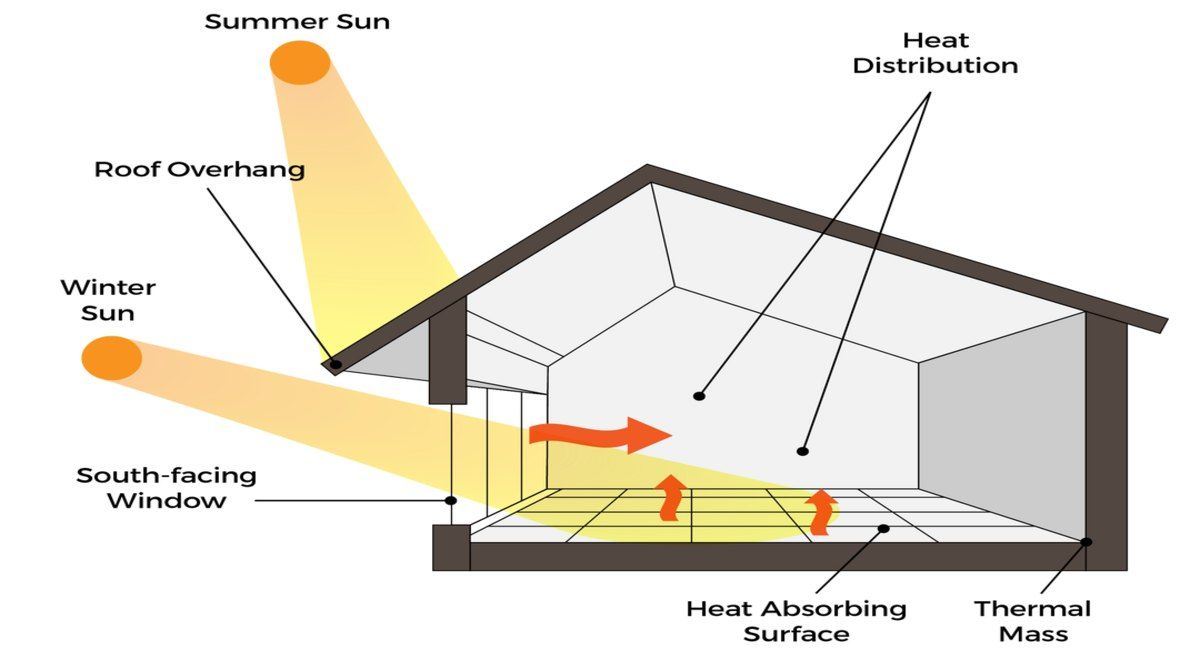
Uses an architectural design which enhances the absorption of solar energy without mechanical power
Is used to reduce heating costs but must have a backup system.
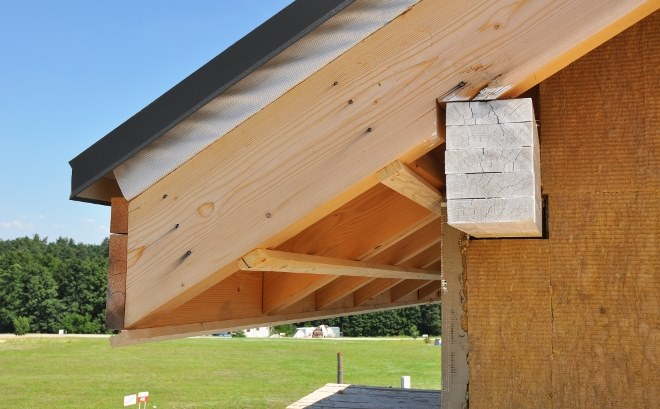
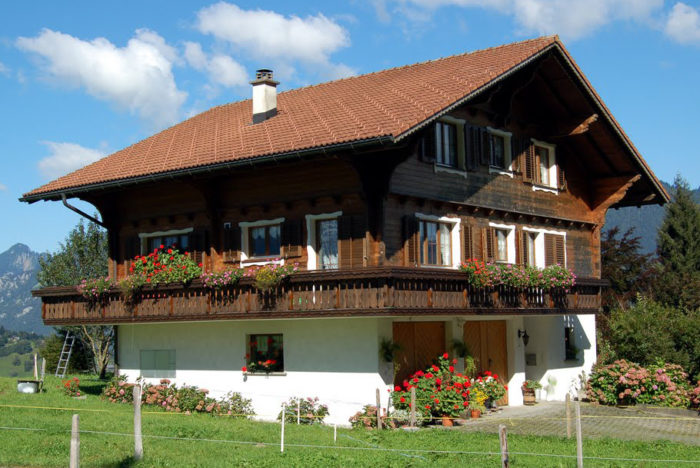
Uses roof overhangs to shade windows in the summer, and in winter allows sunlight to penetrate into a room.
Uses building materials that absorb heat energy
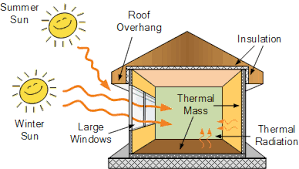
Passive Solar System
Overhanging Roof
Active
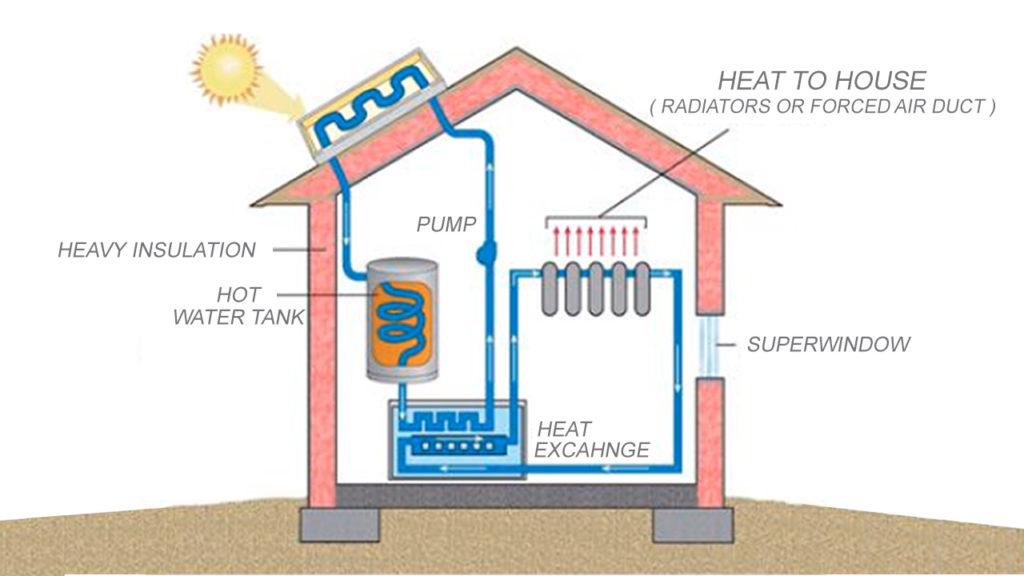
Active Solar Heating
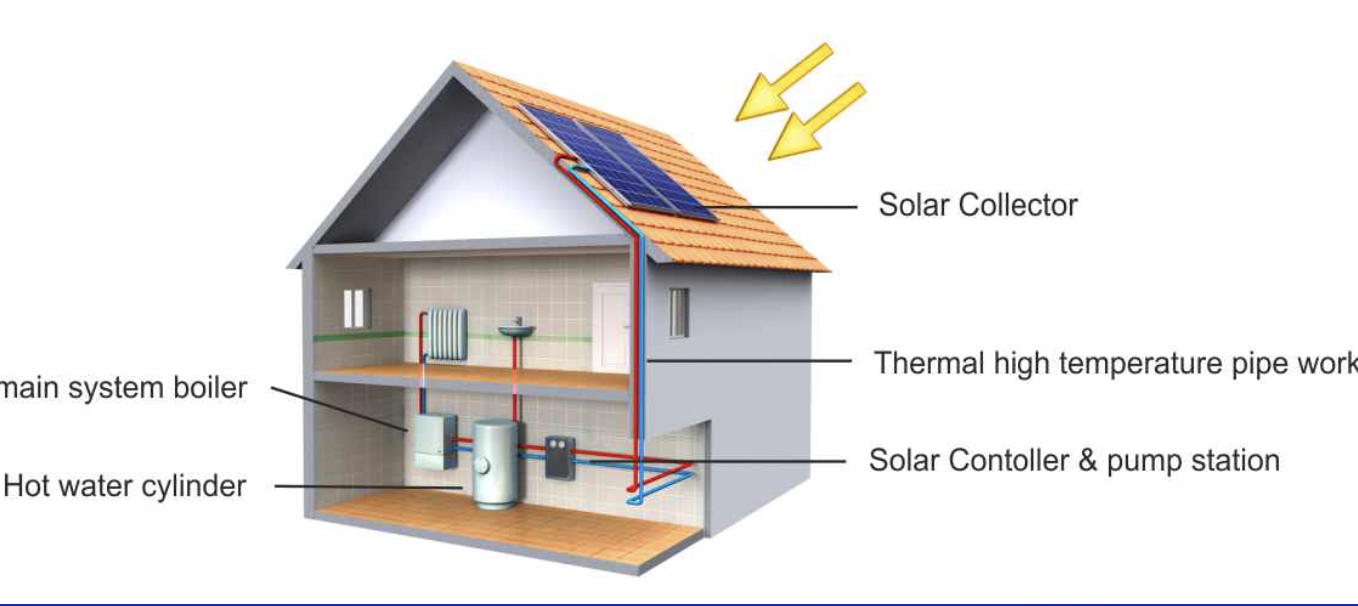
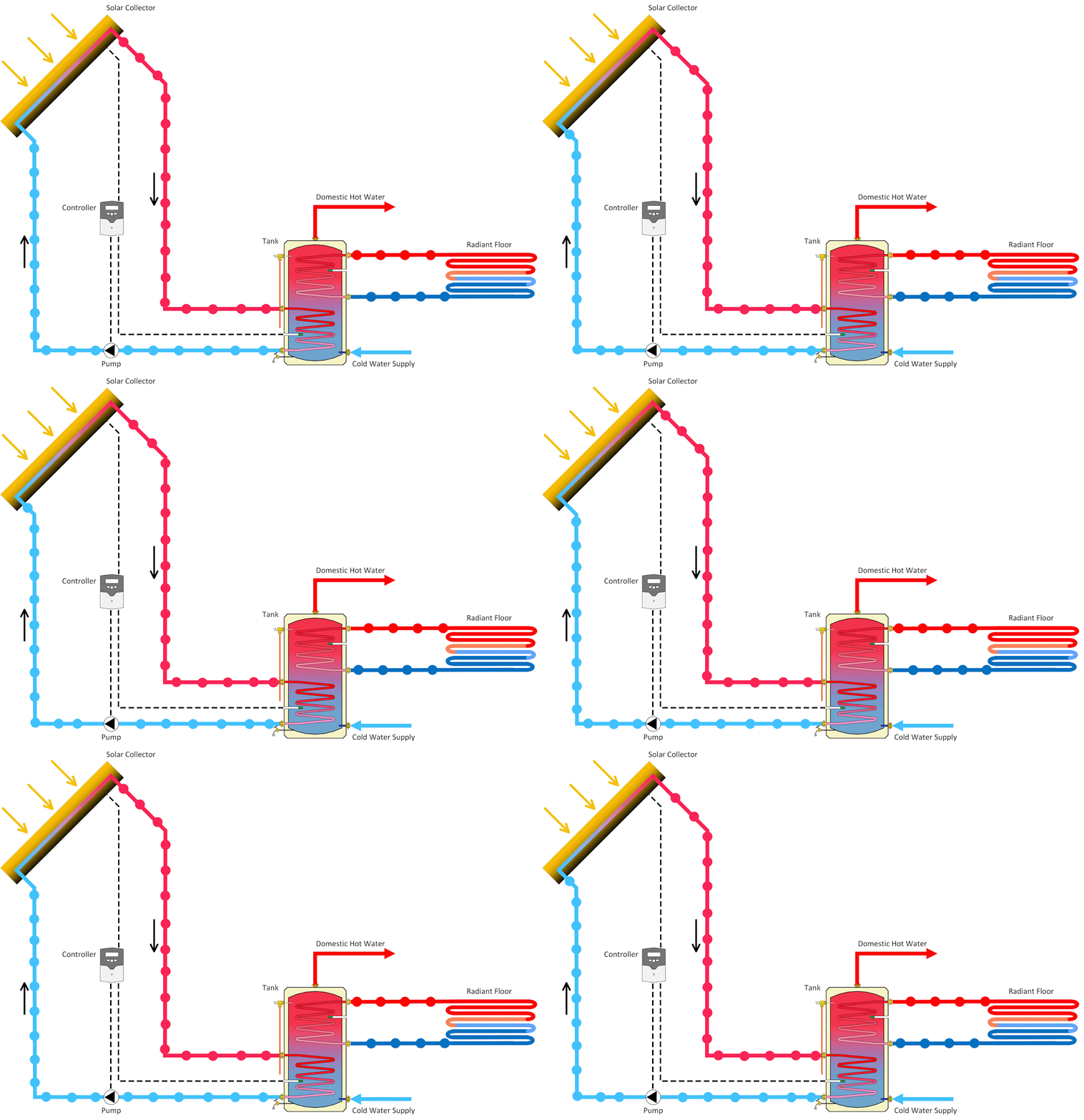
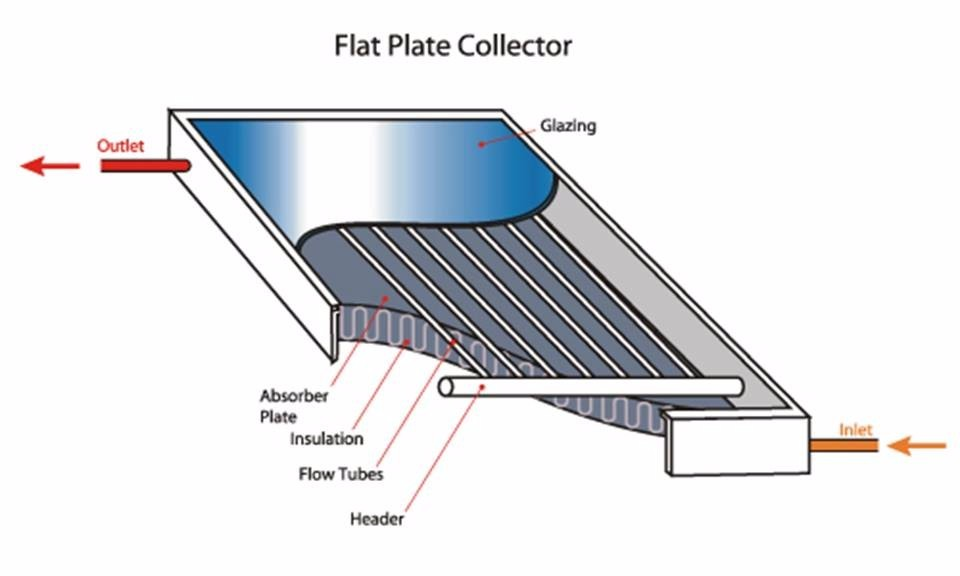
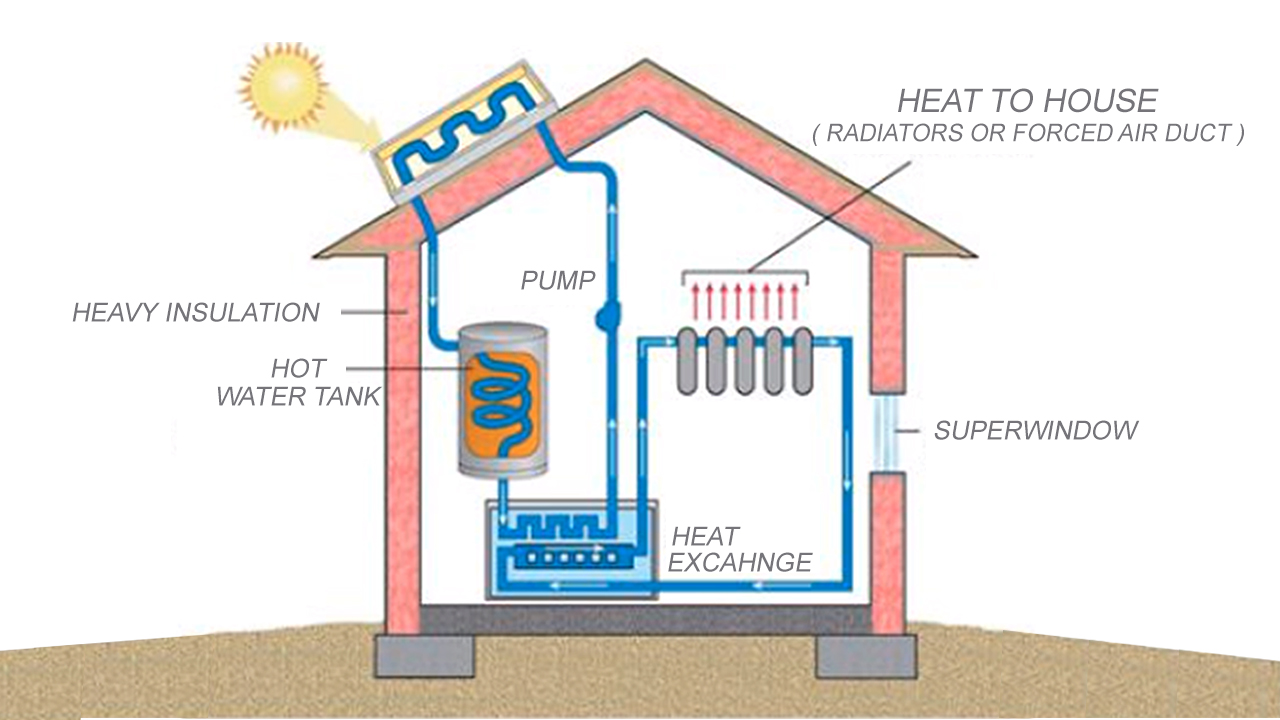
Requires mechanical energy through pumps and fans to move air or water carrying heat to areas where heat is stored.
Energy is collected in a flat plate collector
They have been used in to heat homes but also solar water heaters, solar pool heaters, and space heating systems
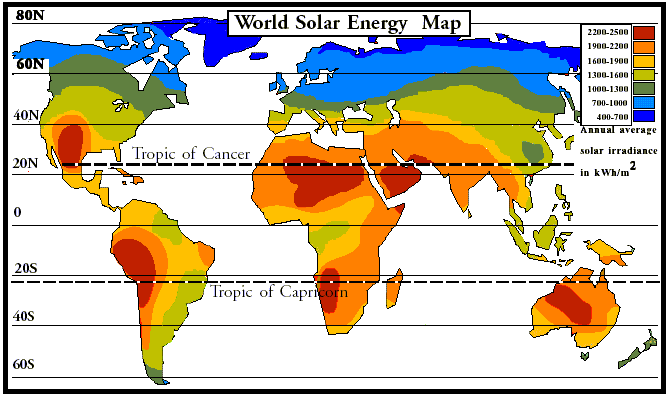
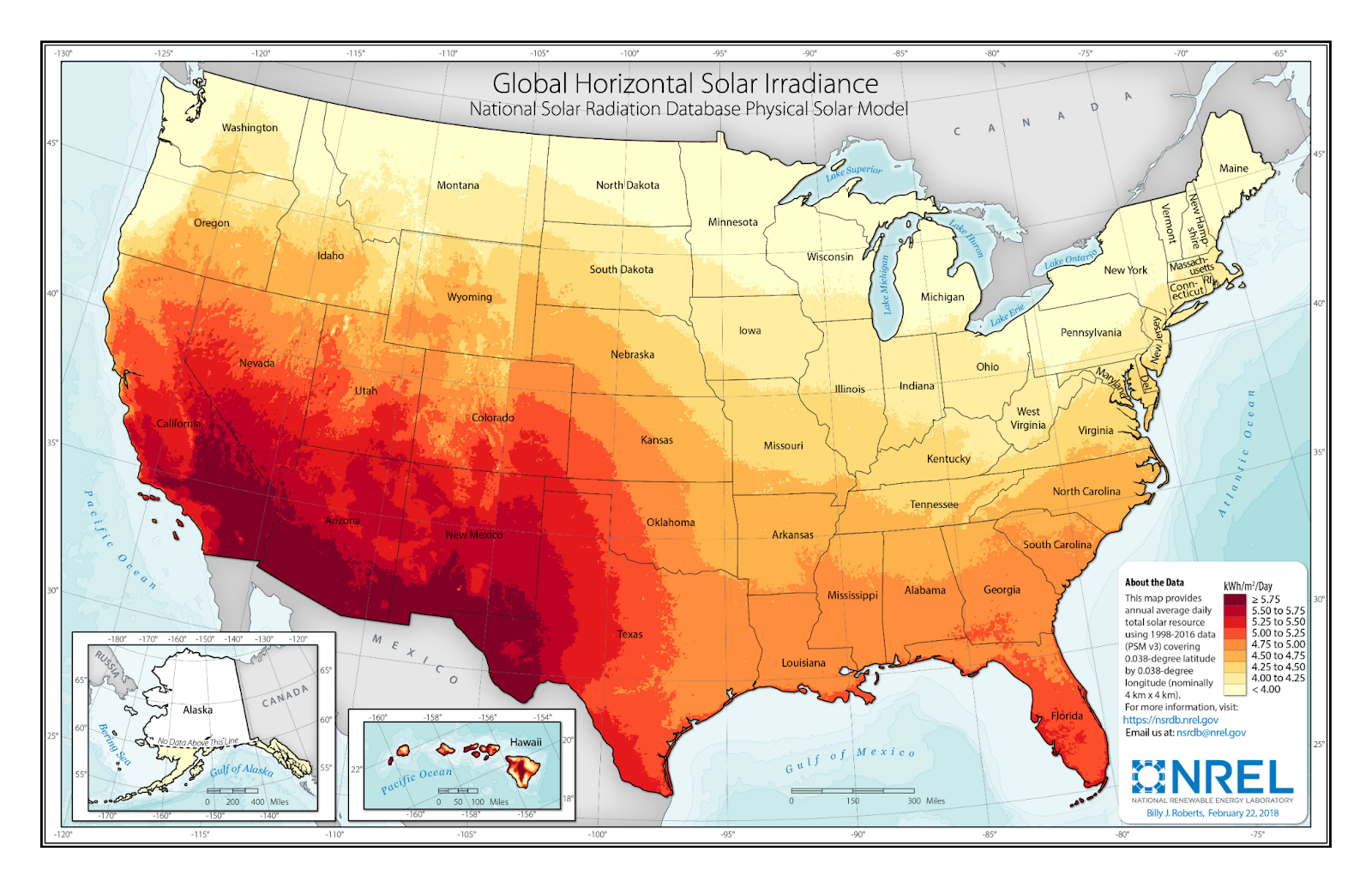
Solar irradiance varies depending on area
Solar Electric Energy
Two types
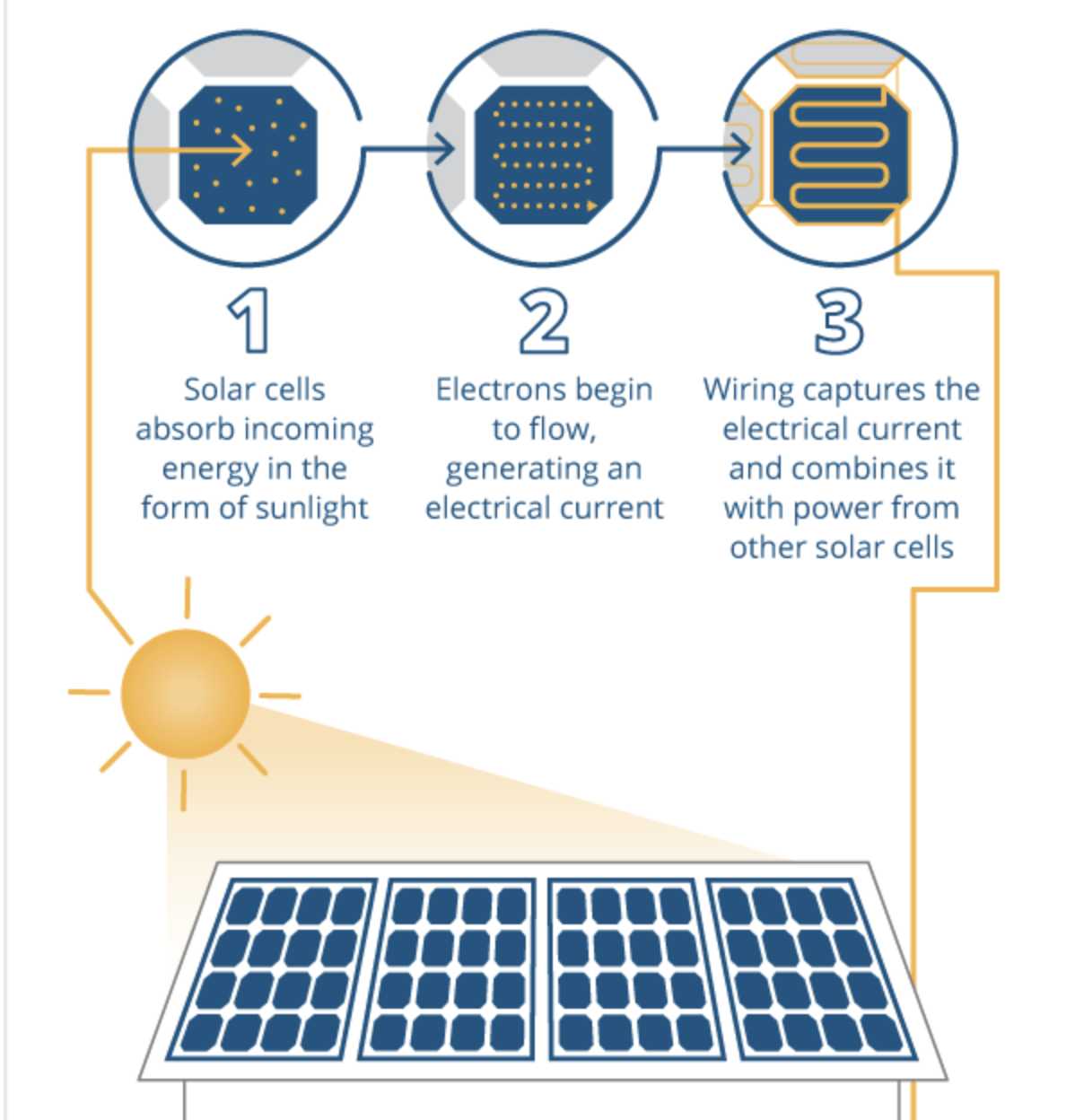
Photovoltaic cells
Considered an active system
A device made of silicon cells which changes sunlight directly to electricity through the release of electrons.
Many uses (calculators, wristwatches, appliances, satellites, space shuttles, and some road signs.)
Expanding globally
Have been used on the rooftops of buildings
Concentrated solar power
Concentrating Solar Power (CSP) Technology
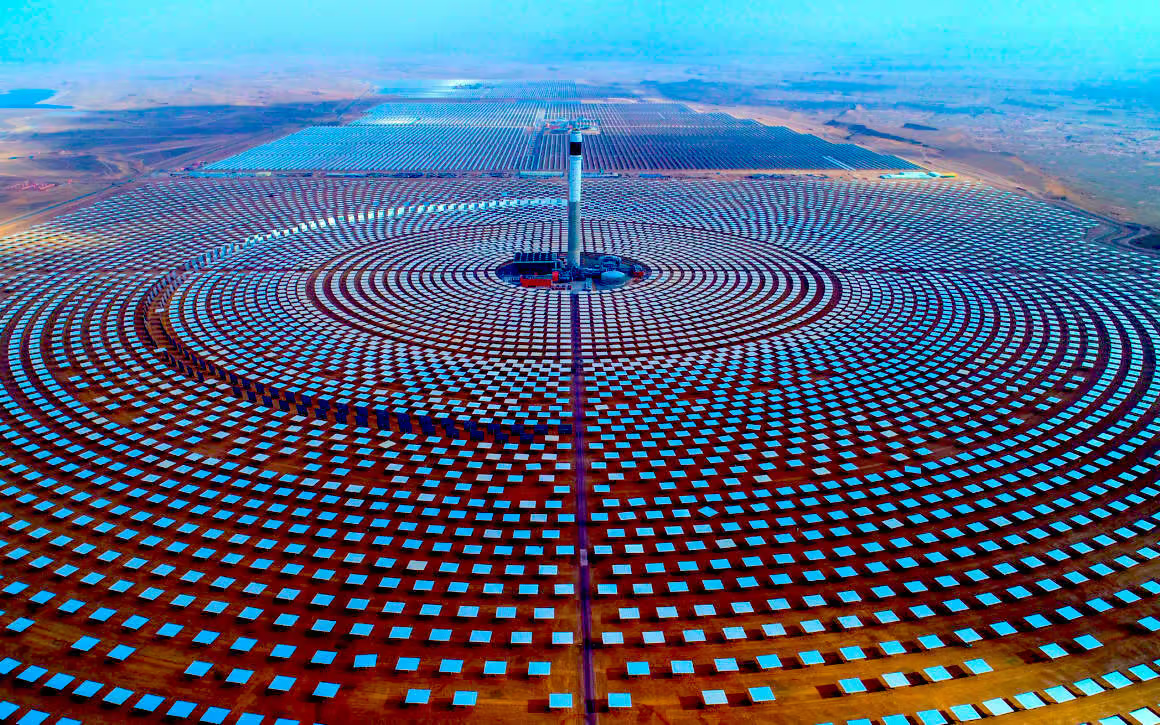
Uses various systems to collect solar energy. This is done at a large scale (power plant level). Also considered an active system.
Converts the sun’s energy into heat which is then used to generate steam to make electricity - power plants.
There are three types of CSP technologies: trough, dish/engine, power tower
CSP - Parabolic Trough
Power plants use a curved trough which reflects the direct solar radiation onto a receiver (also called absorber or collector) running along the trough, above the reflectors
CSP - Dish Design
A dish system uses a large, reflective, parabolic dish (similar in shape to satellite television dish).
It focuses all the sunlight that strikes the dish up onto a single point above the dish, where a receiver captures the heat and transforms it into a useful form.
CSP - Power Tower
Use an array of flat, moveable mirrors (called heliostats) to focus the sun's rays upon a collector tower (the receiver).
This tower has a steam turbine to create electricity.
Solar Lighting - Fiber Optics
Parabolic collectors focus sunlight into a fiber optic system to illuminate buildings
Solar Energy Pros
No air pollution
Inexhaustible supply
Technologies are improving (especially photovoltaics)
Effective on a small scale
Excess power can be sold back to the energy companies
Solar Energy Cons
Lack of consistent sunlight in most areas\
Requires large areas to produce a lot of energy
Still too expensive to compete with fossil fuels in most cases but photovoltaic prices are dropping
Difficult to store energy, requires a battery
Hydrogen Fuel
The changing of hydrogen gas into a fuel source (gas or liquid)
Makes up most of the universe but not common on earth as a gas.
It can be made from water through electrolysis but requires energy such as electricity. It can be made through cracking of hydrocarbons like natural gas.
Hydrogen Fuel Cells
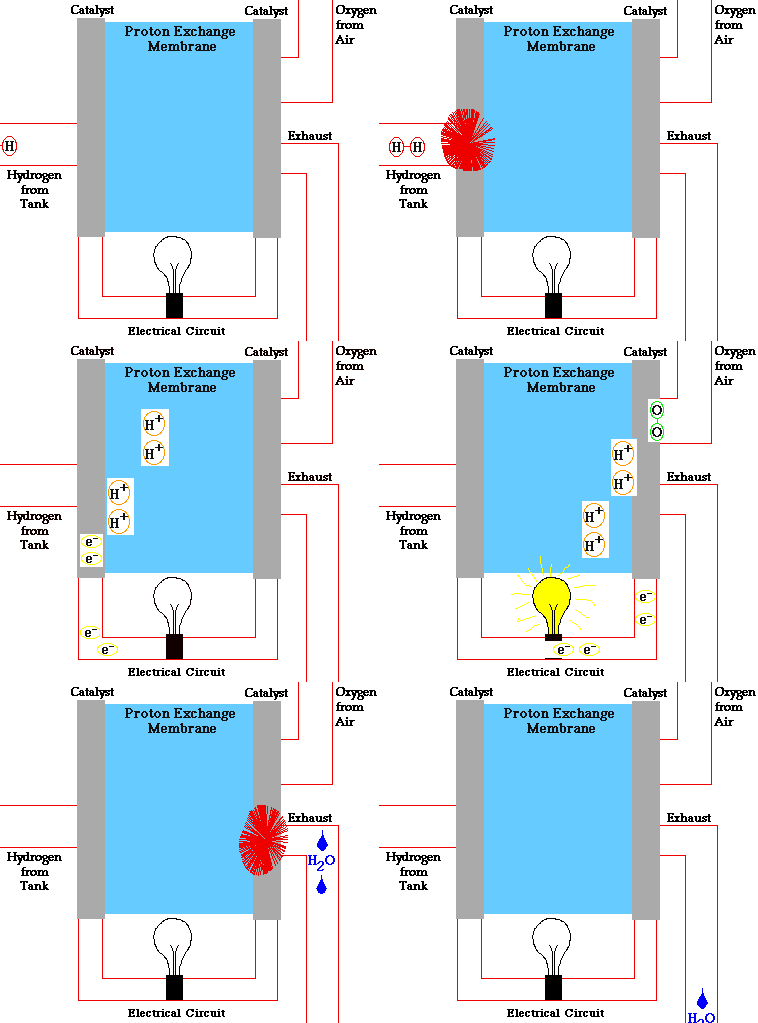
A fuel cell is a device that generates electricity by a chemical reaction
Technology that uses hydrogen fuel to produce electricity. It has been used to create hydrogen fueled cars
Advantages to Hydrogen Fuel
Pollution free.
Sources of hydrogen are very abundant
It can be stored and transported
Fuel cell technology could replace gasoline engines and our dependence on foreign oil.
Disadvantages to Hydrogen Fuel
Current methods to make hydrogen are not efficient.
Hydrogen cars are not on the market in this country due to cost and lack of fueling infrastructure.
A transition from fossil fuels to hydrogen fuel will take a lot of time and money.