GN 301 Module 5: Basics of Mendelian Genetics and Pedigrees
Basics of Mendelian Genetics and Pedigrees
Terminology Review:
- gene: segment of DNA
- allele: form of a gene
- locus/loci: where on the chromosome the gene is located
- phenotype: appearance of an individual regarding a specific traits
- genotype: alleles present in an individual for a trait
- homozygous: different alleles for the same trait
- heterozygous: same alleles for the same trait
- dominant: only one allele is required for the trait to be expressed
- recessive: two of the same alleles are required for the trait to be expressed
Mendel’s Law of Random Segregation: alleles segregate randomly into gametes; when the gametes are formed, each allele of one parent segregates randomly into the gametes, so that half of the parent’s gametes carry each allele
Basic Crosses:
- AA x AA results in AA
- aa x aa results in aa
- Aa x aa results in Aa or aa
- Aa x Aa results in AA, aa, or Aa
Pedigree Symbols
◻️= male. ⚪= female. 🔶= sex unknown
Individuals with a specific trait are shaded: ◼️⚫, etc
phenotype unknown=

deceased=

marriage bar=

sibling bar=
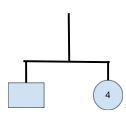
progeny=
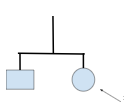
fraternal twins=
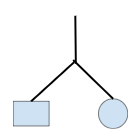
identical twins=
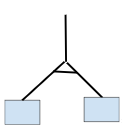
consanguineous union (related individuals marry)=

# of siblings with the same phenotype and gender=
Autosomal Locus Practice Pedigree
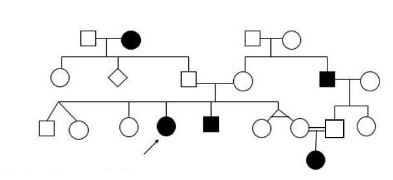
- Is the shaded trait dominant or recessive?
- recessive
- How do you know?
- since it skips generations
- Which individual is the proband?
- III-4
- Which individuals are identical twins?
- III-6 and III-7
- Which two related individuals mated?
- III-7 and III-8
- What is the probability that III-3 is heterozygous?
- 50%
- What is the probability that the next child of a mating between III-7 x III-8 will be affected by this trait?:
- 25%
Practice Problem – Draw a Pedigree
Joe has blue hair. Several other individuals in Joe’s family have blue hair. Help Joe construct a pedigree to determine the mode of inheritance of blue hair in his family. \n \n Joe is the oldest child in his family. He has 3 younger sisters, but only his youngest sister has blue hair. Joe’s mother and maternal grandmother have blue hair. His maternal grandfather does not have blue hair. Although Joe’s father does not have blue hair, both of his father’s parents have blue hair
- Draw the pedigree
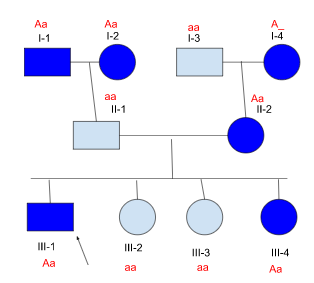
- Determine if blue hair is dominant or recessive. Give genotypes where possible:
- Blue hair is dominant. This is because in order for two people with blue hair to have a child without blue hair, the parents must be heterozygous dominant for blue hair. If blue hair was recessive, the parents would have had the genotype aa and couldn’t have had a child without blue hair because they wouldn’t have had a dominant allele. Therefore, blue hair must be dominant.
- If Joe and his oldest sister marry, what is the probability that their first child will have normal hair?
- Aa x Aa = 50% chance for blue hair
Two Loci and Independent Assortment and Branch Diagrams
Sally’s Green Teeth Example
Sally has green teeth. Her mother also has green teeth. Sally’s paternal grandfather has green teeth, but none of Sally’s other grandparents have green teeth. Sally is younger than her identical twin Suzy by 10 minutes. Sally also has two younger brothers with normal teeth.
- Draw the pedigree for Sally’s family. Number each individual in the pedigree and indicate Sally as the proband.
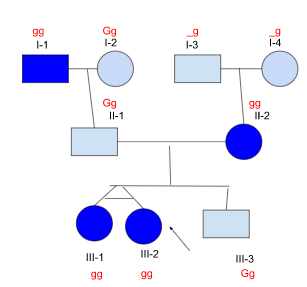
- Is the green teeth allele dominant or recessive?
- Recessive, because an individual with green teeth and an individual without produced a heterozygous dominant individual without green teeth.
- Label the genotypes in the pedigree using G and g to represent the alleles. Use a capital letter for the dominant allele.