Pathology wks 4 Mimdterm
Week 4 Pain
1. Define pain and discuss pain theories.
Pain is defined as an unpleasant sensory and emotional expereince associated with actual or potential tissue damage or described in terms of such damage
Pain is a phenomenon that is difficult to measure:
It is a protective ( the body sends signals to protect itself) complex phenomenon made up of changing interactions between the physical systems, cognitive systems, spiritual systems, emotioal factors and environmental factors. These factors all impact pain and are everchanging.
Theories to explain the phenomenon of pain:
Gate Control Theory:
Pain is modulated (increased, decreased, or regulated) by a “gate” in our neurological system. —> a gate in the cells of the substantia gelatinosa in the spinal cord
Different fibres in the gate of the cells transmit pain signals differently
Large fibres (myelinated (speeds up transmission) A-delta fibres transmits pain signals much faster due to it being myelinated as compared to unmyelinated C fibers.
These fibers respond to broad range of painful stimuli such as mechanical stimuli (eg finger is crushed in door), thermal stimuli (frostbite, heat), or chemical stimuli (contact with acid)
Such stimuli are knwn as nociceptive transmissions, these transmission open the gate located in the substanntia gelitonisa (spinal cord)
Conversely A-beta fibers transmit different kinds of stimuli such as touch.
Touch is considered a nonnociceptive transmission. When touch is transmitted over A-beta fibers it causes the gate to “close” or partially close.
When touch and pain stimuli compete, the painful nociceptive opens the gate and the nonnociceptive arrives at the same time which closes the pain gate.
When gates are closed pain is less, when gates are open pain is more because it allows pain to be perceived
Nociceptive transmission opens the gate, nonnociceptive transmission closes the gate
2. Explain the processes of transduction, transmission, perception and modulation of pain
Neuroanatomy of pain
Three Systems necessary for pain to be expereienced:
Afferent pathways:
Afferent nerve pathways are pathways that move away from the stimulus, and to the brain
Begins in the peripheral nervous system (PNS) and travel to the spinal gate in the dorsal horn and then ascend to higher centers in the central nervous system (ascending pathway)
Interpretive centers:
Are located in the brainstem, midbrain, diencephalon (thalamus, epithalamus, hypothalamus)
Efferent Pathways (out of the brain back to the stimulus)
Motor pathways thar Descend from the CNS to the the dorsal horn of the spinal cord. (descending pathway)
Nociception (stimulation of nerve ending, process of pain through a normally functioning nervous system) or the processing of pain involves four phases:
Transduction: Occurs when tissu damage gets converted to electrophysiologic activity (electrical impulse)
Transmission: Conduction of pain impulses travelling along the A and C fibers into the dorsal horn of the spinal cord and eventually to the reticular formation, hypothalamus, thalamus, and limbic system.
Perception: the conscious awareness of pain (reticular and limbic systems and the cerebral cortex) sensory discriminating system, affective motivational system, cognitive evaluative system
Modulation: process of increasing or decreasing transmission of pain signals throughout nervous system
These four unique phases allow for multiple targets for pharmacological intervention.
3. Compare and contrast myelinated and unmyelinated pain fibres in the transmission of pain
Primary-order neurons: nociceptors
Stimulated by mechanical injury or temprature extremes
-Myelinated Alfa-delta fibers: transmission is fast and causes reflex withdrawal of affected body part from simulus before pain sensation is perceived. Pain sensations are sharp ,well localized (you can recognize where the pain is coming from), “fast”
-Unmyelinated C fibers (most numerous) are polymodal meaning they also respond to mechanical, thermal, and chemical nociceptors. C fibers convey dull, aching, or burning sensations. Unmyelinated = transmission is slow
-Alfa-beta fibers: Large myelinated fibers that transmit touch and vibration sensations
Secondary-order neurons:
Are interneurons (in between) in the dorsal horn of the spinal column
Are projection cells
Are ecitatory or inhibitory
Cross over the cord and either ascend or descend (afferent & efferent)
Tertiary otr Third-order neurons:
Are afferent (away from stimuli to brain via ascending pathway) neurons in the spinothalamic tract
Carry information to reticular formation, hypothalamus, thalamus, and limbic system to interpret pain location and intensity
4. Discuss transmission of pain signals in relation to the neospinothalamic and paleospinothalamic pathways, including the role of chemical mediators.
Pain receptors are activated by a hurtful stimuli (mechanical, thermal, chemical)
Chemical mediators (hydrogen, potassium, prostaglandins, leukotrienes, histamine, bradykinin, acetylcholine and serotonin) are released from injured and inflamed tissues
Stimulate nociceptors
Transmission of action potential from dorsal root ganglion to dorsal horn of spinal cord
From dorsal horn travel up the neospinothalamic (fast conduction) and paleospinothalamic (slow conduction) pathways to the thalamus where information is interpreted (hurtfulness, pain)
neospinothalamic tract (afferent nerve A fibers)- precise location, pain is sharp and stabbing
paleospinothalamic tract- (afferent nerve C fibers) diffuse, dull, aching pain and unpleasant sensations (emotional aspects) associated with chronic and visceral pain;
A-fibers: mylininated, convey cutaneous pressure and touch sensation, cold sensation, mechanical pain, and heat pain.
C-fibers: have the smallest diameter and the slowest rate of conduction. They convey warm–hot, mechanical and chemical sensation, as well as heat- and cold-induced pain sensation.
C-fiber: smallest fiber. Slow-wave pain (slower onset, longer duration) stimulated by chemical stimuli (tissue trauma, ischemia, inflammation) or persistente mechanical/thermal stimuli
This fiber thought to be behind chronic pain
IN OTHER WORDS…
How are Nociceptive Receptor Stimulated
When tissue is i injured/inflamed Diff. chemical mediators are released (ex: H+, histamine, prostaglandins, leukotrienes, bradykinin, serotonin etc)
These mediators stimulate or sensitize nociceptors, activating them
Activating them then sends action potentials from dorsal root ganglion to the dorsal horn where it splits into two pathways
Neospinothalamic
| Paleospinothalamic Tract
|
|---|
Periaqueductal gray region (PAG) a.k.a central grey area
Pathway in midbrain that when stimulated produces analgesia without change in level of consciousness (Unlike morphine)
Due to high concentration of opioid receptors located in this area, the PAG region is referred to as endogenous analgesia centre (our own little pain reliever)(endogenous opioids)
PAG receives input from CNS (cerebral cortex, hypothalamus, brain stem, reticular formation, spinal cord) and is connected to the limbic system and nucleus raphe magnus (NRM)
Axons in NRM project to dorsal horn of the spinal cord where they inhibit the transmission of pain (use neurotransmitters like serotonin)
In spinal cord, these descending pathways inhibit pain transmission
Transmission
IN OTHER WORDS
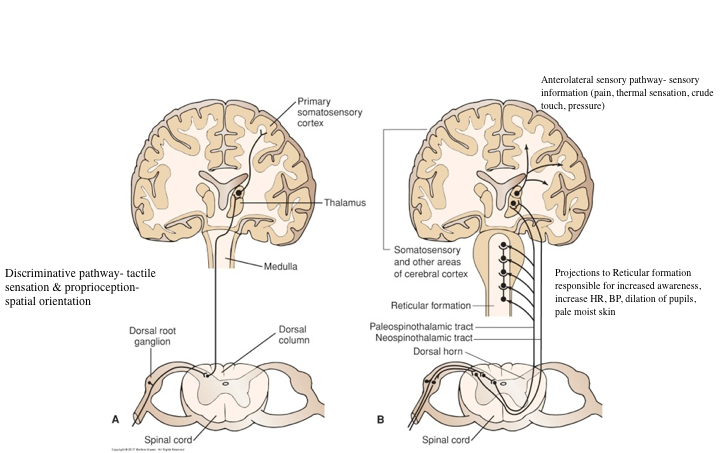
The Anterolateral Pathway.
The anterolateral pathways (anterior and lateral spinothalamic pathways) consist of bilateral, multisynaptic, slow-conducting tracts
These pathways provide for transmission of sensory information such as pain, thermal sensations, crude touch, and pressure that does not require discrete localization of signal source or ɹne discrimination of intensity.
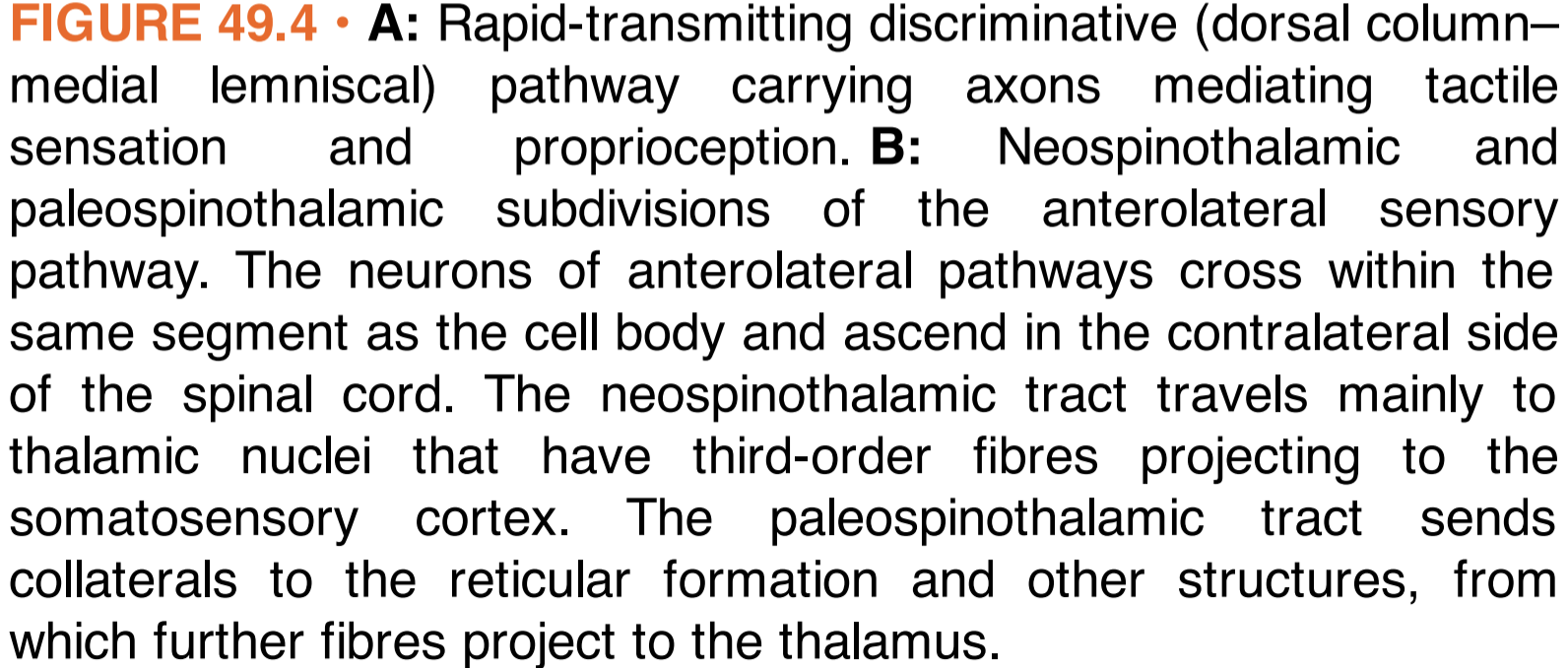
The fibers of the anterolateral pathway originate in the dorsal horns at the level of the segmental nerve, where the dorsal root neurons enter the spinal cord.
They cross in the anterior commissure, within a few segments of origin, to the opposite anterolateral pathway, where they ascend upward toward the brain.
The spinothalamic tract fibres synapse with several nuclei in the thalamus, but en route they give off numerous branches that travel to the reticular activating system of the brain stem.
These projections provide the basis for increased wakefulness or awareness after strong somatosensory stimulation and for the generalized startle reaction that occurs with sudden and intense stimuli.
They also stimulate autonomic nervous system responses, such as a rise in heart rate and blood pressure, dilation of the pupils, and the pale, moist skin that results from constriction of the cutaneous blood vessels and activation of the sweat glands.
There are two subdivisions in the anterolateral pathway: the neospinothalamic tract and the paleospinothalamic tract
The neospinothalamic tract consists of a sequence of at least three neurons with long axons. It provides for relatively fast transmission of localized, acute and sharp pain sensations to the thalamus
. The paleospinothalamic pathway consists of bilateral, multisynaptic, slow-conducing tracts that transit sensory signals such as diʃuse aching and throbbing sensations that do not require discrete localization or discrimination of ɹne gradations in intensity.
This slower-conducting pathway also projects into the intralaminar nuclei of the thalamus, which have close connections with the limbic cortical systems.
This circuitry gives touch its aʃective or emotional aspects, such as the particular unpleasantness of heavy pressure and the peculiar pleasantness of the tickling and gentle rubbing of the skin.
5. Describe the function of endogenous analgesic mechanisms as they relate to modulation of pain.
Pathways of Modulation;
Segmental Inhibition:
A way the body modulates pain
A-beta fibers(touch and vibration) are stimulated and impulses arrive at the same spinal level as A-delta(sharp localized) or C fiber impulses (dull aching, slow)
Inhibitory interneuron
Works to decrease pain transmission (e.g rubbing painful area)
Conditioned Pain Modulation:
Diffuse noxious Inhibitory Control (DNIC)
Simu;taneous pain and simultaneous inhibition
Endogenous pathway that happens to increase pain in one area and decrease pain in another
Two areas of pain your body regulates because there is a greater intensity of pain in one area as compared to the other
Expectancy related Cortical Activation
Cognitive expectations can have an affect on pain (e.g placebo)
Your cognition is able to modulate pain and change your perception of pain
Excitatory neurotransmitters: messages from tissue injury and inflammation
Inhibitory neurotransmitters: Gaba and Glycine
Endogenous (of the body) Opioids: inhibit pain impulses in spinal cord, brain, and periphery
Enkephalins - most abundant bind to specific opioid receptors
Endorphins- endogenous morphine produced in the brain
Dynorphins- very potent of all endogenous opioids, directly impede pain siganls, play a role in neuropathic pain and mood disorders
Endomorphins- very potent
Nociception/ orphanin FQ- specific opioid that induces pain but doesn’t interact with opioid receptors
6. Explain the following categories of pain:
Clinical Description of Pain:
Nociceptive pain: processing of pain through a normally functioning nervous system
Pain with normal tissue injury from a known cause
-Somatic (can be deep or superficial, in muscles, tendons, skeletal structures)
Can be described as aching, throbbing or cramping
-Visceral (in internal organs feels like deep ache or pressure)
Non-nociceptive pain: pain from a disordered nervous system
Neuropathic pain
Is the result of primary lesion or dysfunction in the nervous system
Is most often chronic
Burning, shooting, shocklike, tingling sensation
Hyperalgesia and allodynia(shouldn’t be pain at all) : excessive pain that shouldnt be
Peripheral neuropathic pain: injured nerves become hyperexcitable
Central neuropathic pain: is caused by a lesion or neuroplastic changes in the brain spinal cord (chronic neuropathic pain)
Phantom limb pain: pain that is a type of neurpoathic pain. Pain that a person is perceiving in an area that is not there (amputated body part) Central sensitization
Classification based on duration:
Acute (nociceptive pain)
Lasts less than three months
Is a protective mechanism, alerts an individual to a condition or experience that is immediately harmful to the body
Clinical manifestations: hypertension, diaphoresis, dilated pupils
Anxiety
Acute Somatic
Arises from joints, muscle, bone, and skin
A-delta fibers: pain is sharp and well localized
C-fibers: pain is dull, aching, throbbing, and poorly localized (generalized tummy pain)
Acute Visceral
Pain arises from the internal organs and lining of body cavities- transmitted by c fibers
Pain is poorly localized ( aching, gnawing, throbbing, or intermittent cramping) as a result of the fewer number of nociceptors
Referred Pain
Pain in an area is removed or distant from its point of origin.
Area of referred pain is supplied by the same spinal segment as the actual site
Can be acute or chronic
Chronic
Lasts greater than three months
Does not respond to usual therapy
Serves no protective purpose
Thought to be caused by disregulation of nociception and pain modulation processes (peripheral and central sensitization)
Neuro plasticity : maintenance of pain
May cause behavioural and psychologic changes, such as depression and anxiety
Chronic Pain Syndromes:
-Specific or nonspecific spinal pain
Many individuals of all ages have chronic recurrent back pain
Myofascial Pain Syndrome (MPS)
Injury to the muscle fascia and tendons has occurrecd. Deep, aching, localized to generalized
Chronic postoperative pain
Plastic changes in the PNS and CNS contribute to allodynia and hypersensitivity
Cancer Pain
Central Posstroke pain
Hypersensitivity on one half of body
Phantom limb pain
pain that is a type of neurpoathic pain. Pain that a person is perceiving in an area that is not there (amputated body part)
Complex regional Pain syndrome (CRPS)
Types 1 and 11
Associated w limb injury
Pediatrics and Perception of Pain
Pathways associated with pain are functiobnal in preterm and newborn
Nociceptor system is functional by 15-20 weeks gestation (4 months gestation)
Expressions of pain:
- facial expression
- crying
-body movements
-lack of consolability
Children, ages 5-18 have a lower pain threshold than adults, they will reciognize pain earlier.
Aging and Perception of Pain
Research studies are conflicting
Pain threshold increases (perceieve pain later, require more intense pai nto perceive pain)
Peripheral neuropathies
Skin thickness changes
Cognitive impairment
Pain tolerance decreases
Pain sensitivity is affected by biological factors: female sex shown to have a higher level of sensitivity
Alteration in the metabolism of drugs abd metabolities occur
a) Neurophysiologic
b) Neurogenic
c) Temporal
d) Regional
e) Etiologic
7. Differentiate pain threshold and pain tolerance.
Pain Threshold:
Is the lowest intensity of pain that a person can recognize
Intense pain at one location may increase the threshold in another location
An individual with many painful sites may report only the most painful
After dominant pain is diminished, the individual may then identify other painful areas
If you have a low pain threshold it means you are recognizing pain early and are perceiving it earlier
A higher pain threshold means you recognize pain later
Pain threshold varies from person to person
Pain Tolerance:
Is the greatest intensity of pain that an individual can endure
Is very individualizwed; varies greatly among people and in the same person over time
Decreases with repeated exposure to pain, fatigue, anger, boredom, apprehension, and sleep deprivation
8. Discuss multimodal approaches to pain management.
Pharmacotherapy of Pain
. Identify the classifications of drugs used in the treatment of pain
. Discuss the indications, mechanisms of action, desired effects and adverse effects of drugs used in the treatment of pain judgement case study
Classification | Drug |
|---|---|
Tricyclic anti depressant | Amitriptyline |
Serotonin & norenephrine reuptake inhibitator | Duloxetine |
Antiepileptics | Gabapentin |
Non-opiod analgesics | acetaminophen |
Opiod analgesics (opiod antagonist) | Morphine (week2) |
Oxycodone | |
Fentanyl | |
Codeine | |
Opioid anatgonists | Naloxone (week 2) |
Cannabis | Cannabinoids |
Non-pharmacological Pain Management
Acupressure & Acupuncture
Biofeedback Therapy
Massage
Heat or cold
Meditation
Relaxation Therapy
Distraction including art or music therapy
Imagery
Chiropractic manipulation
Hypnosis
Therapeutic touch
Physical Therapy
Transcutaneous electrical nerve stimulation (TENS)
Energy therapies such as reiki and qigong
yoga
Basis of Analgesics:
The fact that the pain signal begins at nociceptors located within peripheral tissues and proceeds through the CNS provides several targets for the pharmacological interventions of pain transmission
What are analgesics?
Medications used to relieve pain
Two basic categories
Opiods analgesics
- a natural or synthetic morphine like substance capable of reducing severe pain
-opiods are narcotic substances, they produce numbness and stupor-like symptoms
- narcotic is a general term used to describe morphine-like drugs that produce analgeisa and CNS depression
-Natural or synthetic substances extracted from the poppy plant that exert their effects through interaction with mu and kappa receptors (most common)
-Opiods neither lower the threshold for pain at the nociceptor level nor slow or block the transmission of the pain impulse. It is the perception and emotional response to pain that is altered by these medications
Pharmacotheropy with Opioids
Drugs of choice for moderate to severe pain
> 20 different opioids are available as medication, classified by efficacy
Produce many imp effects other than analgesia: suppressing the cough reflex, slowing the motility of the GI tract (Severe diarrhea), sedation, euphoria, and intense relaxation, respiratory depression, sedation, naus3ea, vomiting
-Note the potential to cause physical (body is depending on the drug) and psychological dependance
Oxycodone and Codeine
Different types of Opiod (oxycodone is synthetic)
Each type is often combined with non narcotic analgesics into a single tablet or capsule
When combined, the two classes of analgesics work synergistically to relieve pain
Keep dose of narcotic small to avoid dependance and opioid related side effects
Eg percocet, percodan, AC&C, Atasol, Tylenol #2
Note: Codeine can be used as a cough suppressant
Ocycodone:
Classification: synthetic opiod
Indication for use: Relief of moderate and severe pain
Mechanism of action: Inhibits ascending pain pathways in CNS, Increases pain threshold, alters pain perception
Deasired effects: Pain reduction
Adverse affects (common): drowsiness, change in sedation status, confusion, headache, euphoria, nausea, vomiting, anoirexia, constipation, cramps, rash, respiratory depression
Codeine:
Classification Synthetic Opioid
Indication for use: Relief of moderate and severe pain, cough
Mechanism of action: Depresses pain impulse transmission at the spinal cord level by interacting with opioid receptors; decreases diarrhea depending on route
Adverse affects (common): Drowsiness, sedation, nausea, and vomiting, anorexia, constipation, respiratory depression
Fentanyl
Classification: synthetic opioid
Indications for use: Controls moderate to severe pain; preoperatively, postoperatively, adjunct to general anesthetic, adjunct to regional anesthesia
Mechasnism of action: Inhibits ascending pain pathway in CNS, increases pain threshold, alters pain perception by binding opiate receptors
Desired effects: relief of moderate and severe pain, Supplement to anesthesia
Asdverse affects (common): Seizures, bradychardai, cardiac arrest, DVT, PE, respiratory depression, arrest, laryngospasm
Nursing Implications for Opiods
Assessment: Presence of severe respiratory disorders, Increased Intercranial pressure (ICP), seizures, and liver or renal disease, blood work (CBC, liver and renal functions), pain characteristics, current medication usage, allergy, respiratory distress (or low RR)
Monitor for: Respiratory depression, LOC, falls risks, CIP increase, orthostatic hypotension, urine output, N&V, constipation
Education: Pain Management goals, reasons for obtaining baseline data, possible side effects
Opioid Antagonist
Eg Narcan (naloxone)
Opioid antagonists may be used to reverse the symptoms of opioid toxicity or overdose, suhc as sedation and respiratory depression
Non-opioid Analgesics:
NSAIDs
NSAIDs inhibit cyclooxygenase, which is an enzyme responsible for the formation of prostaglandins (can trigger pain). When cyclooxygenase is inhibited, inflammation and pain are reduced
Use: relive mild to moderate pain, especially for pain associated with inflammation
Desired effects: Anti-pyretic, anti-inflammatory, analgesics
OTC examples: Acetylsalicic adic (ASA), ibuprofen (Advil, motrin), naproxen (Aleve), and diclof-enac (Voltaren) gel
Used to treat arthritis (inflammatory)
Not recommended in child and teens
Acetominophen:
Action (Unclear): Inhibits the synthesis of prostoglandins in the central nervous system; direct action at the level of the hypothalamus and causes dilation of peripheral blood vessels, enabling sweat and dissipation of heat.
Indications for use: treatment of fever, relief of mild to moderate pain
Desired effect: reduces fever and pain
Adverse effects (very rare at therapeutic dose): Acetaminophen inhibits warfarin (coumadin) metabolism, causing warfarin to accumulate to toxic levels. High-dose or longterm acetaminophen usage may result in elevated warfarin levels and bleeding. Acute toxiciry include nausea, vomiting, chills , and abdominal discomfort.
Mechanism of action: Antidepressants
Antidepressants enhance the action of certain neurotransmitters in the brain (Eg norepinephrine and serotonin)
The two basic mechanisms of action are blocking the enzymatic breakdown of norinephrine and slowing reuptake of serotonin
Amitriptyline:
Tricyclic antidepressant
Indication for use: neuropathic pain (in addition to depression)
Mechanism of action: Inhibits the reuptake of norenipherine and serotonin, and to a lesser extent dopamine, into presynaptic nerve terminals
Adverse affects: orthostatic hypotension, anticholinergic effects
Serious interactions: MAO inhibitors
Centrally acting agents
Duloxetine:
Serotonin and norepinephrine reuptake inhibitor, antidepressant
Indications for use: Major depressive disorder (MDD) neuropathic pain associated witg diabetic neuropathy, generalized anxiety disorder, fibromylagia, chronic low back pain, osteoarthritis pain
Mechanism of action: Inhibits the reuptake of serotonin and norepinephrine
Desired effects: Decreased Depression, decreased neuropathic pain
Adverse affects: Nausea, headache, nervousness, hypertension
Serious interaction: MAO inhibitors
Gabapentin
Anti-epileptic, Gaba analogue
Indications for use: Adjunct treatment of partial seizures, with or without generalization in patients, >12 year; adjunct in partial seizures in children 3-12 yr, prostherpetic neuralgia, primary restless leg syndrome. (RLS) in adults. Unlabeled uses: Neuropathic pain, bipoalr disorder, migraine, prophylaxis, fibromyalgia, anxiety
Mechanism of action: Stimulates an influx of chloride ions that interact with GABA receptor- chloride channel complex → more GABA in synapse.
Desired effect: Decreased Seizure Activity
Adverse effects: somnolence, dizziness, ataxia, fatigue, nystagmus, weight gain, headache, and rhinitis
Cannabis :
A plant: The bud contains over 100 substances called cannabinoids which cause its effects
Psychoactive properties are primarily due to one cannabinoid: delta-9-tetrahydrocannabinol (THC)
THC and CBD (cannabidoil) are currently the most well understood of cannabinoids; however there is still much we do not understand
Indication : Acute pain, chronic pain and other conditions and symptoms
-CBD participates in the hunam endocannabinoid system (endogenous)
Medical Use of CAnnabis
Forms: Smoked, Vapouriozed, oral. Also synthetic vs non synthetic
Indications for use: Pain and various conditions
Mechanism of actions: Stimulate cannabinoid receptor type 1 (CB1) and type 2 (CB2) within the endocannaboid system
Desired effects: Reduction of Pain, muscle spasms, nausea and vomiting r/t cancer drugs
Adverse affects: Somnolence, amnesia, cough, nausea, dizziness, euphoric mood, hyperhidrosis, and paranoia
Dosing: Start low and go slow
Cannabis and Acute Pain
Evidence from human studies are limited and mixed and suggest a dose depnedant effect in some cases, with lower doses of THC having an analgesic effect and higher doses having a hyperalgesic effect, pt can perceive more pain
Canabis and Chronic Pain
Neuropathic pain and chronic non-cancer pain in humans
Canerpain: The limited available clinical evidence with certain cannabinoids (dronabinol, nabiximols) suggest a modest analgesic effect of dronabinol and a modest and mixed analgesic effect of nabiximols are mixed.
Headache and migraines: The evidence supporting using cannabis/certain cannabinoids to treat headache and migraine is very limited and mixed
Other indications for medical Cannabis:
Palliative care
Quality of life
Epilepsy
Movement disorder
Glaucoma
Chemotherapy induced nausea and vomiting
Multiple Schelrosis
Epilepsy
Inflammation
Gastrointestial system disorders
ALzheimers and dementia
Psychiatric disorders