Intro to Psychology
Key Terms:
American Psychological Association (APA): Professional organization representing psychologists in the United States.
Behaviorism: Focus on observing and controlling behavior.
Biopsychology: Study of how biology influences behavior.
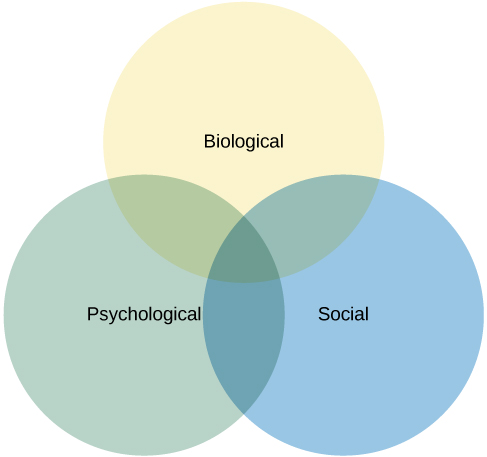
Biopsychosocial Model: Perspective asserting that biology, psychology, and social factors interact to determine an individual’s health.
Clinical Psychology: Area of psychology focusing on the diagnosis and treatment of psychological disorders and problematic patterns of behavior.
Cognitive Psychology: Study of cognitions, or thoughts, and their relationship to experiences and actions.
Counseling Psychology: Area of psychology focusing on improving emotional, social, vocational, and other aspects of the lives of psychologically healthy individuals.
Developmental Psychology: Scientific study of development across a lifespan.
Dissertation: Long research paper about research conducted as part of the candidate’s doctoral training.
Empirical Method: Method for acquiring knowledge based on observation and experimentation, not just logical argument or previous authorities.
Forensic Psychology: Area applying the science and practice of psychology to issues within and related to the justice system.
Functionalism: Focused on how mental activities helped an organism adapt to its environment.
Humanism: Perspective emphasizing the potential for good that is innate to all humans.
Introspection: Process of examining one's own conscious experience to break it into components.
Ology: Suffix denoting “scientific study of.”
Personality Psychology: Study of patterns of thoughts and behaviors that make each individual unique.
Personality Trait: Consistent pattern of thought and behavior.
PhD: Doctor of philosophy, a doctoral degree conferred in many disciplinary perspectives in liberal arts and sciences.
Postdoctoral Training Program: Allows young scientists to further develop research programs and broaden skills under professional supervision.
Psychoanalytic Theory: Focus on the role of the unconscious in affecting conscious behavior.
Psychology: Scientific study of the mind and behavior.
PsyD: Doctor of psychology, a doctoral degree emphasizing application of psychological principles in a clinical context.
Sport and Exercise Psychology: Area focusing on interactions between mental and emotional factors and physical performance in sports and exercise.
Structuralism: Understanding the conscious experience through introspection.
Psychology
Psychology is the scientific study of the mind and behavior, encompassing various aspects of human experience and mental processes.
ABC (what psychology studies):
Affect: Moods, feelings.
Behavior: What are they doing? (Only one you can actively see)
Cognition: Thinking, learning
Structuralism —> Functionalism —> Psychoanalysis (Sigmund Freud (Unconscious)) Behaviorism (Ivan Pavlov, John Watson, BF Skinner) —> Humanistic Psychology (Carl Rogers, Abraham Maslow)
Biological: Physical bases & behavior.
Behavioral: Environmental influences on behavior.
Psychoanalytical: Unconscious influences on behavior & personality.
Humanistic: Psychological growth & personal potential.
Cognitive: Mental processes.
Nature (genetics) vs. Nurture (environment)
Key Areas of Psychology
Explores questions about creativity, prejudice, discrimination, and consciousness.
Psychologists use the scientific method to propose hypotheses fitting into scientific theories.
Conduct experiments and publish results for verification.
Nature of Psychological Science
Relies on empirical data, addressing measurable phenomena.
Understanding values and morality remains limited due to the abstract nature of thoughts.
Historical Context
Emerged as an academic discipline in the late 1800s, previously part of philosophy.
Encompasses aspects of both natural and social sciences.
Popularity of Psychology
Many students pursue psychology for self-understanding or to fulfill educational requirements.
One of the most popular majors in the U.S.
Famous psychology graduates include:
Mark Zuckerberg
Jon Stewart
Natalie Portman
Wes Craven
Educational Outcomes
Develops critical thinking and communication skills.
Enables students to evaluate information reliably.
Highlights the interplay of biology, environment, and experiences in shaping behavior, emphasizing the diversity of human experiences.
Careers in Psychology:
Clinical psychologist: Provides therapy and assessment to individuals with mental health disorders, working to improve emotional and psychological well-being.
Substance counselor: Specializes in helping individuals struggling with addiction and substance abuse, offering support and guidance through recovery processes.
Forensic psychologist: Works within the legal system, applying psychological principles to criminal investigations, assessments of offenders, and providing expert testimony in court.
Sports psychologist: Focuses on the mental aspects of athletic performance, helping athletes enhance their skills, cope with pressure, and improve their overall mental health.
Parole officer: Oversees individuals who have been released from incarceration, ensuring they comply with the terms of their parole and providing support to facilitate their reintegration into society.
College admissions counselor: Guides prospective students through the college application process, helping them choose suitable institutions, refine their applications, and prepare for interviews, while also addressing their academic and personal goals.
Experimental psychologist: Conducts research to understand cognitive processes, behavior, and emotions through controlled experiments, often focusing on the scientific method to test hypotheses and analyze results.
Marriage therapist: Helps couples navigate relationship challenges by providing tools for effective communication, conflict resolution, and emotional support, ultimately aiming to strengthen their bond and promote healthier interactions.
Military psychologist: Works with active duty service members and veterans to address psychological issues related to military life, including trauma, stress management, and adjustment to civilian life, while also promoting mental wellness and resilience.
Speech-language pathologist: Assesses and treats individuals with communication disorders, including difficulties with speech, language, and swallowing, using therapeutic techniques to enhance communication skills and improve overall quality of life.
Overview of Psychology's Evolution
Psychology, a young science with roots in the 19th century, shifted from philosophical inquiry to a distinct academic field thanks to pioneers like Wilhelm Wundt and William James. Wundt, regarded as the first psychologist, focused on conscious experience through introspection and established the first psychology lab in Leipzig in 1879. His student Edward Titchener advanced structuralism, concentrating on mental processes' content. James emphasized functionalism and how mental activities aid adaptation to the environment, prioritizing whole mind functions.
Key Theorists and Movements
Freud: An influential figure, Freud emphasized the unconscious mind and early experiences’ roles in behavior, shaping psychoanalytic theory.
Gestalt Psychology: Founded by Wertheimer, Koffka, and Köhler, this movement highlighted perception's holistic nature, contrasting with structuralism.
Behaviorism: Led by Pavlov, Watson, and Skinner, behaviorism prioritized observable behaviors over internal processes, establishing psychology as a scientific discipline through experimentation.
Humanism: Promoted by Maslow and Rogers, humanism focused on the innate potential for good in individuals, leading to client-centered therapy.
Cognitive Revolution: This movement reintroduced mental functions as valid subjects of study, influenced by interdisciplinary approaches from linguistics and computer science.
Diverse Contributions to Psychology
We must recognize the contributions from diverse groups in psychology, including:
Feminist Psychology: Highlighted biases in traditional psychology and aimed to include women’s perspectives.
Cultural Psychology: Addressed the over-representation of WEIRD societies in research and promoted understanding across varying cultures.
Wilhelm Wundt: Regarded as the first psychologist, he focused on conscious experience through introspection and established the first psychology lab in Leipzig in 1879.
William James: Emphasized functionalism, focusing on how mental activities aid adaptation to the environment, and prioritized whole mind functions.
Sigmund Freud: An influential figure who emphasized the unconscious mind and the role of early experiences in shaping behavior, shaping psychoanalytic theory; father of psychoanalysis, he developed theories on the unconscious mind and the role of childhood experiences in shaping personality.
Gestalt Psychology: Founded by Max Wertheimer, Kurt Koffka, and Wolfgang Köhler, this movement highlighted perception's holistic nature, contrasting with structuralism.
Behaviorism: Led by Ivan Pavlov, John B. Watson, and B.F. Skinner, behaviorism prioritized observable behaviors over internal processes, establishing psychology as a scientific discipline through experimentation.
Humanism: Promoted by Abraham Maslow and Carl Rogers, humanism focused on the innate potential for good in individuals, leading to client-centered therapy.
Margaret Floy Washburn: The first woman to earn a Ph.D. in psychology; known for her work on animal behavior and comparative psychology.
Mary Whiton Calkins: Pioneered paired-association technique; first female president of the American Psychological Association but was denied a Ph.D. from Harvard.
Mary Cover Jones: Known for her contributions to the field of behavior therapy and for her work in developing systematic desensitization as a treatment for phobias.
B.F. Skinner: Introduced the concept of operant conditioning and developed techniques for behavior modification through reinforcement.
Carl Rogers: A key figure in humanistic psychology, he emphasized the importance of self-actualization and unconditional positive regard in therapeutic settings.
Albert Bandura: Known for his social learning theory, he emphasized the role of observational learning, imitation, and modeling in behavior development.
Jean Piaget: Renowned for his theory of cognitive development, he outlined how children progress through distinct stages of mental growth, influencing education and developmental psychology.
Erik Erikson: Developed the psychosocial stages of development, highlighting the impact of social experience across the lifespan and the importance of identity formation during adolescence.
Concise Overview of Key Concepts in Psychology
Contemporary Psychology
Psychology is diverse, as seen in the American Psychological Association (APA), which has 54 divisions covering specialties from religious psychology to behavioral neuroscience. G. Stanley Hall was the first APA president. The Association for Psychological Science (APS) promotes scientific psychology, while various organizations support diverse professionals within psychology.
Major subdivisions:
Biopsychology: Examines how biology influences behavior, often merging psychology with physiology. Researchers explore sensory systems, neurodevelopment, and psychological disorders.
Evolutionary Psychology: Studies behavioral adaptations based on genetics, relating to survival and reproduction.
Sensation and Perception: Investigates how sensory experiences and cultural background shape perceptions.
Cognitive Psychology: Focuses on thoughts, mental processes, and their relation to behavior, including attention and memory.
Developmental Psychology: Studies changes throughout the lifespan, emphasizing cognitive, social, and emotional growth.
Personality Psychology: Looks at individual traits and characteristics, often using the Big Five model to quantify personality.
Social Psychology: Examines interactions and influences among individuals, highlighted by Milgram’s obedience studies.
Industrial-Organizational Psychology: Applies psychology to workplace issues, enhancing productivity and personnel management.
Health Psychology: Analyzes how biological, psychological, and social factors influence health outcomes.
Sport and Exercise Psychology: Focuses on mental aspects of sports performance and overall well-being.
Clinical Psychology: Involves diagnosing and treating psychological disorders, influenced by historical figures like Freud and Rogers.
Forensic Psychology: Concerns the application of psychology in legal contexts, including assessments and expert testimony.
Explanation of Figures and Their Significance
Figure 1.10 - Biological Psychology: Illustrates the relationship between nervous system structure/function and behavior, emphasizing neuroscience's role in understanding psychological phenomena.
Figure 1.11 - Sensation and Perception: Depicts an ambiguous image (duck or rabbit), demonstrating how sensory information and experiences lead to different interpretations, highlighting perception's interdisciplinary nature.
Figure 1.12 - Developmental Psychology: Alludes to Jean Piaget's work on object permanence, crucial for understanding cognitive development from infancy to adulthood.
Figure 1.13 - Big Five Personality Traits: Presents the Five Factor model, providing a framework for assessing personality and predicting behavior.
Figure 1.14 - Milgram’s Obedience Study: Shows an ad for Milgram's experiment, illustrating obedience to authority and raising ethical questions regarding psychological research practices.
Figure 1.15 - Biopsychosocial Model: Represents the interaction of biological, psychological, and sociocultural factors affecting health, advocating a comprehensive understanding in health psychology.
Figure 1.16 - Cognitive-Behavioral Therapy: Highlights therapy strategies that blend cognitive processes with behavior change, reflecting psychological theory applications in clinical practice.
Summary of Educational and Career Pathways in Psychology
Educational Requirements: To pursue a career in psychology, a doctoral degree (PhD or PsyD) is typically required for many positions in higher education. The PhD involves completing a dissertation, while the PsyD focuses more on clinical applications than research.
Career Options in Academia: Psychologists with a PhD may become faculty members, balancing teaching, research, and service responsibilities. Some may work exclusively in research-oriented positions, and postdoctoral training is common before securing full-time faculty roles. Adjunct positions often require at least a master's degree.
Careers Outside Academia: Licensed clinical psychologists typically hold a PhD or PsyD and may practice in various environments after passing a licensure exam. Unlike clinical psychologists, psychiatrists have medical degrees (MD) and can prescribe medications.
Job Opportunities: With a bachelor’s degree in psychology, graduates can pursue diverse roles such as management, sales, human resources, and healthcare. Psychology graduates are well-prepared for careers in various fields, including educational and clinical settings.
Summary:
1.1 What Is Psychology?
Psychology is defined as the scientific study of mind and behavior. Students of psychology develop critical thinking skills, become familiar with the scientific method, and recognize the complexity of behavior.
1.2 History of Psychology
Before the time of Wundt and James, questions about the mind were considered by philosophers. However, both Wundt and James helped create psychology as a distinct scientific discipline. Wundt was a structuralist, which meant he believed that our cognitive experience was best understood by breaking that experience into its component parts. He thought this was best accomplished by introspection.
William James was the first American psychologist, and he was a proponent of functionalism. This particular perspective focused on how mental activities served as adaptive responses to an organism’s environment. Like Wundt, James also relied on introspection; however, his research approach also incorporated more objective measures as well.
Sigmund Freud believed that understanding the unconscious mind was absolutely critical to understand conscious behavior. This was especially true for individuals that he saw who suffered from various hysterias and neuroses. Freud relied on dream analysis, slips of the tongue, and free association as means to access the unconscious. Psychoanalytic theory remained a dominant force in clinical psychology for several decades.
Gestalt psychology was very influential in Europe. Gestalt psychology takes a holistic view of an individual and his experiences. As the Nazis came to power in Germany, Wertheimer, Koffka, and Köhler immigrated to the United States. Although they left their laboratories and their research behind, they did introduce America to Gestalt ideas. Some of the principles of Gestalt psychology are still very influential in the study of sensation and perception.
One of the most influential schools of thought within psychology’s history was behaviorism. Behaviorism focused on making psychology an objective science by studying overt behavior and deemphasizing the importance of unobservable mental processes. John Watson is often considered the father of behaviorism, and B. F. Skinner’s contributions to our understanding of principles of operant conditioning cannot be underestimated.
As behaviorism and psychoanalytic theory took hold of so many aspects of psychology, some began to become dissatisfied with psychology’s picture of human nature. Thus, a humanistic movement within psychology began to take hold. Humanism focuses on the potential of all people for good. Both Maslow and Rogers were influential in shaping humanistic psychology.
During the 1950s, the landscape of psychology began to change. A science of behavior began to shift back to its roots of focus on mental processes. The emergence of neuroscience and computer science aided this transition. Ultimately, the cognitive revolution took hold, and people came to realize that cognition was crucial to a true appreciation and understanding of behavior.
1.3 Contemporary Psychology
Psychology is a diverse discipline that is made up of several major subdivisions with unique perspectives. Biological psychology involves the study of the biological bases of behavior. Sensation and perception refer to the area of psychology that is focused on how information from our sensory modalities is received, and how this information is transformed into our perceptual experiences of the world around us. Cognitive psychology is concerned with the relationship that exists between thought and behavior, and developmental psychologists study the physical and cognitive changes that occur throughout one’s lifespan. Personality psychology focuses on individuals’ unique patterns of behavior, thought, and emotion. Industrial and organizational psychology, health psychology, sport and exercise psychology, forensic psychology, and clinical psychology are all considered applied areas of psychology. Industrial and organizational psychologists apply psychological concepts to I-O settings. Health psychologists look for ways to help people live healthier lives, and clinical psychology involves the diagnosis and treatment of psychological disorders and other problematic behavioral patterns. Sport and exercise psychologists study the interactions between thoughts, emotions, and physical performance in sports, exercise, and other activities. Forensic psychologists carry out activities related to psychology in association with the justice system.
1.4 Careers in Psychology
Generally, academic careers in psychology require doctoral degrees. However, there are a number of nonacademic career options for people who have master’s degrees in psychology. While people with bachelor’s degrees in psychology have more limited psychology-related career options, the skills acquired as a function of an undergraduate education in psychology are useful in a variety of work contexts.