Reproduction (3.1-3.13)
==Asexual Reproduction:== the process resulting in the production of genetically identical offspring from one parent
Advantages:
- Only one parent needed
- Fast reproduction
- Less energy required
- Can colonise environments faster
Disadvantages:
- No Biodiversity / Genetic Variation
- Cannot adapt to new environments
- Susceptible to same diseases
- Overpopulation
→Asexual reproduction in crop plants can be advantegous; a plant with desirable characteristics - eg, high yeild - can be made to reproduce asexually
==Sexual Reproduction:== the process involving the fusion of haploid nuclei to form a diploid zygote and the production of genetically dissimilar offspring
Gamete: Sex cells
Have a haploid nucleus (contains half the number of chromosomes in other cells)
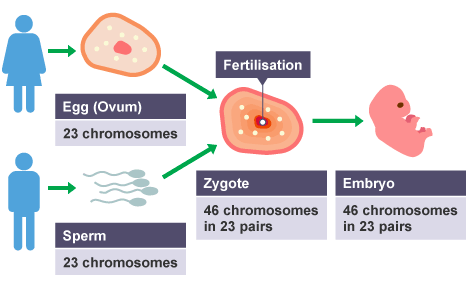
→In humans normal cell contain 46 and gametes contain 23 chromosomes
==MALE 23 + FEMALE 23 → ZYGORE 46==
Advantages:
- Genetic Variation
- Species can adapt to new environments
- Diseases dont affect entire population
Disadvantages:
- Two parents needed
- Uses a lot of energy
- Takes time
- Random fertilisation (could cause harmful variation)
- Isolated members cant reproduce
Plant Reproduction
==Plants mostly reproduce sexually==
Involves the fusion of the male gamete (pollen) and the female gamete (ovule).
A plant flower has both a ‘male part’ containing the pollen and the ‘female part’ which contains the ovule.
- Male part - Stamen
- Female part - Pistil/carpel
==Pollination:== transfer of pollen grains from the male part of the plant (anther) to the female part (stigma)
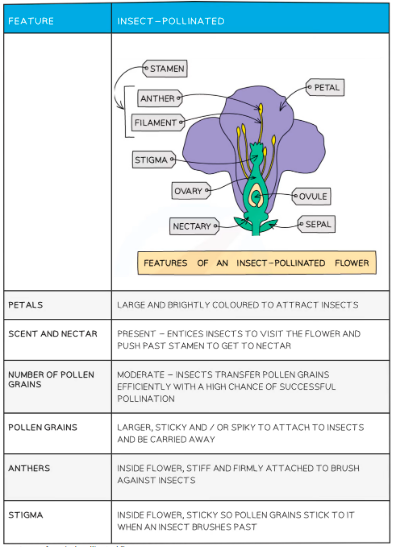
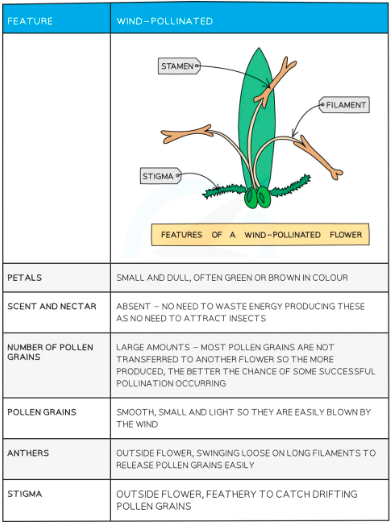
→ Transferred by insects (or other animals like birds) or transferred by wind \n
==Plant reproductive system==
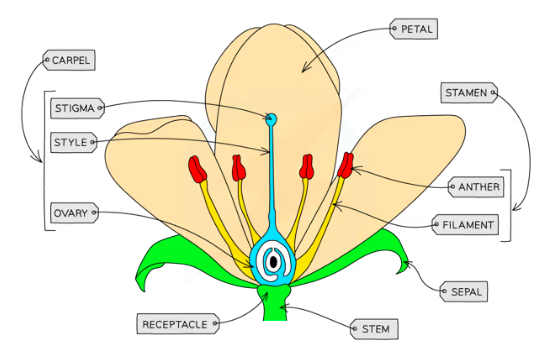
- Sepals - protect unopened flowers.
- Petals - Brightly coloured to attract pollinating insects to the plant
Insects are also attracted by scents and nectar in the plant.
- Anthers - Produces male sex cells in the form Of pollen.
Which is either picked up by insects or blown off the plant and carried in the wind.
- Stigmas - the female part of the plant which collects pollen from insects or from the air.
In wind-pollinated plants, the stigmas and anthers hang out of the plant where they are more exposed to the wind.
- Ovaries - produces the female sex cells which are contained in the ovules.
Fertilisation occurs when the nucleus Of this fuses with a pollen cell nucleus.
==Cross-pollination:== Pollen from one plant is transferred to the stigma of another plant of the same species (provides genetic variation)
→Relies on the presence of pollinators
==Self Pollination:== Pollen from anther of a flower can land on stigma of the same flower or flower on the same plant
→Reduces genetic variation
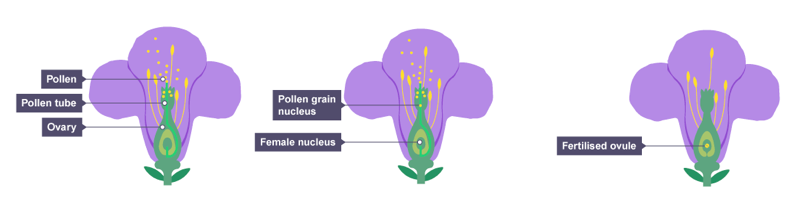
==Fertilisation:== when a pollen nucleus fuses with an ovum nucleus in the ovule
- When a pollen grain lands on the stigma of the correct species, a pollen tube will begin to grow.
- It grows through the style, enters through a small gap in the ovary called the micropyle, and eventually reaches the ovule.
- The nucleus of the pollen then passes along the pollen tube and fuses with the neuclus of the ovule, resulting in successful fertilization.
- The zygote eventually develops into a seed. The seed remains dormant until the conditions are right, and germination occurs
==Germination==
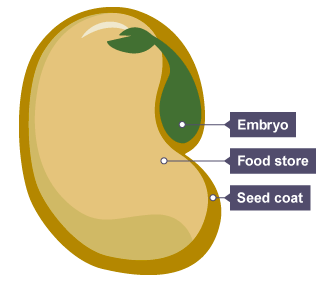
A seed has three main parts:
- embryo – the young root and shoot that will become the adult plant
- food store – starch for the young plant to use until it is able to carry out photosynthesis
- seed coat – a tough protective outer covering
Germination is a process, controlled by enzymes, in which the seed begins to develop into a new young plant
| Factor | Description |
|---|---|
| Water | Lets the seed swell and the embryo start to grow |
| Oxygen | Needed for aerobic respiration |
| Warmth | Increases growth rate and enzyme activity (but very high temperatures denature enzymes) |
Germinating seeds use their food stores until the seedlings can produce their own food by photosynthesis
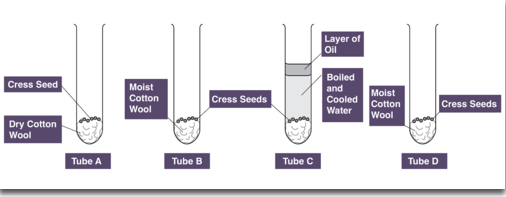
- A(no water) = No germination
- B (control) = Germination
- C (no oxygen) = No germination
- D (cold temperature) = No germination
Human Reproduction
==Male Reproductive System==
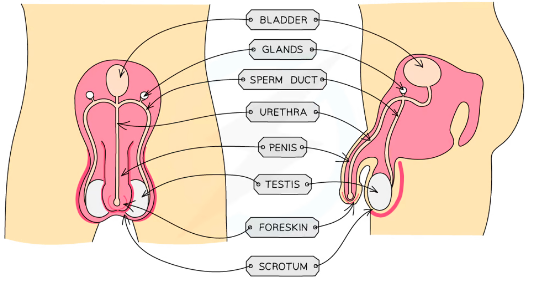
- The testes: The glands in which sperm and testosterone are produced.
- Scrotum: Protect testes and keep them at several degrees lower than the normal body temperature.
- Sperm ducts: A duct through which the sperm pass in order to be transported from the testes to the outside of the male body
- Prostate gland: Secretes prostate fluid (one of the fluids that make up semen). The mixture of sperm and the fluid in which it is transported is called semen.
- Urethra: A tube that carries urine or semen. It continues from the sperm duct.
- Penis: The primary male sex organ – used in sexual intercourse. Ejaculates semen and is also used to discharge urine.
==Female Reproductive System==
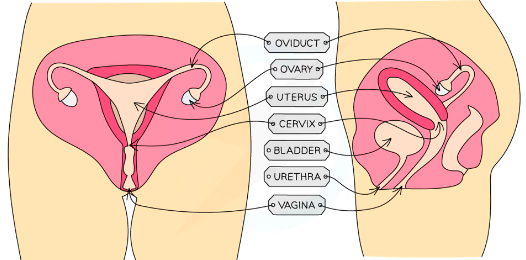
- Ovaries: To produce the hormones oestrogen and progesterone/ It is also the site of egg development and ovulation
- Fallopian Tubes (Oviducts): Carry the ovum from the ovary to the uterus
- Uterus: Place for embryo and fetus developement
- Cervix: Involved in menstruation/ It holds the fetus in place during pregnancy/ Dialates during birth to allow the fetus to leave the uterus.
- Vagina: Provides a passageway for the sperm and menstrual flow/ It also functions as the birth canal
==Fertilisation:== the fusion of the nuclei from a male gamete (sperm cell) and a female gamete (egg cell)
→It occurs in the oviducts
==Sperm Cells:==
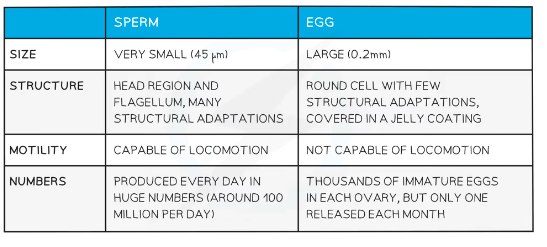
- a tail to move them towards an egg cell
- many mitochondria to provide energy
- an acrosome (part of the tip of the head) that releases enzymes to digest the egg membrane
- Produced in large numbers to increase the chance of fertilisation
==Egg Cells:==
- Cytoplasm containing energy store for cell division after fertilisation
- Jelly coat to stop multimple sperm from penetrating
==Pregnancy==
- Sperm enters vagina
- Sperm passes through cervix
- Sperm enters oviduct
- If an egg is present, it becomes fertilized
- Fertilization results in zygote formation
- Zygote divides to make an embryo (ball of cells)
- Embryo implants into the uterus walls
- Embryo develops further to form a fetus
- Fetus develops within uterus/womb
- Birth of a baby

In the uterus, the embryo embeds itself in the thick lining (implantation) and continues to grow and develop
The gestation period for humans is 9 months
Major development of organs takes place within the first 12 weeks, during which time the embryo gets nutrients from the mother by diffusion through the uterus lining
By then the placenta has formed and the embryo is now called a fetus
The remaining gestation time is used by the fetus to grow bigger in size
- ==First 12 weeks is growth in complexity, remaining time is growth in size== \n
==Placenta:==
The embryo develops into a placenta connected by an umbilical cord.
The placenta holds the embryo in place (the uterus)
It allows:
- nutrients and oxygen to move from the mother to the embryo
- waste materials and carbon dioxide to move from the embryo to the mother
The placenta brings fetal blood supply close to the mother’s blood without mixing
→The bloods run opposite each other, never mixing, in the placenta
→Movement of all molecules across the placenta occurs by diffusion due to difference in concentration gradients
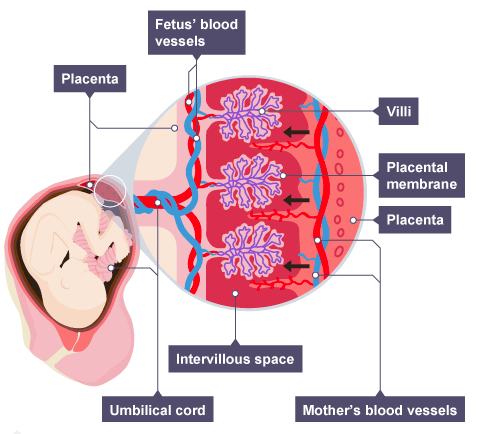
- Umbilical artery: Carries blood from the fetus to the placenta
- Umbilical vein:
Carries blood from the placenta to the fetus
Some toxins such i.e. nicotine or pathogens i.e. rubella, can cross the placenta from the mother’s blood and affect the fetus
Stages of Birth
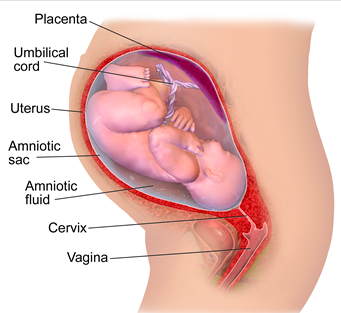
- Labour is triggered by the oxytocin hormone
- Muscular walls of the uterus contract
- Pressure from contraction breaks the amniotic sac and releases amniotic fluid
- Contractions become more violent and push the baby down the cervix
- The cervix becomes dilated for the baby to pass through
- The vagina stretches in order to allow the baby to be born
- The Baby is still attached to the placenta via umbilical cord post birtth
- The umbilical cord is therefore cut and tied
The placenta breaks away from the uterus wall and passes out
==Antenatal Care:==
Before birth, the baby obtains all dietary requirements from the mother via the placenta.
==Mothers diet should include more:==
- Amino acids/proteins for growth
- Calcium for bone development
- Iron for RBC formation \n
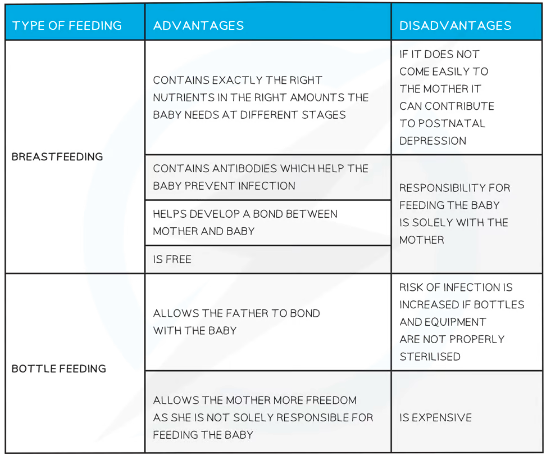
Breast Feeding vs. Bottle Feeding:
Secondary Sex Characteristics:
- Testosterone triggers the development of secondary sexual characteristics in males
- Estrogen triggers the development of secondary sexual characteristics in females
| Boys only | Boys and girls | Girls only |
|---|---|---|
| Voice breaks | Pubic hair grows | Voice deepens gradually |
| Hair grows on face and body | Underarm hair grows | Hips get wider |
| Body becomes more muscular | Sexual organs grow and develop | Breasts develop |
| Testes start to produce sperm cells | Ovaries start to release egg cells - menstruation starts |
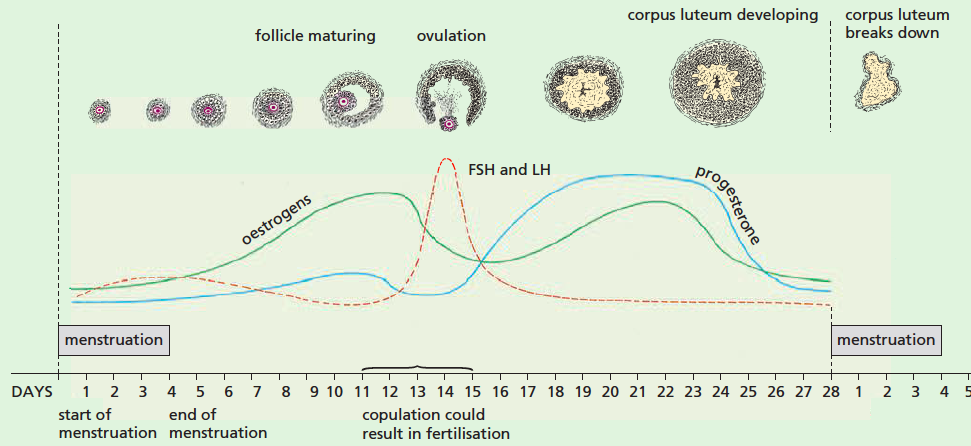
==Menstrual Cycle:==
Recurring process which takes 28 days where the uterine lining is prepared for pregnancy
It is then shed if the fertilised egg doesn't implant into the uterus lining
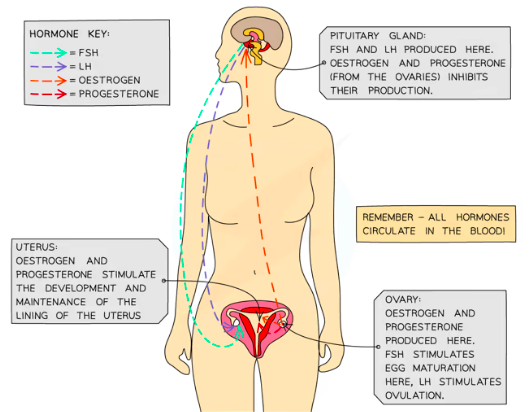
==Hormones involved in the menstrual cycle:==
- Estrogen – Builds the uterus lining
- Progesterone – Maintains the uterus lining in the case of pregnancy
- FSH – Causes a single follicle in the ovary to mature (a mature follicle contains the egg, along with other surrounding cells)
- LH – Secreted from pituitary glands which stimulate ovulation
==Cycle==
- Uterus lining breaks down due to the lack of progesterone
- Estrogen levels rise to build the uterus lining
- FSH causes a single follicle to mature
- On day 14, estrogen levels drop and LH levels spike to cause ovulation
- The ovum gets released into the oviduct, leaving behind the remains of the mature follicle.
- The cells that get left behind after ovulation become the corpus luteum
- The corpus luteum secretes progesterone which maintains the thick uterus lining in preparation for implantation
==Birth Control:==
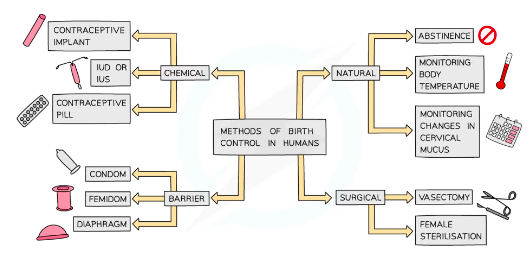
- IUD / IUS
Small device fitted inside the uterus by a doctor or nurse
Releases sex hormones which thicken the mucus produced in the cervix, making it difficult for sperm to swim into the uterus
Thins the lining of the uterus, making it more difficult for a fertilised egg to implant
- Vasectomy:
The sperm ducts are cut, meaning that no sperm is present in the semen when ejaculation occurs
- Female sterilisation (tubal ligation):
The oviducts are cut or tied off, preventing eggs from reaching the uterus or sperm from reaching the eggs
very effective but difficult to reverse
==Contraceptive Pills:== Work by mimicking some of the hormone levels during pregnancy
Raise the levels of progesterone and oestrogen, the uterus lining is maintained and the development of another egg cell is prevented** \n **
== \n Fertility treatments: ==
In vitro fertilisation (IVF) and artificial insemination (A1) are two fertility treatments
- IVF: If fertilisation cannot occur due to the sperm count or quality being low, the egg cell can be fertilised outside of the body and then be implanted back into the uterus.
- AI: Sperm is directly inserted into the uterus
Can be from partner, or from a sperm bank if their sperm is not of a high enough quality. \n
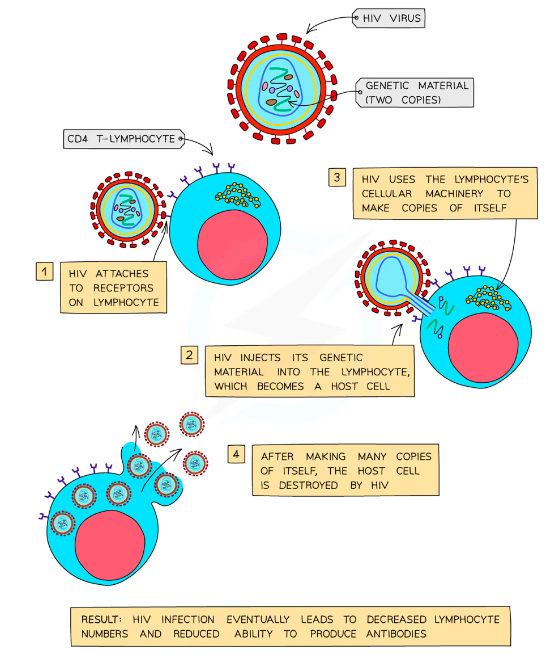
==Sexually transmitted diseases (STIs):== Infections that can be transmitted via body fluids during sexual contact.
eg. HIV (human immunodeficiency virus)
HIV infection can lead to AIDS (acquired immunodeficiency syndrome).
==HIV virus destroys the body’s immune system==.
→The virus attacks lymphocytes in the blood stream, and a decreased lymphocyte count leads to reduced antibodies, and therefore compromised immunity.
Methods of transmission include:
- Unprotected sex
- Sharing needles
- Mother to fetus via the placenta
Methods to prevent the spread of HIV include:
- Condom usage
- Abstinence of sexual intercourse
- Using sterilized needles instead of sharing
\n