Ancient Greece (Test: October 3rd)
Archaic period
The removal of the Persians
Classical Period
Peloponnesian War, Athens vs. Sparta
Archaic Period
Sculptures
During this period stone was the only thing that really survived,
Items that were used for grave markers
Lost-wax process was used to cast bronze
Investment was a sort of cement that formed around a figure
Many sculptures created with this method were melted later to create weapons and gear.
More often than not these sculptures are made out of Morbal.
An archaic smile is a way to have just a little emotion in the figure.
Statues were often times painted
Anavysos Kouros, People in ancient Greece did not look like this.
The Greeks Loved male nudity.
Realistic muscle deff.
Grave Marker, This person died in battle.
Red pigments that were originally used for the hair show that this sculpture was once Painted.
Peplos Kore
Female nudity is usually frowned upon.
People are a type of shall.
The left arm is missing indicating that there was a septage piece of marble for the hand.
Stature was destroyed by the Persians.
Buried under the Acropolis.
Art historians think she represented a goddess. Goddesses would often be represented by what they hold in their hands.
Trends
isosceles triangle known as the Pediment often involved a relief sculpture
Frieze, architrave.
Colom of the doric order, have no base with a simplified capital
Athenian Agora
Used for commerce
Religious center.
Government buildings
Panathenaic Way, a parade route for a celebration of wisdom. Leads up to the Acropolis.
Stoa: a long skinny hypostal hall used for shade. These are like more permanent easy-ups.
the assistance was built in Italy, influenced by the Greeks (will be covered in the future)
Classical period: Trends
Greeks were prolific potters
White-ground: A white base coat to allow other colors.
A red-Figure: A black slip was added to create negative space revealing a figure.
Black-Figure: Using black to create the figures then removing it with an etching tool to create details.
Niobides Krater
Used for storing and mixing water and wine.
The concessionary tail of Niobie,
Wornse aguenced humerus, unchecked pride.
Hurkulease is a product of infidelity. Shown in the nude, wearing a lion pelt (the twelve labors)
The gods are vengeful and pitty.
Unsure why he is there
A depiction of Athena was also shown
Figures don’t occupy one single ground line
Many are floating!! why the heck would they be floating, This is an attempt by an artist to display complex 3D space.
Doryphoros (Spear Bear)
A Roman copy (fanboys)
Exactly 7 heads tall
Found in Pompey
There were supports that are there to maintain the structure of the marble
Classical facial shape
There was once a sphere.
Placed in a gymnasium.
an example for people in the gym (people did not look like this)
Idealistic
7 head cannon
Nude
Made out of marble
Understanding of human anatomy becoming more defined.
Contrapposto
More asymmetry,
Naturalistic
Wait distribution.
Wet-clothed on women
Athletes
Male nudity
Board looking (archaic smile dispensaries)
Ionic
two curly cues
Have a base
Corinthian
an abundance of tinny leaves. small curly cues.
Have a base
X=2y+1
X refuses to one side of the building, and Y refers to another.
The ratio of building edges.
Order roofes.
Pediment
Frieze
Architrave
stylobate
column
Doric
iconic
corinthian
The Acropolis
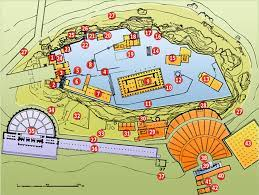
The Greeks needed to make art about their victory
Agora
The Acropolis was built from excess war money.
Made out of incredibly expensive materials.
Greece
not always controlled by the Greeks
Controlled by the Romans, omen emperor, bis inteins.
Parthenon
The Parthenon was used as a mosque, church, military base,
Parts of the Parthenon were removed.
8 columns on one side and 17 on the other.
The roof was convex to prevent rain from building up
NOT a temple; no alter
the corners of the Parthenon are bigger
Marble was used as it was perstiduce
Used to hold a statue of Athena
Nike was in her hand
Athena was also in the Friezes
Plated in Gold and Ivory
Ideas of conflict
FIghts with mythical creatures.
Battle ment Athena.
Pediment sculptures
Removed
The birth of the goddess Athena
Dianices was in the nude
Three goddesses Anthena and two other goddesses
They are shown confused
Large portions of the Parthenon were in disrepair
Lord Elgon took the pediment sculptures,
as they were lowering the art to the ground, it fell.
The British Museum has had the statue for the past 200 years
Temple of Athena Nike
One interior room
Ionic columns
Restored recently.
Commemorative temple
Nike; the greek goddess of victory
The Battle of Marathon
Amphiprostyle: four columns in the front, four in the back
Nike Adjusted her Sandals
Very elegant graceful way
Wet Drapery
Plaque of the Ergastine
All heads appear to be on the same level: Isocephalism
Not in a twisted perspective.
Grave Stele of Hegeso
Flat stone about a meter high
Image of the deceased.
Grave marker
Devoted to Negeso
Pediment, friezese and two columns
Looking at jewelry in a jewelry box.
Next to a servant or slave
Shown to be a sign of wealth
hegusu takes up far more compassion hierarchy of scale. Has a vail and fancy garment
Uncommon for women to leave the house
Only seen in public on special occasions
very closed scene, heads bowed
Walled in space.
Hellenistic Period: Trends
Sculpture
A better understanding of how to sculpt in marble.
More dynamic and gestural poses
People of different ages.
Not showing people always at their best.
Rise of eroticism
An attempt at modesty
not for public view
More threedimensional appealing.
you can walk around it
Winged Victory (Nike)
Seated Boxer
Found in a public bath
Depicts a seated boxer (nude and gloved)
Indentations on his nose and teeth show injury
The figure has a condition called clove flower ear, the Lip is split and the teeth are broken.
His body is heroic, but is praised for his prime, beard is used to suggest an older male.
Intentions are unsure.
Con- Tra- Post- o
Hellenistic Period: Architecture
We see an integration with sculpture and architecture.
architects are becoming creative and changing the order of classical constructs.
The nation is incredibly wealthy causing the scale of structures to increase
Classical elements are mix and matched into new things
The Great Altar of Zeus and Athena
The altar was taken piece by piece to Burlin.
The frieze was moved down to the level of the audience and enlarged.
These are high-release marble sculptures.
The fight between gods and the giants
Complex three-dimensional poses and facial expressions.
Nike the goddess of victory crowns victor.
The goddess Gaia gasps from the horror.
Greeks were incredibly passionate about the accomplishments of their gods.
Atmospheric Perspective
Linear perspective
Foreshortening
a more advanced understanding of three-dimensional space.
Hellenistic Period: trends
Mosaics: Hand cut and shaped, think like pixels to create pictures.
Complex understanding of form and shapes.
Are able to articulate light on more difficult materials like medals.
Mosaics would be based on paintings.
Alexander Mosaic
Found in Pompi
Buried under ash
They are far more understanding of the human body,
there is reddish and pink tiles on the nose and on the ears
images of a fallen soldier reflected on a shield.
Perspective was not something that just emerged form the renaissance.