Periodic Table Test
Definitions
Atom - smallest unit of matter
Electron Cloud: surrounds the nuclues where negatively charged electrons orbit
Nuclues - contains the postive protons and the neutral neutrons; contains almost all the mass
Proton: positively charged particles; the atomic of the element
Neutron: electrically neutral particles; determines the isotope of the element.
Electron: negatively charged particles with almost no mass
Periodic Table: an organized table of all 118 elements
Element: one type of atom
Atomic Number: number of protons (and electrons if needed)
Chemical symbol: 1 or 2 letters that represents the element
Atomic Mass: Average mass of atom; equals protons and nuetrons
Isotopes: Atoms of the same element with different numbers of nuetrons. Isotopes always have the same number of protons with different atomic masses.
Valence Electron: electron located in the outermost layer
Cation: An atom that loses a valence electron (+)
Anion: an atom that gains a valence electron (-)
Periodic Table
There are 118 elements on the periodic table
There are four parts to an element block: Atomic Number, Chemical Symbol, Element Name, Atomic mass
The periodic table is set up into groups (up and down, 18 groups, and they all have similar properties) and periods (rows across, 7 periods, categorized based on energy levels)
Atomic number is determined by the number of protons it has
The rules for writing chemical symbols are that they have to be one or two letters, must always start with a capital letter, and any second letter must be lowercase
Some elements aren’t named like their element block because they took the Latin name of the element (ex. Sodium - Na)
Group 1 is known as Akali metals
Group 18 is known as Noble gases
2-17 is known as transition metals
Difference between group 1 and group 18
Metals, Non Metals, Metailloids
Metailloids
dull or shiny
often malleable - hammered into thin sheets
often ductile - pulled into thin wires
Examples: Boron, Silicon, Arsenic
Non Metals
dull
usually brittle
usually less dense
Examples - Oxygen, Chlorine, Argon
Metals
shiny (high luster)
metallic
everything that mettaloids
Examples: Iron, Tin, Sodium
Atoms
How to draw a detailled simple atom model
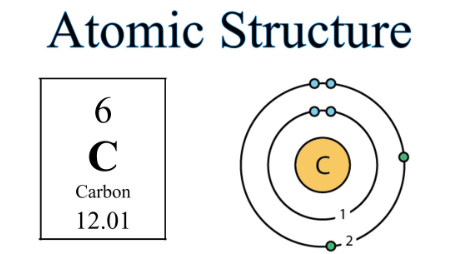
Get all your info - what are you drawing? Atomic Number, Atomic Mass
Draw your nuclues - draw as many circles as your atomic mass, label an atomic number with plus signs - protons.
Start drawing the electron shell - however many circles you draw around the nuclues is what period its in
Put your electrons on the electron shell - 2, then 8, then 8, then hope you dont need another one