instrumental conditioning
Instrumental conditioning is leaning of a contingency between a behaviour and a consequence
INSTRUMENTAL CONDITIONING
Thorndike (guy with the escape room for cat) found that the frequency of the fandom behaviours generally decreased over time over several trials Animals don't have a clear aha moment
Stamping in and stamping out - behaviours that were followed by the favourable consequence are stamped in. Random behaviours are stamped out. Eventually the process leads to refinement
Law of effect - Behaviours w positive consequences are stamped in; those with neg consequences are stamped out
In instrumental conditioning we are considering overt behaviours that are operated by an actor, leading to a reinforcer
TYPES OF INSTRUMENTAL CONDITIONING
Reinforcer - any stimulus that is presented after a response that impact the frequency that the response is performed
Reward training - presentation of positive reinforcer, which inc the freq of the behaviour
punishment training - presentation of a negative reinforcer, which dec the freq of the behaviour
omission training - removal of a positive reinforcer, which dec the freq of the behaviour
escape training - removal of a negative reinforcer, which inc the freq of the behaviour
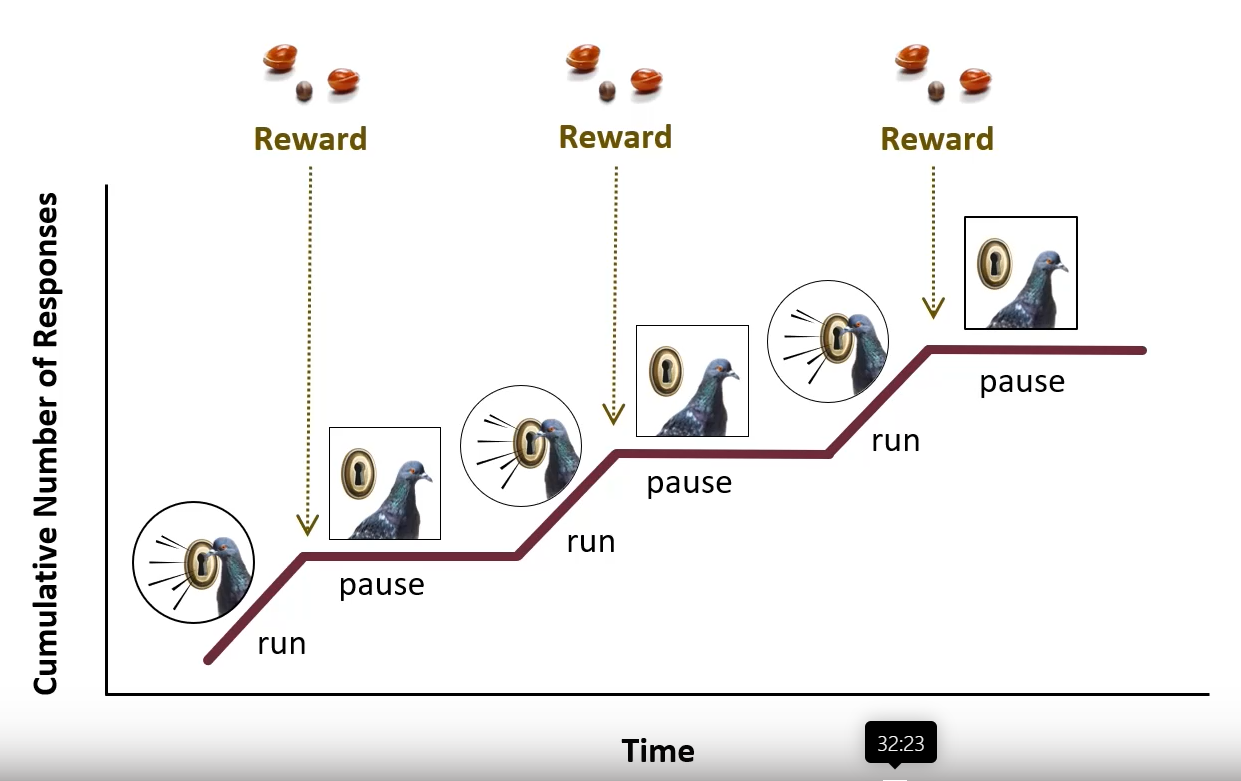
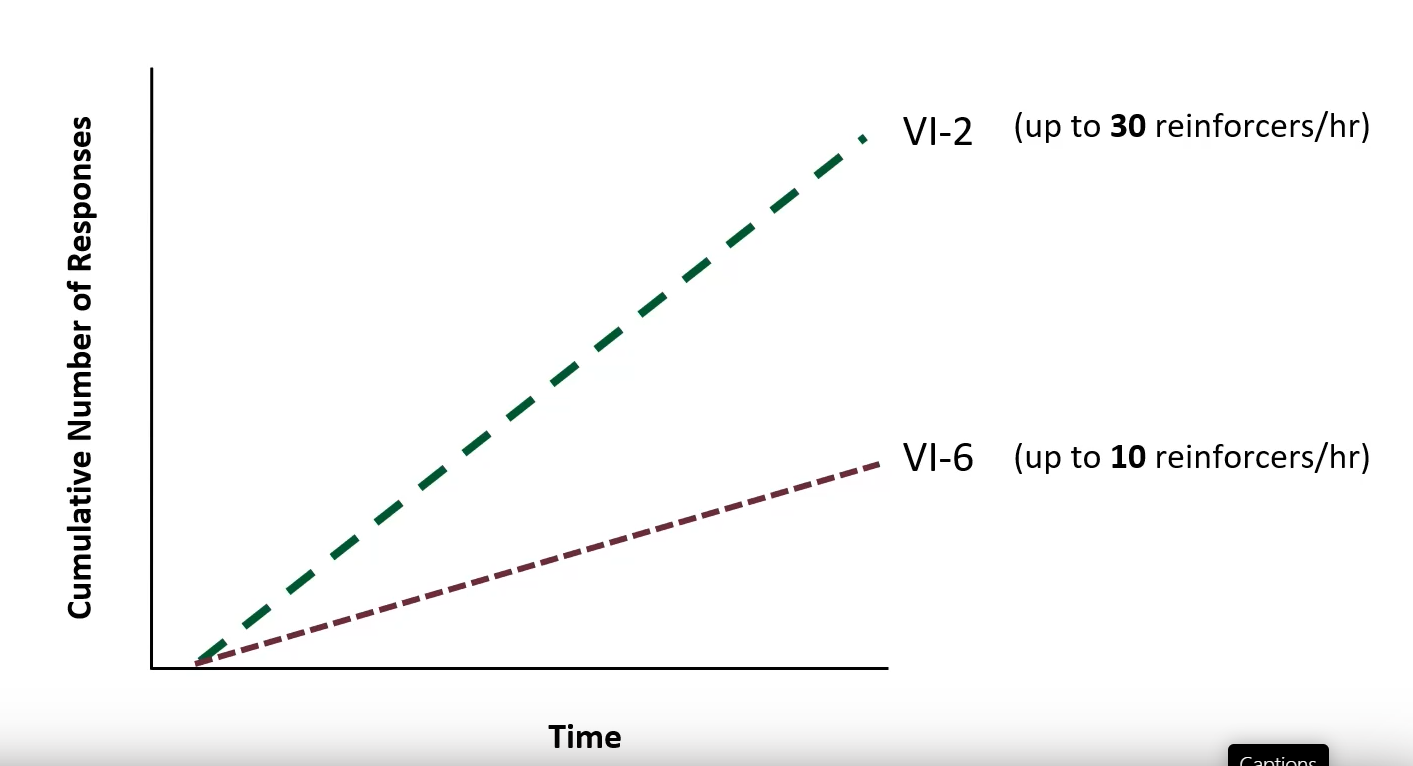
response rate of behaviour - visualized by psychologists using graphs (think that moving paper and a pencil). Graph has cumulative number of responses on y axis, time on the x-axis
AQUISITION AND TRAINING
autoshaping is a form of conditioning in which a subject that has been given reinforcement following a stimulus, regardless of its response to that stimulus
shaping successive approximation gradual learning. rewarding for behaviour similar to the behaviour wanted. a behaviour is reinforced only if it is a closer approximation of the desired behaviour last reinforced; reinforcing on the basis of improvement
chaining - a technique used to develop a sequence of behaviours. each behaviour is reinforced w the opportunity to perform the next behaviour in a sequence. ABCDE. behaviours in the chaining sequence, as well as the order, are set prior to the training. reinforced the behaviour so long as it is performed in a defined order. incresingly more complex
GENERALIZATION AND DISCRIMINATION
SD / S+ - signals when a contingency b/w a particular behaviour and reinforcement is “on”; sets the occasion for a voluntary response
S𝛿 / S- - signals when the contingency relationship is not valid
SCHEDULES OF REINFORCEMENT
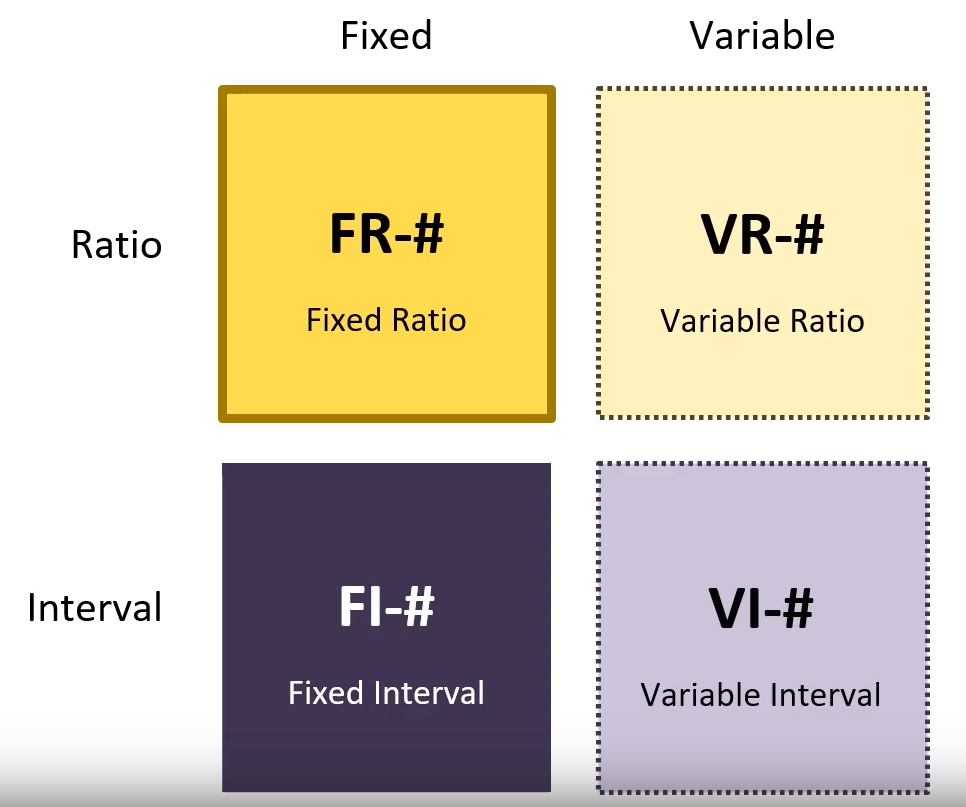
a ratio schedule of reinforcement is based on the number of responses made by a subject, which determines when reinforcement is given
an interval schedule of reinforcement is based on the times since the last response was reinforced
fixed schedule - the conditions were held constant across trials
variable schedule - based on the average across trials
ratio strain - if the reward is too stingy, the subject is no longer going to respond
 FR-#
FR-#
VR-# - 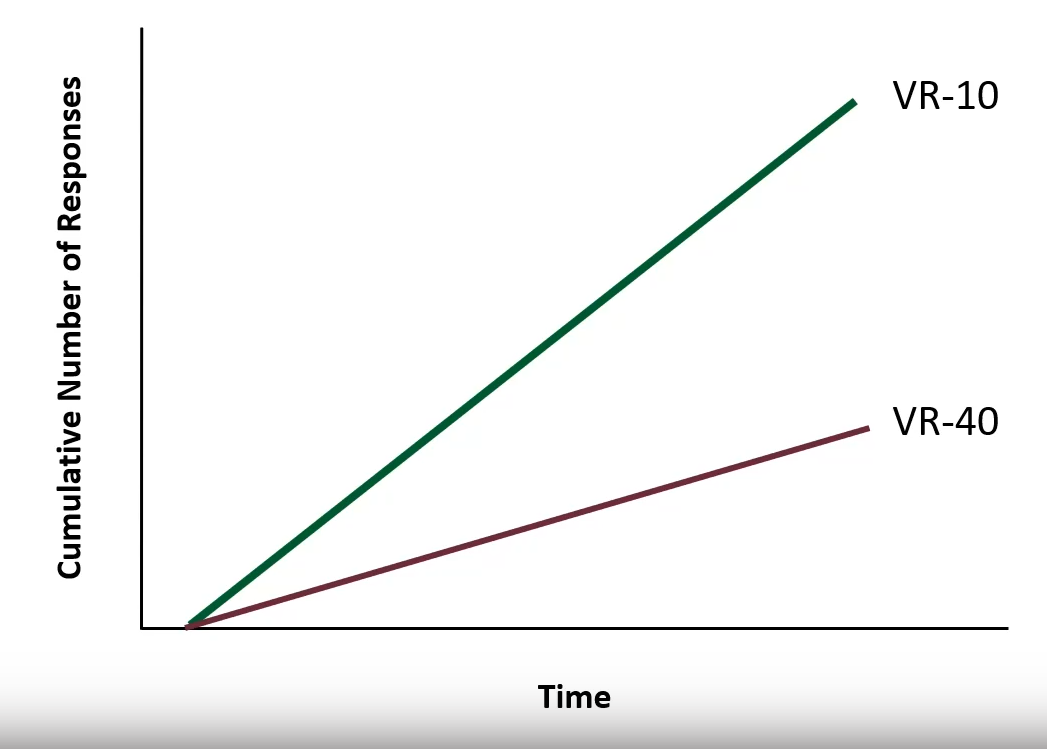 FI-# -
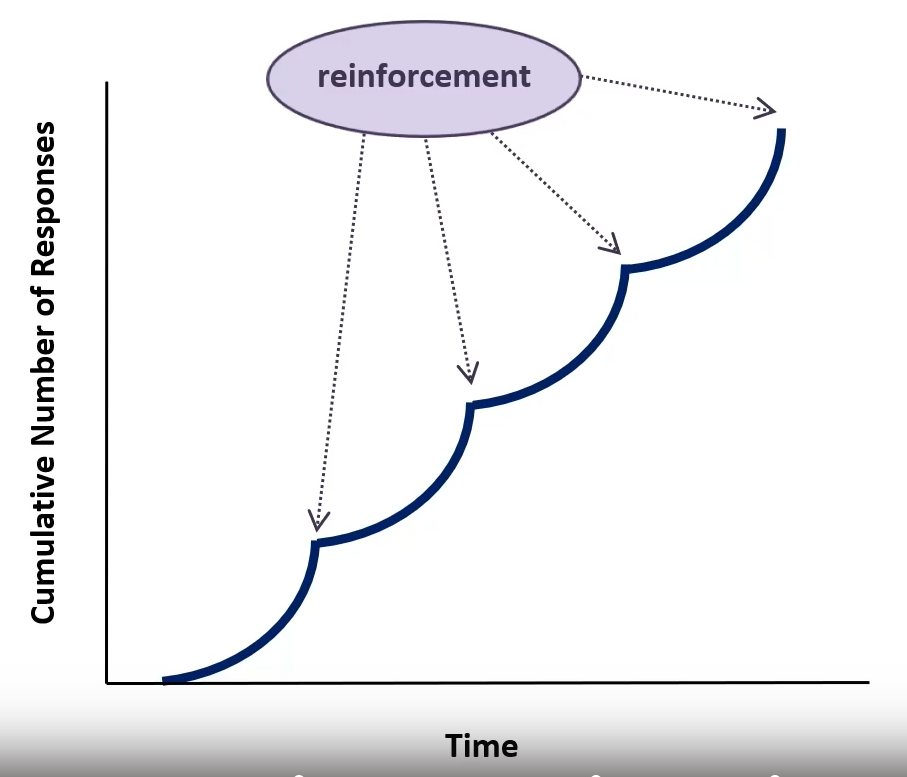 VI -# -
CRF continuous reinforcement schedule
PRF partial reinforcement schedule; more resistant to extinction
chapter 4: instrumental conditioning
law of effect - a response followed by a satisfying effect is strengthened and likely to occur again in that situation, while a response followed by an unsatisfying effect is weakened and less likely to occur again in that situation.
overjustification effect - when indic are rewarded for a behaviour that previously has intrinsic value, and now only has extrinsic value once has been reinforced
negative contrast :: lowering of reward value, dec response rate
positive contrast :: increasing reward value, inc response rate
mirror neuron :: a cell that responsds in the same way when preforming an action as it does when the organism pocessing that cell observes someone else perform the action or even imagines perfoming the action. believed to play a key role in observational learning
primary reinforcer :: a reinforver with intrinsic value such as food, water or a mate
secondary reinforcer :: a reinforver that can be exchanged for a primary reinforcer. money is most commonly used for humans