12-07: Algebraic Vectors
An algebraic vector is a vector expressed using coordinates as opposed to a magnitude and a direction
- These coordinates can be used to determine magnitude and direction
2D Algebraic Vectors:
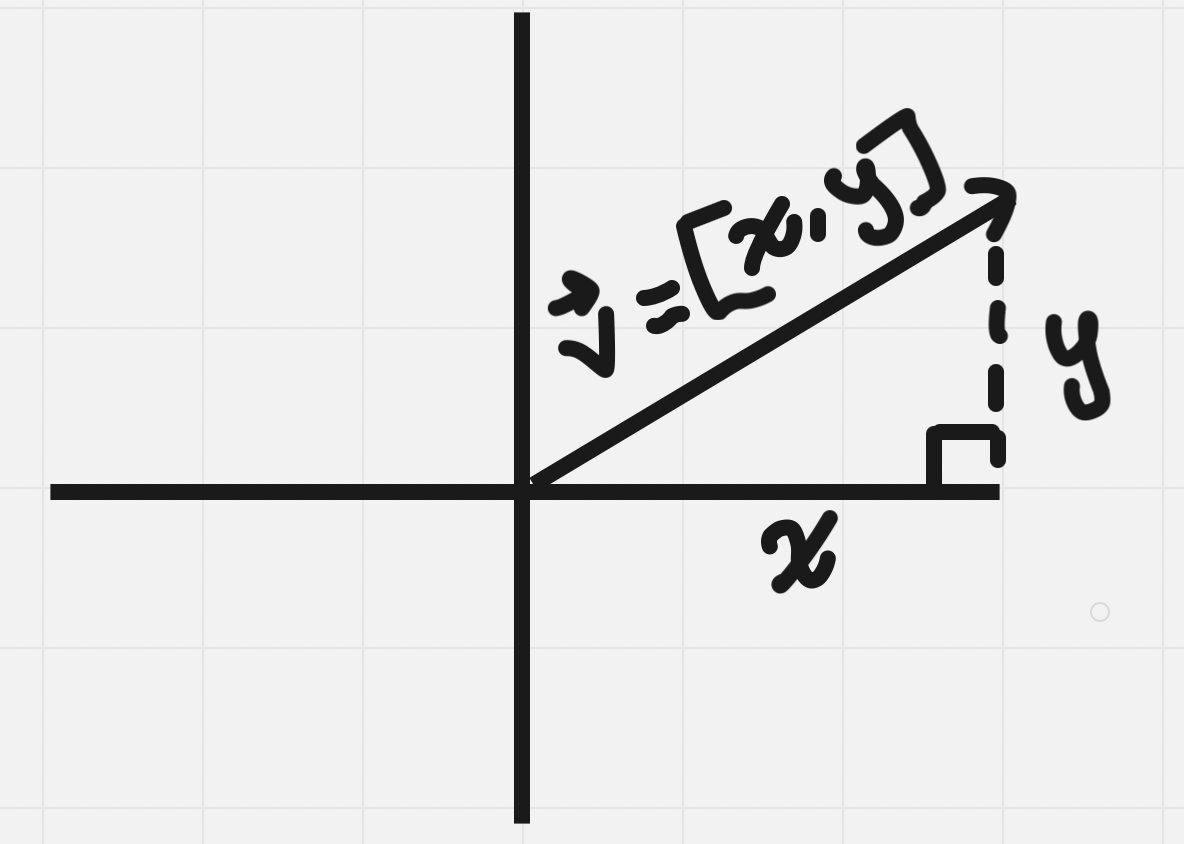
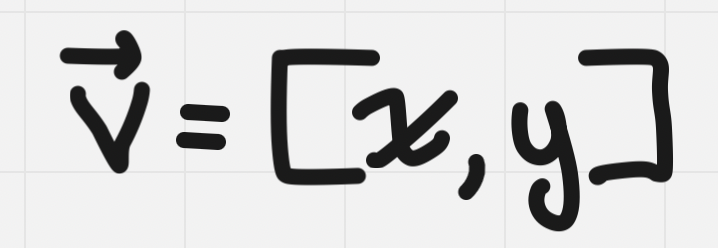 Where x is the x-distance away from the origin (x component)
Where y is the y-distance away from the origin (y component)
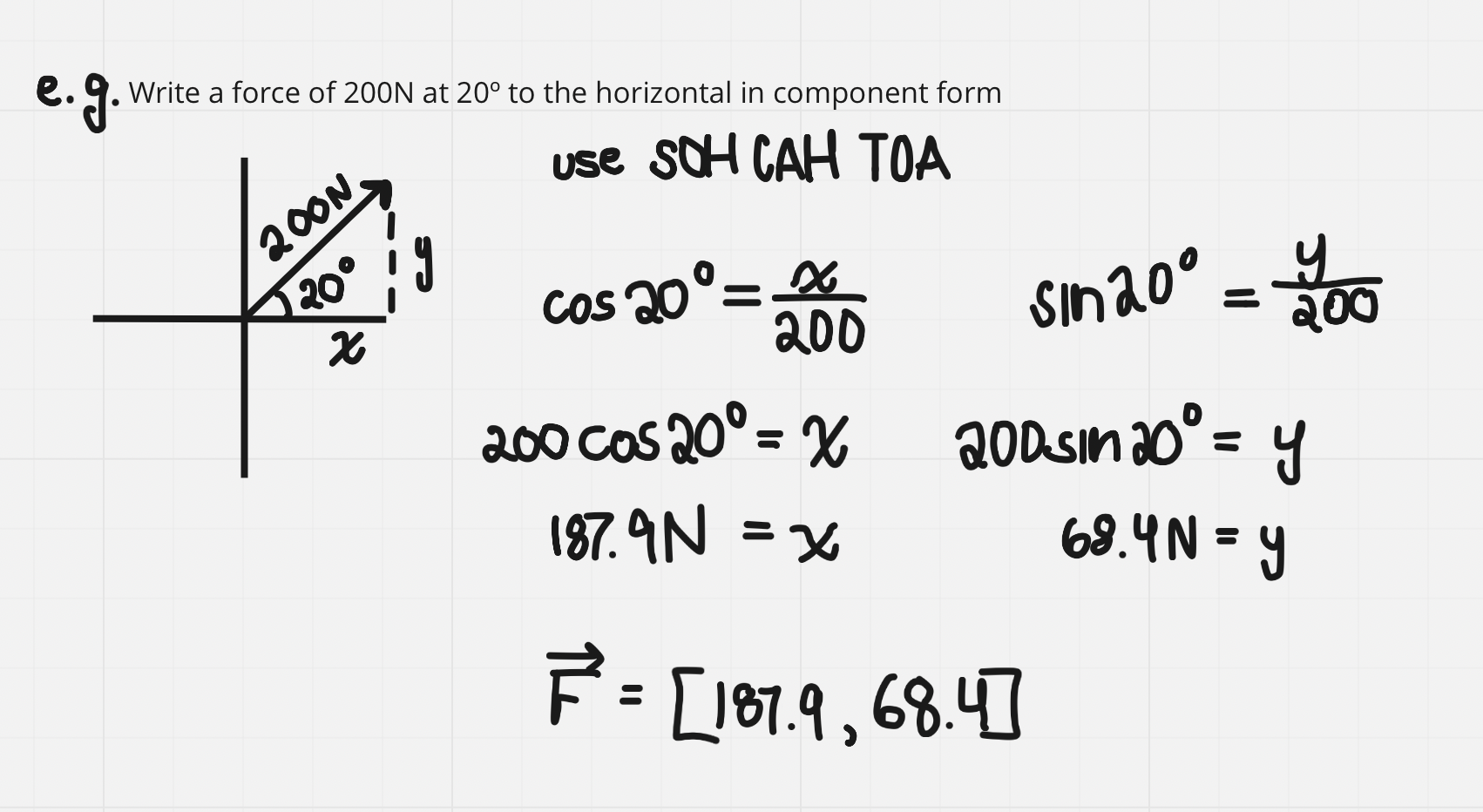
Converting to Component Form:
- Draw a diagram
- Use SOH CAH TOA to find x and y respectively (x and y component)
- Put both answers in as coordinates, surrounded by square brackets
The magnitude of an algebraic vector
- Found by calculating the vector sum of the x and y components (Pythagorean theorem for hypotenuse)

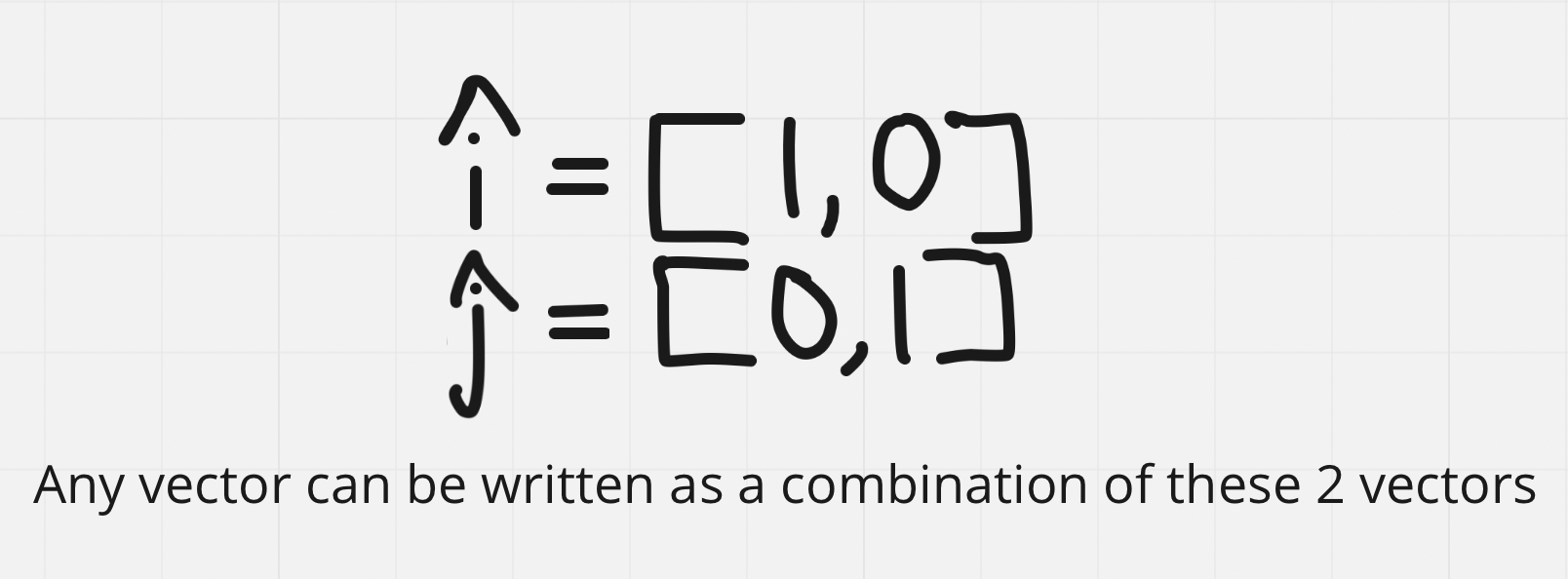
Unit vectors
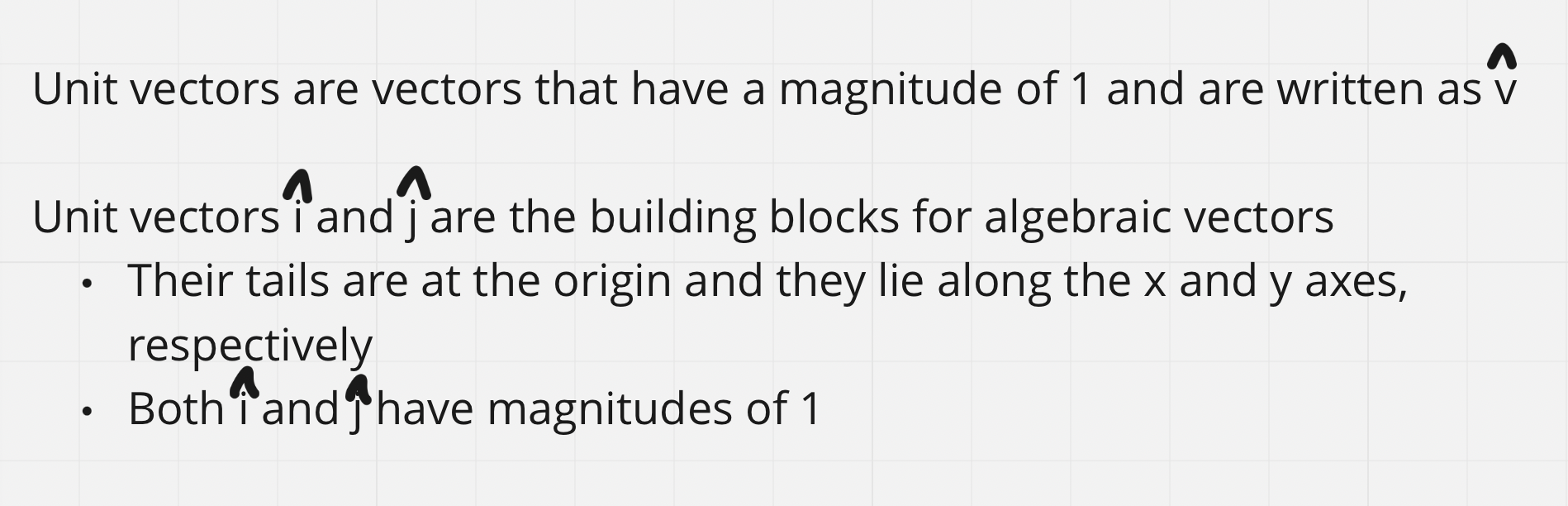
In component form:
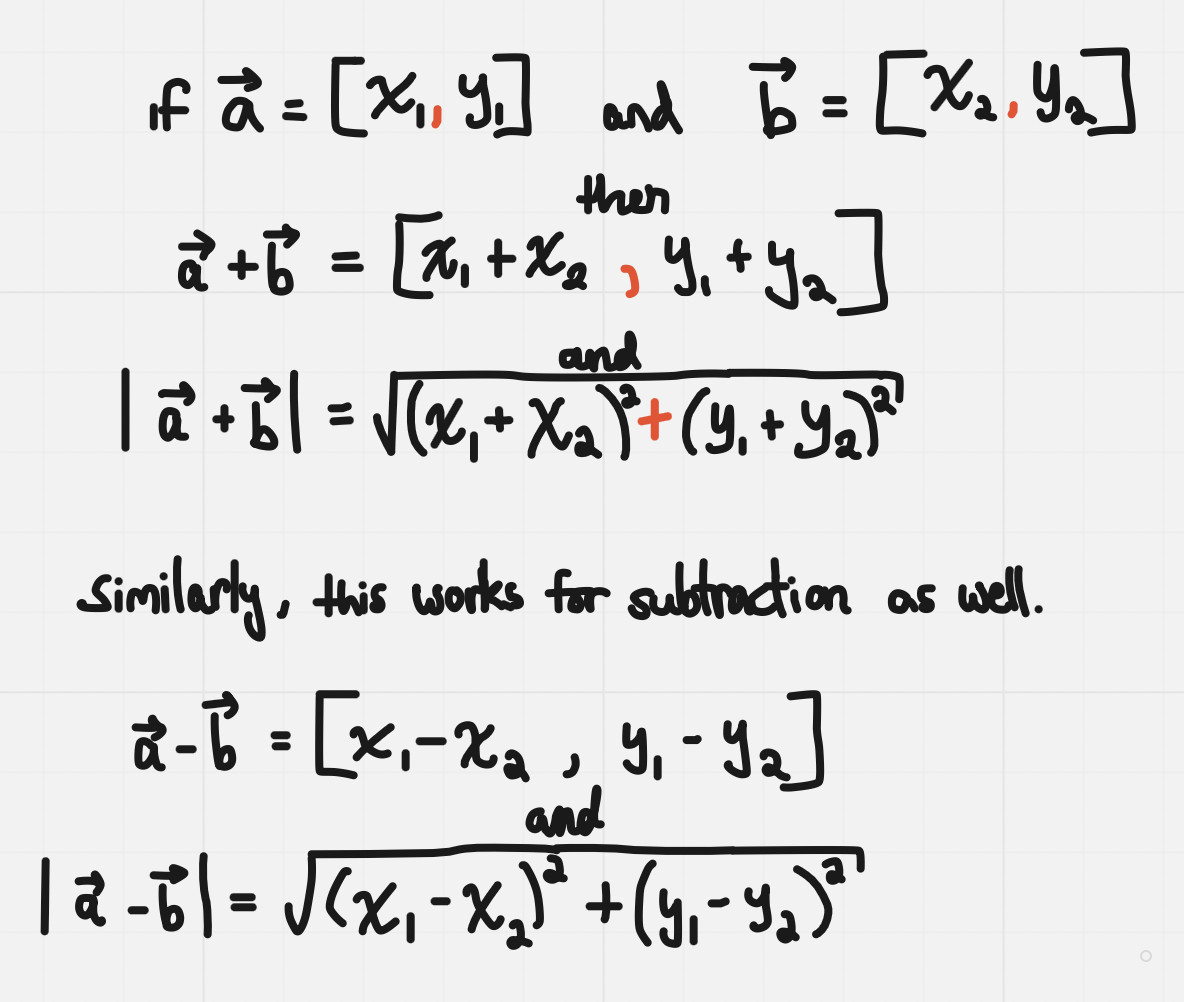
Adding and subtracting algebraic vectors
- To find the sum or difference of 2 or more algebraic vectors, simply add or subtract their components
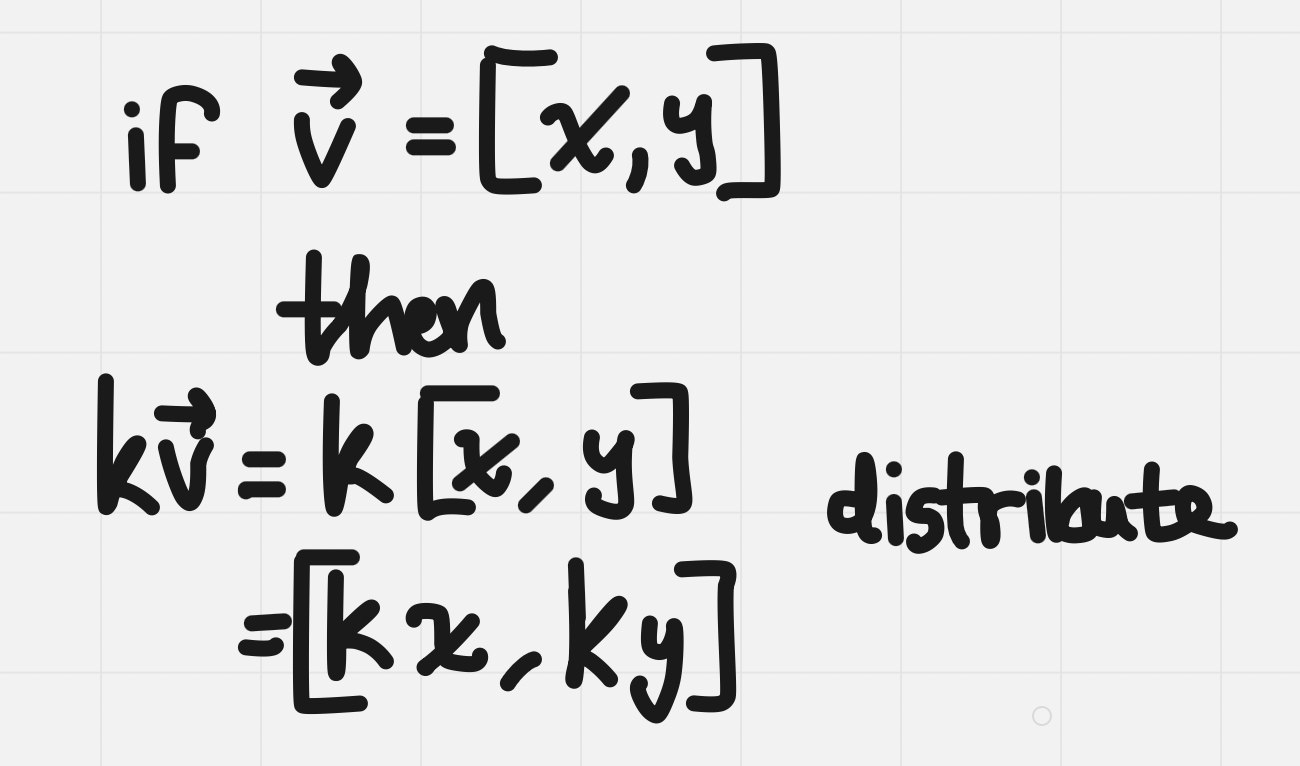
Multiplying vectors by scalars
- When multiplying algebraic vectors by scalars, simply multiply each component by the scalar
Colinear vectors
- Collinear vectors: vectors that have the same direction but different magnitude. They are always scalar multiples of each other
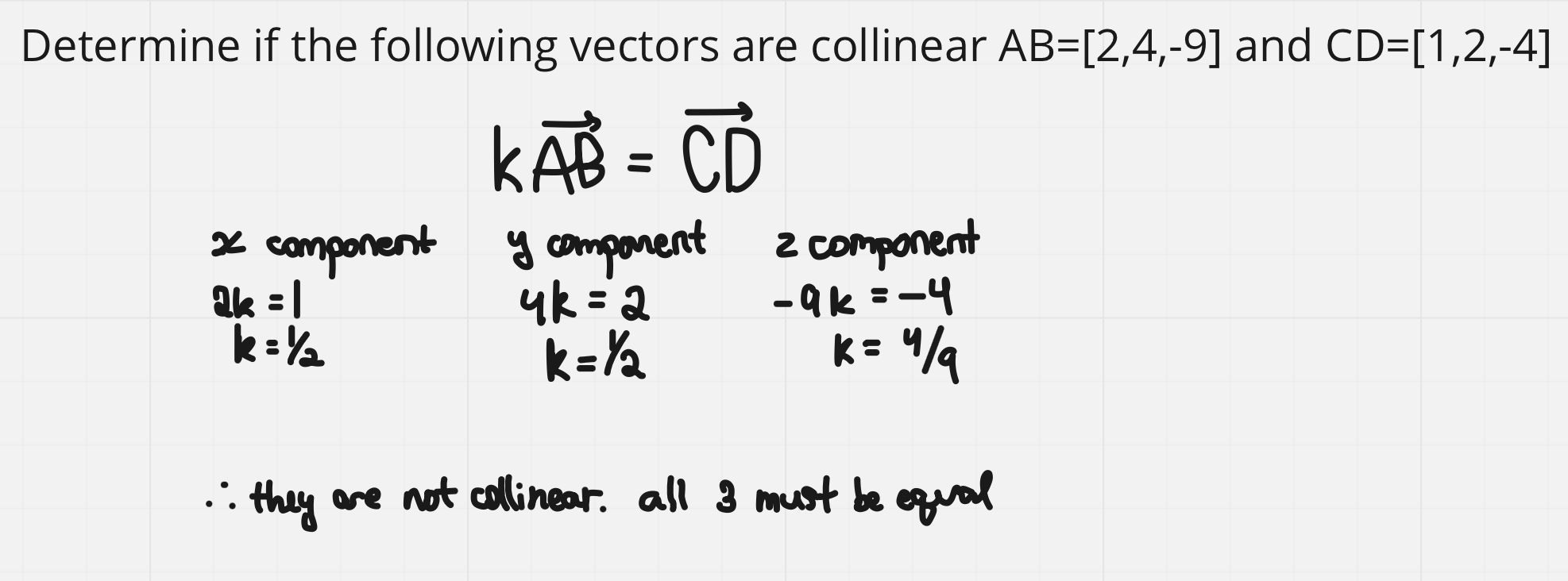
To determine if 2 vectors are collinear, we can determine if there is some scalar k we can multiply both vectors by to make them equivalent

Colinear unit vectors
- A collinear unit vector to a vector must have the following criteria
- Has a magnitude of 1 (units)
- Is a scalar multiple of the original vector (collinear)
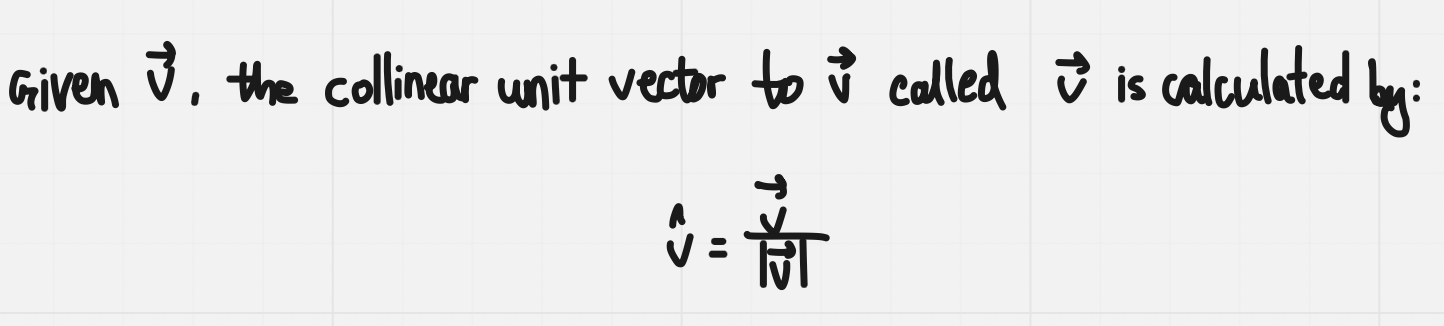
We can find collinear unit vector to a vector using the following formula:
Algebraic vectors defined by two points
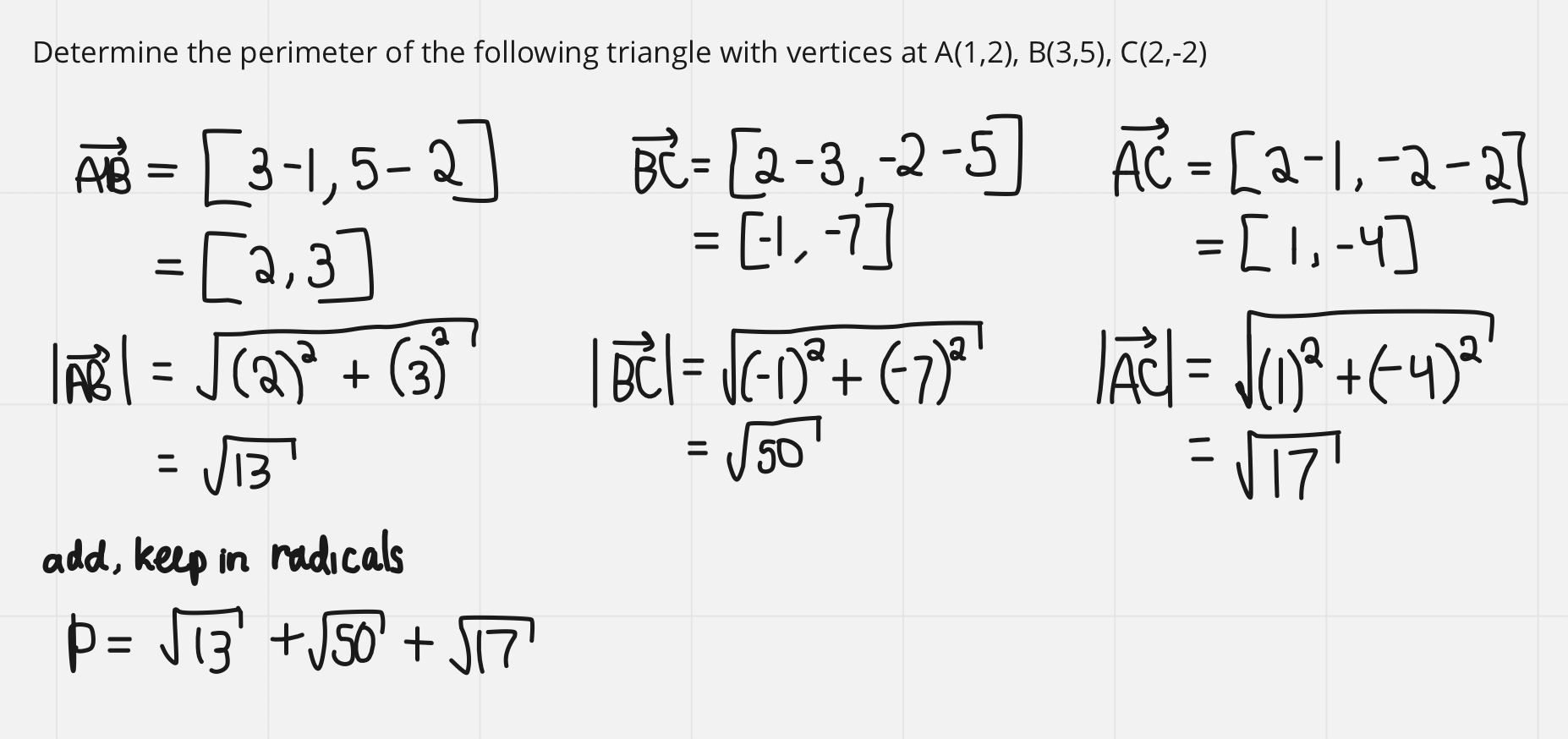
- Sometimes we are given the coordinates of 2 points and we want to express the vector between the 2 points as a position vector
- To find the position vector given 2 points take the coordinates of the head and subtract the coordinates of the tail
- To find the magnitude of this vector, simply take the magnitude as usual
Finding the perimeter given only the vertices: find each magnitude and add them up
e.g.
3D vectors
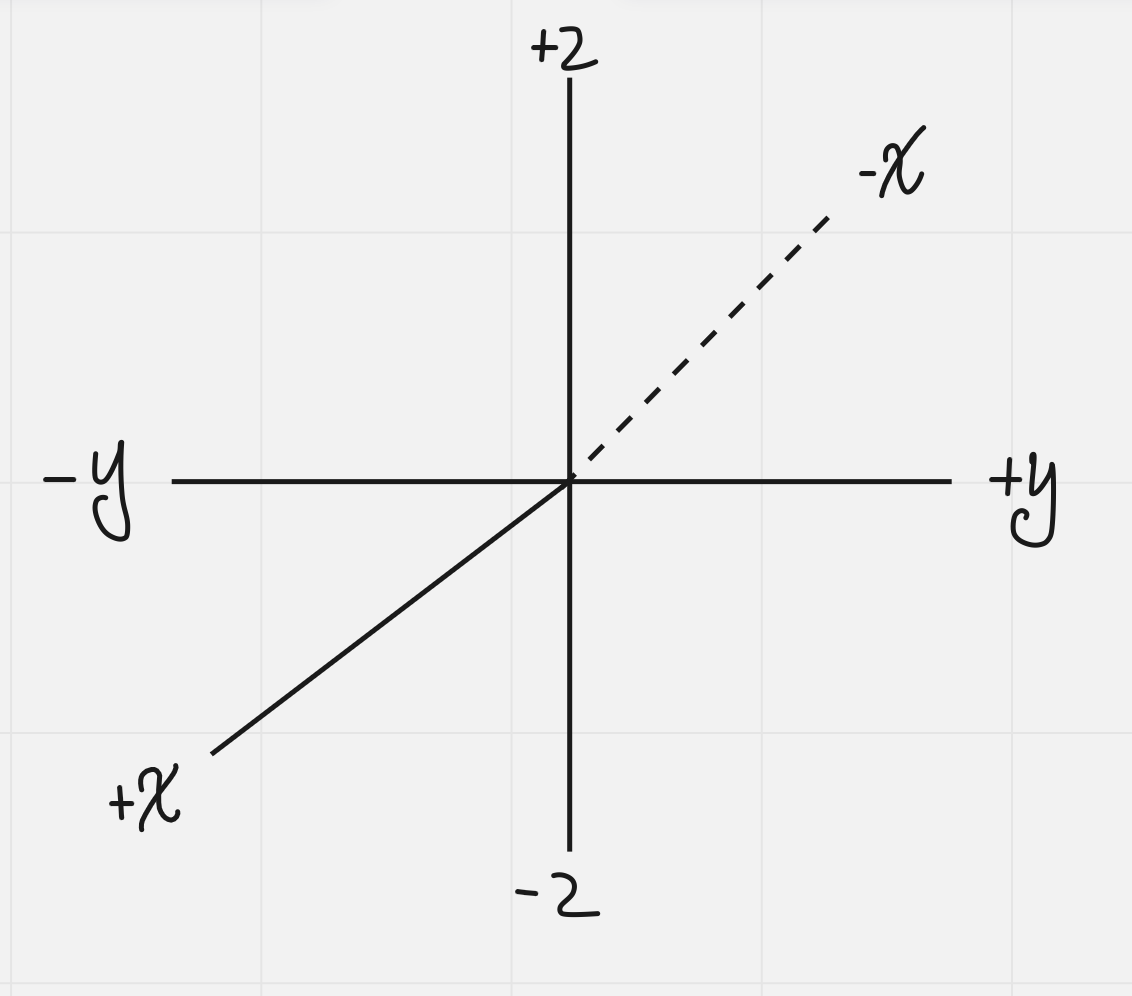
- A 2D coordinate system has 4 quadrants. A 3D coordinate system has eight octants
- 3D coordinates have an x, y and z component
A 3D Cartesian plane:
Working with 3D vectors
- We can perform the exact same calculations with 3D vectors as we did with 2D vectors
- The only difference is we now need to factor in the z component
- We can now perform magnitude, addition, subtraction, collinear vectors, vector between 2 points, & scalar multiplication

Determining if vectors are collinear
e.g.
Dot product
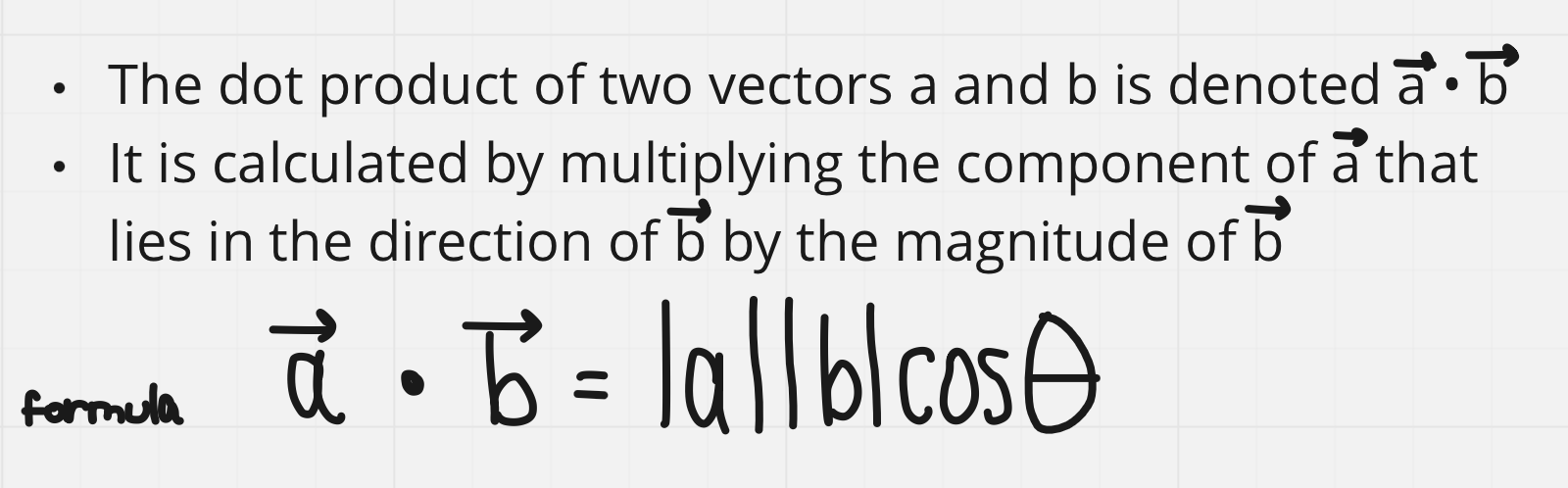
- The dot product always produces a scalar (not a vector) and is sometimes referred to as the %%scalar product%%
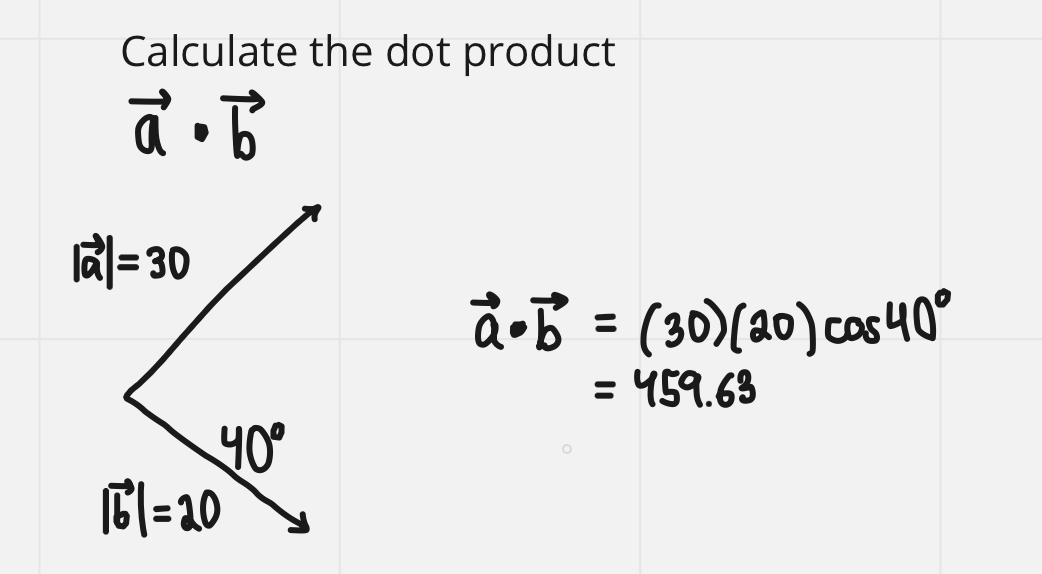
- The dot product formula (above) is often used when we’re given geometric vectors or angles between 2 vectors
e.g.
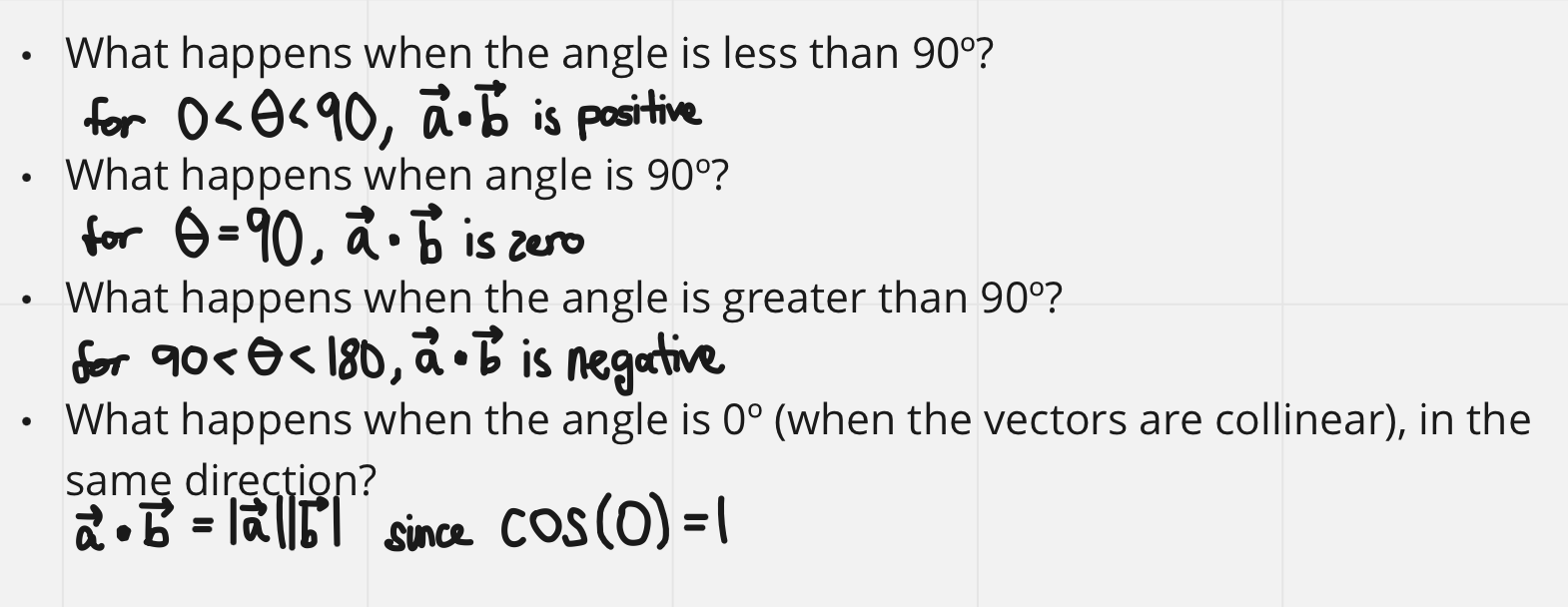
We can make conclusions about the dot product for various angles between the vectors
One application of the dot product (more when given Cartesian plane) is the ability to find the angle between the 2 vectors
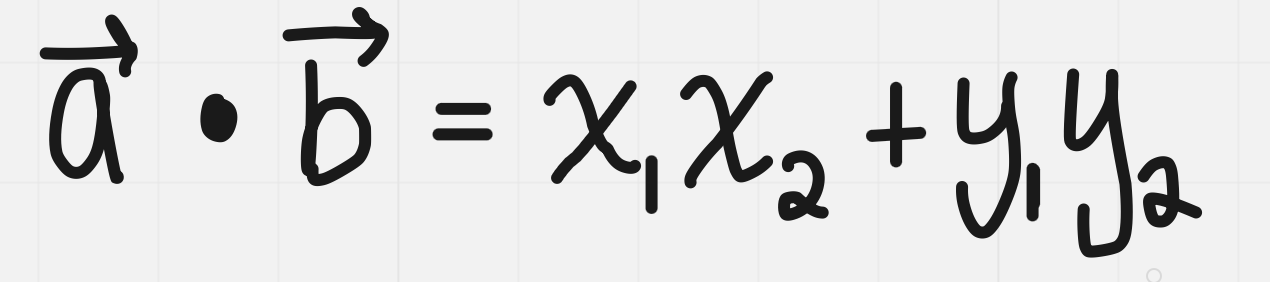
We can also determine the dot product given algebraic vectors
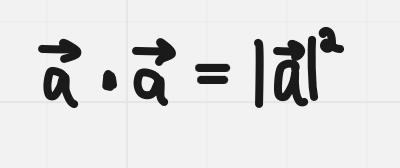
Some properties hold true with the dot product:
- Distributive property

- Magnitudes
- Associative property with a scalar

Scalar and vector projection
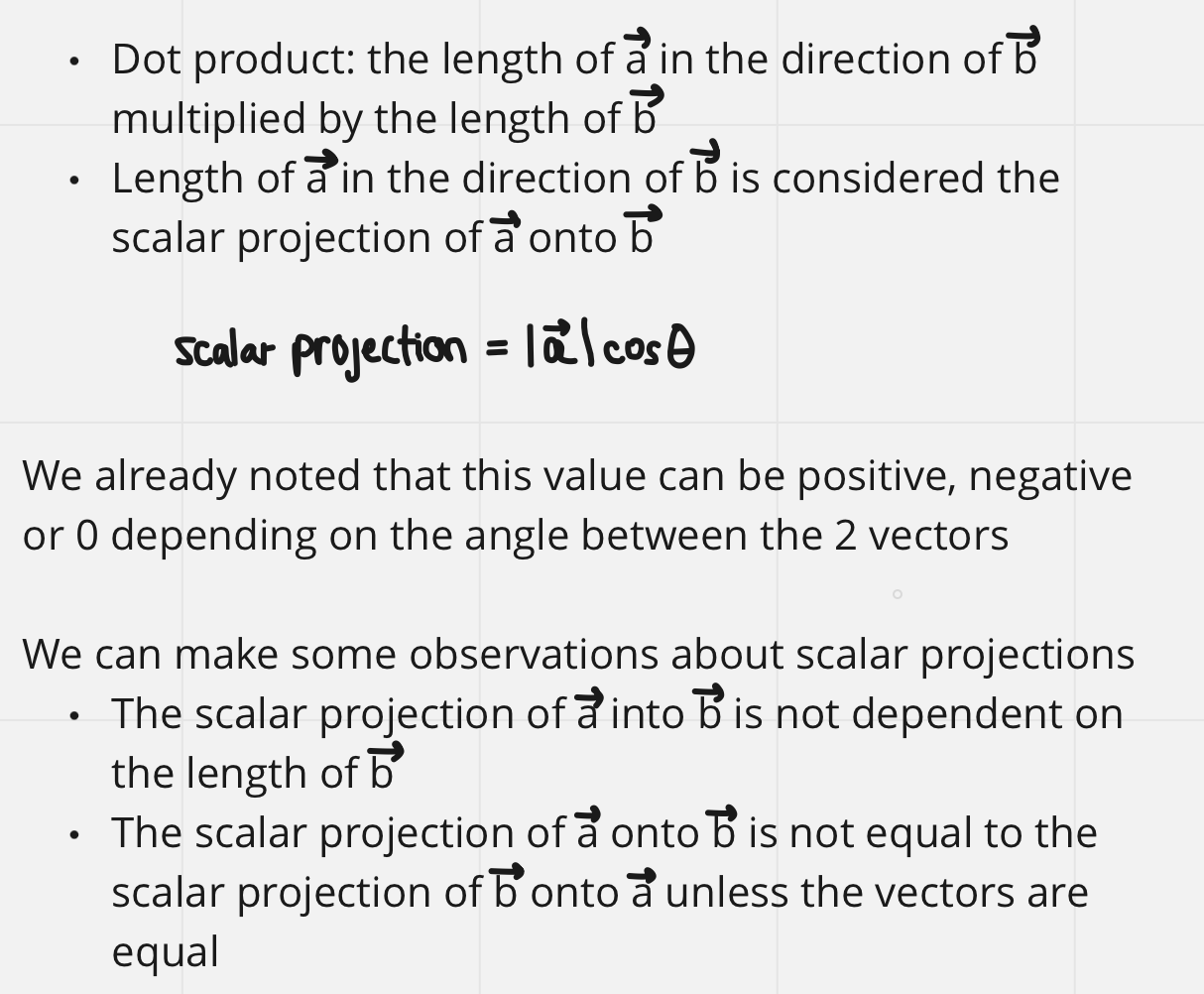
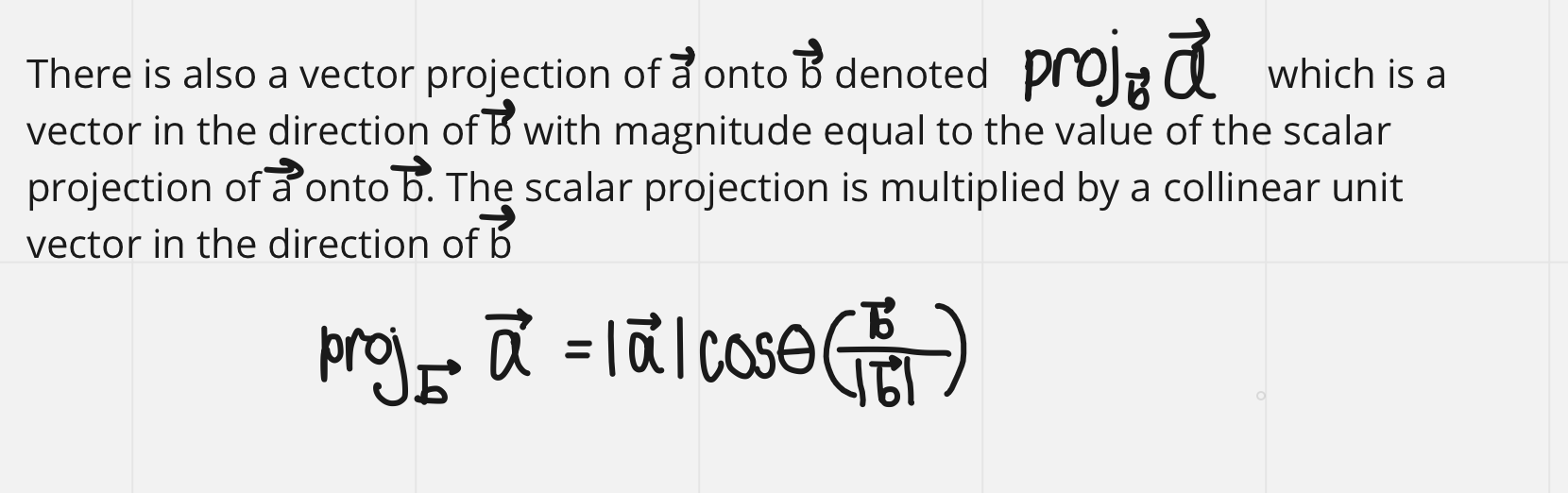
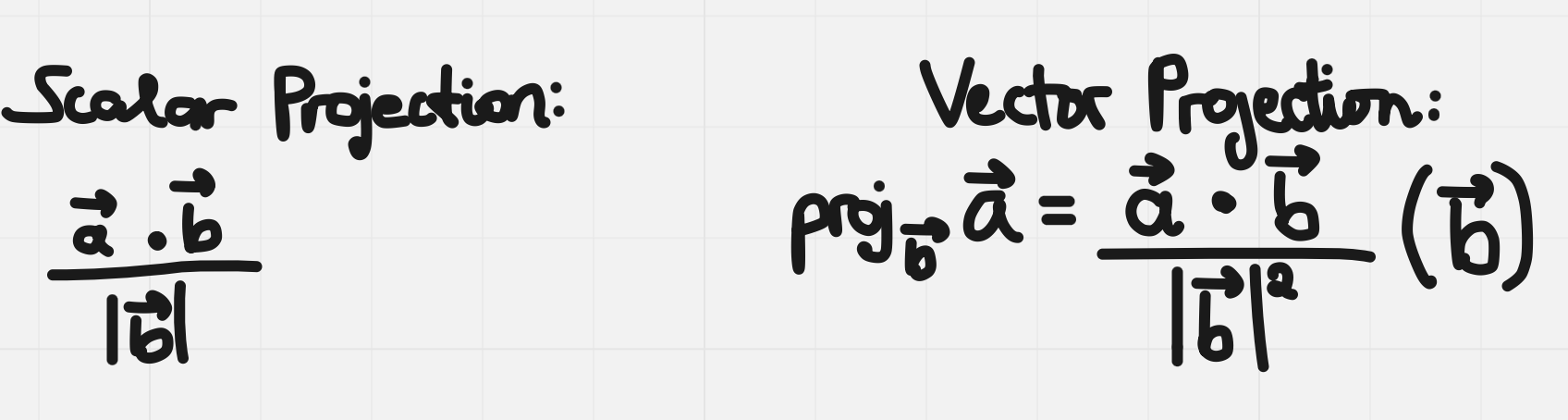
- Scalar and vector projection are more often found using their algebraic vectors
- We can rearrange the dot product formula to obtain another equivalent expression for scalar and vector projections
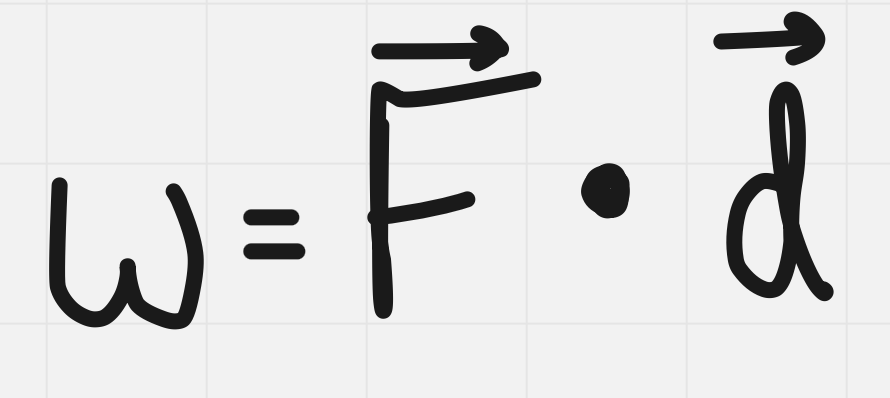
Work
- Dot product between force and displacement
- Measured in Joules (J)
- Force is said to do work if when acting there is a displacement in the direction of the force
Cross Product
- Another form of vector multiplication sometimes known as vector products

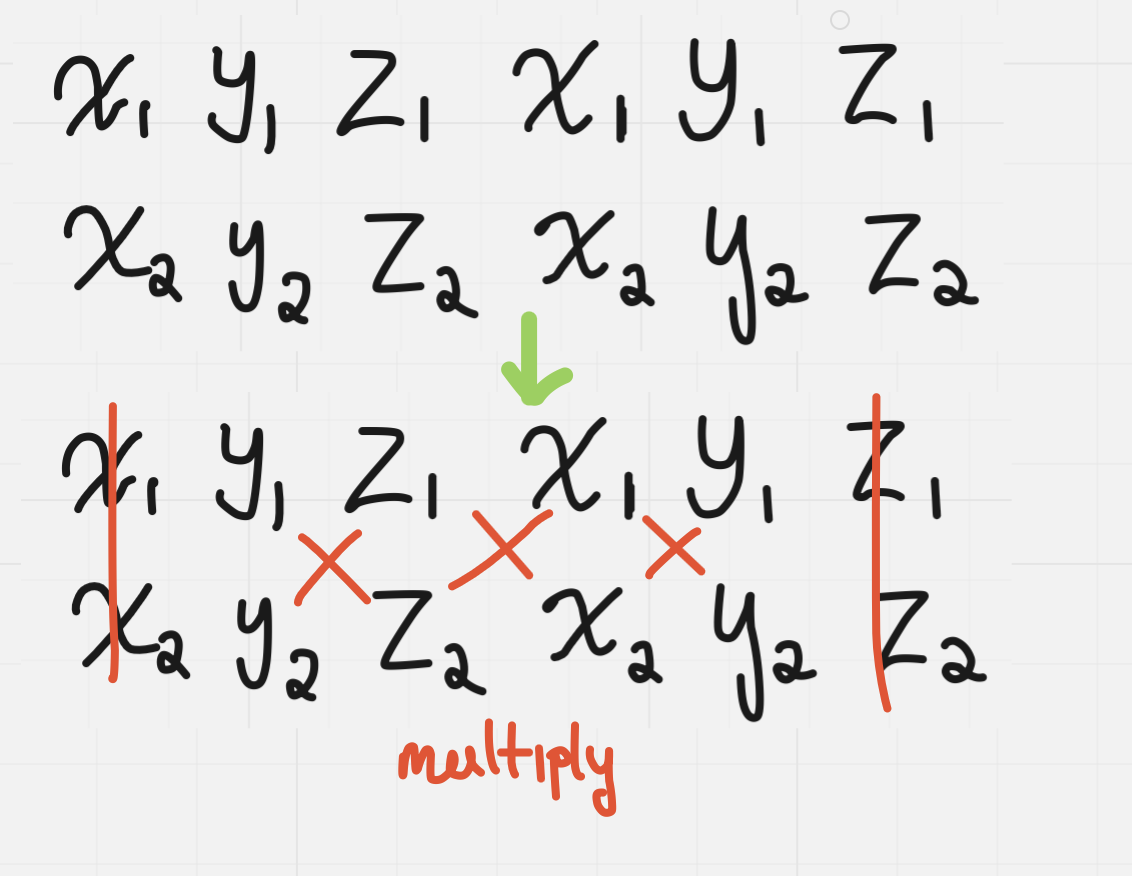
- A cross product will always result in a third vector that is perpendicular to the original 2 vectors. This can only be achieved in 3D space and therefore only 3D vectors can have a cross product

There is also another way to remember the cross product
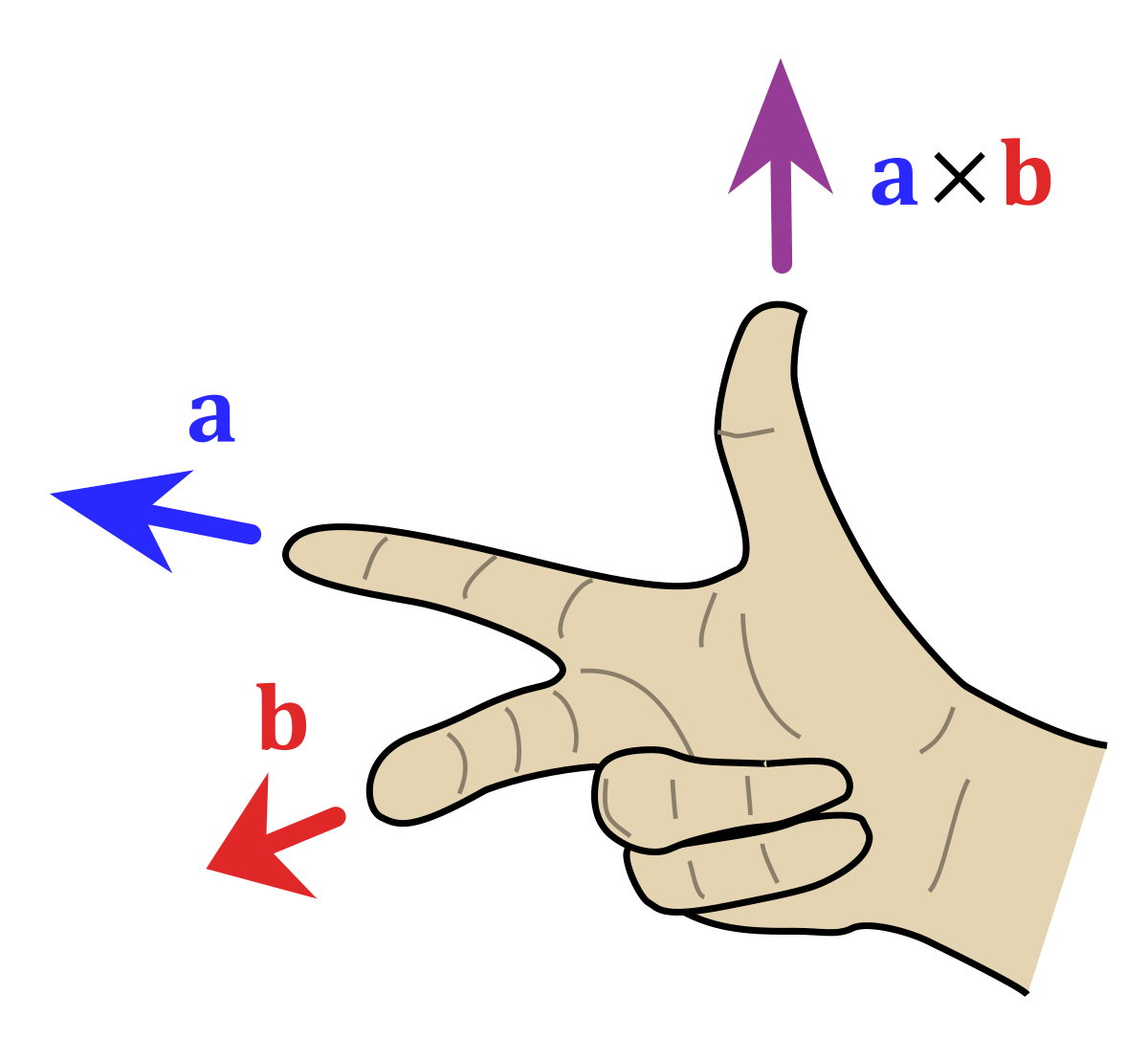
The right hand rule is used to determine the orientation of axes in 3 space. The right hand rule can determine the direction of the cross product vector given two other vectors
We can also use the cross product to solve problems in geometry. We can determine area of parallelogram, area of triangle, and volume of parallelepiped using the cross product

The area of a triangle can be calculated by finding the area of a parallelogram and dividing it by 2
Torque
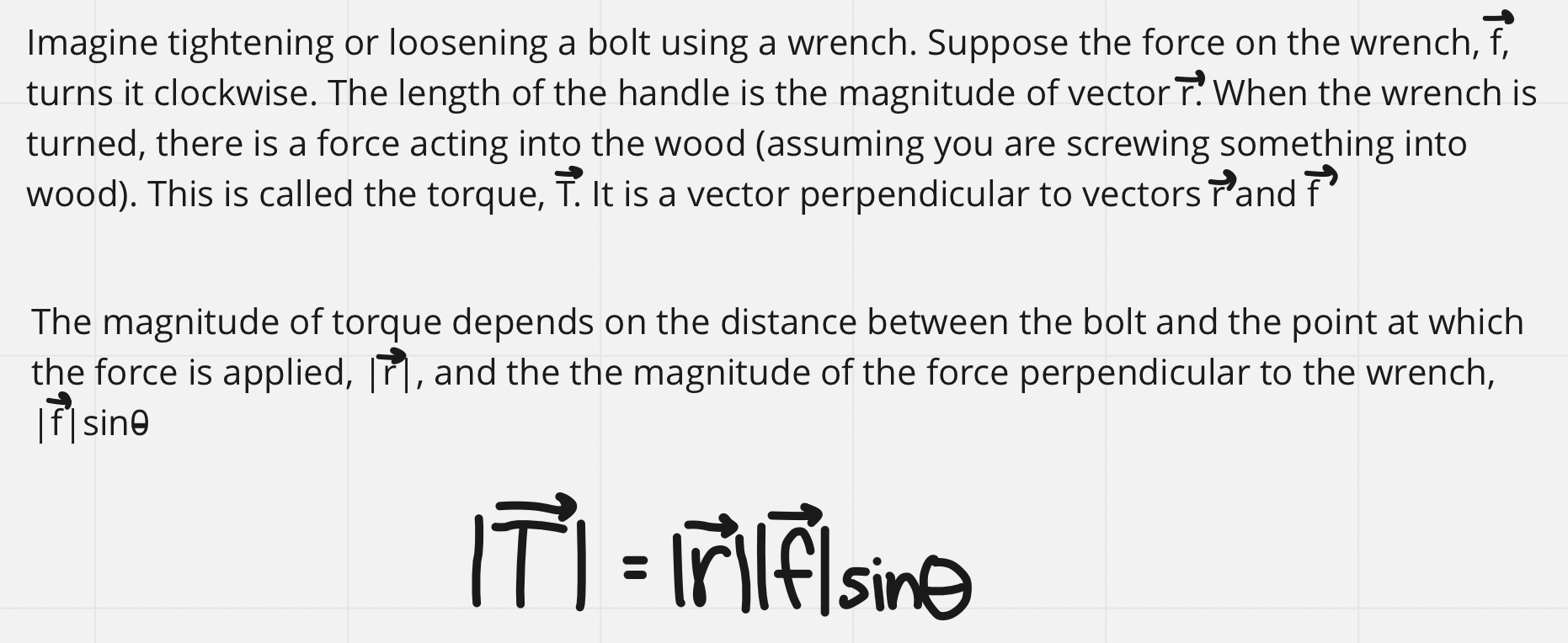
- The magnitude measures the twisting effect of the applied force. Torque is also the cross product of two vectors
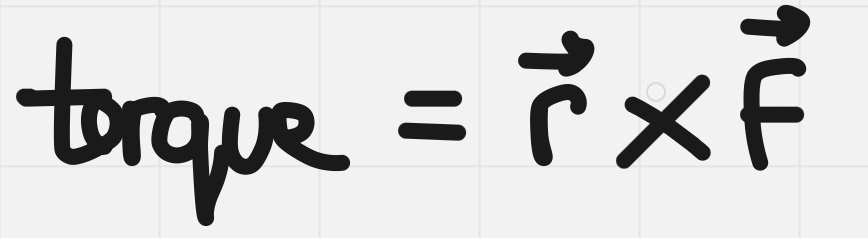
Torque is measured if the length is given in meters and the force is in Newtons. Therefore torque is measured in Nm (Newton meters)