Unit 1 Notes (apes)
Species Interactions
Symbiosis
Mutualism: When both organisms benefit from an interaction (+,+)
Commensalism: One organism benefits and the other is unaffected (+,0)
Parasitism: One organism is hurt and the other benefits (+,-)
Predation: One organism benefits and the other is killed or gravely harmed (+,-)
Competition
Intraspecific: Between members of the same species
Interspecific: Between members of other species
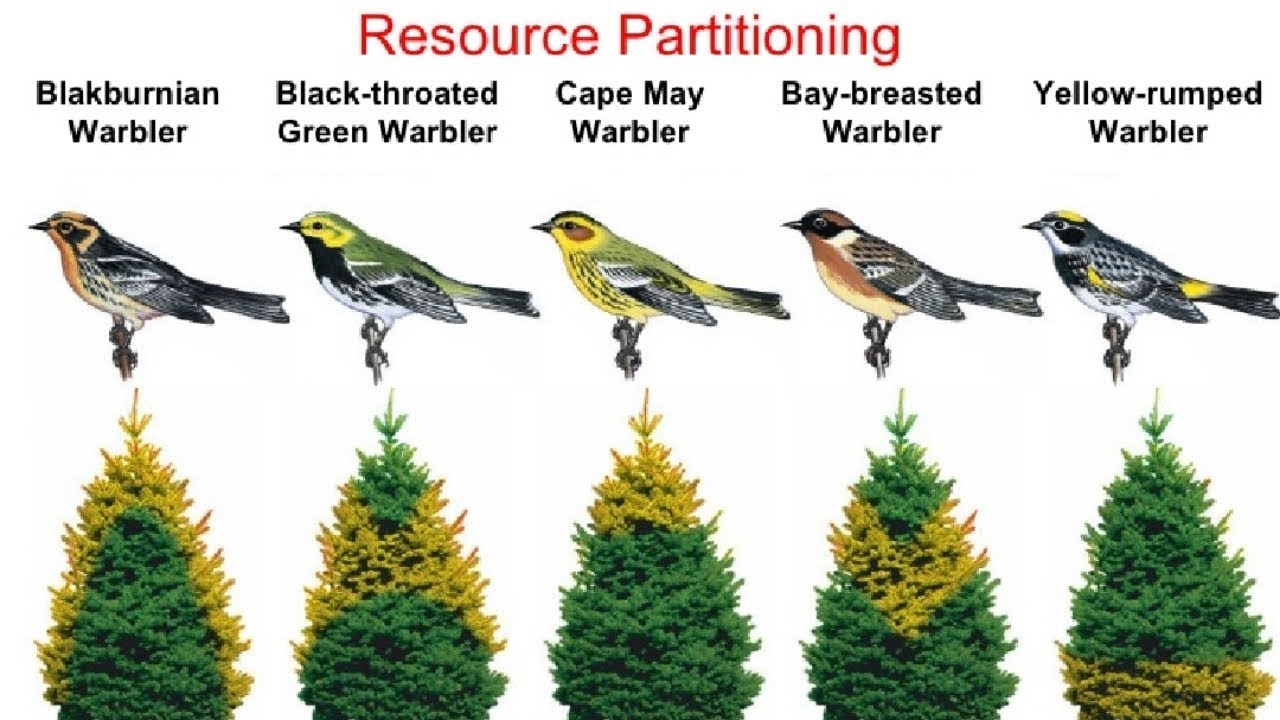
Resource Portioning: Species share limited resources by utilizing different resources or occupying distinct niches in an ecosystem.
Terrestrial Biomes
Geographic and geologic influences
Latitude
Latitude
Rain shadow
Oceans
Land Biomes
Deserts
With an average high of 20 degrees Celsius and a low of 0, the desert is usually hot and dry.
Deserts also have an average of 0 mm of precipitation every year.
Threats: Climate change and water depletion
Tundra
Tundras have a high of 5 degrees Celsius and a low of -15 degrees. This makes the biome cold, and treeless, and has an abundance of permafrost.
Threats: melting permafrost from climate change and mining
Grasslands
Temperate Grassland
Known as the “Cold desert”, the temperate grassland often has harsh cold winters and hot dry summers which result in fires.
Threats: Agriculture
Savannas
Often, they have warm temperatures with wet and dry seasons.
Threats: Agriculture
Coniferous (Boreal, Taiga)
Cold winters, short growing seasons, and poor soil are all traits of coniferous forests.
Threats: Logging (cutting down trees)
Temperate Deciduous
They tend to have warm summers and cold winters.
Threats: Agriculture
Tropical Rain Forest
Tropical rainforests tend to have poor soil
Threats: Slash and burn, agriculture
(i can’t think of anything else to write)
Aquatic Biomes
Oceans and Estuaries
Aquatic biomes together make up 75% of the earth’s surface. Only about 3% of the earth’s water is drinkable.
Open ocean: No sunlight reaches the bottom
Photic zone: the top layer, nearest the surface of the ocean and is also called the sunlight layer
Aphotic zone: The portion of a lake or ocean where there is little or no sunlight.
Freshwater
Rivers and Streams
Turbulent water moves dissolved oxygen. Animals need this
The Carbon Cycle
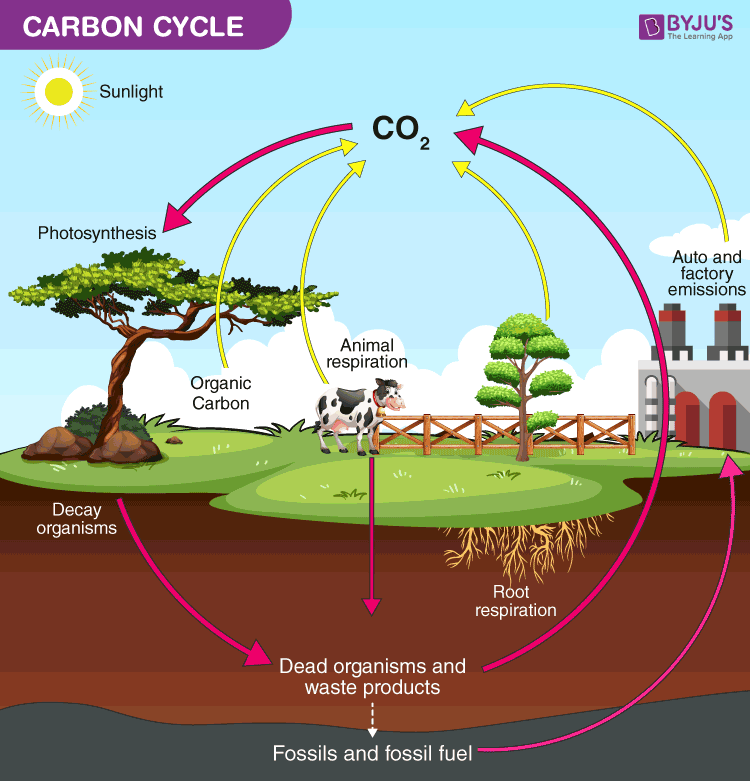
The carbon cycle is the exchange of carbon between the atmosphere, oceans, and living organisms. Key points include:
Plants absorb carbon dioxide (CO2) during photosynthesis.
Animals consume plants, transferring carbon compounds.
Respiration releases carbon back into the atmosphere.
Decomposition of dead organisms also releases carbon.
Some carbon is stored in fossil fuels and carbonate rocks.
Human activities, like burning fossil fuels, increase CO2 levels, causing climate change.
The carbon cycle balances carbon in Earth's systems, but human actions disrupt this balance.
Short Cycle - Fast Carbon
Carbon that moves through animals and plants through photosynthesis and cellular respiration
Long Cycle - Slow Carbon
Carbon that has been stored underground for millions of years
Sinks/Reservoirs
Deep ocean sediments (sedimentary rock)
Ocean
Nitrogen Cycle
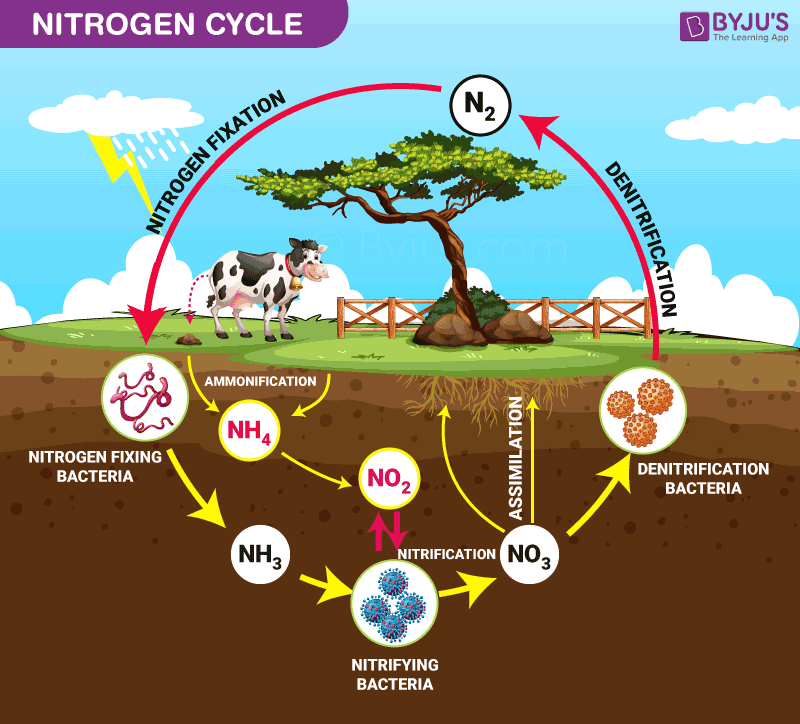
Nitrogen Fixation
N2 → NH3
Nitrification
NH3 → NO2 → NO3
Ammonification
NH3 → NH4
Denitrification
NO2
or → N2
NO3
Human Impact
Excess nitrogen can build up in waterways which happens to be a type of pollution. This type of pollution occurs when the burning of fossil fuels releases NOx (Nitrogen oxide, air pollutant)
Phosphorus Cycle
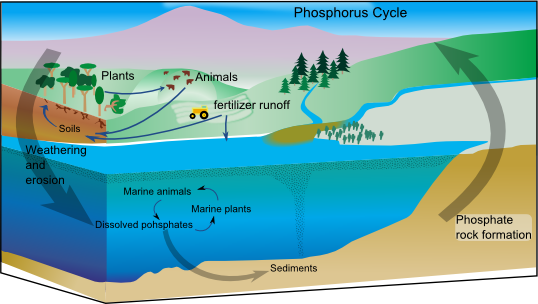
The phosphorus cycle describes how phosphorus moves through ecosystems. Rocks weather, releasing phosphorus into the soil. Plants absorb it from the soil, animals get it from plants. When plants and animals die, phosphorus goes back to the soil. Erosion can wash phosphorus into water, where aquatic plants and animals can take it up. Eventually, it can become sedimentary rocks, completing the cycle.
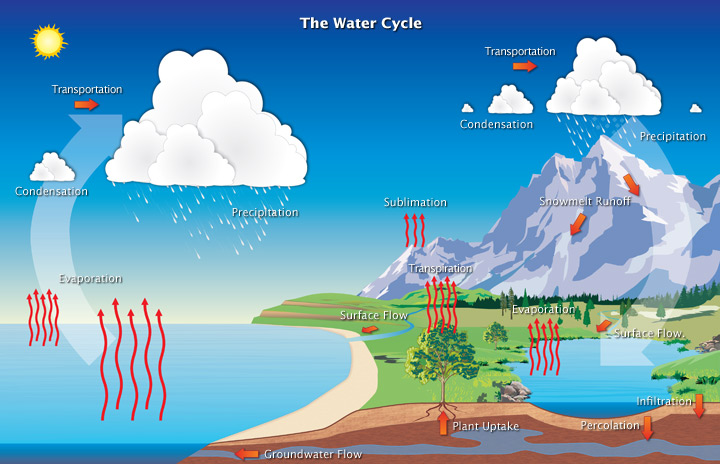
Hydrologic Cycle
The water cycle, or hydrological cycle, is the continuous movement of water on, above, and below the Earth's surface. It involves evaporation, condensation, precipitation, and runoff.
Evaporation: Heat from the sun turns water into vapor, which rises into the atmosphere.
Condensation: The water vapor cools and forms clouds.
Precipitation: Water droplets in clouds fall as rain, snow, sleet, or hail.
Runoff: Water on land flows into rivers, lakes, and oceans, restarting the cycle.
Primary Productivity
6H2O → C6H12O6 + 6O2 (glucose)
GPP | Respiration | NPP |
Gross primary productivity
| Respiration
| Net primary productivity
|
Biomes
More plants = More productivity
More sunlight = Higher productivity
Oceans
Red and blue wavelengths do not go into deep oceans which means there’s no photosynthesis occurring
Energy Flow in Ecosystems
Trophic Levels
Trophic levels are the different stages in a food chain that show how energy moves through an ecosystem. They are:
Producers: Plants that make their own food using sunlight.
Primary Consumers: Herbivores that eat plants.
Secondary Consumers: Carnivores that eat herbivores.
Tertiary Consumers: Top predators that eat other carnivores.
Each level depends on the one below it for energy.
Food Web
Food Web: A network of interconnected food chains in an ecosystem.
Producers: Plants that make their own food using sunlight.
Consumers: Animals that eat plants (herbivores) or other animals (carnivores).
Decomposers: Organisms like fungi and bacteria that break down dead matter, returning nutrients to the soil.
Energy Flow: Energy moves from producers to consumers and then to decomposers.
Balance: A healthy food web maintains ecosystem stability and biodiversity.
The 10% Rule
90% of energy is lost as heat and respiration
General Vocab
Decomposers: Breaks down organic material
Detritivore: Eats dead material
Scavenger: Eats everything
Biomass: The mass of living biological organisms in a given area or ecosystem at a given time
Niche: An organism’s job in an environment