Oral-Communication7
Oral Communication
Communication – exchange of people’s thoughts, feelings, expressions, observations. It may be using words, phrase, body, and sign
Dynamic – ever changing; constant change
Systemic – system with a group of elements that occurs within multiple system
Symbolic – interaction through symbols; verbal communication uses language arbitrary; no inherent meaning
Meaningful – interpreting, understanding, giving, transacting and sharing meaning; denotative and connotative
Relational – influences relationship and vice versa
Presentational – provides information about a person’s perspective and worldview
Sender
-conveys message
-Source of information that initiates the communication
-begins with the sender
Receiver
-one who listens and decodes the conveyed message
-receive frames of reference
-who the message is directed
Message
-content, idea that wants a sender to send to receiver
Channel
-medium or means through which the message is transmitted it connects
Noise
-source of hindrance
-interference
-anything that reduces the quality of the signal sent by the sender through the channel
Physical noise – comes from the environment
Psychological noise – mental state of a person
Physiological noise – bodily condition
Semantic noise – anything related to the meaning of the words that distorts or mask the message
Situation – time and place
Feedback – receiver’s message
COMMUNICATION BREAKDOWN
-defined by Emily Rodgers in her online article, “failure to exchange information, resulting in lack of communication”
1. Language barriers – words used may act as a barrier
2. Psychological Barrier – the psychological condition
3. Physiological Barriers – physical condition
4. Physical Barriers – geographic location. Distance
5. Attitudinal Barriers – prejudices and other related biases. Listeners attitude towards the speaker
6. Jumping to an immediate conclusion – confusing details with inferences is a common factor
7. Dysfunctional Feedbacks – ignoring or not responding to a suggestion
8.Lacking of confidence – being shy, difficultly being assertive or low self-worth
Models of comunication
-are systematic representations of the process which help in understanding how communication works can be done
1. Linear Model
-is a simple one-way communication model. The message flows in a straight line from the sender to receiver
-There is no concept of feedback. The only task a receiver does here is to receive the message
a. ARISTOTLE’S MODEL OF COMMUNICATION
-mainly focused on speaker and speech. It can be broadly divided into 5 primary elements: speaker, speech, occasion, audience, effect
-speaker-centered model
-the role of the audience is passive, influenced by speech
-this makes the communication process one way, from the speaker to receiver
-the setting where the listener is situated is also an important part of this model. It is setting that dictates the Message
3 SETTING IN ARISTOTLE’S
Legal setting – the courts where ordinary people defended themselves (there were no lawyer then)
Deliberative setting – the political assemblies, the highest of which was the Roman Senate
Ceremonial Setting – celebrations held when they won a war, when they lost a leader or had a new one
Criticisms of Aristotle Model
There is no concept of feedback, it is one way from speaker to audience
There is no concept of communication failures like noise and barriers
This model can only be used in public speaking
b. LASSWELL’S COMMUNICATION MODEL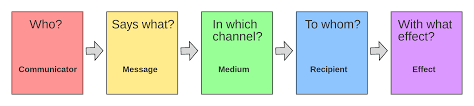
-describes an act of communication by defining who said it, what was said, in what channel it was said, to whom it was said, and with what effect it was said
-though Lasswell’s model was developed to analyze mass communication, this model is used for interpersonal communication or group communication to be disseminated message to various groups in various situation
-it was developed to study the media propaganda of countries and business at that time
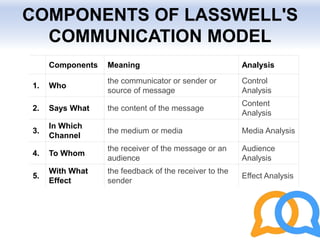
Components of Lasswell Model
-control analysis helps the sender to have all the power
-content analysis is associated with stereotyping and representation of different groups politically. It also related to the purpose or the ulterior motives of the message
-media analysis represents which medium should be used to exercise maximum power against the receivers
-audience analysis shows who are the target population to be manipulated or brain-washed
-effect analysis is done before the process starts. It used to predict the effect of the message on the target population to be exploited
c. SHANNON-WEAVER’S MODEL OF COMMUNICATION
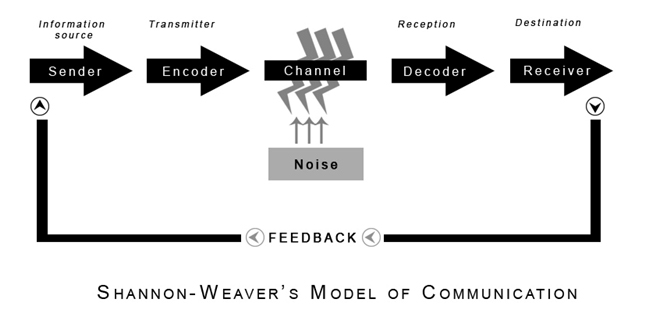
-Claude Shannon and Warren Weaver (1948) introduced the concept of “NOISE”
-Shannon Weaver’s Model of Communication is also known as the “TELEPHONE MODEL”
-this model of communication asserts that the message sent by the source is not necessarily the message received by the destination. This is due to the intervention of “noise that hampers communication.
-ex. Dropped calls, or faint signal
Concept of Shannon-Weaver Model
Sender: originator of the message or the information source selects desired message
Encoder: the transmitter which converts the message into signal
Decoder: the reception place of the signal which converts signals into a message. A reverse process of encode
Receiver: the destination of the message from the sender
Noise: the message is transferred from encoder to decoder through a channel.
d. BERLO’S MODEL OF COMMUNICATION
DAVID KENNETH BERLO’S SMCR MODEL OF COMMUNICATION
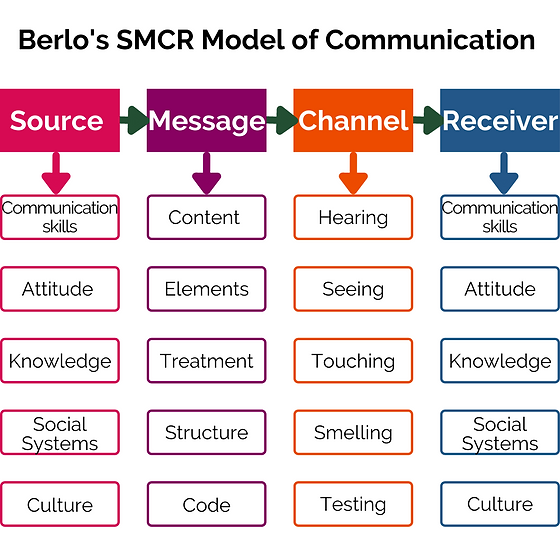
-in 1960, David Berlo postulated Berlo’s Sender-Message-Channel-Receiver (SMCR) model of communication from Shannon Weaver’s Model of Communication (1949). He described factors affecting the individual components in the communication making the communication more efficient
SOURCE
-S-Sender is the source of the message or the person who originates the message
-Communication Skills of a person is a factor that affect the communication process. If the sender has good communication skills, the message will be communicated better than if the sender’s communication skills are not good
-Attitude of the sender and the receiver creates the effect of the message. The person’s attitude towards self, the receiver and the environment change the meaning and effect of the message
-Knowledge. Familiarity with the subject of the message makes the communicated message have its effect more. Knowledge on the subject matter makes the communicator send the message effectively
-Social Systems. Values, beliefs, laws, rules, religion and many other social factors affect the sender’s way of communicating the message. It creates difference in the generation of message. Place and situation also fall under social systems
-Culture. Cultural differences make messages different. A person from one culture might find something offensive which is very much accepted in another culture
-M-MESSAGE
is the substance that is being sent by the sender to the receiver. It might be in the form of voice, audio, text, video or other media
-Content – it is the thing that is in the message
-Elements – are the nonverbal things that tag along with the content like gestures, signs, language, etc
-Treatment – the way in which the message is conveyed to the receiver. Treatment also affects the feedback of the receiver
-Structure – the structure of the message or the way it has been structured or arranged, affects the effectiveness of the message
-Code – the form in which the message is sent. It might be in the form of language, text, video, etc
-C-CHANNEL
is the medium used to send the message.
-Hearing – we receive the message through hearing
-Seeing – we perceive through seeing. We also get non-verbal messages by seeing
-Touching – many non-verbal communications happen from touching like holding hands
-Smelling – we collect information from smelling
-Tasting – taste also provides the information to be sent as a message
-R-RECEIVER
– is the person who gets the message sent in the process.
-Communication Skills
-Attitude
-Knowledege
-Social Systems
-Culture
Criticism of Berlo’s SMCR Model
There is no concept of feedback, so the effect is not considered
There is no concept of noise or any king of barrier in the communication process
It is a linear model of communication, there is no two-way communication
Both of the people must be similar according to all the factors mentioned above
ORAL COMMUNICATION
-it is way to verbally transmitting information and ideas from one individual or group to another
-it can be either formal or informal depending on the purpose of communication
Informal communication
-is the casual and unofficial form of communication wherein the information is exchange spontaneously between two or more persons without the conforming to the prescribed official rules, systems, formalities, and chain of commands
Ex. Face to face conversation
Telephone conversation
Discussion that takes place at business meetings
Formal Communication
-prescribed or official form of communication
-Is governed by the established chain of command
Ex. Presentations at business meetings
Classroom lectures
Commencement speeches, given a at graduation ceremony
ADVANTAGES OF ORAL COMMUNICATION
Less expensive
Saves time
Immediate feedback
Personal contact
Useful in difficult situations
Co-operative spirit
Useful in secret matters
Persuasive
Useful for all kinds of audience
DISADVANTAGE OF ORAL COMMUNICATION
Lack or accountability
Low of reference value
Greater scope for errors
Easily forgotten
Not useful for long distance
FUNCTION OF VERBAL COMMUNICATION
Regulation/control
Regulation
-rule or directive made and maintained by an authority
-the action or process of regulating or being regulated
Control
-the power to influenced or direct people behavior or the course of events
-it influences or direct people behavior
Regulation – following certain communication rules
Control – influencing people to behave
Verbal cues – are specific words
Non-verbal cues – hand gestures, bodily action, vocal tone, eye contact
Social Interaction
-refers to the spontaneous verbal exchanges occurring in natural setting that are typically familiar to the interactants
Emotional expression
Manifestation of ones internal emotional state. It is an important social signal that conveys a variety
Motivation
-desire to do things. It is a crucial element in setting and attaining goals
It is a key communication function that aims to encourage people into action
-words and gestures motivate people
Offering kind and affirming words to someone can encourage
-non-verbal cues such as patting on the back
Intrinsic motivation
-you are motivated to do the activity because it is internally rewarding
-you choose to do it because it’s fun, enjoyable, and satisfying
Extrinsic motivation
-order to gain an external reward in return
-your goal is focused on outcome, and does not satisfy you basic psychological needs
Information
-communication can be used in giving and getting information
-enables humans to get to know the world
-evident in news agencies, customer service and technical support sectors where objective use to share information to people
FUNCTION OF NON-VERBAL COMMUNICATION
Accenting – calling attention to a key part of the message. You create emphasis
Ex. Stamping, increasing volume, moving forward
Moderating – opposite of accenting as it seeks to reduce attention
Ex. Reducing volume, speeding up, being incoherent
Complementing – similar to accenting, but covers a wider range of the message
Ex. When talking about sad things, lowering head and using sad tone
Substituting – is the replacement of words with non-verbal language
Ex. Waggling eyebrows and grinning
Contradicting – sending a non-verbal message that disagree with what is being said
Ex. Saying no while gently nodding
Regulating – a typical use is around starting and ending speech
Can be used to send signals about speaking
Ex. Breaking (making) eye contact, raising eyebrows when you are about to speak
Repeating – is like complementing or accenting, but with a delay between verbal and non-verbal communication
Ex. Saying then shaking head afterward
Deceiving – non-verbal signals can be used as a part of lying or deceit, this takes careful control and it is easy send mixed messages
Ex. Getting someone to do something by acting excited