AnSc 121 LESSON 10
Poultry Health & Sanitation Management
good hygiene and sanitation practices will protect the flock from harmful pathogenic agents.
Basis of Health Management
Preventive medication program
Suitable monitoring program
Quarantine - isolation of sick animals, newly acquired ones should not join the flock for 40 days.
Hygiene - control of minimizing contacts of the flock from disease-causing microorganisms.
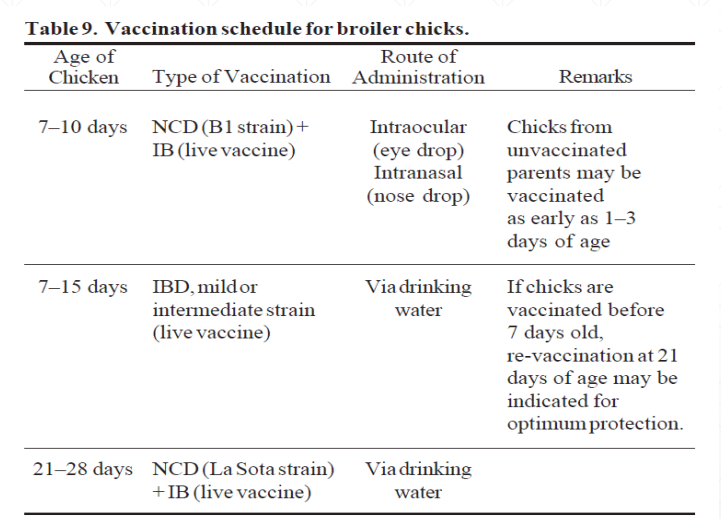
Vaccination - protective immunity of the flock, triggers the immune system of the birds. immunization comes after an interval of time (10-14 days).
What is a Vaccine?
biological products prepared from the organisms causing the disease.
Live vaccines are available against most viral diseases.
Sanitation
necessary to keep exposure to disease-causing organisms to a low level as possible.
Proper cleaning and disinfecting of poultry houses, premıses, and equipment reduce microbial challenges.
Disinfectants for Poultry Farms
Phenolic compounds - (cresol, orthophenyl-phenol, and orthobenzyl-parachlophenol), the indication is foot dips
Organic iodine combinations/iodophores - (povidone-iodine or known as betadine)
Quaternary ammonium compounds/quats - (benzalkonium chloride, benzethonium chloride, cetylpyridinium chloride)
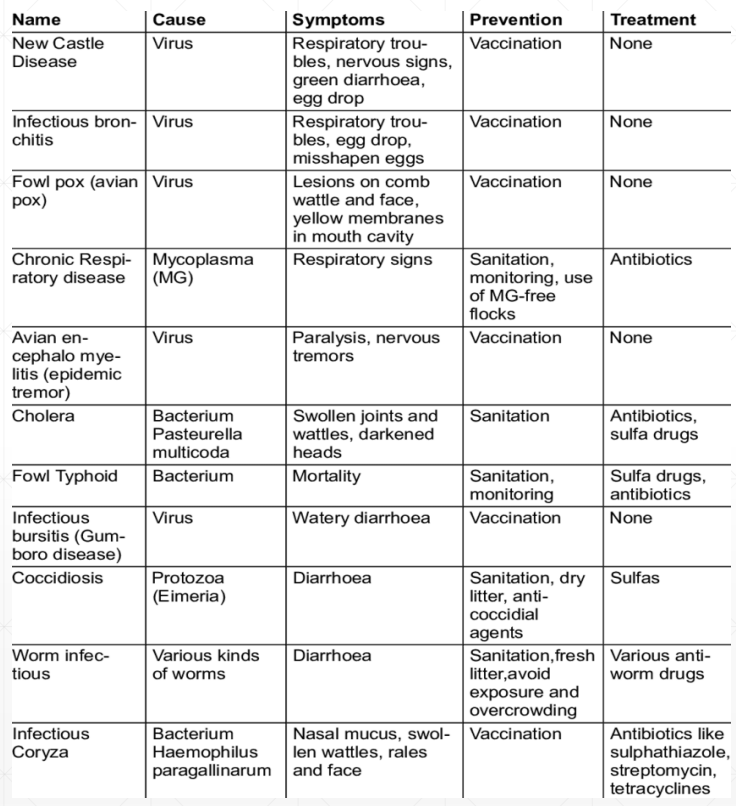
VIRAL DISEASES
Fowl Pox
viral disease
nodular proliferative skin lesions on the featherless parts of the body.
Prevention and control
Prophylactic vaccination
Fowl pox vaccine (4-6 weeks old)
second dose at (12-14 weeks old)
Etiolog
Family: Pox Viridae
Genus: Avipoxvirus
Double-stranded DNA
Ranikhet Disease
new castle disease (pukgaw)
viral disease: respiratory, nervous and digestive disorders, high mortality
Etiology
Paramyxoviridae
Paromyxovirus-1
Clinical signs
listlessness
edema around eyes
paralysis of legs
green diarrhea
neck, head, and legs are twisted
wheezing
swollen head and neck
discharge from eyes and nose
Prevention and Control
Prophylactic vaccine
Lentogenic strain
Mesogenic strain
BACTERIAL DISEASES
Infectious Coryza
fowl coryza
high contagious
acute disease of the upper respiratory tract
can turn into chronic respiratory disease
Etiology
Haemophilus paragallinarum
Small coccoid or gram negative rod
Non-motile
Exhibits bipolar staining
Clinical signs
mucoid nasal discharge with foul smelling
facial edema
conjunctivitis
swollen wattles
diarrhea
reduced feed/water consumption
Treatment and control
Gentamicin
Penicillin
Streptomycin
delivered in feed or drinking water
Proper Disinfection
Bacillary White Diarrhea
Pullorum disease caused by Salmonella pullorum
fatal septicemia of young chicks
Clinical Signs
Somnolecence
Weakness
Loss of appetite
Chalky white diarrhea
Stained greenish brown(sometimes) in and around vent
Treatment
Enrofloxacin
Parenteral injections
Oral liquids
Supportive therapy
Bumble Foot: Pododermatitis
injury to the lower surface of the foot
infection by Staphylococcus bacteria
Common Causes
rough perches
splinters
wire floors
poor litter or bedding
Clinical signs
Lameness
swelling of the foot pad
hard, pus-filled abscess on foot pad
Treatment
soak foot in warm water and epsom salt
disinfect with alcohol
if skin is open, drain pus from abscess
flsuh abscess cavity with hydrogen peroxide to cleanout pus and debris
pack with antibiotic ointment
wrap with gauze or elastic bandage
Prevention and Control
provide good quality bedding/flooring
remove sharp objects on the ground
DEFICIENCY DISEASE
Curled Toe Paralysis
Deficiency of Riboflavin
Poor growth
Weakness
Emaciation and diarrhea
unable to walk as their toes are turned inwards
Drooping of wings
Treatment
Riboflavin - 3.6mg/kg of feed in chicks
Riboflavin - 1.8mg/kg of feed in growers
Riboflavin - 2.2mg/kg of feed in layers