Speech Disorders: Childhood Disorders Part 2
Motor Speech Disorders Include: apraxia & dysarthria
Childhood Apraxia of Speech (CAS)
neurological speech disorder that affects the planning and programming of the movements necessary for speech.
this is a muscle planning disorder that causes difficulty producing sounds, words, & syllables
oral non-verbal apraxia (kiss, cough, lip smacks)
muscle movement is responsible
not at the level of phonological representations
not due to muscular weakness (i.e. not dysarthria)
not an issue with phonological representations (i.e. not specific language impairments)
articulation errors are not consistent
this is a motor planning disorder in which a person has the language capacity to talk, but the signals between their brain & mouth muscles are not sent correctly
What Is The Difference Between Speech Planning & Programming
speech planning - the process of organizing and structuring the content of a speech, including the selection of appropriate vocabulary, phrasing, and tone
speech programming - involves the physical movements required to produce speech, such as the coordination of breathing, vocal fold vibration, and articulation
Childhood Apraxia Of Speech
motor plan
setting general spatial (where it’s going), temporal (timing), & acoustic goals for the articulators
move the tongue to the alveolar ridge after /ka/
motor program
parameters of movement - which muscles need to contract and how much (how strong)
range of motion
direction
speed
force
muscle tension
both are “automatic” (procedural) in TD (typical development), which enables rapid speech production
Childhood Apraxia Of Speech
characteristics
difficulty specification of movement parameters required to make appropriate articulatory gestures for production goals
inconsistent errors on consonants & vowels in repeated productions of syllables or words
lengthened & disrupted transitions between sounds & syllables
inappropriate prosody, especially in the realization of word or phrasal stress
choppy with the incorrect word or sentence stress (causes speech to be slower)
speech groping behaviors (grasping for the right sound - they can hear & try to correct the phoneme)
omissions/insertions outside normal phonological processes/patterns
difficulty with multisyllabic words into adolescence/adulthood
single word productions are generally more accurate than running speech
severe ~ initially nonverbal
in this case the individual is nonverbal
frequent comorbid phonological impairments & expressive language delay
normal cognition
selective mutism
good prognosis
poor intelligibility for school-age
difficulties with phonological awareness, reading, writing, & spelling
phonological impairment: phoneme is stored incorrectly therefore they will produce it wrong (apraxia is wrong sometimes due to motor issues)
Inconsistently~ storage of the sound is incorrect
this will point you to apraxia
Assessment & Treatment
diagnosis as early as 3 or 4
targets: articulatory gestures or transitions between them
requires attention and multiple productions of words
no gold standard for assessment
strands 10-point checklist
screen for apraxia
if the kid has 3 or more on the checklist - expected to have apraxia
Childhood Apraxia Of Speech ~ Is Not A Medical Diagnosis
Dysarthria
motor speech disorder caused by neuromuscular deficits: physical deficits that affect speech
affect respiration, phonation, resonance, & articulation
types characterized by:
lesions location
central vs periphery
weakness/paralysis
ability to move the muscle
spasticity/flaccidity
contracted vs loose/relaxed
poor coordination
clumsiness
involuntary movements
repress inappropriate movements
an individual with dysarthria will know exactly what they want to say & the language used but the motor control of the muscles used to generate that speech is affected
slur their words
the anatomy of the individual is affected
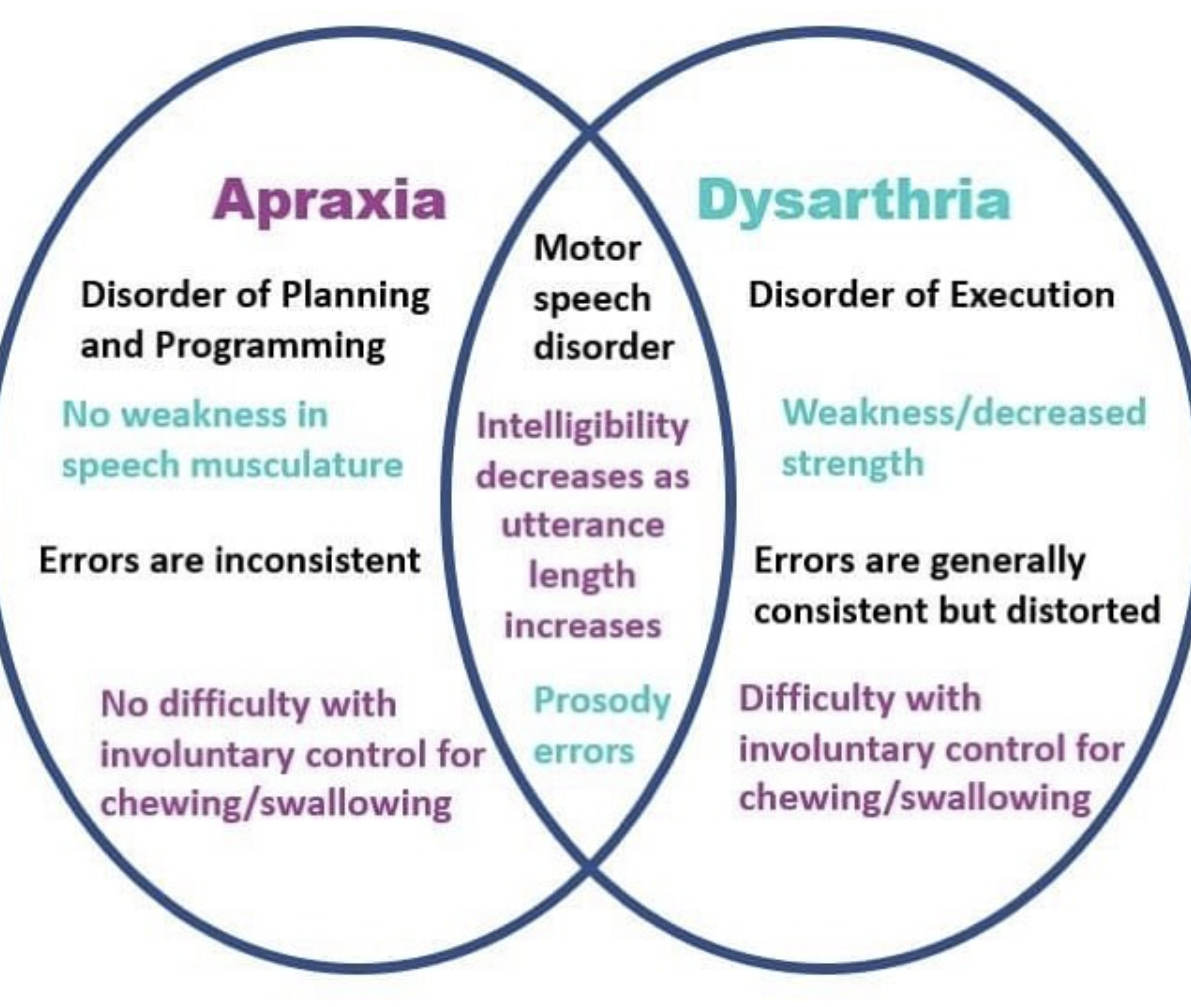
Dysarthria is a problem with the muscles used for speech, while apraxia is a problem with the brain's ability to plan and organize movements needed for speech production (inconsistent errors)
Dysarthria In Cerebral Palsy
CP: a permanent neuromotor disorder caused by brain damage that occurred before, during, or shortly after birth: affects movement & balance
causes
oxygen deprivation to the brain
hemorrhages
infection
malnutrition
fetal alcohol spectrum disorders/fetal alcohol syndrome
accident/injury
damage is not progressive but gross motor symptoms oftentimes are
most common etiology of chronic physical disability in pediatric populations
Does not progress or pass over to other areas of the brain