Invasive Species & Agriculture
Invasive Species & Agriculture
Definition of Exotic/ Introduced Species
Definition:
An introduced, alien, exotic, non-indigenous, or non-native species is defined as:
A species living outside of its native distributional range due to human activity, either deliberately or accidentally.
Introduction can occur via multiple pathways:
By ship, seed, or contamination.
The risk of impact is more significant than the method of introduction
Effects of Introduced Species
Some introduced species can damage the ecosystem they enter, while others may have neutral or no negative effect, and others could even be beneficial
Example of Beneficial = livestock animals like pigs and chicken
Example of Neutral = trees and shrubs
Examples:
Beneficial Introduced Species: Livestock such as pigs and chickens.
Neutral Introduced Species: Trees and shrubs
Invasive Species
Definition:
An exotic species that does or is likely to cause economic, environmental harm OR harm to human health
Globally, invasive species are recognized as the second greatest threat to biodiversity, exceeded only by habitat destruction
Specific Example of Invasive Species
Leafy Spurge
Origin: Europe
Characteristic: Perennial plant that spreads through seeds.
Mechanism of Spread: Seed pods dry out and explode, ejecting seeds up to 5 meters.
Relevance: Significant prevalence in livestock pastures

Impact on Agriculture
Economic Impact:
Invasive species impact Canada’s agricultural industry, costing approximately $2.2 billion per year in damages
Impacts on Agriculture Include:
Crop damage → wild pigs eat fields , mice feed on storage supplies
Invasive insects contaminate crops
Potential spread of diseases
Loss of crop productivity → due to invasives taking over pastures
can be poisonous to livestock when grazing OR wildlife
Risk of Invasive Species
Tens Rule:
roughly, 1 in 10 alien species introduced to a new region will establish free-living populations.
roughly, 1 in 10 of those established species will ultimately spread to invasive levels.
Conclusion:
Roughly 1% of introduced species become invasive
Despite a low overall risk, one invasive species can cause significant damage.
Climate change affects the spread and impacts of invasive species.
There are a vast number invasive plant species across Canada, with the least amount of them in the Northern parts of the country. This could be due to less shipment of grain, less people and colder weather
Ways of Introducing New Invasive Species
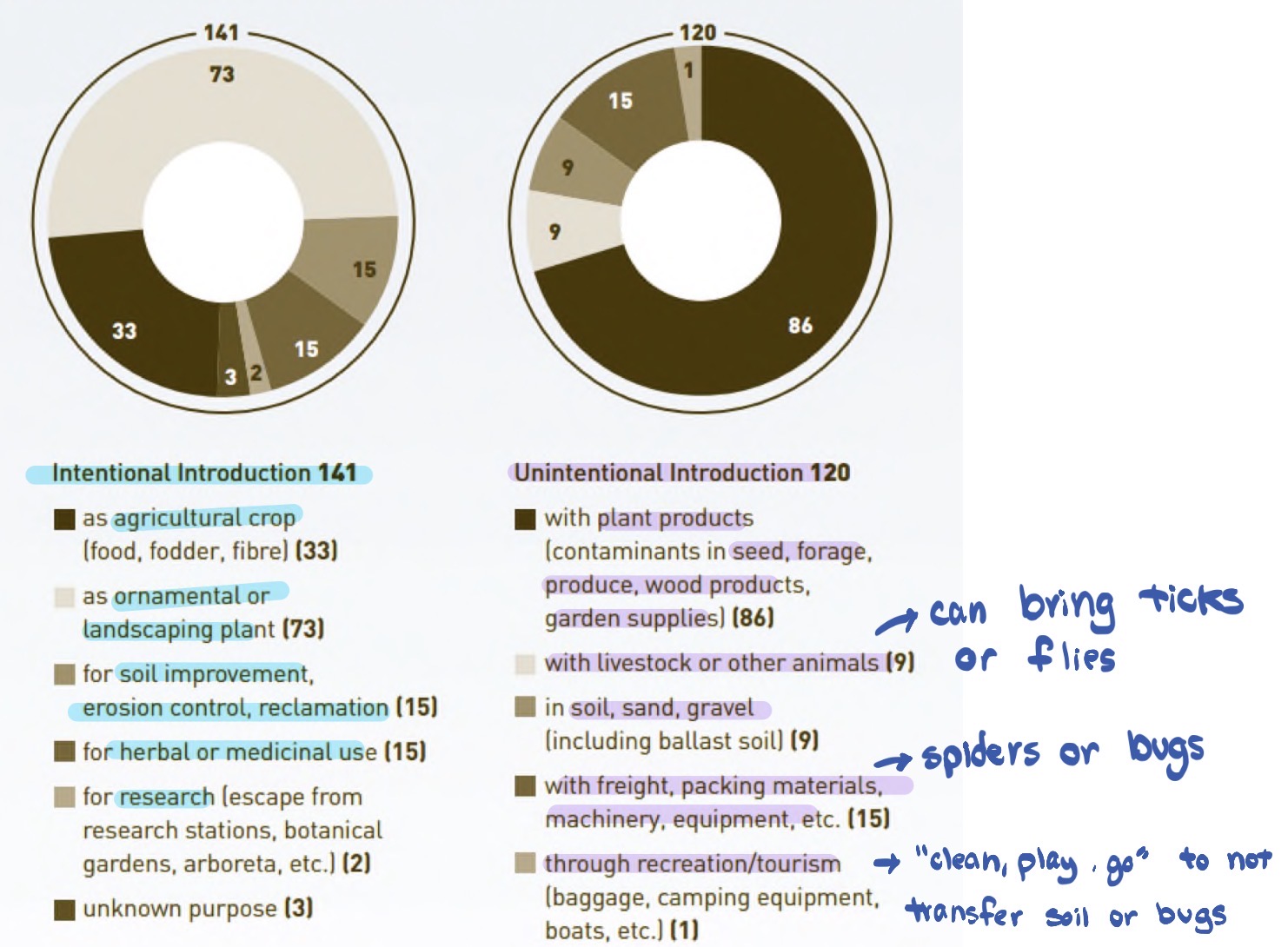
2 Introduction Pathways
Intentional: introduction was on purpose and deliberate
Unintentional: introduction was an accident
Risk Assessment of Invasive Species
Definition:
Risk assessment involves quantifying and qualifying the potential risk related to specific threats, also known as hazards.
Ideally done before an issue becomes LARGE concern
Formula:
Risk (R)= Magnitude of Potential Loss (L) * Probability (P)
Goal: Ideally, assess severity of risks before issues emerge
Bioclimatic Envelope Models
Function:
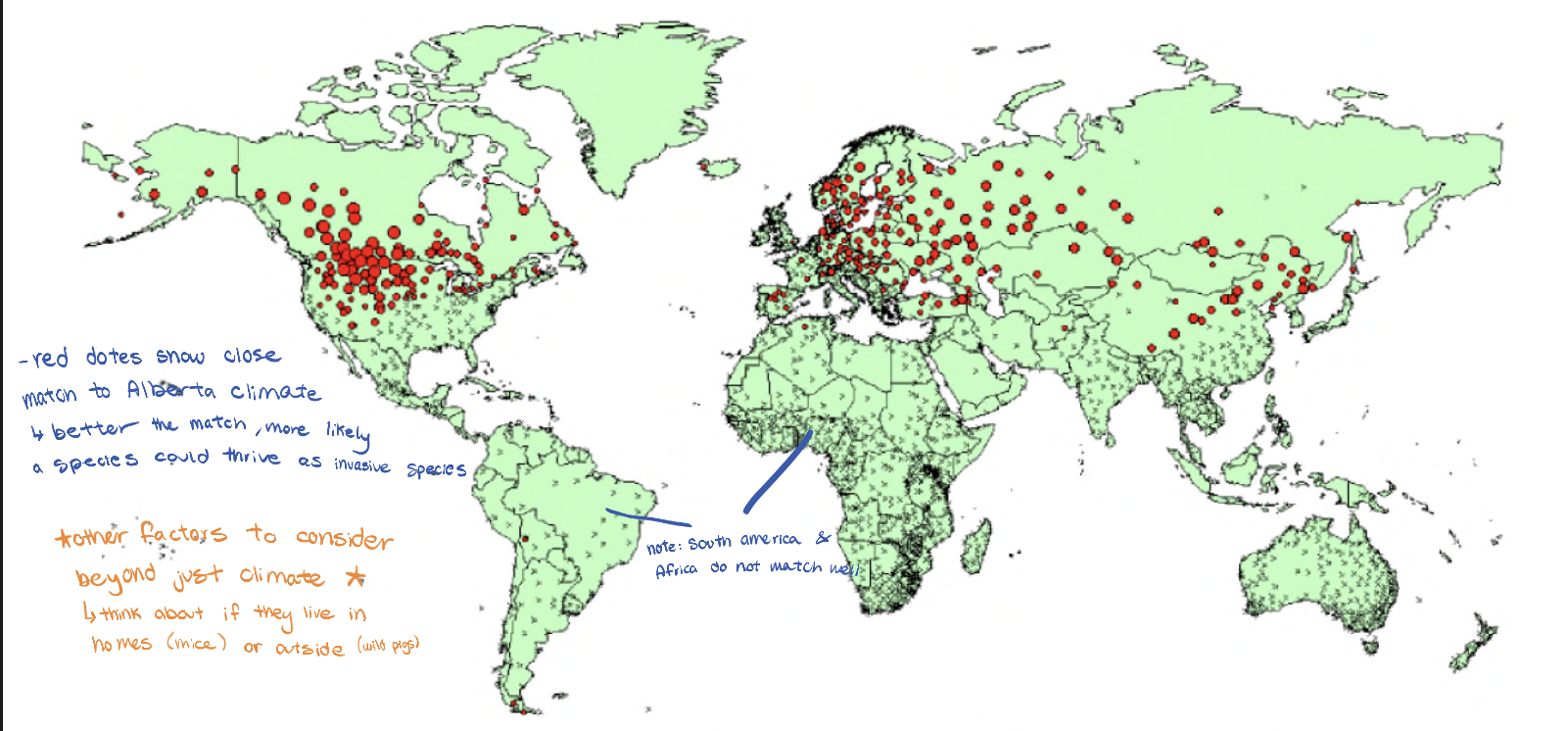
By examining the climate from which a species originates, one can gauge the likelihood of its survival in new environments.
Factors Considered:
Climate significantly influences plant viability.
Cross-comparison of climate data yields fit ratings: probable, moderate, or low fit to climate of new area
Geographic Climate Matching
Example:
Use of red dots to indicate suitable climates in Alberta for potential invasive species.
Noticing geographical mismatches (e.g., South America vs Africa) can inform about species' survival and establishment.
Risk Management
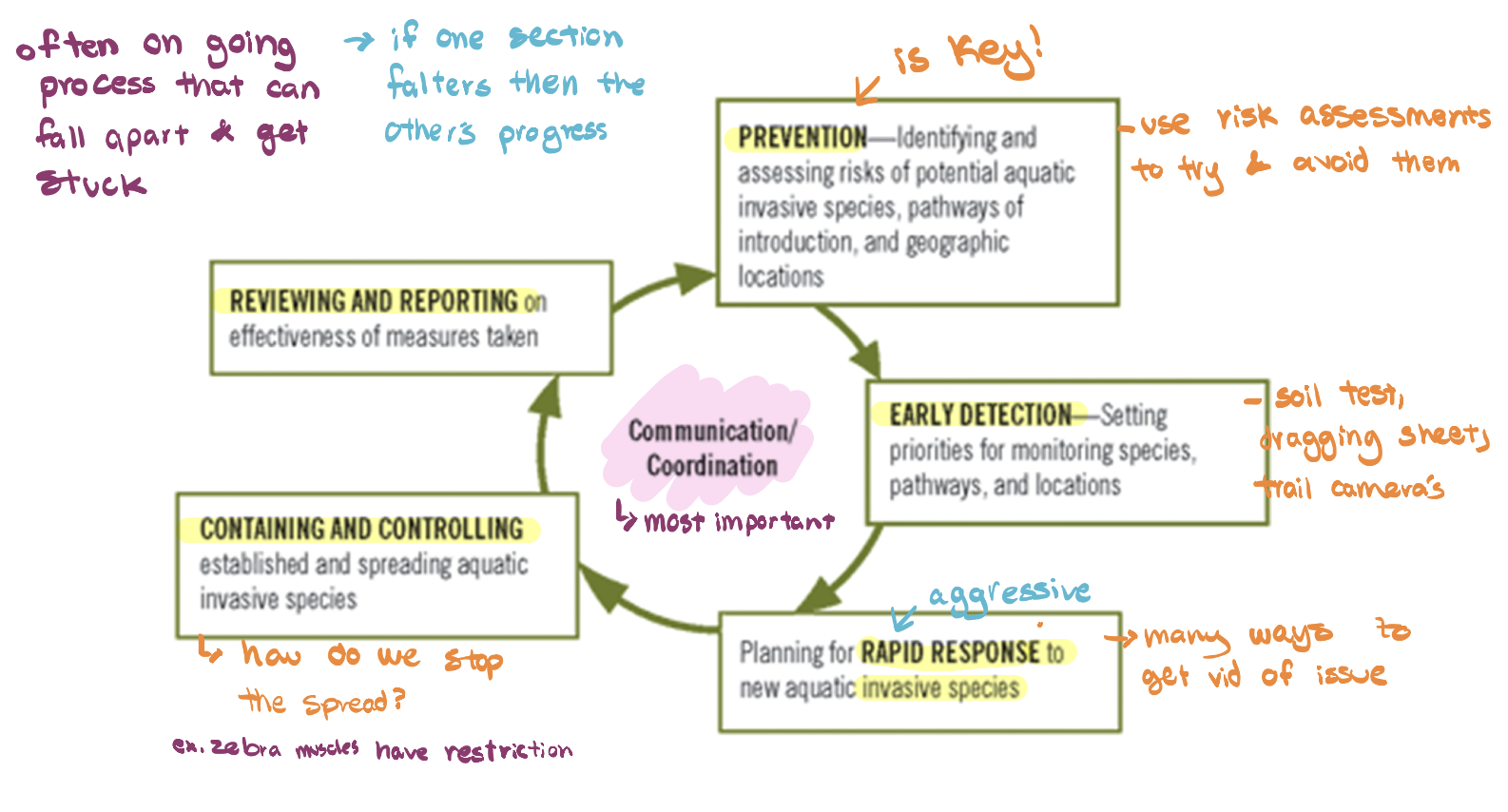
General process and order of action:
Prevention → Early Detection → Rapid Response → Containing and Controling → Reviewing and Reporting
*all centres around communication and coordination
Invasive Species Control by Livestock
use certified weed free seed
quarantine new animals
monitor winter feeding areas during growing season
ensure gravel or fills are from clean pits
recognize that all pastures are at risk and implement preventative measures
PLEASE NOTE: wind can spread plant seed
Targeted Grazing Techniques
Description:
Specific livestock species are utilized for grazing on invasive plants.
Important Note: Livestock can inadvertently consume invasive plant seeds; therefore, waste management is critical to avoid spreading invasives through unbroken seeds in the poop
Invasive Species Mitigation
*Prevention is key!!*
Key Mitigation Techniques:
Conducting risk assessments → Utilizing climate models
Testing grain and selecting certified weed-free seeds
Implementing controlled burning / fires as a management tool
Engaging in targeted grazing practices with specific mammals (e.g., sheep, goats)
Employing trail cameras for monitoring large mammals
Physical removal of invasive plants and animals (e.g., pigs)
herbicides, rodenticides, pesticides → poison
Early detection protocols to catch invasives promptly
Proper cleaning of recreational equipment (e.g., boots, boats) to avoid inadvertent spread of invasive species
Quarantine measures for new animals, with strong communication networks to aid in prevention practices.
All of these pointless without early detection and basic knowledge on what an invasive species is