Chapter 5
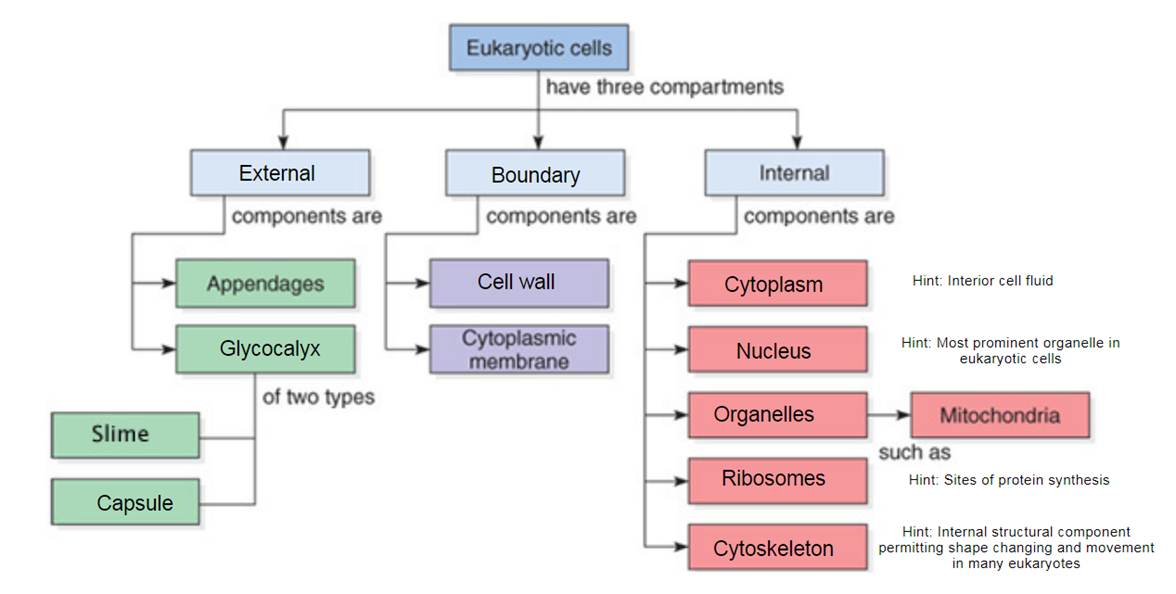
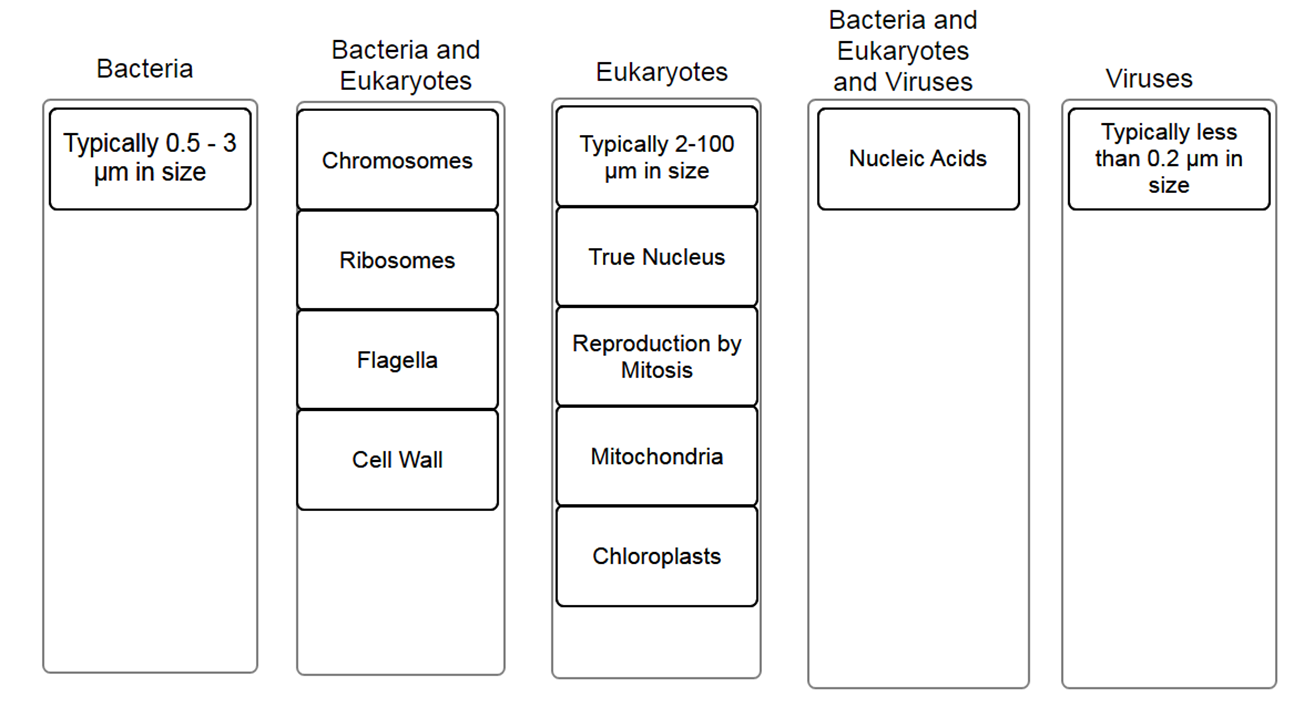
Compartments of eukaryotic cells and what is in them: external (glycocalyx and appendages), internal (cytoplasm, nucleus, etc.), Boundary (cell wall and membrane)
Macroscopic fungi: mushrooms, puffballs, gill fungi
Microscopic fungi: molds, yeasts
Yeast cells are what shape and how do they reproduce: round; asexually
Hyphae: threadlike cells
Pseudo hyphae: chains of yeast that look like hyphae
Dimorphic fungi cells: can be in a yeast cell or hyphae form
Saprobe: obtain substrates from dead organisms
Parasites: obtain substrates from live organisms
Mycelium: Mass if hyphae that makes up body or colony of mold
Septa: hyphae divided into segments or cross wall
Spores: fungal reproductive bodies
Types of growth in fungi: growth of hyphae; fragmentation (separated piece of mycelium) ; primary reproductive mode (spore formation)
Sporangiospores: formed by successive cleavages within a sporangium (sac)
Conidiospores/Conidia: free spores not enclosed by sac
Purpose of sexual spores: genetic variation
Identification of fungi: asexual spore forming structures; hyphal type; colony texture; etc.
Primary pathogenic fungi: attack healthy people
Opportunistic pathogenic fungi: attack sickly people
Other medical conditions caused by fungi: allergies and neurological conditions due to toxins
Fungal spores are ____ while bacterial spores are ____: reproductive and nonreproductive
Fungi are ___ to corn and grain: pathogenic
Subkingdoms of Protista: Algae and Protozoa
Protist: any unicellular or colonial organism lacking tissues
Algae and protozoa exhibit all/most ____ organelles: eukaryotic
Plankton are the _____ version of algae: freshwater
Most protozoa are _____ to humans: harmless
Protozoa are heterotrophic and are either ___ or _____: free-living or parasitic
Locomotion in protozoa: pseudopods, flagella, cilia
Life Cycle of protozoan: trophozoite, cell dries and losses motility, cell matures into a cyst
Trophozoite: motile/feeding stage requires food and moisture
Cyst: dormant stage formed during unfavorable conditions; pathogenic
Some protozoan can exist only exist as ___ or can __ and this dictates ______:trophozoite or alternate and transmission
Protozoans can reproduce: by mitosis, fission, or sexual reproduction
Flagellar Protozoa: single nucleus, syngamy, form cysts and free living
Amoeboid Protozoa: mostly amoeba, fission, uninucleate, encyst, free-living and non infectious
Cilia Protozoans: cilia tufts, encyst, macro and micronuclei, transverse fission, free-living and harmless
Parasitology: study of protozoa and helminths
Pathogenic Flagellar Protozoa: Trypanosoma brucei (African sleeping disease) , Trypanosoma cruzi (chagas disease); long crescent shaped with one flagella
Pathogenic Amoeboid Protozoa: Entamoeba histolytica (ingestion of human feces)
Parasitic Helminths: tapeworms, flukes, roundworms, all can become meters long
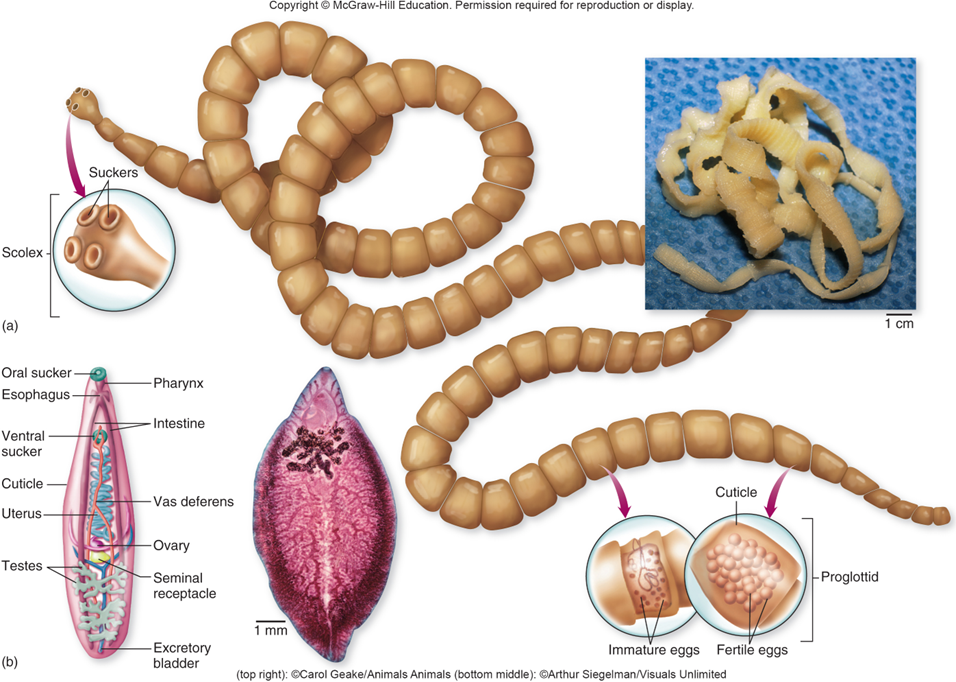
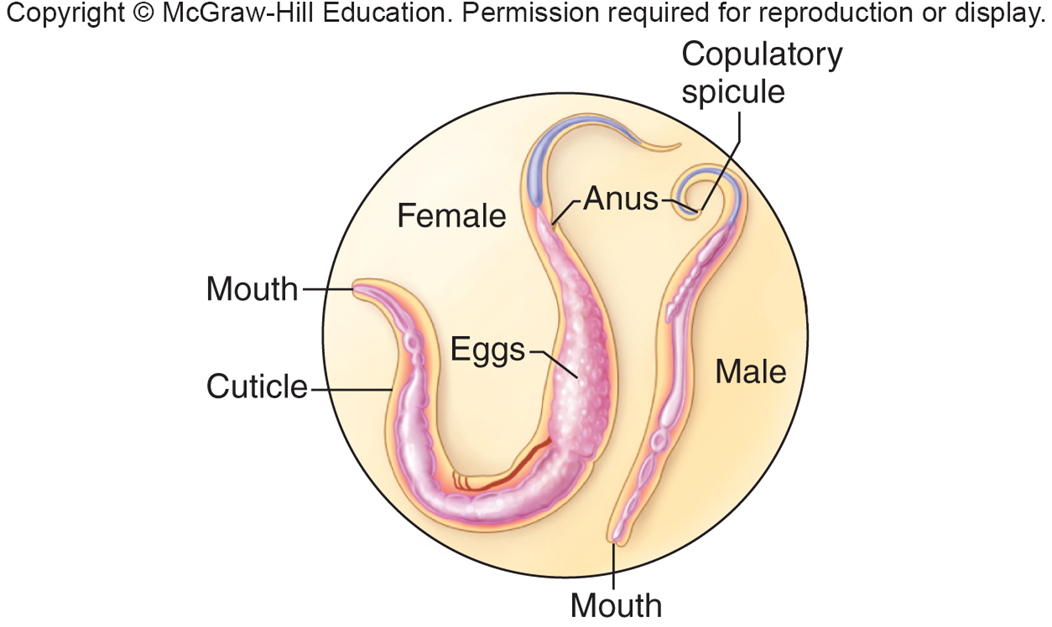
General Worm Morphology: developed reproductive tract; primitive organ systems; thick cuticle; mouth glands
Life Cycle of Parasitic Helminth: Egg, Larval (intermediate host), Adult (definitive host)
Nematode sexes have ______ reproductive morphology: different
Trematodes sexes have ______ reproductive morphology: hermaphroditic
Cestodes sexes have ____ reproductive morphology: hermaphroditic
How do humans become infected by parasitic helminths?: ingestion or broken skin
Enterobius vermicularis: pinworm
Helminth Classification: shape, size, organ complexity, mode of reproduction, hosts, eggs and larvae