Cell Membrane Functions and Structures
Cell Membrane
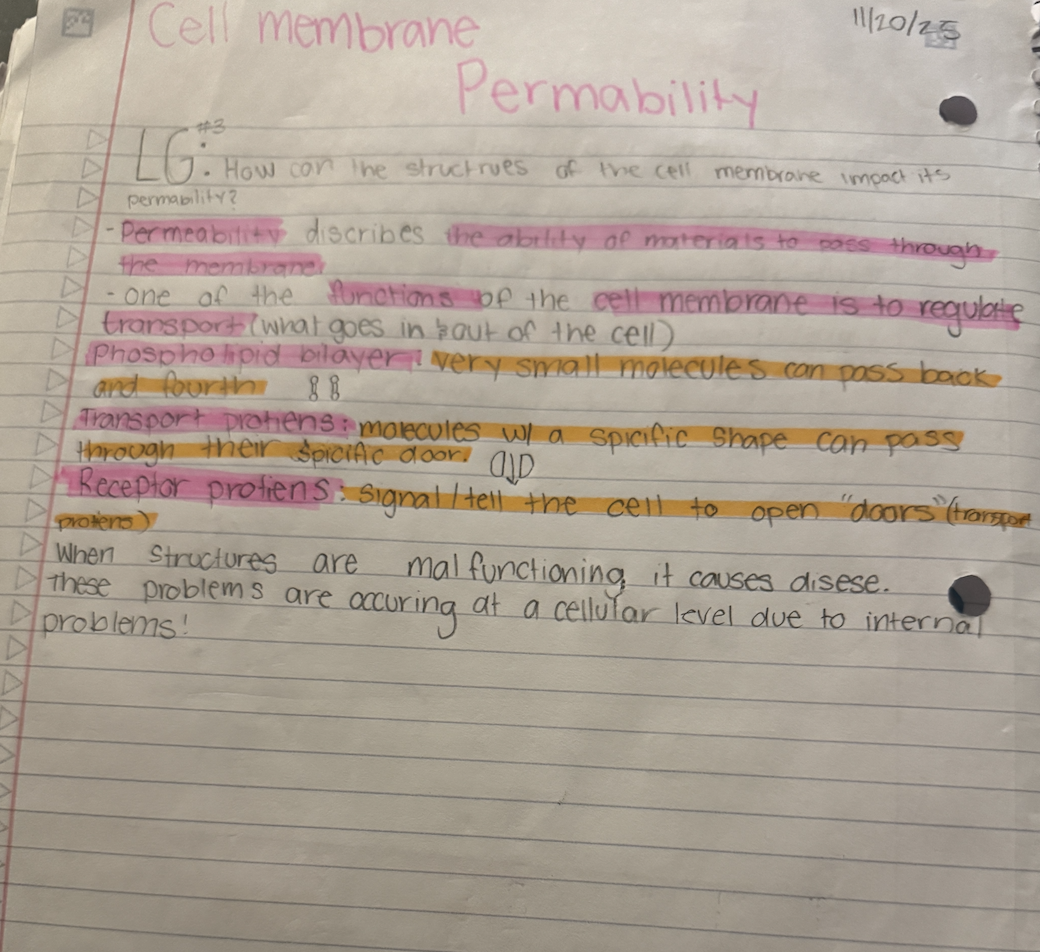
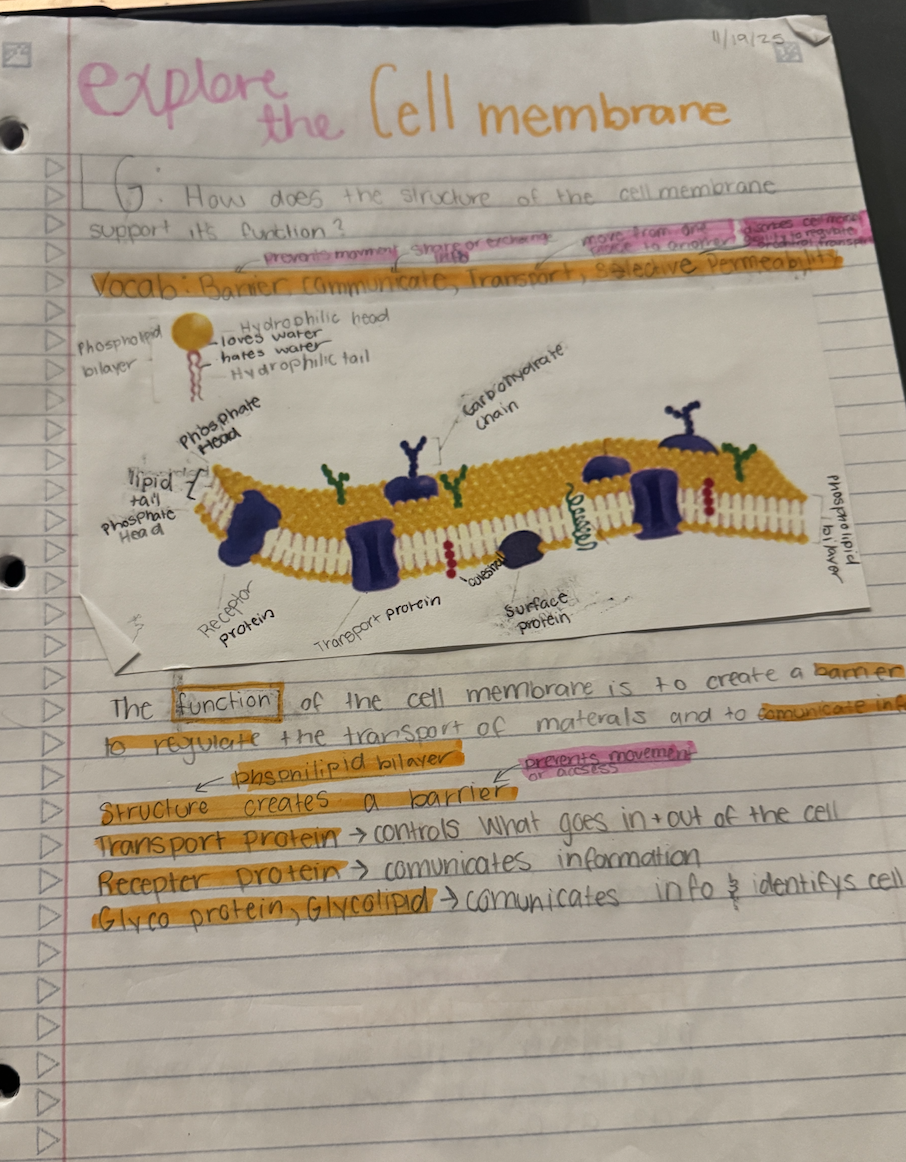
Functions of the Cell Membrane
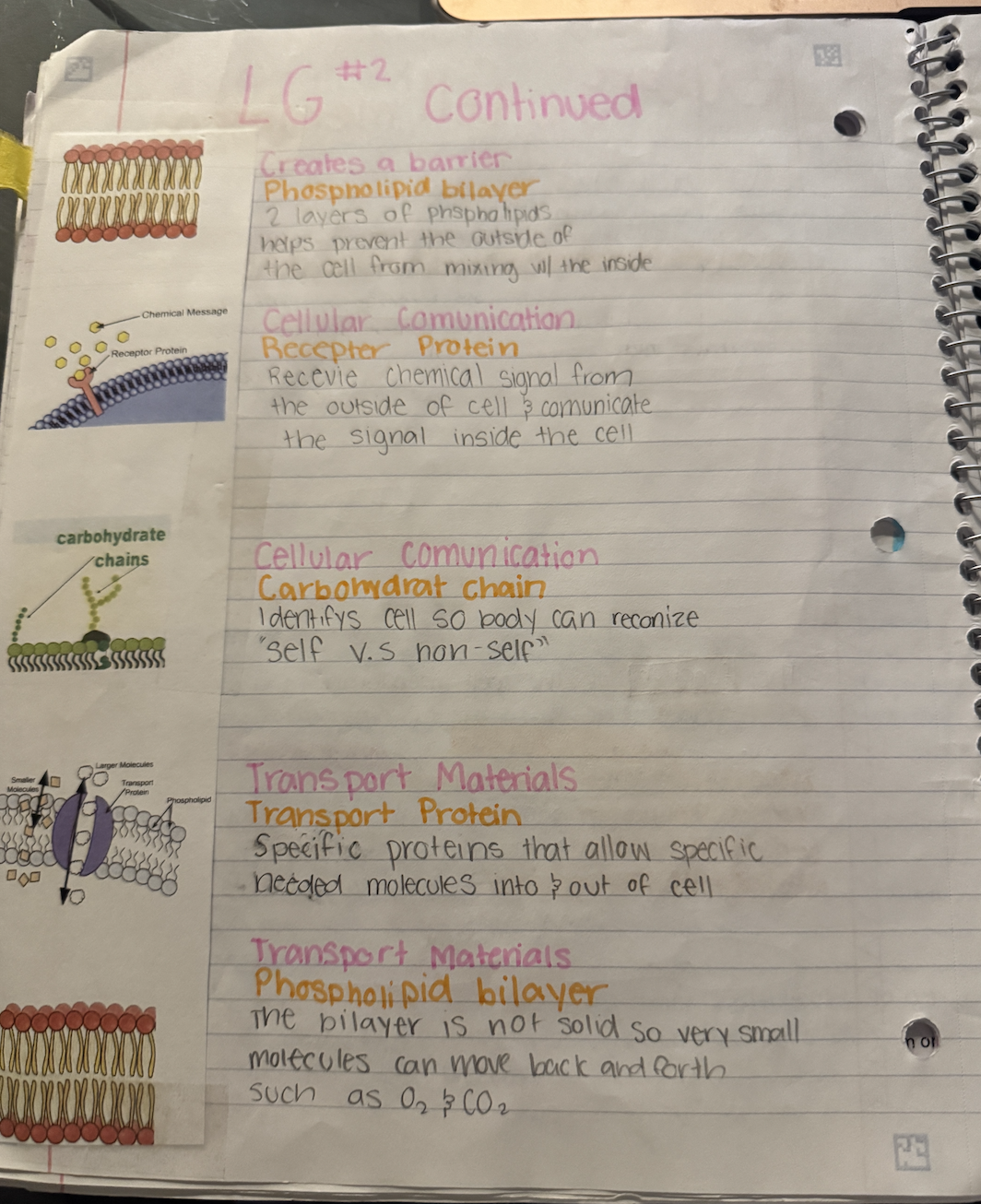
Selective Barrier:
The cell membrane regulates the entry and exit of substances, allowing some materials to pass while blocking others. This selective permeability is crucial for maintaining the internal environment of the cell.
Cell Communication:
The cell membrane contains proteins that act as receptors, allowing the cell to receive signals from its environment. This communication can influence cellular activities and responses.
Structural Support:
The cell membrane provides structural integrity to the cell. It helps to define the shape of the cell and protects internal components from the external environment.
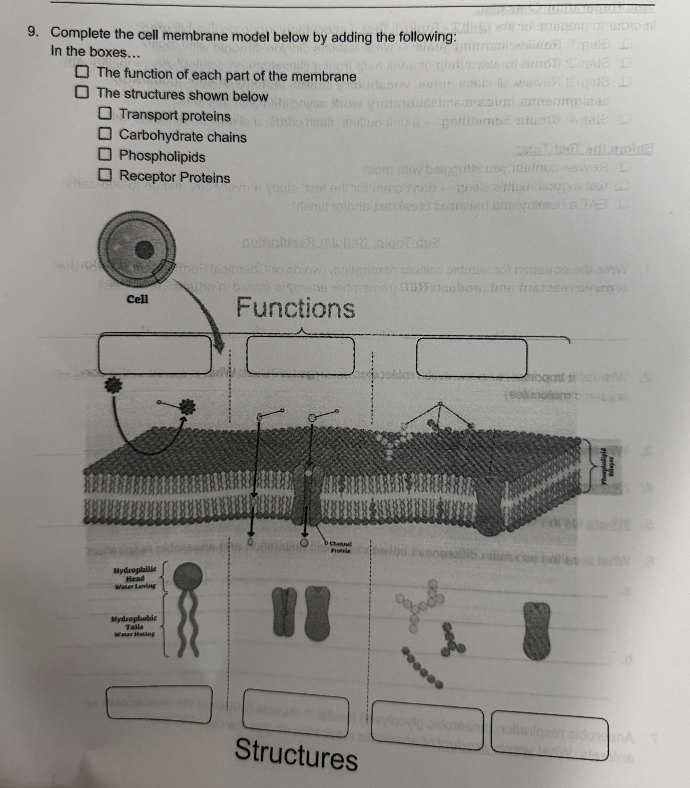
Cell Membrane Model Components
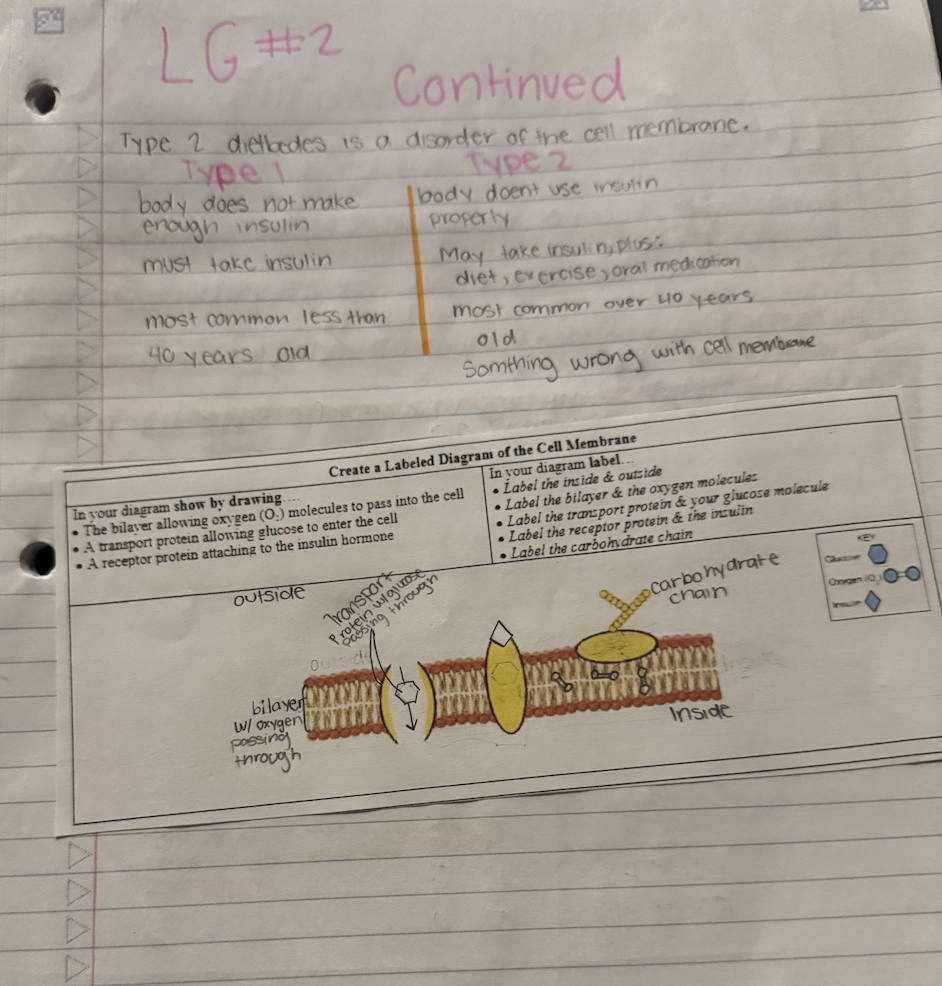
Transport Proteins:
Function: These proteins facilitate the movement of substances across the cell membrane. They can transport molecules actively (requiring energy) or passively (without energy).
Types include channel proteins (which create passageways) and carrier proteins (which change shape to transport molecules).
Carbohydrate Chains:
Function: These molecules are attached to proteins and lipids on the extracellular side of the membrane, playing a vital role in cell recognition and communication by serving as identification tags.
Phospholipids:
Function: Phospholipids form the bilayer of the cell membrane, with hydrophilic (water-loving) heads facing outward and hydrophobic (water-hating) tails facing inward. This arrangement is fundamental to the membrane's structure and function.
Receptor Proteins:
Function: These proteins bind signaling molecules like hormones or neurotransmitters, triggering a response in the cell. They play a critical role in cell signaling and communication.
Phospholipid Bilayer
Hydrophilic Heads:
Description: The heads are polar, attracting water. They orient towards the aqueous environments inside and outside the cell.
Hydrophobic Tails:
Description: The tails are non-polar, repelling water. They are situated in the interior of the bilayer, away from water, which provides a barrier to most water-soluble substances.
Additional Information
The fluid-mosaic model describes the structure of the cell membrane, highlighting how various proteins float in or on the fluid lipid bilayer like boats on a pond.
Cholesterol molecules are often present within the membrane, contributing to fluidity and stability.
Extend your thinking:
a. Glucose is not normally one of the waste products removed by the kidneys. Why would
glucose be found in the urine of a young girt? Describe the cause and effect of Type 1
Diabetes.
b. Why would glucose be found in the urine of an adult? Describe the cause and effect of Type 2 diabetes.
Unit 2.1 Study Guide: Meeting Metabolic Needs
Te s t Preparation Checklist:
In order to prepare for the Unit 2 - Topic 1 Test, I encourage you to do the following:
• Step 1: Review learning goals → what lessons did you struggle with most?
• Step 2: Come to extra help or seek help from a classmate on content you struggled with
• Step 3: Review all class notes, vocabulary charts, activity sheets, homework
assignments, quizzes and laboratory work associated with this unit.
• Step 4: Create Something → a unit outline, flash cards, a slides presentation, etc.
Before the Test Tips:
⼜ Review content you struggled with most
⼜ Get a good night's sleep → don't cram for the test, study a every day and go to bed early
• EAT a healthy and balanced breakfast and/or lunch
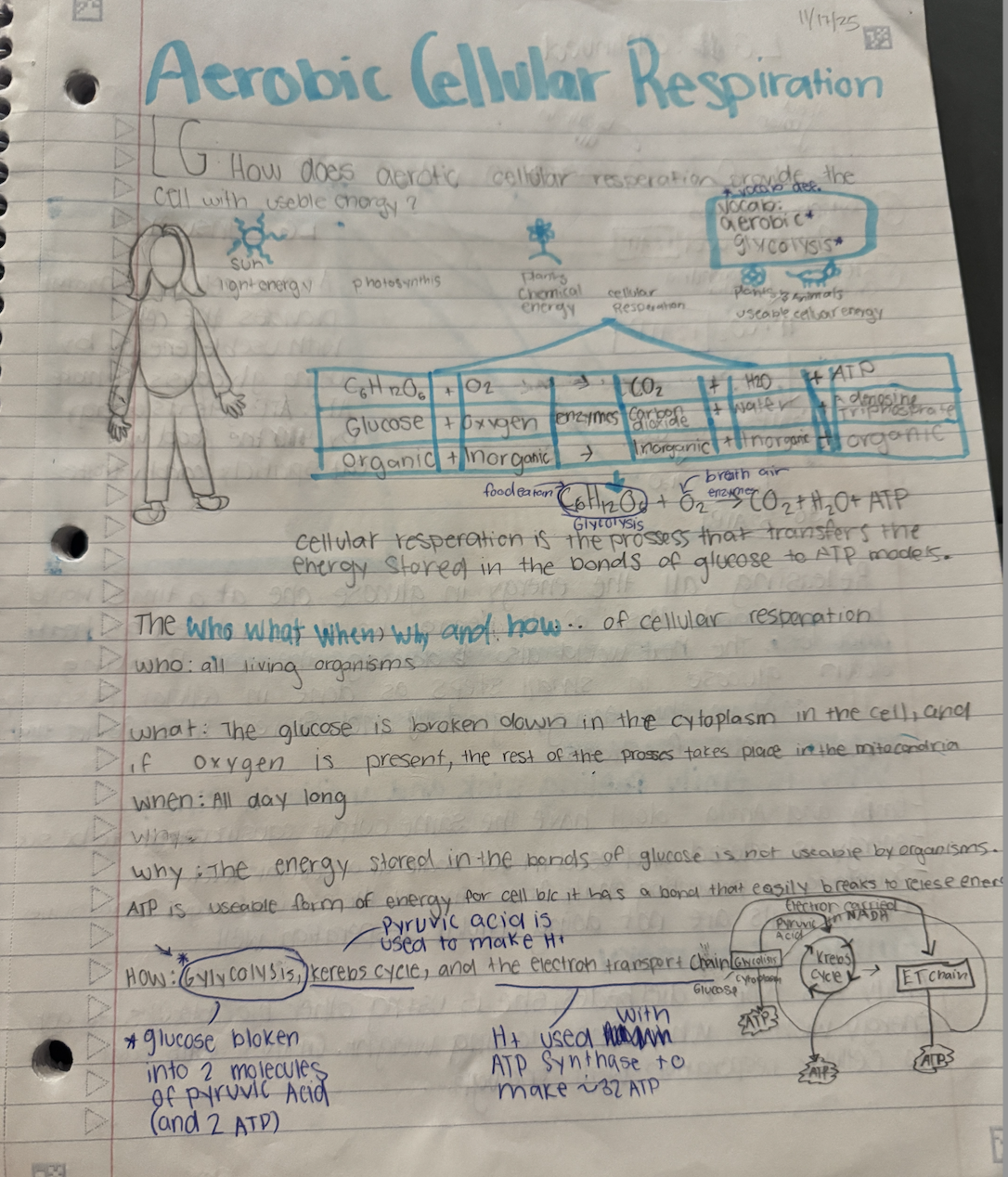
Sub Topic: Cellular Respiration
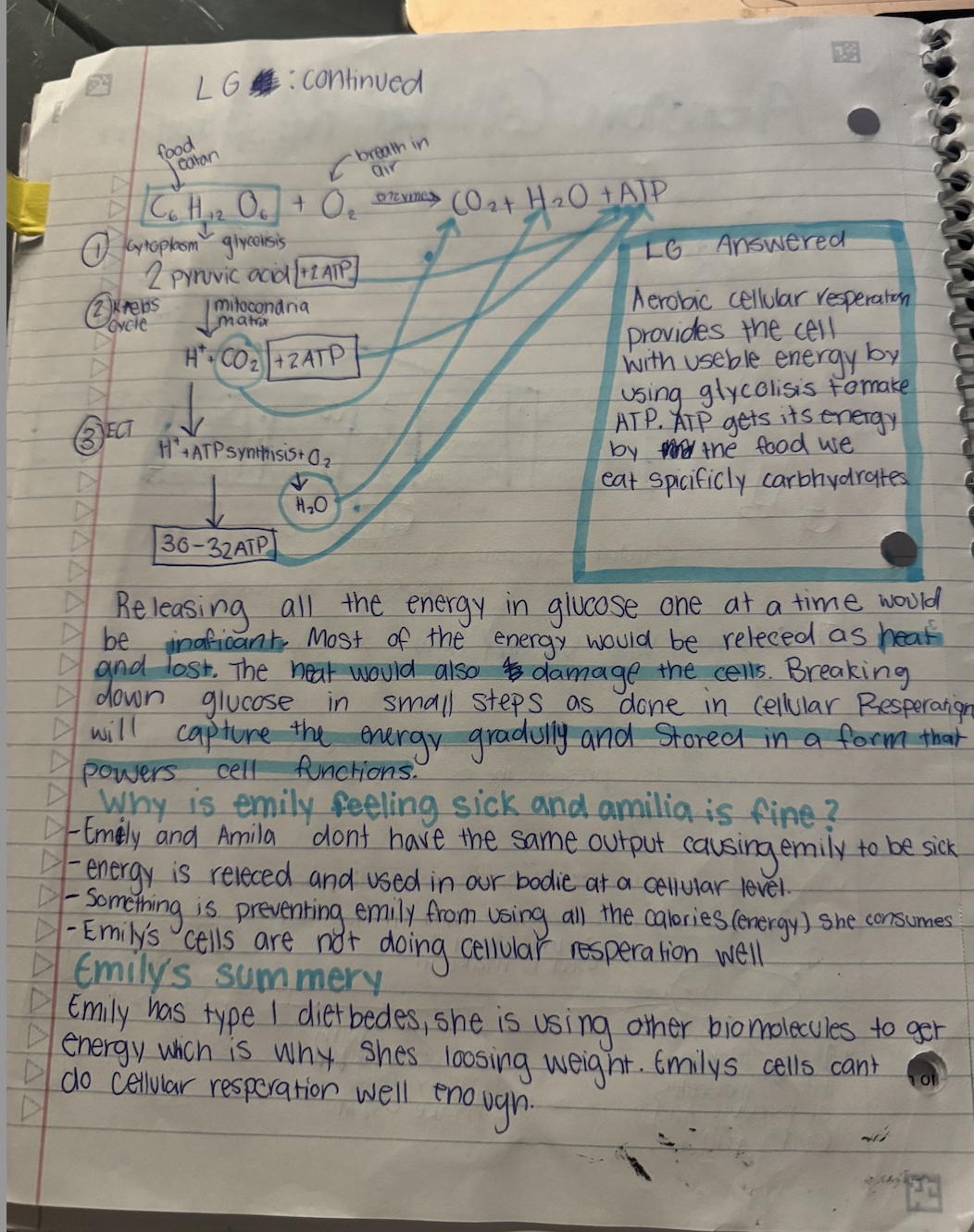
1 . Write the equation for aerobic cellular respiration. (words or Chemical Formula) and Color the
organic reactant and product RED. (remember energy is stored in organic molecules)
2 . Why is it important to know which molecules are organic? (hint: What is stored in the bonds of
organic molecules)
3 . Where does cellular respiration occur in the cells? (organelle) _
4 . Remember: ALL organisms (and cells) need energy so must perform cellular respiration.
5 . Where is the energy stored in glucose?
6 . What are the two main differences between aerobic respiration and anaerobic respiration?
a ._____________________
b.______________________
7. Anaerobic respiration (anaerobic glycolysis) results in muscle fatigue in the muscle cells of
animals. What waste product of anaerobic respiration singles the cell of fatigue?
ory, Digestive, Respiratory and Excretory Systems
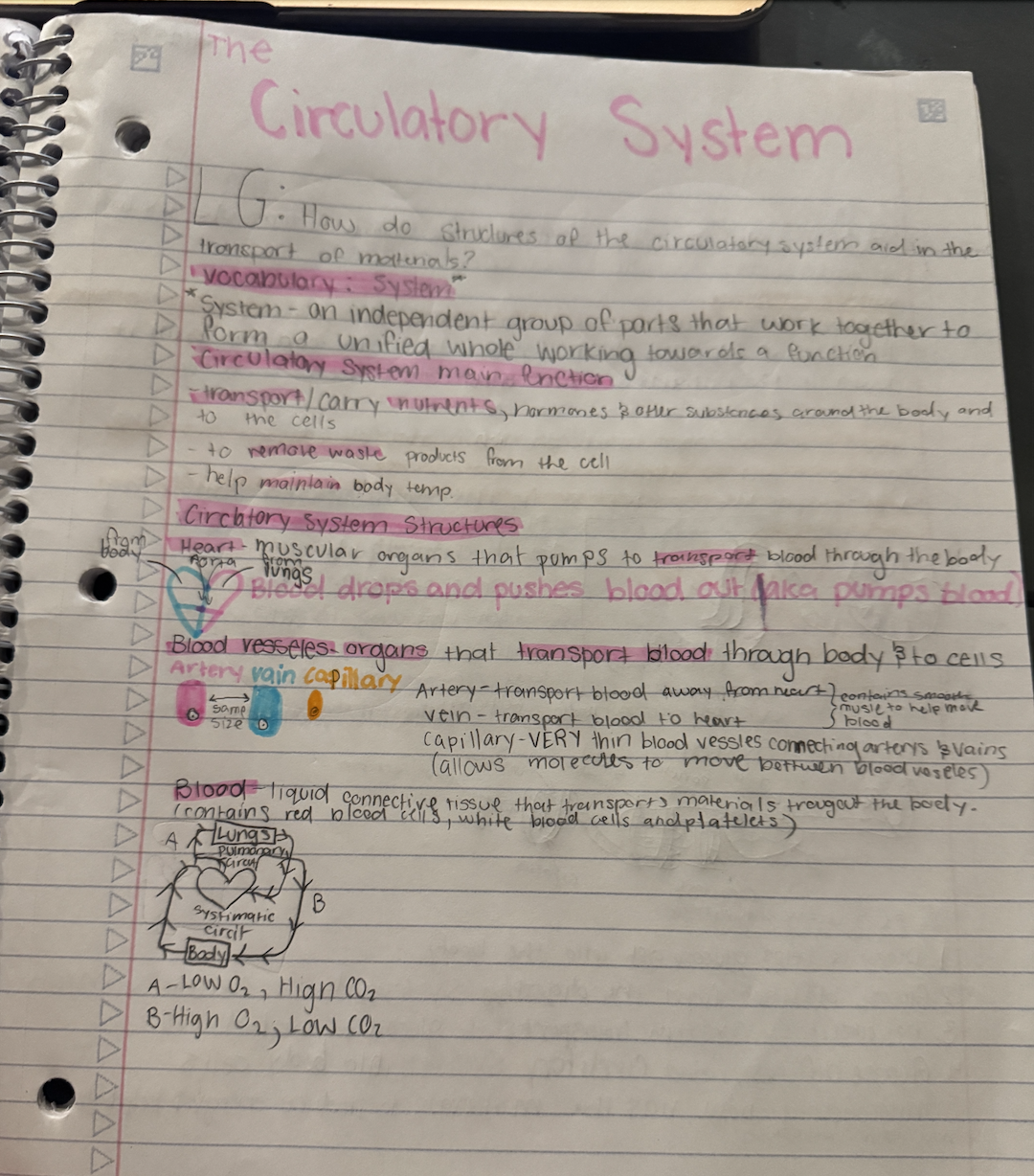
10. U s e o n e of two words to describe the function of each of the following systems.
a . Circulatory System
b. Digestive System
c . Respiratory System
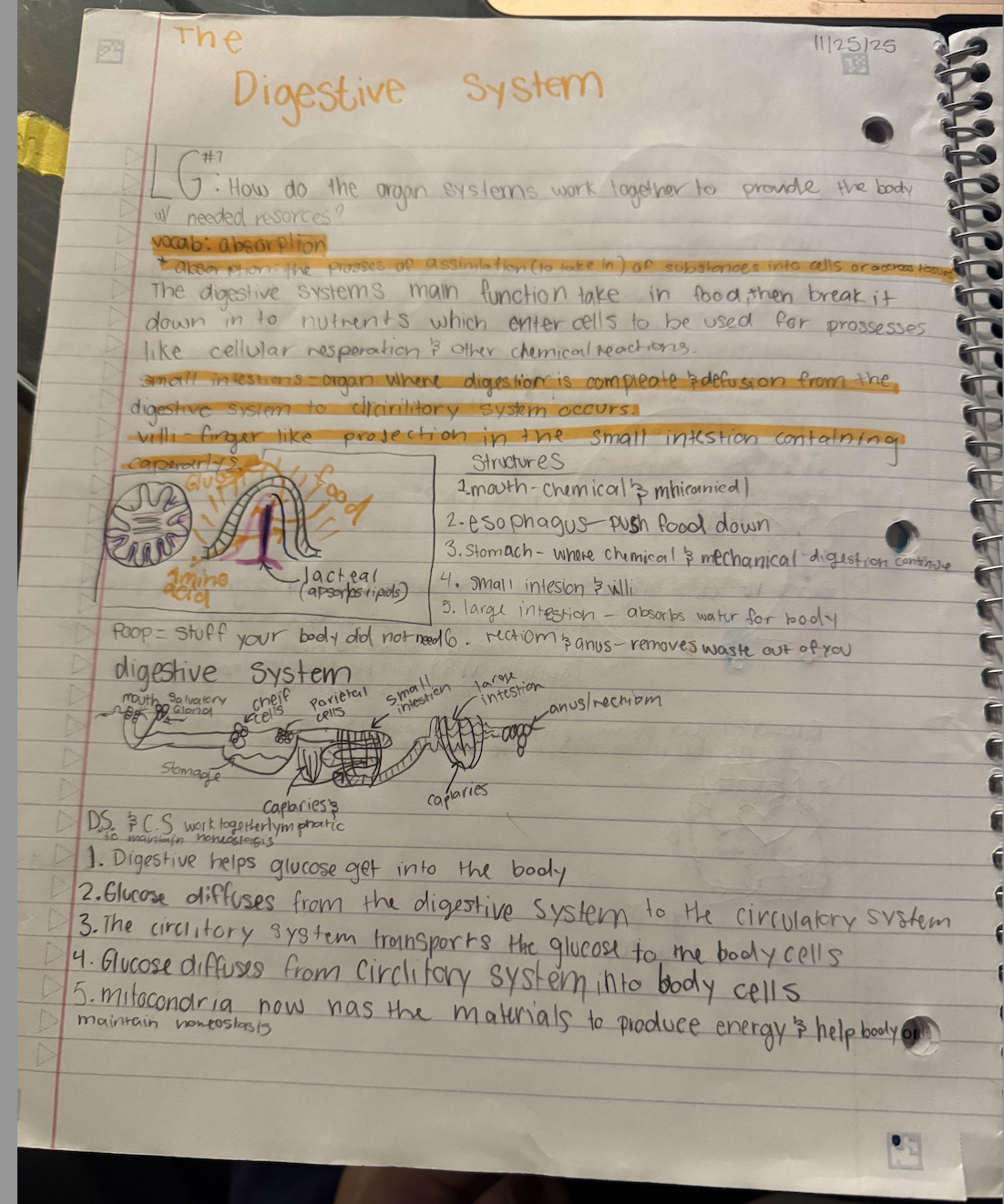
11. How do the digestive system and circulatory system work together to supply the body cells with
the materials needed for cellular respiration? Write or show (model or flow chart)
In your response, be sure to:
• identify the materials needed (provided by the digestive system).
• Explain how they are supplied to the cell. Refer to important structures in each system.
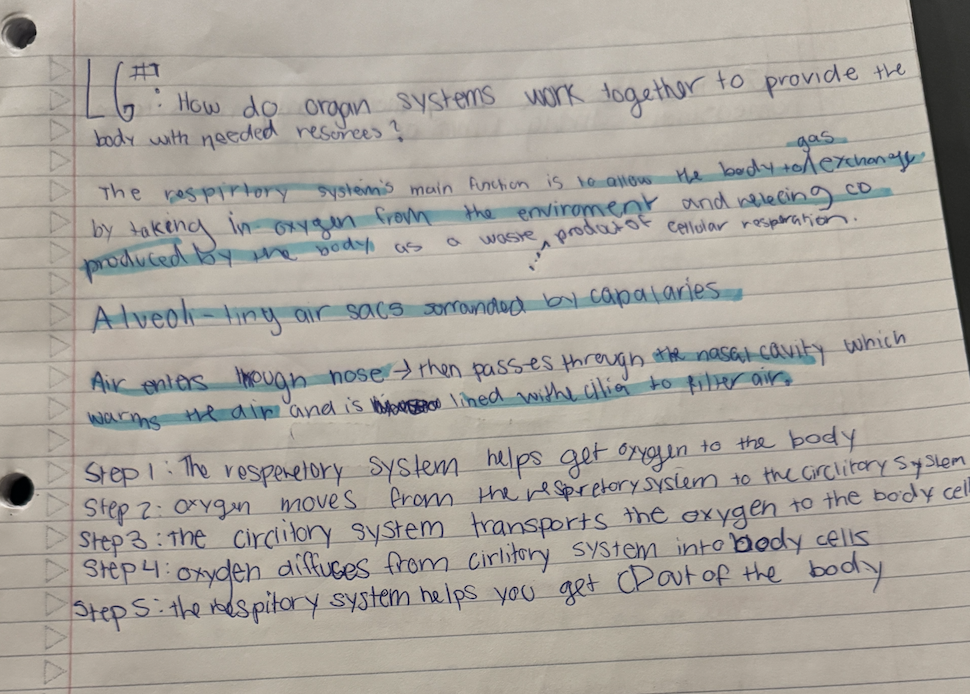
12. How do the respiratory system and circulatory system work together to supply the body cells
with the materials needed for cellular respiration? Write or show (model or flow chart)
In your response, b e sure to:
• identify the materials needed (provided by the respiratory system).
• Explain how they are supplied to the cell. Refer to important structures in each system.
13. Describe at least ONE change that occurs in the body during/after exercise that helps the body
maintain homeostasis.
14. Explain why this change is necessary to help to maintain homeostasis during/after exercise?
15. Where does the absorption of glucose from the digestive system into the circulatory system
occur in the human body?
a. From respiratory system to circulatory system
b . From circulatory system to cell
!
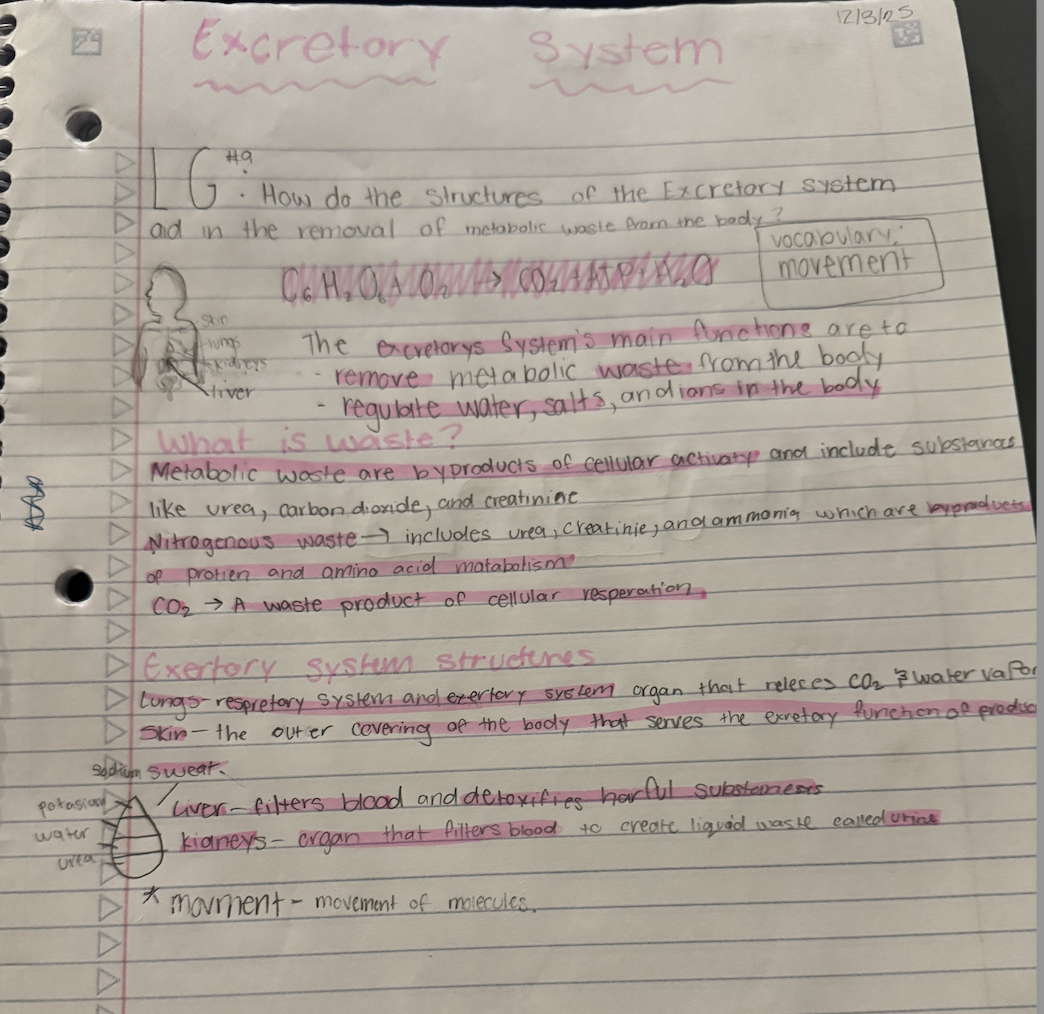
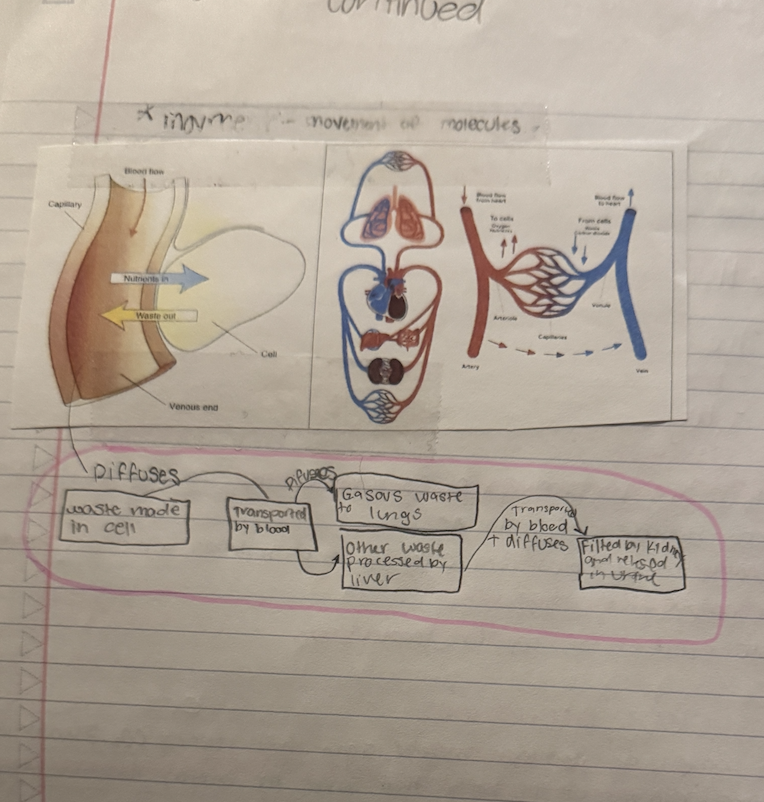
17. What is the main function of the Excretory system?
18. What are the 4 main structures of the Excretory system and what waste is removed from each
structure? M a i n S t r u c t u r e Waste R e m o v e d
19. What is the function of the Urinary System?
20. How does the kidney "clean" the blood? Describe the function of the Loop of Henle.
hiu