Aural Rehab Final Review (Comprehensive)
Cumulative
Multiple-choice, true/false, matching, short answer, and essay questions (to case studies)
Choose 2 case studies (synthesize understanding)
1 pediatric
1 adult
three questions about scenario
More than 1 sentence for each question (2-3 for each)
Pay attention to ages (be aware of normal ages for things)
Know language hierarchy!
20 pt
Few bonus point questins
Focus on key concepts, but look over everything
Module 1
What services might be included in a AR plan?
Diagnosis and quantification of hearing loss
Provision of listening devices and assistive devices
Informational/educational counseling
Communication strategies training
Assertiveness training, psychosocial support, and counseling/instructions for patients and for family and colleagues
Auditory and speechreading training
Intervention related to speech, language and academic achievement
Hearing protection
Tinnitus management
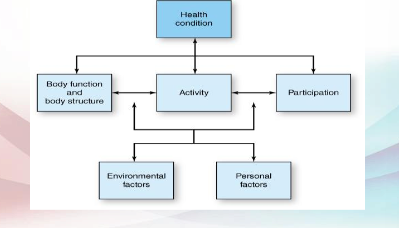
World Health Organization (WHO) & International Classification of Functioning, Disability, and Health (ICF)
ICF: a classification system that considers the consequences of a health-related condition within the context of a patient’s environment and circumstances; framework to communicate information about an individual’s disability and function across disciplines
Biopsychosocial approach → person-centered & interdisciplinary
Related terms
Body structure: an anatomical part of the body
Body functions: physiological functions of body systems
Activity: the execution of a task or action by an individual
Participation: involvement in a life situation
Environmental factors: the physical, social, and attitudinal environment in which a patient lives and conducts his or her life
Personal factors: encompass the patient’s age, lifestyle, race, coping styles, attitudes, self-efficacy, habits, preferences, socioeconomic background, and other health conditions
Activity limitation (disability): change at the level of
the person brought about by an impairment at the
level of body structure and function
Participation limitation (handicap): an effect of an
activity limitation that results in a change in the
broader scope of a patient’s life
ICF Diagram
Phoneme testing: testing that isolates phonetic pronunciations so phonetic errors can be studied
Stimuli typically used: phonemes, words, phrases, unrelated sentences, or topically related sentences
What results of phoneme testing reveal
Indicate that kinds of speech features utilized during speech recognition
Results independent of vocabulary level
Fine-grain assessment to determine training goals or distinguish between ability
Mod 2
Narrative therapy: counseling approach that focuses on the narrative, discussing the problem as separate from the patient and explores HL impact on patient and frequency communication partners
Used when patient has an overly negative view of their HL
Techniques utilized
Attach new meaning to an experience or behavior
Identify times where there was an exception
Clarification
Validation
Reassurance
Explicit categorization: part of informational counseling that categorizes pertinent information to discuss in order
Personal adjustment counseling: counseling that focuses on adjustment and acceptance
Cognitive approach: modifies thought process by identifying activating event, evaluating event, identify consequences of event, dispute negative feelings, create effective action
Behavior approach: modify behavior to unlearn negative behavior, desensitize negative reactions, identify physical systems of stress, introduce relaxation techniques
Desensitization: reduce negative reaction through repeated exposure
Affective approach: modify emotions by focusing on feelings & finding congruence with self; uses honest person-centered approach, conditional positive regard, empathetic understanding, reflection & clarification point-of-view
Mod 3
3 general types of listening devices
1) Hearing aids
Mild to severe hearing loss when its effective
2) Implantable devices (cochlear implants, middle-ear implants)
Cochlear implants: for those who cannot benefit from a hearing aid, usually because of severe HL
Middle-ear implants: for patients who cannot wear an external hearing aid or who choose not to
3) Hearing assistive technology systems
Help with face-to-face communication, broadcast and other electronic media, telephone use, noisy environments, and environmental stimuli when other devices are inadequate
Fundamental components of hearing aids and general function
1) Microphone: convert acoustic signal to an electric signal
Directional microphone: only responds to sound in front
Omnidirectional microphone: responds to sound from all directions
Automatic directional (ADM): adaptively responds to sound, switching between directional and adaptive modes based on sound characteristics of environment
2) Amplifier: increases the level of the signal
3) Receiver: converts the electrical signal into an acoustic signal
Bone-anchored hearing aid: transmits sound through skull via external component coupled to titanium screw
Who is a good candidate? Patients who cannot wear an external hearing aid or who choose not to do so
General requirements for children vs adult cochlear implant candidacy
Children CI candidacy
>9 months of age (with some exceptions)
Trial period with hearing aids
Limited or no benefit from hearing aids
Adult CI candidacy
Irreversible sensorineural hearing loss, usually severe or profound
Good general health
Patients most likely to benefit are those who
Used aural/oral communication in childhood
Used a hearing aid in the to-be-implanted ear up until the time of implantation
Those who experienced a progressive hearing loss
Those with adventitious hearing loss
Hearing aid orientation sessions
The audiologist describes the function of the hearing aid.
The patient practices inserting and removing the hearing
aid.
The audiologist reviews basic hearing aid maintenance.
The patient practices using the telephone, using the telecoil switch if the hearing aid has one.
The audiologist reviews realistic expectations and limitations.
Mod 4
Rship btwn hearing loss & perceptual effort: Hearing loss requires more perceptual effort to simply recognize the words in an utterance.
Analytic vs synthetic training differences, auditory training
Analytic training: focuses on elements of speech and perception of the fine-grained acoustical differences to improve the ability to identify individual speech sounds
Synthetic training: focuses on meaning of utterances and perception of the whole message to improve ability to comprehend at sentence levels
Auditory training programs for speech reception
4 types: phoneme-based, word-based, sentence-based, cognitive-skill-based
Brain plasticity: the brain’s ability to change as a result of experience, behavior, environment, sensory deprivation or stimulation
Auditory training helps to “recalibrate” the brain for listening, especially when an individual begins using new hearing device(s)
Mod 5
Lipreading (uses only the visual speech signal and related facial and body gestures to recognize speech) vs speechreading (uses the visual speech signal and the auditory signal and related facial and body gestures to recognize speech)
Factors that influence the difficulty of lipreading: cognitive skills, age, type of hearing loss, visibility of sounds, rapidity of speech, coarticulation and stress effects, visemes and homophenes, speaker
Factors that influence the difficulty of speechreading
Analytic vs synthetic approaches in speechreading
Analytic speechreading focuses on identifying individual phonemes and syllables
Synthetic speechreading emphasizes understanding the overall meaning of sentences and phrases using context
Mod 6 (recorded lecture, helpful for case study)
Anticipatory strategies: strategies to deal with HL that focus on anticipating potential vocabulary and conversational content
Specific repair strategies: strategies to deal with HL that repair conversation focusing on clarity and specificity; includes asking to:
Repeat all or part of the message
Rephrase the message
Elaborate the message
Simplify
Clarify topic
Confirm message
Receive feedback
Write or fingerspell
Non-specific repair strategies: strategies to deal with HL that may or may not effectively repair conversation; includes saying:
What?
Huh?
Pardon?
(Shoulder shrug)
Maladaptive strategies: strategies to deal with HL that cope with difficulties in inappropriate manners; bluffing, withdrawing from interactions, dominating conversations, feelings of anger & self-pity
Bluffing: pretending to understand communication when in reality there was no understanding
Stages of communication breakdown repair
Detect communication breakdown
Choose course of action
Use repair strategy
Disregard utterance
Bluff
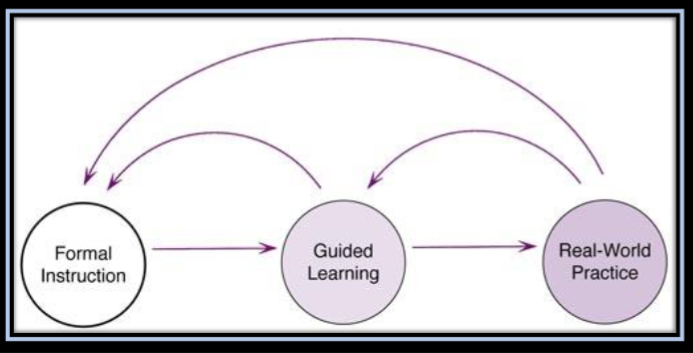
Model for communication strategies training
Order of steps: formal instruction → guided learning → real-world practice (go back if need be)
Formal instruction: learn and practice the types of strategies
Activities: group sharing & instruction, courtesy, explanation, direction
Guided learning: participants encouraged to use conversational strategies in a structured setting
Activities: modeling, role-playing, analysis of videos, attention, continuous discourse tracking
Real-world practice: participants encouraged to use strategies in real-world contexts
Diagram
Mod 7
Typical pattern for adult-onset hearing loss
Onset: bilateral gradual progressive in the 50s - 70s
Type & degree: sensorineural, & usually mild
Configuration: down-sloping, loss of high-frequency hearing
Patient journey
6 stages
Pre-awareness: denial, turning up TV, blaming others for mumbling, fatigue from increased perceptual effort, ignore symptoms
Awareness: have to acknowledge symptoms, repeated frustration, increased anxiety, fear of aging, social withdrawal
Movement: realization → action, investigating solutions, research, talking to friends, making an appointment
Diagnosis: appointment with professional, assessment, receiving diagnosis, emotional reactions like denial or relief
Rehabilitation: active engagement with solutions, receiving hearing aids, learning to use assistive devices, attending counseling or lip-reading classes, follow-up appointments
Resolution: acceptance of hearing loss & management, improved communication strategies, consistent use of devices, asking others to speak louder or face them when speaking, integrating changes into daily life
Presbycusis: hearing loss associated with the aging process; typically high-frequency hearing loss
Incidence: affects 30% over 65 y.o., affects 50% 75-79 y.o.
Personal variables in older adults: emotional state, mental health, temperament (personality), sense of self-sufficiency, independence, self-concept
Mod 8
Joint Committee on Infant Hearing (JCIH): national committee that establishes professional guidelines for early detection, evaluation, and intervention for infants with hearing loss, focusing on equitable access to care
Early Hearing Detection and Intervention (EHDI): the national practice of screening all newborns for hearing loss to identify hearing loss early to ensure proper language and communication development
1-3-6 guideline: screening by 1 month, diagnosis by 3 month, intervention by 6 months
Models for parental greiving for HL
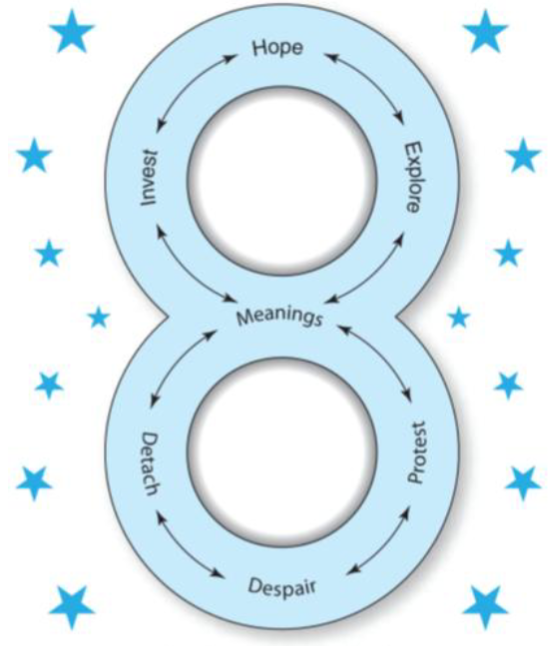
Sequential Stage Model of Grieving: shock & disbelief, guilt, bargaining, anger, depression or detachment, acceptance
Sometimes stages revisited
Circular-Pathways Model of Grieving: outward-focused pathway (top), inward-focused pathway (bottom), external influences (stars)
Diagram
IDEA Part C (The Program for Infants and Toddlers with Disabilities): federal grant program that assists states in operating a comprehensive statewide program of early intervention services for infants and toddlers (0-3 y.o.) with disabilities and their families
Basically makes sure every elligible child can have access to early intervention
Goals: reduce educational costs by minimizing the need for SPED through early intervention, minimize likelihood of institutionalization, maximize independent living, enhance capacity of families to meet their child’s needs
The Individualized Family Service Plan (IFSP): plan for education of preschool children that includes entire family, with parents playing an active role in development; specifies child’s present capabilities, identifies family’s resources & priorities & concerns, and describe goals for achieving progress
Communication modes:
Spoken language: multi-sensory system using both vision & hearing to recognize speech; speak messages & use hearing and/or speechreading to receive messages
Manually coded English: manual system of communication corresponding to the words & syntax of English that includes speaking simultaneously while signing
aka Total communication: the child uses every available means to receive a message, including sign, residual hearing, and lipreading
Sign language such as ASL: manual system of communication expressed by the hands through configuration, orientation, location, movement; is a distinct language with its own syntax and semantics
Mod 9
Historical figures of importance in D/HH education
Alice Cogswell (1805), inspiration to Gallaudet to research deaf education
Thomas Hopkins Gallaudet: commissioned to learn deaf education approaches
Braidwood family in England did not share their teaching methods
Abbe Sicard & Laurent Clerc in France shared their manual communication system
American asylum for education of the Deaf and dumb founded (1817) by Gallaudet & Clerc, uses manual communication approach
Gallaudet University: first college for deaf students (President Edward Miner Gallaudet)
Clark School (1867)
Established by Mabel Hubbard’s father & Samuel Howe
She eventually married Alexander Graham Bell who was a huge advocate for aural/oral education
Manual vs oral comm approach
Manual communication approach: teaching people with hearing loss sign language to be used for communication
Oral communication approach: teaching people with hearing loss to speak and speechread
The Individualized Education Program (IEP): plan created for each individual child in school-age needing extra support taking into account their SPED needs, strengths, skills, impact on learning, & goals
Includes:
Anticipated duration of services
Criteria to determine if objectives are achieved
Procedures to determine if objectives achieved
Schedules for review
Assessment information
Placement justification statement
Professionals part of team: audiologist, SLP, school personnel, parents, psychologist, interpreter, parent/guardian, school counselor
Audiologist: test hearing & speech perception, listening devices, assess central auditory function, assess classroom acoustics, provide auditory training, consultation, sign language instruction
SLP: assessment speech, language, literacy, & speechreading skills, knowledge of listening devices, speech therapy, consultation, sign language instruction
Teacher: academic instruction, educational assessments, modifications to curriculum, manage learning environment, manage student behavior & social skills
Psychologist: implement psychoeducational assessment, assess intelligence (verbal & nonverbal, writing, reading, and arithmetic skills), memory, behavior, attention, social-emotional
Itinerant teacher: 1:1 instruction, supplements classroom instruction, provides pre-teaching
Classroom placement options
Self-contained: classroom that places the SPED kid in a different classroom either alone or along with other SPED kids
Mainstream classroom: classroom that places the SPED kid in the normal classroom alongside other kids
direct & indirect services, accommodations
Mixed: SPED kid spending some time in the mainstream classroom and some in the self-contained classroom
Part-time self-contained, part-time mainstream
Classroom acoustics: access to auditory information in the classroom can be challenging due to these factors: distance, noise, reverberation
Distance: more distance between listener & speaker/talker = reduced audibility & intelligibility
Greatly affects speech understanding
Noise: background noise muffles and distorts speech
Unoccupied classroom noise levels should not exceed 35 dBA, however, most unoccupied classrooms have a noise level of 51 dBA & over 60 dBA if they are occupied
Reverberation: sound signal is reflected from walls, floor, or ceiling magnifying noise and impacts speech recognition
Strategies for reducing classroom noise: carpeting, rubber tips on chair and desk legs, acoustical panels or flannel on the walls and ceilings, window treatments, HVAC modifications, and reduced overall room size
Format accommodations: adjustments to academic assignments to accommodate for hearing difficulties or communication breakdowns
Examples appropriate: abbreviated assignments, abundant visual aids, content enhancement, content reduction, study partner/classroom buddy, flexible scheduling, language simplification, paraphrasing
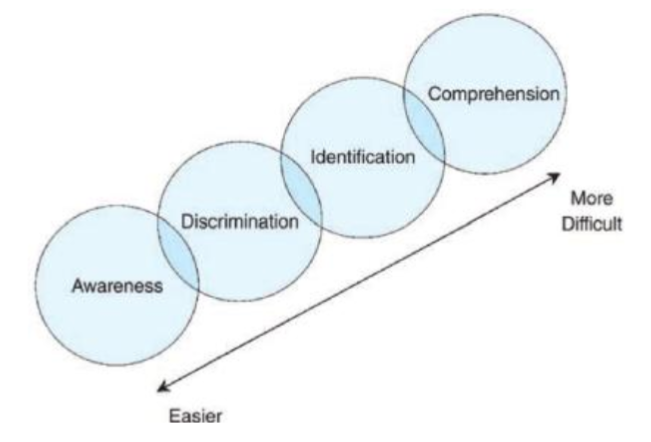
Auditory training
Auditory skill hierarchy: awareness → discrimination → identification → comprehension
Sound awareness activities: peek-a-boo, musical chairs, march to the beat, push toy car when clinician says Vrrrm
Discrimination activities: play a game with toy animals (the cow says ____, the sheep says ____), Simon says, play same or different game, repeat what you hear
Identification activities: Candy Land, sticker games, Go Fish
Comprehension activities: read-aloud story and answer questions, I Spy, 20 questions
Diagram
Psychosocial impacts from HL: lower levels of self-perceived social acceptance, fewer close friendships, self-concept differences
Mod 10
Characteristic language differences in children with HL:
Vowels
Neutralization & nasalization
Substitutions & diphtongizations
Prolongations
Consonants
Voice/voiceless confusions
Substitutions, omissions, and distortions
Consonant cluster errors
Suprasegmental production
Errors in stress, rate, coarticulation, breath common
Aberrant voice quality
Voice pitch, high or monotone
Speech rate is slow
Frequent pauses, often at inappropriate semantic and syntactic boundaries
Limited coarticulation
Errors in intonation, stress, tempo, rhythm, and amplitude fluctuations
Hindered ability to convey meaning, reducing overall intelligibility
Problems often seen in language include form (syntax), content, pragmatics, expressive & receptive language skills
Form: simple sentence structures, overuse nouns & verbs, rarely use adverbs pronouns & prepositions, omit function words, rarely use or omit morphemes, poor understanding of various sentence structures
Content: limited vocabulary to common everyday words, cannot identify synonyms antonyms and idioms, understanding of words limited to single meaning, learn more concrete than abstract words
Pragmatics: incorrect language use, inappropriate asking of questions, lack of initiation skills, absence of communication breakdown repair, poor turn-taking
Why have trouble with pragmatics?
Unfamiliar with language structures
Reduced vocabulary
Few conversational partners
Unable to overhear conversations
Lack of instruction on rules of communicating
Book prezys
Main concept of books & primary psychosocial theme emphasized in each book 4
A Loss for Words: Deafness in a Family
Main concept:The experience of a hearing child with Deaf parents
Primary psychosocial theme: personal identity development while existing between two worlds with communication barriers and responsibilities being navigated
Train Go Sorry: Inside of a Deaf world
Main concept: hearing daughter of principal of deaf school tells the stories of various Deaf students
Primary psychosocial theme: Navigating Deafness identity in the world
The Art of Being Deaf
Main concept: a middle-aged woman with moderate-severe hearing loss reflects on how her parents insistence on oralism and her hearing loss has affected her life
Primary psychosocial theme: communication breakdowns can have a big impact on relationships
Deaf Like Me
Main concept: father along with his family navigates supporting his daughter with severe hearing loss
Primary psychosocial theme: oralism vs manualism
Understand
CODA role
language access for communication dev
oral-deaf experieicne
education setting and deaf development