Brain Bee Doc.docx
The Nervous System
- Neurons
- Sensory neurons
- Coupled to receptors specialized to detect and respond to different attributes of environment
- Vision, hearing, touch, smell, and taste
- Motor neurons
- Control activity of muscles
- Responsible for all forms of behavior ex. Speech
- Interneurons
- Between sensory and motor neurons
- Mediate simple reflexes
- Glial cells
- Important contribution to the development of the nervous system and function in adult brain
- Architecture of Neuron
- Consists of a cell body and two sets of additional compartments called processes
- First set is called axons
- Transmits information from the neuron on to others to which it is connected
- Other set is called dendrites
- Receives information being transmitted by the axons of other neurons
- First set is called axons
- Both of these processes participate in the specialized contacts called synapses
- Synapses: places where neurons connect and communicate with each other
- Consists of a cell body and two sets of additional compartments called processes
- *The brain and spinal cord are connected to sensory receptors and muscles through long axons that make up the peripheral nerves.
- The Spinal Cord has two functions
- Simple reflexes such as the knee jerk and rapid withdrawal of a limb from a hot object or pinprick.
- Forms highway between body and brain for information traveling in both directions.
- The Spinal Cord has two functions
- **These basic structures of the nervous system are the same in all vertebrates. What distinguishes the human brain is its large size in relation to body size. This is due to an enormous increase in the number of interneurons over the course of evolution, providing humans with an immeasurably wide choice of reactions to the environment**
- Sensory neurons
- Anatomy of Brain
- The brain consists of the brain stem and the cerebral hemisphere
- Brain Stem - Divided into hind-brain, mid-brain, and diencephalon
- Hind-brain: extension of spinal cord ; contains networks of neurons for the control of vital functions such as breathing and blood pressure
- At the roof lies the cerebellum which plays a central role in the control and timing of movements
- Mid-brain: contains groups of neurons, each of which seem to use predominantly a particular type of chemical messenger (dopamine and serotonin)
- Mediates functions such as sleep, attention or reward
- Diencephalon
- Divided into two very different areas: thalamus and hypothalamus
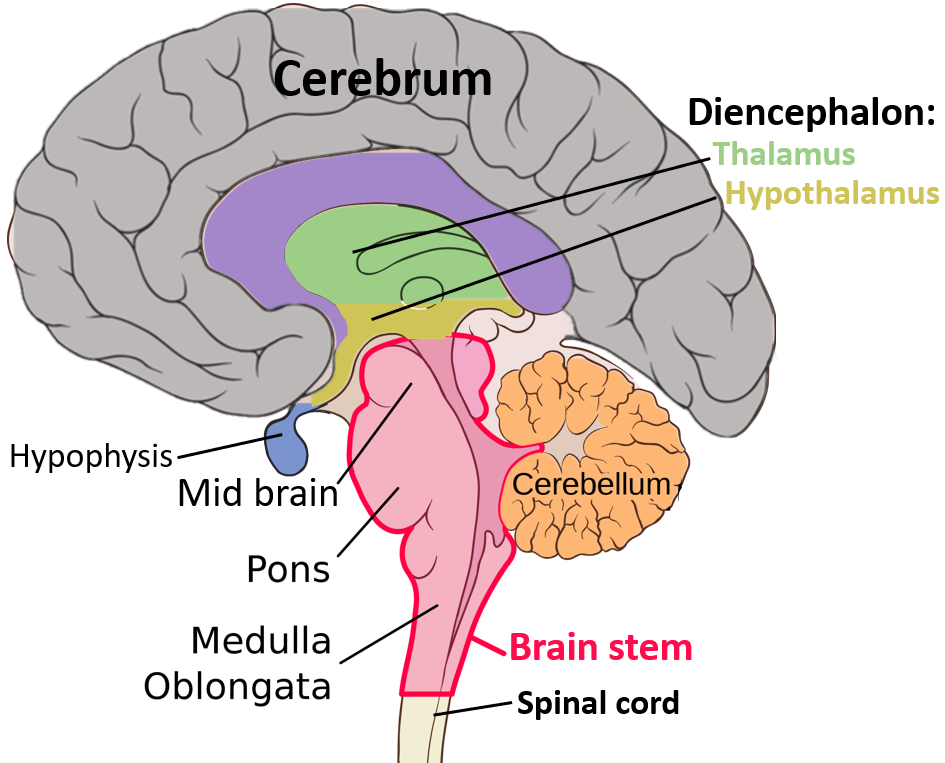
- Divided into two very different areas: thalamus and hypothalamus
- Hind-brain: extension of spinal cord ; contains networks of neurons for the control of vital functions such as breathing and blood pressure
- Brain Stem - Divided into hind-brain, mid-brain, and diencephalon
- The brain consists of the brain stem and the cerebral hemisphere
Thalamus: relays impulses from all sensory systems to the cerebral cortex, which in turn sends messages back to the thalamus
Hypothalamus: controls functions such as eating and drinking, and it also regulates the release of hormones involved in sexual functions
- Cerebral Hemisphere
- Consists of a core, the basal ganglia, and an extensive but thin surrounding sheet of neurons making up the gray matter of the cerebral cortex
- Cerebral Hemisphere
Basal Ganglia: plays a central role in in the initiation and control of movement
Cerebral Cortex: enables a large surface area for the sheet of neurons
This cortical tissue is the most highly developed area of the brain in humans
Divided into a large number of discrete areas that have functions such as visual, auditory, and olfactory, sensory areas receiving from skin, and motor areas
The pathways from the sensory receptors to the cortex and from cortex to the muscles cross over from one side to the other(Thus, movements of the right side of the body are controlled by the left side of the cortex and vice versa)(Left half of the body sends sensory signals to the right hemisphere)
Connected by large fiber tract called the corpus callosum
Cerebral Cortex required for voluntary actions such as language, speech, thinking, and remembering
Neurons and Action Potential
- Synapses: the point at which information is exchanged between dendrites and axons
- All neurons have both electrical and chemical activity and they cooperate and compete with each other in regulating the state of the nervous system
- Chemical Signals received in the dendrites are transformed into electrical signals, which add to or subtract from electrical signals from all the other synapses, thus making a decision about whether to pass on the signal elsewhere. Electrical potentials then travel down axons to other synapses on the dendrites of the next neuron and the process repeats
- Neuron structure: dendrites, cell body, axon, synaptic terminals
- Functional subdivision: receiving, integrating, transmitting compartments
- Polarization concept: dendrites receive, cell body integrates, axons transmit
- Neuronal membrane: fatty substances, draped around cytoskeleton
- Constant motion: dendrites change shape(sprouting new connections and withdrawing others), axons grow new endings(neuron struggles to talk a bit more loudly or a bit more softly to others)
- Inner compartments: proteins manufactured in cell body, transported along cytoskeleton
- Dendritic spines: where incoming axons make connections, important for neuronal connectivity
- Fuel: mitochondria inside cell
- Growth factors: influence gene expression, enable growth and changes in shape/function
- Continuous flow of information, nutrients, and messengers to and from cell body
Receiving and Deciding
- Synapses on cerebral cortex cells mainly located on dendritic spines
- Synaptic transmission: what communication between nerve cells at these contact points is referred to as.
- Chemical messengers received by dendrites set up miniature electrical currents
- Currents can be excitation (into cell) or inhibition (out of cell)
- Accumulated currents spread to cell body
- If currents cross threshold, neuron sends message to other neurons
- Neuron acts as miniature calculator, adding and subtracting received messages
- Sensation, thought, and movement are based on network of neurons
The Action-Potential
- Neuronal signal travels along axon via electrical pulses called action potentials
- Axonal membrane contains ion channels for sodium (Na+) and potassium (K+) ions
- Channels open in response to electrical depolarization of membrane
- Action potential initiation: Na+ channels open first, influx of Na+ ions, membrane voltage switches rapidly from negative to positive → K+ channels open, efflux of K+ ions, membrane potential returns to negative
- Few ions traverse membrane, concentrations of ions remain stable
- Ion pumps maintain ion balance, remove excess sodium ions
- Nerve fibers act as electrical conductors, the action potential is actively propelled in a wave of depolarization that spreads from one end of the nerve fiber to the other.
- Analogy: movement of energy along lit sparkler
- Refractory period: brief silence before axon membrane becomes ready for next action potential, recovering its explosive capability
- Early understanding from experiments on large neurons in sea creatures
- Modern technique: patch-clamping for precise measurement of ion currents in neurons
Insulating the axons
- Myelin sheath: insulating blanket around axons, accelerates action potential transmission
- Nodes of Ranvier: gaps in myelin sheath where ion channels concentrate, amplify action potential
- Myelinated neurons: action potentials can travel at 100 meters per second
- All-or-nothing characteristic: action potentials don't vary in size, only in frequency
- Frequency of action potentials encodes strength or duration of stimulus
- Efficient axons can conduct action potentials up to 1000 times per second
Chemical Messengers
- Action potentials transmitted along axons to synapses, where axons contact dendrites of other neurons.
- Synapses consist of presynaptic nerve ending and postsynaptic component, often on dendritic spine.
- Electrical currents of action potentials can't bridge synaptic gap.
- Transmission across gap done by neurotransmitters, chemical messengers.
Storage and release
- Neurotransmitters stored in synaptic vesicles.
- Arrival of action potential opens calcium ion channels.
- Activation of enzymes acts on presynaptic proteins.
- Proteins cause fusion of synaptic vesicles with membrane, release neurotransmitter.
- Neurotransmitter diffuses across the synaptic cleft.
- Synaptic vesicles reform and refill with neurotransmitter for continuous recycling.
- Neurotransmitter interacts with receptors on next neuron's membrane once it gets to the other side
- Glial cells around the synaptic cleft have transports that assist by clearing the neurotransmitter from synaptic cleft allowing the next action potential to come.
- They send the transmitter back to be stored in the vesicles for future use
Messengers that open ion channels
- Attachment of the transmitter(the key) to the ionotropic receptor(the lock) opens the ion channels, leading to inflow of positive ions which cause excitation.
- Excitatory post-synaptic potential (epsp) produced.
- Multiple synapses converge on a neuron, a large sum of epsps can trigger new action potential
- Main excitatory neurotransmitter: glutamate.
- Nervous activity precision requires excitation of some neurons and suppression of others via inhibition.
- Inhibitory synapses: activation of receptors opens ion channels, inflow of negatively charged ions, leading to inhibitory post-synaptic potential (ipsp).
- ipsp opposes membrane depolarization, prevents action potential initiation.
- Two inhibitory neurotransmitters: GABA and glycine.
- Synaptic transmission rapid: from arrival of action potential to generation of epsp in next neuron, takes 1/1000 of a second.
- Timing crucial for glutamate delivery to add up epsps, and for inhibition to be effective in same interval.
Messengers that modulate
- Excitatory and inhibitory neurotransmitters uncovered numerous other chemical agents released from neurons.
- Many affect neuronal mechanisms via metabotropic receptors, adjusting chemical processes (neuromodulation).
- Metabotropic receptors trigger intracellular second messengers, leading to biochemical events.
- Neuromodulation effects include changes in ion channels, receptors, transporters, and gene expression, and effects extend well beyond synapse.
Identifying the messengers
- Neuromodulators include acetylcholine, dopamine, and noradrenaline.
- These neurotransmitters have diverse effects and project widely through the brain.
- Noradrenaline neurons, although few in number, send axons throughout the brain and spinal cord, fine-tuning neuronal assemblies.
- Dopamine enhances rewarding aspects of situations, while acetylcholine acts on ionotropic and metabotropic receptors, tuning neurons for attention.
Drugs and the Brain
- Recreational drugs(cocaine, heroin, nicotine, alcohol, cannabis etc) share the ability to promote the release of the chemical messenger dopamine in certain brain regions
Alcohol
- Alcohol:
- Dampens excitatory messages, promotes neural inhibition.
- Long-term use damages liver, brain, affects babies in pregnancy.
- Causes aggression, dependence, and health issues.
- Nicotine:
- Acts on acetylcholine receptors, activating alerting mechanisms.
- Highly addictive, damaging to lungs, leading to lung cancer and heart diseases.
- Cannabis:
- Acts on brain's natural system, useful in medical context.
- Pleasurable and relaxing, alters perception, but may cause panic attacks.
- Debate on legalization, often smoked with tobacco.
- Amphetamines:
- Man-made chemicals like Dexedrine, Speed, Ecstasy.
- Cause release of dopamine and serotonin in brain, leading to arousal and pleasurable effects.
- Dangerous, can cause hallucinations, psychosis, and death.
- Heroin:
- Derivative of morphine, acts on brain's endorphin system.
- Highly addictive, causes immediate pleasure but leads to craving.
- Dangerous, suppresses breathing reflexes, can be lethal.
- Cocaine:
- Plant-derived, causes pleasurable sensations and acts as psychostimulant.
- Increases dopamine and serotonin levels, leads to aggression and overdose.
- Highly addictive, associated with crime and aggression.
Touch and Pain
Pain serves to inform and to warn us of damage to our bodies. It has a strong emotional impact and is subject to powerful controls within the body and brain
Touch Receptors:
- Found in skin's dermal layers.
- Include Pacinian and Meissner corpuscles, Merkel's disks, and Ruffini endings.
- Have ion channels that open in response to mechanical deformation, triggering action potentials.
- Pacinian corpuscles have larger receptive fields(area of skin which each individual receptor responds to) than Meissner's corpuscles.
Sensory Pathway:
- Sensory nerves carry impulses to dorsal roots of spinal cord.
- Touch receptors send rapid signals & information via large myelinated fibers.
- Cold, warmth, and pain detected by thin axons with "naked" endings.
- Temperature receptors show adaptation.
Somatosensory Cortex:
- Maps body surface representation.
- Areas with high receptor density have correspondingly higher sensory nerves.
- Uniform neuronal density results in a distorted map.
Sensory Discrimination:
- Ability to perceive fine detail varies across body parts.
- Touch involved in active control of movement.
- Sensory input from touch receptors aids in motor control.
Pain Perception:
- Pain system differs from touch.
- Pain receptors respond to stimuli causing tissue damage.
- Molecular techniques reveal structure and characteristics of nociceptors(receptors that respond to heat above 46°C, tissue acidity, chili peppers, etc).
- Ascending pathways carry pain signals to the cerebral cortex.
- One dealing with localisation of pain and emotional aspect of pain
Pathway Differences:
- Second pathway diverges from the somatosensory cortex.
- Targets anterior cingulate cortex and insular cortex.
Brain Imaging with Hypnosis:
- Separates pain sensation from pain unpleasantness.
- PET imaging during hot water immersion with hypnotic suggestion.
Positron emission tomography (PET) Findings:
- Changes in pain intensity activate the somatosensory cortex.
- Pain unpleasantness activates the anterior cingulate cortex.
Importance of Pain:
- Facilitates learning to avoid harmful situations.
- Initiates protective reflexes like withdrawal reflex.
- Provides rest for healing after tissue damage.
Modulation of Pain:
- Endogenous analgesics suppress pain during likely injury.
- Ex: soldiers in battle → pain sensation is suppressed
- Electrical stimulation of brain areas elevates pain threshold(good).
- Involves descending pathway from midbrain to spinal cord.
Chemical Involvement:
- Endogenous opioids like met-enkephalin are involved.
- Morphine(pain killer) acts on similar receptors as endogenous opioids.
Hyperalgesia:
- Lowers pain threshold, increases pain intensity(bad).
- Can broaden pain area or cause pain without stimulation.
Mechanisms of Hyperalgesia:
- Sensitization of peripheral receptors.
- Complex changes in ascending pain pathways.
- Involves excitation and inhibition interaction.
Challenges in Treatment:
- Despite understanding cellular mechanisms, chronic pain treatment remains inadequate.
Vision
- Human Visual Perception:
- Humans heavily rely on vision to perceive and understand the world around them.
- Vision involves the detection of various environmental aspects through light entering the eyes.
- Photoreceptors in the retina initiate neural impulses in response to light, which then travel through visual pathways to the brain.
- Light on the Eye:
- Light enters the eye through the pupil and is focused by the cornea and lens onto the retina.
- The eye doesn't function like a static camera; it continually moves, and visual processing occurs dynamically.
- Photoreceptors on the retina, including rods and cones, respond to light by generating electrical potentials
- These pass via synapses through a network of cells in the retina, activating retinal ganglion cells whose axons form the optic nerve which enter the brain
- transmitting action potentials to different visual regions with distinct functions.
- These pass via synapses through a network of cells in the retina, activating retinal ganglion cells whose axons form the optic nerve which enter the brain
- Photoreceptor Function and Types:
- Rods, highly sensitive to light, enable night vision, while cones, less numerous, facilitate daylight vision and color perception.
- Cones, sensitive to different wavelengths, contribute significantly to color vision.
- Research has elucidated processes like phototransduction, the genetic basis of color blindness, and the role of retinal networks in visual processing.
- Ganglion cells, including small and large types, play essential roles in transmitting visual information to the brain.
- Visual Pathway to the Brain:
- Optic nerves from each eye converge at the optic chiasm, where fibers cross over.
- These fibers form optic tracts containing inputs from both eyes, projecting to the cerebral cortex via the lateral geniculate nucleus.
- Representation in the Visual Cortex:
- Visual space is represented in the cerebral cortex, with the left visual field processed in the right hemisphere and vice versa.
- Visual areas like V1, V2 process various aspects of the visual world such as shape, color, and movement.
- Receptive Fields and Cortical Organization:
- Visual cells have receptive fields, responding to specific types of visual stimuli.
- Neurons in V1 exhibit an organized response to lines or edges of a particular orientation.
- Plasticity in the visual cortex allows for adaptation based on experience, influencing individual cell responses.
- Circuitry and Neuroplasticity:
- The intricate circuitry of the visual cortex remains a puzzle, with neurons organized in precise local circuits.
- Some suggest a canonical cortical microcircuit, but variations exist across different visual areas.
- Insights from Visual Illusions:
- Study of visual illusions provides insight into different stages of visual analysis and processing.
- Decision Making in the Cortex:
- The cerebral cortex processes sensory information and facilitates decision making based on available evidence.
- Decision making involves cognitive processes, weighing sensory input against existing knowledge to make choices.
- Decisions range from simple and automatic to complex, requiring extended thinking.
- Neural Basis of Decision-Making:
- Understanding decision-making involves recording neural activity during daily activities, which poses challenges in interpretation.
- Interpreting neural correlations with behavior requires precise experimental control and specific tasks.
- Experimental Approach:
- Experimental neuroscientists use controlled tasks to study decision-making, ensuring subjects perform optimally.
- Tasks are complex enough to be interesting yet simple enough to analyze effectively.
- Example Task:
- Making visual decisions about stimuli, like determining which spot of light is bigger or brighter, involves a complete cycle of decision-making.
- Sensory information is acquired, analyzed, and decisions are made with rewards based on performance.
- Visual Motion and Color Decision-Making:
- Current research focuses on understanding how neurons contribute to decisions about visual motion and color.
- Recognizing if an object moves and its direction is vital for humans and animals to distinguish objects.
- Brain regions processing motion can be identified anatomically through connectivity patterns, human brain imaging, and neuron activity recordings in animals.
- Area MT or V5 Neurons in Action:
- Neurons in area MT or V5 were observed in a monkey making visual decisions about moving dots.
- Dots mostly moved randomly, but some moved consistently in one direction.
- Observers had to judge the overall direction of dot movement.
- Neuronal Response to Motion:
- Neurons in V5 responded selectively to specific directions of movement.
- Activity increased accurately with the proportion of dots moving in their preferred direction.
- Remarkable Neuronal Performance:
- Some neurons performed as well as observers in detecting dot movement.
- Microstimulation of neurons biased the monkey's judgment of relative movement.
- Implications for Decision-Making:
- Despite many neurons sensitive to motion, decisions may rely on a few neurons.
- Similar Process for Color Decisions:
- Decisions about color are likely to follow a similar pattern.
Area V5 Perception:
- Area V5 interprets perceived motion, not just actual motion.
- Neurons respond differently based on perceived motion direction.
- Neuronal decisions reflect observer's perception, not actual stimulus.
Visual Ambiguity:
- Examples of ambiguous visual stimuli causing indecision.
- Neurons reflect observer's fluctuating interpretations.
Binocular Rivalry:
- Occurs when different eyes see conflicting visual information.
- Neurons track observer's perceptual shifts between interpretations.
Conclusion:
- Visual processing involves complex neuronal responses to perceived stimuli.
- Neuroscientists continue to unravel mysteries of visual perception.
Movement
- Catching a ball involves intricate brain processes from planning to execution.
- The motor hierarchy involves various brain regions, including the cerebral cortex, basal ganglia, cerebellum, and spinal cord.
- Motor neurons in the spinal cord activate muscle fibers through neuromuscular junctions, causing muscle contraction producing force and movement.
- Spinal Cord
- Controls muscles through several different reflex pathways
- Withdrawal reflex, stretch reflex, etc
- Controls muscles through several different reflex pathways
- Rhythmic movement of limbs involve coordinated excitation and inhibition of motor neurons
- The motor cortex in the cerebral cortex maps body movements (nerve cells that cause movements in different limbs are topographically arranged), with neurons firing before muscle activity.
- Pre-motor areas plan actions, prepare spinal circuits, and link visual movements with understanding.
- The basal ganglia initiate movements by filtering information and sending output to motor cortical areas.
- Parkinson's disease results from dopamine deficiency in the basal ganglia, affecting movement initiation.
- The cerebellum is crucial for smooth movements, coordination, balance, and motor learning through synaptic plasticity.
- Alcohol affects the cerebellum, leading to motor coordination issues.
- The cerebellum may function as a "model" of motor systems, refining movements based on sensory feedback.
- Catching a ball engages multiple levels of the motor hierarchy, integrating sensory information into muscle signals throughout the process.
The Developing Nervous System
- The brain's basic plan is similar across individuals and mammals, shaped by genetics and early-life electrical activity.
- Brain development starts from a fertilized egg, guided by genetic instructions(genome).
- Genes shared with fruit flies play crucial roles in human nervous system development.
- Brain development is studied in various animals like zebrafish, frogs, chicks, and mice, each offering unique advantages in particular cellular and molecular events.
First Steps
- Cell division and differentiation mark early brain development, leading to the formation of brain regions.
- Different kinds of neurons migrate to various locations in a process called pattern formation
- First major event of pattern formation: neural plate is formed, the front of which is to become the brain and the rear to be the spinal cord
- Various regions of the early nervous system express different subsets of genes, presaging the emergence of brain areas
Rolling Around
- Neural plate closes into a neural tube
- In the next few weeks, changes occur in cell shape, division, migration , and cell-cell adhesion
Knowing your position in life
- Cells in nervous system determine position using molecular gradients
- Resemble map-reading, measuring distances from defined points
- Embryo creates localized polarizing regions in neural tube
- Secretes signal molecules forming concentration gradients
- Example: Sonic hedgehog protein expressed at bottom of neural tube
- Diffuses, influencing cell development based on distance
- Close proximity(higher concentration) induces interneuron gene expression
- Further distances(lower concentration) trigger motor neuron gene expression
- Diffuses, influencing cell development based on distance
- Axonal guidance and synapse formation involve precise navigation and molecular cues.
- Electrical activity refines neural connections, crucial for vision and other functions.
- Understanding developmental genetics and stem cell potential offers avenues for brain repair and treatment of neurodegenerative diseases like Parkinson's.
Dyslexia
- Children w/ Dyslexia find reading very difficult
- Reading involves..
- Recognizing alphabetic visual symbols in the right order(orthography)
- Hearing the seperate sounds in words in their right order(phonemic structure)
- Dyslexics are slow and inaccurate at analysing both
- Dyslexics have problems with visuomotor integration
- Visuomotor integration: what the eyes see has to be integrated with motor signals from the eye movement system
- Visual control of the eye movement system is dominated by a network of large neurons known as the magnocellular system
- Network is from the retina through the pathway to the cerebral cortex & cerebellum, to the motor neurons of the eye muscles
- Specialized for tracking moving targets
- Generates motion error signal when eyes move off letters
- ✦✦ Magno cellular system helps point the eyes steadily at each letter in turn, and hence in determing their order
- Mildly impaired in many dyslexics
- Sensitivity and responses to visual motion is poor
- Mildly impaired in many dyslexics
- Dyslexics have problems putting the sounds of words in the right order( lollypop ➡ pollylop) and slower and more inaccurate at translating letters into the sounds they stand for
- Rooted in mild deficiency of auditory skills
- Systems of auditory neurons track changes in sound frequency and intensity which is how we distinguish letter sounds(phonemes)
- These neurons fail to develop as well in dyslexics
- Impaired development of brain cells in dyslexics
- Cerebellum function can be impaired which causes bad handwriting
What can be done?
- Treatment for dyslexia is an area of disagreement among scientists currently
- Many different hypotheses on its underlying cause
Plasticity
- Plasticity is the ability of our brain to change
- Synaptic Plasticity: the science of how neurons alter their ability to communicate with each other
- Connections between neurons early in life need fine-tuning
- As we interact with our environment, these synaptic connections start to change
- New ones being made, useful ones becoming stronger, unuseful ones becoming weaker or lost for good
- As we interact with our environment, these synaptic connections start to change
- Synaptic transmission involves release of chemical neurotransmitter which activates receptors
- Synaptic strength is the reponse to the release of the neurotransmitter
- Two kinds:
- Long-term potentiation(LTP): high frequency release, enhances strength
- Long-term depression(LTD): low frequency release, depresses them
- Two kinds:
- Glutamate is a common amino acid used to build proteins and a neurotransmitter that functions at the most plastic synapses of our brain - LTP and LTD
- Glutamate receptors come in four varieties
- Three are ionotropic (AMPA, NMDA, & Kainate)
- Fourth type is metabotropic and is called mGluR
- All respond to the same neurotransmitter, but perform very different functions
- Ionotropic use their ion channels to generate epsp while metabotropic modulates the size and nature of this response
- Glutamate receptors come in four varieties
- AMPA and NMDA are the memory molecules
- AMPA receptors(only LTP): Once glutamate is bound to these receptors, they rapidly open their ion channels to produce epsp
- Only bound for a fraction of a second and once it leaves, ion channels close and electrical potential reverts to resting state
- This is what happens when neurons in brain send information to each other quickly
- Only bound for a fraction of a second and once it leaves, ion channels close and electrical potential reverts to resting state
- NMDA receptors
- Triggers synaptic plasticity
- Only involved when synapse is activated quickly
- As soon as NMDA receptors open ion channels, the channels become plugged by another ion(Mg^2+)
- When synapses are activated quickly, NMDA receptors sense excitement immediately.
- Greater synaptic activity ➡ large depolorization in post synaptic neuron ➡ Electrical repulsion dispels Mg^2+ ➡ NMDA receptors are able to partake in synaptic communication
- Conducts Na+ and K+ which adds to depolorization and allows calcium to enter
- Greater synaptic activity ➡ large depolorization in post synaptic neuron ➡ Electrical repulsion dispels Mg^2+ ➡ NMDA receptors are able to partake in synaptic communication
Calcium binds to proteins located close to synapses where NMDA receptors were activated
Some are enzymes that are activated by calcium which leads to chemical modifications of other proteins.
These chemical modifications are the first stages of the formation of memories
AMPA Receptors and Memory Storage:
- NMDA receptor activation leads to plastic changes in neuronal connectivity.
- AMPA receptors on post-synaptic side express strength changes.
- Mechanisms involve AMPA receptors working more efficiently or increased insertion into synapse.
- Larger EPSP leads to Long-Term Potentiation (LTP); reduced efficiency results in Long-Term Depression (LTD).
- LTP or LTD can occur within a single dendritic spine, altering synaptic strength locally.
- Structural Alterations in Memory Formation:
- Synapses with more AMPA receptors change shape, grow bigger, or sprout new synapses post-LTP induction.
- Synapses losing AMPA receptors may deteriorate.
- Brain's physical structure changes in response to activity.
- Impact of Emotional State and Attention on Learning:
- Emotional states influence learning; memories linked to emotional experiences are better retained.
- Attention enhances learning, involving neuromodulators like acetylcholine, dopamine, noradrenaline, and cortisol.
- Role of Synaptic Plasticity in Brain Recovery:
- Synaptic plasticity aids brain recovery post-injury.
- Neurons destroyed during injury don't necessarily grow back, but other neurons can adapt, forming new networks.
- Process akin to re-learning showcases brain's recuperative abilities.
Learning and Memory
- Memories and Individuality:
- Memories vary among individuals, encompassing events, facts, emotions, and skills.
- Brain has multiple memory systems mediated by different neuronal networks.
- Formation of memory is now widely thought to depend on synaptic plasticity
- Organization of Memory:
- No single brain area stores all learned information.
- Working memory holds data temporarily; long-term memory stores vast amounts of information.
- Working Memory:
- short-term data storage.
- Limited capacity but high accuracy; can hold about 7 +/- 2 items.
- Controlled by a central executive system with a phonological store and visual sketchpad.
- Phonological: You saying things to yourself (silent rehearsal loop)
- Visual sketchpad: Holds onto images of objects for lolng enough to manipulate them in your mind's eye
- Located mainly in frontal and parietal lobes, crucial for speech, planning, and decision-making.
- Evolution of Working Memory:
- Likely evolved alongside language development.
- Critical for learning language in young children, suggesting co-evolution with speech.
- Long-term Memory:
- Long-term memory encompasses various systems distributed across different brain networks, each serving distinct functions.
- Information enters sensory systems, then passes down pathways that provide increasingly specialized processing
- Ex: Visual system information passes through networks that work out shape, color, object identity, etc
- Perceptual and Semantic Memory:
- Perceptual: cortex regions extract perceptual representations of stimuli, aiding in recognition of things and memory formation.
- Semantic memory stores vast factual knowledge put into different categories for efficient retrieval.
- The organization of information into categories facilitates memory retrieval, enhancing the efficiency of the search process.
- Skills and Emotional Learning:
- Skills: are acquired through extensive practice, with specialized brain areas like the basal ganglia and cerebellum playing crucial roles.
- Emotional learning: often rapid, involves the amygdala and influences memory formation, especially regarding associations with emotional events.
- Episodic Memory:
- Episodic memory records personal experiences and events, crucial for retaining unique life events.
- Studies of neurological patients with specific memory deficits have aided in understanding the anatomical organization of episodic memory and other memory systems.
- Amnesia and Learning:
- Amnesia: can not remember things that just happened
- Amnesic patients demonstrate dissociation between learning and conscious awareness, as they can learn new skills without consciously remembering the learning process.
- Despite learning without conscious recall, amnesic individuals lack the ability to recover conscious awareness of past events.
- Brain Circuits and Memory:
- Damage to specific brain regions, such as the midbrain and thalamus, disrupts normal memory formation, leading to deficits in episodic and semantic memory.
- The hippocampus is crucial for memory formation, particularly in the context of episodic and semantic memories, highlighting its importance in cognitive function and memory consolidation.
Memory System and Brain Damage
- Damage in the brain affects memory systems differently.
- Semantic dementia showcases breakdown in word understanding.
- Early stages: Patients recognize pictures accurately.
- Later stages: Struggle to label pictures correctly.
- Confirms categorical storage of factual information.
Neurobiology of Memory:
- Animal research elucidates neural and chemical processes.
- Many aspects of brain development parallels early learning.
- Example: Chicks' imprinting demonstrates the learning process.
- Chemicals aid in forming precise brain images.
- Genes activated to solidify memories.
Place Cells and Navigation:
- Hippocampal place cells assist animal navigation.
- Action-potentials fire in familiar places which aids spatial mapping and directional navigation.
- Crucial for survival, relevant to semantic and episodic memory.
- Help remember locations of events.
NMDA Receptors and Memory Formation:
- NMDA receptors vital for learning about places.
- Blocking them impairs spatial learning.
- Animals lacking NMDA receptors struggle to learn.
- Changes in AMPA receptors also impact memory.
Can we improve memory
- Balancing memory improvement is complex.
- Excessive memory may clutter trivial information.
- No magic solution for memory enhancement.
- Drugs might aid serious forgetfulness.
- Research aims to halt memory-affecting diseases.
Cognitive Engineering and Memory Enhancement:
- Complements drug treatments.
- Helps understand memory processes.
- Tips like paying attention and spacing learning sessions.
- Tools like "NeuroPage" aid task structuring.
- Recognizing memory types is crucial.
- Skill learning necessitates practice.
Understanding Stress:
- Stress impacts everyone, even in seemingly calm lives.
- Occurs during exams, competitions, or conflicts.
- Neuroscientists explore brain's chemical response to stress.
- Questions arise about its purpose and effects when it goes awry.
Nature of Stress:
- Stress is not just pressure but a mismatch between expectations and reality.
- Psychological and physical stressors are common.
- Various stressors involve mix of physical pain and mental strain.
- Stress is fundamental across all organisms, triggering protective mechanisms.
Stress and the Brain:
- Brain coordinates stress perception and response.
- Cognitive appraisal interacts with bodily signals and information.
- Neuroendocrinology studies hormonal responses to stress.
- Immediate "fight or flight" response activates sympathetic nervous system.
HPA Axis Response:
- Hypothalamus, pituitary gland, adrenal cortex, and hippocampus form the HPA axis.
- Hypothalamus triggers pituitary gland to release ACTH.
- ACTH stimulates adrenal gland to release cortisol.
- Cortisol raises blood sugar and aids immediate needs, while inhibiting other functions.
- Feedback loop regulates cortisol levels in the brain, impacting learning and memory.
Cortisol and the Brain:
- Hippocampus has receptors for cortisol.
- High cortisol levels lead to sustained activation of specific receptors.
- Excessive stress can lead to hippocampus shrinkage.
- Bell-shaped curve relates stress to brain function.
Conclusion:
- Stress is inevitable and can be both psychological and physical.
- Understanding stress response helps comprehend its effects on the brain and body.
Depression and Stress Overactivity:
- Chronic brain diseases show excess cortisol in blood.
- Severe depression linked to cortisol overproduction.
- Hippocampus may shrink in severe depression.
- Depression often viewed as severe long-term stress.
- Blocking cortisol production or action can help patients.
- Antidepressants normalize overactive HPA axis.
- Research aims to develop better stress disorder treatments.
Stress and Ageing:
- Brain ageing varies among individuals.
- Cortisol levels higher in unsuccessful ageing.
- Elevated cortisol precedes mental decline and hippocampus shrinkage.
- Lowering stress hormone levels prevents memory decline in animal studies.
- Excessive stress hormone responses may lead to cognitive disorders with age.
- Antidepressants may help control stress system and reduce cognitive decline.
Conclusion:
- Stress plays a significant role in modern life.
- Understanding stress-immune system interaction is crucial.
The Immune System
Brain's Immune Function:
- Brain was once considered immune privileged due to blood-brain barrier.
- Recent research challenges this view.
- Neuroimmunology is now an active research area.
Body's Defenses:
- Immune system defends against invaders like viruses and bacteria.
- Local and systemic responses combat infections.
- Acute phase response generates symptoms aiding recovery.
- Control of responses crucial to prevent excessive damage.
Brain's Response to Defense:
- Brain interacts with immune system and damaged tissues.
- Neural and humoral signals inform brain of threats.
- Cytokines play a key role in immune response.
- Brain regulates cytokine production through neural signals and hormones.
Cytokines in Defense:
- Cytokines are key defense molecules.
- Produced in response to disease or injury.
- Stimulate immune system and inflammation.
- Brain can regulate cytokine production.
Stress and Immune System:
- Stress affects brain directly and indirectly via HPA axis.
- Impact on immune system depends on stress type and response.
- Excessive stress can inhibit defense responses.
- Activation of HPA axis suppresses immune function.
Immune Responses in Brain Diseases:
- Defense molecules like cytokines play roles in brain diseases.
- Overproduction of cytokines can damage neurons.
- New treatment strategies target immune and inflammatory molecules.
- Neuroimmunology offers insights into brain disease treatment.
Sleep
Sleep and Brain Function:
- Sleep is a crucial part of life, occupying roughly a third of our time.
- Circadian rhythm governs sleep-wake cycle, controlled by suprachiasmatic nucleus.
- Sleep stages involve distinct brain activity patterns, including slow-wave sleep (SWS) and rapid eye movement (REM) sleep.
- SWS: When we fall asleep, our electroencephalogram(EEG) increases in amplitude and decreases in frequency as we move through series stages of sleep
- REM Stage: The EEG becomes like the waking state again and our eyes jerk back and forth beneath our closed eyelids
- This is where we dream
- Sleep deprivation studies show that primarily the brain benefits from sleep, not the body.
Purpose of Sleep:
- Sleep aids brain recovery and memory consolidation.
- REM sleep and SWS may play crucial roles in brain restoration.
- Sleep allows brain to reset and consolidate memories.
Mechanisms of Rhythms:
- Neural mechanisms of sleep studied by recording brain activity.
- Brainstem activating system involves neuromodulatory transmitters like adenosine.
- The chain of transmitters take us through the sleep stages
- Synchronization mechanisms facilitate transitions between sleep stages.
- The chain of transmitters take us through the sleep stages
- Neurogenetics reveal genes involved in regulating sleep rhythms, such as per and tim in fruit flies.
- Similar molecular mechanisms observed in mammals, indicating evolutionary conservation of circadian rhythms.
Brain Imaging
- Brain Imaging Revolution:
- Phrenologists attempted to understand the brain by studying skull bumps.
- Modern brain imaging techniques provide detailed insights into brain structure and function.
- Evolution of Brain Imaging:
- Neurologists correlate brain structure with function postmortem, leading to discoveries like Broca's discovery of speech areas.
- Structural brain imaging developed 30 years ago, followed by functional imaging methods.
- Allows us to see inside the skull
- Functional Brain Imaging Techniques:
- Electrophysiological techniques monitor neuronal activity changes.
- Brain scanning monitors changes in energy metabolism related to neural activity.
- The electrochemical gradients that move charged ions in and out of neurons need energy
- Energy comes from the oxidation of glucose
- Glucose & Oxygen are delivered via cerebral circulation
- Increase in cerebral blood flow in active areas
- Glucose & Oxygen are delivered via cerebral circulation
- Energy comes from the oxidation of glucose
- PET Scan:
- Uses the injection of radioactive tracers to measure changes in cerebral blood flow.
- Used to produce maps of changes in local cerebral blood flow
- Limitations include the need for radioactive substances
- Many people can not have PET scan
- MRI:
- Non-invasive and does not require radioactive substances.
- Provides detailed brain structure images, including white matter tracts with diffusion tensor imaging(DTI).
- fMRI: functional MRI
- Based on changes in magnetic properties of blood.
- Measures oxygen consumption and cerebral blood flow changes during neuronal activity.
- Data Analysis and Application:
- fMRI studies involve subtracting brain images to analyze activity associated with specific tasks.
- Statistical parametric mapping (SPM) is a common analysis package.
- Understanding Brain Function:
- Brain areas "light up" during specific tasks, providing insights into sensory processing and cognitive functions.
- Studies reveal diverse brain areas involved in tasks like memory processing and pain perception.
- Advancements and Future Directions:
- New techniques like effective connectivity analysis reveal how brain regions interact during tasks.
- High-field magnets promise even more precise imaging, aiding in understanding neural network dynamics.
Neural Networks & Artificial Brains
Brain Characteristics:
- Real brain consists of neurons, blood vessels, and fluid-filled ventricles.
- Highly adaptable, tolerating faults and learning throughout life.
- Contains billions of nerve cells and vast networks, packed efficiently into a small volume.
Brain Modeling Approach:
- Mathematicians, physicists, engineers, and computer scientists study the brain through equations, computer models, and hardware devices.
- Mimic real neurons to understand brain efficiency and build brain-like machines.
Building Brain Circuits in Silicon:
- Energy consumption in signaling influences brain evolution.
- Silicon-based circuits mimic neural networks but face challenges in direct communication and power efficiency.
- Neuromorphic engineering adopts analog coding for efficient computation, inspired by biological systems.
Silicon Retina Prototype:
- Silicon retina prototype mimics biological networks, processes visual information efficiently.
- Uses integrate-and-fire neurons to process inputs and make simple decisions.
Artificial Neural Networks (ANNs):
- Used to study learning and memory, modeled after biological neural networks.
- Utilize interconnected processing units with content-addressable storage.
- Trained through modifying connection strengths, gradually reducing error signals.
Generalization and Fault Tolerance:
- ANNs generalize to unseen patterns, capture associations, and tolerate faults.
- Similar to real brains, ANNs retrieve stored patterns despite noisy or incomplete input.
Paradox of Modern Computing:
- Present-day ANNs are simulated on digital computers, limiting real-world applications due to simulation time.
- Challenges include slow training algorithms and lack of learning capability in silicon neurons.
- Future advancements in understanding brain mechanisms may lead to more sophisticated neural networks with real brain-like performance.
When things go wrong
- Brain Disorders Overview:
- Brain disorders can result from accidents, diseases, or genetic predispositions.
- Assessment requires clinical skills, biomedical assays, and brain imaging.
- Some common disorders include epilepsy, depression, schizophrenia, and Alzheimer's Disease.
- Epilepsy:
- Seizures involve loss of consciousness, stiffness, shaking, confusion, and potential injury.
- During seizure: Increased firing of neurons followed by reduced excitability, modulated by inhibitory(GABA) and excitatory(glutamate) neurotransmitters.
- When reduction in excitability is incomplete, seizures may be triggered by the uncontrolled recruitment of neighboring neurons
- Recurring seizures (epilepsy) may be triggered by various factors.
- Neuroscience research contributes to drug development and surgical management to control abnormal seizure activity.
- Headache and Migraine:
- Headaches can result from muscle tension or serious underlying causes.
- In conditions where there is a serious underlying cause, the pain comes from the stretching of the meninges - lining of the brain
- Migraines involve headache, nausea, sensitivity to light or noise, and visual disturbances.
- Brain imaging reveals increased activity in pain processing regions during migraines.
- In response, there is brief increase in blood supply (→ flashing lights), followed by reduced blood flow (→ temporary weakness)
- Advances in understanding serotonin receptors led to the development of effective migraine treatments like triptans that activate a particular subgroup of serotonin receptors
- Headaches can result from muscle tension or serious underlying causes.
Stroke Overview:
- Sudden weakness on one side of the body may indicate a stroke affecting the opposite brain side.
- Strokes vary in severity depending on the affected brain region.
- Transient Ischaemic Attack(TIA): blood supply fails and supply of ATP is interrupted
- No permanent damage
- Stroke: Blood supply is cut off for a prolonged period and permanent damage occurs
- W/o ATP, cells cannot maintain homeostasis and burst
- Neurons may depolarise, releasing toxic neurotransmitters
- Glial Cells which mop up excess glutamate stop working
- Strokes are caused by blood clots blocking vessels
- Treatments include clot-busting drugs and drugs to block toxic neurotransmitters like glutamate.
Genetic Diseases:
- Genetic testing revolutionizes diagnosis for inherited brain diseases.
- Diseases like spinocerebellar ataxia have identified gene defects, aiding diagnosis and family counseling.
- Huntington's disease and some forms of Parkinson's disease are linked to specific gene mutations.
- Huntington: repeat mutation in huntingtin gene
- Parkinsons: caused by problems in genes coding for Parkin
- Challenges remain in understanding how genetics interacts with the environment in disease development.
Multiple Sclerosis (MS):
- MS affects young adults with episodes of weakness, numbness, and other symptoms.
- Cycles between periods of illness and periods of remission
- Caused by inflammation in the nervous system
- Autoimmune diseases: when the immune system begins to attack parts of us
- IS attacks myelin that wraps around neurons → local inflammation → demyelination
- Autoimmune diseases: when the immune system begins to attack parts of us
- Treatments aim to shorten attacks and may include steroids or immune-dampening drugs like azathioprine.
Other Autoimmune Conditions:
- Autoimmune diseases like myasthenia gravis and Guillain-Barré syndrome involve the immune system attacking nerves or muscle junctions.
- Alzheimer's Disease Overview:
- Alzheimer's Disease is a form of dementia affecting memory and personhood.
- Brain cell death, amyloid plaques, and fibrillary tangles characterize the disease.
- Genetic factors like mutations in amyloid precursor protein and environmental factors like toxins and brain injury contribute.
- Treatments aim to enhance neurotransmitter function like acetylcholine but cannot slow down disease progression.
- Depressive Disorder:
- Severe depression can lead to brain cell loss and serious medical conditions.
- Symptoms include prolonged low mood, disturbed sleep, and loss of interest in life.
- Treatments include antidepressant drugs and specialized talking therapies.
- The drugs enhance of neuromodulatory transmitters such as serotonin and noradrenaline
- Chronic depression can damage brain cells and alter stress hormone control.
- Schizophrenia Overview:
- Schizophrenia is a progressive psychiatric disorder involving a decline in cognitive ability and social interaction.
- Core symptoms include delusions and hallucinations, often starting in early adulthood.
- The ventricles of the brain enlarge and the activity of the frontal lobes become impaired
- Dopamine receptor-blocking drugs help manage symptoms but do not cure the condition.
- Abnormalities in dopamine release and neurotransmitter systems like glutamate are implicated.
- Efforts to understand mental disorders represent a significant frontier in medical neuroscience.
Neuroethics
- Historical Context:
- Clear distinction between science and technology in the past.
- Scientists pursued truth for the sake of discovery.
- Engineers applied scientific knowledge to change the world.
- Distinction between science and technology is now seen as a fairy-tale.
- Neuroethics:
- Intersection of neuroscience, philosophy, and ethics.
- Examines impact of neuroscience on society.
- Includes:
- Effects of brain discoveries on human identity and morality.
- Implications for social policies and education.
- Ethical considerations in research and public engagement by neuroscientists.
- Social Context in Neuroscience:
- Historical examples show influence of societal context on neuroscience.
- Computational metaphors and real-world applications shape research.
- Ethical dilemmas arise regarding smart drugs, neurotoxins, and brain-imaging technologies.
- Diverse Perspectives in Neuroscience:
- Debate between reductionist and interactionist neuroscientists.
- Society's role in determining research priorities and ethical considerations.
- Concrete Examples in Neuroethics:
- Issues of informed consent in medical research.
- Ethical considerations in animal experimentation.
- Balance between scientific progress and ethical principles.
- Communication and Trust in Science:
- Paradox of distrust in scientists despite efforts to communicate.
- Importance of engaging public, especially youth, in understanding neuroscience and its uncertainties.
- Science's Impact on Society:
- Richard Feynman's pursuit of science for the pleasure of discovery.
- The gradual but significant impact of science on society.
Chapter 1: Brain Basics
I. Introduction
- The brain serves as the body's control center.
- It orchestrates various activities, including thinking, dreaming, and physical movements.
- Comprises different parts wired together for specific functions.
- Works in conjunction with the nervous system for communication.
II. Mapping the Brain
- The cerebrum, the largest part, governs higher order functions.
- Divided into two hemispheres connected by the corpus callosum.
- Cerebral cortex covers the outer layer, referred to as gray matter.
- Wrinkled appearance due to folding, which increases surface area for neurons.
- Function of cerebral cortex divided into zones.
- Frontal lobe: Initiates motor movements, cognitive skills, personality traits.
- Parietal lobe: Involved in sensory processes, attention, language.
- Occipital lobe: Processes visual information.
- Temporal lobe: Processes auditory information, short-term memory, emotional responses.
III. Key Parts of the Forebrain
- Basal ganglia, thalamus, and hypothalamus coordinate various functions.
- Cerebral nuclei aid in movement coordination and behavior.
- Thalamus prioritizes sensory information for the cerebral cortex.
- Hypothalamus regulates appetites, behaviors, sleep-wakefulness.
IV. Midbrain and Hindbrain
- Midbrain consists of colliculi and neuronal clusters regulating CNS activity.
- Hindbrain includes pons, medulla oblongata, and cerebellum.
- Pons and medulla oblongata control respiration, heart rhythms, and glucose levels.
- Cerebellum aids in movement coordination and cognitive processes.
V. Spinal Cord
- Extension of the brain through the vertebral column.
- Receives sensory information and relays it to the brain.
- Generates nerve impulses for muscle and visceral control.
VI. Parts of the Nervous System
- Central Nervous System (CNS) comprises forebrain, midbrain, hindbrain, and spinal cord.
- Protected by the skull and vertebral column.
- Peripheral Nervous System (PNS) consists of nerves and ganglia.
- Nerves connect CNS to body parts interacting with the external environment.
VII. The Neuron
- Neurons are specialized cells transmitting information.
- Basic unit of the brain.
- Contains cell body, dendrites, and axon.
- Synapses are contact points for neuron communication.
- Transmission occurs through electrical impulses along axons.
VIII. Neurotransmitters and Neuromodulators
- Acetylcholine: First identified neurotransmitter, involved in muscle control and brain function.
- Amino Acids: Glycine, GABA inhibit neuronal firing; glutamate, aspartate act as excitatory signals.
- Catecholamines: Dopamine, norepinephrine regulate brain and peripheral functions.
- Serotonin: Impacts sleep, mood, depression, and anxiety.
- Peptides: Opioid peptides, substance P, trophic factors regulate brain function and development.
- Hormones: Endocrine system communication, affecting brain and body functions.
- Gases and Lipid Messengers: Nitric oxide, carbon monoxide, prostaglandins, endocannabinoids.
- Second Messengers: ATP, cAMP play roles in intracellular signaling and gene expression.
IX. Conclusion
- Communication systems in the brain develop early and influence behavior.
- Understanding brain anatomy and neurotransmitter functions aids in addressing neurological disorders.
Chapter 2: The Developing Brain
- Introduction
- The human brain's remarkable capabilities stem from intricate communication among its billions of neurons.
- Developmental neurobiology focuses on understanding how brain cells form, specialize, migrate, and connect to create complex neural networks.
- Prenatal development plays a significant role, shaped by both genetic factors and environmental influences.
- Developmental Processes
- Brain cell development involves induction, proliferation, migration, and connection.
- Signaling molecules, particularly from the mesoderm, initiate neural induction, guiding ectoderm cells to become nerve tissue.
- External factors like alcohol and radiation can disrupt migration, leading to developmental disorders.
- Migration and Connection
- Neurons migrate to their final destinations guided by glia and other mechanisms.
- Radial migration, directed by glial cells, occurs in an inside-out manner, shaping the layers of the cortex.
- Tangential migration, particularly by inhibitory interneurons, contributes to brain circuitry.
- Synaptic Formation
- Neurons form synapses through the growth of dendrites and axons, facilitating communication.
- Growth cones at axon tips navigate toward specific targets guided by signaling molecules like netrin.
- Synaptic specificity is crucial for proper signal transmission and information processing.
- Specificity and Plasticity
- Molecular cues mediate target recognition and synapse formation.
- Plasticity allows the brain to adapt to environmental challenges and reorganize neural circuits.
- Critical periods during development shape neuronal connectivity and behavior, influenced by genetic and environmental factors.
- Myelination and Paring Back
- Myelination of axons by glial cells enhances signal transmission speed and efficiency.
- Apoptosis eliminates excess neurons and synapses, refining neural circuits for optimal functioning.
- Trophic factors play a role in neuronal survival, with apoptosis occurring if neurons fail to receive necessary signals.
- Critical Periods
- Early sensitive windows of brain development, characterized by high learning rates, are crucial for forming neural circuits.
- Environmental input during critical periods shapes neuronal connectivity and behavior, with lasting effects into adulthood.
- Deprivation or injury during critical periods can disrupt normal brain development, leading to long-term consequences.
- Implications and Future Directions
- Understanding brain development provides insights into neurological disorders and potential treatments.
- Research into plasticity offers hope for interventions to correct developmental abnormalities or damage.
- Continued exploration of developmental neurobiology may lead to age-specific therapies for brain disorders.
- Conclusion
- Brain development is a complex and dynamic process essential for understanding brain function and behavior.
- Sensory inputs are processed through intricate brain networks, shaping our perception of the world and guiding our actions.
Chapter 3: Senses and Perception
Vision
- Sight is a remarkable sense that enables us to perceive the world around us, from intricate artworks to expansive landscapes.
- Vision is complex, involving processes such as gathering, encoding, integrating, and processing information about image size, shape, color, motion, and spatial location.
- Approximately 30% of the human brain is dedicated to vision, making it the most demanding sensory system.
- Extensive research on vision has been conducted, with significant insights gained from studies on various organisms, including fruit flies, mice, monkeys, and cats.
Anatomy of Vision
- The process of vision begins with light passing through the cornea and lens, forming a clear image on the retina, located at the back of the eye.
- The retina contains photoreceptors (rods and cones) that absorb light and convert it into electrical signals, which are then transmitted to the brain via the optic nerve.
- Human vision typically involves binocular vision, where signals from both eyes converge at the optic chiasm, allowing for depth perception and spatial awareness.
- Different regions of the retina have varying sensitivities to light and are responsible for different aspects of visual perception, such as color and detail.
Photoreceptors and Color Vision
- Photoreceptors in the retina, including rods and cones, play crucial roles in vision, with cones responsible for color perception.
- Human eyes contain three types of cones sensitive to different ranges of colors (red, green, and blue), which work together to convey information about thousands of colors.
- The central region of the retina, known as the fovea, contains mainly red and green cones and is essential for detailed vision.
- Diseases affecting photoreceptors, such as macular degeneration, can lead to vision loss and blindness, particularly in the elderly population.
Processing Visual Information
- Visual information is processed in the retina and transmitted to the brain through the optic nerve, thalamus, and primary visual cortex located in the occipital lobe.
- Studies have revealed complex neural processing mechanisms in the visual cortex, including responses to specific shapes, edges, angles, and movements.
- Different processing systems in the brain specialize in analyzing shape, color, movement, location, and spatial organization, contributing to our perception of the visual world.
Applications and Implications
- Insights from vision research have led to advancements in treating visual disorders, such as strabismus, through early intervention and gene therapy.
- Genetic studies have identified defects in inherited eye diseases, paving the way for gene and stem cell-based therapies and the development of new drugs.
- Understanding the mechanisms of vision not only enhances our knowledge of sensory processing but also provides opportunities for improving treatments and technologies for visual impairment.
Chapter 4: Learning, Memory & Language
- Introduction
- Breakthrough: Understanding learning & memory.
- Study: H.M., epilepsy, experimental surgery.
- Result: Severe amnesia; inability to form new memories.
- Medial Temporal Lobe
- Role: Converts short-term to long-term memories.
- Areas: Hippocampus, parahippocampal region.
- Function: Organizes, stores memories in other brain areas.
- Declarative Memory
- Type: Consciously remembering facts, events.
- Brain Regions: Cerebral cortex, hippocampus.
- Process: Initial entry into working memory, then cortical areas.
- Semantic Memory
- Type: General facts, data.
- Brain Areas: Specialized cortical networks.
- Examples: Faces, tools, language.
- Episodic Memory
- Type: Specific personal experiences.
- Brain Areas: Medial temporal lobe.
- Process: Integrates "what," "where," "when" info; hippocampus involvement.
- Memory Systems
- Types: Declarative, procedural, emotional.
- Brain Regions: Basal ganglia, cerebellum, amygdala.
- Separate processing.
- Memory Storage
- Mechanism: Persistent synaptic changes.
- Model: Long-term potentiation (LTP).
- Process: Structural, biochemical changes; protein synthesis.
Language
- Types of Aphasias
- Nonfluent: Broca's aphasia (left frontal lobe).
- Fluent: Wernicke's aphasia (left temporal lobe).
- Word Deafness: Profound auditory comprehension loss.
- Brain Regions for Language
- Functions: Speech recognition, production, comprehension.
- Areas: Left frontal, temporal lobes; bilateral temporal involvement.
- Techniques: Genetic studies, imaging methods.
- FOXP2 Gene
- Mutation: Speech difficulties.
- Function: Protein regulation in the brain.
- Research: Human evolution, animal comparisons.
- Functional Imaging
- Structures: Middle, inferior temporal lobe; anterior temporal lobe.
- Circuit: Sensory-motor in left posterior temporal lobe.
- Roles: Speech development, verbal short-term memory.
Chapter 5: Movement
*The cerebellum helps us adjust motor output to deal with changing conditions
- Introduction
- Marvel at professional sports movements.
- Everyday movements are equally remarkable.
- Movement reflects mood and state of mind.
- Muscles and Movement
- Skeletal muscles: Attach to skeleton, cross joints.
- Flexors vs. extensors: Cause contraction or lengthening.
- Agonists vs. antagonists: Start and stop movements.
- Motor Units
- Controlled by alpha motor neurons.
- Functional unit: Motor unit.
- Loss of motor neurons leads to movement impairment.
- Involuntary Movements
- Reflexes: Automatic muscle responses.
- Muscle spindles: Sense muscle stretch.
- Reflex arc: Involves sensory and motor neurons.
- Feedback Systems
- Gamma motor neurons: Monitor muscle spindle sensitivity.
- Golgi tendon organs: Detect muscle force.
- Adjustments for different movement tasks.
- Spinal Cord Mechanisms
- Control walking, posture, basic movements.
- Studied for postural recovery after paralysis.
- Basic walking patterns generated in spinal cord.
- Brain Control of Movement
- Motor cortex: Controls spinal cord alpha motor neurons.
- Coordination of muscle action.
- Involvement of basal ganglia, thalamus, cerebellum.
- Movement Disorders
- Dysfunction of basal ganglia: Parkinson's disease symptoms.
- Role of dopamine.
- Cerebellar function: Coordination, balance, skilled movement.
- Cerebellum
- Integrates sensory information for smooth coordination.
- Adjusts motor output for different tasks.
- Stores detailed control information for learned movements.
- Sleep and the Brain
- Brain controls sleep stages.
- Switches between stages throughout the night.
Chapter 6: Sleep
- Importance of Sleep
- Crucial for concentration, memory, coordination, emotional health.
- Sleep loss affects performance as much as alcohol consumption.
- Lack of sleep linked to various health problems.
- Sleep Research
- Sleep remains a mystery in neuroscience.
- Recent progress in understanding brain circuits controlling sleep-wake states.
- Sleep consists of different stages, choreographed by complex switching mechanisms.
- Brain Activity During Sleep
- Experimentation with EEG in the 1950s revealed sleep stages.
- Slow wave sleep: Brain waves slow down, relaxation of muscles and eyes.
- REM sleep: Neocortical EEG waves similar to waking, but with muscle paralysis.
- Cycles of slow wave and REM sleep alternate during the night.
- Sleep Disorders
- Insomnia: Difficulty falling asleep or staying asleep.
- Obstructive sleep apnea: Airway collapse during sleep, leading to breathing difficulties.
- Periodic limb movements of sleep: Intermittent jerks of legs or arms.
- Narcolepsy: Inability to regulate sleep-wake transitions properly.
- Regulation of Sleep
- Wakefulness maintained by brain systems using neurotransmitters like acetylcholine, norepinephrine, serotonin, and orexin.
- Slow wave sleep induced by suppression of arousal systems by VLPO nucleus.
- REM sleep characterized by internally activated brain, muscle paralysis, and vivid dreams.
- Sleepiness regulated by circadian system and homeostatic system.
- Homeostatic System
- Responds to longer wake periods by increasing urge to sleep.
- Adenosine plays a crucial role, with levels increasing during wakefulness and decreasing during sleep.
- Brain ATP levels increase during sleep, supporting the restorative function of sleep.
- Conclusion
- Understanding sleep is crucial due to its impact on health and well-being.
- Different sleep disorders require specific treatments.
- Different brain systems regulate wakefulness and sleep, involving neurotransmitters and complex circuits.
Chapter 7: Stress
- Evolutionary Perspective
- "Fight or flight" response evolved for survival.
- Stressors in modern life are often psychological or social.
- Definition of Stress
- Any external stimulus threatening body's equilibrium (homeostasis).
- Lack of control exacerbates psychological stress, impacting physiology.
- Chronic stress has harmful effects.
- Positive Aspects of Stress
- Properly controlled stress can provide strength and energy for coping with challenges.
- Acute stress responses protect the body and brain, aiding homeostasis.
- Immediate Response to Stress
- Three major communication systems in the brain:
- Voluntary nervous system: Responds to sensory information.
- Autonomic nervous system: Sympathetic branch for arousal, parasympathetic branch for calming.
- Neuroendocrine system: Releases stress hormones affecting bodily processes.
- Three major communication systems in the brain:
- Role of Glucocorticoids
- Secreted by adrenal glands in response to stress signals from the hypothalamus.
- Mobilize energy, regulate cardiovascular function, delay non-essential processes.
- Acute stress enhances memory, boosts immune function, protects against pathogens.
- Chronic Stress
- Continuous release of stress hormones leads to negative consequences.
- Impairs memory, suppresses immune function, contributes to hypertension, atherosclerosis, and obesity.
- Increases inflammation, accelerates aging, and damages neurons in the brain.
- Effects on Body Systems
- Immune system: Short-term stress boosts function, but chronic stress suppresses it.
- Cardiovascular system: Immediate effects on heart rate and blood pressure, chronic stress leads to heart disease.
- Personality traits and perception of control influence susceptibility to stress-related disorders.
- Hostility and anger increase risk of cardiovascular damage.
- Research and Implications
- Scientists explore how perception of control affects physiological responses to stress.
- Understanding stress response crucial for managing stress-related disorders and promoting overall well-being.
Chapter 8: Aging
- Brain Aging and Functioning:
- Neuroscientists suggest that the brain can age healthily, with severe declines indicating disease processes rather than normal aging.
- Research investigates both normal and abnormal changes over time, focusing on reasoning and intellectual activities.
- Misconceptions and Realities:
- Age-related effects on brain function are subtle and selective, not as severe as previously believed.
- Lack of understanding about brain aging previously contributed to misconceptions, but ongoing research is shedding light on the process.
- Population Aging:
- Longer life expectancy has led to a larger elderly population, providing a broader sample for studying age-related changes.
- Typical age-related memory lapses, such as forgetfulness in the elderly, are considered normal aging phenomena, not signs of disease.
- Individual Differences:
- Some individuals maintain cognitive abilities throughout life, with wisdom and experience compensating for performance deficits.
- However, dementia, including Alzheimer's disease, affects millions worldwide, impairing daily functioning severely.
- Understanding Brain Aging:
- Long-term studies offer insights into brain aging, revealing subtle changes in structure and chemistry from midlife onwards.
- Normal aging does not entail widespread neuron loss, distinguishing it from neurodegenerative diseases like Alzheimer's.
- Intellectual Changes:
- Studies show mixed results on intellectual capacity with age, indicating declines in some areas but improvements in others.
- Resilience of the aging brain's circuitry allows adaptation to changes, potentially maintaining performance levels similar to younger adults.
- Factors Influencing Aging:
- Factors influencing brain aging include genetics, DNA damage, hormonal changes, and oxidative damage from free radicals.
- Physical and mental exercises are increasingly recognized as effective ways to mitigate age-related cognitive decline.
- Unanswered Questions:
- Many questions remain unanswered about brain aging, including the role of gene expression, hormonal changes, and gender differences.
- Ongoing research, including animal studies and advanced imaging techniques, aims to deepen understanding of brain aging and function.
Chapter 9: Kinds of Research
Animal Research:
- Vital for understanding brain function due to genetic and biochemical similarities with humans.
- Rats and mice studies revealed neurotransmitter roles; rabbits and cats used for vision studies.
- Fruit flies, zebrafish, and sea slugs provide insights into nervous system functions.
- Responsible animal care guidelines ensure humane research practices.
- Examples include Parkinson's disease research with mice, addiction studies with rats, and memory research with sea slugs.
Imaging Techniques:
- Positron Emission Tomography (PET): Measures brain activity based on radioactivity emitted during decay.
- Magnetic Resonance Imaging (MRI): Provides detailed anatomical images without radiation.
- Functional MRI (fMRI): Maps brain activity by detecting blood oxygen levels.
- Magnetoencephalography (MEG): Monitors weak magnetic fields emitted by neurons, offering high-resolution activity tracking.
- Optical imaging techniques offer safe, inexpensive ways to visualize brain activity.
Gene Diagnosis:
- Over 7,000 disorders, including neurological conditions, have genetic bases.
- Genetic linkage studies and chromosome microarrays identify genes responsible for various conditions.
- Understanding genetic contributions aids in diagnosis, treatment, and prevention.
- Autism, intellectual disabilities, and neurodevelopmental disorders studied extensively for genetic components.
- Next-generation sequencing offers promise but presents challenges in interpreting vast amounts of genetic data.
Conclusion:
- Neuroscience research utilizes animal models, imaging techniques, and gene diagnosis to understand brain function and disorders.
- Continued research aims to unravel neurological mysteries and develop effective treatments.
Chapter 10: Childhood Disorders
Autism:
- Autism spectrum disorders (ASD): Impaired social skills, communication difficulties, obsessive interests, and repetitive behaviors.
- Associated symptoms: Intellectual disabilities, seizures, gastrointestinal problems.
- Incidence: 1 in every 110 babies born in the United States; approximately 40,000 new cases yearly.
- Factors contributing to increased diagnosis: Changes in diagnostic criteria, detection of subtler forms, enhanced awareness.
- Genetic factors: Highly genetic; over 100 genes linked to increased risk.
- Diagnosis: Typically based on behavioral symptoms around three years of age, but sensitive measures can detect differences as early as one to two years old.
- Brain alterations: Abnormal development in regions involved in language, cognition, and social communication.
- Treatment: Specialized behavioral therapies based on learning theory; earlier intervention leads to better outcomes.
- Future prospects: Genetic or biological tests may complement behavioral indicators for earlier diagnosis and intervention.
Attention Deficit Hyperactivity Disorder (ADHD):
- Characteristics: Excessive inattention, hyperactivity, or impulsivity.
- Incidence: Affects 5 to 8 percent of school-age children; up to 60 percent continue to experience symptoms as adults.
- Diagnosis: No objective diagnostic test; comprehensive evaluation required, including clinical interview and ratings from parents, teachers, or self.
- Genetic influence: Strong genetic component, with genes encoding dopamine and norepinephrine transmission implicated.
- Brain function: Altered activity observed in circuits connecting cortex, striatum, and cerebellum, particularly in the right hemisphere.
- Treatment: Parent education, school-based interventions, medications like stimulants and nonstimulant drugs.
- Future prospects: Continued evaluation of treatment effectiveness; ongoing research on genetic and neurobiological factors.
Down Syndrome:
- Incidence: 1 in every 691 babies; increased risk with maternal age.
- Characteristics: Intellectual disabilities, low muscle tone, distinctive facial features, increased risk of heart defects and other health issues.
- Development: Slower developmental rate compared to typical children; early intervention programs available.
- Advances: Greater understanding and medical advances leading to longer and fuller lives for individuals with Down syndrome.
- Research focus: Understanding genetic factors on chromosome 21 and potential for future treatments or cures.
Dyslexia:
- Prevalence: Affects 8 to 10 percent of children in the United States; most common form of learning disability.
- Characteristics: Specific reading disability, difficulty with speaking and reading despite normal intelligence.
- Phonological deficit: Central difficulty in dyslexia, affecting oral language and reading.
- Diagnosis: Based on reading difficulties and phonological deficits.
- Brain differences: Variances in brain regions between dyslexic and nonimpaired readers, involving left hemisphere neural systems.
- Genetic factors: Runs in families, but not explained by a single gene; multifactorial model with genetic and environmental factors.
- Interventions: Focus on teaching phonological awareness and decoding skills, reading practice for meaning and enjoyment.
Chapter 11: Addiction
Drug Abuse Overview:
- Prevalence: About 9% of Americans abuse drugs regularly, costing over $600 billion annually.
- Effects: Prolonged drug abuse alters brain structure and chemistry, leading to addiction.
- Addiction Characteristics: Pathological craving for drugs, consuming time and thoughts, despite adverse consequences.
Neuroscience of Drug Addiction:
- Pleasure Mechanism: Abused drugs activate brain reward system, promoting continued use.
- Neuronal Effects: Drugs alter neurotransmitter function, disrupting brain communication.
- Brain Changes: Susceptible individuals experience complex brain changes, affecting executive functions and judgment.
Factors Influencing Addiction:
- Motivation: Initial drug use driven by pleasure or stress relief.
- Genetics and Environment: Genetic predisposition and environmental stressors influence addiction susceptibility.
- Drug Characteristics: Speed of brain entry, tolerance, and dependence contribute to addiction.
Nicotine Addiction:
- Prevalence: Over 70 million Americans smoke, despite fatal consequences.
- Mechanism: Nicotine stimulates reward circuitry, releasing dopamine, promoting continued use.
- Treatment: Various medications and behavioral therapies help in smoking cessation.
Alcohol Addiction:
- Prevalence: Nearly 17.6 million Americans abuse alcohol or are alcoholic.
- Health Consequences: Liver diseases, fetal alcohol syndrome, and mental health issues.
- Mechanism: Alcohol affects neurotransmitter systems, altering mood and behavior.
Marijuana, Opiates, and Club Drugs:
- Marijuana: Distorts perception, affects memory, and coordination.
- Opiates: Mimic natural opioids, leading to euphoria, dependence, and overdose risk.
- Club Drugs: Rohypnol, GHB, Ketamine, and their combinations pose significant health risks, including addiction and overdose.
Chapter 12: Degenerative Disorders
Alzheimer's Disease:
- Prevalence and Impact:
- Common form of dementia in elderly.
- Affects 5% of Americans aged 65-74 and nearly half of those aged 85 and older.
- Predicted to affect 14 million individuals in the US by 2050.
- Seventh leading cause of death in the US.
- Symptoms and Diagnosis:
- Early symptoms include forgetfulness, disorientation, and difficulty with concentration.
- Behavioral disturbances and psychosis may occur in later stages.
- Diagnosis involves medical history, physical exams, psychological testing, and brain imaging.
- Final confirmation often requires brain tissue examination.
- Pathology and Mechanisms:
- Reductions in neurotransmitter markers like acetylcholine and glutamate.
- Accumulation of beta amyloid and neurofibrillary tangles in brain regions crucial for memory.
- Genetic mutations associated with early-onset Alzheimer's.
- Treatments:
- Current treatments offer temporary symptom relief but don't modify disease progression.
- Experimental therapies focus on amyloid removal or reducing amyloid production.
- Lifestyle factors like cognitive and physical activity, and diet, may influence risk.
Amyotrophic Lateral Sclerosis (ALS):
- Prevalence and Impact:
- Affects approximately 5,600 Americans annually, with average survival of 2-5 years.
- High costs of care and treatment, reaching $200,000 per year per family.
- Symptoms and Diagnosis:
- Progressive paralysis starting in hands/feet or muscles of speech/swallowing.
- Diagnosis through clinical examination, family history, and various tests.
- Pathology and Mechanisms:
- Involves motor neuron disintegration, leading to muscle weakness and deterioration.
- Potential causes include excess glutamate, oxidative stress, environmental factors, and genetic mutations.
- Treatments:
- No cure; treatments focus on symptom management.
- Anti-glutamate drugs and other medications may slow progression.
- Research explores nerve growth factors, stem cells, and potential gene therapies.
Huntington's Disease:
- Prevalence and Impact:
- Affects approximately 30,000 Americans; hereditary disorder.
- Onset between ages 30-50; progresses over 10-20 years.
- Symptoms and Diagnosis:
- Involuntary jerking movements, mood swings, depression, and impaired cognition.
- Diagnosis through clinical examination, genetic testing, and family history.
- Pathology and Mechanisms:
- Caused by expanded triplet repeat mutation affecting the huntingtin protein.
- Leads to degeneration of basal ganglia and brain cortex.
- Treatments:
- No cure; treatments focus on symptom management and support.
- Medications help control symptoms like mood swings and movement disorders.
- Research explores potential new treatments and therapies.
Parkinson's Disease:
- Prevalence and Impact:
- Affects approximately 1.5 million Americans; onset typically after age 50.
- Characterized by slowness of movement, muscular rigidity, and balance impairment.
- Symptoms and Diagnosis:
- Loss of dopamine-producing cells in the brain's substantia nigra pars compacta.
- Diagnosis through clinical examination, imaging, and sometimes genetic testing.
- Pathology and Mechanisms:
- Cause remains unknown; believed to involve both genetic and environmental factors.
- Loss of dopamine-producing cells leads to motor symptoms.
- Treatments:
- Dopamine replacement therapy is the main treatment but doesn't slow disease progression.
- Research explores new medications, deep brain stimulation, and potential gene therapies.
- Animal models like rodents and nonhuman primates aid in research and treatment development.
Chapter 13: Psychiatric Disorders
Anxiety Disorders
- Prevalence:
- Affects 18% of the adult population yearly (40 million Americans).
- Include OCD, panic disorder, phobias, social anxiety disorder, generalized anxiety disorder, and PTSD.
- Often co-occurs with depression, increasing suicide risk.
- Obsessive-Compulsive Disorder (OCD):
- Trapped in repetitive thoughts and behaviors.
- Affects 2.2 million American adults.
- Linked to environmental factors and genetics.
- PET scans show brain abnormalities.
- Treatments: serotonergic antidepressants, SSRIs, exposure therapy.
- Panic Disorder and Phobias:
- Panic disorder starts unexpectedly, causing overwhelming fear.
- Phobia is an irrational fear of specific objects or situations.
- Cognitive behavioral therapy and antidepressants are effective treatments.
- Post-Traumatic Stress Disorder (PTSD):
- Caused by extreme stressors like trauma, combat, or assault.
- Lifetime prevalence: 6.8%.
- Associated with dysregulated stress hormones and depression.
- Treated with prazosin, antidepressants, antipsychotics, and psychotherapies.
- Tourette Syndrome:
- Inherited disorder affecting about 200,000 Americans.
- Symptoms: motor and vocal tics, often accompanied by other conditions.
- Treatments: antipsychotics, SSRIs, behavioral therapy.
Major Depression
- Prevalence:
- Lifetime risk: 18% in the U.S.
- Symptoms: sadness, hopelessness, sleep/appetite disturbances, cognitive issues.
- Linked to genes, environment, and stress.
- PET imaging shows brain region involvement.
- Treatments: SSRIs, cognitive behavioral therapy, ketamine.
Bipolar Disorder
- Prevalence:
- Affects about 1% of the population.
- Episodes of depression and manic highs.
- Genetic influence; genes associated with risk identified.
- Treatments: lithium, anticonvulsants, SSRIs.
Schizophrenia
- Prevalence:
- Affects 1.1% of the population (2.4 million Americans).
- Disturbances in thinking, cognition, emotion, and behavior.
- Brain abnormalities include enlarged ventricles and reduced brain regions.
- Genetic mutations identified.
- Treatments: antipsychotic medications, first and second-generation drugs, seeking safer options.
Chapter 14: Injury and Illness
- Primary Brain Tumors
- Develop within brain tissue.
- Can spread but not always malignant.
- Criteria for classification: growth rate, invasion, specific cells.
- Interfere with normal brain activity.
- Types of Brain Tumors
- Primary: Arise within the brain.
- Metastatic (Secondary): Spread from other body parts to the brain.
- Incidence: 19 cases per 100,000; 35,000 new cases annually in the US.
- Symptoms
- Vary by location and size.
- Common: seizures, headaches.
- Gliomas release toxic glutamate, causing neuronal death.
- Symptoms may include visual disturbances, vomiting, mental impairment.
- Diagnosis
- MRI and CT scans.
- Early imaging crucial for prognosis and treatment planning.
- Treatment
- Limited options: Surgery, radiation, chemotherapy.
- Challenges with chemotherapy effectiveness due to blood-brain barrier.
- Steroids for brain swelling, antiepileptic drugs for seizures.
- New Therapies
- Targeted therapy focuses on tumor biology.
- Examples: vaccines, monoclonal antibodies, gene therapy, scorpion-derived toxin.
- Stem cell research offers insights into tumor origin.
- Epidemiological studies investigate genetic and environmental factors.
- International efforts for awareness, research collaboration, innovative therapies.
Multiple Sclerosis (MS)
- Affects 400,000 Americans, 2.5 million worldwide.
- Diagnosed mainly in ages 20-40.
- Autoimmune disease attacking myelin sheath.
- Symptoms: numbness, clumsiness, blurred vision, fatigue, depression.
- No cure, medications control symptoms, prevent relapses.
- New therapies under investigation, including neurogenesis stimulation.
Neurological AIDS
- HIV affects nervous system, leading to neurocognitive disorders.
- Impacting concentration, memory, coordination.
- Antiretroviral therapy may prevent or reverse neurological symptoms.
- Peripheral neuropathy common, exacerbated by certain antiretroviral drugs.
- Research aims for preventive and therapeutic strategies for neurological complications.
Neurological Trauma
- Traumatic brain and spinal cord injuries cause disabilities, deaths.
- 1.7 million traumatic head injuries yearly in the US.
- Leading causes: falls, motor-vehicle incidents.
- Lifetime care costs: $60 billion for spinal cord injuries, $10 billion for traumatic brain injuries.
- Focus on preventing secondary damage, regeneration, rehabilitation optimization.
Pain
- More than 76.2 million Americans suffer chronic pain yearly.
- Treatments: local anesthesia, NSAIDs, opioids, antiepileptic drugs, antidepressants.
- Targeted therapies in development to reduce side effects.
- Psychological factors play a significant role in pain experience.
Seizures and Epilepsy
- Epilepsy affects over 50 million worldwide.
- Generalized seizures involve loss of consciousness; partial seizures may maintain consciousness.
- Antiepileptic drugs target ion channels, neurotransmitter receptors.
- Surgery, electrical stimulation therapy for drug-resistant cases.
Stroke
- 795,000 Americans affected yearly, with $73.7 billion annual costs.
- Risk factors: age, gender, ethnicity, medical history.
- tPA standard treatment for clot-induced strokes.
- Research focuses on neuroprotection, rehabilitation strategies, stem cell therapy.
Chapter 15: Potential Therapies
Introduction:
- Most current medicines developed through trial and error.
- Limitation: Lack of understanding of mechanisms behind drug effects.
- Molecular biology advancements enable safer and more effective drug design.
Rational Drug Design:
- Potency determined by attachment to receptor or protein target.
- Drug structure varied to enhance action on desired target.
- Subsequent drug generations designed for better therapeutic effects and fewer side effects.
- Effort needed to clarify role of different drug targets in disorders.
Promising Drug Candidates:
- Trophic Factors:
- Control development and survival of specific neuron groups.
- Identified actions and receptors facilitate treatment development.
- Example: Nerve Growth Factor (NGF) shows promise in Alzheimer's treatment.
- Engineered Antibodies:
- Immune system targeted to modify disease-causing proteins.
- Genetic engineering used to alter antibodies' disease characteristics.
- Promising for Alzheimer's, Parkinson's, and Huntington's diseases.
- Small Molecules and RNAs:
- Small-molecule drugs altering brain damage processes.
- High-throughput screening identifies potential therapies.
- Laser measurement of protein clumping aids drug discovery.
- Cell and Gene Therapy:
- Experimental approaches for neuron repair and replacement.
- Stem cells identified in brain and spinal cord.
- Viruses used to carry therapeutic genes into the brain for correcting diseases.
Clinical Trials:
- Testing underway for Parkinson's disease and rare genetic diseases.
- Evaluation of herpes simplex virus and adenovirus vectors for brain tumor treatment.
Conclusion:
- Advancements in drug development hold promise for treating various neurological disorders.
- Continued research and clinical trials essential for validating efficacy and safety of new drugs.
Chapter 16: Neuroethics
Introduction:
- Ethical dilemmas are ubiquitous in daily life.
- Neuroscientists face unique ethical challenges due to advances in brain research.
Ethical Questions Raised:
- Brain Imaging and Deception:
- Brain imaging studies investigate processes like deception.
- Ethical concerns about accuracy of lie detection technology.
- Balancing privacy with security is crucial.
- Neuroethics:
- Explores ethical implications of neuroscience.
- Examines behavioral research, moral reasoning, and new technologies.
- Considers societal impact beyond the lab.
- Personal Responsibility and Punishment:
- Neuroscience reveals brain mechanisms underlying behavior.
- Challenges the concept of free will and personal responsibility.
- Implications for criminal law and societal functioning.
- Diagnosis, Treatment, and Enhancement:
- Ethical issues in extending treatments to enhance cognitive functions.
- Tradeoffs between diagnosis, treatment, and personality changes.
- Regulation needed to address ethical concerns.
- Social Behavior:
- Understanding social interaction at neurobiological level.
- Implications for prejudice, influence, and privacy.
- Policies needed to prevent misuse of technology.
- Predicting Behavior:
- Neuroimaging and genetic screening for behavior prediction.
- Concerns about privacy, fairness, and societal impact.
- Challenges in determining truthfulness and ensuring ethical use.
- Informed Consent in Research:
- Importance of informed consent, especially with vulnerable populations.
- Ongoing education and communication are essential.
- Scrutiny and safeguards needed to protect participants.
- Communication and Commercial Enterprise:
- Media portrayal of neuroscience and its influence.
- Ethical considerations in commercialization of neurotechnologies.
- Need for accurate scientific communication and oversight.
Conclusion:
- Neuroethics vital for addressing ethical challenges in neuroscience.
- Requires collaboration among scientists, ethicists, policymakers, and the public.
- Promotes informed discussions and responsible use of emerging technologies.
Notes: Neurons and GCaMP
- Neurons:
- Brain cells storing and processing information, responding to events.
- Questions: How is information represented, processed, and stored? Which neurons activate during specific behaviors?
- Experimental Approach:
- Record neuron activity inside the brain.
- 2001: Introduction of GCaMP, a protein fluorescing brightly when neurons are active, responsive to calcium levels.
- Neuron Activation:
- Electrical activation releases neurotransmitters.
- Action potential crucial for neuron communication.
- Calcium gates open during activation, allowing calcium influx, triggering neurotransmitter release.
- Fluorescent Protein:
- Fluorescence: Molecule absorbs one light color, emits another.
- Green Fluorescent Protein (GFP): Discovered in jellyfish, emits green light when illuminated.
- Genetic code modified to produce GFP in other organisms.
- GCaMP:
- Engineered protein reacting to calcium influx.
- Comprises calcium-sensing, light-producing, and activation-regulating components.
- Circular permutation of GFP allows fluorescence when calcium binds.
- Importance:
- Understanding neuronal activity crucial for learning and disease.
- GCaMP enables visualization of neuron activity, aiding research in memory, learning, and disease.
- Continuous improvement enhances its utility in neuroscience research.
Notes: Optogenetics and Brain Mapping
- Introduction to Optogenetics:
- Technique combining light and genetic engineering to control brain cells.
- Developed in 2005, widely used in neuroscience research.
- Neurons and Communication:
- Neurons communicate via electrical and chemical signals.
- Early discoveries by Luigi Galvani (1700s) and Dr. Wilder Penfield (1930s) using electrical stimulation.
- Optogenetics: How it Works:
- Genetic engineering inserts light-sensitive proteins (opsins) into neurons.
- Opsins, like ChR2, activated by specific light wavelengths.
- Allows precise control over neuron activation with light stimulation.
- Comparison with Electrical Stimulation:
- Electrical stimulation activates neurons non-selectively.
- Optogenetics offers selective stimulation, akin to directing specific cars on roads.
- Provides detailed insights into neuron communication patterns.
- Applications of Optogenetics:
- Brain mapping: Zooming out to understand long-distance connections, zooming in to study individual neuron interactions.
- Investigating brain functions and diseases: Fear response, risk-reward calculation, memory storage, stroke effects.
- Recent discoveries highlight its utility in understanding brain dynamics and developing treatments.
- Future Directions:
- Continued refinement and expansion of optogenetic techniques.
- Potential for multi-opsin approaches to control different neuron types simultaneously.
- Wide-ranging applications expected in neuroscience research for years to come.
Notes: Exploring Neuron Communication in the Living Brain
- Introduction:
- Human brain: Complex system of interconnected neurons.
- Normal function depends on effective neuron communication.
- Several diseases result from impaired communication, necessitating study of signals in living brains.
- Neurons in the Brain:
- Neurons communicate via electrical and chemical signals.
- Signals move from dendrites to presynaptic terminals, then to the next neuron.
- Similar to electricity passing through wires; disruptions lead to communication problems.
- Understanding neuron communication aids in treating various diseases.
- Peeking into the Brain:
- Microscopes used to observe neurons.
- Difficulty in observing active neurons in living brains.
- Craniotomy technique combined with 2-photon microscopy used in mice.
- Mice serve as models for studying brain injury and disease in humans.
- Visualizing Neurons:
- Fluorescent dyes added to neurons for visibility.
- Laser light excites dyes, causing them to glow.
- 2-photon microscopy preferred for deeper neuron imaging.
- Provides clearer images compared to 1-photon microscopy.
- 2-Photon Microscopy and Brain Research:
- Reveals insights into brain diseases.
- Example: Fragile X Syndrome and Alzheimer's disease.
- Helps understand neuron shape, growth, and signal transmission.
- Calcium level changes indicate neuron signal transmission.
- The Future:
- 2-photon microscopy contributes to understanding and treating brain diseases.
- Alzheimer's, Fragile X Syndrome, strokes, schizophrenia, etc.
- Scientists aim to advance knowledge for improved treatments globally.
Drosophila - a versatile model in biology & Medicine
- Introduction:
- Drosophila Melanogaster: Versatile model organism in biomedical research for over a century.
- Technical advantages over vertebrate models: Easy and inexpensive to culture, short life cycle, large embryo production, genetic modification.
- Historical Significance:
- Thomas Hunt Morgan: Pioneer of Drosophila research, refined Mendelian inheritance theory.
- Nobel Prizes awarded for discoveries in genetics and mutations using Drosophila.
- Contributions to understanding the role of chromosomes and genes in heredity.
- Genetic Insights:
- Drosophila's genome sequenced, revealing similarities with humans.
- Approximately 75% of human disease genes have counterparts in Drosophila.
- Unique naming convention for mutations reflects observable phenotypes.
- Genetic Tools:
- Drosophila genetics essential for understanding biology.
- Wide array of genetic tools available, including transgenic flies and RNA interference.
- Short life cycle allows for rapid experimentation compared to vertebrate models.
- Life Cycle and Cultivation:
- Four-stage life cycle: Egg, larva, pupa, fly.
- Imaginal discs play a crucial role in tissue development and regeneration.
- Relatively simple to cultivate and maintain in laboratory conditions.
- Regenerative Biology and Medicine:
- Drosophila used to study tissue regeneration pathways.
- Understanding embryonic development aids in tissue regeneration research.
- Drosophila facilitates drug discovery for regenerative medicine.
- Bioengineering and Safety:
- Drosophila embryos valuable for studying the safety of bioengineering technologies.
- Allows evaluation of potential damage to various cellular processes.
- Not subject to stringent animal licensing laws, facilitating research.
- Future Directions:
- Drosophila research poised for breakthroughs in regenerative medicine.
- Genetic studies crucial for unraveling molecular mechanisms of cell fate commitment.
- Drosophila offers potential for innovative approaches to address key questions in regenerative medicine.