Medical Terminology
Medical Terminology: The language of medicine is a universal language used by healthcare professionals to document the services and procedures they perform.
Derived from ancient Greeks & Romans
Root: The base of a word. The word part holding the fundamental meaning of the medical term ,and each medical term contains at least one root or base word.
A word can have more than one root
A root may be used for different meanings based on the body system referred to
Combining Vowels: attached to root words to link the root word with the suffix or link one root word to another.
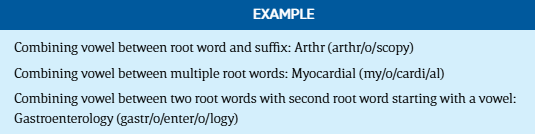
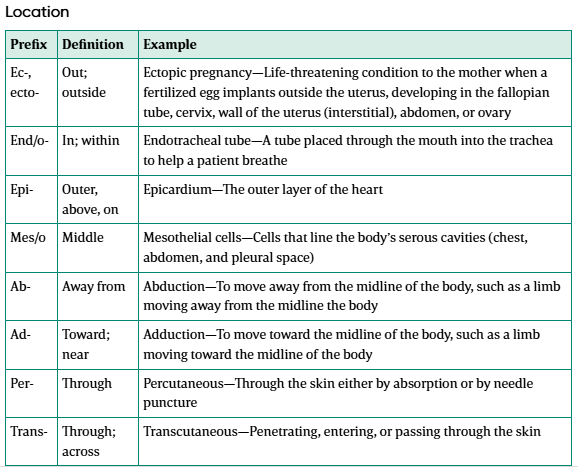
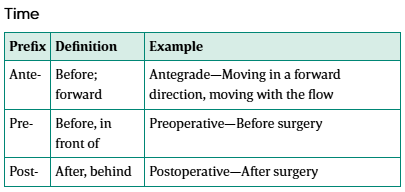
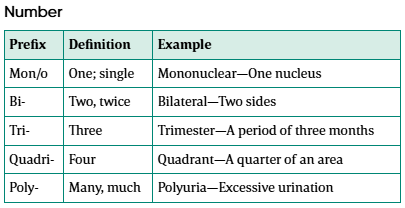
Prefix: A prefixed is attached to the beginning of a word to modify or alter its meaning.
Not all medical terms contain a prefix.
Often indicate location, time, or number.
Suffix: subfigure, or fasten underneath. A suffix is attached to the end of a word to modify its meaning.
Not all medical terms have a suffix
Frequently indicate the procedure, condition, disorder, or disease
Often used for diagnostic or surgical procedures
Include medical specialties
Suffix Conditions: -ia, -ism, -sis, and -y
Suffix Medical Specialties: -ian, -iatrics, -iatry, -ics, -ist, and -logy
Suffix Diseases: -itis, -oma, -megaly, -pathy
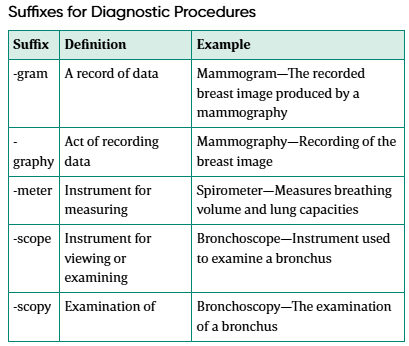
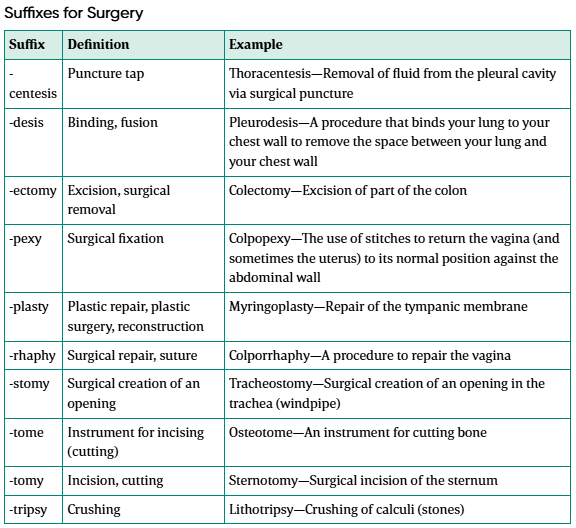
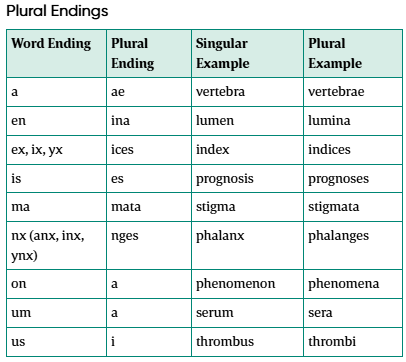
Anatomy: The human body contains multiple organ systems.
Organ System: A collection of body parts depending on one another to achieve a common objective
Integumentary - The largest organ. Skin, hair, and nails. External protection covering body.
Musculoskeletal - Muscles, ,joins, tendons, and ligaments providing movement, form, strength, and protection. Skeletal & Muscular system protects vital organs and provides structure to the body.
Cardiovascular - Heart and the blood vessels. Work together to move blood throughout the body. Blood provides nutrients and oxygen to all organs and tissues within the body.
Lymphatic - Lymph vessels, lymph nodes. bone marrow, thymus, thoracic duct, spleen. Collects excess fluid from the interstitial spaces (spaces between tissues) and returns it to the heart. This is the body's immune system - houses lymphocytes (white blood cells)
Respiratory - Nose, nasal cavity, pharynx, larynx, trachea, bronchi, smaller branches, lungs, and alveoli. Exchanges carbon dioxide for oxygen, breathing. Also referred to as pulmonary system. Keeps blood supplied with oxygen.
Digestive - Aka Gastrointestinal system. GI tract and its ancillary organs make up the digestive system. Begins at the mouth, ends at the anus. Oral cavity, esophagus, liver, stomach, small intestines, large intestines, rectum, and anus.
GI (Gastrointestinal) aka Alimentary Tract
Winds through body and encompasses many structures and organs
Breaks down food (mechanically and chemically) into miniscule or molecular size for absorption into the blood stream and use at the cellular level.
Urinary - Two kidneys, two ureters, a bladder, and a urethra. Produces urine for excretion of metabolic wastes and fluid and electrolyte balance. Provides transportation and temporary storage of urine prior to urination.
Reproductive -
Male - Male genital system.
External: Testes, epididymis, scrotum, and penis.
Internal: prostate gland, seminal vesicles, Cowper's glands, and penis. Tubes and ducts that sperm travel through to leave the body is comprised of vas deferens, ejaculatory duct, and urethra.
Female - Female genital system.
External: Vulva, labia majora and minora, clitoris, external opening of the vagina (introitus), opening of the urethra (urinary meatus), Skene's glands, Bartholin's glands.
Internal: vagina, uterus, two fallopian tubes, and two ovaries
Nervous - Brain, sensory receptors, spinal cord, and nerves. Enormous network of nerve fibers traversing the body. Composed of central and peripheral portions. Controls the body's response to internal and external changes.
Brain & Spinal Cord are Central Nervous System (CNS)
Cranial & spinal nerves are Peripheral Nervous System (PNS)
Organs of Sense -
Eye = Sight
Ear = hearing. Works in tandem with the auditory nerves sending auditory impulses to the temporal lobes of the cerebrum. They form the auditory apparatus.
Endocrine - Glands located throughout the body producing various hormones that regulate bodily processes in coordination with the nervous system. Pineal gland, pituitary gland, thyroid gland, thymus, adrenal gland, pancreas, ovaries, and testes.
Neuroendocrine System = Nervous System + Endocrine System
Hematologic - Hemic system involves the blood
Immune - Body's defense mechanism
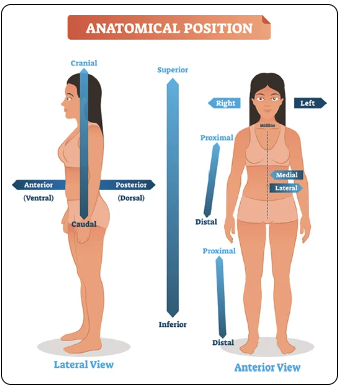
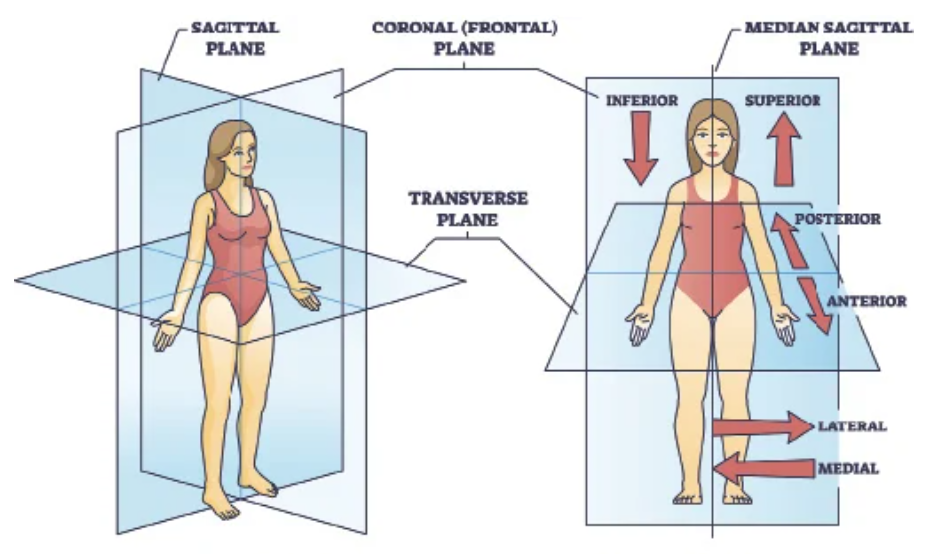
Anatomical Position & Planes - The standard body position. Upright, forward facing, with arms by the side and palms facing forward. Feet are parallel and slightly apart.
Anterior (ventral) - Toward the front of the body
Posterior (dorsal) - Toward the back of the body
Medial - Toward the midline of the body
Lateral - Toward the side of the body
Proximal - Nearer to the point of attachment or to a given reference point
Distal - Farther from the point of attachment or from a given reference point
Superior (cranial) - Above, toward the heard
Inferior (Caudal) - Below, toward the lower end of the spine
Superficial (external) - Closer to the surface of the body
Deep (internal) - Closer to the center of the body
Supine - Lying face up
Prone - Lying face down
Radiological Planes - the body is often cut along a flat surface called a plane.
Sagittal - Cuts through the body from font to back and divides the body into right and left sections
Midsagittal - Cuts through the midline of the body from front to back and divides the body into equal right and left sections
Frontal (coronal) - Cuts at a right angle to the midline, from side to side, and divides the body into front (anterior) and back (posterior) sections
Transverse (horizontal)(axial) - Cuts horizontally through the body and separates the body into upper (superior) and lower (inferior) sections
Structure of the Human Body:
Cells
Tissues
Organs
Systems
Cells - Basic unit of all living things. Human anatomy is composed of cells varying in size and shape according to function.
Cell membrane forms the boundary of a cell
Cytoplasm makes up the body of a cell
Nucleus is the small, round structure in the center of a cell.
Chromosomes are in the nucleus of the cell. Contain genes that determine hereditary characteristics
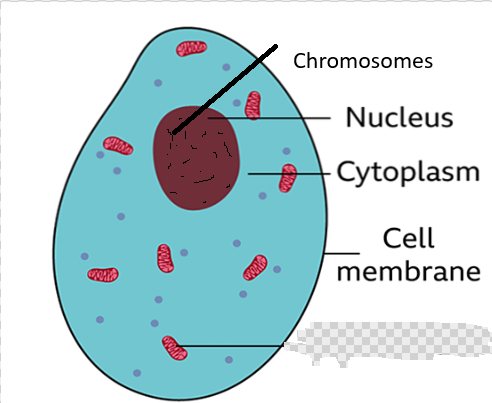
Cell Membrane - Surrounds and protects individual cell.
Nucleus - Small, round structure within the cell containing chromosomes and nucleoplasm (deoxyribonucleic acid - DNA & ribonucleic acid - RNA)
Chromosome - Linear strand made of DNA carrying genetic information
Cytology - Study of cells including the formation, structure, and the function of cells
RNA (Ribonucleic Acid) - Contained within the nucleus, is transcribed from DNA by enzymes and plays a crucial role in protein synthesis.
Gene - Specific segment of base pairs in chromosomes; functional unit of heredity
Mitosis - cells divide and multiply to form two cells
Tissue - A group of similar cells performing a specific task.
Muscle tissue produces movement
Nerve tissue conducts impulses to and from the brain
Connective tissue connects and supports various body structures: Adipose (fat) and Osseous (Bone). 4 types:
Proper
Cartilage
Bone
Blood
Epithelial tissue is found in the skin and lining of the blood vessels, respiratory, intestinal, urinary tracts, and other body systems
Organs - Two or more kinds of tissue, together performing special body functions.
Organ Systems - groups of organs working together to perform complex body functions.
Body Cavities - 5 cavities with an orderly arrangement of organs
Cranial Cavity (Dorsal Cavity): Space inside skull, or cranium, containing brain
Spinal (vertebral canal) Cavity (Dorsal Cavity): Space inside the spinal column containing the spinal cord
Thoracic/Chest Cavity (Ventral Cavity): Space containing heart, lungs, esophagus, trachea, bronchi, and thymus
Abdominal Cavity (Ventral Cavity): Space containing lower portion of esophagus, stomach, intestines (excluding rectum & colon), kidneys, liver, gallbladder, pancreas, spleen, and ureters.
Divided into 4 sections:
RUQ - Right Upper Quadrant
LUQ - Left Upper Quadrant
RLQ - Right Lower Quadrant
LLQ - Left Lower Quadrant
Pelvic Cavity (Ventral Cavity): Space containing urinary bladder, certain reproductive organs, part of large intestine and rectum
Membranes - Line the internal spaces of organs and tubes opening to the outside, and line body cavities . 5 types:
Mucous Membranes - Line interior walls of the organs and tubes opening to the outside of the body.
Ex: digestive, respiratory, urinary, and reproductive sytems
Lined with epithelium overlaying a layer of connective tissue called lamina propria.
Involved in absorption and secretion
Not every mucous membrane secretes mucous
Serous Membranes - Line cavities including the thoracic cavity and internal organs (heart)
Layer of epithelium overlaying a layer of loose connective tissue
Support internal organs and compartmentalize the large cavities to hinder spread of infection
Membrane for lungs = pleura
Membrane for heart = pericardium
Membrane for abdominal cavity = peritoneum
Synovial Membranes - Line cavities and are composed of connective tissue. Secrete synovial fluid into the joint cavity, this lubricates the ends of bones so they can move freely.
Meninges - 3 connective tissue membranes within the dorsal cavity to protect brain and spinal cord. Outer to inside layers:
Dura Mater (Outer)
Arachnoid Mater (middle)
Pia Mater (inside)
Cutaneous Membrane - Forms outer covering of the body that consists of stratified squamous epithelium attached to a thicker underlying layer of connective tissue called the cutaneous membrane AKA Skin.
Physiology - The study of how the human body operates
Chemistry, physics, foundation of basic biological processes, like how molecules react in cells and how organ systems work together.
Pathology - The study of disease.
Determines the disease cause and understands the processes of its development (pathogenesis), the structural changes associated with the disease process (morphological alterations), and the functional effects of those changes.
Homeostasis - Physiological balance. An organism's normal state.
Pathophysiology - Disrupted physiology due to disease.
Determining the illness's source (etiology)
Understanding the processes of its development (pathogenesis)
Structural changes associated with the disease process (morphological changes), and functional outcomes of these changes
Disease - Any adverse change from an organism's normal structural, functional, or social condition that is accompanied by specific signs and symptoms and changes in function from physical damage.
AKA - DISORDER; MORBIDITY: ILLNESS
4 Types:
Infectious Disease: caused by organisms, like bacteria, viruses, fungi, or parasites
Deficiency Disease: resulting from a dietary deficiency of minerals, vitamins, essential nutrients, like proteins or carbohydrates
Genetic Disease: When a change to a gene (pathogenic variant) affects your genes or when you have the wrong amount of genetic material
Physiological Disease: When the body malfunctions and causes illness, such as diabetes, glaucoma, or asthma1
Communicable - Spreads from person to another through things like contact with blood & bodily fluids, breathing in an airborne virus, or being bitten by an insect
Noncommunicable - Noninfectious health condition that cannot be spread from person to person to person
Medical Treatment:
Curative - to cure a patient of disease or illness
Palliative - To alleviate symptoms of a disease or illness
Preventative - To avoid or mitigate the onset or development of a disease or illness
Medical Record - Anytime you are seen by a medical provider, the visit or service is documented in a medical record
Evaluation & Management (E/M) Documentation
Service related to the entire body. Not specific.
Visual evaluation, Palpation (touch) examination, Auscultation (listening), & Percussion *creating sounds from tapping on body areas to examine - vibrations help identify abnormalities
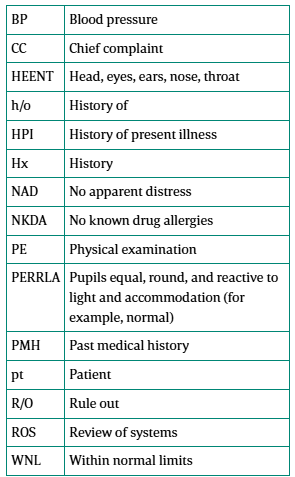
Abbreviations used during E/M Documentation
Operative reports - A note produced by a healthcare professional for procedures they provide
Must be written or dictated immediately after procedure performed and must contain a detailed summary of findings throughout the Surgery
Procedure performed
Specimens removed
Pre- and post-operative diagnoses
Names of the primary performing surgeon and assistants
Divided into 4 sections -
Header
indications for surgery - provides brief history outlining reasons for procedure (medical necessity)
detail/body of procedure - specific details of Sx
This will determine the CPT Code
findings - completion of surgery. Estimated blood loss and patient status upon completion.
Radiology reports
Laboratory reports
Medical Records format - SOAP:
Subjective
Objective
Assessment
Plan
Medical Coder - The primary responsibility of a medical coder is to interpret the medical record documentation into alpha numeric codes
