Adaptions of Organism
Herbivores are heterotrophs that feed on plants
Herbivory in insects:
Insects with jaw-like mouthparts for biting off, chewing and ingesting leaves
Insects with tubular mouthparts for piercing leaves or stems to feed on the phloem sap
Aphids have specialised mouthparts called stylets. Stylets secrete the enzyme pectinase to break down the polysaccharide pectin that hold the cell wall of plants together to allow the style to reach the sap.
Herbivory in mammals:
Grazing animals have flat teeth for grinding plant matter
Ruminant mammals' digestive system is adapted to improve digestion of tough plant material
Bacteria and archaea living in the rumen help to break down cellulose
Plant adaptions against herbivory:
Mechanical deterrents
Cacti have sharp spines
Nettles have tiny hairs that contain toxins which irritate the skin
Thick bark prevents insects from piercing plant stems
Toxic secondary compounds
Foxgloves produce a toxic compound which affects the heartbeat of humans and animals
Deadly nightshade produce toxins known as atropine to cause muscle paralysis
Plants produce chemicals called tannins which can deter herbivores by their bitter taste
Adaptions of Predators and Prey
Predators: animals that hunt and eat other animals
Prey: animals that are hunted and consumed by predators
Adaptions of predators and prey can either be:
Chemical: chemical compounds that assist in the catching of prey or the avoidance of predation
Physical: physical features, such as specially adapted sense organs, that assist int eh catching of prey or the avoidance of predation
Behavioural: behaviours that aid in the catching of prey or the avoidance of predation
Predator adaptions: assist them in catching prey
P - Vampire bats
Have unique dentition will small premolars and no molars, but relatively large incisors and canines on their upper jaw that are pointed and razor sharp
--> used to pierce prey, so the vampire can feed on the blood
C - Black Mambas
Produce venom containing a mixture of neurotoxins
--> the venom paralyses prey when injected via poison fangs
--> can then swallow the prey without resisting
B - Grizzly bears
Learn ambush strategies for catching migrating salmon either by trial and error or copying others
--> some bears wait at the top of waterfalls for fish to jump out of the water and others put their head underwater and watch for fish
Prey adaptions: assist them in avoiding predation
P - Buff-tip moths
Resemble broken birch twigs allowing them to camouflage during daylight hours
C - Caterpillars of the cinnbar moth
Feed on the ragwort and accumulate toxic alkaloids from it
Their black and yellow stripes are warning coloration which deters predators
B - Blue-stripped snappers
Swim in a tight group reducing the chance of predation
--> threats are more likely to be detected and it is difficult for a predator to catch
Plant Adaptions for Harvesting Light
Plants in very dense forests have to develop adaptations to harvest light for photosynthesis
--> development of these strategies arranged them into different layers of the forest
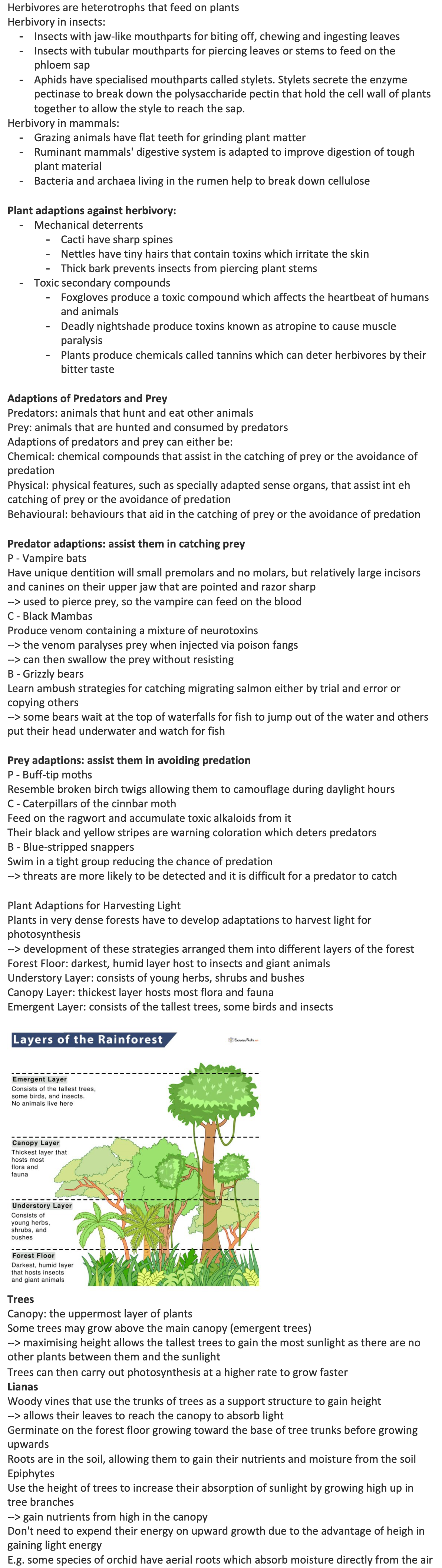
Forest Floor: darkest, humid layer host to insects and giant animals
Understory Layer: consists of young herbs, shrubs and bushes
Canopy Layer: thickest layer hosts most flora and fauna
Emergent Layer: consists of the tallest trees, some birds and insects
Trees
Canopy: the uppermost layer of plants
Some trees may grow above the main canopy (emergent trees)
--> maximising height allows the tallest trees to gain the most sunlight as there are no other plants between them and the sunlight
Trees can then carry out photosynthesis at a higher rate to grow faster
Lianas
Woody vines that use the trunks of trees as a support structure to gain height
--> allows their leaves to reach the canopy to absorb light
Germinate on the forest floor growing toward the base of tree trunks before growing upwards
Roots are in the soil, allowing them to gain their nutrients and moisture from the soil
Epiphytes
Use the height of trees to increase their absorption of sunlight by growing high up in tree branches
--> gain nutrients from high in the canopy
Don't need to expend their energy on upward growth due to the advantage of heigh in gaining light energy
E.g. some species of orchid have aerial roots which absorb moisture directly from the air