Notes for ap hug unit 3 (rest of notes in the beginning r on paper)
3.1 and 3.2
3.1
which of the following is an example of material culture? The car an individual drives
All of the following are characteristics of modern culture except… it diffusing through relocation diffusion. This is folk culture, not modern culture!
Short notes:
Material culture: items that a society/culture holds value to. Physical things.
Non material culture: connects to beliefs and practices/non material things. ideas formed by society and individual.
Cultural relativism: when a culture takes account for a cultures own standards. Mostly no judgement.
Ethnocentrism: when a person views a culture thru their own cultural standards. Can lead xenophobia.
which of the following is the best example of a folk culture? A traditional dance performed by a specific ethnic group.
Indigenous cultures: strong emphasis on community and traditional values. May have unique languages, art forms, and spiritual beliefs that are passed down through generations.
Modern culture: it’s in more developed countries and diffuses through hierarchical diffusion. It’s more diverse.
Folk culture: homogenous, relocation diffusion, focuses on family, community, and religion
3.2
Which of the following mostly clearly indicate a cultural landscape shaped by religion? A mosque with Arabic signage in a USA neighborhood
— is how cultures overtime have left their mark on a geographic location —> sequent occupancy
explain the idea of sequent occupancy and it is viable in urban cultural landscapes.
Why does sequent occupancy help contribute to a unique cultural landscape?
Notes:
Land use: how land has changed in order to be used for a specific purpose.
Land use patterns allow us to understand what society values.
agricultural
Industrial
Commercial
Residential
Recreational
Transportation
Sequent occupancy: how different cultures have impacted a location (aka, how they left their mark on the area)
Traditional architecture: more localized
Modern architecture: focusing on function not local culture
Post modern architecture - style of architecture that strives to create a unique look that strives to incorporate the local culture into it.
Cultural land scape helps us understand how people have used the land and impacted it.
3.4-3.3
3.3
Place: a specific point on earths surface with one or more unique characteristics.
Placelessness: when a place does not invoke any strong response from an individual due to the place lacking unique characteristics and identity.
Folk vs popular culture:
Sense of place: a strong feeling that people have of a place. Gets stronger when people get together for community events (placemaking)
Centripetal forces: forces that unite people ( like language ) strong societies
Centrifugal forces: forces that separate people. Divided society . Example: no unified culture, language barriers
3.4
Diffusion: the spread of a cultural element, item, group of people, disease, or phenomenon from one place to another.
hearth: area where something originated basically
relocation diffusion: people moving from place to another. Occurring due to migration. Hearth is weakened. Example is the Omish cuz they migrated to escape persecution.
Expansion diffusion: more people practice this however, tho very similar to relocation. Hearth remains strong, items expand outwards.
Hierarchical diffusion: type of expansion diffusion… happens thru systems, example: fashion trends often start in global cities and diffuse to other areas. Eventually making way down to smaller settlements.
Reverse hierarchical diffusion: makes its way up instead of down (like something will spread thru a small business up to the elites rather than the elites spreading something to the small business or settlements)
Contagious diffusion: has little no barriers, can expand from the hearth, examples are viral videos, spreads quickly
Stimulus diffusion: trait is changing as it’s diffusing (McDonald’s because the menu changes through out the world, different elements have changed in order to account for the cultural trends and aspects of a society)
Language barriers make it more difficult to spread a trait.
Physical barriers are less prominent for being responsible for separating others because the internet and things like smartphones. However, things will still get in the way such as political or economic barriers.
3.5
When a culture adopts different cultural traits of another culture, this is known as acculturation.
Assimilation: when a minority group adopts the dominant culture in the area, thus resulting in the loss of the minority culture in the area.
Colonialism and imperialism led to the spread of different religions and cultures around the world. As new colonies were created, we saw the creation of new cultures and mixture of different cultures.
creolization: two cultures coming together to create a new third culture due to colonization.
Lingua Franca- a language that is used by individuals even if their native language is different. English for instance is part of this.
diaspora: the dispersion of any people from their original homeland usually due to forced migration.
3.6
An expanded discussion on 3.5, except it being contemporary.
distance decay: the effect of distance on cultural or spatial interactions (the larger the distance, the less interaction) things like facebook and twitter allow for the world to share and spread ideas despite the separation.
Cultural divergence: happens when individuals become separated from different aspects of their culture. This can happen if people are physically separated from their culture or exposed to new ideas. This can be why folk culture can be resistant to modern technology!
Cultural convergence: when different cultures merge together to form one mass culture. It can be a global or modern culture.
Increased communication has led to the increase of both these ideas.
Globalization: as countries become more connected they will continue to see new ideas, cultures, people and goods and services diffuse. Spreading of things worldwide, diffusion is national.
As technology and urbanization connect new people and places around the world, we’ll continue to see more diffusion occur.
3.7
When we’re going back to the starting point of a language, we’re going to the Protolanguage: going back in time before written records
Language family: variety of different languages that have a common ancestry. Think of it as languages being genetically related. (Indo-European)
Language group/branch: cluster of different languages that are part of a language family and make up a sub division of that family. (Romance language would be part of a language branch, and then the language group would be Spanish, French, Portuguese and Italian.)
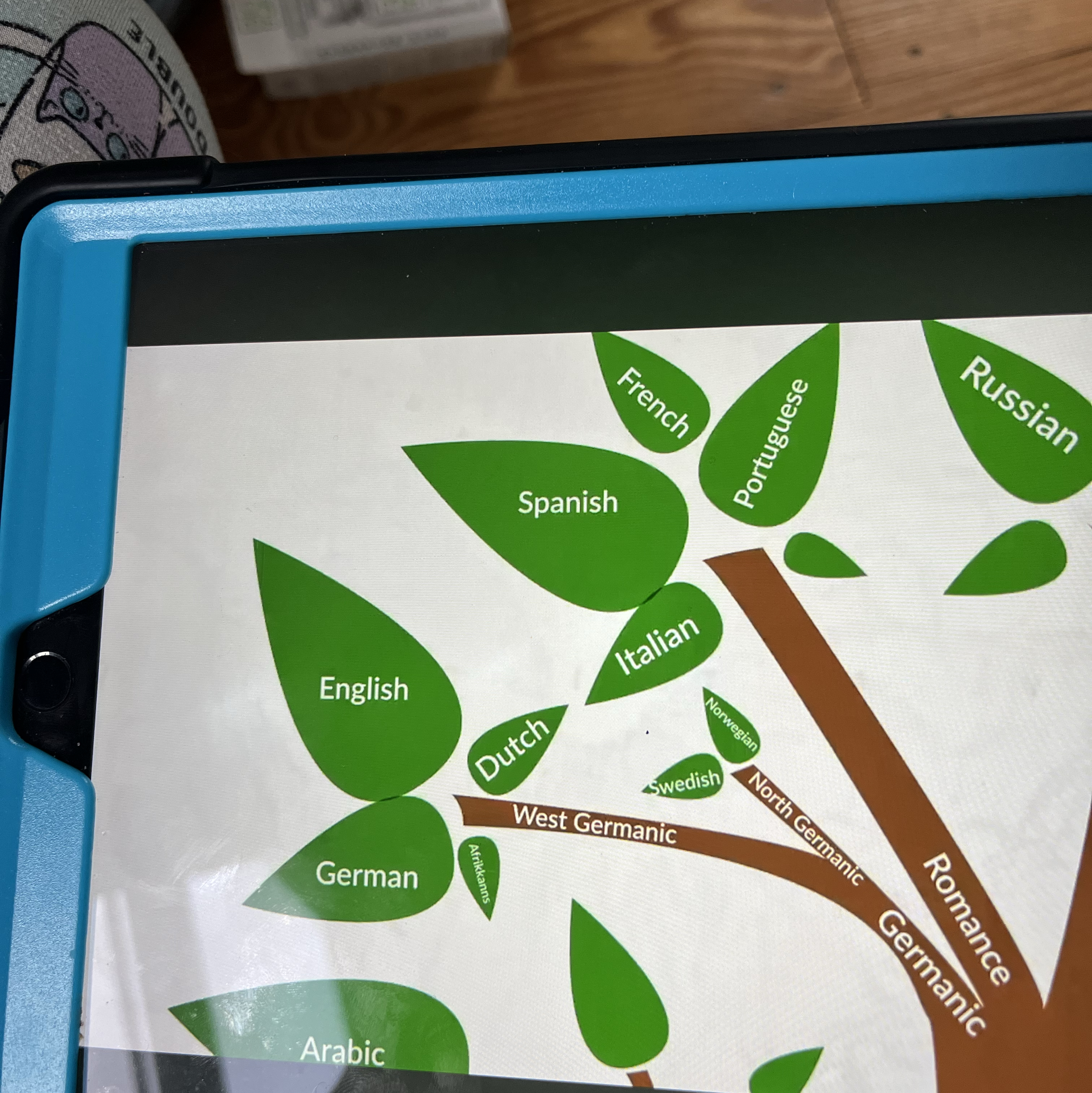 Shown here visually.
Languages can shift and evolve as more cultures interact.
Dialect: regional variance that occurs in the form of a language. It can be the difference of pronouncing of different words. For instance, Mr. Sinn is from Minnesota, and he drinks “pop” not soda.
Isogloss: boundary that is based on linguistic (language stuff) differences.
How do religions differ from location to location?
Universalizing religions: religions that seem to expand and seek as many people as possible. Will expand through expansion diffusion but can still spread thru relocation diffusion.
Christianity (it spread thru colonialism and things such as hierarchical diffusion) . It’s monotheistic and based on the teachings of Jesus Christ. Its hearth is located in the eastern Mediterranean and it is also one of the abrahamic religions. World’s largest religions. Missionaries relocated to different colonies around the world and set up churches and boarding schools to help convert local people and spread the faith thru hierarchical diffusion.
Islam is also a universalizing religion. Abrahamic .It’s monotheistic and traced back to a single god Muhammad. Sunni and Shia split, who should lead the faith? Follows five pillars of Islam. Quran is holy book. Islam diffused thru missionary work and conquest, Also hierarchical diffusion. impacts the world also thru mosques.
Buddhism: originated in South Asia. Buddhism doesn’t have a set deity. It’s based on the idea that anyone could achieve salvation by following the four noble truths and the middle path, Which will allow a person to break free of their material needs. Prior to Buddhism the most relevant religion in the region was Hinduism (had connections to the caste system and thus did not allow salvation for everyone)… this allowed Buddhism To be popular with people and diffuse.
Diffused thru relocation, As missionaries would relocate to other countries and regions to spread the faith.
Buddhism also spread thru extensive trade routes that linked India to other parts of Asia, adapting to the local culture to increase its diffusion.
Pagodas: serve as cultural and religious landmarks and statues of the Buddha.
Sikhism is a monotheistic religion that originated in the Pujab region. Sikhism believes that all human beings can achieve spiritual liberation thru meditation, self discipline, and service to others. It follows ten gurus and Siks in their daily lives. These siks preach the word of God and have distinct appearances.
Ethnic religions: often stay in one location and do not try to convert other people. Really only diffuse thru relocation diffusion.
Hinduism and Judaism.
Hinduism is the worlds oldest religions and is predominantly located in India, where it originated. It believes in karma and dharma, the Vedas is its sacred text. Doesn’t have an exact founder. As it spread thru the region, it diffused thru stimulus diffusion, it spreaded thru different faiths. Hindu temples shape the land.
Judaism originates in the eastern Mediterranean. Abrahamic. Judaism is closely linked to a sense of shared history and tradition that connect to the Jewish people. Israel is their home land.
Oftentimes local faiths not only impact the architecture but also have influence on how women and men are treated, where people worship, and much more.
3.8
Basically some parts of topic 3.5. Examples of assimilation can be boarding schools to assimilate native Americans into the American cultures.
acculturation is different because it involves a culture just adopting some different cultural traits of another culture, but the original culture is not forgotten, just modified.
Syncretism: two or more cultures change over time in a similar manner but remain culturally distinct. Example of Sikhism (blend of Hinduism and Islam) because the two cultures were blended together to form the sik religion.
Over time they evolved in a similar manner but remained culturally distinct.
Hinduism and Islam remain true to their fundamental belief systems, but now we have Sikhism, which has aspects of both faiths.
Multiculturalism: when a society has a large diversity of different cultures, often due to immigration. (Canada)
Cultural resistance: whenever diffusion happens and a new trait is introduced into a society, there’s a chance that the society will push back and reject the trait.
This can happen because individuals may fear of losing their way of life.
Individuals may also have developed prejudice towards the incoming culture or trait. Or they just may not understand the culture or trait.