cell cycle
Cell Mitosis is the process of cell division where a parent cell divides into two daughter cells, each with the same number of chromosomes as the parent cell. It consists of stages like prophase, metaphase, anaphase, and telophase.
Meiosis is a type of cell division that produces gametes with half the number of chromosomes as the parent cell. It involves two rounds of division, resulting in four daughter cells with genetic variation.
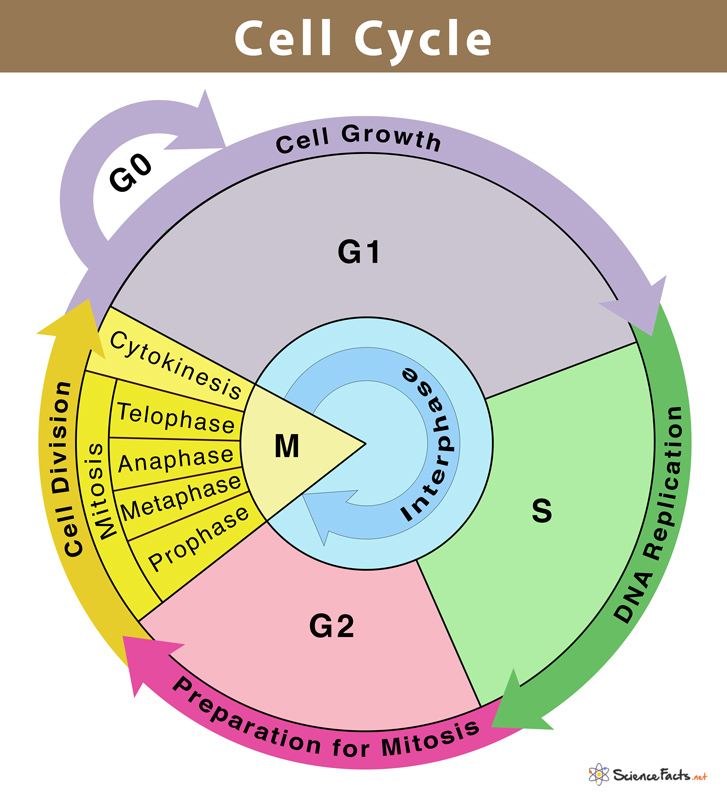
3 phases:
interphase
mitosis
cytokinesis
INTERPHASE
dna replication, growth and cell preparation for mitosis
90% of the time of a cell cycle is spent in interphase
preps for cell reproduction
not a resting phase, but this stage is not visible under light microscope as the chromosomes are not condensed
G1 (gap 1) phase
cells grows
synthesises proteins needed for gene regulation
organelles duplicate - mitochondria, chloroplasts
non dividing cells enter G0 stage - brain cells and neurons
S (synthesis) phase
all dna in chromosomes are replicated
the parent cell contains 2 identical copies of dna
G2 (gap 2) phase
synthesis of proteins needed for spindle
cells grow and prepare for mitosis
MITOSIS
organisation and chromosome separation
after fertilisation, mitosis duplicated zygote
creates 2 genetically identical daughter cells
used to grow body parts, develop tissues and replace dead cells
Mitosis phases
nucleus divides to produce 2 nuclei with 46 unduplicated chromosomes each
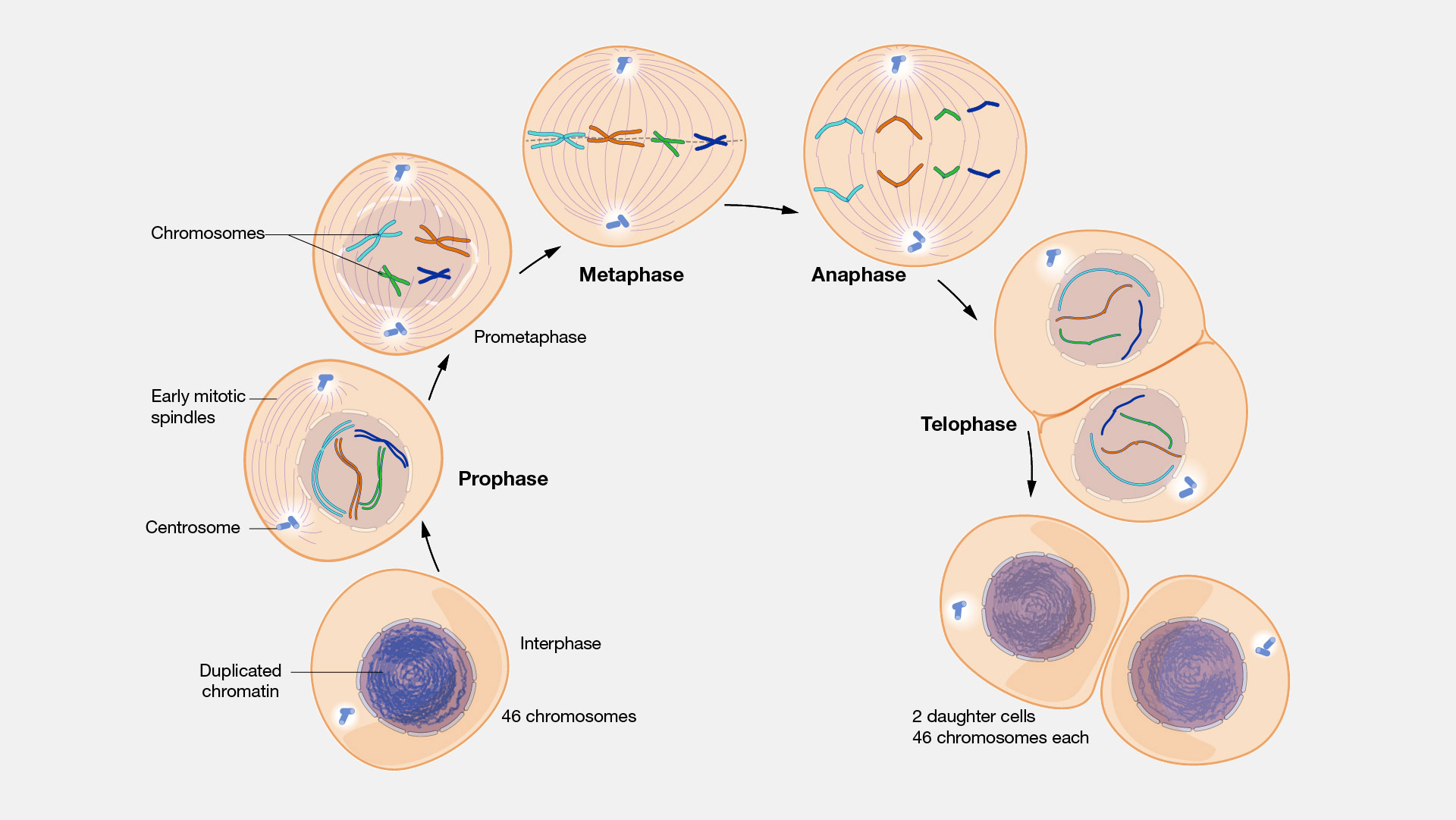
prophase
chromosomes condense and form chromatids
spindle apparatus forms
nucleolus and nuclear membrane disappear
metaphase
chromosomes line up at cell equator
spindle fibers attached to centromere
anaphase
sister chromatids separated and moved to opposite poles
telophase
chromosomes uncoil
spindle apparatus disappear
nuclear envelopes form around each chromosome cluster
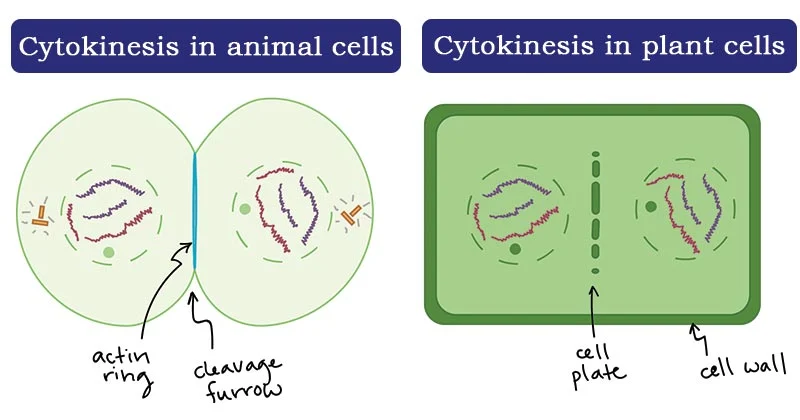
cytokenesis
animals: indentation of cell surface in late anaphase, the cleavage furrow
plants: formation of cell plate
BINARY FISSION
cell cycle in prokaryotes
very fast process
the dna molecule is replicated
cell increases size
two dna molecules are pulled to separate poles and a membrane forms between the separating cells
2 daughter cells are formed by a single parent cells.
CELL CYCLE CHECK POINTS
cell cycle undergo apoptosis due to dna damage, spindle break or chromosome failure.
cell cycle has 3 checkpoints - G1, G2 and mitosis
G1 checkpoint - checks for DNA damage, stop cycle if damage not repaired, apoptosis if damage is irreparable.
G2 checkpoint - checks dna damage and cell size
mitosis (metaphase/anaphase) checkpoint - checks the spindle fibres and chromosome misalignment
the mitotic spindle
spindle fibers grow from centrioles to middle of cell
anchor double stranded chromosomes at kinetochore in metaphase