Introduction to The Human Body Chapter 1
The Human Body: An Overview
The body is a complex system of microscopic parts working together for ~75 years.
Anatomy & Physiology help us understand how the body works, what causes illness, and why certain structures exist.
Key Scientific Fields
🔹 Anatomy → Study of body structure (form, size, location, composition).
Example: The heart’s size, shape, and location.
Origin: Greek word for "dissect", early studies involved cadaver dissections.
🔹 Physiology → Study of body function (how it works, why it’s essential).
Example: How the heart pumps blood and sustains life.
🔹 Pathophysiology → Study of disease effects on body function.
Example: A heart attack and its impact on circulation.
🔥 Key Takeaway: Understanding anatomy + physiology is essential for recognizing how disease alters normal function.
Why Study Anatomy & Physiology?
Foundation of Healthcare → Understanding normal structure & function is essential to recognize disease, disorders, and treatments (e.g., drugs, surgery).
Better Patient Care → Knowledge of anatomy & physiology allows effective treatment and better decision-making.
Structure & Function Are Linked
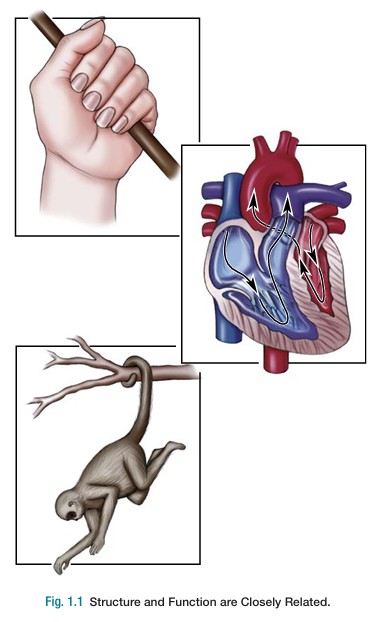
Anatomy (structure) determines physiology (function).
Example: Hand structure → Allows grasping.
Example: Heart structure → Enables pumping blood.
Example: Monkey’s tail → Strong, flexible for hanging.
Bird’s wings → Adapted for flight.
Eye structure → Facilitates vision.
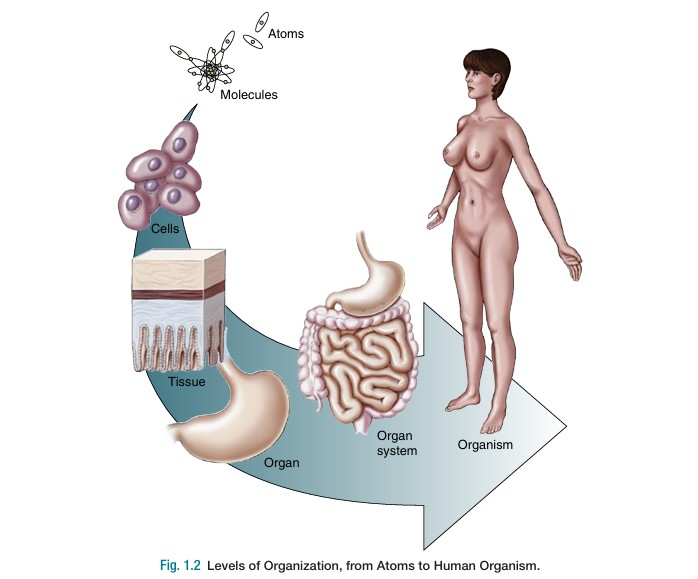
Levels of Organization in the Body (Simple → Complex)
1⃣ Atoms → Form molecules.
2⃣ Molecules → Combine into larger molecules.
3⃣ Cells → Basic unit of life.
4⃣ Tissues → Specialized groups of cells.
5⃣ Organs → Made of different tissues (e.g., heart, stomach).
6⃣ Organ Systems → Groups of organs with specific functions (e.g., digestion, reproduction).
7⃣ Human Organism → The fully functional human body.
🔥 Key Takeaway: Understanding structure & function is crucial for diagnosing diseases and providing effective care. The human body is built in a progressive, organized manner from atoms to a complete organism.\
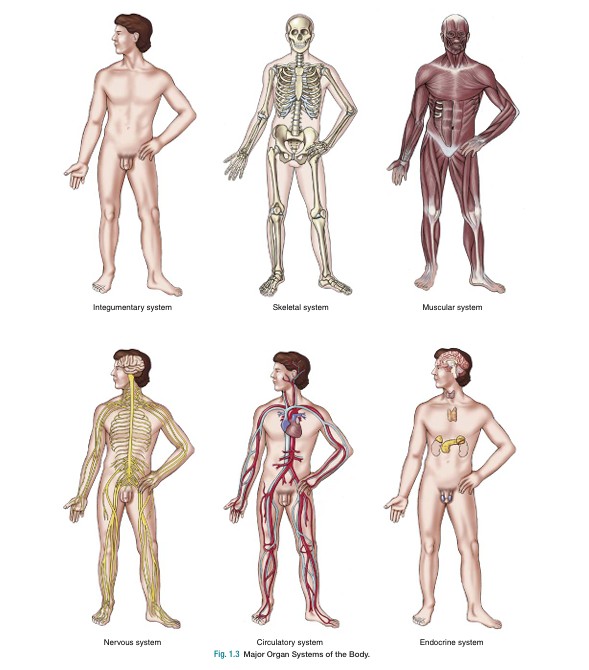
The human body is made up of 12 major organ systems, each with specialized functions that work together to maintain life.
1⃣ Integumentary System
🟢 Organs: Skin, hair, nails
🔹Main function is protection
🔹Largest organ
🔹 Forms external body covering
🔹 Regulates temperature
🔹 Houses sensory receptors
2⃣ Skeletal System
🟢 Organs: Bones, joints, cartilage
🔹 Provides structure & support
🔹 Protects organs (e.g., skull protects the brain)
🔹 Produces blood cells (bone marrow)
3⃣ Muscular System
🟢 Types of Muscles: Skeletal, Cardiac, Smooth
🔹 Skeletal → Moves the body, maintains posture
🔹 Cardiac → Pumps blood (heart)
🔹 Smooth → Moves fluids in organs & blood vessels
4⃣ Nervous System
🟢 Organs: Brain, spinal cord, nerves, sensory organs
🔹CNS (Brain and spinal cord) and PNS (nerves and ganglia)
🔹 Processes sensory information
🔹 Sends signals for movement & response
🔹 Controls thought, memory, emotions
5⃣ Endocrine System
🟢 Organs: Glands (pituitary, thyroid, adrenal, etc.)
🔹 Secretes hormones to regulate body functions
🔹 Controls growth, metabolism, reproduction
🔹 Maintains water balance
6⃣ Circulatory System
🟢 Organs: Heart, blood, blood vessels
🔹 Transports oxygen & nutrients to cells
🔹 Removes waste (CO₂, toxins)
🔹 Helps regulate body temperature
7⃣ Lymphatic System
🟢 Organs: Lymph nodes, lymph vessels, spleen, tonsils
🔹 Maintains fluid balance
🔹 Fights infections by producing white blood cells
8⃣ Immune System
🟢 Organs: Widespread (blood, lymphatic structures), white blood cells, mucus membranes
🔹 Defends against infections & diseases
🔹 Protects from allergens, cancerous cells
9⃣ Respiratory System
🟢 Organs: Lungs, trachea, bronchi
🔹 Brings oxygen into the body
🔹 Removes carbon dioxide waste
🔹 Helps regulate acid-base balance
🔟 Digestive System
🟢 Organs: Stomach, intestines, liver, pancreas
🔹 Breaks down food for nutrient absorption
🔹 Eliminates waste
1⃣1⃣ Urinary System
🟢 Organs: Kidneys, bladder, urethra
🔹 Filters & removes waste (urine)
🔹 Maintains water & electrolyte balance
🔹 Regulates acid-base levels
1⃣2⃣ Reproductive System
🟢 Organs: Testes (male), Ovaries (female), Penis (male), Breast, Vagina (female) related structures
🔹 Enables reproduction
🔹 Produces sex hormones
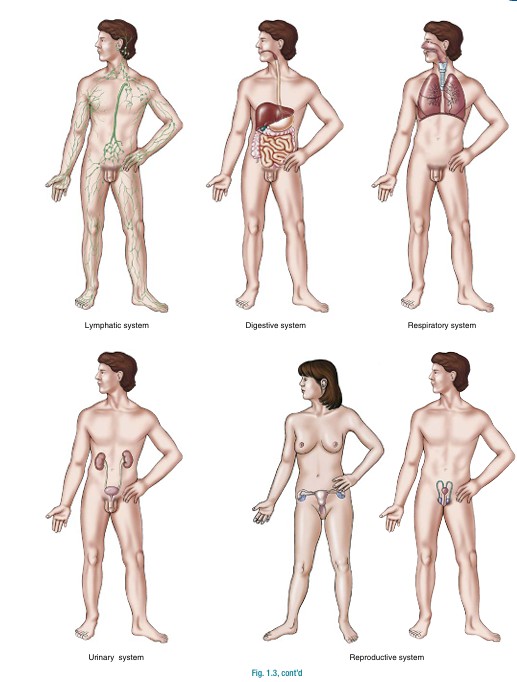
🔥 Key Takeaway: Each organ system has specific functions, but they all work together to keep the body alive and functioning.
🔹 Homeostasis: The Body’s Balance
📌 Definition: The ability of the body to maintain a stable internal environment despite external changes.
🛠 Examples of Homeostasis in Action:
✅ Body Temperature → Stays at ~98.6°F (37°C) even when the external temperature changes.
✅ Water Balance → Cells maintain the right amount of water, no matter how much you drink.
✅ Blood Sugar → Stays within normal limits whether you've just eaten or haven't eaten in hours.
⚠ Homeostatic Imbalance → Leads to disease or dysfunction (e.g., fever, dehydration, diabetes).
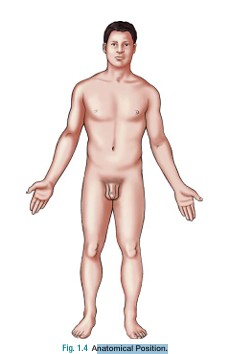
🔹 Anatomical Position: The Standard Reference
📌 Definition: The universally accepted body position used to describe locations and directions.
🔹 The correct anatomical position includes:
✅ Standing upright
✅ Head facing forward
✅ Palms facing forward
✅ Arms at the sides
✅ Feet slightly apart
🔹 Summary & Key Takeaways
✔ Homeostasis keeps the body’s internal conditions stable despite external changes.
✔ The 12 major organ systems work together to maintain homeostasis.
✔ Anatomical terms are based on the anatomical position, ensuring clarity in medical communication.
📍 Directional Terms (Relative Positions)
Term | Definition | Example |
|---|---|---|
Superior | Above another part | Head is superior to the chest |
Inferior | Below another part | Chest is inferior to the head |
Anterior (Ventral) | Toward the front | Heart is anterior to the spinal cord |
Posterior (Dorsal) | Toward the back | Spine is posterior to the heart |
Medial | Closer to midline | Nose is medial to the ears |
Lateral | Away from midline | Ears are lateral to the nose |
Proximal | Closer to attachment point | Elbow is proximal to wrist |
Distal | Further from attachment | Fingers are distal to wrist |
Superficial | Near surface | Skin is superficial to muscles |
Deep | Away from surface | Bones are deep to the skin |
Central | Center location | Heart is central in the body |
Peripheral | Away from center | Nerves extend peripherally from the spinal cord |
📏 Body Planes & Sections
📍 Sagittal Plane → Divides body into left & right halves.
📍 Frontal (Coronal) Plane → Divides body into front (anterior) & back (posterior) sections.
📍 Transverse Plane → Divides body into upper (superior) & lower (inferior) parts.
🏷 Regional Terms
🔹 Anterior (Front) Regions
Brachial – Arm
Cranial – Near the head
Orbital – Eye area
Buccal – Cheek
Oral – Mouth
Sternal – Middle of chest
Axillary – Armpit
Inguinal – Groin
Plantar – Sole of foot
🔹 Posterior (Back) Regions
Occipital – Back of the head
Deltoid – Rounded shoulder
Gluteal – Buttocks
Popliteal – Back of the knee
Scapular – Shoulder blade area
🌎 Cavities of the Body 🏥
Organs, called viscera (VISS-er-ah), are located within body cavities, which are large internal spaces.
There are two major body cavities:
🟢 Dorsal Cavity (Back)
🔵 Ventral Cavity (Front)
🟢 Dorsal Cavity (Back)
📍 Location: Towards the back of the body.
📦 Divisions:
1⃣ Cranial Cavity → Houses the brain 🧠 (within the skull).
2⃣ Spinal (Vertebral) Cavity → Protects the spinal cord 🦴 (extends downward from the cranial cavity).
🔗 Note: The cranial and spinal cavities form one continuous space!
🔵 Ventral Cavity (Front)
📍 Location: Towards the front of the body.
📦 Divisions:
1⃣ Thoracic Cavity (Above the diaphragm)
2⃣ Abdominopelvic Cavity (Below the diaphragm)
🫁 Thoracic Cavity (Chest Area)
📍 Location: Above the diaphragm, surrounded by the rib cage.
🔀 Divisions:
🔹 Mediastinum (MEE-dee-ass-TI-num) – Middle section containing:
❤ Heart (inside the pericardial cavity)
🦠 Thymus gland
🏥 Parts of the esophagus, trachea, & large blood vessels
🔹 Pleural Cavities – Right & left lungs 🫁 sit on either side of the mediastinum.
📌 Key Note: The lungs occupy most of the thoracic cavity! This space is crucial for respiratory function, allowing the exchange of gases as we breathe.
🏥 Abdominopelvic Cavity & Medical Terminology 🏥
🔵 Abdominopelvic Cavity
📍 Location: Below the diaphragm
📦 Divisions:
1⃣ Abdominal Cavity (Upper portion)
Stomach, intestines, liver, gallbladder, pancreas, spleen, kidneys
2⃣ Pelvic Cavity (Lower portion)Remainder of intestines, rectum, urinary bladder, reproductive organs
🟢 Dividing the Abdominopelvic Cavity
📌 Quadrants (4 Sections)
🟡 Right Upper Quadrant (RUQ)
🟠 Left Upper Quadrant (LUQ)
🔵 Right Lower Quadrant (RLQ) → ⚠ Common site of appendicitis pain
🔴 Left Lower Quadrant (LLQ)
✅ Clinical Use: Helps locate pain & diagnose conditions!
📌 Regions (9 Sections)
Central Regions:
🔹 Epigastric → Below breastbone (above stomach)
🔹 Umbilical → Around belly button
🔹 Hypogastric → Below stomach
Side Regions:
🟢 Right & Left Hypochondriac (Under ribs)
🟠 Right & Left Lumbar (Sides of umbilical region)
🔵 Right & Left Iliac (Inguinal) (Near hip bones)
📌 Key Note: Quadrants & regions refer only to the abdominopelvic cavity, not the thoracic cavity!
🏠 Other Body Cavities
✔ Oral Cavity – Mouth 👄
✔ Nasal Cavity – Nose 👃
✔ Orbital Cavity – Eyes 👀
✔ Middle Ear Cavities – Ears 👂
📚 Medical Terminology Basics
🟢 Word Root → Core meaning (e.g., hepat- = liver)
🔵 Suffix → Modifies meaning (e.g., -itis = inflammation → hepatitis = liver inflammation)
🟠 Prefix → Modifies the beginning (e.g., mal- = bad → malnutrition = poor nutrition)
🔴 Combining Vowel → Helps pronunciation (e.g., angi/o/plasty = blood vessel repair)
🏥 Common Medical Word Parts & Meanings
Word Part | Meaning | Example & Description |
|---|---|---|
-ectomy | Removal | Appendectomy = removal of appendix |
-itis | Inflammation | Tonsillitis = inflammation of tonsils |
-logy | Study of | Biology = study of life |
-stasis | Standstill | Homeostasis = body’s internal balance |
quadr/i- | Four | Quadrants = four sections of abdomen |
trans- | Across | Transverse Plane = divides body into upper & lower |