7. Representation and Organization of Knowledge
Key Concepts
Concepts, Categories, Networks, and Schemas are fundamental frameworks for how knowledge is organized in the mind.
Concepts: Abstract ideas or mental symbols representing a class of objects or events.
Example: The concept of 'bird' encompasses various species such as eagles and sparrows.
Categories: Groups or classes formed by organizing similar concepts based on shared properties or characteristics.
Example: The category 'wildlife' includes all animals living in a natural habitat, such as lions, tigers, and birds.
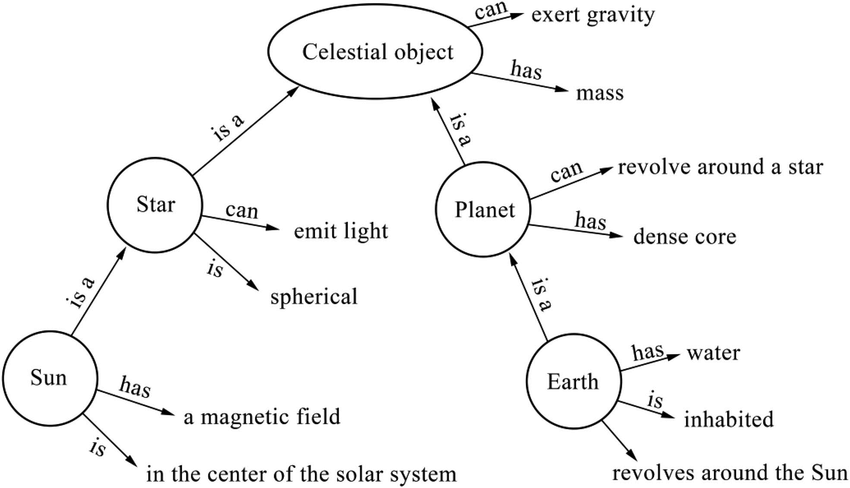
Networks: Structures that connect various concepts in a web-like manner, illustrating relations and hierarchies among them.
Example: A semantic network displaying the relationship between concepts like 'animal,' 'mammals,' and 'dogs.'
Schemas: Cognitive frameworks or mental structures that help organize and interpret information, often comprising various concepts and categories.
Example: A schema for a 'restaurant' might include concepts like 'menu,' 'waiter,' 'meal,' and 'payment,' outlining the expected interactions and sequences.
Declarative vs Procedural Knowledge
Overview
Declarative Knowledge: Knowing that; can be expressed with words (e.g., personal history, mathematics).
Procedural Knowledge: Knowing how; involves procedural steps for performing actions (e.g., driving a car, writing).
Organization of Declarative Knowledge
Concept
Symbolic knowledge as a means of understanding the world; often represented in a single word.
Category
A group of similar objects or concepts.
Concepts and Categories
Types of Categories
Natural Categories: Naturally occurring groupings (e.g., birds, trees).
Artifact Categories: Human-designed/invented groupings for specific purposes (e.g., automobiles).
Basic Level of Specificity
Concepts have a basic level of specificity that is neither the most abstract nor the most specific.
This level has distinctive features, allowing for quicker identification.
Example: ‘Dog’ → not the most abstract/vague (which would be 'animal') nor the most specific (which would be 'Labrador Retriever'). This level allows for quicker identification based on distinctive features common to all dogs such as fur, barking, and companionship.
Feature-Based Categories
Essential Elements
Each feature acts as a defining characteristic.
Defining Features: Necessary attributes; absence means exclusion from the category.
Advantages: Systematic and orderly.
Disadvantages: Difficulties in defining categories, leading to exceptions (e.g., a zebra painted black).
Prototype Theory
Prototypes and Characteristic Features
Prototypes: Abstract averages of all objects encountered.
Characteristic Features: Describe but are not essential for category membership.
Classical Concepts vs Fuzzy Concepts
Classical Concepts: Defined by defining features (e.g., bachelor).
Fuzzy Concepts: Evolve naturally, built around prototypes, harder to define (e.g., game, death).
Exemplars in Categorization
Usage of Exemplars
Exemplars are typical representatives of a category used for comparisons.
example: For the category "furniture", exemplars might include; chair, table, sofa, etc.
Criticism
The number of exemplars stored in a category can vary.
A Synthesis of Theories
Combining Feature-Based and Prototype Theories
Integrates both defining and characteristic features of categories.
Theory-Based View of Categorization (subjective)
The theory-based view of categorization explains how we understand and group concepts based on our existing knowledge and beliefs.
It suggests that our mental categories are influenced by personal experiences and cultural perspectives, making them complex and sometimes hard to express. Essentially, this means that people might categorize things differently based on what they know and have learned from their environment.
For instance, how one person groups animals might differ from another's view based on their upbringing and experiences with those animals.
Semantic-Network Models
Knowledge Representation
Knowledge is organized as concepts connected in a web-like network. It involves creating a mental map or framework that connects different concepts. This way, we can easily find and use information when we need it.
Example: Collins and Quillian’s Network Model represents meaning in a hierarchical structure.
Schematic Representations
Definition of Schemas
Schemas create a mental framework for organizing related concepts.
Scripts: Details the sequence of expected events in specific contexts.
In summary, semantic networks illustrate how concepts relate to one another, while schemas help organize and interpret grouped concepts and their interactions.
Characteristics of Schemas
Schemas can include other schemas and vary in abstraction.
They encompass general facts that may differ among instances.
More flexible.
Causal Relationships in Schemas
If-then relationships: Used to link concepts and attributes, can lead to stereotypes.
Scripts
Information Representation
Scripts detail the expected order of events and default values for various elements within scenarios (e.g., coffee shop interactions).
Typicality Effect
Typical scenarios are remembered better than atypical ones.
Procedural Knowledge
Knowledge Acquisition
Procedural knowledge is implicit and relies on practice and experience for retrieval.
Production of Procedural Knowledge
Involves a series of operations, often structured in a production system with “if-then” rules.
Non-declarative Knowledge
Encompasses perceptual, motor, and cognitive skills, as well as associative and non-associative knowledge.
reminder, Non-Associative:
Habituation: Initially, when a loud siren passes by, a person may startle. However, after repeated exposure to the sound, the individual becomes accustomed to it and may no longer react. This decrease in response showcases habituation, a type of non-associative learning.
Sensitization: Consider a scenario where a person is exposed to a loud noise, such as a car backfiring, which causes them to jump in surprise. If they then later hear a similar sound, their heightened response reflects sensitization, as the initial experience has made them more easily startled by subsequent similar noises.
These examples illustrate how non-associative knowledge leads to changes in reaction based on repeated exposure to stimuli, rather than linking multiple stimuli together.
Integrative Models for Knowledge Representation
Integrative models for knowledge representation combine different types of knowledge to help understand information and make decisions. Two main models include:
ACT-R Model
The ACT-R (Adaptive Control of Thought-Rational) model integrates both declarative and procedural knowledge to facilitate understanding and decision-making processes. It structures knowledge through a network of nodes (concepts) and links (relationships) while utilizing production rules.
Example: In a learning scenario, consider a student trying to solve a math problem:
The declarative knowledge includes facts such as the multiplication table (e.g., knowing that 6 x 7 = 42).
The procedural knowledge involves the steps taken to solve a problem, such as "If I need to multiply two numbers, I will recall the multiplication table."
As the student practices, the ACT-R model refines its knowledge representation, allowing for efficient retrieval and application of both types of knowledge during problem-solving.
Parallel Distributed Processing (PDP)
Network structure where knowledge is represented through connections rather than fixed units.
Allows for multiple operations occurring simultaneously, inspired by brain functioning.
Neural connections work in parallel rather than sequentially.
example: The brain processes various facial features (like shape, color, and eyes) simultaneously across different neural connections.