Introduction to Anatomy for Physiotherapy
Lecture Overview
Recorded lecture availability:
Students should be aware of recording availability post-lecture (usually a few hours after).
Planning is crucial depending on class times (e.g., preparation for Tuesday classes on Monday).
Communication with lecturer:
Email questions, particularly about sensitive topics; less experienced students are encouraged to check if information is available elsewhere (e.g., Blackboard) before emailing.
Email address provided for students (not explicitly given in the transcript).
Acknowledgment of Traditional Owners
Acknowledgment of Wadjuk Noongar Butcher land as a place of learning for tens of thousands of years.
Emphasis on traditional owners' care for the land.
My Role as Unit Coordinator
Unit focus: Applied anatomy, essential for all physiotherapy students.
Aim: Make learning easier and establish clear unit expectations.
Importance of studying anatomy: Foundation for physiotherapy and essential knowledge across various health sciences.
Importance of Anatomy
Anatomy as foundational to:
Movement and life.
Study of bodily structures related to functionality. - Core knowledge necessary for successful physiotherapy practice.
Unit Administration and Course Structure
Unit outline:
Importance in understanding assessments, expectations, and program calendar.
Essential reading to avoid loopholes during assessments and to follow guidelines.
Use of Blackboard:
Access weekly learning modules (missing anatomy license prevents access).
Class registration and learning resources available digitally.
Requirement for anatomy compliance:
Completion of anatomy compliance test necessary to enter wet lab.
Emphasis on required lab coat and closed shoes for lab participation.
Lab Procedures and Attire
Guidelines for lab sessions:
Importance of appropriate clothing for palpation exercises (e.g., light shorts) to facilitate learning.
Overview of draping principles to ensure modesty and professionalism in practice.
Assessment and Practical Skills
Practical skills focused on palpation:
Must-pass assessment of practical skills at semester end.
Importance of communication and consent when performing physical examinations.
palpation- is a fundamental diagnostic technique in medicine involving the use of hands and fingers to physically examine the body by touchp
Weekly Learning Topics
Week one topics:
Terminology:
Understanding anatomical terms essential for assessments and communication.
Osteology:
Study of bone structure and landmarks, pivotal for practical tasks.
Clinical Context and Relevance
Importance of the biopsychosocial model in health care education:
Consideration of biological, psychological, and social factors in patient care.
Emphasis on anatomy as a focus area, with integration into practical applications.
Anatomical Terminology and Concepts
Definitions of relevant terms:
Anterior vs. Posterior: Front and back.
Medial vs. Lateral: Towards and away from the midline.
Proximal vs. Distal: Closer to and farther from the trunk for limb descriptions.
Superficial vs. Deep: Closer to skin and deeper within the body.
Cranial vs. Caudal: Towards the head and towards the tail.
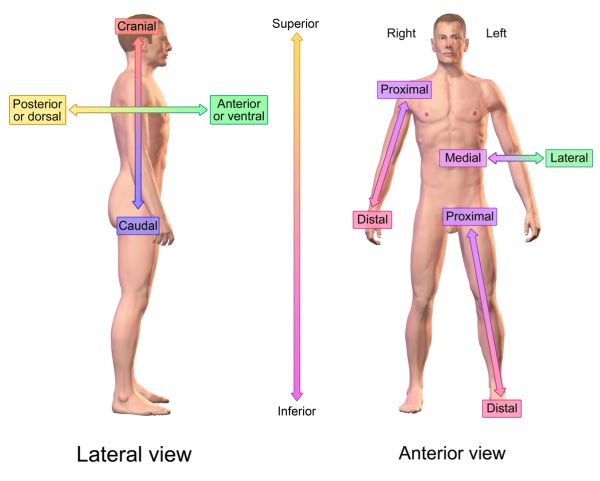
Anatomical Position and Planes of Movement
Standard anatomical position:
Importance of maintaining definitions regarding movements even when the position changes (e.g., lying down).
Overview of the three anatomical planes:
Sagittal plane: Divides left and right.
Coronal (frontal) plane: Divides front and back.
Axial (transverse) plane: Divides top and bottom.

Types of Movements
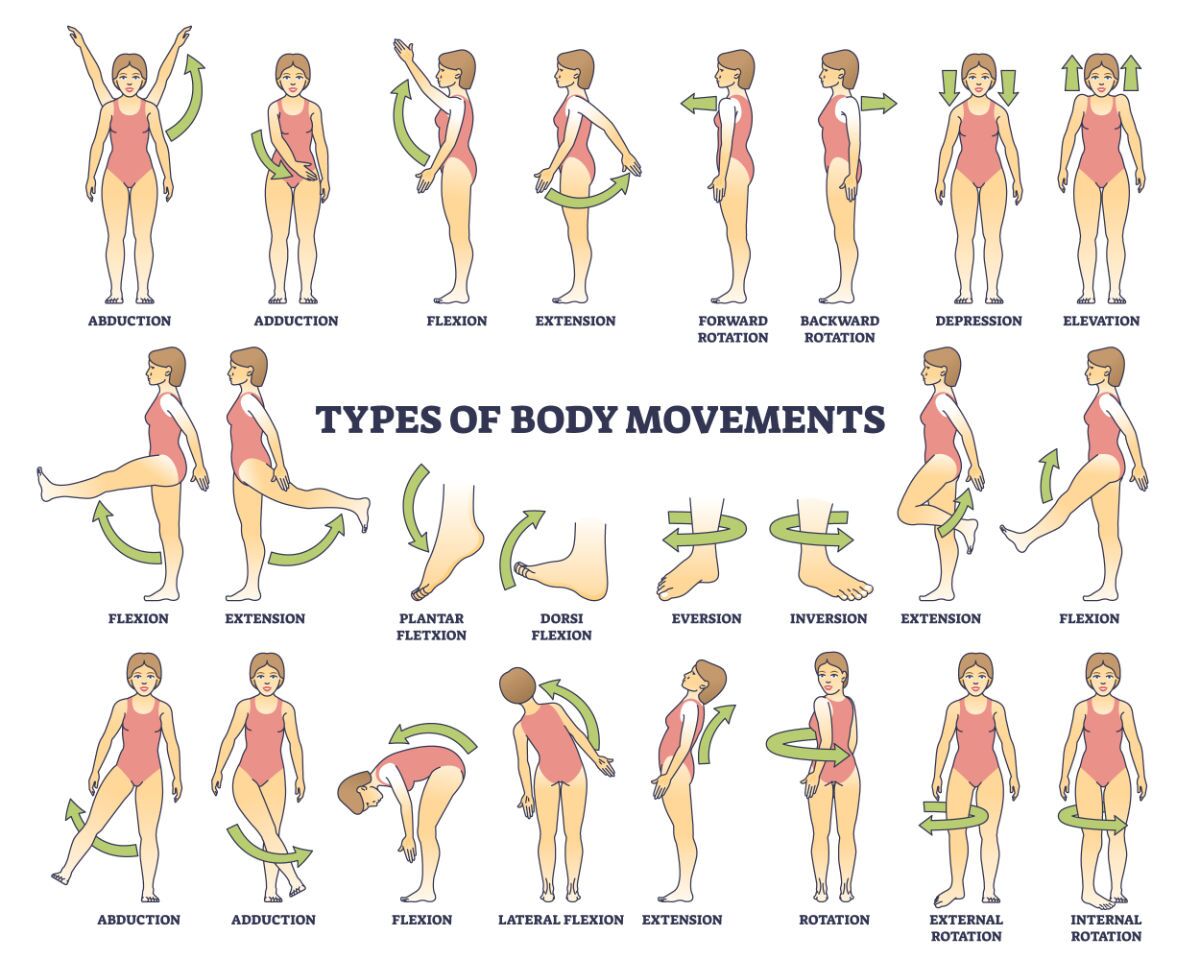
Flexion vs. Extension:
Flexion: Bending.
Extension: Straightening.
Adduction vs. Abduction:
Adduction: Movement towards the midline.
Abduction: Movement away from the midline.
Rotation (medial vs. lateral): Rotational movements through specific axes.
Circumduction: Combination of movements in various joints.
structure
Osteo = Bone
Neuro = Nerve
Myo = Muscle
Chondro = Cartilage
Cyte = Cell
Relationship
Epi = Above/over/on
Peri = Around/ about
Endo = Within
Osteology Introduction
Categorizing bones:
Long bones (tubular), short bones(cuboidal-, flat bones, and irregular bones., sesamoid bone grown in a tendon- eg petalla
Sesamoid bones: Irregular bones that develop within tendons, providing various functional benefits such as improving the mechanical advantage of muscles.
Structure of long bones:
Differentiation between cortical (compact) and cancellous (trabecular) bone.
cortical= compact and very dense, while cancellous bone is lighter, less dense, and characterized by a honeycomb structure that helps in shock absorption and weight reduction.
Importance of understanding bone repair processes and adaptation to physical stress.\
long bone structure:\
epiphysis= ends
metaphysis= area of bone growth
diaphysis= shaft
periosteum= outer layer of connective tissue
endosteum =inner layer

Bone Microstructure
Overview of the osteon:
Features of cortical bone organized in concentric layers.
Cancellous bone structure characterized by lighter weight and softer composition.
Discuss the need for a consistent blood supply to maintain bone health.

Bone Growth and Remodelling
Description of bone cells involved in growth and repair:
Osteoblasts (bone formation), osteoclasts (bone resorption), osteocytes (mature bone cells).
Factors affecting bone health:
Nutrition, physical activity, hormonal levels, and age.
3 types okf blood ttypes
osteoblast, = bone depsition bo˜e
osteclasts= absorbe bone
osteacytes =mature bone cells
Fracture Types and Healing
Differences in fracture characteristics based on cortical vs. cancellous bone.
Greenstick fractures in children.
Importance of understanding healing processes and implications for rehabilitation.
Naming Bony Landmarks
Techniques for identifying and naming anatomical structures:
Tubercle, fossa, foramen, ramus, and trochanter.
Logic behind naming conventions and anatomical relationships.
Practical Application and Consent
Importance of effective communication about palpation practices, consent, and creating safe environments.
Students encouraged to express comfort levels regarding participation in clinical practice scenarios.
Conclusion and Expectations
Summary of key takeaways for the course cohesion and successful performance throughout the semester.
Encouragement to reach out for assistance and clarification on course material and expectations.