Chapter 16: Immune Disorders
1. Allergic Reaction: Immune response to allergen (an antigen but not from pathogen).
2. Anaphylaxis: Severe allergic reaction
• Blood pressure drops
• Swelling
• Throat closes
• Treated with epinephrine
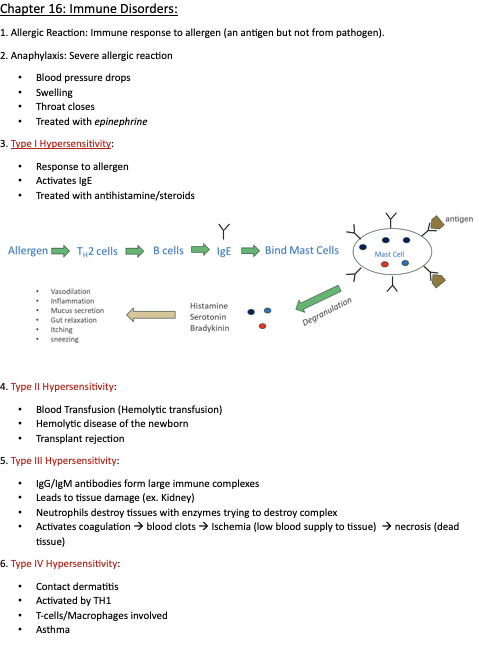
3. Type I Hypersensitivity:
• Response to allergen
• Activates IgE
• Treated with antihistamine/steroids
4. Type II Hypersensitivity:
• Blood Transfusion (Hemolytic transfusion)
• Hemolytic disease of the newborn
• Transplant rejection
5. Type III Hypersensitivity:
• IgG/IgM antibodies form large immune complexes
• Leads to tissue damage (ex. Kidney)
• Neutrophils destroy tissues with enzymes trying to destroy complex
• Activates coagulation blood clots Ischemia (low blood supply to tissue) necrosis (dead tissue)
6. Type IV Hypersensitivity:
• Contact dermatitis
• Activated by TH1
• T-cells/Macrophages involved
• Asthma
Autoimmune disorders:
1. Celiac: immune reaction to gluten, damages lining of the small intestine leading to inflammation,
malabsorption and diarrhea.
2. Graves disease: Hyperthyroid (overactive thyroid); increases Thyroid-stimulating hormone; Symptoms:
• Bulging eyes
• Heat intolerance
• Rapid heart rate
• Anxiety/Irritability
• Fatigue
• Enlarged thyroid (goiter)
3. Hashimoto: Antibodies attack thyroid gland; Symptoms:
• Cold sensitivity
• Weak muscles
• Stiff joints
• Depression
• Enlarged thyroid
• Memory problems
• Fatigue
• Puffy face
• Increased sleepiness
4. Addison Disease: Affects adrenal glands (adrenal insufficiency). Body makes insufficient cortisol and aldosterone hormones. Symptoms:
• Low blood sugar (hypoglycemia)
• Extreme fatigue
• Nausea/abdominal pain
• Salt craving
• Depression/irritability
• Weight loss
• Darker skin areas
• Can lead to adrenal shock (low BP, confusion, loss of consciousness)
5. Multiple Sclerosis: Immune system attacks and damages myelin sheath of the nerve fibers. Symptoms:
• Inflammation
• Muscle weakness
• Unsteady balance/gait
• Blurry/double vision
• Numbness/tingling sensations
• Fatigue
• Cognitive issues
6. Myasthenia Gravis: Antibodies attack Acetylcholine Receptors and block Acetylcholine at
Neuromuscular junction. Symptoms:
• Decreases muscle contraction
• Extreme muscle weakness
• Affects speech, walking, talking, chewing, respiration (breathing)
7. Rheumatoid arthritis (RA): Chronic inflammation caused by release of inflammatory cytokines.
RA affects the lining of the joints, causing painful swelling that over many years can lead to bone
erosion and joint deformity. RA can damage many parts of the body, including the skin, eyes, lungs,
heart, and blood vessels. RA signs and symptoms vary in severity and may come and go. Periods of
increased disease activity (flares), alternate with periods of remission (swelling and pain disappear).
Swollen, tender joints
Stiff Joints
Fatigue, fever and loss of appetite
8. Lupus: Immune System antibodies attack many types of tissues, including the joints, skin, kidneys,
blood cells, brain, heart and lungs. Difficult to diagnose because symptoms similar to other conditions.
Fatigue
Fever
Joint pain, stiffness and swelling
Butterfly-shaped rash on the face
Skin lesions that worsen with sun exposure
Fingers and toes may turn white/blue when exposed to cold or during stressful periods
Shortness of breath
Chest pain
Dry eyes
Headaches, confusion and memory loss