Chapter 4. Writing as a Process and as a Product: How to Teach and Assess Writing in the Second Language
Writing is a challenging and complex skill.
Writing requires staying focused on the topic sentence and or the thesis statement.
It also requires one to be meticulous in polishing the paper in terms of grammar and structure because, unlike speaking, where the audience can forget the speakers’ error over time, writing leaves a document for audiences to critique.
As future language teachers, you do not only need to master the writing skills but also the ability to teach writing.
You must have learned by heart that you cannot teach something that you do not possess; therefore, equipping yourself with the knowledge and skills in the nature, process, and strategies in writing will best prepare you in the classroom setting.
teaching writing, according to Baggot (2012: 3), is "a complex process for most teachers and often a difficult and demanding task for students to master." She attributed this challenge to the emphasis on reading instruction as a preparation among language pre-service teachers. With writing as part of the core curriculum now, "many teachers will find themselves needing to teach writing and may not feel well prepared to do so effectively” (Weigle, 2024: 223).
However, digital technology has changed the writing landscape. Social media networks provide us with rich opportunities to express our ideas and opinions.
This changing context of communication can be the proverbial boon (means: blessing) or bane dilemma (means: distress) of the teachers. The vast writing opportunities and modalities can be a motivation for students to acquire writing skill. However, these can also be their unbridled (means: uncontrolled) platform of expression resulting to some writers' violation of communication ethics.
Expose
Writing can be considered the most effective means of communication because it could promote and perpetuate an idea.
Ancient forms of writing like the cuneiform, the hieroglyphs, and the baybayin give us a glimpe of the world in the past.
Indigenous knowledge, skills, and traditions are preserved and perpetuate by codifying or writing them.
Purposes of Teaching Writing
Writing is often taken as a task integrated with other communication skills like reading. Harmer (1998:79) offered four purposes of teaching writing, namely "reinforcement, language development, learning style and as a skill of its own."
a. Reinforcement. Writing is considered as one of the ways of helping language learners remember and even improve their fluency in target language. Your lessons in the principles of teaching may remind you that learning best happens when more senses are used. So, writing the linguistic codes may help one to nuance sound-spelling similarities and differences or commit to memory important concepts they have read or listened to.
b. Language Development. Harmer (1998) asserts that learning a language is a process. He recognized that writing, like the other communication skills, is done in stages or procedural steps.
c. Learning Style. Our understanding of Gardner's Multiple Intelligences theory would tell us that students differ in the way they learn. Some may learn better when engaged in receptive communication activities like listening and reading, while others learn better when engaged in production activities like speaking and writing. Some may be quiet in the discussion but are passionately expressive when asked to write.
d. Writing as a skill. It has to be taught for its being. Writing as a skill cannot be acquired or mastered overnight.
Graham, MacArthur, and Fitzgerald (2007) have offered four principles in writing instruction. They reminded us that "writing is essential," and as such, we are challenged to "do a better job in teaching it: we need to know what skilled writing looks like" and must have a collection of "effective writing procedures for teaching writing."
a. The essence of writing. Writing, according to Graham et al. (2007), is an effective and versatile means of communication. It allows us to persuade our audience or explain to them ideas. It also offers a venue for self-expression, whether in a creative or critical form of writing. As language teachers, it is one of the most commonly used tools for assessing language proficiency and academic performance. As they aptly said: "The power of writing resides in the many ways it can be used. It is essential to school success and has increasingly become a central component of daily life in industrialized societies." (Graham et al.2007:3)
b. The need for effective writing instruction. Having pointed out the essence of writing, Graham et al. also emphasized the need for writing instruction that is grounded on research. They stressed that "Our instructional efforts in this area need to be informed by what is known about the factors that foster writing development and proven methods for promoting such development(p.3)." In our context, we are aware that we have fared poorly in national and international language assessments. Among the recent researches regarding our learners' writing skills is the one done by Saavedra (2020:) which abstract revealed the following:
Based on their experiences and observations while teaching writing to the pupils, the following was recorded:
1) lack of vocabulary in the target language;
2) difficulty in conveying and organizing ideas;
3) pupils' perception that writing is a hard task;
4) lack of motivation and interest in writing; and
5) the difficulty in spelling, grammar and sentence construction are the reasons why many elementary pupils have poor writing skills in English and Filipino. These factors can be attributed to the first languages of the pupils (Chabacano, Bahasa Sug, and Cebuano), where English and Filipino are considered as L2 only.
c. Knowledge of effective writing. As earlier established, our own knowledge and skills are the limits to the things we can teach to our students. It is imperative, therefore, that we equip ourselves with the content and procedural knowledge in teaching writing. Graham et al. contend that "If students are to become good writers, we need to help them become strategic, knowledgeable, and motivated writers who are not hampered by inefficient or faulty transcription and sentence construction skills."
d. Effective writing procedures for teaching writing. We are also challenge to research beyond the context and reality of our learners' writing skill. We must equip ourselves with the different perspectives on the nature of writing and the pedagogies of writing instruction.
Perspectives on the Nature of Writing and Writing Instruction
Writing as a means of communication has the potential to change not on one's worldview but the world itself. Famous works like Noli Me Tangere (1887) Jose Rizal, An Inconvenient Truth (2006) by Al Gore and Greta Thunberg's social media posts on climate change can just be a few of the examples of the power writing.
Yagelski (2018:8) purports the four ways of understanding writing. He said that: "Writing is a powerful means of communication; Writing is a way to participation; Writing is a unique way of thinking that helps us learn, and Writing is a way to understand ourselves and the world around us."
There are two major schools of thought in viewing writing instruction: 1.) writing as a cognitive ability vs. writing as a sociological phenomenon and 2) writing as a product vs. writing as a process.
1. Writing as cognitive ability vs. writing as a sociological phenomenon.
a. Cognitive ability: To view writing as a cognitive ability means taking into account both the writing ability and the linguistic proficiency of the learner (Weigle, 2014).
Writing ability refers to the learners' knowledge and skills of the writing process, which includes choosing a topic, generating and organizing ideas with consideration of the context and audience, and polishing structure and style of presentation of writing outputs, among others.
Language proficiency refers to one's knowledge of the linguistic codes, be it in L1 or L2. For some students, this may demand knowledge of vocabulary, grammar, and syntax, among others.
b. Sociological Phenomenon. This view on writing, according to Weigle (2014:224), recognizes that writing is "done for a purpose, is directed at a specific audience, and is part of a broader set of literacy practices…shaped by a particular culture and setting." As writing teachers, we need to inculcate among our learners that "written texts do not exist in isolation" and that they have to be a "member of a discourse community."
A discourse community defines the rules of writing or sets of expectations for a written output. For instance, we are now aware of technical writing, creative writing, professional writing, business writing, and many more.
2. Writing as a product vs. writing as a process
a. Writing as a Product. If we take this view in teaching writing, we are more concerned about the students' output. Also called genre writing approach, this perspective in teaching writing pays attention to the correctness of the students' grammar or their structure.
Dirgeyasa (2016, citing Thoreau, 2006) defines genre-based writing as a kind of writing which "has a typical style, particular target of readers, and a specific purpose."
As classified by Tompkins (2008), writing genres include Journal writing, biographical writing, letter writing, expository, narrative, descriptive, poetry, and persuasive writing.
Zakime (2018) finds the product approach in teaching writing time-efficient because its primary aim is accuracy; therefore, the teacher has a focus skill to correct. Teacher who uses this approach usually asks learners to read model texts for analysis and templates for writing. Zakime provided the following key items, which she attributed to her CELTA mentor Mellissa Lamb, as a guide for analysis: Content, Lexis, Organization, Grammar, and Style (CLOGS). This is followed by controlled writing activities that would lead them to think of their own topic to develop using the pattern they saw from the model text. After student writers have thought of their topic, they will organize their ideas and write the final output. Because of its focus on fluency, this perspective in writing instruction is most useful as a reinforcement or language development activity.
b. Writing as a Process. This view takes into account the different stages of writing as a way of developing writing skills.
Writing as a process, according to Langan (2014:41), involves five basic steps, namely:
Pre-writing - This step involves choosing the topic and the generation of ideas for writing. Choosing a topic is crucial, especially if the writing activity is done within the given class time. As teachers, we need to guide students in deciding on topics that they are knowledgeable of and interested in. They also have to be reminded that the topic they have chosen is narrow enough to done within the given time frame.
Langan further offers four pre-writing activities, which include:
freewriting or writing without restrictions.
listing
brainstorming
clustering
Organizing ideas or outlining the paper - In this stage, we assist our students in planning or outlining the ideas they have generated during the pre- writing stage.
Writing the draft - This refers to the development of the key ideas outlined in the previous stage.
Revising - Effective writers re-read their work to revise content and structure. This stage asks the writers to check the substance of their claims and the smooth flow of the development of their ideas.
Editing - This stage in writing prepares the writing output for final submission. This requires polishing of grammar, mechanics, and style. This also asks students to revisit the writing format required by their teacher.
With these processes in mind, we need to remind our students that effective writing considers subject, audience, and purpose in order to put the message across (Langan, 2008).
Subject. This is the idea that we want to talk or write about. We cannot produce anything, if our knowledge is limited. We need to have a considerable collection of ideas in order to carry out a discussion intellectually. To enrich our content knowledge, we need to read, observe and listen. A person who is an effective reader, a keen observer, and a sensitive listener never runs out of ideas to write.
Purpose. Influential writers purposely utilize their extensive collection of ideas. They may inform their readers about the latest facts, convince or persuade them to embrace a new concept or technology, or humor them with entertaining stories. Our writing purpose guides us in organizing our ideas and choosing the language to use in writing. It also helps us decide the length of our discussion and the style of presentation.
Audience. A writer always has an audience in mind. In the school set up, the audience can be the teacher who reads and grades the writing output or fellow students who share the same passion on the chosen subject. Just as your purpose determines your language and style of presentation, the audience plays a crucial role in shaping your writing style and organization. Age, profession, cultural background, and gender, among others, contribute a lot in deciding your topic, our method of presentation, and language to use in writing.
In the academic setting, our subject or topic is most often pre-defined by the teacher or by the discipline we are taking up. Our purpose most often revolves around informing, arguing, or persuading. Our primary audience is your teacher. We also remind our students that the writing process is recursive, and as such, it can go back and forth between the student and the teacher for feedbacking and revising. Prichard and Honeycutt (2007: 33)have this to say about the process approach:
Teachers must demystify the writing process for students by teaching them that regardless of how skilled they become, all writers will perform just like professional writers: they will utilize a process, adapted to their needs, to develop their manuscripts; they will go through several stages of revision; they will seek the responses of others; they will edit for errors at the manuscript level, and they will eventually realize that writing is never perfect and always open to revision.
Writing as a product or as a process has drawn debates among practitioners While others agree that genre-based or product approach is purpose-driven and is helpful in achieving fluency, some others also assert that it is not student-friendly and sometimes can result in mechanical writing. Tompkins (2008) offers a way of compromise on this issue by balancing the teaching of writing as product and process or even mixing the two approaches.
The Mechanics of Writing
Writing in the second language begins in understanding the writing system and the mechanics of writing. For our learners who may have to negotiate between their mother tongue, which is not necessarily Filipino, and English as their L2, this requisite in learning to write can be daunting. Olshtain (2014) lists the following mechanics of writing:
a. Letter recognition is the ability to distinguish a letter from the other letters in the alphabet and is a foundation in learning to read and write the language. For example, a Filipino learner who has memorized the alphabet song may not necessarily know the symbol of each letter when it is removed from its regular sequence.
b. Letter discrimination is the ability to distinguish similar-looking letters like b and d or letters like t and f.
c. Sound-to-letter correspondence. This mechanics in writing refers to the matching of the sound with the letters or symbol. English phonetics can be a challenge to Filipino learners because they have sounds or phonemes that do not correspond with their sound, i.e. the /f/ sound being spelled as 'gh' in the word laugh, the voiced and voiceless 'th' in though and thought.
d. Word recognition. The complex sound-to-letter correspondence often results in the learner's problem in word recognition, which is the ability to quickly identify and read the written word.
e. Basic rules of spelling. An effective writer demonstrates fluency in spelling, but to some of our learners, this could be a tedious task, especially if they have not mastered the first four of these mechanics.
Aside from understanding the complex mechanics of writing our target language, we also need to learn the writing system itself, which according to Olshtain (2014), can be classified as either meaning-based or sound-based.
Meaning-based system can be exemplified by the Chinese and the Japanese Kanji where the graphic character represents real-world meaning.
The sound-based system, like the English language, uses the alphabet where the symbol represents a sound. It is also crucial to know the writing system directions that affect the way we learn writing. Some languages are written in columns, like the Chinese and Japanese or from right to left, like Arabic, or from left to right like Filipino and English.
Expose
Teaching writing requires careful planning.
Kroll, as cited in Weigle (2014:229), lists the essential tasks of a writing teacher. These are "designing or implementing a syllabus, planning the individual class session, providing opportunities for writing and responding to that writing."
In designing the writing syllabus, we need to consider the following factors:
a. A feasible scope of the writing task. This requires us to think through the writing tasks by looking at the needs of our learners and their background. We must give them writing tasks that they can manage in terms of breadth and depth.
b. A writing task that promotes academic integrity. In this age of copy and-paste, we need to prepare writing prompts or assignments that deter the students from plagiarizing written outputs. In most cases, we do this by making the consequences clear to them and equipping them with paraphrasing and summarizing skills.
c. The suitable scaffold for the given tasks. Wilfong (2015:xiii) said that a teacher should not "assign writing without previous work on the genre, have students write without exposing them to readings from the genre, nor have writing be an isolated, individual activity in your classroom."
d. A specified topic, genre, and purpose. We may negotiate the topic with our learners, but to avoid frustration upon checking their outputs, we need to be clear in the genre and purpose that we want our students to write about.
e. A clear rubric of evaluation. A well-defined rubric guides the learners in accomplishing their writing tasks.
f. A reasonable set of deadlines. Just as we need to give them feasible scope, we also have to set realistic deadlines. We can set deadlines in stages to provide immediate feedback on their outputs and avoid severe errors in content and organization.
Another part in the planning and implementation of the writing syllabus is the articulation of learning outcomes or learning objectives. We have learned the value of behavioral objectives and even the acronym SMART for specific, measurable, achievable, relevant, and time-bound objectives. These concepts are important in articulating learning outcomes or objectives for writing instructions because they do not only specify the context, the way of teaching it, and the way of monitoring and evaluating performance.
Designing the Lessons for Writing
1. Writing Instruction for Beginners. Teaching L.2 writing for beginners requires understanding the context of the learner. For instance, we need to know if they already have the skills sets like producing the linguistic codes, writing conventions, and writing mechanics. We may also consider if and when we teach spelling and handwriting. Aside from deciding on the learning objectives, content scope and sequence, we must also plan the teaching strategies and techniques ahead of time.
Pressley, Mohan, Fingeret, Reffitt & Raphael-Bogaert (2007) offer the following characteristics of an effective elementary literacy classroom.
a. Engaging activities. Writing as a skill can be developed through constant and correct practice, and we might also agree that learning happens best when more senses are involved. Beginners who have to learn letter recognition and letter discrimination can trace letters, write on the air, or use their body movements to describe a letter or spell a word. In teaching spelling, Schlagal (2007) asserted that spelling is not just a rote memory process. It is best taught along with vocabulary activities where the teacher carefully chooses words that are preferably context-based and clustered as to their difficulty levels.
The study of Pressley et al. (2007) revealed that effective writing classes involve motivating activities like posting learners' outputs on the wall, making students react on their classmates' outputs. Tompkins (2008) described how a teacher encouraged young children to write by hanging images hinged on a theme like weather or familiar event. Students are encouraged to write something about the image by inserting in packets words that describe the image.
b. Developmental Instruction- It maybe tempting to teach writing at an early stage using the product approach because it is easier to check and time efficient. However, experts (Tompkins, 2008; Pressely et al. 2007; Wilfong, 2015) have strongly recommended the use of process approach even at the earliest stage in the teaching of writing. They have proven that the draft-revise-final output is less effective compared to the plan- draft-revise-re-write process of writing. The recursive pattern of the process approach helps the learners to develop not only the habit of planning and organizing but also the ability to monitor their own writing skill, similar to the metacognition skill in reading.
e. Conducive environment. Experts consider it a serious offense to require learners to write on topics without proper context. As teachers of writing, it is best to incite students to write by providing not only the motivation but also the scaffolds to write effectively. This could be done by providing plenty of varied reading materials of that could serve as their source or model for content and opportunities for authentic writing, i.e. a greetings or dedication corner where students can write messages for each other.
Balancing writing as a process and as a product, Tompkins (2008, 22) has the following summarized strategies for teaching writing in the elementary years.
Motivated Writing
What is it?
Teacher writes in front of children, creating the text, doing the writing, and thinking-aloud about writing strategies and skills.
Who writes?
Teacher
How much support?
The most: The teacher does both the thinking and writing.
What size groups?
Whole class, Small group
Which activities?
Demonstrating
Shared Writing
What is it?
Teacher and children create the text together, then the teacher does the actual writing. Children may assist by spelling words.
Who writes?
Teacher
How much support?
The teacher and the children do the thinking together, but the teacher does the writing.
What size groups?
Whole class, small group, buddies, individuals
Which activities?
Language, Experience, Approach, K-W-L Charts
Interactive Writing
What is it?
- Teacher and children create the text and share the pen to do the writing. Teacher and children talk about writing conventions.
Who writes?
Teacher and children
How much support?
The teacher and children share the responsibility for doing the thinking and the writing.
What size groups?
Whole class, small group, buddies, individuals
Which activities?
Predictions, Daily News, Innovations, Letters
Guided Writing
What is it?
Teacher presents a structured lesson and supervises as children write. Teacher also teaches a writing procedure, strategy or skill.
Who writes?
Children
How much support?
The teacher provides the structure, but the children do the thinking and the writing.
What size groups?
Small group, buddies, individuals
Which activities?
Class collaborations, Class ABC Books, Formula Poems
Independent Writing
What is it?
Children use the writing process to write stories, informational books, and other compositions. Teacher monitors children’s progress.
Who writes?
Children
How much support?
The least: The children do both the thinking and writing.
What size groups?
buddies, individuals
Which activities?
Writing Centers, Writing Workshop, Writing in journals, letters
2. Writing Instruction for Intermediate and Advanced Learners
Writing teachers of intermediate and advanced learners must help students understand the relevance of writing not only in fluency in the target language but also in learning successful other subjects. Knowing that writing is both a "social act" and a "developmental cognitive task," teachers can raise the students' awareness of the different writing tasks they have to hurdle in an academic setting.
Newell, Koukis, & Boster (2007) asserted the importance of writing as a tool of learning so that teachers have to engage the learners in the writing tasks commonly required in other disciplines. These include:
a. Note-taking: a skill in extracting and recording relevant information from different types of texts for future use.
b. Reporting: an ability to recount and write the events that transpired, for instance, in a laboratory experiment, field trip, or group activity.
c. Summarizing: a skill in "looking for patterns across a range of events and ideas" and presenting the information most concisely.
d. Analyzing: an ability to break down ideas, note details, and determine relationships and causality.
e. Journal writing: often a means for self-expression and reflection.
f. Creative writing: "literary writing, such as short stories and poetry, that provides personal and imaginative ways of exploring ideas and experiences."
Wilfong (2015) narrowed these tasks into three writing genres that a teacher can use as a guide in organizing writing lessons.
These genres are narrative (recounts factual events or tells a fictional story), informative (involves factual information), and argumentative (appeals to reason or emotion).
Whether the writing instruction is task or genre-based, we need to motivate our learners to write and help them write effectively. We could use the following instructional tips.
a. Reading-Writing Connection. Reading can help provide context and content for writing. We can encourage our learners to write effectively by providing model texts to read and emulate or reading materials that they can analyze, react or reflect on.
b. Strategy Instruction. Strategy, as defined by Graham et al. (2007), refers to the "course of action for accomplishing a specific objective," This requires one to have a clear purpose or goal, the procedural knowledge in accomplishing the task, and the "will to embark on the designated course of action and the effort to see it through." Teaching students strategies in each stage of the writing process would allow learners to reflect on their writing habits and idiosyncrasies as writers to employ the processes involved in writing independently, Scaffolds, like model texts and writing templates, help a lot in teaching students strategies in writing.
Some scaffolds and templates that prove to be helpful in writing for learning include:
the RAFT or Role, Audience, Format, Topic model of Holston and Santa (1985 as cited in Jacobson, Johnson and Lapp, 2011),
the 5-paragraph Essay (Langan, 2008; Wilfong, 2015; Tompkins, 2008),
and CREW or Claim, Reason, Evidence, Warrant for argumentative writings (Wilfong. 2015).
The templates and scaffolds for creative writing include cinquain, acrostics, list poems, big book projects, and others.
c. Peer or Collaborative Writing. Yagelski (2018) asserted that writing is a "social activity" because writers often have an audience in mind and other readers who respond to or assess their written outputs. As teachers, we can develop this awareness of the audience-readers among our students by engaging them in peer or collaborative writing activities. We may assign them a peer editing partner or group them in a writing activity that requires investigation or research with assigned roles like a lead researcher, assistant researcher, and documenter. We can also engage them in a writing workshop.
d value of technology in teaching writing. Our learners now are exposed to multi-modal texts, and they sometimes find the physical act of traditional writing difficult or tiring. Teachers can allow students to use word processors to deal with illegible handwriting of their learners. Sandolo (2010, citing Karchmer-Kelin, 2007) claimed that "Internet writing practices support required curriculum standards… encourage students to think about the social implication of their work, help students learn the literacy skills necessary to be successful in the 21st century. "The editing features of word processors are beneficial for both students and teachers in monitoring linguistic accuracy. Social networks can be an opportunity for learners to have authentic readers and write interactively.
3. Scaffolds in Teaching Writing
The following templates and suggested strategies can be useful for an engaging writing classroom
a. Teaching writing mechanics
Tracing Letters, Words and Sentences
Letter Recognition
b. Teaching Planning in Writing
We can help our learners have a pleasant experience. They need assistance in choosing the topic, saying something about the topic they have chosen, finding focus and support to the claims they make, and making their voice visible in their writing. But among these stages, it is important to motivate learners to write through the scaffolds that we provide.
b.1 Prewriting Activities help learner generate ideas. These include:
freewriting - is writing without restrictions, writing down everything that comes to mind or feelings about the topic and about the act of writing itself.
questioning - is similar to brainstorming and is one of the easiest ways to generate ideas for writing because it is like talking to oneself or finding answers to your questions. For instance, you can ask them to write about their reasons for taking up their course, using the 5Ws and H as their guide in planning their essay.
clustering - This means collecting or grouping together ideas related to our chosen topic. We guide our students in putting their chosen topic at the center and then drawing a circle or box for every related idea and connecting these ideas with a line, like the one shown in the following Figure.
listing - This technique can help learners in choosing the topic and narrowing the focus by simply listing all relevant ideas without worrying about the order of importance. An example is shown below:
Computers can help me in my research assignment.
Legitimate sites
On-line journals for the scholarly written articles
I can access them even in the middle of the night.
Be careful with those plagiarized articles.
Check the legitimacy of sites and sources.
Easy storage of information
Write as you research.
Citation of sources is easy.
b.2. Other Planning Strategies
1.) RAFT - The RAFT Model by Holston and Santa (1985 as cited in Jacobson, Johnson and Lapp, 2011) is a versatile model or template that helps students produce an audience-centered and purpose-driven writing output.
R stands for the student-writer's assumed Role
A refers to the target audience
F for the prescribed or suitable format/genre in writing
T for the topic that needs to be developed or discussed. For instance, when we ask a learner to write a narrative paragraph or essay on their most significant summer experience.
2.) W-W-W +2 WHAT + 2 HOW - This planning strategy offered by Graham and Harris (2007) is useful for writing short stories. The letters stand for the following:
Who is the main character, who else is in the story?
When does the story take place?
Where does the story take place?
What does the main character want to do; what do other characters want to do?
What happens when the main character tries to do it, what happens with the other characters?
How does the story end?
How does the main character feel; how do other characters feel?
3.) CREW - This model is patterned after Toulmin's model of argument which emphasized the articulation of a writer's claim or position. Useful in helping students write effective arguments.
Claim - is the writer's position on the topic.
Reason - is the general support to the claim,
Evidence - followed by the details or pieces of evidence and concludes with a
Warrant to tie everything together.
In applying CREW, Wilfong suggests to start with an opinion poll that encourages learners to take sides on a debatable issue. Then they will be provided with model texts where they can annotate using the CREW strategy. They can be guided by the following template in extracting information from the model text or producing arguments for their own argumentative piece of writing.
4.) STOP & DARE - This planning model by De La Paz and Graham (as cited in Graham and Harris, 2007) is useful for persuasive and argumentative writing.
The acronym/mnemonic stands for:
Suspend judgment - Suspending judgment develops in the learner reflective writing to avoid sweeping generalizations or claims that have no clear grounding.
Take a side - Students need to take a clear stand on an issue so that they can produce a unified and coherent argument. This is one way of making their voice visible in their written output.
Organize ideas - Carefully structured claims supported by cohesive and coherent evidence result in effective and persuasive arguments.
Plan more as you write - Writing is a recursive process so that planning happens not only in the beginning but in the entire writing activity.
Develop a topic sentence or a thesis statement - The topic sentence of a paragraph or the thesis statement of an essay is one of the unifying elements of writing. It helps the writer stay focused in the topic.
Add supporting ideas - Supporting ideas strengthen the position a writer takes. Learners need to understand that supporting ideas bring their propositions or claims to life.
Reject arguments from the other side - In taking a position on an issue, a writer should be aware of the opposing arguments so that they can rightfully refute these.
End with a conclusion - Clear and emphatic closing or conclusion persuades the readers to think and feel or embrace the position of the writer.
5.) The five-paragraph essay - This strategy is useful in teaching genre writing or writing for learning. The template includes the:
Introductory paragraph, which introduces the topic and the thesis statement. It begins with a hook to get the reader interested. Nearly always ends with the thesis sentence, which explains the topic. In this thesis, the author tells his reader that the essay will be organized according to advantages, disadvantages, and overall value-in that order.
The second, third, and fourth paragraphs develop the key ideas articulated in the thesis statement. The first body paragraph gives some advantages, just as the author agreed to do in the thesis when he identified advantages first. He has put in three examples of advantages, adding appropriate description. Note that the focus in body paragraphs is nearly always explained in the first sentence, usually the topic sentence. Now come the disadvantages. The problem of complex topics is covered by the nuclear power example, and the problem of focused description is described as an outgrowth of the complex topic problem. The third body paragraph looks to overall value, playing up advantages in the first body paragraph while downplaying problems discussed in the second body paragraph.
The 5th or concluding paragraph clinches the discussion either by summarizing or reiterating the thesis statement. The conclusion reaffirms the overall value of the five-paragraph theme as argued in the thesis. It then reminds the reader of the hook-the uses of the theme-before ending with a little twist that to keep readers involved.
6.) Cinquain. Sometimes called a diamond poem, a cinquain is a poetic genre created by Adelaide Crapsey. The didactic cinquain form's variation has become a creative strategy for writing poems with the following formula for poetry writing.
Variation 1
The first line is one word which is the title of the poem.
The second line contains two words which are adjectives that describe the title.
The third line has three words, usually gerunds, that tell the reader more about the subject of the poem or show action.
The fourth line has four individual words or a four-word phrase that show emotion about the subject of the poem.
The fifth line is a one-word synonym or very similar word to the title.
Example:
Castle By William Swink
"Castle
Strong, beautiful
Imposing, protecting, watching
Symbolizes wealth and power
Fortress"
Variation 2
one-word title of the poem.
two adjectives that describe the first word.
three other modifiers of the first word, all ending in ing
a complete sentence with four or more words
one word
Example
"Star
Hot, radiant
Shining, burning, exploding
It gives life to everything.
Sun"
7.) List Poems. This creative writing activity asks learners to list down an inventory of persons, places, objects, or ideas. It incites students to write strong or funny descriptions of the things they are passionate about.
Example:
What's in the box under my bed?
eight marbles and a shoestring
a shiny bubblegum ring
two valuable baseball cards
some chocolate candy bars
a letter my friend wrote
4. Writing Prompts. Along with the strategies, the teachers can also motivate the learners to write by giving clear writing prompts. A prompt is anything that moves the student to write. It can be an incomplete statement as a story starter like "I never thought I'd survive, or a question like "What are the benefits of urban living?" or thought-provoking triggers like images, quotes, or songs Wilfong (2015) offered two types of writing prompts, infinite which can be answered in multiple ways, and finite, which requires a direct or straightforward response.
Infinite prompts can be confusing to some students but would be useful for every day or non-graded writing activities.
Finite prompts are less daunting for the students because the goal and expectations are clear. Finite prompts are useful for formative and summative assessments, especially if you want to check their understanding of the concepts and application of specific writing competencies.
Lesson 3. Assessment in Teaching Writing
Assessment is central in the teaching-learning process because it provides evidence of learning and informs the teacher on the course content that needs reinforcement or re-teaching.
However, with the complexity of writing and the diversity of the writing outputs that students turn in, teachers often do not prioritize writing assessment. Checking the written outputs of the learner is not only tedious but also time-consuming. On the part of the students, they would get demotivated by the feedback or the red. Therefore, when we asses writing, we focus not only on the outputs but also on the writers (Tompkins, 2008).
Assessment in the Context of Teaching Writing
We need to review our understanding of writing as a product and as a process, formative vs. summative evaluation, and assessment vs. testing.
a. Product vs. Process. A valid assessment of writing, according to Calfer and Miller (2007), "taps both product and process." We need to nuance a writer who demonstrates linguistic fluency but lacks the depth in discussing the meat of the topic from one who has a good grasp of the topic subject but commits some flaws in syntax and structure. To assess writing as a product means looking into the students' ability to observe proper mechanics, correct sentence construction, coherence, and cohesion. To assess writing as a product is to look into the writers' ability to produce written outputs that are audience and purpose-driven, credible, and substantive.
b. Formative vs. Summative Evaluation.
Formative evaluation - monitors students' progress and is often informal and qualitative.
Summative evaluation - gauges the students' level of competence vis-à-vis a mandated or expected standard. Summative evaluation is often a challenge for teachers who handle heterogeneous classes with different backgrounds and abilities.
c. Assessment vs. Testing.
Assessment is more favorable than testing because it takes into account the context of the learners and finds ways of helping them forward.
Testing is associated with the traditional, like the multiple-choice type of gauging the learner's level of competence. This may not be the ideal way of assessing writing but a necessary skill to develop among learners who need to take standardized tests in their college admission or national assessments.
Purposes of Writing Assessment
Calfee and Miller (2007:284) reiterated the value of writing in their claim that writing "reveals thinking with unusual clarity. The results.... are portraits that students construct in demonstrating their understanding of a topic, revealing their capacity to 'go beyond formation given." So, while writing can be an assessment in itself, it must also be assessed accordingly because of the following reasons as offered by Tompkins (2008:78).
Reflect the students' growth as a writer
Inform students and parents about students' achievement
Guide writing instruction
Substantiate the grade-level standard met by the learner
Evaluate the effectiveness of the instructional program
How to Assess Writing
Writing as a process is recursive, and as such, assessment is best done in every stage of the process. To instill the basic strategy of plan-draft-revise-edit, teachers need to monitor their performance and give feedback before they give their graded assessment.
Feedback, according to Clark (2010:59), is "a mentoring dialogue that helps the learner's repeated attempts to be articulate... marking of pupils' written work should be positive, encouraging and indicative of future steps."
Weigle (2015) classified the types of feedback that we can offer to our student writers. They are:
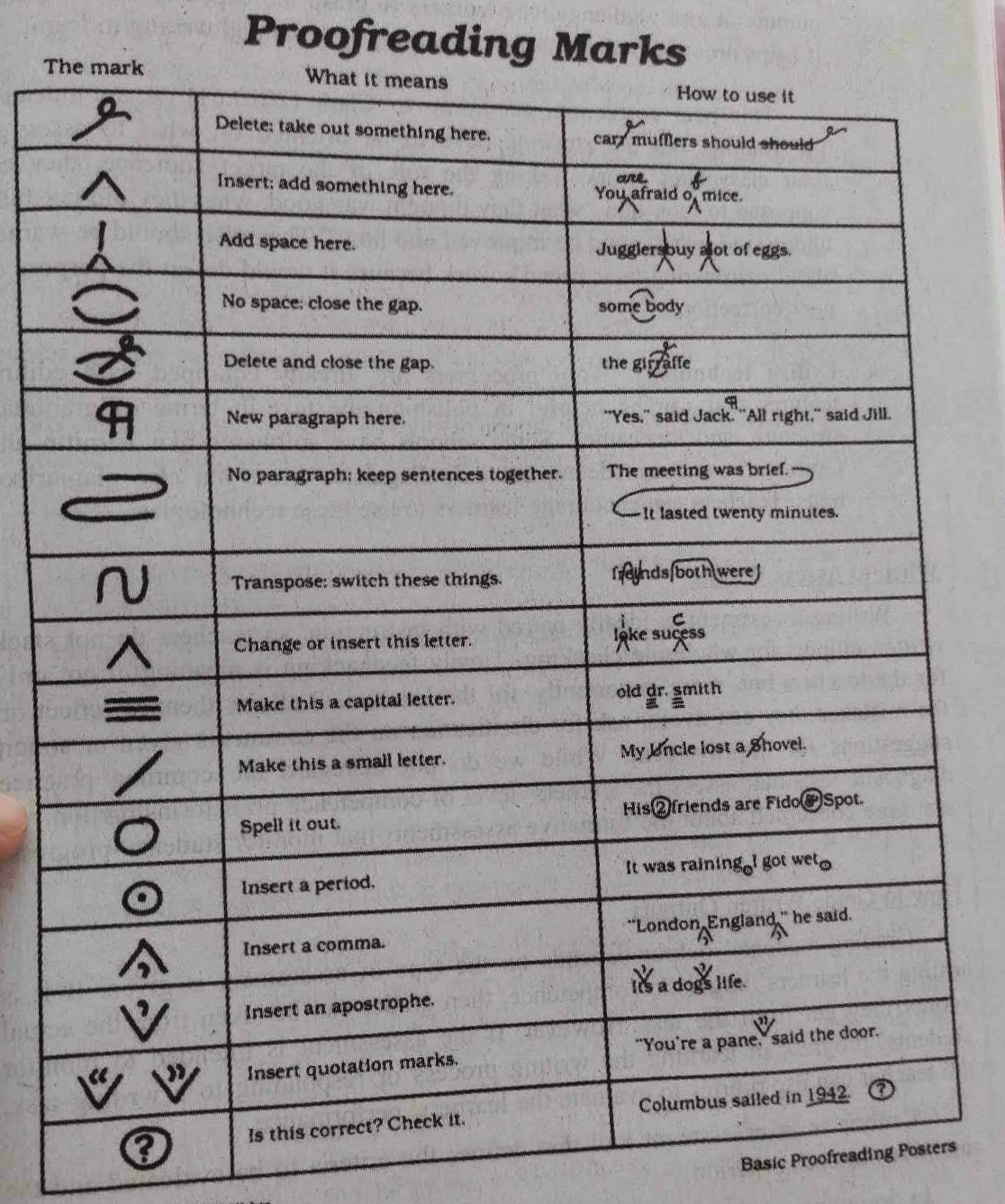
a. Written comments. This is the most commonly used feedback mechanism where teachers write their corrections either on the texts using symbols for editing or indicate comments on the margins of the student's paper. This is helpful in correcting on the spot the errors committed by the learners. However, it can be time-consuming for the teachers and intimidating for the students.
b. Individual conference. This type of feedback is useful for process writing, where teachers have to assist student writers in every stage of the writing process. The conference is usually focused on the students' ability to comply with the given task, i.e., choosing a topic and narrowing the focus, ensuring that developing ideas support the topic statement. This requires the student's ability to listen and take note of the comments in their writing journal; otherwise, they would not get the feedback correctly.
c. Recorded feedback. This is an alternative conferencing, especially if the class is big and individual conferencing would not be viable. The teacher will check the outputs and audio-record her comments to the students for the students to listen and follow. But in places where technology is scarce or unavailable, this does not work.
Other assessment strategies that may work in the writing classroom would include:
Observation can be used in monitoring the learner's writing habits, problems in executing the process, interaction with peers during collaborative or peer writing activity.
Collection of writing samples can be done by the teacher or the students themselves. Posting writing exemplars on the wall is affirming for the learners. However, it would be best if the learners themselves collected their written outputs in a portfolio. The collection includes the drafts and the final output as well as the ones they consider as the worst and the best-written output. The learners can reflect on their development as a writer.
Anecdotal/keeping records note down the teacher's comments on what they have observed or read from the students' outputs as evidence of learning.
Writing Checklists for the students and teachers to assess if the outputs have responded to the given prompts or defined objectives.
In the context of the Philippine classrooms, where teachers handle big classes with learners coming from diverse backgrounds and levels of competence, they need to employ strategies that could lighten the arduous task of assessing writing. Some of these are:
Focus on a specific aspect or competency (Harmer, 1998). This strategy that adheres to the principle of less is more' requires the teacher to orient the students on the target competencies that the writing program or activity aims to achieve. Since it is impossible to correct all aspects of fluency simultaneously, the teachers and students can agree to focus on vocabulary, spelling, and mechanics, or subject-verb agreement on the next. If it is a big task, linguistic focus can be coupled with one stage of the process at a time.
Agree on the list of written symbols (Harmer, 1998). As the teachers focus on the specific aspect of competency, they also can tell the students the codes used in correcting the errors. For beginner and intermediate learners, the following codes would be useful:
1. SP - spelling error
2. WO - error in word order
3. P - punctuation error or problem
4. T - Tense of the verb
5. WW - wrong word
6. " - missing word
7. [ ] - incorrect word
8. WF - error in word form
9.~ error in combining two words into one
10./ signal for run-on sentences
Peer correction and feedbacking. This strategy is not only time-efficient but promotive as well of the 'self-regulation in writing.
Self-regulation, according to Zimmerman and Risemberg (1997:76), refers to "self-initiated thoughts, feelings, and actions that writers use to attain various literary goals, including improving their writing skills as well as enhancing the quality of the text they create." Enlisting the students' participation in the feedbacking activities not only lightens the teacher's load in checking outputs; it also challenges the learners to grasp the expected competencies. It helps promote both the habit of learning to write and writing to learn.
This peer correction, according to Clark (2010:61), is not intended for grading, but the students have to be oriented on what to assess in their classmates' work. Taking the role of the target audience, they are supposed to look into "what they thought was good, what they did not fully understand, what could be improved and how." They also should be warned about patronizing their friend's work because it would defeat the purpose of peer correction.
Utilize technology. Word processors are already equipped with editing features that can be helpful in polishing the text in terms of grammar, structure, and mechanics. Some schools have software like Turnitin and Grammarly that can detect not only linguistic errors but also plagiarized texts. Teachers can encourage learners to use these technologies.
When to Assess Writing
Writing assessment is ideally paired with instruction, so teachers do not stack written outputs for wholesale checking. Timely feedbacking is meaningful not only for the teachers but, more importantly, for the learners. It allows them to reflect on the mistakes they can avoid, ask for clarification on the comments given or solicit suggestions for improvement. While we do not disregard the common practice diagnostic tests that assess the learners' level of competence prior to instruction, we are more concerned about the formative assessments that monitor students' progress.
How to Grade Written Outputs
Grading students' output depends on the type of assessment is given. If it is testing the learners' linguistic competence, then grades can be taken from the actual scores they get from the test. However, if the assessment is intended to monitor students' progress in learning the writing process or responding to a writing task, the teacher can use rubrics to evaluate the learners' performance.
A rubric is an assessment tool that defines the criteria to be evaluated and the rate given to each criterion.
In designing rubrics, a teacher must also be clear on the criteria of assessments.
Calfee and Miller (2007) listed the following as the essential criteria for evaluating writing outputs:
Idea refers to the substance or the student's knowledge and command of the topic chosen.
Organization is the student's logical organization and use of the appropriate presentation pattern (i.e., exposition, cause-effect, problem solution).
Voice means that even if the students may have researched some of the ideas used in writing, they still managed to surface their point of view or personality as a writer.
Sentence fluency is the writer's competence in observing lexical and syntactical structures.
Convention refers to the learners' mastery of grammar, spelling, and mechanics.
Presentation refers to the overall style of the writer.
A rubric comes in two general types: the holistic and the trait rubrics.
A holistic rubric, which assesses the output based on a single scale for all the identified criteria, is time-efficient in terms of preparation and easy to use for the rater However, it does not give specific feedback for the learner on what area to improve.
Trait or analytic rubric comes in a matrix form with the criteria listed on the first column and levels of performance identified on the other columns. Each level of performance has a description and is assigned a point for the rater to choose. The strength of a trait rubric lies in the specificity of the feedback, thereby helpful for the learners in improving their works. The weight given for each criterion reflects the importance of each aspect. The drawback of a trait rubric lies in the time a teacher spends in preparing it.