3.1 Nosocomial Infection Test
(3.1.5 Isolation) Joni was excited to go to microbiology class because it was bacterial streaking day in the lab. Before streaking her bacteria, she put on gloves because she didn't want to infect herself with bacteria. She went and got her tube of bacteria, her petri dish, and her sterile plastic inoculation loop. Before obtaining her bacteria, she opened the petri dish and lightly squished the agar with her gloved finger because she had never touched agar and wanted to know how it felt. She was surprised that it felt more solid than what she expected. She then opened up the sterile package containing the inoculation loop and placed the loop on the table while opening the tube of bacterial broth. She remembered to keep the lid in her hand and flamed the mouth of the tube before getting her bacterial sample. She then flamed the mouth of the tube again before putting on the lid. With her bacterial sample, she made her initial streak. Using the same loop, she then drug the loop one time through the first streak, making three additional lines/streaks (but making sure not to go through the initial streak). Then, using the same loop, she continued streaking her plate as instructed, making sure to put the loop into bleach water (loop down) in the end. What did Joni do wrong?
I. She should have never put on gloves.
II. She should have drug the loop through the initial streak all four times during her second round of streaking.
III. She shouldn't have touched the agar with her gloved finger.
IV. She should have used a new sterile loop with each new round of streaking.
V. She should have only flamed the mouth of the tube when first opening it. There was no need to do it after obtaining the sample.
VI. She put the loop down on the table.
III, IV and V only
II and III only
II, III, and V only
Correct!
III, IV and VI only
Question 2
1 / 1 pts
(3.1.1 Outbreak) Nosocomial infections are acquired where?
on a flight
Correct!
in a hospital
in a foreign country
in the jungle
Question 3
1 / 1 pts
(3.1.3 Modes of Transmission) Ciliated cells in the body
I. are part of the acquired immune system
II. help to sweep mucous with potential pathogens out of the respiratory tract and into the esophagus where they are swallowed into the stomach
III. are damaged by cigarette smoke
IV. are part of the innate immune system
Correct!
II, III, and IV only
I, II, III, and IV only
I only
IV only
Question 4
1 / 1 pts
(3.1.3 Modes of Transmission) If you were to get sick because you touched a gas nozzle with the Influenza A virus and then picked something out of your teeth, then this is describing which type of mode of transmission?
Direct
Correct!
Indirect
Question 5
1 / 1 pts
(3.1.2 Agents of Disease) Influenza, Rabies, Measles, Polio, Ebola, Herpes, Hepatitus, HIV, HPV are all types of what?
bacteria
protists
Correct!
viruses
prions
Question 6
1 / 1 pts
(3.1.3 Modes of Transmission)
While on a trip to Tanzania, Jane came down with malaria. While still sick with malaria she was bitten by an Anopheles mosquito, which later bit and fed off of her husband who was taking care of her. Unfortunately, her husband Trevor also came down with malaria. Their dream trip to Tanzania did not go as planned to say the least. In this example, what is the initial reservoir and what is the mode of transmission?
Trevor and indirect contact
Correct!
Jane and indirect contact
Trevor and direct contact
Jane and direct contact
Question 7
1 / 1 pts
(3.1.6 Gram Stain) This was the second stain added in the Gram Staining procedure and combined with the Crystal Violet to make a large molecule inside of the bacterial cell.
Correct!
Gram's Iodine
Ethyl Alcohol
Agar
Safranin
Question 8
1 / 1 pts
(3.1.6 Gram Stain) Gram positive streptococci bacteria would be best described as what?
Correct!
purple, round shaped bacteria in a chain
yellow spiral shaped bacteria in clumps
pink, round shaped bacteria in a chain
pink, rod shaped bacteria in grapelike clusters
Question 9
1 / 1 pts
(3.1.3 Modes of Transmission) Nonspecific, first line of defense, cilia, mucous, skin, phagocytes
Autoimmune
Active acquired immunity
Correct!
Innate immunity
Passive acquired immunity
Question 10
1 / 1 pts
(3.1.3 Modes of Transmission) The higher the R-naught value, the better.
True
Correct!
False
Question 11
1 / 1 pts
(3.1.6 Gram Stain) If a bacteria stains pink during a gram stain, then is it gram-positive or gram-negative?
Correct!
Gram Negative
Gram Positive
Question 12
1 / 1 pts
(3.1.6 Gram Stain) Which cell would stain purple during a gram stain and why?
The cell on the left because it has two cell walls.
The cell on the right because it has two cell membranes.
Correct!
The cell on the left because it has a thicker wall.
The cell on the left because it has a thicker membrane.
Question 13
1 / 1 pts
(3.1.2 Agents of Disease) A urinary tract infection (UTI) is an infection in any part of your urinary system — your kidneys, ureters, bladder and urethra. Most infections involve the lower urinary tract — the bladder and the urethra. Symptoms may include the following:
A strong, persistent urge to urinate
A burning sensation when urinating
Passing frequent, small amounts of urine
Urine that appears cloudy
Urine that appears red, bright pink or cola-colored — a sign of blood in the urine
Strong-smelling urine
Pelvic pain, in women — especially in the center of the pelvis and around the area of the pubic bone
The disease is caused by a living, unicellular, prokaryotic, microscopic pathogen that usually comes from the gastrointestinal tract of humans. The most common cause of a UTI is Escherichia coli. The best type of treatment includes antibiotics. Which type of pathogen is most likely the cause of this disease?
fungus
virus
prion
Correct!
bacteria
Question 14
1 / 1 pts
(3.1.3) Type of immunity acquired after an infection or vaccine
Sporadic
Innate
Passive Acquired
Correct!
Active Acquired
Question 15
1 / 1 pts
(3.1.6 Gram Stain) What is the reason why gram positive bacterial cells stain purple instead of pink?
Correct!
Due to their large cell wall or thick layer of peptidoglycan, the crystal violet/iodine complex molecule is unable to leave the cell when the ethyl alcohol is applied to the slide.
Due to having two lipid bilayers surrounding the cell, they retain the purple dye and purple trumps pink.
It is because they have an extremely thin layer of peptidoglycan outside of their cell membrane.
Gram positive bacterial cells will not allow safranin to enter.
Question 16
1 / 1 pts
(3.1.3 Modes of Transmission) Which of the following is an example of direct contact?
Drinking contaminated water
Correct!
Kissing
Mosquito bite
Touching a gas nozzle
Question 17
1 / 1 pts
(3.1.6 Gram Stain) A line/chain of bacteria
tetrad
diplo
staph
Correct!
strep
Question 18
1 / 1 pts
(3.1.3 Modes of Transmission) One of the benefits of breast feeding is the passing of mother antibodies to baby. Basically, the baby is gifted antibodies for protection. Which of the following adequately describes this type of immunity?
Passive Innate Immunity
Naturally Acquired Active Immunity
Artificially Acquired Active Immunity
Correct!
Passive Acquired Immunity
Question 19
1 / 1 pts
(3.1.2 Agents of Disease)
Amoebic dysentery is an intestinal infection caused by a living, microscopic, eukaryotic, unicellular organism called Entamoeba histolytica. For patients who develop amoebic dysentery, symptoms include fever, chills, diarrhea, abdominal pain and passing stool with blood and/or mucus. Transmission of amoebic dysentery occurs mainly through the fecal-oral route. Which type of pathogen is most likely the cause of this disease?
Correct!
protist
bacteria
virus
prion
Question 20
1 / 1 pts
(3.1.5 Isolation) Below is a picture of one bacteria colony. It was described as a small colony, gold, lobate, and flat. The term "lobate" refers to which type of data used to identify bacterial species?
Correct!
margin
color
elevation
size
Question 21
1 / 1 pts
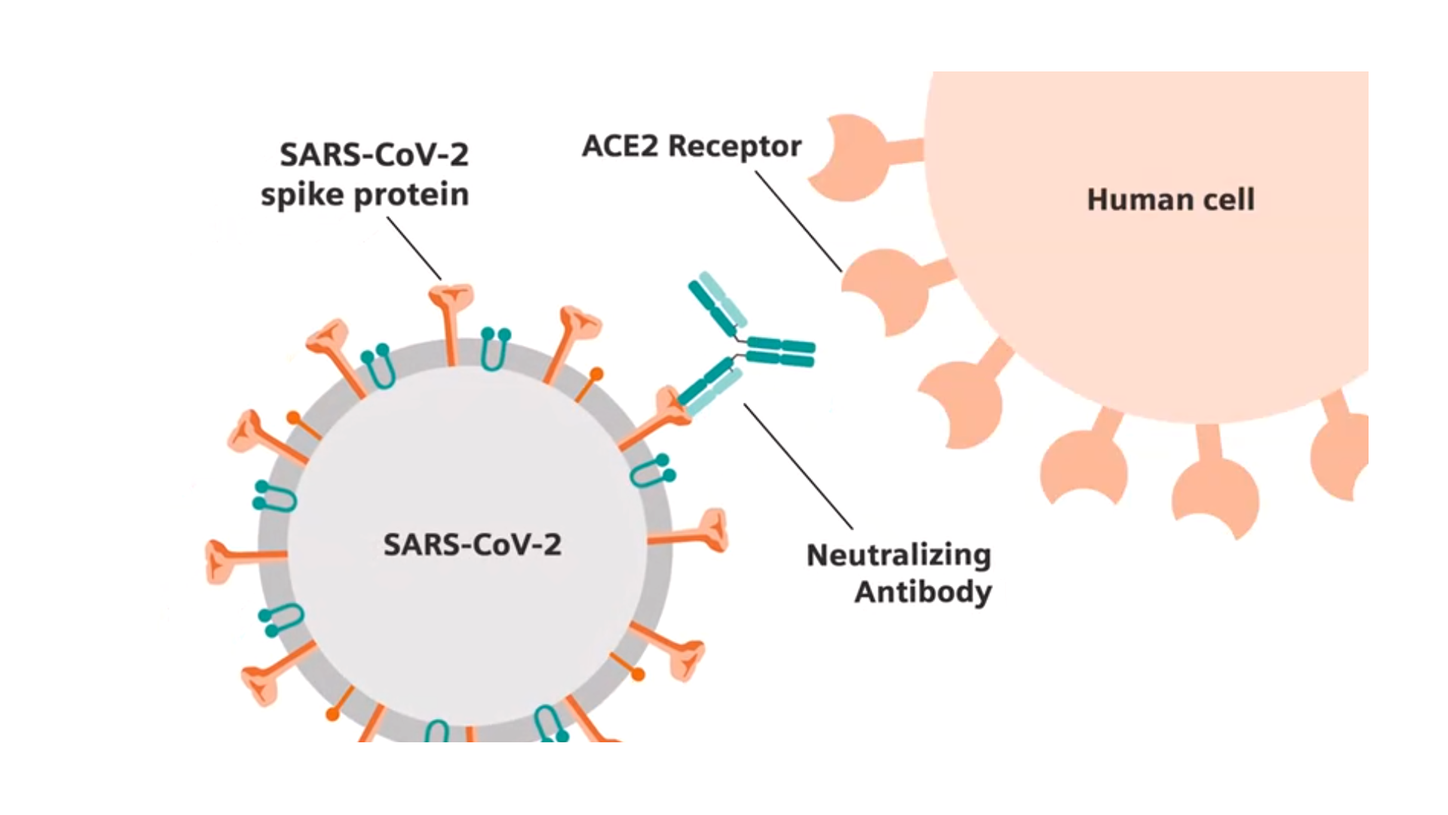
(3.1.3 Modes of Transmission) SARS-CoV-2 is the virus that causes the COVID 19. The virus uses it's SARS-CoV-2 spike protein to bind to the ACE2 Receptor on a human cell. Once bound, it is allowed to enter the host cell where it takes over the cell and uses it to mass produce more viruses. What is the role of the SARS-CoV-2 spike protein?
Correct!
It serves as the foreign antigen on the virus.
It serves as the antigen on the human cell.
It serves as the antibody that is produced by the human immune system.
It serves as the antibody on the virus.
Question 22
1 / 1 pts
(3.1.3 Modes of Transmission) Which type of immunity produces antibodies in response to a vaccine?
naturally acquired immunity
passive immunity
innate immunity
Correct!
artificially acquired immunity
Question 23
1 / 1 pts
(3.1.3 Modes of Transmission) In the picture below, what is the role of the antibody and how is it made?
The role of the antibody is to "eat" the virus, and antibodies are formed by T cells of the immune system.
The antibody is made by the virus and the antibody is used to trick the host cell into thinking it is a harmless protein trying to get into the host cell.
Correct!
The antibody is made by the immune system, and the antibody's role is to attach to foreign antigens located on the virus so that it is unable to bind to the host cell.
Antibodies are made by T cells and antibodies kill human cells.
Question 24
1 / 1 pts
(3.1.2 Agents of Disease) Histoplasmosis is an infection caused by breathing in spores found in bird and bat droppings. The infection is most commonly spread when these spores are inhaled after taking to the air, such as during demolition or cleanup projects. The infection is caused by a eukaryotic, microscopic, living, organism that can sometimes be in unicellular or multicellular form.
Soil contaminated by bird or bat droppings also can spread histoplasmosis, putting farmers and landscapers at a higher risk of the disease. In the United States, histoplasmosis commonly occurs in the Mississippi and Ohio River valleys, though it can occur in other areas, too.
Most people with histoplasmosis never develop symptoms and aren't aware they're infected. But for some people — primarily infants and those with compromised immune systems — histoplasmosis can be serious. Diagnosis may require a biopsy of the infected tissue where the tissue is viewed under the microscope. Treatments are available for even the most severe forms of histoplasmosis, usually in the form of some type of antifungal med.
Which type of pathogen is most likely the cause of this disease?
Correct!
fungus
prion
virus
bacteria
Question 25
1 / 1 pts
(3.1.2 Agents of Disease) What are helminths?
prions
Correct!
worms
bacteria
viruses
Question 26
1 / 1 pts
(3.1.5 Isolation) These are all types of what?

Correct!
elevation
gram stains
viruses
margins
Question 27
1 / 1 pts
(3.1.2 Agents of Disease) Mad cow disease is the common name for a disease affecting cattle that slowly destroys the brain and spinal cord. The human form, called variant Creutzfeldt-Jakob disease (vCJD), is a rare and fatal degenerative disorder that destroys the brain and spinal cord over time. The disease is caused by an abnormal protein. It usually takes four to six years from the time a cow is infected with the abnormal protein to shows symptoms of BSE. This is called the incubation period. During the incubation period, there is no way to tell that a cow has BSE by looking at it. Once a cow starts to show symptoms, it gets sicker and sicker until it dies, usually within two weeks to six months. There is no treatment for BSE and no vaccine to prevent it. Humans generally get the disease by eating the meat of an infected cow. Which type of pathogen is most likely the cause of this disease?
virus
helminth
Correct!
prion
bacteria
Question 28
1 / 1 pts
(3.1.6 Gram Stain) Gram negative bacteria stain pink.
Correct!
True
False
Question 29
1 / 1 pts
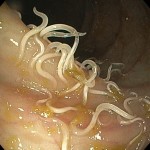
(3.1.2 Agents of Disease) Pinworms are small worms (parasites) that live in the digestive system of people, and are common in school-aged children. Pinworm eggs are spread directly from person to person. Children are infected when they touch something that has pinworm eggs and then put their fingers in their mouth. The eggs are swallowed and hatch in the small intestine in 1-2 months. The worms become adults while living in the colon. Female worms move to the child’s anal area, especially at night and deposit more eggs. This may cause a lot of itching. When the child scratches the itching anal area, the eggs can get under the child’s fingernails. These eggs can be transferred to other children, family members, and items in the house.
What is the best classification for this type of pathogen?
Correct!
helminth
virus
fungus
prion
Question 30
1 / 1 pts
(3.1.5 Isolation) Certain bacterial species are capable of causing disease such as staphylococcus aureus. It can cause pneumonia and skin infections in people. What is wrong with the scientific name of this particular species of bacteria?
The scientific name is written just as it should be written.
The species name should be capitalized.
Both the genus and species name should be capitalized and either underlined or italicized.
Correct!
The genus name should be capitalized and the entire name should either be italicized or underlined.
Question 31
1 / 1 pts
(3.1.2 Agents of Disease) Which of the following is NOT a way bacteria are beneficial to us?
they make some of the vitamins we need to stay healthy
their presence helps to keep disease causing bacteria populations at bay
they help us digest some of our food
Correct!
they produce energy for us in the form of ATP
Question 32
1 / 1 pts
(3.1.5 Isolation) What is the purpose for bacterial streaking?
To increase the number of bacteria undergoing binary fission
To create more species of bacteria
To kill off any unwanted bacteria
Correct!
To isolate individual colonies for identification purposes
Question 33
1 / 1 pts
(3.1.1 Outbreak) The Spanish flu, the deadliest in history, infected an estimated 500 million people worldwide—about one-third of the planet’s population—and killed an estimated 20 million to 50 million victims, including some 675,000 Americans. The 1918 flu was first observed in Europe, the United States and parts of Asia before swiftly spreading around the world. This disease is best classified as which type?
sporadic
epidemic
outbreak
Correct!
pandemic
Question 34
1 / 1 pts
(3.1.6 Gram Stain) Which shape of bacteria is rod shaped?
Correct!
bacillus
none of these
coccus
spirillum
Question 35
1 / 1 pts
(3.1.6 Gram Stain) Put the Gram Stain procedure in the proper order.
1. Safranin
2. Ethyl Alcohol
3. Crystal Violet
4. Iodine
1, 2, 3, 4
3, 2, 4, 1
Correct!
3, 4, 2, 1
2, 4, 3, 1
Question 36
1 / 1 pts
(3.1.3 Modes of Transmission) What is the R-naught value?
Correct!
It is the expected number of new infections that come about from one infected person.
It is the color of the bacteria cell.
It is the number of pathogens required to cause an infection.
It is the number of antibodies produced through naturally acquired immunity.
Question 37
1 / 1 pts
(3.1.6 Gram Stain) What is the morphology and arrangement of this type of bacteria?
spirilla
streptococci
tetrad
Correct!
diplococci
Question 38
1 / 1 pts
(3.1.6 Gram Stain) The Gram stain is a test that differentiates bacteria into one of two groups based on the composition of their cell wall. What are bacterial cell walls composed of?
cellulose
glycogen
phospholipids
Correct!
peptidoglycan
Question 39
1 / 1 pts
(3.1.3 Modes of Transmission) What do B cells make?
Correct!
antiBodies
havoc
T cells
prions
Question 40
1 / 1 pts
(3.1.6 Gram Stain) Type of bacteria?

Gram positive streptobacilli
Gram negative staphlobacilli
Gram negative diplococci
Correct!
Gram negative spirilla
Question 41
1 / 1 pts
(3.1.1 Outbreak) On 7 February 2021, the Democratic Republic of the Congo declared an outbreak of Ebola in North Kivu province, in the country's northeast. This marks the 12th Ebola outbreak in the DRC, with the first being in 1976. So far there has been 11 confirmed cases and 6 deaths. Which type of specialist is trained in helping to curb and stop these outbreaks?
Paleontologists
Cardiologists
Anthropologists
Correct!
Epidemiologists
Question 42
1 / 1 pts
(3.1.2 Agents of Disease) These two pathogens are not considered alive.
Prions and protists
Correct!
Prions and Viruses
Helminths and Fungi
Bacteria and protists
Question 43
1 / 1 pts
(3.1.3 Modes of Transmission) Joni is a 40 year old female who has been suffering from bouts of joint pain, stiffness, and swelling including fatigue, fever, and headaches for several years now. She finally found a doctor that has determined that she has Lupus. Her doctor explained to her that Lupus is a disease in which her own immune system attacks her body's cells/tissues/and organs. Symptoms vary from person to person with this type of disease, but Joni is just relieved to finally have an answer so she can start to manage and treat the disease. Which type of disease is Lupus best classified as?
Artificially Acquired
Correct!
Autoimmune
Passively Innate
Infectious
Question 44
1 / 1 pts
(3.1.3 Modes of Transmission) Innate immunity
I. is with us from birth
II. is acquired after a person either gets a pathogen naturally or artificially
III. is often times referred to as our first line of defense
IV. includes B and T cells
V. is responsible for producing antibodies
VI. includes our skin, mucous, earwax, and tears
Correct!
I, III, and VI only
V only
II, IV, and V only
I, II, and IV only
Question 45
0 / 1 pts
(3.1.3 Modes of Transmission) Which of the following viruses are the most contagious?
You Answered
Mycobacterium tuberculosis
Correct Answer
Ebola
E. coli
Influenza A
Question 46
1 / 1 pts
(3.1.1 Outbreak) The varicella-zoster virus causes chickenpox in the United States. It causes an itchy rash with small, fluid-filled blisters. Since this disease is common and is constantly present at a low level in a population, it can be classified as which type of disease?
acute
epidemic
pandemic
Correct!
endemic
Question 47
1 / 1 pts
(3.1.2 Agents of Disease) Which of the following is characteristic of a virus?
I. They are cellular.
II. They are treatable with antibiotics.
III. The best type of prevention and treatment includes vaccination.
IV. They are made up of protein and either DNA or RNA.
V. Examples include Mycobacterium tuberculosis and Bordetella pertussis.
VI. Examples include HIV, Measles, and Polio.
I, II, and VI only
Correct!
III, IV, and VI only
II, IV, and VI only
I, III, and V only
Question 48
1 / 1 pts
(3.1.2 Agents of Disease) What is the best treatment/prevention we have against viruses?
Anti-fungals
Correct!
Vaccines
We don't have any type of treatment/prevention for viruses.
Antibiotics
Question 49
1 / 1 pts
(3.1.3 Modes of Transmission) Herd immunity
I. reduces the R-naught value
II. protects those who do not have immunity
III. is achieved through naturally acquired immunity and artificially acquired immunity
IV. increases the R-naught value
V. is never a good idea as it prolongs the time it takes for pandemics to end
I and II only
Correct!
I, II, and III only
I, II, III, IV, and V
IV and V only
Question 50
1 / 1 pts
(3.1.2 Agents of Disease) These are not considered alive and are made of two main components--protein and nucleic acid (either DNA or RNA)?
prion
helminth
Correct!
virus
bacteria