Psychology Unit 3 Redo (copy)
3.1 Themes and Methods in Developmental Psychology
Research methods in developmental psychology
Cross-sectional vs longitudinal designs
Cross-sectional designs compare individuals of different ages at a single point in time
Researchers might assess memory skills in groups of 20, 40, and 60-year-olds to see how recall changes with age
Provides information about age differences but cannot determine if changes are truly due to development
Longitudinal designs track the same individuals repeatedly over an extended period
A study might follow a cohort of children from age 5 to 15, measuring their reading abilities each year
Reveals developmental changes within individuals but is time-consuming and subject to participant dropout
Using both cross-sectional and longitudinal methods gives researchers a comprehensive understanding of how people change across the lifespan
Key Thematic Issues:
Developmental Psychology
Focuses on both the chronological order of development and thematic issues across the lifespan.
Stability vs. Change Over Time:
Stability: Refers to traits and characteristics that remain consistent throughout a person’s life, such as temperament or personality traits.
Change: Refers to how individuals can undergo significant transformations in behavior, abilities, or characteristics as they age, influenced by experiences and environmental factors.
Nature vs. Nurture:
Nature: The role of genetics and inherited traits in shaping an individual’s development. This includes biological predispositions that affect physical and psychological traits.
Nurture: The influence of the environment, including upbringing, culture, and life experiences, on development. This explores how external factors shape behavior and abilities.
Continuous vs. Discontinuous Stages of Development:
Continuous Development: The idea that development is a gradual, ongoing process without clear-cut stages. It suggests that changes occur steadily over time.
Discontinuous Development: The belief that development occurs in distinct stages, with each stage representing a different type of behavior or way of thinking. This suggests that individuals go through specific stages with noticeable shifts.
Chronological vs thematic development
Developmental psychology studies how individuals grow, change, and maintain stability throughout their lives.
Chronological development emphasizes the sequence and timing of changes as people age, with milestones marking key events at specific ages, like walking or talking.
Thematic development focuses on overarching patterns and issues that extend across life stages. Major themes explored by developmental psychologists include stability and change, nature vs. nurture, and continuous vs. discontinuous development.
Critical periods are specific phases in development when certain experiences or stimuli are particularly influential on future growth, such as language acquisition. Plasticity refers to the brain’s capacity to change and adapt in response to experiences, especially during sensitive periods in early development.
3.2 Physical Development Across the Lifespan
Physical development before birth
Stages of Development
Prenatal development occurs from conception to birth and includes the germinal, embryonic, and fetal stages
The germinal stage (first two weeks) involves rapid cell division and implantation of the fertilized egg in the uterus
The embryonic stage (weeks 3-8) is characterized by the development of major organs and systems
The fetal stage (week 9 to birth) involves rapid growth and further development of organs and systems
Infancy and toddlerhood (birth to age 2) are marked by rapid physical growth, development of basic motor skills, and the formation of attachment relationships
Early childhood (ages 2-6) is characterized by the development of language, social skills, and self-regulation
Middle childhood (ages 6-11) involves the development of logical thinking, social comparison, and increased independence
Adolescence (ages 11-18) is a period of significant physical, cognitive, and social-emotional changes, including puberty, abstract thinking, and identity formation
Early adulthood (ages 18-40) is characterized by the establishment of intimate relationships, career development, and possibly parenthood
Middle adulthood (ages 40-65) involves continued personal and professional growth, as well as potential challenges (midlife crisis, caring for aging parents)
Late adulthood (ages 65+) is marked by retirement, reflection on life experiences, and adaptation to physical and cognitive changes associated with aging.
Prenatal influences on development
Teratogens are substances that can harm the developing fetus and lead to birth defects or developmental issues.
Includes alcohol, drugs, certain medications, and environmental toxins
Exposure during critical periods of development can have the most severe impacts
Illegal Drugs: Cocaine and other drugs can cause addiction in the baby.
Legal Drugs: Even some prescription or over-the-counter drugs can harm the fetus.
Fetal Alcohol Syndrome (FAS): Alcohol consumption during pregnancy can lead to physical and cognitive impairments.
Smoking: Reduces oxygen and nutrients to the fetus, leading to low birth weight and potential brain damage.
Maternal illnesses like rubella (German measles) and sexually transmitted infections can cross the placenta and harm the developing fetus
Genetic mutations, either inherited or spontaneous, can cause physical and cognitive abnormalities
Down syndrome results from an extra copy of chromosome 21
Sickle cell anemia is caused by a mutation in the hemoglobin gene
Hormonal imbalances in the mother can affect fetal development
Excess androgens can lead to masculinization of female fetuses
Insufficient thyroid hormone can impair brain development
Environmental factors such as poor nutrition, lack of prenatal care, and exposure to toxins can negatively impact fetal growth and development
Physical development in infancy and childhood
Motor skill development
Gross motor skills involve large muscle movements like crawling, walking, and running
Typically develop in a predictable sequence, with most children walking by 12-18 months
Fine motor skills require precise, coordinated movements of the hands and fingers
Grasping, manipulating objects, and drawing are examples of fine motor skills
Develop more slowly than gross motor skills, with refinement continuing into childhood
The timing of motor skill development can vary among children
Factors like genetics, nutrition, and opportunities for practice can influence the rate of development
Mastering motor skills allows children to explore their environment, engage in play, and become more independent.
Infant reflexes
Reflexes are automatic, involuntary responses to specific stimuli
Present at birth and help infants survive and interact with their environment
The rooting reflex causes infants to turn their head toward a touch on the cheek and begin sucking.
Helps infants locate and latch onto a nipple for feeding
Other examples of infant reflexes include the Moro (startle) reflex, grasping reflex, and stepping reflex
The presence and strength of these reflexes can indicate healthy neurological development
Absence or persistence of certain reflexes beyond the expected age may signal developmental issues
Visual cliff experiment
Developed by Eleanor Gibson and Richard Walk to study depth perception in infants
Apparatus consists of a raised platform with a clear glass surface extending over a drop-off
Checkered pattern placed beneath the glass creates the illusion of a cliff
Infants are placed on the shallow side and encouraged to crawl to their caregivers on the "deep" side
Most infants hesitate or refuse to cross the visual cliff, suggesting an innate understanding of depth
Demonstrates that depth perception emerges early in life, typically by 6-8 months of age
Innovative method for assessing infant behavior and perceptual abilities without requiring verbal responses
Critical periods and imprinting
Critical periods are specific time windows during development when the brain is highly sensitive to certain experiences
Exposure or lack of exposure during these periods can have lasting effects on development
Language acquisition is a prime example of a critical period in human development
Children who are not exposed to language during early childhood may struggle to develop normal language skills later in life
Imprinting is a rapid, instinctive learning process that occurs during a critical period in some animal species
Young animals, particularly birds, form a strong attachment to the first moving object they encounter (usually a parent)
Allows them to quickly learn to follow and identify their caregivers, ensuring their survival
Konrad Lorenz famously demonstrated imprinting in geese, showing that goslings would follow him if he was the first object they saw after hatching.
Physical development in adolescence
Puberty and sexual maturation
Puberty marks the transition from childhood to adulthood and is triggered by hormonal changes
Begins with the activation of the hypothalamic-pituitary-gonadal (HPG) axis
Leads to the production of sex hormones (testosterone in males, estrogen in females)
The adolescent growth spurt is a rapid increase in height and weight that occurs during puberty
Typically starts earlier in females (around age 10) than in males (around age 12)
Accompanied by changes in body composition and proportions
Primary sex characteristics are the reproductive organs that develop during puberty
In males, this includes the enlargement of the testes and penis, and the production of sperm (spermarche)
In females, the ovaries and uterus mature, and menstruation begins (menarche)
Secondary sex characteristics are physical features that distinguish males and females but are not directly involved in reproduction
Examples include breast development in females and facial hair growth in males
Also includes changes in body hair, voice, and skin
Physical development in adulthood
Age-related physical changes
Adulthood is the longest stage of human development, spanning from the end of adolescence to the end of life
Reproductive ability generally peaks in early adulthood and then declines with age
Menopause, the cessation of menstruation, typically occurs in females around age 50
Male fertility declines more gradually, but testosterone levels and sperm quality decrease with age
Mobility and flexibility tend to decrease in older adulthood due to factors like muscle loss and joint changes
Regular exercise and stretching can help maintain physical function
Reaction time slows down with age, particularly for complex tasks
Older adults may take longer to respond to stimuli and make decisions
Visual and auditory acuity often decline in later life
Presbyopia (age-related farsightedness) and hearing loss are common in older adults
Regular check-ups and corrective devices (glasses, hearing aids) can help mitigate these changes
While some physical declines are inevitable, maintaining a healthy lifestyle can help preserve function and quality of life in older adulthood
3.3 Gender and Sexual Orientation
Gender refers to the social and cultural roles associated with being male, female, or non-binary, while sex is biologically based (male, female).
Sexual orientation refers to an individual's pattern of physical, romantic, or emotional attraction to others.
Common categories of sexual orientation include:
Heterosexual: attracted to the opposite gender.
Homosexual: attracted to the same gender.
Bisexual: attracted to both genders.
Pansexual: attracted to individuals regardless of gender.
Asexual: lacks sexual attraction to others.
Influencing factors:
A complex interaction of biological, environmental, and social factors.
Exact causes are not fully understood.
Development:
Sexual orientation often becomes evident in adolescence or young adulthood.
It is generally a stable trait for many individuals, though some may experience fluidity in their attractions over time.
Influences on Gender Identity and Sexual Orientation
Biological Factors:
Genetics: Studies suggest a genetic component in both gender identity and sexual orientation. Variations in certain genes and their interactions with environmental factors may influence how individuals experience and express their gender and sexual orientation.
Hormonal Influences: Prenatal hormone exposure is thought to play a role in shaping gender identity and sexual orientation. Differences in levels of hormones like testosterone and estrogen during fetal development may affect brain structures linked to gender and sexual preference.
Psychological Factors:
Individual Experiences: Personal life experiences, including relationships with parents, peers, and role models, can impact one's understanding and acceptance of their gender identity and sexual orientation. For example, supportive family environments may foster a secure sense of identity, while adverse experiences may cause confusion or internalized stigma.
Self-Perception and Cognition: The way individuals perceive and process their own gender and sexuality, including self-reflection and self-discovery, is influenced by both internal beliefs and external feedback. This psychological component helps individuals form a coherent sense of their identity and navigate their orientation within a broader social context.
Social Influences:
Cultural Norms: Societies have different beliefs and expectations regarding gender and sexuality. Cultural norms influence acceptable gender expressions, the acceptance of diverse sexual orientations, and the resources available for those exploring their identities.
Socialization: From a young age, individuals are socialized into gender roles, often influenced by family, media, religion, and education. These influences can either support or restrict one’s exploration of gender identity and sexual orientation.
Peer Influence and Social Acceptance: Peer acceptance or rejection can strongly influence one’s comfort in expressing gender identity and sexual orientation. Environments that are accepting and inclusive may encourage individuals to explore their identities, while judgmental settings may cause repression or secrecy.
Gender Roles and Stereotypes
Societal Expectations:
Norms for Gendered Behavior: Societies often promote specific behaviors for men and women, such as expectations for men to be assertive and women to be nurturing. These norms can shape how individuals express themselves, influencing decisions about appearance, hobbies, and career paths.
Roles in Family and Career: Traditional gender roles often dictate specific family roles, with women expected to take on more caregiving responsibilities and men expected to be the primary earners. These roles can limit personal choices and affect self-esteem, especially if individuals feel constrained by these expectations.
Impact on Self-Perception and Identity:
Internalization of Stereotypes: When individuals internalize gender stereotypes, it can influence their self-concept and aspirations. For example, a woman who internalizes the stereotype that “women are less capable in science” may feel discouraged from pursuing STEM fields, even if she has a strong interest.
Gender Role Conflict: When societal expectations clash with personal identity, individuals may experience gender role conflict. For example, a man who feels societal pressure to avoid showing vulnerability may struggle with expressing his emotions, potentially affecting mental health and relationships.
3.4 Cognitive Development Across the Lifespan
Piaget's theory of cognitive development proposes four stages: sensorimotor, preoperational, concrete operational, and formal operational
Core Idea: Children actively construct their understanding of the world through interactions with their environment.
The sensorimotor stage (birth to age 2) involves the development of object permanence(The understanding that items are still there if they are out of sight) and basic problem-solving skills
The preoperational stage (ages 2-7) is characterized by the emergence of symbolic thinking (Pretend play), egocentrism, and animism (Giving traits to items)
The concrete operational stage (ages 7-11) involves the development of logical thinking, conservation, and reversibility (Conservation and reversibility: Conservation is the understanding that objects can change in size, volume, or appearance, but essentially remain the same. Reversibility means that some things that have changed can return to their original state, while others cannot.)
Classification and Seriation and less egocentric
The formal operational stage (ages 11+) is marked by the ability to think abstractly, reason hypothetically, and consider multiple perspectives
Piaget's Influence: His stage theory remains influential, but modern research suggests:
Development is a continuous process, not always in distinct stages.
Children may achieve certain cognitive skills earlier than Piaget proposed.
Formal logic is just one aspect of cognition; other forms of thinking are important too.
Vygotsky’s Theory of Cognitive Development
Influence of Social Interactions:
Role of Social Environment: Vygotsky emphasized that cognitive development is largely a social process. Children learn and grow by interacting with more knowledgeable others, such as parents, teachers, and peers. These social interactions provide the language, tools, and problem-solving strategies necessary for cognitive growth.
Importance of Language: Language plays a crucial role in Vygotsky's theory as it enables thought and self-regulation. Through dialogues and conversations, children internalize language, which helps them organize and direct their own thinking. This internalized language, or "inner speech," becomes a key tool for cognitive processing.
Scaffolding: Scaffolding is the support provided by an adult or peer that helps a child perform a task just beyond their current ability. As the child becomes more competent, the support is gradually removed. This process enables children to gradually acquire skills and confidence to perform tasks independently.
Cultural Context:
Role of Culture in Learning: Vygotsky believed that cognitive development is heavily influenced by the cultural context. Cultural values, beliefs, and tools (like language, symbols, and traditions) shape the way children think and learn. Different cultures emphasize various skills and knowledge, which in turn influence the areas in which children develop competence.
Transmission of Knowledge: In every culture, specific knowledge and skills are passed down to the next generation, often through guided interactions. For example, a child raised in a technologically advanced culture might be more proficient in using digital tools than a child from a less technologically-oriented culture.
Zone of Proximal Development (ZPD):
Definition: The Zone of Proximal Development is the gap between what a child can do independently and what they can achieve with assistance. Tasks within the ZPD are those that are too challenging for a child to perform alone but can be accomplished with guidance from a skilled individual.
Application in Education: The concept of ZPD is widely applied in educational settings, where teachers provide support tailored to each child’s current level of ability. By working within a child’s ZPD, teachers encourage children to reach new cognitive levels without overwhelming them.
Role of Collaborative Learning: Vygotsky believed that collaborative learning, where children work together on tasks within their ZPD, is particularly effective. Through collaboration, children can exchange ideas, offer support, and solve problems together, which enhances cognitive growth.
Information Processing Theory of Cognitive Development
Focus on Cognitive Skills:
Memory Development: Information processing theory examines how memory improves as children grow. Over time, children develop greater working memory capacity, enabling them to retain and manipulate more information simultaneously. This improvement in memory facilitates more complex problem-solving and learning.
Attention: As children mature, their ability to focus and sustain attention increases. They become better at selective attention, filtering out irrelevant information, and focusing on tasks. This gradual improvement in attentional control is essential for academic and everyday tasks.
Problem-Solving Abilities: Children’s problem-solving skills improve through practice and experience. Information processing theory suggests that as cognitive processes such as memory retrieval, planning, and organizing information become more efficient, children can approach problems in more sophisticated ways.
Gradual Cognitive Improvements:
Continuous Development: Unlike stage-based theories, information processing theory sees cognitive development as a continuous, gradual process. Skills and abilities improve incrementally over time rather than through distinct developmental stages.
Speed of Processing: With age, children process information more quickly, which allows them to complete tasks more efficiently. Faster processing speed also means that children can take on more complex tasks and handle multiple pieces of information at once.
Development of Strategies: Children gradually learn and apply strategies for encoding, storing, and retrieving information. For example, they may learn mnemonic devices to improve memory or develop problem-solving strategies like trial and error, planning, or analyzing parts of a problem.
Application in Education:
Instructional Strategies: Information processing theory informs instructional practices that break down complex tasks into smaller, manageable steps. This approach helps children improve skills at a pace suited to their current processing abilities.
Role of Practice and Repetition: Repeated practice is essential for the improvement of cognitive skills. For example, children may improve their reading skills by practicing decoding, recognizing patterns, and expanding their vocabulary through repeated exposure.
Self-Monitoring and Metacognition: Over time, children develop metacognitive skills, or the ability to think about their own thinking. Metacognition allows children to monitor their progress, adjust their strategies, and evaluate their success, leading to more effective learning and problem-solving skills.
Late Adulthood (65+ years)
Cognitive Changes:
Fluid Intelligence (declines): Ability to reason and solve new problems.
Crystallized Intelligence (stable): Accumulated knowledge and skills.
Memory:
Slower processing speed affects memory retrieval.
Episodic memory (personal events) is most affected by age.
Staying mentally and physically active can help preserve memory.
Dementia: Loss of cognitive functioning — thinking, remembering, and reasoning — to such an extent that it interferes with a person's daily life and activities.
3.5 Communication and Language Development
Language Development
Building Blocks of Language:
Phonemes: Smallest distinctive sound units.
Morphemes: Smallest units that carry meaning (words, prefixes, suffixes).
Words: Meaningful units.
Phrases: Two or more words combined.
Sentences: Many words combined with proper grammar.
Language Rules:
Grammar: The system of rules governing language structure.
Semantics: Rules for understanding meaning.
Syntax: Rules for arranging words into grammatically correct sentences
Language Acquisition Stages:
Rapid Language Acquisition: Children typically learn language at an astonishing pace.
Babbling Stage: Repetition of sounds, typically around 6-8 months.
One-Word Stage: Single words used to communicate, around age 1.
Two-Word Stage: Basic sentence structure, typically around age 2.
Complex Speech: Expands vocabulary and grammar over time.
Theories of Language Development
Chomsky’s Language Acquisition Device (LAD)
Innate Language Mechanism:
Language Acquisition Device (LAD): Noam Chomsky proposed that humans are born with an innate biological mechanism called the Language Acquisition Device, which allows them to acquire language. According to Chomsky, the LAD is a mental structure that provides an inherent understanding of the basic principles of language, enabling children to rapidly grasp language syntax and grammar.
Universal Grammar: Chomsky introduced the concept of universal grammar, a set of structural rules common to all languages. He argued that this innate grammar framework enables children to learn any language to which they are exposed, explaining why children can acquire language quickly and without explicit instruction.
Evidence from Language Development: Support for Chomsky’s theory includes children’s ability to create novel sentences they have never heard before, as well as their ability to recognize grammatical errors in sentences. This suggests an internalized understanding of language rules beyond mere imitation.
Behaviorist Views on Language Development
Role of Reinforcement:
Language as a Learned Behavior: Behaviorist theories, notably proposed by B.F. Skinner, suggest that language is acquired through reinforcement and conditioning. According to this view, children learn language by imitating sounds, words, and sentences they hear from caregivers and are reinforced (through praise or attention) when they use language correctly.
Imitation and Repetition: Children often imitate words and phrases they hear from adults, and through repeated practice and reinforcement, they learn correct language use. For example, if a child says "milk" when asking for milk, they may receive positive feedback, which reinforces the behavior and encourages them to continue using that word.
Limitations of Behaviorist Approach: While reinforcement and imitation play a role in language learning, critics argue that behaviorism cannot fully explain language development. For instance, children can construct sentences they have never heard before, which suggests they are not solely relying on imitation and reinforcement.
Interactionist Perspectives
Combination of Biological and Environmental Factors:
Biological Preparedness and Social Interaction: Interactionist theories propose that language development results from a combination of biological predispositions and environmental experiences. While children may have an innate capacity for language, they need rich social interactions to fully develop their language skills.
Social and Cultural Influences: Language is influenced by the social and cultural context in which a child is raised. Interactionists emphasize the importance of engaging in conversations, using language in meaningful contexts, and receiving feedback from caregivers, all of which enhance a child’s language development.
Vygotsky’s Role of Social Interaction: Lev Vygotsky’s ideas also support interactionist views, suggesting that children develop language through collaborative activities and interaction with more knowledgeable others. This shared activity helps them learn vocabulary, grammar, and syntax through practical use in social settings.
Joint attention, or shared focus between a child and caregiver, facilitates language learning
Parentese, or child-directed speech, is characterized by simplified grammar, exaggerated intonation, and repetition
Critical Period for Language Development
Sensitive Period in Early Childhood:
Optimal Window for Language Acquisition: Research indicates that there are critical or sensitive periods in early childhood when language learning is most effective. Children are particularly adept at acquiring language from birth until about puberty, and this period is seen as the prime time for developing language proficiency.
Neurological Basis: During the critical period, the brain is more receptive to language input, and neural pathways for language are more adaptable. As children grow older, this flexibility declines, making it harder to achieve native-like fluency in a new language learned later in life.
Evidence from Language Deprivation Cases: Studies on children who have been deprived of language exposure during early childhood, such as cases of extreme isolation, suggest that language development is severely limited when the critical period is missed. These findings support the theory that there is an optimal period for acquiring language skills.
Implications for Bilingualism: The critical period concept also explains why children who learn multiple languages early in life can achieve native-like proficiency in both, while adults often struggle to master new languages. Early language exposure can lead to better fluency and pronunciation compared to language learned later in life.
The Connection Between Language and Thought
Linguistic Determinism (Whorf's Hypothesis): Language strongly determines how we think and perceive the world.
Language's Influence on Thought: Having words for concepts helps us think about them more clearly. Example: Distinguishing between shades of blue if your language has different words for them.
Thinking Beyond Language: We can also think in images and perform actions without words (like riding a bike).
The Brain's Role: Brain imaging shows that imagining an activity activates similar brain regions as actually performing it.
3.6 Social and Emotional Development
Ecological Systems Theory (Urie Bronfenbrenner)
This theory explains how a child’s development is influenced by different types of environmental systems.
Five Systems in the Theory
Microsystem:
Involves groups and people who have direct contact with the individual, such as family, friends, teachers, and peers.
This is the most immediate environment influencing the individual’s daily life and behavior.
Mesosystem:
Refers to the relationships and interactions between different groups in the microsystem.
For example, the connection between a child’s home life and their school experience, such as how parental involvement in education can impact a child’s academic success.
Exosystem:
Includes factors that indirectly affect the individual’s life, even though they do not have direct contact with them.
Examples include a parent’s workplace policies or community services that influence the individual’s environment and experiences.
Macrosystem:
Encompasses the broader cultural and societal influences that affect an individual and those around them.
This includes cultural values, laws, customs, and societal norms that shape the individual’s development and worldview.
Chronosystem:
Represents the timing of events and transitions in an individual’s life, as well as the socio-historical context.
This includes changes over time, such as how growing up in a particular era (like during a technological boom or economic recession) can impact an individual’s development and life experiences.

Diana Baumrind’s Parenting Styles
Baumrind identified four main types of parenting based on levels of demand (rules, expectations) and responsiveness (warmth, support).
1. Authoritative (Best Style)
High demand, high responsiveness
Sets rules but is loving and supportive
Encourages independence and communication
Result: Confident, responsible, and happy children
2. Authoritarian
High demand, low responsiveness
Strict, expects obedience, little warmth
"Because I said so" type of parenting
Result: Obedient but less happy, may have low self-esteem
3. Permissive
Low demand, high responsiveness
Very loving but sets few rules
Acts more like a friend than a parent
Result: Impulsive behavior, lacks self-discipline
4. Neglectful / Uninvolved
Low demand, low responsiveness
Uninvolved in the child’s life, provides only basic needs
Little guidance, attention, or support
Result: Low self-esteem, poor social skills
Attachment
Attachment: The emotional bond between a child and their caregiver.
Harry Harlow's Monkey Experiments: Demonstrated the importance of contact comfort (physical closeness and warmth) over food in forming attachments.
Stranger Anxiety: The fear of strangers that infants commonly display, starting around 8 months old.
Bowlby's Attachment Theory
Role of Secure Bond:
Importance of Early Bonds: John Bowlby, the founder of attachment theory, emphasized that the emotional bond between a child and their primary caregiver (often the mother) is crucial for healthy psychological development. Bowlby argued that this attachment serves as a secure base, providing the child with safety, comfort, and the confidence to explore their environment.
Biological Basis: Bowlby believed attachment is biologically rooted. He argued that infants are born with innate behaviors, such as crying and smiling, that encourage closeness with the caregiver. This bond enhances the child’s chances of survival, as a secure attachment ensures that their physical and emotional needs are met.
Impact on Later Relationships: Bowlby suggested that the quality of early attachment relationships influences future social relationships. A secure attachment in childhood often leads to healthier relationships in adulthood, while insecure attachments may result in difficulties in trust and intimacy.
Ainsworth’s Strange Situation and Attachment Styles
Strange Situation Experiment:
Observational Study: Mary Ainsworth expanded on Bowlby’s work by conducting the Strange Situation experiment, which observed infants’ reactions to a series of separations and reunions with their caregiver. This experiment helped identify different patterns of attachment behavior.
Types of Attachment Styles:
Secure Attachment: Children with secure attachment show distress when the caregiver leaves but are quickly comforted upon their return. These children use the caregiver as a secure base, showing confidence in exploring their surroundings.
Avoidant Attachment: Children with avoidant attachment do not show strong distress when the caregiver leaves and may avoid the caregiver upon return. They appear emotionally distant and are less likely to seek comfort from the caregiver.
Anxious/Ambivalent Attachment: Children with anxious or ambivalent attachment display intense distress when the caregiver leaves and are not easily comforted upon their return. They may cling to the caregiver but also show resistance, reflecting uncertainty and insecurity.
"Fearful-avoidant attachment," also known as disorganized attachment, is a type of insecure attachment characterized by a desire for closeness and intimacy, coupled with a deep-seated fear of rejection and vulnerability, leading to a push-pull dynamic in relationships.
Long-Term Implications: These attachment styles can have long-term effects on personality, self-esteem, and relationships. Securely attached children tend to develop stronger social skills, while those with insecure attachments may struggle with trust and emotional intimacy in future relationships.
Erikson’s Psychosocial Stages
Stage-Based Development:
Eight Psychosocial Stages: Erik Erikson proposed eight stages of psychosocial development, each characterized by a specific challenge or "crisis" that individuals must resolve to develop a healthy personality. Successfully overcoming each stage's challenge contributes to positive psychological traits, while failure to do so may lead to difficulties in later stages.
Stages and Key Challenges:
Trust vs. Mistrust (Infancy): In the first stage, infants develop a sense of trust when caregivers are consistent and responsive to their needs. Successful resolution leads to a basic sense of safety and trust in the world, while failure may result in mistrust and insecurity.
Autonomy vs. Shame and Doubt (Toddlerhood): As toddlers begin to explore their independence, they need supportive guidance to develop autonomy. Overly strict or controlling parenting may lead to feelings of shame and self-doubt, while supportive guidance fosters confidence and self-reliance.
Initiative vs. Guilt (Preschool): In this stage, children take initiative in their actions and decision-making. Encouragement helps them develop leadership and confidence, while criticism or discouragement can lead to guilt and a reluctance to take initiative.
Industry vs. Inferiority (School Age): Children develop competence and self-confidence by mastering skills and tasks. If they experience repeated failure or criticism, they may feel inferior and doubt their abilities, affecting self-esteem.
Identity vs. Role Confusion (Adolescence): During adolescence, individuals explore their personal identity and beliefs. Successful resolution leads to a strong sense of self, while unresolved questions about identity may lead to confusion about one's place in society.
Intimacy vs. Isolation (Young Adulthood): This stage focuses on developing close, committed relationships. Those with a secure sense of self are more likely to form healthy relationships, while individuals with unresolved issues from earlier stages may struggle with isolation.
Generativity vs. Stagnation (Middle Adulthood): Adults in this stage seek to contribute to society and support the next generation. Failure to achieve a sense of purpose and productivity may lead to feelings of stagnation.
Integrity vs. Despair (Late Adulthood): In the final stage, individuals reflect on their lives. A sense of satisfaction and integrity leads to peace, while regret and a feeling of missed opportunities may result in despair.
Self-concept refers to an individual's beliefs, attitudes, and perceptions about themselves, which develop through social interactions and self-reflection
Emotional regulation involves the ability to manage and express emotions appropriately, which develops through modeling and support from caregivers
Development of Emotional Control:
Managing Emotions Over Time: Emotional regulation involves learning to recognize, express, and control emotions appropriately. This skill develops gradually, beginning in early childhood as children learn to cope with frustration, disappointment, and excitement.
Influence of Attachment and Socialization: A secure attachment fosters a sense of safety that can make it easier for children to regulate their emotions. Additionally, caregivers play a crucial role by modeling appropriate emotional responses and teaching children techniques for managing their feelings.
Empathy and Social Understanding:
Developing Empathy: Emotional regulation also includes the development of empathy—the ability to understand and respond to the feelings of others. As children grow, they learn to recognize emotions in others and respond with compassion, which is essential for forming healthy interpersonal relationships.
Social Competence: Emotional regulation is closely linked to social competence, or the ability to interact effectively with others. Children who learn to regulate their emotions are often better equipped to handle social challenges, build friendships, and resolve conflicts.
Importance for Interpersonal Relationships:
Healthy Relationships: Effective emotional regulation is essential for healthy relationships across the lifespan. It enables individuals to communicate openly, handle conflicts constructively, and offer support to others.
Long-Term Psychological Health: Poor emotional regulation can lead to issues such as anxiety, depression, and difficulty in relationships. By contrast, individuals who develop strong emotional regulation skills often experience greater resilience, mental well-being, and life satisfaction.
Moral development, as described by Kohlberg, progresses from a focus on obedience and punishment to an understanding of universal ethical principles
The preconventional level (ages 2-9) is characterized by a focus on self-interest and avoiding punishment
The conventional level (ages 9-20) involves conformity to social norms and expectations
The postconventional level (ages 20+) is marked by the development of autonomous moral reasoning based on universal principles
Social cognition involves the ability to understand and interpret the thoughts, feelings, and intentions of others (theory of mind)
Adverse Childhood Experiences (ACEs) and Their Impact
ACEs: Refers to traumatic or stressful events experienced during childhood, such as abuse, neglect, or household dysfunction.
Impact on Relationships: These experiences can have long-lasting effects on the types of relationships people form throughout their lives, influencing their ability to trust, form attachments, and maintain healthy interactions.
Sociocultural Differences: Different cultures may define and respond to ACEs in various ways, affecting how these experiences influence future outcomes, such as mental health, behavior, and overall well-being.
Peer Relationships – AP Psychology
Definition
Peer relationships refer to social connections between individuals of similar age or developmental level, especially during childhood and adolescence.
These relationships are crucial for social, emotional, and cognitive development.
Importance of Peer Relationships
Social skills development: Help children learn cooperation, negotiation, conflict resolution, and empathy.
Emotional support: Provide a sense of belonging and validation during important developmental stages.
Identity formation: Influence self-concept, self-esteem, and values, particularly during adolescence.
Modeling behavior: Peers often serve as role models for behavior, language, and attitudes.
Developmental Stages
Early Childhood:
Play is often parallel (side-by-side but not interactive).
Gradually becomes more interactive with shared goals.
Middle Childhood:
Friendships become more stable and emotionally significant.
Emphasis on loyalty, trust, and shared interests.
Adolescence:
Peer influence intensifies, often impacting identity, values, and behavior.
Increased importance of peer acceptance and group identity.
Adolescent Egocentrism (David Elkind)
Definition
A heightened self-focus in adolescence where individuals believe their thoughts, feelings, and experiences are unique and constantly being noticed by others.
Coined by David Elkind, who built on Piaget’s theory of cognitive development.
Not the same as childhood egocentrism; it's more about self-consciousness and the belief that others are as focused on them as they are.
Key Features of Adolescent Egocentrism
1. Imaginary Audience
Adolescents believe that everyone is watching and judging them, even when no one actually is.
Leads to self-consciousness and concern with appearance or behavior.
Example: A teen might think everyone will notice a small pimple or fashion choice.
2. Personal Fable
The belief that one’s thoughts and experiences are unique and no one else can understand them.
Often includes a sense of invulnerability or invincibility ("It won’t happen to me").
Can contribute to risk-taking behavior (e.g., reckless driving, unprotected sex).
Identity Status (James Marcia)
Marcia expanded Erikson’s ideas and described four identity statuses based on exploration (trying new things) and commitment (making decisions).
1. Identity Achievement
Explored options and made a commitment
Knows who they are and what they want
Example: “I’ve tried different careers and I’ve decided to be a doctor.”
2. Identity Moratorium
Exploring but not yet committed
Still figuring things out
Example: “I’m trying different majors to see what fits me best.”
3. Identity Foreclosure
Committed without exploring
Often influenced by parents or others
Example: “I’m going to be a lawyer because my parents said so.”
4. Identity Diffusion
No exploration or commitment
Unclear sense of self or direction
Example: “I don’t know what I want, and I’m not really thinking about it.”
Diverse Aspects of Identity: Adolescents also work on developing various aspects of their identity, such as:
Racial/Ethnic Identity: Understanding and embracing one’s cultural heritage and background.
Gender Identity: Recognizing and expressing one’s gender in a way that feels authentic.
Sexual Orientation: Exploring and understanding one’s sexual preferences and attractions.
Religious Identity: Developing beliefs and values based on spiritual or religious teachings.
Occupational Identity: Considering career paths and what roles one might take in the workforce.
Familial Identity: Understanding one’s role and identity within the family structure.
Possible Selves: Adolescents often think about various possible versions of themselves, considering different paths they could take in the future based on their interests, values, and goals.
3.7 - Classical Conditioning
Learning Processes
Behavioral: How we learn through rewards, punishments, and observation. Example: How do we develop phobias?
Theory that focuses on observable behaviors and how they are shaped by external stimuli and reinforcement.
Learning: A lasting change in behavior due to experience.
Association: Our minds naturally connect events that occur together.
Key Concepts of Classical Conditioning
Unconditioned Stimulus (UCS)
Definition: An unconditioned stimulus (UCS) is a stimulus that naturally and automatically triggers a response without prior learning.
Example: In Pavlov’s experiment, food served as the UCS because it naturally elicits salivation in dogs.
Unconditioned Response (UCR)
Definition: The unconditioned response (UCR) is the automatic, unlearned reaction to the unconditioned stimulus.
Example: Salivation in response to food is the UCR in Pavlov’s experiment, as it is a reflexive response that does not require learning.
Conditioned Stimulus (CS)
Definition: A conditioned stimulus (CS) is an initially neutral stimulus that, after repeated pairings with the UCS, becomes associated with it and elicits a response.
Example: In Pavlov’s experiment, the bell is the CS. Initially, it does not cause salivation, but through repeated pairing with food (the UCS), it eventually triggers salivation.
Conditioned Response (CR)
Definition: The conditioned response (CR) is the learned reaction to the conditioned stimulus that occurs after association with the UCS.
Example: The dog’s salivation in response to the bell alone is the CR, a learned behavior resulting from the association between the bell (CS) and food (UCS).
Processes in Classical Conditioning
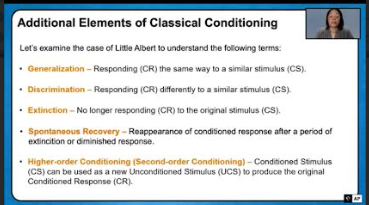
Acquisition: The initial learning phase when the association between the NS and UCS is formed.
Extinction: The weakening of the CR when the UCS is no longer presented with the CS.
Spontaneous Recovery: The reappearance of a weakened CR after a rest period.
Stimulus Generalization: Responding to stimuli similar to the CS.
Stimulus Discrimination: Learning to respond only to the specific conditioned stimulus, not to similar stimuli. Example: A dog salivates to a specific bell tone, not to other sounds.
Higher-order Conditioning (Second-order Conditioning)-Conditioned Stimulus (CS) can be used as a new Unconditioned Stimulus (UCS) to produce the original Conditioned Response (CR).
Pavlov’s Experiment: Demonstrating Classical Conditioning
Setup: Ivan Pavlov, a Russian physiologist, conducted experiments to study the salivary response in dogs when presented with food. He noticed that the dogs would begin to salivate at the sight of the food or even the footsteps of the assistant bringing the food.
Pairing the Stimuli: Pavlov introduced a neutral stimulus, a bell, which initially did not cause the dogs to salivate. He then consistently rang the bell (CS) just before presenting the food (UCS).
Conditioned Response: Over time, the dogs began to associate the sound of the bell with the arrival of food. Eventually, the sound of the bell alone (CS) caused the dogs to salivate (CR), demonstrating the learned association between the bell and food.
Applications of Classical Conditioning
Behavior Therapy
Systematic Desensitization: Classical conditioning is used in behavior therapies like systematic desensitization, where individuals with phobias are gradually exposed to the feared stimulus while practicing relaxation techniques. This exposure helps to weaken the fear response by breaking the association between the feared object and anxiety.
Aversion Therapy: This technique uses classical conditioning to reduce undesirable behaviors. For example, pairing an unpleasant stimulus (like a mild electric shock) with a behavior such as smoking can create an aversive reaction, discouraging the behavior.
Counterconditioning: A therapy technique that helps people unlearn fear responses by pairing the feared stimulus with relaxation.
Taste Aversions: A strong dislike for a food after a single bad experience (even if the food didn't cause the illness).
Advertising
Association with Positive Emotions: Advertisers often use classical conditioning to create associations between their products (neutral stimuli) and positive emotions (UCRs). For instance, an ad may pair a brand with pleasant imagery or music (UCS), aiming to evoke positive feelings (CR) in viewers when they see the brand.
Brand Loyalty: By repeatedly associating a product with desirable emotions, companies hope consumers will develop a conditioned response, associating the brand with those positive feelings and, ideally, leading to brand loyalty.
Understanding Phobias
Formation of Phobias: Phobias can develop through classical conditioning when a neutral stimulus (such as a dog) is paired with a frightening or painful experience (e.g., being bitten), leading the individual to associate the object with fear.
Treatment of Phobias: Therapies based on classical conditioning, such as exposure therapy, aim to gradually reduce the fear response by breaking the association between the phobic stimulus and the fear response through controlled, repeated exposure without negative outcomes.
Biological Preparedness
Animals and humans are predisposed to learn certain associations faster than others, especially those related to survival.
Taste aversions are an example of biological preparedness, helping us avoid poisonous foods.
John B. Watson and Behaviorism
Behaviorist Manifesto (1913):
Psychology should focus on observable behavior, not internal mental processes.
The goal is to predict and control behavior.
Little Albert Experiment:
Watson conditioned a baby (Albert) to fear a white rat by pairing it with a loud noise.
Albert's fear generalized to other furry objects.
The experiment was unethical and likely did not cause lasting harm due to extinction (the fear response likely faded over time).
3.8 Operant Conditioning
Skinner’s Experiments in Operant Conditioning
B.F. Skinner and Operant Conditioning
Behavior Shaping: B.F. Skinner, a leading figure in behaviorism, conducted experiments demonstrating how behavior can be shaped and maintained using reinforcement and punishment.
Skinner Box: Skinner created a controlled environment called the Skinner Box to observe and measure animal behavior, typically using rats or pigeons. In the Skinner Box, animals could press a lever (for rats) or peck a key (for pigeons) to receive rewards (such as food) or avoid aversive stimuli (like a mild electric shock).
Behavioral Learning: Through this setup, Skinner demonstrated how behaviors can be strengthened (reinforced) or weakened (punished) based on their consequences.
Latent learning refers to learning that occurs without immediate reinforcement but is demonstrated later when incentives are provided
Thorndike's Law of Effect: Behaviors followed by favorable consequences become more likely, and behaviors followed by unfavorable consequences become less likely.
Types of Reinforcement in Operant Conditioning
Reinforcers: Strengthening Behavior
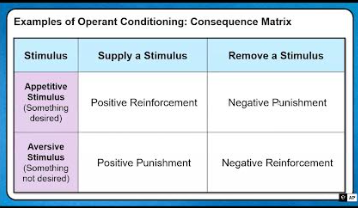
Reinforcer: Anything that increases the likelihood of a behavior being repeated.
Generalization in Reinforcement:
Definition: The tendency for a response to be elicited by stimuli that are similar to the original conditioned stimulus (CS).
Example: If a dog is trained to salivate at the sound of a bell (CS) when food (UCS) is presented, the dog may also salivate at the sound of a different bell, suggesting generalization occurs.
Implications: Generalization allows organisms to respond to similar stimuli without needing specific training for each stimulus, facilitating learning in varied environments.
Discrimination in Reinforcement:
Definition: The ability to distinguish between different stimuli and responding only to the specific conditioned stimulus.
Example: In the same dog study, if the dog only salivates to the specific tone of the bell used during training but ignores other tones, it demonstrates stimulus discrimination.
Implications: Discrimination helps organisms learn and respond selectively to stimuli that are relevant while ignoring those that are not, leading to more precise and effective responses in their environment.
Primary Reinforcer: Satisfies a biological need (e.g., food, water, warmth).
Conditioned (Secondary) Reinforcer: Gains its power through association with a primary reinforcer (e.g., money, grades, praise).
Immediate Reinforcer: Occurs right after the behavior (e.g., getting a treat for sitting).
Delayed Reinforcer: Occurs after a delay (e.g., getting a paycheck at the end of the week).
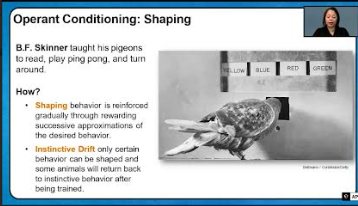
Shaping behavior is reinforced gradually through rewarding successive approximations of the desired behavior.
Positive Reinforcement
Definition: Positive reinforcement involves adding a desirable or pleasant stimulus after a behavior to increase the likelihood that the behavior will occur again.
Example: In the Skinner Box, a rat pressing a lever might be rewarded with food pellets, encouraging the rat to repeat the lever-pressing behavior. In humans, positive reinforcement could be a child receiving praise or treats for completing homework.
Effectiveness: Positive reinforcement tends to be highly effective for encouraging repeated behaviors and is commonly used in education, parenting, and animal training.
Negative Reinforcement
Definition: Negative reinforcement involves removing an aversive or unpleasant stimulus to increase the likelihood of a behavior.
Example: In the Skinner Box, a mild electric shock might be continuously delivered until the rat presses a lever. When the rat presses the lever, the shock stops, reinforcing the behavior of lever pressing to avoid the unpleasant stimulus.
Common Misunderstanding: Negative reinforcement is often confused with punishment, but it actually increases behavior by taking away something negative (rather than decreasing behavior).
Application: Negative reinforcement can be seen in everyday scenarios, like fastening a seatbelt to stop the car’s alarm or studying to avoid a poor grade.
Punishment
Definition: Punishment involves introducing an unpleasant consequence or removing a desirable stimulus to reduce an unwanted behavior.
Types:
Positive Punishment: Adding an unpleasant stimulus, such as a reprimand or a fine, to reduce behavior (e.g., a parking ticket for illegal parking).
Negative Punishment: Removing a pleasant stimulus, such as taking away privileges, to decrease behavior (e.g., grounding a child for misbehavior).
Potential Side Effects: While punishment can be effective in reducing behavior, it may also lead to unintended consequences such as fear, anxiety, aggression, or resentment toward the punisher.
Limitations: Punishment often only suppresses behavior temporarily and may not lead to lasting behavior change unless combined with reinforcement strategies for desirable behaviors.
Learned Helplessness (Martin Seligman): Learned helplessness occurs when a person (or animal) feels powerless after repeated failures or negative experiences — even when they actually have control.
Learned Optimism: Also developed by Seligman. Teaches people to challenge negative thoughts and regain a sense of control
Reinforcement Schedules in Operant Conditioning
Continuous Reinforcement: Reinforcement is provided every time the desired behavior occurs, which is effective for initially teaching new behaviors but may lead to quick extinction if reinforcement stops.
Partial (Intermittent) Reinforcement:
Fixed-Ratio Schedule: Reinforcement occurs after a fixed number of responses. For example, a rat might receive food after every five lever presses. This schedule produces a high rate of responding but can lead to a pause after each reinforcement.
Variable-Ratio Schedule: Reinforcement occurs after an unpredictable number of responses, leading to a high and steady rate of behavior. This schedule is highly resistant to extinction and is commonly used in gambling (e.g., slot machines).
Fixed-Interval Schedule: Reinforcement is given after a fixed time interval, provided the desired behavior occurs. This schedule often leads to behavior increasing as the interval ends (e.g., studying more as an exam approaches).
Variable-Interval Schedule: Reinforcement is provided at unpredictable time intervals, resulting in steady but moderate behavior. For example, checking for emails or social media notifications, where reinforcement (a new message) is unpredictable, can lead to repeated checking.
Behavior Modification: Applying Operant Conditioning Principles
Definition and Purpose
Behavior Modification: Behavior modification is the practical application of operant conditioning principles to change behavior. It is widely used in education, therapy, parenting, and workplace settings to encourage desirable behaviors and reduce unwanted ones.
Goals: Behavior modification focuses on reinforcing desired behaviors and eliminating or reducing behaviors that are considered problematic.
Examples of Behavior Modification Techniques
Token Economies: In educational settings, children may receive tokens or points for completing tasks or displaying positive behavior. These tokens can later be exchanged for rewards, reinforcing positive behaviors.
Behavioral Contracts: Behavior contracts set clear expectations and outline rewards and consequences for specific behaviors, commonly used in therapeutic settings or classrooms to encourage behavior change.
Parenting and Education: In parenting and classrooms, operant conditioning principles are used to reinforce desirable behaviors (like studying, completing homework, and good behavior) and discourage undesirable ones (like tantrums or disruptive behavior).
Applications in Therapy
Behavioral Therapy: Techniques such as systematic desensitization and contingency management in therapy use reinforcement to encourage adaptive behaviors and decrease problematic ones, especially for conditions like anxiety and addiction.
Habit Change Programs: Programs for changing habits, such as smoking cessation or weight loss, often incorporate reinforcement schedules and behavior modification strategies to gradually shape desired behaviors and extinguish undesirable ones.
3.9 - Social, Cognitive, and Neurological Factors in Learning
Cognitive Factors in Classical Conditioning
Rescorla's Contingency Model: Emphasizes that for learning to occur, the neutral stimulus must reliably predict the unconditioned stimulus.
Insight Learning (Wolfgang Kohler): The sudden realization of a solution to a problem ("aha" moment).
1. Preparation
Learner gathers information
Tries to understand or solve the problem
May feel confused or stuck
2. Incubation
Learner steps away from the problem
Subconscious mind keeps working on it
No obvious progress, but ideas are forming
3. Insight (Aha! Moment)
Sudden realization or solution appears
The problem "clicks" into place
Often feels exciting or surprising
4. Verification
Learner tests the insight to see if it works
Confirms the solution is correct
Cognitive Maps and Latent Learning (Edward Tolman)
Tolman's research with rats showed that they could learn a maze even without immediate reinforcement, suggesting they formed a mental map (cognitive map) of the environment.
Latent Learning: Learning that occurs without reinforcement but is demonstrated later when there's an incentive.
Cognitive Maps (Edward Tolman): Mental representations of our surroundings that we develop through experience, even without direct reinforcement.
Biological Predispositions: Natural tendencies that make certain behaviors easier to learn.
Instinctive Drift (Breland & Breland): The tendency for animals to revert to innate behaviors even after being trained.
Neurological Basis of Observational Learning and Memory Formation
Long Term Potentiation (LTP)
Long Term Potentiation is a persistent strengthening of synapses based on recent patterns of activity.Long Term Depression (LTD)
Long Term Depression is a long-lasting decrease in synaptic strength resulting from low-frequency stimulation of synapses.
Role of Brain Structures
Hippocampus:
Function: The hippocampus plays a critical role in memory formation, especially in consolidating new information into long-term memory. Observational learning relies on the ability to remember what has been observed, which involves hippocampal activity.
Impact on Retention: Damage to the hippocampus can impair memory formation, affecting an individual’s ability to retain observed behaviors and information.
Amygdala:
Function: The amygdala is involved in processing emotions and emotional memories. It helps attach emotional significance to experiences, making memories associated with strong emotions more vivid and easier to recall.
Role in Observational Learning: When learning involves observing emotionally charged behaviors (e.g., aggression or empathy), the amygdala plays a role in enhancing memory retention of those behaviors.
Mirror Neurons:
Definition: Mirror neurons are specialized brain cells that activate both when an individual performs a specific action and when they observe someone else performing the same action.
Role in Imitation: Mirror neurons are thought to facilitate imitation, empathy, and understanding of others’ actions, making them essential for observational learning. These neurons may allow individuals to "mirror" the actions of others internally, enabling more effective reproduction of observed behaviors.
Neurotransmitters and Reward Pathways
Dopamine:
Role in Reward and Motivation: Dopamine is a neurotransmitter associated with the brain’s reward and pleasure system. It plays a central role in motivation, reinforcement, and the formation of habits.
Influence on Observational Learning: When a behavior is associated with a reward, dopamine pathways in the brain strengthen, reinforcing the association. Observing others receive rewards (vicarious reinforcement) can trigger dopamine release, enhancing motivation to imitate the behavior.
Oxytocin:
Function: Oxytocin is a hormone and neurotransmitter involved in social bonding, trust, and empathy.
Role in Social Learning: Oxytocin levels increase during social interactions, making individuals more likely to form bonds and trust with others. This hormone enhances the motivation to learn from social contexts and may influence the observer’s attention and retention of behaviors modeled by trusted figures.
Concept of Observational Learning
Observational learning, or modeling, involves learning by observing and imitating others
Bandura's social learning theory emphasizes the role of attention, retention, reproduction, and motivation in observational learning
Observational Learning
Concept of Observational Learning
Definition: Observational learning, also known as social learning, is the process of learning by watching the behaviors of others and imitating those behaviors. This type of learning emphasizes the role of social influence and the environment in acquiring new skills, behaviors, and attitudes.
Albert Bandura: Psychologist Albert Bandura is a key figure in observational learning theory. He proposed that much of human behavior is learned through observing and modeling others, rather than through direct reinforcement or punishment alone.
Bandura's Bobo Doll Experiment:
Study Overview: Bandura's famous Bobo doll experiment demonstrated observational learning in children. In the study, children watched an adult model exhibit aggressive behavior toward a Bobo doll (e.g., hitting, kicking, and verbally attacking the doll).
Findings: After observing the adult's behavior, children were more likely to imitate the aggressive actions toward the Bobo doll, especially when they saw the adult being rewarded for aggression. This experiment highlighted that children learn not only by direct experience but also by observing the actions of others.
Implications: The study underscored the powerful influence that role models, especially adults and authority figures, have on behavior. It showed that children are likely to mimic behaviors they observe, whether positive or negative, especially if they see those behaviors being rewarded.
Cognitive Factors in Observational Learning
Key Processes in Observational Learning
Bandura identified four essential cognitive processes that affect whether an individual will successfully learn and reproduce an observed behavior.
Attention:
Importance: Observational learning begins with paying attention to the behavior being modeled. Without attention, an individual will not acquire the information needed to learn.
Influencing Factors: Attention is influenced by various factors, including the observer’s interest in the behavior, the attractiveness or status of the model, and environmental distractions.
Retention:
Definition: Retention involves the ability to remember the observed behavior and store it in memory. This process enables the observer to recall the behavior later, even when the model is not present.
Role of Mental Images and Verbal Descriptions: Individuals may retain information by forming mental images or verbal descriptions of the behavior. Practicing mental rehearsal can also enhance retention of the learned behavior.
Reproduction:
Definition: Reproduction is the process of replicating or reproducing the observed behavior. For successful imitation, the observer must have the physical and cognitive ability to perform the behavior.
Practice and Feedback: Reproduction often involves practicing the behavior, which helps refine the observer’s ability to imitate the model accurately. Feedback from others or self-correction can further enhance accuracy.
Motivation:
Role in Observational Learning: Motivation determines whether an individual will choose to reproduce a learned behavior. Without motivation, even if the behavior is learned, the observer may not perform it.
Types of Motivation:
Direct Reinforcement: Observers may be motivated by anticipated rewards for imitating the behavior, such as praise or tangible rewards.
Vicarious Reinforcement: Observing a model receiving rewards or punishment for a behavior can influence the observer’s motivation to imitate that behavior.
Self-Reinforcement: Internal rewards, such as personal satisfaction or a sense of accomplishment, can also motivate behavior.
Applications of Observational Learning
Education and Parenting:
Modeling Positive Behaviors: Teachers and parents can serve as role models by demonstrating behaviors they wish to encourage, such as cooperation, kindness, or perseverance.
Reducing Negative Behaviors: By observing role models who exhibit restraint, empathy, or positive conflict resolution, children can learn constructive behaviors in social situations.
Therapy:
Social Skills Training: Therapists may use role-playing and modeling to teach clients social skills, such as assertiveness, conflict resolution, or empathy. Clients can observe these skills and then practice them in a safe environment.
Cognitive Behavioral Therapy (CBT): Observational learning is often incorporated into CBT, where clients learn coping mechanisms and adaptive behaviors by observing the therapist or other role models.
Media and Society:
Influence of Media on Behavior: Observational learning highlights the impact of media on behavior, as individuals may imitate behaviors they see in movies, television, or social media. For example, exposure to violence in media can increase aggressive behaviors, while prosocial content can encourage positive behaviors.
Public Awareness Campaigns: Observational learning principles are used in campaigns promoting behaviors like recycling, healthy eating, or safe driving by showing individuals modeling these behaviors and receiving social approval.
RECAP
Influential Researchers and Studies
Harlow's monkey studies demonstrated the importance of contact comfort and attachment in social and emotional development
Ainsworth's Strange Situation experiment identified different attachment styles (secure, avoidant, ambivalent) based on infants' responses to separation and reunion with caregivers
Bandura's Bobo doll experiment showed that children can learn aggressive behaviors through observation and imitation
Piaget's conservation tasks revealed that children's understanding of concepts like volume and number changes as they progress through the stages of cognitive development
Vygotsky's concept of the zone of proximal development (ZPD) highlighted the role of social interaction and guidance in cognitive development
Skinner's operant conditioning experiments with pigeons and rats demonstrated the principles of reinforcement and punishment in shaping behavior
Skeels and Dye's Iowa orphanage study showed the positive impact of environmental enrichment on cognitive and social development in institutionalized children
Hart and Risley's study on language exposure in early childhood found significant differences in the quantity and quality of language input between low-income and high-income families
Real-World Applications
Understanding developmental milestones can help parents, educators, and healthcare professionals monitor children's progress and identify potential delays or concerns
Applying principles of classical and operant conditioning can be effective in behavior modification (token economies, desensitization therapy)
Knowledge of attachment theory informs parenting practices and interventions for children with social-emotional difficulties (foster care, adoption)
Recognizing the importance of social interaction and scaffolding in cognitive development can guide educational practices (cooperative learning, guided discovery)
Awareness of language development stages and the role of environmental input can promote strategies for supporting language acquisition (reading aloud, engaging in conversation)
Understanding the impact of early experiences on brain development underscores the importance of providing nurturing, stimulating environments for infants and young children
Applying concepts of moral development can inform character education programs and approaches to discipline in schools and families
Insights from research on cognitive development and learning processes can be used to design effective instructional strategies and educational interventions (multimedia learning, spaced practice)