psychoactive drugs
Psychoactive Drugs: any chemicals that influence our perceptions and/or mood
Example: anti-depressants, caffeine, cocaine
Tolerance: Brain chemistry adapts to frequent use of some drugs. So it will take more of the drug to give you the same effect.
Addiction: Craving for the drug, despite negative consequences (physical, Psychological, or social)
Withdrawal: When you have a dependency on a drug and suddenly you don’t get that drug anymore. Withdrawal is very unpleasant. Negative physical or psychological effects of stopping a drug.
Not all drug use is a disorder.
Substance use disorder:
Continuing the use of a drug even if it is disruptive to your life. The varies in severity.
Diminished control over use of a drug. Not being able to say no.
Reduced ability to interact with other people
Hazardous use: example- driving drunk
Drug action: experiencing tolerance and or withdrawal
The more of these indicators listed above = more severe the disorder
Common Psychoactive Drugs:
Depressants and Anxiolytics: reduce activity in the central nervous system/Reduce anxiety
Barbiturates: used to be used for anxiety now used for epilepsy
Make GABA more effective
Aid in sleep, reducing anxiety, relaxation
Anticonvulsant (helping people with seizures
Potentially fatal when combines with alcohol
Benzodiazepines:
Enhance GABA
Mostly replaces Barbiturates (milder side effects and less addictive)
Examples: Xanax and Valium
Alcohol:
Crosses the blood-brain barrier easily
Can feel effects very quickly
Slows Neural processing
Slurred speech
Impaired reaction time
Impairs REM sleep
Memory disruption (blackouts)
Cortical disinhibition: makes alcohol appear to have stimulant properties in low doses
Reduced awareness of altered state… you the more you drink the more you may think you are fine
Your brain wants to get rid of the alcohol because it is toxic
Triggers activity in the area postrema (this the detector of toxic substances)
When the area postrema is overstimulated you will throw up from drinking
Moderate drinking can suppress the area postrema and you won't puke
Mental and physical withdrawal from alcohol:
Anxiety and depression
Insomnia
Elevated blood pressure and heart rate
Hallucinations
Delirium Tremens (the DT's): Most severe form of alcohol withdrawal and they can kill you.
Can begin several days after stopping drinking
Can cause strokes and heart attacks
Can involve severe hallucinations and convulsions
Potentially fatal breathing and heart rate changes
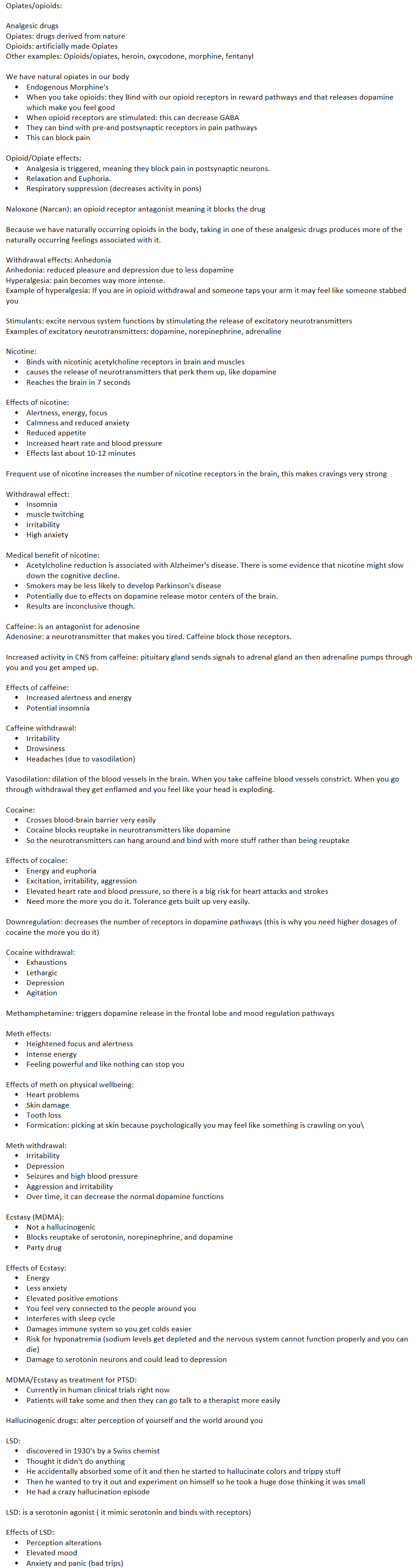
Opiates/opioids:
Analgesic drugs
Opiates: drugs derived from nature
Opioids: artificially made Opiates
Other examples: Opioids/opiates, heroin, oxycodone, morphine, fentanyl
We have natural opiates in our body
Endogenous Morphine's
When you take opioids: they Bind with our opioid receptors in reward pathways and that releases dopamine which make you feel good
When opioid receptors are stimulated: this can decrease GABA
They can bind with pre-and postsynaptic receptors in pain pathways
This can block pain
Opioid/Opiate effects:
Analgesia is triggered, meaning they block pain in postsynaptic neurons.
Relaxation and Euphoria.
Respiratory suppression (decreases activity in pons)
Naloxone (Narcan): an opioid receptor antagonist meaning it blocks the drug
Because we have naturally occurring opioids in the body, taking in one of these analgesic drugs produces more of the naturally occurring feelings associated with it.
Withdrawal effects: Anhedonia
Anhedonia: reduced pleasure and depression due to less dopamine
Hyperalgesia: pain becomes way more intense.
Example of hyperalgesia: If you are in opioid withdrawal and someone taps your arm it may feel like someone stabbed you
Stimulants: excite nervous system functions by stimulating the release of excitatory neurotransmitters
Examples of excitatory neurotransmitters: dopamine, norepinephrine, adrenaline
Nicotine:
Binds with nicotinic acetylcholine receptors in brain and muscles
causes the release of neurotransmitters that perk them up, like dopamine
Reaches the brain in 7 seconds
Effects of nicotine:
Alertness, energy, focus
Calmness and reduced anxiety
Reduced appetite
Increased heart rate and blood pressure
Effects last about 10-12 minutes
Frequent use of nicotine increases the number of nicotine receptors in the brain, this makes cravings very strong
Withdrawal effect:
Insomnia
muscle twitching
Irritability
High anxiety
Medical benefit of nicotine:
Acetylcholine reduction is associated with Alzheimer's disease. There is some evidence that nicotine might slow down the cognitive decline.
Smokers may be less likely to develop Parkinson's disease
Potentially due to effects on dopamine release motor centers of the brain.
Results are inconclusive though.
Caffeine: is an antagonist for adenosine
Adenosine: a neurotransmitter that makes you tired. Caffeine block those receptors.
Increased activity in CNS from caffeine: pituitary gland sends signals to adrenal gland an then adrenaline pumps through you and you get amped up.
Effects of caffeine:
Increased alertness and energy
Potential insomnia
Caffeine withdrawal:
Irritability
Drowsiness
Headaches (due to vasodilation)
Vasodilation: dilation of the blood vessels in the brain. When you take caffeine blood vessels constrict. When you go through withdrawal they get enflamed and you feel like your head is exploding.
Cocaine:
Crosses blood-brain barrier very easily
Cocaine blocks reuptake in neurotransmitters like dopamine
So the neurotransmitters can hang around and bind with more stuff rather than being reuptake
Effects of cocaine:
Energy and euphoria
Excitation, irritability, aggression
Elevated heart rate and blood pressure, so there is a big risk for heart attacks and strokes
Need more the more you do it. Tolerance gets built up very easily.
Downregulation: decreases the number of receptors in dopamine pathways (this is why you need higher dosages of cocaine the more you do it)
Cocaine withdrawal:
Exhaustions
Lethargic
Depression
Agitation
Methamphetamine: triggers dopamine release in the frontal lobe and mood regulation pathways
Meth effects:
Heightened focus and alertness
Intense energy
Feeling powerful and like nothing can stop you
Effects of meth on physical wellbeing:
Heart problems
Skin damage
Tooth loss
Formication: picking at skin because psychologically you may feel like something is crawling on you\
Meth withdrawal:
Irritability
Depression
Seizures and high blood pressure
Aggression and irritability
Over time, it can decrease the normal dopamine functions
Ecstasy (MDMA):
Not a hallucinogenic
Blocks reuptake of serotonin, norepinephrine, and dopamine
Party drug
Effects of Ecstasy:
Energy
Less anxiety
Elevated positive emotions
You feel very connected to the people around you
Interferes with sleep cycle
Damages immune system so you get colds easier
Risk for hyponatremia (sodium levels get depleted and the nervous system cannot function properly and you can die)
Damage to serotonin neurons and could lead to depression
MDMA/Ecstasy as treatment for PTSD:
Currently in human clinical trials right now
Patients will take some and then they can go talk to a therapist more easily
Hallucinogenic drugs: alter perception of yourself and the world around you
LSD:
discovered in 1930's by a Swiss chemist
Thought it didn't do anything
He accidentally absorbed some of it and then he started to hallucinate colors and trippy stuff
Then he wanted to try it out and experiment on himself so he took a huge dose thinking it was small
He had a crazy hallucination episode
LSD: is a serotonin agonist ( it mimic serotonin and binds with receptors)
Effects of LSD:
Perception alterations
Elevated mood
Anxiety and panic (bad trips)
Opiates/opioids:
Analgesic drugs
Opiates: drugs derived from nature
Opioids: artificially made Opiates
Other examples: Opioids/opiates, heroin, oxycodone, morphine, fentanyl
We have natural opiates in our body
Endogenous Morphine's
When you take opioids: they Bind with our opioid receptors in reward pathways and that releases dopamine which make you feel good
When opioid receptors are stimulated: this can decrease GABA
They can bind with pre-and postsynaptic receptors in pain pathways
This can block pain
Opioid/Opiate effects:
Analgesia is triggered, meaning they block pain in postsynaptic neurons.
Relaxation and Euphoria.
Respiratory suppression (decreases activity in pons)
Naloxone (Narcan): an opioid receptor antagonist meaning it blocks the drug
Because we have naturally occurring opioids in the body, taking in one of these analgesic drugs produces more of the naturally occurring feelings associated with it.
Withdrawal effects: Anhedonia
Anhedonia: reduced pleasure and depression due to less dopamine
Hyperalgesia: pain becomes way more intense.
Example of hyperalgesia: If you are in opioid withdrawal and someone taps your arm it may feel like someone stabbed you
Stimulants: excite nervous system functions by stimulating the release of excitatory neurotransmitters
Examples of excitatory neurotransmitters: dopamine, norepinephrine, adrenaline
Nicotine:
Binds with nicotinic acetylcholine receptors in brain and muscles
causes the release of neurotransmitters that perk them up, like dopamine
Reaches the brain in 7 seconds
Effects of nicotine:
Alertness, energy, focus
Calmness and reduced anxiety
Reduced appetite
Increased heart rate and blood pressure
Effects last about 10-12 minutes
Frequent use of nicotine increases the number of nicotine receptors in the brain, this makes cravings very strong
Withdrawal effect:
Insomnia
muscle twitching
Irritability
High anxiety
Medical benefit of nicotine:
Acetylcholine reduction is associated with Alzheimer's disease. There is some evidence that nicotine might slow down the cognitive decline.
Smokers may be less likely to develop Parkinson's disease
Potentially due to effects on dopamine release motor centers of the brain.
Results are inconclusive though.
Caffeine: is an antagonist for adenosine
Adenosine: a neurotransmitter that makes you tired. Caffeine block those receptors.
Increased activity in CNS from caffeine: pituitary gland sends signals to adrenal gland an then adrenaline pumps through you and you get amped up.
Effects of caffeine:
Increased alertness and energy
Potential insomnia
Caffeine withdrawal:
Irritability
Drowsiness
Headaches (due to vasodilation)
Vasodilation: dilation of the blood vessels in the brain. When you take caffeine blood vessels constrict. When you go through withdrawal they get enflamed and you feel like your head is exploding.
Cocaine:
Crosses blood-brain barrier very easily
Cocaine blocks reuptake in neurotransmitters like dopamine
So the neurotransmitters can hang around and bind with more stuff rather than being reuptake
Effects of cocaine:
Energy and euphoria
Excitation, irritability, aggression
Elevated heart rate and blood pressure, so there is a big risk for heart attacks and strokes
Need more the more you do it. Tolerance gets built up very easily.
Downregulation: decreases the number of receptors in dopamine pathways (this is why you need higher dosages of cocaine the more you do it)
Cocaine withdrawal:
Exhaustions
Lethargic
Depression
Agitation
Methamphetamine: triggers dopamine release in the frontal lobe and mood regulation pathways
Meth effects:
Heightened focus and alertness
Intense energy
Feeling powerful and like nothing can stop you
Effects of meth on physical wellbeing:
Heart problems
Skin damage
Tooth loss
Formication: picking at skin because psychologically you may feel like something is crawling on you\
Meth withdrawal:
Irritability
Depression
Seizures and high blood pressure
Aggression and irritability
Over time, it can decrease the normal dopamine functions
Ecstasy (MDMA):
Not a hallucinogenic
Blocks reuptake of serotonin, norepinephrine, and dopamine
Party drug
Effects of Ecstasy:
Energy
Less anxiety
Elevated positive emotions
You feel very connected to the people around you
Interferes with sleep cycle
Damages immune system so you get colds easier
Risk for hyponatremia (sodium levels get depleted and the nervous system cannot function properly and you can die)
Damage to serotonin neurons and could lead to depression
MDMA/Ecstasy as treatment for PTSD:
Currently in human clinical trials right now
Patients will take some and then they can go talk to a therapist more easily
Hallucinogenic drugs: alter perception of yourself and the world around you
LSD:
discovered in 1930's by a Swiss chemist
Thought it didn't do anything
He accidentally absorbed some of it and then he started to hallucinate colors and trippy stuff
Then he wanted to try it out and experiment on himself so he took a huge dose thinking it was small
He had a crazy hallucination episode
LSD: is a serotonin agonist ( it mimic serotonin and binds with receptors)
Effects of LSD:
Perception alterations
Elevated mood
Anxiety and panic (bad trips)