chapter 5: states of consciousness
overview
- dualism - belief that humans consist of two materials: thought and matter
- thought is a nonmaterial aspect that arises from a brain
- matter is everything that has substance
- monism - belief that everything is the same substance and thought and matter are aspects of the same substance
- thought is a by-product of brain processes and stops existing when the body dies
levels of consciousness
- mere-exposure effect - occurs when we prefer stimuli we have seen before
- priming - research participants respond more quickly and/or accurately to questions they have seen before, even if they don’t remember seeing them before
- blind sight - some people who report being blind can nonetheless accurately describe the path of a moving object or accurately grasp objects they say they cannot see
- conscious level
1. the information about yourself and your environment you are currently aware of
- nonconscious level
1. body processes controlled by your mind that we are not usually aware of
- preconscious level
1. information about yourself or your environment that you are not currently thinking about but you could be
- subconscious level
1. information that we are not consciously aware of but we know must exist due to behavior
- unconscious level
1. psychoanalytic psychologists believe some events and feelings are unacceptable to our conscious mind and are repressed into the unconscious mind
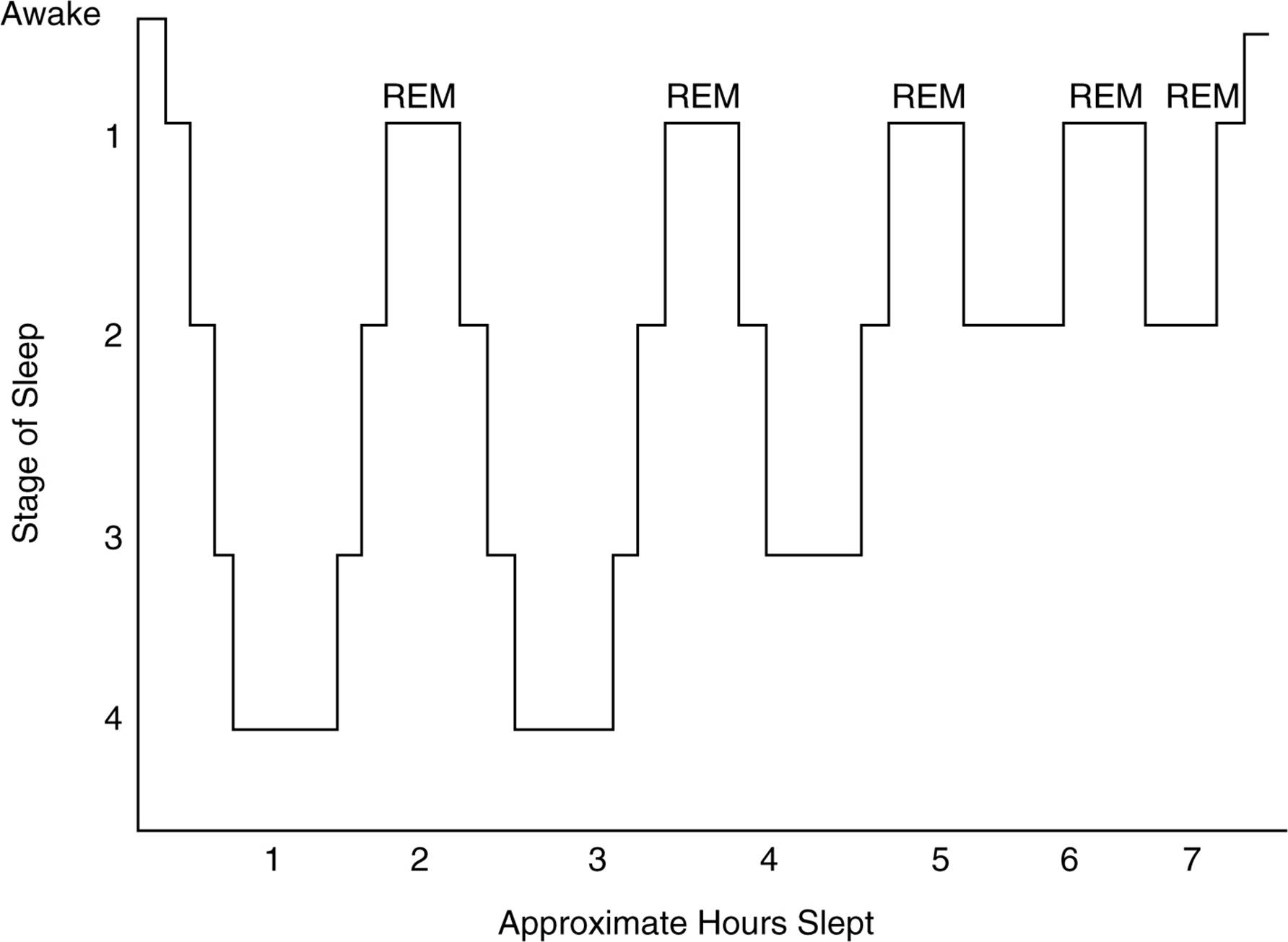
sleep cycle
- circadian rhythm - physical, mental, and behavioral changes that follow a 24-hour cycle
- sleep is far from a time of unconsciousness
- sleep onset - the period when we’re falling asleep, the stage between wakefulness and sleep
- the brain produces alpha waves before falling asleep and enters stage 1
- when we are asleep and in stages 1 and 2, our brain produces theta waves, which are high-frequency and low-amplitude waves
- these waves progressively slower and higher in amplitude once we’re through stages 1 and 2
- in stage 2, sleep spindles start to show, which are short bursts of rapid brain waves
- from this, we move on to stages 3 and 4, which is called delta sleep because of the delta waves that exist during these stages. the slower the wave, the deeper the sleep and the less aware we are of our environment.
- a person in delta sleep is difficult to wake up, and if you are awakened, you would be very groggy, but it is important in terms of replenishing the body.
- after a period of time in delta sleep, the brain waves start to speed up and we go back to stages 3 and 2.
- once we reach stage 1, the brain produces a period of intense activity, which is REM
- REM - rapid eye movement
- this stage is sometimes called paradoxical sleep since the brain waves appear as active and intense as they do when we are awake
- dreams are more like to occur during REM sleep
- individuals deprived of REM sleep will experience REM rebound, which means they will experience more and longer periods of REMs
- as we age, the need for REM sleep declines and so does the amount of time we spend in REM sleep
sleep disorders
- insomnia - having persistent problems getting to sleep or staying asleep at night
- narcolepsy - suffer from periods of intense sleepiness and may fall asleep at unpredictable and inappropriate times
- sleep apnea - causes a person to stop breathing for short periods of time during the night and causes the person to wake up slightly and gasp for air, then continue sleeping
- night terrors - a sleep disorder in which a person quickly awakens from sleep in a terrified state, could be related to somnambulism (sleepwalking)
dreams
- dreams are storyline images we experience as we sleep
- dreams are difficult to research since they rely on self-reports
- Sigmund Freud considered dreams important since he emphasized. dream interpretation as a method to uncover the repressed information in the unconscious mind.
- manifest content - the literal content of our dreams
- latent content - the unconscious meaning of the manifest content
- activation-synthesis theory - looks at dreams as biological phenomena and proposes that dreams could be nothing more than the brain’s interpretations of what is happening physiologically during REM sleep
- split-brain patients sometimes make up elaborate explanations for behaviors caused by their operation
- information-processing theory - points out that stress during the day will increase the number and intensity of dreams during the night
hypnosis
- posthypnotic amnesia - people report forgetting events that occurred while they were hypnotized
- posthypnotic suggestion - a suggestion that a hypnotized person behave a certain way after he or she is brought out or hypnosis
- role theory - states that hypnosis is not an alternate state of consciousness at all and points out that some people are more easily hypnotized than others, which is called hypnotic suggestibility
- state theory - points out that hypnosis meets some parts of the definition for an altered state of consciousness
- dissociation theory - developed by Ernest Hilgard and said that hypnosis causes us to divide our consciousness voluntarily. One part of our consciousness responds to the suggestions of the hypnotist while another part retains awareness of reality
drugs
- psychoactive drugs are chemicals that change the chemistry of the brain and induce an altered state of consciousness
- blood-brain barrier - the brain is protected from harmful chemicals in the bloodstream by thicker walls surrounding the brain’s blood vessels
- agonists - the drugs that mimic neurotransmitters
- antagonists - the drugs that block neurotransmitters
- tolerance - a physiological change that produces a need for more of the same drug in order to achieve the same effect
- withdrawal - the unpleasant physical reaction that accompanies the process of ceasing to take an addictive drug
- stimulants - speed up body processes, including autonomic nervous system functions
- depressants - slow down the same body systems
- alcohol is the most commonly used depressant and psychoactive drug
- hallucinogens or psychedelics - cause changes in perceptions of reality, including sensory hallucinations, loss of identity, and vivid fantasies
- reverse tolerance - repeated exposure to the same dose of a particular drug of abuse, a specific behavioral, physiological, or cellular response increases, rather than decreases, over time
- opiates - a drug derived from a poppy plant and acts as agonists, so they are powerful painkillers