CH 4 Notes
Vocabulary ( Skip )
Gene
- Section of DNA on a chromosome that carried code for protein
Nitrogenous Base
- Makes DNA and RNA with its nitrogen ring(s) and forms hydrogen bonds between strands of double helix
Base Pair
- Two nitrogenous bases connected with a hydrogen bond
Phosphodiester Bond
- Bond that links sugars and phosphates of adjacent nucleotides
Hydrogen Bond
- weak bond that holds the DNA together
Purine
- Nitrogenous base with 2 rings
Pyrimidine
- Nitrogenous base with 1 ring
Medium
- something you can grow stuff on
Lysis
- The rupture of cells that causes the release of DNA
R plasmid
- Plasmid that contains gene for antibiotic resistance
Vector
- Carrier of genes to a cell
RNA polymerase
- enzyme that builds RNA strands from DNA strands
Enhancer
- Increases expression of a gene (transcription factor)
Silencer
- decreases expression of a gene (transcription factor)
Intron
- mRNA gene region that is transcribed but Not expressed
Exon
- Gene region that codes for a protein and is expressed u
Gene therapy:
- Repairing genes to solve a genetic problem
Site Specific Mutagenesis
- Changing genetic code in certain (site specific) areas.
4.1
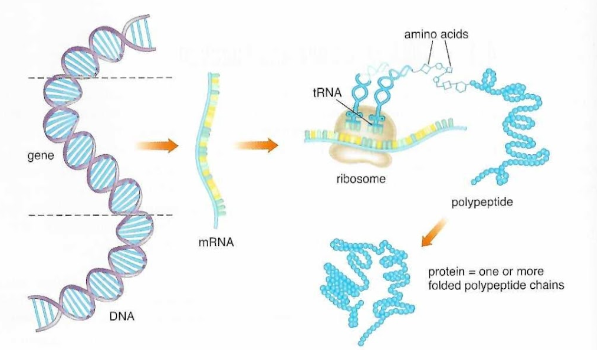
Genes get transcribed into mRNA and then mRNA ( at the ribosome ) gets translated into chains of amino acids and those amino acids fold to form polypeptide chains
4 Nitrogenous Base Pairs
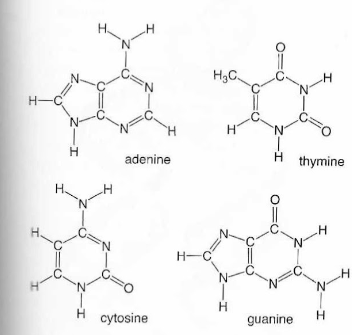
* Note the SHAPES of each of these. Guanine and Adenine have double rings
- These shapes ensure the width is always the same
* Uracil is only used in RNA
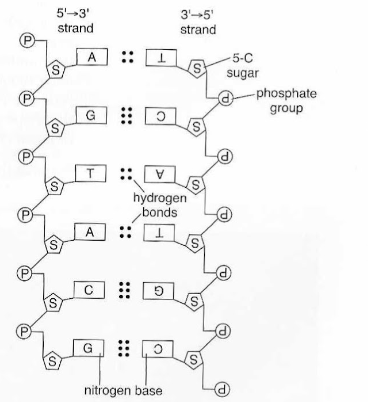
Pairs thru hydrogen bonds , A-T , G-C
DNA REPLICATION
|
Why is it called antiparallel?
|
|---|
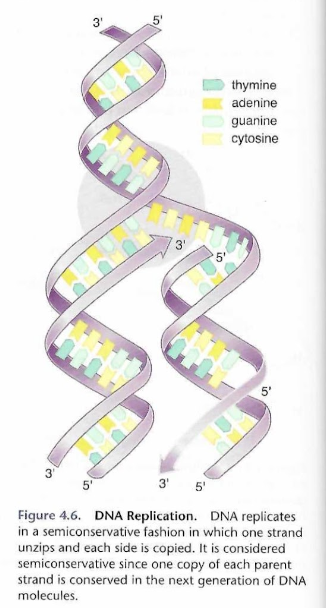
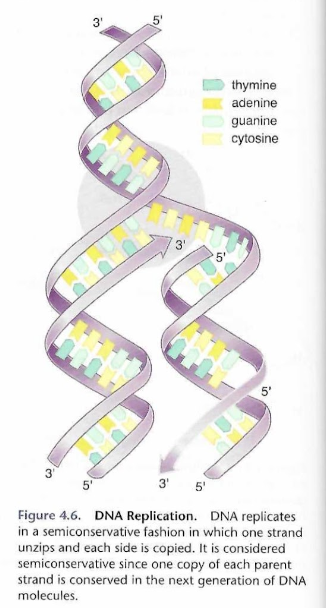
- TLDR DNA unzips and each side is copied to conserve one strand of parent DNA.
4.2
Prokaryotes do not contain membrane-bound organelles
- In prokaryotes. DNA attaches to a spot in the cell membrane (so its not so floaty)
- Plasmids contain only a few genes that offer proteins for extreme situations characteristics
- One has a several thousand genes
- entire thing codes for RNA and proteins
- no unused proteins
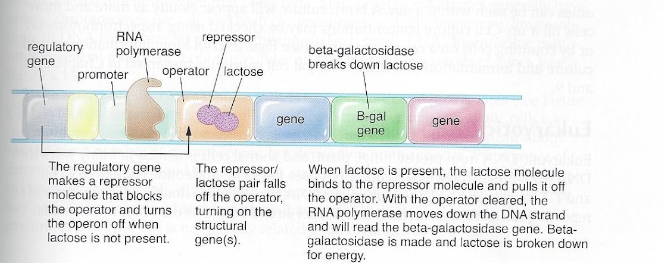
Gene Regulation - Operons
 |
|---|
- Operons can STOP dna from being transcribed (negative feedback turns gene on or off)
- Promoter region is where it attaches to (produces product)
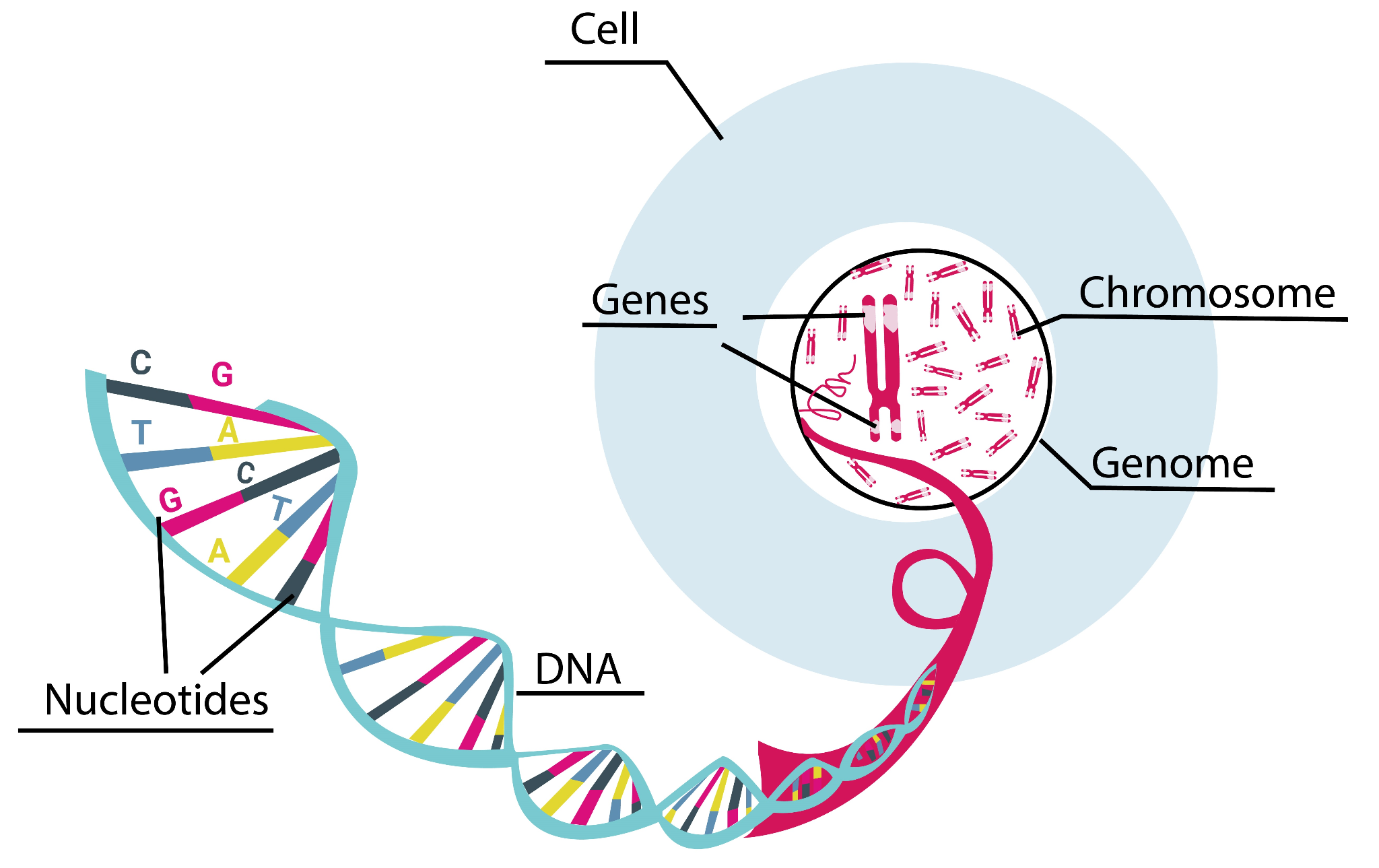
Chromosomes
- We have 23 chromosomes PAIRS and 46 total chromosomes
Genetic Engineering steps
Identify
- Find the molecule
Separate
- Isolate DNA sequence/ gene that codes for the molecule
Manipulate
- Alter DNA by placing it somewhere else or altering it inside the original cell
Harvest
- Collect molecule/product and market it.
* Note: If something has r before the name ex: “rDNA” it means RECOMBINANT
Common Gel Stains
- Ethidium Bromide (EtBr)
- Glows orange under UV
- Methylene blue
Test Specific Studying
- Need to know ALL terms and definitions
- Isolating and Manipulating DNA Order and Step Definitions
- Lots about Gel Electrophoresis
- Agarose vs Polyacrymelide
- What kind of molecules do they separate
- If given proteins or DNA, what system would u use and why
- Concentrations effect on molecules
- Different Stains and how they function
- Agarose vs Polyacrymelide
- In bacteria how many bands will u see given a certain amount of cuts
- Ex: one cut gives __ # of bands
- How are genes turned off and on?
- Need to know introns extrons etc
- Heavy on 4.2
- How is DNA different and the same between all organisms
- How SPECIFICALLY do you manipulate DNA
Test Studying Specific Answers:
Vocabulary at top of page
Isolation and Manipulation of DNA
Identify
- Find the molecule
Separate
- Isolate DNA sequence/ gene that codes for the molecule
Manipulate
- Alter DNA by placing it somewhere else or altering it inside the original cell
Harvest
- Collect molecule/product and market it.
Gel Electrophoresis
- Polyacrylamide VS Agarose
- Polyacrylamide gels (PAGE) seperate SMALLER molecules like proteins or TINY DNA/RNA
- Agarose gel separates medium-large DNA 500-25,000 bp
- RNA is smaller than DNA
- Smears appear when theres a small concentration of thousands of different sizes of molecules
- Concentration makes DNA move slower through gel
Types of Stains
- Methylene Blue
- attaches to DNA and proteins
- Ethidium Bromide
- DNA stain that glows under UV
Restriction enzymes cuts
- # cuts = # of bands
DNA between organisms
- All DNA has a double helix, runs antiparallel, has hydrogen bonds, etc.
- NOT all DNA has the same number of strands
- This means that their base pairs vary in length
- Some DNA has LINEAR chromosomes or CIRCULAR
Manipulating DNA
- Gene Therapy or Site Specific Mutagenesis