Gas exchange in Humans (2.39-2.40)
- Gas exchange: Swapping oxygen for carbondioxide through a gas exchange surface
- The Gas exchange system in humans consists of:
- Respiratory surface- membrane lining the alveoli
- Set of tubes- Allow air to reach respiratory surface
- Blood supply- carried by pulmonary veins and arteries to carry gases to and from the surface
- Ventillation system- keeps a good flow of air over the respiratory surface
- Thin: Gases have short distances to diffuse over
- Large surface area: Many gas molecules can diffuse at once (faster rate of diffusion)
- Moist: Cells die if not kept moist
- Well ventilated: Concentration gradient is maintained by regular air supply
- Close to blood supply: Gases can be carried to and from cells
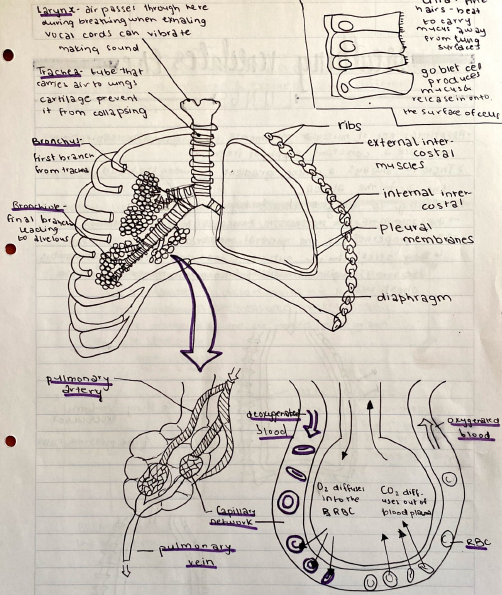
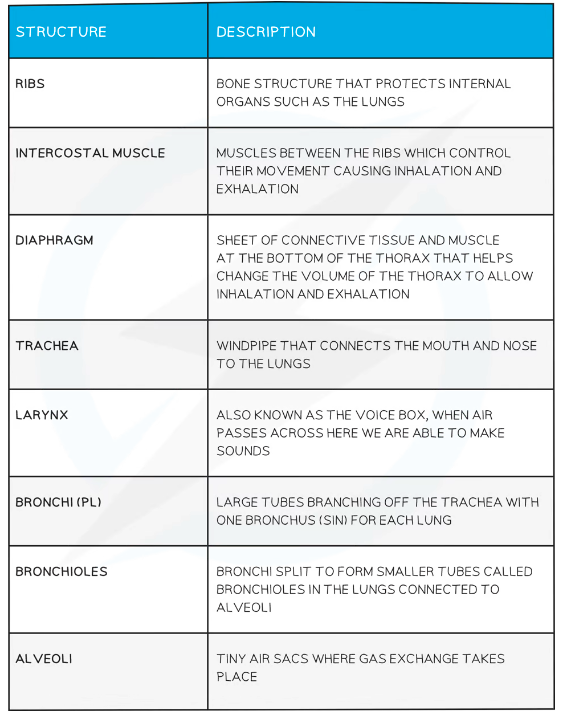
- Rings of cartilage surround the trachea (and bronchi)
- If they were not present then the sides could collapse inwards when the air pressure inside the tubes drops
Breathing Ventilates the lungs
- Breathing: Set of muscular movements that gives the respiratory surface a constant supply of fresh air
- There is always a concentration gradient between the blood and the air in the alveoli
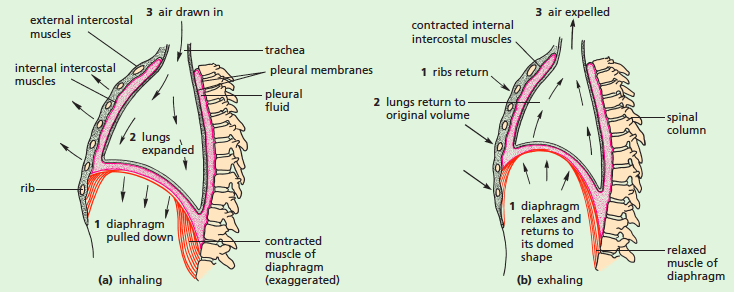
- Breathing is brought about by:
- The action of the intercostal muscles and the diaphragm
- The properties of the plueral membranes; Stick the outside of the lungs to the chest cavity so the lungs will automatically follow the movements of the chest wall
Air will always move from higher air pressure to lower air pressure.
- When the thorax volume increases it reduces the air pressure inside the thorax (below atmospheric pressure). Air therefore travels into the body i.e. inhalation
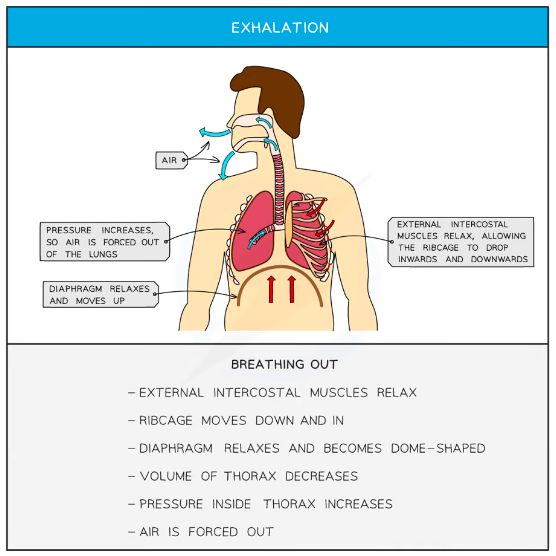
- When the thorax volume decreases it increases the air pressure inside the thorax (above atmospheric pressure). Air therefore travels out of the body i.e. exhalation
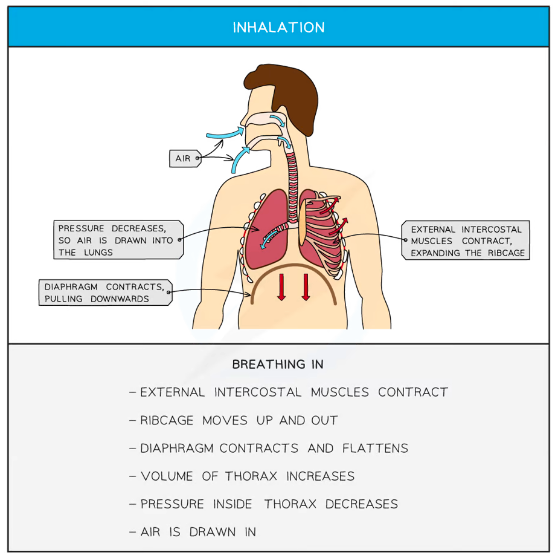
- Air is breathed in
- Gas exchange takes place
- Air is breathed out
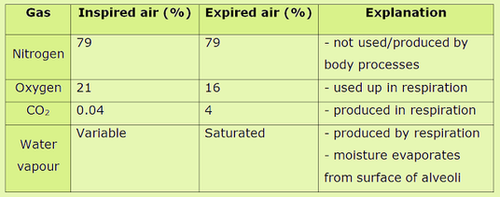
- Limewater test to confirm the presence of carbon dioxide in expired air
- Turns milky when carbon dioxide is blown into it
** \n Exercise and Breathing**
- Exercise means body cells respire more rapidly. More carbon dioxide is produced as a result and the increased carbon dioxide concentration in the blood leads to an increase in blood acidity
- The brain detects the increased blood acidity and signals for the increase in breathing rate and depth to allow carbon dioxide to be removed quicker and for oxygen to reach respiring cells faster
- Muscles need to release more energy by repiration
- Increased breathing rate - more breaths per minute
- Increased tidal volume- more air per breath
- This can increase the volume of air passing in and out of the lungs
Cillia and Goblet Cells
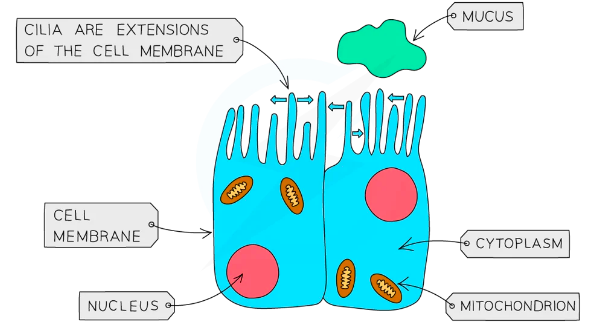
- The passages down to the lungs are lined with ciliated epithelial cells
- They have tiny hairs on the end of them that beat and push mucus up the passages towards the nose and throat where it can be removed
- The mucus is made by goblet cells
- The mucus traps particles, pathogens like bacteria or viruses, and dust and prevents them getting into the lungs and damaging the cells there