Untitled
4.1
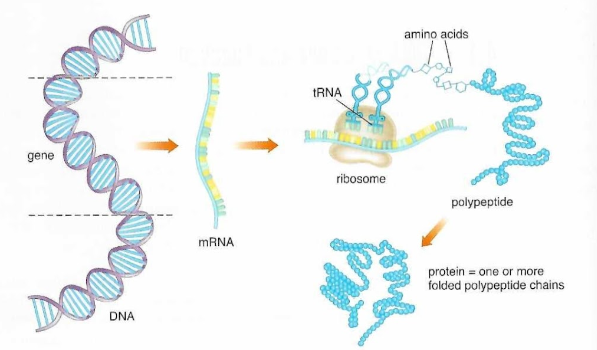
Genes get transcribed into mRNA and then mRNA ( at the ribosome ) gets translated into chains of amino acids and those amino acids fold to form polypeptide chains
4 Nitrogenous Base Pairs
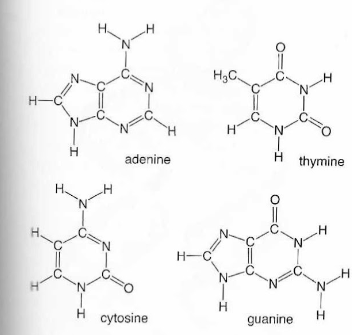
* Note the SHAPES of each of these. Guanine and Adenine have double rings
These shapes ensure the width is always the same
* Uracil is only used in RNA
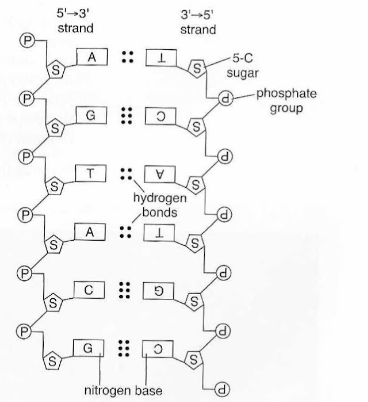
Pairs thru hydrogen bonds , A-T , G-C
DNA REPLICATION
|
Why is it called antiparallel?
|
|---|
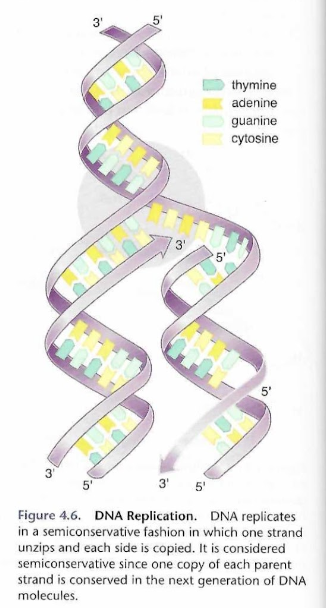
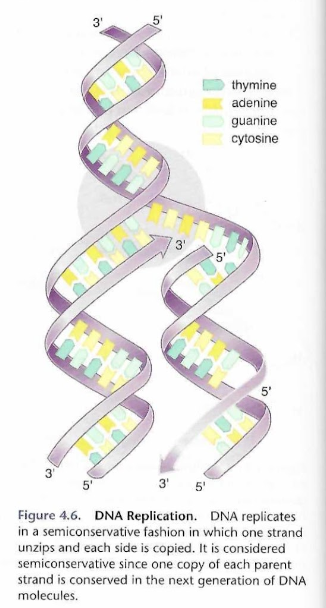
TLDR DNA unzips and each side is copied to conserve one strand of parent DNA.
4.2
Prokaryotes do not contain membrane-bound organelles
In prokaryotes. DNA attaches to a spot in the cell membrane (so its not so floaty)
Plasmids contain only a few genes that offer proteins for extreme situations characteristics
One has a several thousand genes
entire thing codes for RNA and proteins
no unused proteins
Gene Regulation - Operons
|
|---|
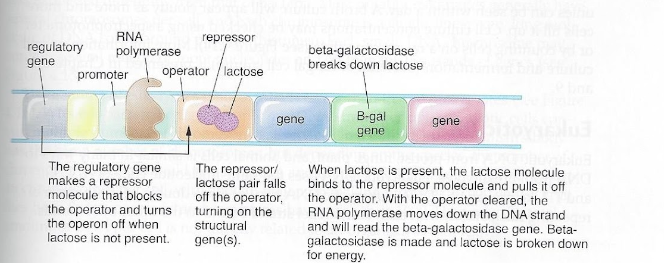
Operons can STOP dna from being transcribed (negative feedback turns gene on or off)
Promoter region is where it attaches to (produces product)
Chromosomes
We have 23 chromosomes PAIRS and 46 total chromosomes
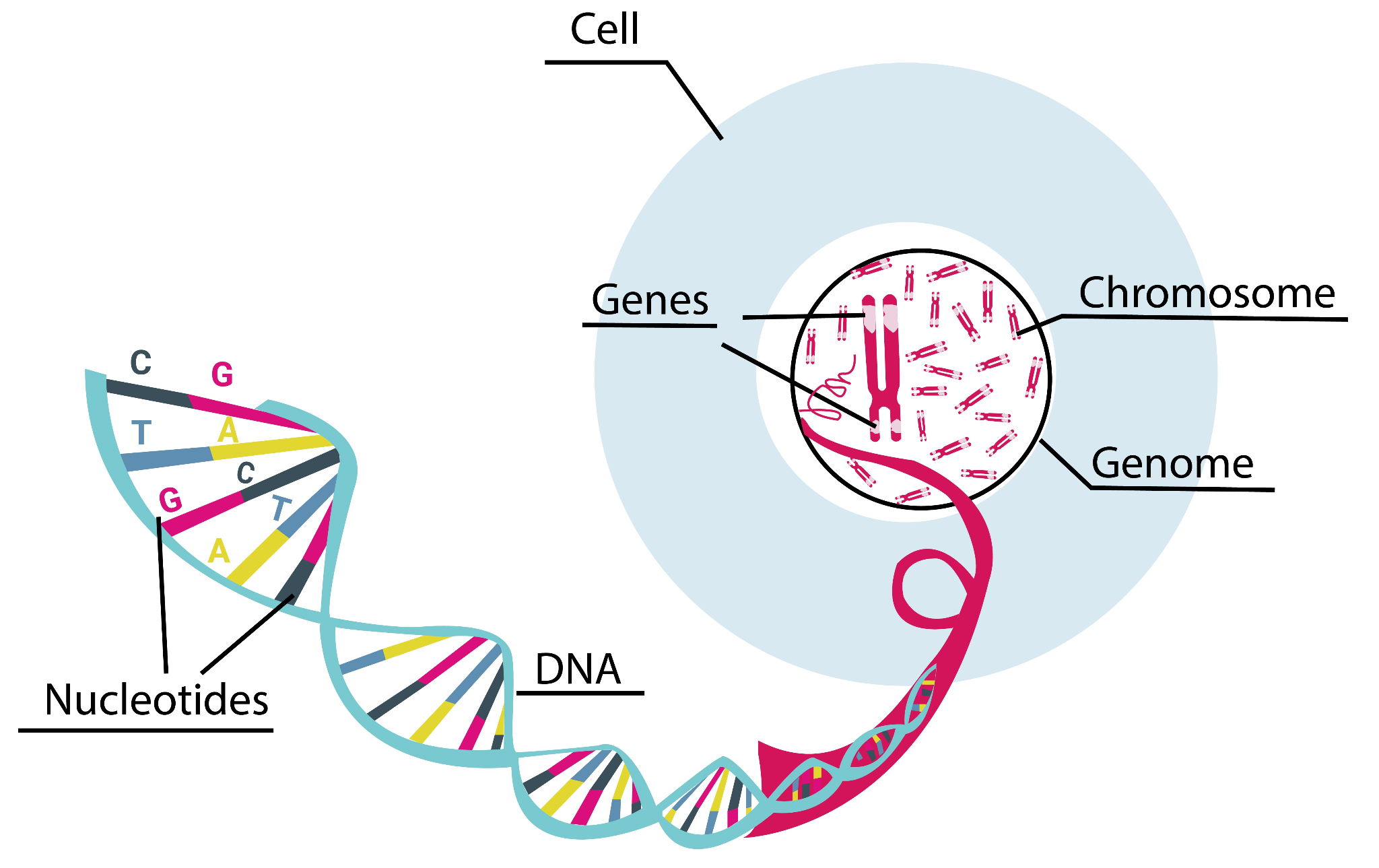
Genetic Engineering steps
Identify
Find the molecule
Separate
Isolate DNA sequence/ gene that codes for the molecule
Manipulate
Alter DNA by placing it somewhere else or altering it inside the original cell
Harvest
Collect molecule/product and market it.
* Note: If something has r before the name ex: “rDNA” it means RECOMBINANT
Common Gel Stains
Ethidium Bromide (EtBr)
Glows orange under UV
Methylene blue
Test Specific Studying
Need to know ALL terms and definitions
Isolating and Manipulating DNA Order and Step Definitions
Lots about Gel Electrophoresis
Agarose vs Polyacrymelide
What kind of molecules do they separate
If given proteins or DNA, what system would u use and why
Concentrations effect on molecules
Different Stains and how they function
In bacteria how many bands will u see given a certain amount of cuts
Ex: one cut gives __ # of bands
How are genes turned off and on?
Need to know introns extrons etc
Heavy on 4.2
How is DNA different and the same between all organisms
How SPECIFICALLY do you manipulate DNA
Test Studying Specific Answers:
Vocabulary at top of page
Isolation and Manipulation of DNA
Identify
Find the molecule
Separate
Isolate DNA sequence/ gene that codes for the molecule
Manipulate
Alter DNA by placing it somewhere else or altering it inside the original cell
Harvest
Collect molecule/product and market it.
Gel Electrophoresis
Polyacrylamide VS Agarose
Polyacrylamide gels (PAGE) seperate SMALLER molecules like proteins or TINY DNA/RNA
Agarose gel separates medium-large DNA 500-25,000 bp
RNA is smaller than DNA
Smears appear when theres a small concentration of thousands of different sizes of molecules
Concentration makes DNA move slower through gel
Types of Stains
Methylene Blue
attaches to DNA and proteins
Ethidium Bromide
DNA stain that glows under UV
Restriction enzymes cuts
# cuts = # of bands
DNA between organisms
All DNA has a double helix, runs antiparallel, has hydrogen bonds, etc.
NOT all DNA has the same number of strands
This means that their base pairs vary in length
Some DNA has LINEAR chromosomes or CIRCULAR
Manipulating DNA
Gene Therapy or Site Specific Mutagenesis