Mass Media: Unit 2
Folkmedia (Traditional Media)
Folk comes from the word “yolk” which means people in German.
Characteristics:
The entire cultural group participates in the activities
Folk media operates with materials that are available locally
The skills required for the operation of folk media do not require formal training
The people in the group are responsible for spreading information
Types of Folk Media
1. Drama
TamashaIt is a performance in Maharashtra which incorporates 3 basic elements Entertainment Tradition, Propoganda Tradition, and Devotion Tradition.
Nautanki
Nautanki is a form found in North India mend to entertain their audience with often vulgar and disrespectful stories.
This included lively dancing, drum beats, throated singing
Khayal
Khayal is mainly popularly performed in Rajasthan which is a combination of dance, song and drama.
Music is the most important component of this folk.
It is used not only for entertainment but also essential means of communication between actors
2. Street-Theatre
Popularly known as “nukkad natak”
3. Puppetry
Glove puppets
String puppets
Rod puppets
Shadow puppets
4. Music & Dance
It is the oldest form of classical art and it is the most natural representation of the emotions of the masses.
Marathi Bhajans: The traditional ragas of Maharashtra
Mand: Rajasthan folk tune
Gazal: Urdu poetry
Qawwali: High-pitched and fast-paced style of singing. Emerged from sayings of sufi saints + improvised Indian classical music.
5. Traditional paintings and symbols
Paintings: Bundelkhand
Paintings are usually done by a cast of professional painters called “Chiteras”Chattisgarh
A mud plaster base is used and the process is called LipaiMadhya Pradesh
Pithora- Bright colors realistic paintingMalwa and Nimar in Madhya Pradesh
Floor painting- a blend of red clay and cow dung
6. Storytelling
Characteristics of Print Media
Tangibility: Print media is physical and tangible allowing readers to hold, flip through and interact with content.
Credibility: Newspapers are often considered as a reliable and credible source of information.
Longevity: Print materials have a longer shelf life than digital media. eg: magazines have a shelf life. of months
Target Audience: Print media can be tailored to specific demographics and interests allowing advertisers and publishers to reach a targeted audience.
Editorial Control: Publishers have greater control over the content, layout, and design of print materials, ensuring a consistent and polished presentation
Advertisements: Print media is a common platform for displaying advertisements, ranging from full-page ads in magazines to classifieds in newspapers. Advertisers can reach a local or global audience through print media.
Accessibility: Print media is accessible without the need for an internet connection or electronic device, making it available to a wide range of readers, including those without internet access.
Visual Impact: Print materials allow for high-quality imagery, graphics, and design elements, enhancing the visual appeal of the content and ads.
Local Reach: Local newspapers and community magazines are vital for disseminating news, events, and information within a specific geographical area.
Archival Value: Print materials often serve as historical records, preserving significant events, stories, and cultural moments for posterity
Limited Interactivity: Unlike digital media, print media lacks interactive elements such as hyperlinks, videos, or real-time updates. Readers can't directly engage with the content beyond reading.
Environmental Impact: The production of print media can have environmental consequences due to the use of paper, ink, and energy. However, efforts are being made to increase sustainability in the print industry.
Costs: Printing and distributing physical materials can be expensive, and it may not be as cost-effective as digital alternatives, especially for small-scale or rapidly changing content.
Declining Circulation: With the rise of digital media, many print publications have seen declining circulation and revenue, leading to challenges for the print industry.
Limited space: Print media has limited space for content, which can be a constraint for in-depth coverage of complex topics.
Characteristics of Public Relations
Public relations is a strategic communication process that builds mutually beneficial relationships between organisations and their publics.
Media Relations: PR professionals work with journalists and media outlets to secure positive media coverage for their clients or organizations.
Crisis Management: PR practitioners are often responsible for managing an organization's response to crises or negative events.
Stakeholder Engagement: PR involves identifying and engaging with key stakeholders, including customers, employees, investors, and the community. Maintaining positive relationships with these groups is essential for the organization's success.
Content creation: Press releases, blog posts, social media updates & videos to convey messages to the audience
Employee communication: Maintaining effective communication with employees is a key aspect of PR. It includes internal newsletters, company-wide meetings, and ensuring that employees are informed and engaged.
Community Relations: PR practitioners often engage with the local community to build positive relationships and support community initiatives. This can include philanthropy, sponsorships, and volunteering efforts.
Social Media Management: Social media plays a crucial role in PR, with professionals using platforms like Facebook, Twitter, Instagram, and LinkedIn to connect with the public, share news, and manage the organization's online reputation.
Brand Management: PR plays a significant role in shaping and managing an organization's brand identity and reputation. It involves defining brand messaging, and positioning, and ensuring consistency in how the brand is perceived.
Sustainability & CSR: Many organisations use PR to communicate their commitment to sustainability and CSR initiatives showcasing their efforts to contribute positively to society and the environment.
Characteristics of Advertising
Paid promotion: Advertising involves a cost, as organizations pay for space or time to deliver their message through various media channels.
Target Audience: Advertisers typically identify a specific target audience or demographic group to tailor their message to the people most likely to be interested in their products or services.
Communication: Advertising is a form of communication that aims to inform persuade or remind the audience about a particular offering
Creativity: Successful advertising often involves creative concepts, designs, and messages to capture the audience's attention and leave a lasting impression.
Persuasion: Advertising seeks to persuade consumers to take a desired action, such as making a purchase, signing up for a service, or changing their behaviour.
Informational and Emotional Appeal: Advertisements can provide information about a product's features and benefits while also appealing to the emotions and aspirations of the audience.
Brand-building: Advertising is instrumental in building and reinforcing brand identity, helping consumers recognize and trust a particular brand.
Competition: In most industries, there is significant competition for consumers' attention, so advertising needs to stand out and be memorable.
Regulation: Advertising is subject to legal and ethical guidelines, with regulations in place to ensure accuracy, and fairness, and protect consumers from deceptive or misleading practices.
Characteristics of Digital Media
Digital media refers to digitised content that can be transmitted over the internet or computer network
Film and television content is provided via a high-speed internet connection rather than cable or provider
It is digital
In the digital process, data is converted into numbers. It can be compressed or decompressed to align for large data to be stored and distributed efficientlyIt is Interactive
Interactivity is “a measure of the media’s potential and ability to let the user exert an influence on the 32 Understanding ICT context and/or form of the mediated communication.” In this context, interactivity can be interpreted as a value-added characteristic of digital media.Hypertext
Hypertext is a form of text that is composed of blocks. The links between these blocks of content work as a knot to each other.
Thus, in the digital process, hypertext combines traditional text with interactive branching to create a non-linear text.Virtual
Augmented Reality
An enhanced version of reality created by the use of technology to add digital information to an image of something
Intercultural Communication Model
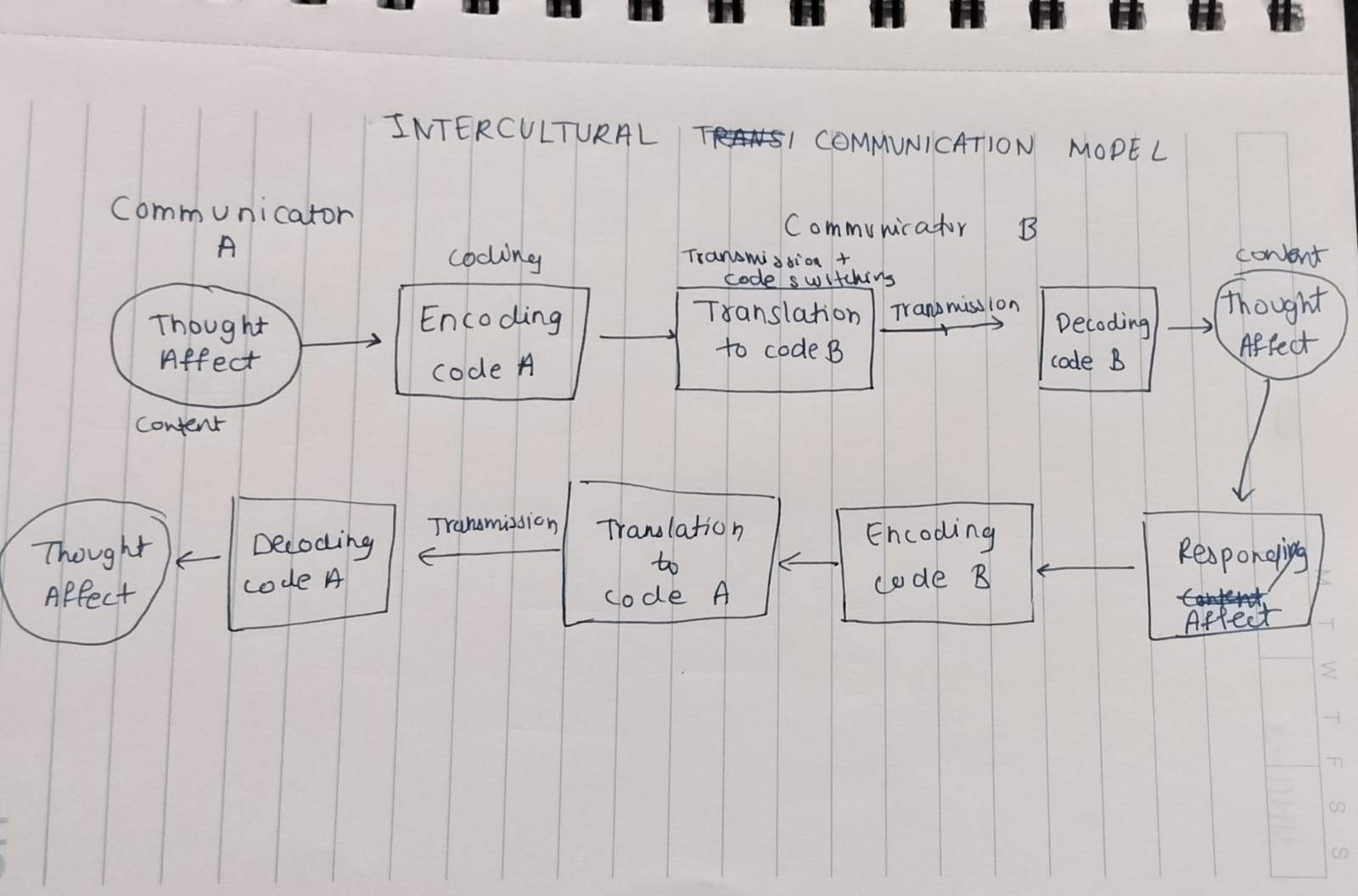
Intercultural communication refers to the communication between two different cultures. This means that when two or more people with different cultural backgrounds interact and communicate with each other or one another intercultural communication is set to take place.