Cognitive Models
One way to classify the models is with respect to how well they describe features of the competence and performance of the user.
Competence Models - represent the kinds of behavior expected of a user, but they provide little help in analyzing that behavior to determine its demands on the user.
Performance Models - provide analytical power mainly by focusing on routine behavior in very limited applications.
The presentation of the cognitive models follows this classification scheme, divided into the following categories:
hierarchical representation of the user’s task and goal structure
linguistic and grammatical models
physical and device-level models
Goal and Task Hierarchies
Two Models
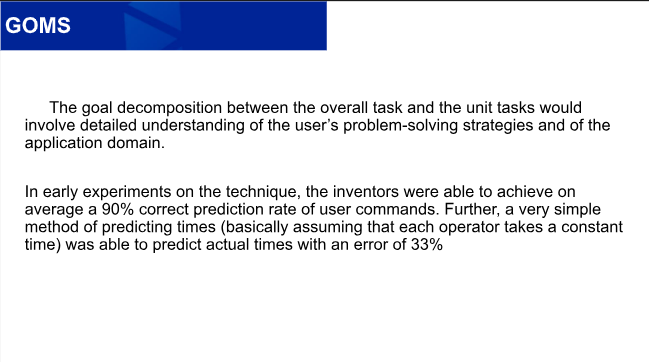
GOMS (Goals, Operators, Methods & Selection)
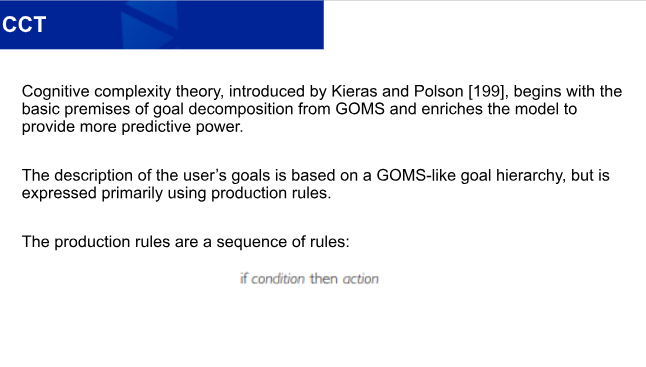
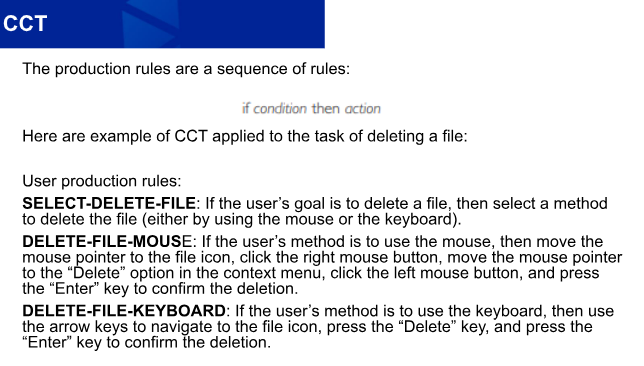
CCT (Cognitive Complexity Theory)
Goals, Operators, Methods & Selection Rules
The GOMS model of Card, Moran and Newell is an acronym for Goals, Operators, Methods and Selection.
The GOMS description consists of these four elements
Goals - these are the user’s goals, describing what the user wants to achieve.
Operators - These are the lowest level of analysis. They are the basic actions that the user must perform in order to use the system. They may affect the system (for ex., press the ‘X‘ key) or only the user’s mental state (for ex, read the dialog box)
Methods - series of operators that are used to accomplish the goal
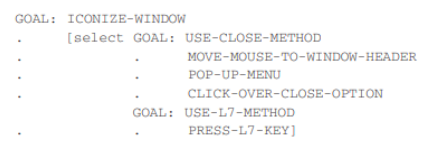
Selection - From the above snippet we see the use of the word select where the choice of methods arises. GOMS does not leave this as a random choice, but attempts to predict which methods will be used.
Cognitive Complexity Theory
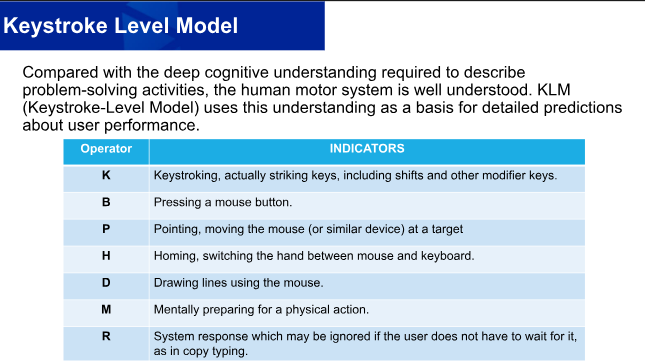
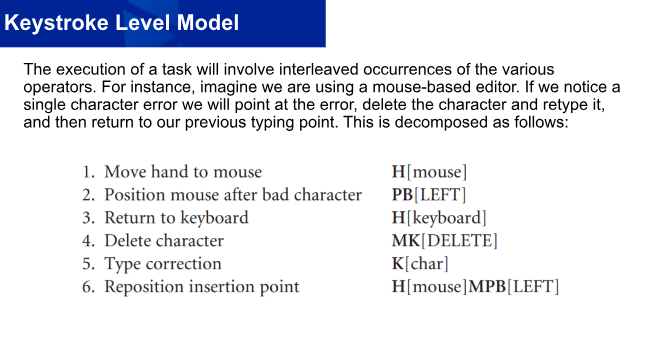
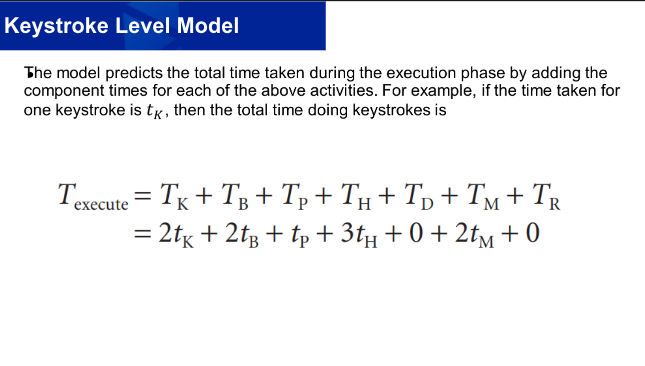
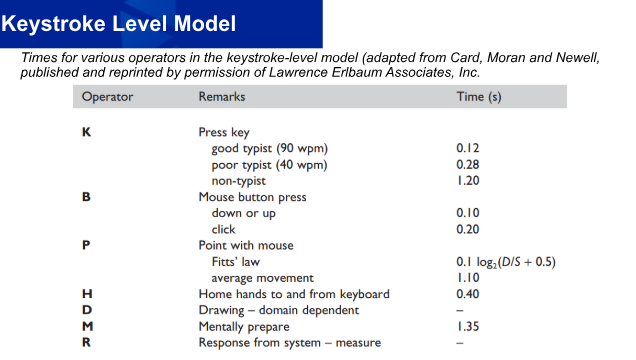
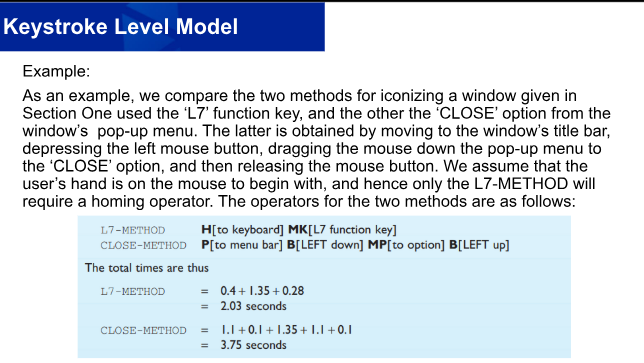
Keystroke Level Model