Fish Basics
Fish Basics
Diversity of Fish
Fish make up > ½ the 55,000 species of vertebrates
515 families, 62 orders
27,977 living species
108 = jawless
970 = cartilaginous — sharks, rays, skates
26,000+ = bony fishes
Fish = one species, fishes = more than one species
Wide diversity of physiological characteristics and habitats
Sizes range from 7mm minnow to 12 meter whale sharks
Can live in everywhere from alkaline springs—hypersaline lakes
Habitat: everywhere from sunless caves, temporary ponds, anoxic swamps
Lifespan = 10 weeks to 150 years
What makes a fish a fish?
Aquatic vertebrates
Poikilothermic (temperature varies), ectothermic (derives body temp from environment)
finned appendages
gills for respiration
body covering is made of scales
Exceptions exist to all of these.
Unusual Adaptations of Fish
Lungfishes can remain dormant for up to 4 years in drought (using a swim bladder)
Antarctic fishes can survive water that is colder than the freezing point of their blood
Deep sea fish can swallow prey larger than them (not very many prey items swimming by, so they must be able to eat whatever comes along)
Gender change is common (like clownfish, if the male dies then the female becomes the male, and young breeding clownfish become the breeding female)
Wide variety of parental care
Bioelectricity
Ability to produce light
Predatory tactics
Fish Evolution and Classification
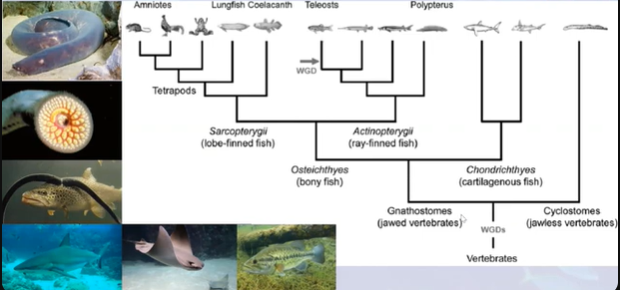
Most jawless fish are parasitic, and they suck on other fish