Latin spring assessment
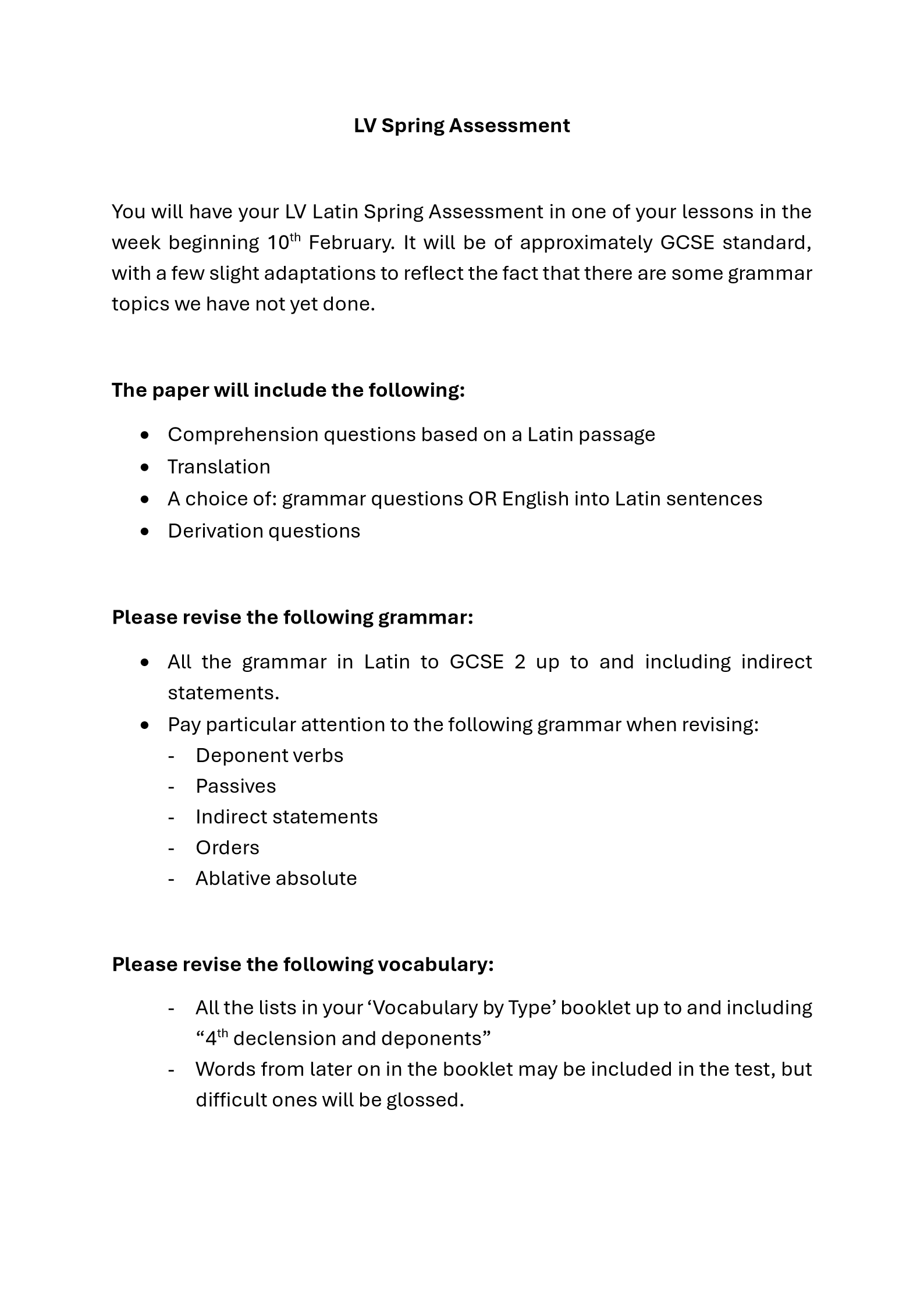
Small Words
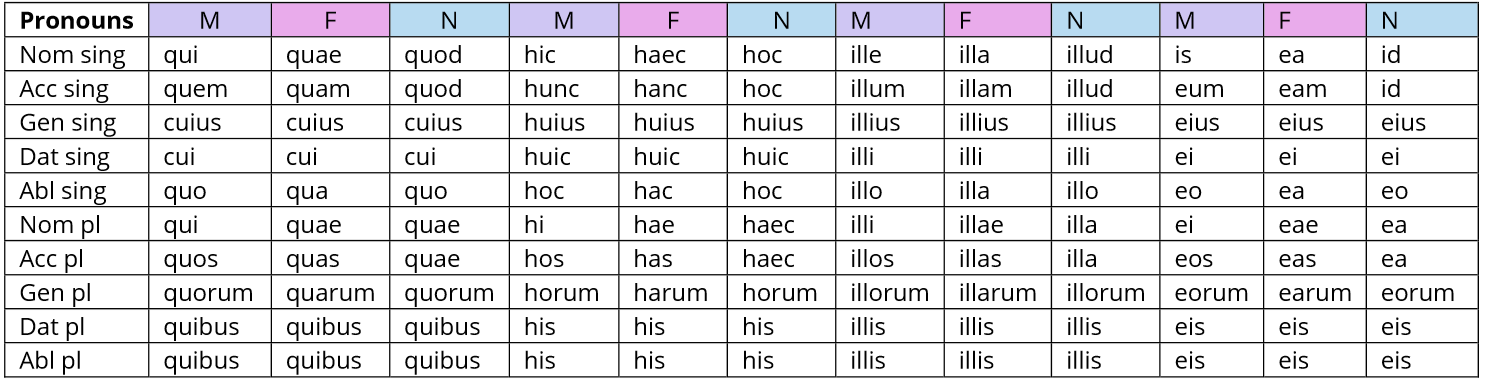
Pronouns
Prepositions
Accusative Prepositions:
ad (to), per (through), in (into), prope (near), apud (among/at the house of)
Ablative Prepositions:
cum (with), sine (without), de (about, concerning), in (in/on), sub (under)
Verbs
Here’s a breakdown of the verb tenses in both active and passive voices, with all six persons conjugated using amo, amare, amavi, amatus (to love) as the example.
Present Tense
Active:
1st Person Singular: amo - I love
2nd Person Singular: amas - you love
3rd Person Singular: amat - he/she/it loves
1st Person Plural: amamus - we love
2nd Person Plural: amatis - you (pl.) love
3rd Person Plural: amant - they love
Passive:
1st Person Singular: amor - I am loved
2nd Person Singular: amaris - you are loved
3rd Person Singular: amatur - he/she/it is loved
1st Person Plural: amamur - we are loved
2nd Person Plural: amamini - you (pl.) are loved
3rd Person Plural: amantur - they are loved
Perfect Tense
Active:
1st Person Singular: amavi - I have loved
2nd Person Singular: amavisti - you have loved
3rd Person Singular: amavit - he/she/it has loved
1st Person Plural: amavimus - we have loved
2nd Person Plural: amavistis - you (pl.) have loved
3rd Person Plural: amaverunt - they have loved
Passive:
1st Person Singular: amatus sum - I have been loved
2nd Person Singular: amatus es - you have been loved
3rd Person Singular: amatus est - he/she/it has been loved
1st Person Plural: amati sumus - we have been loved
2nd Person Plural: amati estis - you (pl.) have been loved
3rd Person Plural: amati sunt - they have been loved
Imperfect Tense
Active:
1st Person Singular: amabam - I was loving
2nd Person Singular: amabas - you were loving
3rd Person Singular: amabat - he/she/it was loving
1st Person Plural: amabamus - we were loving
2nd Person Plural: amabatis - you (pl.) were loving
3rd Person Plural: amabant - they were loving
Passive:
1st Person Singular: amabar - I was being loved
2nd Person Singular: amabaris - you were being loved
3rd Person Singular: amabatur - he/she/it was being loved
1st Person Plural: amabamur - we were being loved
2nd Person Plural: amabamini - you (pl.) were being loved
3rd Person Plural: amabantur - they were being loved
Pluperfect Tense
Active:
1st Person Singular: amaveram - I had loved
2nd Person Singular: amaveras - you had loved
3rd Person Singular: amaverat - he/she/it had loved
1st Person Plural: amaveramus - we had loved
2nd Person Plural: amaveratis - you (pl.) had loved
3rd Person Plural: amaverant - they had loved
Passive:
1st Person Singular: amatus eram - I had been loved
2nd Person Singular: amatus eras - you had been loved
3rd Person Singular: amatus erat - he/she/it had been loved
1st Person Plural: amati eramus - we had been loved
2nd Person Plural: amati eratis - you (pl.) had been loved
3rd Person Plural: amati erant - they had been loved
Future Tense
Active:
1st Person Singular: amabo - I will love
2nd Person Singular: amabis - you will love
3rd Person Singular: amabit - he/she/it will love
1st Person Plural: amabimus - we will love
2nd Person Plural: amabitis - you (pl.) will love
3rd Person Plural: amabunt - they will love
Passive:
1st Person Singular: amabor - I will be loved
2nd Person Singular: amaberis - you will be loved
3rd Person Singular: amabitur - he/she/it will be loved
1st Person Plural: amabimur - we will be loved
2nd Person Plural: amabimini - you (pl.) will be loved
3rd Person Plural: amabuntur - they will be loved
Infinitive
Present Active Infinitive:
amare - to love
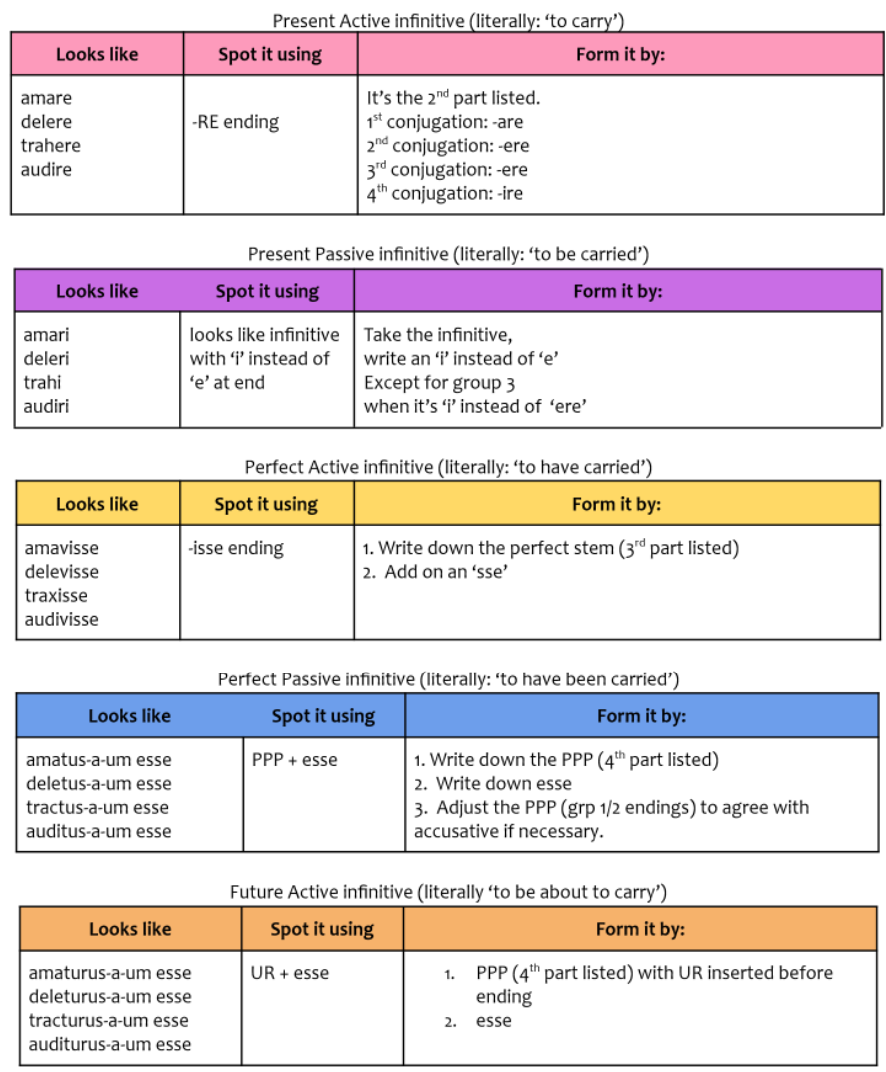
All the infinitives:
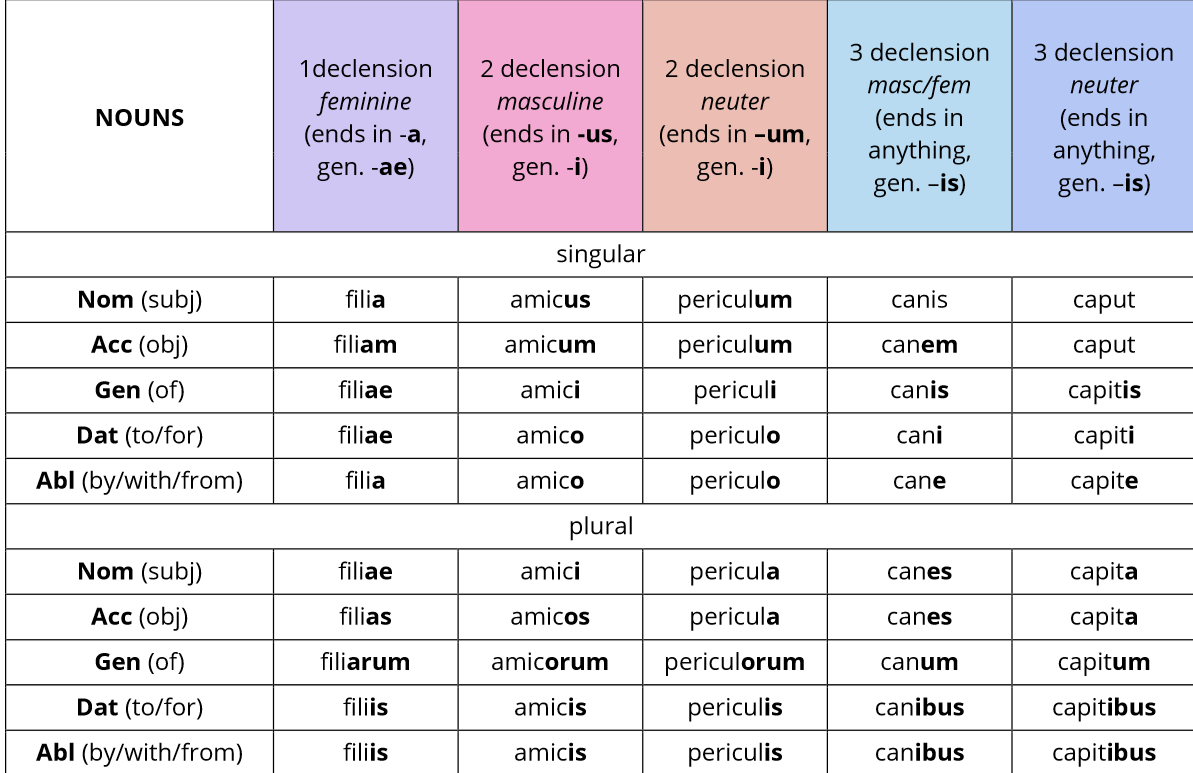
Nouns
Declensions: Review all five declensions (1st to 5th)
Cases: Nominative, Genitive, Dative, Accusative, Ablative, Vocative
Adjectives and Adverbs
Adjectives:
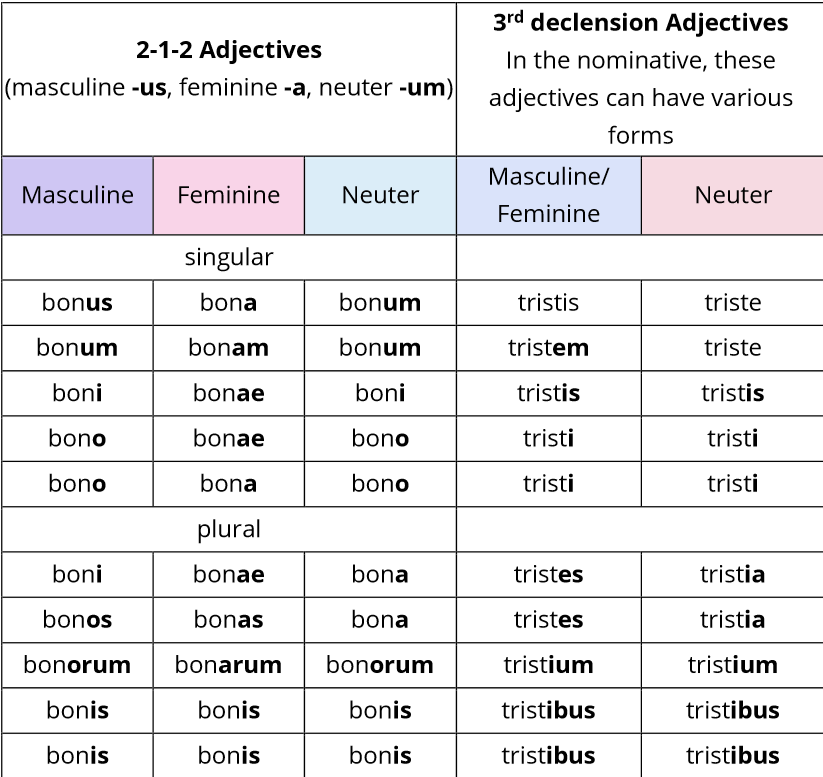
2-1-2 adjectives (e.g., bonus, -a, -um - good)
3rd declension adjectives (e.g., fortis, forte - brave)
Comparatives and Superlatives:
Comparatives (e.g., fortior - stronger)
Superlatives (e.g., fortissimus - strongest)
Adverbs:
Basic adverbs (e.g., celeriter - quickly)
Comparative adverbs (e.g., citius - more quickly)
Superlative adverbs (e.g., citissime - most quickly)
Participles
Present Active Participle (e.g., amans - loving)
Perfect Passive Participle (e.g., amatus, -a, -um - having been loved)
Irregular Verbs:

Special tense/verbs:
Deponent Verbs
What it is:
Deponent verbs are verbs that are passive in form but active in meaning. They are found in Latin and some other languages.
How it is formed:
Deponent verbs are conjugated using passive endings in all tenses but are translated actively.
Example Verb: Sequor, sequi, secutus sum (to follow)
Full Conjugation Across Tenses:
Present:
sequor (I follow)
sequeris (you follow)
sequitur (he/she/it follows)
sequimur (we follow)
sequimini (you all follow)
sequuntur (they follow)
Imperfect:
sequebar (I was following)
sequebaris (you were following)
sequebatur (he/she/it was following)
sequebamur (we were following)
sequebamini (you all were following)
sequebantur (they were following)
Future:
sequentur (I will follow)
sequeris (you will follow)
sequetur (he/she/it will follow)
sequemur (we will follow)
sequemini (you all will follow)
sequentur (they will follow)
Perfect:
secutus sum (I have followed)
secutus es (you have followed)
secutus est (he/she/it has followed)
secuti sumus (we have followed)
secuti estis (you all have followed)
secuti sunt (they have followed)
Pluperfect:
secutus eram (I had followed)
secutus eras (you had followed)
secutus erat (he/she/it had followed)
secuti eramus (we had followed)
secuti eratis (you all had followed)
secuti erant (they had followed)
Future Perfect:
secutus ero (I will have followed)
secutus eris (you will have followed)
secutus erit (he/she/it will have followed)
secuti erimus (we will have followed)
secuti eritis (you all will have followed)
secuti erunt (they will have followed)
Passives
What it is:
Passive voice indicates that the subject is acted upon by someone or something else.
How it is formed:
In Latin, the passive is formed by using passive verb endings:
Present: -r, -ris, -tur, -mur, -mini, -ntur
Perfect: Passive participle + form of sum
Future perfect and pluperfect use esse forms.
Example Verb: Amare (to love)
Full Conjugation Across Tenses (Indicative):
Present:
amor (I am loved)
amaris (you are loved)
amatur (he/she/it is loved)
amamur (we are loved)
amamini (you all are loved)
amantur (they are loved)
Imperfect:
amabar (I was loved)
amabaris (you were loved)
amabatur (he/she/it was loved)
amabamur (we were loved)
amabamini (you all were loved)
amabantur (they were loved)
Future:
amabor (I will be loved)
amaberis (you will be loved)
amabitur (he/she/it will be loved)
amabimur (we will be loved)
amabimini (you all will be loved)
amabuntur (they will be loved)
Perfect:
amatus sum (I have been loved)
amatus es (you have been loved)
amatus est (he/she/it has been loved)
amati sumus (we have been loved)
amati estis (you all have been loved)
amati sunt (they have been loved)
Pluperfect:
amatus eram (I had been loved)
amatus eras (you had been loved)
amatus erat (he/she/it had been loved)
amati eramus (we had been loved)
amati eratis (you all had been loved)
amati erant (they had been loved)
Future Perfect:
amatus ero (I will have been loved)
amatus eris (you will have been loved)
amatus erit (he/she/it will have been loved)
amati erimus (we will have been loved)
amati eritis (you all will have been loved)
amati erunt (they will have been loved)
Indirect Statements
What it is:
Indirect statements report someone else’s words, thoughts, or beliefs, without quoting them directly. In Latin, they use an accusative subject and an infinitive verb.
How it is formed:
Introduced by a verb of saying, thinking, perceiving, or knowing.
The subject of the indirect statement is in the accusative.
The verb is in the infinitive.
Example:
Direct statement: Marcus dicit: "Ego venio." (Marcus says, “I am coming.”)
Indirect statement: Marcus dicit se venire. (Marcus says that he is coming.)
Infinitives Used:
Present: amare (to love), amari (to be loved)
Perfect: amavisse (to have loved), amatus esse (to have been loved)
Future: amaturus esse (to be about to love)
Orders
What it is:
Orders in Latin are typically expressed using the imperative mood, which gives commands or requests.
How it is formed:
Present imperative singular: base form of the verb (e.g., ama! - love!).
Present imperative plural: add -te to the base form (e.g., amate! - love, you all!).
Negative commands use noli (singular) or nolite (plural) with the infinitive.
Example:
Positive: Porta libros! (Carry the books!)
Negative: Noli portare libros! (Do not carry the books!)
Conjugations needed:
Only the imperative forms:
Singular: ama, mone, audi (love, warn, listen)
Plural: amate, monete, audite (love, warn, listen)
Ablative Absolute
What it is:
An ablative absolute is a construction consisting of a noun and a participle (both in the ablative case) that provides background information or context.
How it is formed:
Noun/pronoun in the ablative case.
Participle agreeing with the noun in case, number, and gender.
Example:
Hostibus victis, milites laeti erant.
(With the enemies having been defeated, the soldiers were happy.)
Conjugations needed:
Participles in ablative case:
Present participle: -nte/-ntibus (e.g., amante - loving)
Perfect participle: -o/-is (e.g., amato - having been loved).