LAB for anat/ phys
Scientific Method - the biological phenomena which has a long history of helping with asking questions and receive knowledge and logical conclusions
Scientific method consists of 1) Observation 2) Hypothesis 3) Experimentation 4) Analysis of Data 5) Drawing conclusions
While doing an experiment, we utilize a independent variable and dependent variable —
Independent Variable- is the variable that can be change in the experiment but it is already determine when doing the experiment (is manipulated, what is set) ex: the babies receive dose of vaccine
Dependent Variable- is the variable that is being measure and will give results from the experimentation (what is measured) ex: number of babies w/ illness
Standardized variable is held constant for all objects ex: the age and health of children is constant
What is a control in an experiment? - A control group is the untreated or un touch group, receive placebo while conducting an experiment used for comparison
Control Group- is the normal or untreated group
Experimental Group- is the independent variable that is manipulated
ex: they resemble the treatment group but doesn’t receive treatment
Graphing- the independent variable is on the x- axis line (horizontal) —-the dependent variable is on the y-axis line (vertical) (what is measure)
What is hypothesis? Hypothesis is the collective information conquer by the observation to formulate an educated guess or a proposed explanation
What is a theory? A theory serves as an explanation statement from facts, laws, or confirmed hypotheses
Metric Measurement System Units consists:
Length—-meter, mass—gram, volume--liter, time—second, temperature— Celsius
The metric system is a base 10 system. This means that each successive unit is 10 times larger than the previous one.
Metric Conversions
To convert m to cm, multiply by 100.
To convert cm to mm, multiply by 10.
To convert km to m, multiply by 1000.
To convert kg to grams, multiply by 1000.
To convert grams to mg, multiply by 1000.
To convert liters to kiloliters, divide by 1000.
To convert ml to liters, divide by 1000.
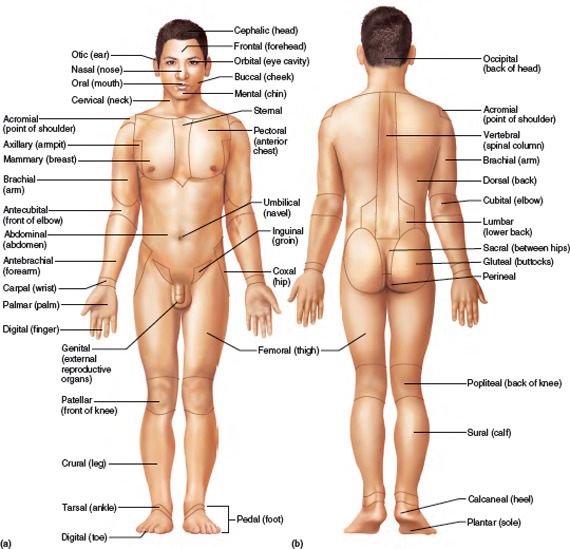
Centimeters can be used to measure a person’s height
inches is NOT part of the metric system
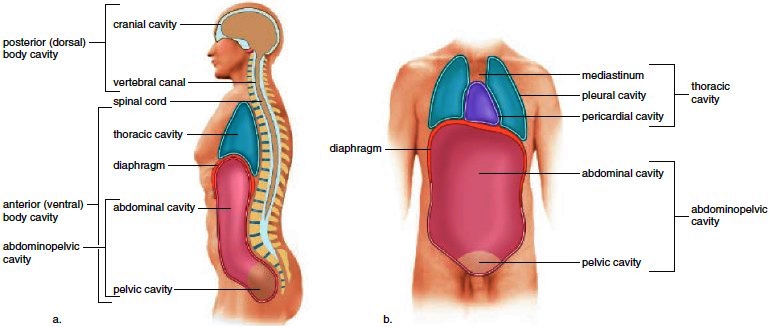
Major body cavities consists of Cranial cavity, vertebral canal, thyoracic cavity, diaphragm , abdominal cavity, and pelvic cavity
Cranial cavity contains the brain
Vertebral cavity contains the spinal cord, cerebrospinal fluid (csf)
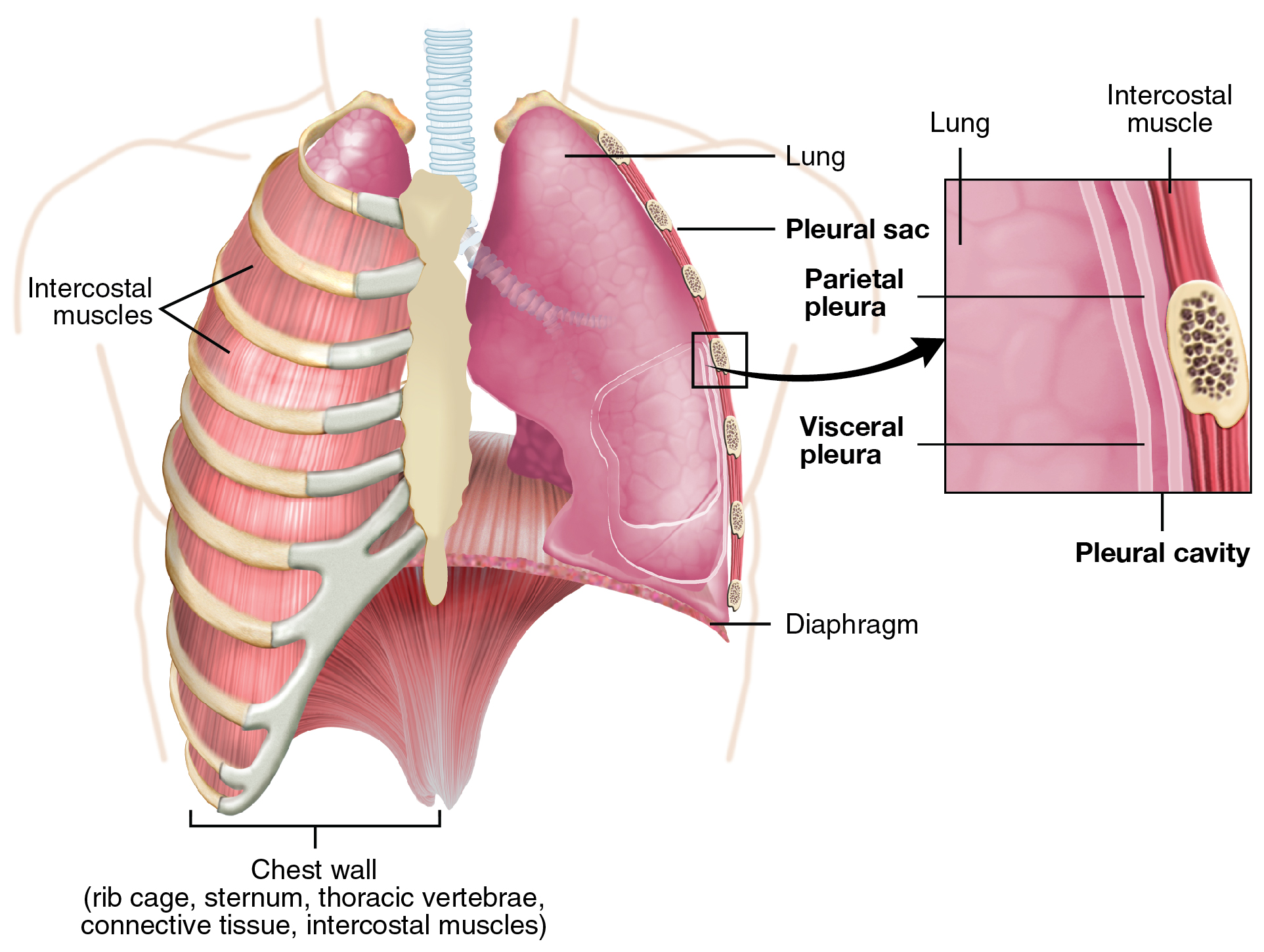
Thoracic cavity is located in the chest, contains the heart, esophagus & trachea, lungs —- it house the lungs and inside of them they contain the pleural cavity. Inside of the lung there is a tissue that surrounds/clings to the lung which is the Visceral pleural and the Parietal Pleura surrounds the wall of the lung
— in the space outside the pleural cavity of the lungs, there is a pleura cavity that has fluid of serosa to help reduce friction when breathing
Pleura surrounds the lungs, inner layer = the visceral pleura
the parietal pleura is the outer layer that covers the wall
thoracic cavity of the lung= pleural
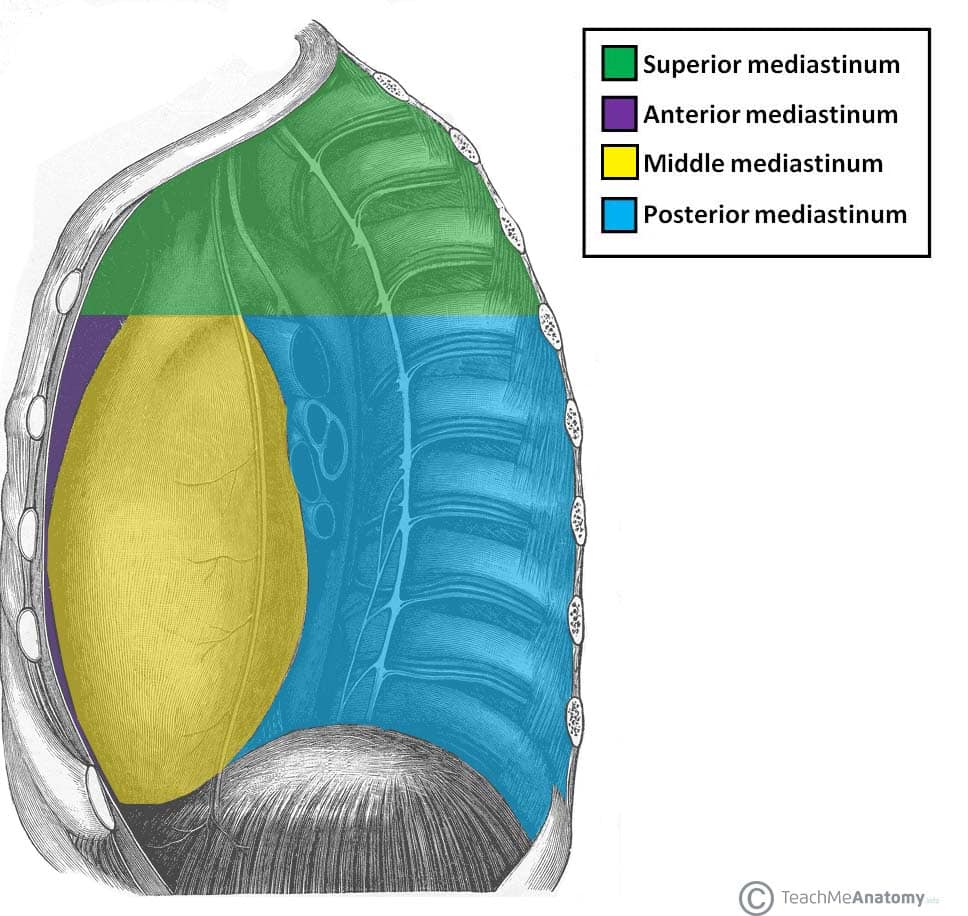
-in between the lungs there is the mediastinum - superior mediastinum and inferior mediastinum
middle mediastinum contains the heart, the tissue that clings along the heart is visceral pericardium and the parietal pericardium clings on the wall of the heart
-in the space between of them holds the pericardial cavity and has serous fluid to reduce friction
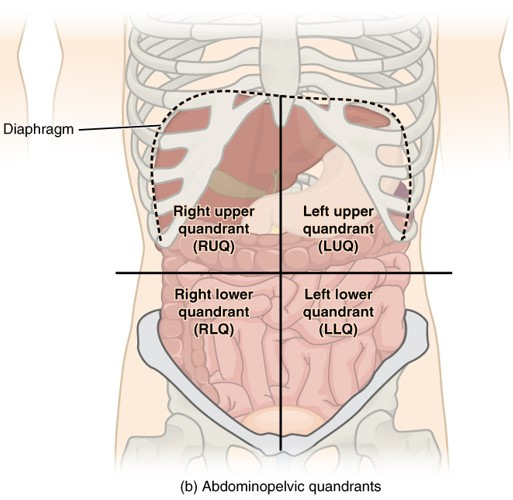
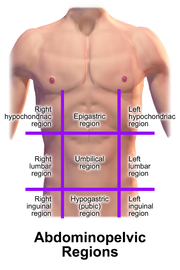
The entire abdominopelvic cavity contains 4 quadrants and 9 regions
ventral, anterior = in front of body
dorsal, posterior= behind, the back
pericardium, pleural, and peritoneum, are thin layer of the serous membrane that line the thoracic cavity and abdominopelvic cavity. -each has serous fluid that provides organs with movement and reduce friction
diaphragm separates the thoracic and abdominopelvic, functions in respiration
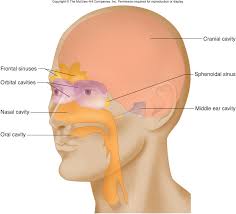
other body cavities consist of nasal cavity, oral cavity, middle ear cavity, orbital cavity and synovial cavity (joints the jaw)
Pericardium surrounds the heart, its the parietal pericardium surrounds the wall of the heart & the visceral pericardium surrounds the tissue of the heart — in between the space of them its the pericardial cavity
heart= pericardium
abdominopelvic cavity- there are some many body parts that are in this cavity
abdominopelvic cavity = peritoneum
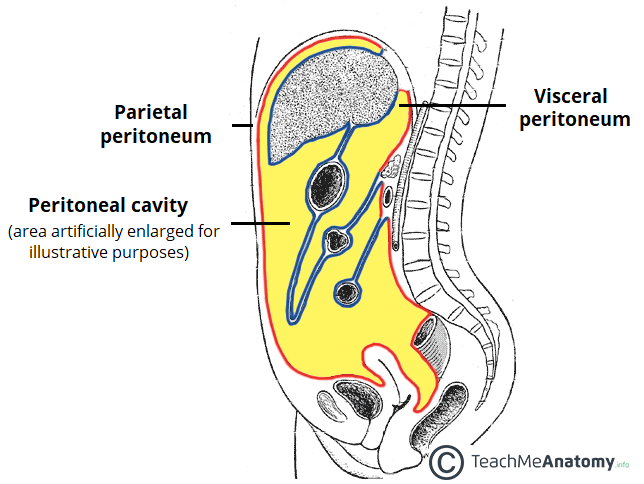
an organ inside the cavity has a tissue that clings surround the organ- is the visceral peritoneum
the tissue that clings to the wall is parietal peritoneum
the cavity between parietal and visceral is the Peritoneal cavity this contains serous fluid
mesentery - is structure that connect the parietal and visceral
pelvic brim is the imaginary line that separates the pelvic cavity from the abdominal cavity
The abdominopelvic cavity consists of 4 quadrants and 9 regions
Right Upper Quadrant- contains the right kidney, gallbladder, liver
Left Upper Quadrant - contains the left kidney, spleen, left adrenal, etc.
Right Lower Quadrant- contains appendix, ascending colon, reproductive organs
Left Lower Quadrant - contains the descending colon, left ureter
The 9 regions of the abdominal cavity consists
Right Hypochondriac
Mind Map: 9 Regions of the Abdominal Cavity
Central Idea
Abdominal Cavity Regions
Main Branches
Right Hypochondriac Region
Organs
Liver
Gallbladder
Right kidney
Common Conditions
Gallstones
Liver disease
Epigastric Region
Organs
Stomach
Pancreas
Duodenum
Common Conditions
Gastritis
Peptic ulcers
Left Hypochondriac Region
Organs
Spleen
Left kidney
Stomach
Common Conditions
Splenomegaly
Gastric issues
Right Lumbar Region
Organs
Ascending colon
Right kidney
Common Conditions
Kidney stones
Appendicitis
Umbilical Region
Organs
Small intestine
Transverse colon
Common Conditions
Umbilical hernia
Intestinal obstruction
Left Lumbar Region
Organs
Descending colon
Left kidney
Common Conditions
Diverticulitis
Kidney issues
Right Iliac Region
Organs
Appendix
Cecum
Common Conditions
Appendicitis
Crohn's disease
Hypogastric Region
Organs
Bladder
Reproductive organs
Common Conditions
Urinary tract infections
Pelvic inflammatory disease
Left Iliac (inguinal) Region
Organs
Sigmoid colon
Left ovary (in females)
Common Conditions
Constipation
Ovarian cysts
Conclusion
Understanding the regions aids in diagnosing abdominal conditions and locating organs
Dorsal (back)cavities consists of the vertebral cavity and the cranial cavity
Ventral (in front) consists of thoracic cavity and abdominal cavity
List 11 organ system
Integumentary system
skeletal system
muscular system
nervous system *
endocrine system
cardiovascular
lymphatic system
respiratory system
digestive system
reproductive system
urinary system
Integumentary S. provides protection, regulates body temperature. consists of skin (composed of epidermis and dermis), hair, nails
Skeletal S. provides support and protection, allows body movements , produce blood cells
-consists of bones (head, torso ,limbs), ligaments (connects bones to bones), joints
Muscular S. Allows body movements , helps w/ posture, produce body heat
-consists of skeletal muscles (allows voluntary movements), tendons (connects muscles to bones)
Nervous S. detects changes, sensations, control movements,
consists of the brain (cranial cavity), spinal cord (vertebral canal), nerves (conducts impulses into and from the brain & spinal cord
Endocrine S. influences metabolism, growth, secretes hormones
-pituitary gland -attached to base of the brain'
thyroid gland- anterior neck
parathyroid glands - 4 glands, embedded on the posterior thyroid gland
pancreas- located on left upper quadrant- influences sugar
cardiovascular s. transports nutrients, gases, waste products throughout the body , place role in the immune system —- consists of the heart (muscular pump for blood), blood vessels, arteries (transports blood away from heart), veins (transport blood back to the heart)
Lymphatic s. - removes foreign substances from the blood and lymph, combats diseases, houses and produces immune cells . consists of lymphatic vessels (carry lymph fluid), lymph nodes (contains leukocytes that help fight infections), spleen
Respiratory S.- exchanges oxygen and carbon dioxide between the blood and air, regulates blood ph. consists of lungs, nasal cavity, pharynx (passage of air), larynx (house of vocal cords), bronchi (airway tubes of lung)
digestive s. -performs the mechanical and chemical process of digestion, the breakdown of food molecules, absorbs nutrients and eliminates waste. consists of mouth, tongue, teeth (biting & chewing), salivary glands (causes saliva), pharynx, esophagus (tube from pharynx to stomach), liver, gallbladder, pancreas, small &large intestines.
Urinary S. - removes wastes products from blood & regulates blood ph.
consists of kidneys, ureters (tubes from kidney to urinary bladder), urinary bladder (stores urine), urethra
Reproductive S.
Female repro. produces egg production and fetal development, site of fertilization. consists of ovaries (produces eggs and hormones), uterine tubes (transports eggs), uterus (structure for fetal development), vagina
Male repro- produces and transforms sperm cells to the female (sperm production) consists of scrotum, testes (produces sperms & hormones), ducts, penis, urethra (transports semen and urine)