Biotechnology
Breeding for crop improvement has been going on for millennia, they have been bred for increased yield, disease resistance, and increased ease of harvesting.
Classical Breeding
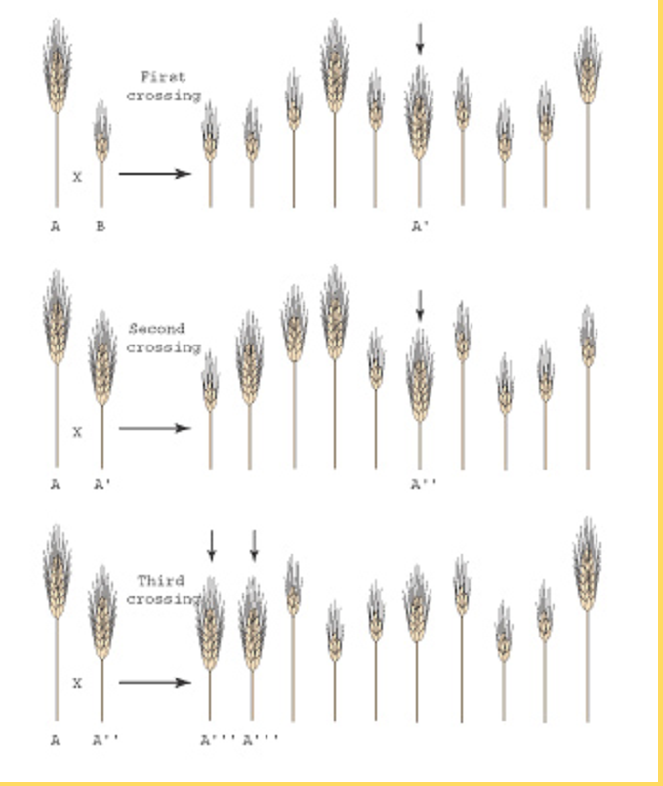
For wheat, the breeding involves crossing 2 varieties, one of which has a desirable trait that the breeder wants to introduce into the original variety. After the initial cross, there are many generations of selection for the desirable progeny. The goal was to make short-stemmed wheat that had the same size grain. The short stems (blowing over). Lodging reduced the ability to harvest grain because the plant is flat on the ground. Reduced lodging leads to increased grain being harvested.
Green Revolution
Dr. Norman Borlaug developed dwarf varieties of wheat that do NOT lodge. This work was don’t at the CGIAR (Consultative Group for International Agriculture Research) in Mexico (CMMYT). Dwarf or semi-dwarf rice was also developed at the CGIAR in the Philippines (IRRI) which also does not lodge. This work was done in the 1950s and 60s through conventional plant breeding. Two generations per year were possible by breeding at two different sites in Mexico. The result was that as long as crops received fertilizer and irrigation the yields were phenomenal. Despite the positives, people always find negatives such as the cost (not everyone had the resources to buy the Green Revolution seeds), you must use fertilizer and water, which can be environmentally damaging. Nevertheless, the Green Revolution saved millions of lives and reduced malnutrition, particularly in India. Today, a large percentage of wheat and rice varieties that are grown worldwide are derived from these Green Revolution varieties developed by Dr. Borlaug and his colleagues.
Biotechnology
Biotechnology: the manipulation of biological processes to serve our needs.
Advances in sciences leading up to the 1990s allowed for genes of other organisms to be identified, isolated, and incorporated into another organism. This is possible because the genetic code is universal.
Applied to Plants
The plants containing foreign DNA are considered “transgenic” AKA genetically modified organisms (GMOs)
First, scientists must identify a “problem” this could be susceptibility to disease, to insect herbivory, or a nutritional deficiency, now we solve the problem. If the problem can be fixed by adding one or more genes, we can then find an organism with the gene we want. We isolate that gene from the donor along with the promotor. The gene must be activated in the correct organ at the right time. In some cases, enhancers or other factors need to be added for transcription.
Now that we have our gene we need to get it into the plant cells. This can be done by going through the wall or by removing the wall and only working with the protoplast (but you’ll have to regrow the wall later). The reason we are able to do this is that plants are totipotent, meaning they are able to regenerate from a group of cells. You can also use intact plants or parts of plants (leaf discs). By using a bacterial vector you can get the DNA into the plant cells through the cell wall.
Agrobacterium Tumifaciens
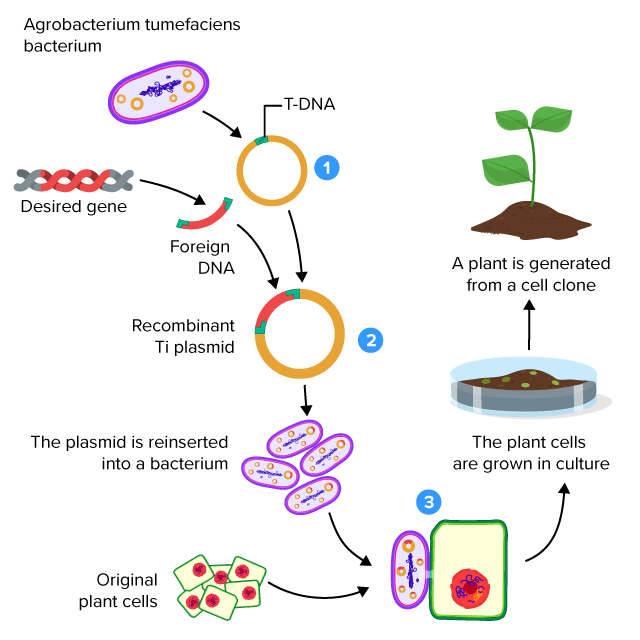
Agrobacterium Tumifaciens is a soil bacteria that infect plants and causes Crown Gall Disease (tumor growth). This happens because Agrobacterium Tumifaciens has a tumor-inducing plasmid (Ti) that contains genes that encode an enzyme in the biosynthetic pathways of plant hormones. This plasmid is inserted into DNA through Horizontal Gene Transfer (HGT). The “transformed” cells make auxin and cytokinin and form a tumor (the gall).
In Biotechnology, we use Agrobacterium Tumifaciens as a Vector but we take out the hormone-encoding, tumor-inducing gene. To do this we extract the plasmid, disarm it so no gall, insert the gene you want, you also need to insert a “selectable marker” (like antibiotic resistance, fluorescence), return the plasmid into the bacteria, and make copies, expose the recipient plant “leaf disc” to Agrobacterium containing the plasmid, the bacterium gets into the plant cell. Plasmid DNA is incorporated into the plant’s DNA and the foreign genes will be expressed. Next, you regenerate the whole plant from the leaf disc but since we only want the transformed plant which if you added antibiotic resistance will grow in the presence of an antibiotic.
However, not all plants can be infected with Agrobacterium Tumifaciens like monocots. In cases like these other modes of DNA transfer are needed, such as a gene gun (which uses gold particles coated with DNA that is shot into plant cells) and somehow the DNA gets incorporated into the plant’s cells.
Tomato
The 1st GMO to reach the marketplace were tomatoes that didn’t overripen and were engineered using antisense technology. This stops the ethylene gene at right time. Antisense technology and RNA interference is a newer version of the same biological intervention to suppress the transcription of a native gene. Basically plugs in complementary microRNA (forms a hairpin) so it can’t be translated.
CRISPR-Cas9 Method
CRISPR stands for Clustered Regularly Interspaced Short Palindromic Repeats. CRISPR-Cas9 is a method for gene editing that will knock out or alters a gene without inserting new DNA. A piece of guide RNA (sgRNA) hybridizes with the target DNA, which is broken down by Cas9 endonuclease.
This helped create tomatoes that are machine-harvest inclined.
CRISPR doesn’t involve foreign DNA, more likely acceptable to people who don’t want to eat foreign DNA. Probably easier to pass through regulation. None have been approved for human consumption yet, but this is a very active area of research.
Golden Rice
In the early 2000s, 250,000-500,000 children go blind due to vitamin A deficiency, which causes blindness that is permanent. In certain parts of Asia, 80% of calories come from rice, no fruits or vegetables, and they’ll need supplemental Beta-Carotene (Pro-Vitamin A). Beta-Carotene is not a protein, it’s a lipid. Rice contains no gene for the enzyme that creates Beta-Carotene.
The Biosynthetic Pathway
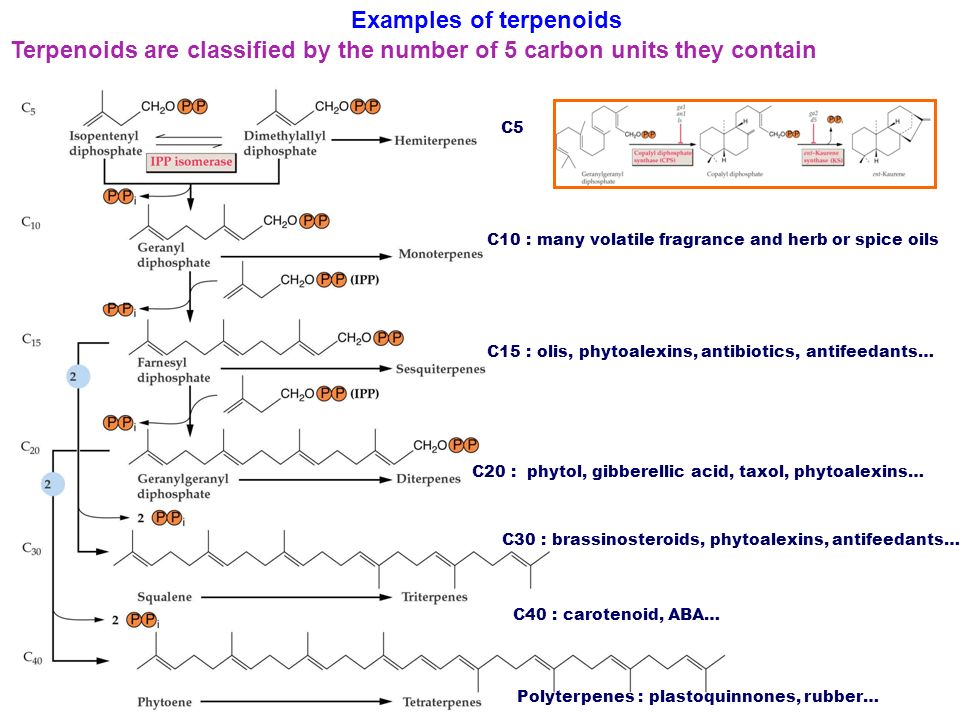 Terpenoids are built from 5-carbon unit isoprenoid (IPP and DMAPP) combined to form a 20-carbon chain is GGPP, and 2GGPP combine to give phytoene (40C) which is a precursor of pro-vitamin A.
The endosperm of rice makes GGPP, but not phytoene, so we need to add an enzyme for phytoene and the carotenoids (there are three of them (PSY, PDS, ZDS) or 2 (PSY and CRT1)). The construct has two genes and promoters (1 from daffodils and 1 from bacteria) the rice plants were then transformed by Agrobacterium. This was achieved by Dr. Ingus Potrykus in Zurich, Switzerland. The first form was simply proof-of-concept and had low levels of beta-carotene. The second form, however, has enough beta-carotene to prevent blindness when fed to children.
Transgenic Crops Approved in the USA
Transgenic crops can be more nutritious, grown in low tillage, and resistant to pathogenic attack.
| Crop | Genetically Engineered Trait |
|---|---|
| Alfalfa | Herbicide resistance |
| Canola | Herbicide resistance, Lauric acid production |
| Corn | Herbicide resistance, Bt gene for insecticide resistance |
| Cotton | Herbicide resistance, Bt gene for insecticide resistance |
| Papaya | Virus Resistance |
| Potato | Bt gene for insecticide resistance |
| Soybean | Herbicide resistance, high oleic acid production |
| Squash | Herbicide resistance, Virus Resistance |
| Sugarbeet | Herbicide resistance |
| Tomato | Delayed ripening, Thicker skin |
Weed Control (Herbicides)
Weeds compete with crops for water, nutrients, and light, and may harbor pests or pathogens. Farmers don’t exactly want weeds in their crops, so they tend to use herbicides which may kill crop plants too. Through genetic engineering, you can make herbicide-resistant plants AKA “Round-Up-Ready.” Round-Up-Ready crops are resistant to Round-Up (Glyphosphate), so when farms spray herbicide only the weeds die.
How it works
Round-Up blocks an Amino Acid (AA) (tyrosine, tryptophan, phenylalanine) without the AA the plants die. The chemical inhibits an enzyme in the biosynthetic pathway. Transgenic plants are given a “backup” enzyme, stolen from a bacteria, that is not inhibited by Round-Up so they live.
Farm Effects
Fields only need to be sprayed a few times and there is a decreased need for tilling (plowing). This saves energy and decreases soil erosion.
The Foods
94% of soybeans, 80% of corn, and 82% of cotton grown in the US are herbicide resistant. These are the most widely grown GMO crop plants on the market.
Insect Resistant (Insecticides)
Insects attack plants by eating the leaves or just causing damage, this can decrease yield. Farmers spray insecticide to combat this but it pollutes the land and can get into rivers and lakes.
Cry Proteins AKA BT
CRY Proteins have insecticidal activity. These proteins are found in the bacteria Bacillus Thuringenesis (Bt). Plants transformed with Bt require less insecticide as they make it themselves, which limits environmental pollution.
Farm Effects
Reduced the amount of insecticides used by 50-70%
The Foods
63% of the corn and 93% of the cotton grown in the USA is Bt transformed.
Antipathogenic Crops
Prevent bacterial, viral, and fungal infections as diseased plants have decreased yield or bad products.
Papaya
Papaya resistant to the papaya ring spot virus expresses the viral coat protein (gene silencing) and this project saved the Hawaiian papaya industry.
Plums and Related Trees
Plums and related trees have been modified for resistance to the plum pox virus.
Concerns about GMOs
Risks Associated with GMOs
Food Safety
Potential toxicity of new compounds in the food supply; the foreign genes could result in a toxic protein or an enzyme that would catalyze the synthesis of a toxic product.
Foods from transgenic plants are thoroughly tested. All transgenic foods are tested to see whether they have now allergenic properties. They go through a series of different tests and must pass them ALL before being approved. There are 8 types of food (shellfish, peanuts, tree nuts, fish, eggs, milk, soy, and wheat) that account for 90% of food allergies, and no one would ever plan to have a plant express allergenic proteins. There was a story circulating about soybeans expressing Brazil nut proteins but that is completely false.
The main GMO crops are corn, soybean, and cotton and ~70% of food products contain something bioengineered. There is NO evidence of harm from GMOs despite being on the market for 20 years.
Substantial Equivalency (Must say yes to all)
- Is the transgenic food product the same (or better)?
- Does it contain the same nutrients (or better) as the non-transgenic food?
- Does it NOT contain any contaminating or toxic compounds?
GMOs are now labeled as bioengineered in the hope to decrease public backlash. As of January 2022, foods containing foreign DNA must be labeled Bioengineed, so oil/starch doesn’t have to be labeled.
Specific Examples
Starlink Corn: a type of transgenic corn approved for animal feed but not human consumption, on accident it got mixed in some corn-based foods; there was no evidence that it was dangerous to humans.
New-Leaf Potatoes: A Bt potato made by Monsanto and is resistant to the Colorado Potato Beetle, lots of the potatoes were sold to McDonald’s and when the public found out they were GMO, they were pulled off the market.
Ecological Risks
Weed Volunteerism and transfer of foreign genes to related wild species.
Gene flow between GMO crops and closely related plants with which they are compatible. This is because pollen from the transgenic plants can be transferred to other plants if they are in close proximity. To avoid this, buffer zones between transgenic and non-transgenic crops of the same species are recommended. Other times it is unlikely that wild relatives are even near the transgenic crops, for example, teosinte (corn’s precursor) only grows in Mexico. Since only 4 crops were domesticated in the US and none of them have transgenic counterparts, it really isn’t a worry. Pollen gene transfer can also be prevented by having the transgenic genes in the mitochondrial DNA which comes from the egg.
Protecting the Good Insects
Insects we do not want to harm (ie pollinators) may be harmed by the presence of the Bt protein, but they are also harmed by spray insecticide. A paper was published in 1999 that Bt corn would wipe out Monarch Butterflies because larvae feed on milkweed plants covered in Bt Corn pollen. It was later shown that the data was unreliable, and the experimental design was flawed. Monarch Butterflies are not any more susceptible to Bt corn pollen than sprayed insecticide.
Careful management of GM crops is needed to avoid the emergence of resistant insects.
Other concerns - Most Arguments are based on Emotion
There’s DNA in the food, but most people don’t know that everything has DNA, so this argument is not really valid.
It’s NOT natural, well we’ve domesticated and bred for specific traits in our crops for thousands of years so. Moving genes does occur naturally through HGT.
The foreign DNA can’t jump from plant to human it is destroyed by stomach acid.
Animal Genes Inserted into Plants
There was a cold-resistance strawberry developed that contained a gene from cold-water fish, in the hope of conferring cold-hardiness to strawberries. They are not currently on the market.