unit 2 to unit 7
UNIT 2 — Social Interactions & Economic Outcomes
1. Self-Interest and Social Outcomes
Self-interest does not always lead to socially optimal outcomes.
Good outcomes → Invisible Hand
Bad outcomes → Prisoner’s Dilemma, Tragedy of the Commons
Why bad outcomes occur:
Individuals care only about own payoffs
No mechanism to make players internalise effects on others
No coordination before decisions
One-shot interactions
2. Social Preferences
Social preferences: individuals care about their own payoff AND others’ payoffs.
Types:
Altruism – helping others at a cost to yourself
e.g. paying taxes honestly, environmental behaviour
Inequality aversion – dislike unequal outcomes
Reciprocity – respond kindly to kindness, punish unkindness
Social norms – shared rules of acceptable behaviour
How economists study preferences:
Surveys (subjective)
Observational data (hard to control)
Lab experiments (controlled, replicable)
Field experiments (more realistic)
3. Repeated Games & Cooperation
In repeated interactions, better outcomes can arise because:
Future consequences matter
Social norms develop
Reciprocity and punishment deter selfish behaviour
Peer Punishment
Players can pay to punish free-riders
Punishment is altruistic (costly to punisher)
Increases cooperation in public goods games
4. Nash Equilibrium (NE)
Nash equilibrium: a set of strategies where no player can benefit by changing their strategy alone.
Key points:
A player does not need a dominant strategy
NE may be inefficient
5. Multiple Nash Equilibria & Conflict
When there are multiple NEs:
Which one occurs?
Is there a conflict of interest?
Climate Change Game
Two NEs: one country restricts emissions, the other free-rides
Everyone wants to avoid catastrophe
Each wants the other to move first
Explains difficulty of international agreements
Policy goal: change the game so (Restrict, Restrict) becomes a NE
UNIT 3 — Public Policy, Fairness & Efficiency
1. Evaluating Economic Outcomes
Two key criteria:
Efficiency
Fairness
Pareto Efficiency
An allocation is Pareto efficient if:
No one can be made better off without making someone else worse off.
⚠ Pareto efficiency says nothing about fairness
→ Extremely unequal outcomes can still be Pareto efficient.
2. Ultimatum & Dictator Games
Ultimatum Game
Proposer offers a split
Responder can accept or reject
Rejection → both get nothing
Insight:
Pure self-interest predicts acceptance of any offer
In reality, unfair offers are often rejected → social preferences
Dictator Game
Responder cannot reject
Efficient but often unfair
➡ Shows trade-off between efficiency and fairness
3. Fairness: Substantive vs Procedural
Substantive Fairness
Concerned with outcomes
How unequal are the final allocations?
Procedural Fairness
Concerned with process
Were rules impartial, transparent, and voluntary?
Example: “I cut, you choose”
Equal outcome
Fair procedure
→ Generally seen as fair
4. Rawls’ Veil of Ignorance
Evaluate policies as if you do not know your position in society:
Rich or poor
Healthy or ill
Male or female
Encourages impartial judgement of institutions and policies.
5. Public Policy Tools
Policies influence behaviour by changing:
Directives (rules)
Incentives (taxes, subsidies)
Information
Example: Overgrazing Tax
Forces individuals to internalise social costs
Fair (applies equally)
Efficient (less skilled farmers exit)
6. Unintended Consequences
Policies can:
Crowd out social norms
Change preferences
Examples:
Fines for late pickup at daycare increased lateness
Seatbelts → riskier driving
Legal drinking age → marijuana use
Good policy design requires:
Intended outcome is a Nash equilibrium
Preferences are not undermined
UNIT 4 — Work, Wellbeing & Scarcity


1. Scarcity & Choice
Individuals want:
More consumption
More free time
But consumption requires work → trade-off.
2. Production Function
Shows how inputs → outputs (holding other factors constant).
Key concepts:
Marginal product: extra output from extra input
Diminishing marginal product: productivity falls as input rises
3. Feasible Frontier & MRT
Feasible frontier: all possible combinations
MRT (Marginal Rate of Transformation):
Slope of feasible frontier
Measures opportunity cost
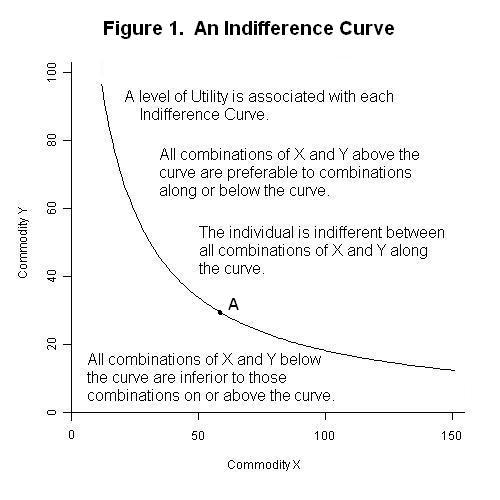
4. Indifference Curves & MRS
Indifference curves show equal utility
MRS (Marginal Rate of Substitution):
Slope of indifference curve
Willingness to trade one good for another
Properties:
Downward sloping
Higher curves = higher utility
Do not cross
5. Optimal Choice
Utility maximisation occurs where:
MRS = MRT
Graphically:
Tangency between indifference curve and feasible frontier
UNIT 5 — Institutions, Power & Inequality
1. Institutions
Institutions = written and unwritten rules shaping interaction and distribution.
They determine:
Incentives
Power
Allocation of surplus (rents)
2. Power
Power = ability to influence outcomes against others’ interests.
Forms:
Take-it-or-leave-it offers
Threat of imposing costs
Property rights are a key source of power.
3. Angela & Bruno Model
Shows how allocations differ under:
Force
Property rights
Rule of law
Key insight:
Voluntary agreements shrink total surplus
But improve welfare for the weaker party
UNIT 6 — Firms: Workers, Managers & Owners
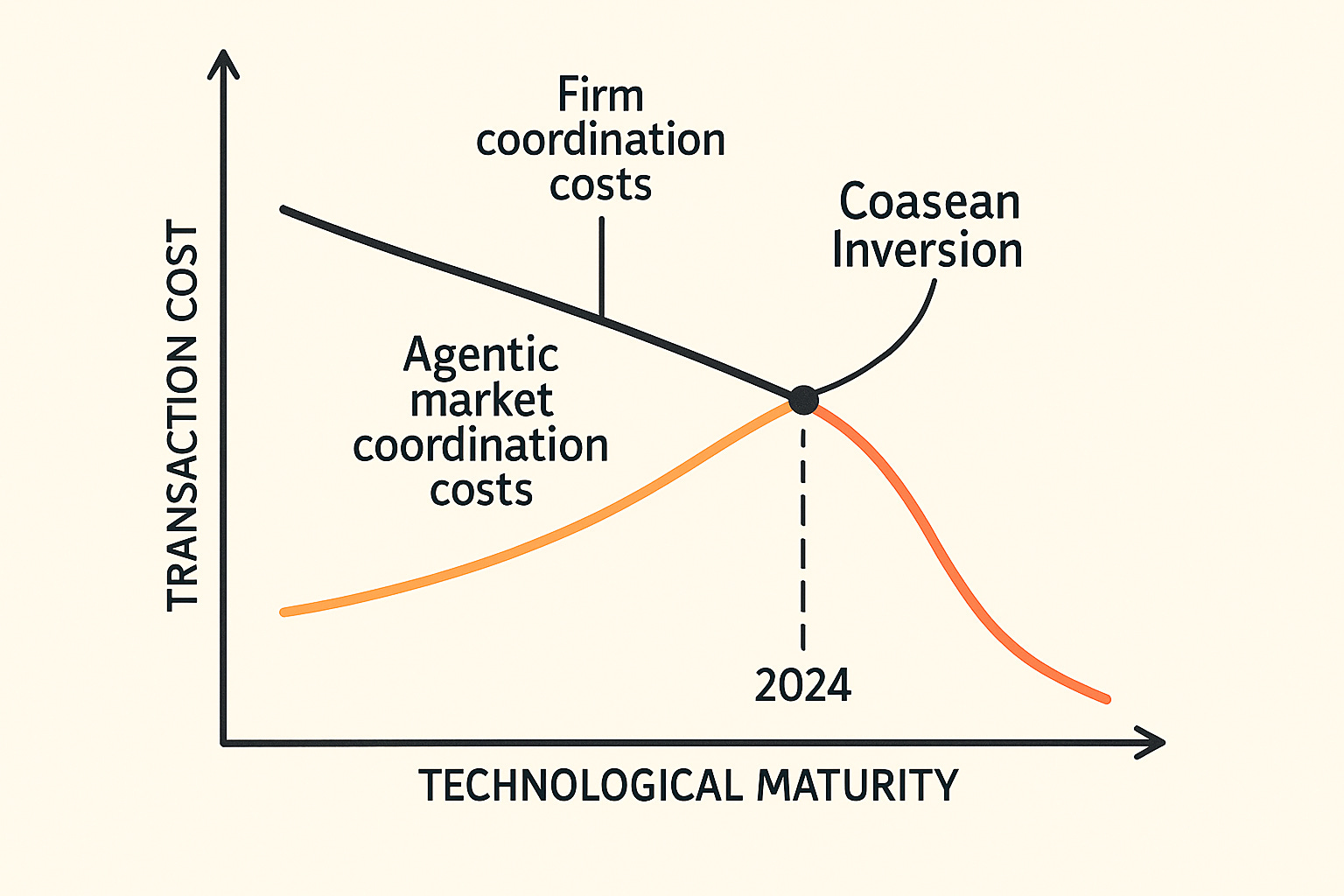


1. Firms vs Markets
Markets:
Decentralised
Voluntary exchange
Firms:
Centralised authority
Orders replace prices
2. Incomplete Contracts
Labour contracts are incomplete because:
Effort is hard to measure
Future contingencies unknown
3. Employment Rent
Employment rent:
Benefit of having a job over next best alternative
Employment rent =
Wage − disutility of effort − reservation wage
Higher rent:
More effort
More employer power
Unemployment benefits reduce employment rent → lower effort.
UNIT 7 — Firms & Markets for Goods

1. Economies of Scale
Large firms may be more profitable due to:
Specialisation
Bulk buying
Network effects
But can suffer diseconomies of scale (bureaucracy).
2. Profit Maximisation
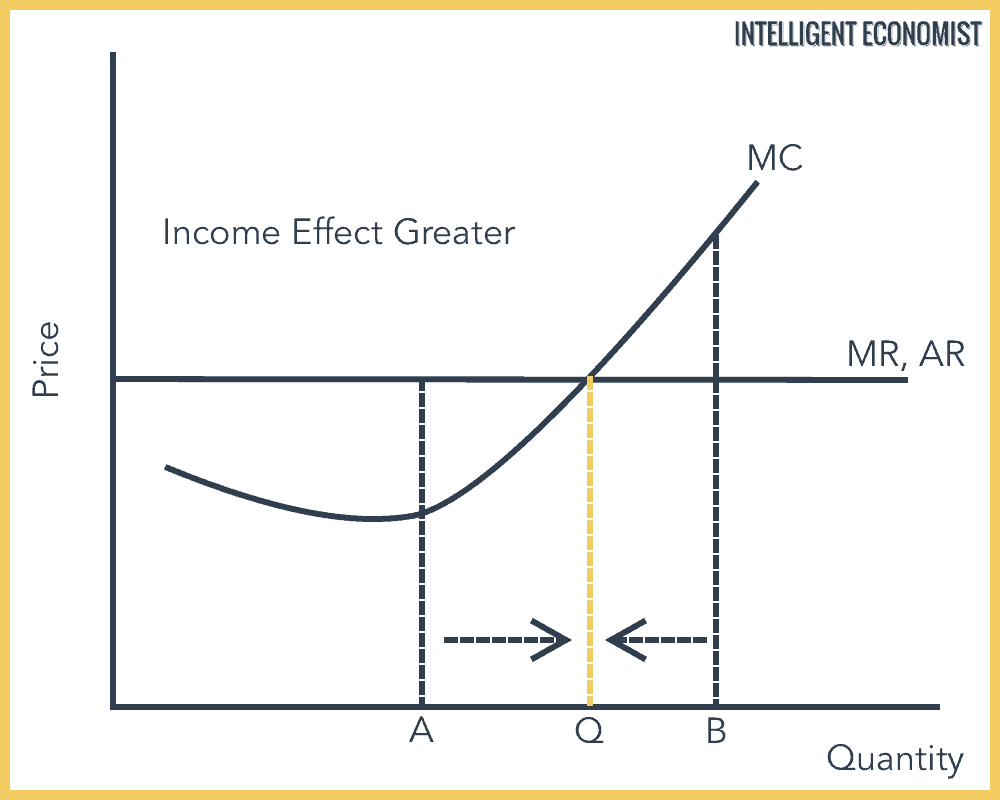
Two equivalent conditions:
MRS = MRT
MR = MC
Demand curve = feasible frontier
Isoprofit curves = indifference curves
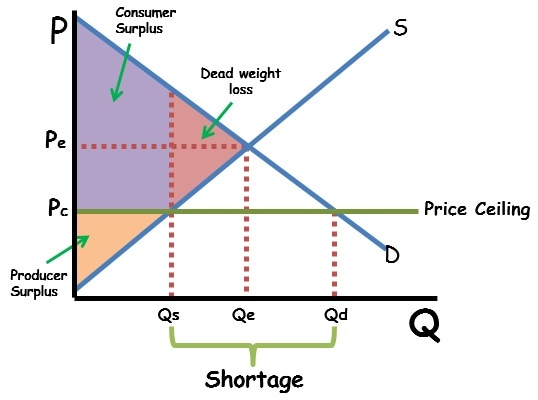
3. Surplus & Deadweight Loss
Consumer surplus = WTP − price
Producer surplus = price − MC
Total surplus = CS + PS
Deadweight loss occurs when:
Price ≠ Marginal Cost
Gains from trade are not fully realised
4. Price Elasticity of Demand
Elasticity affects:
Profit margins
Market power
Tax effectiveness
Key result:
Markup is inversely related to price elasticity
How to Revise Efficiently (Exeter-Style Exam Tip)
Focus on:
Clear definitions
Explaining intuition
Referring to games and diagrams
Linking policy → incentives → equilibrium
If you want, next I can:
Condense this into a 2–3 page exam cheat sheet
Create diagram-only revision summaries
Write model exam answers for likely questions
Turn this into active recall questions
Just tell me 👍