B3: Organisation & The Digestive System
Tissue and Organs
Organism - a group systems working together to make 1 independent living thing
Organ System - organs working together
Tissues - groups of the same / similar cells linked together with a specific / particular / certain function
Organs - groups of tissues working together to preform a function
Cells - the smallest unit of life - they are the basic building blocks of all living organisms
Cells —> Tissue —> Organs —> Organ System —> Organism
Muscular Tissue — contracts and relax - Moving the Stomach, Mixed Food with Acid and Enzymes e.g. Mechanical digestion
Glandular Tissue — secretes substances - Enzymes, Hydrochloric Acid (HCl), Mucus
Epithelial Tissue — lines surfaces - Protection, Secretion, Cover
Digestive System
Digestion - the breaking down of food, from large molecules into small/ insoluble into soluble
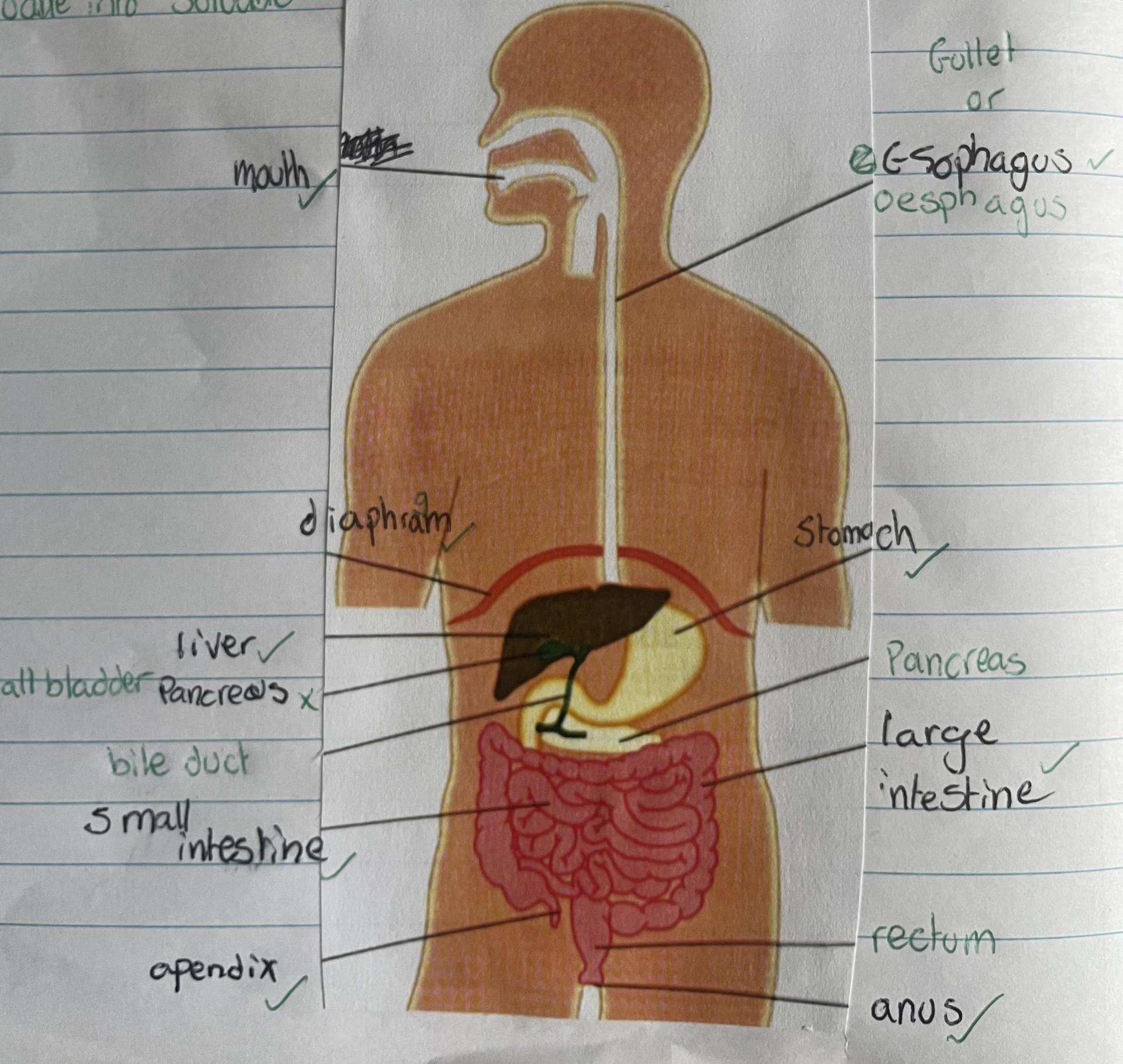
Mouth
chews food into smaller pieces - teeth (mechanical digestion)
tongue helps to manipulate food to be swallowed
Salivary Glands
produces saliva
glandular tissue
produces enzymes - amylase, breaks down starch (chemical digestion)
Oesophagus
food passes through and transports it to the stomach
the movement is by ‘Peri Stalsis’
muscular tissue
Stomach
mixes enzymes - breaks down food into small molecules
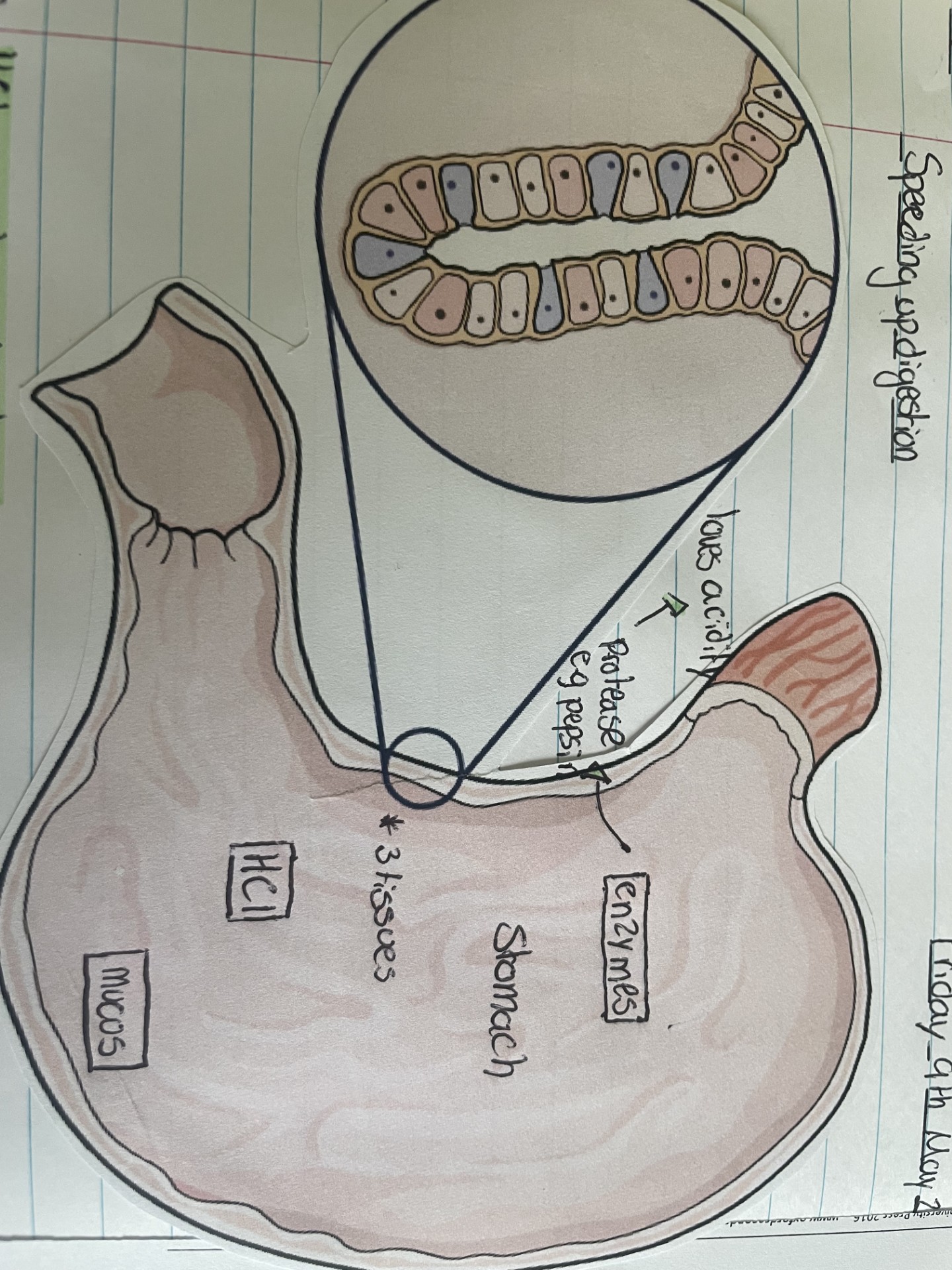
all 3 tissues - muscular, epithelial, and glandular
contains acid
enzymes made here - chemical digestion
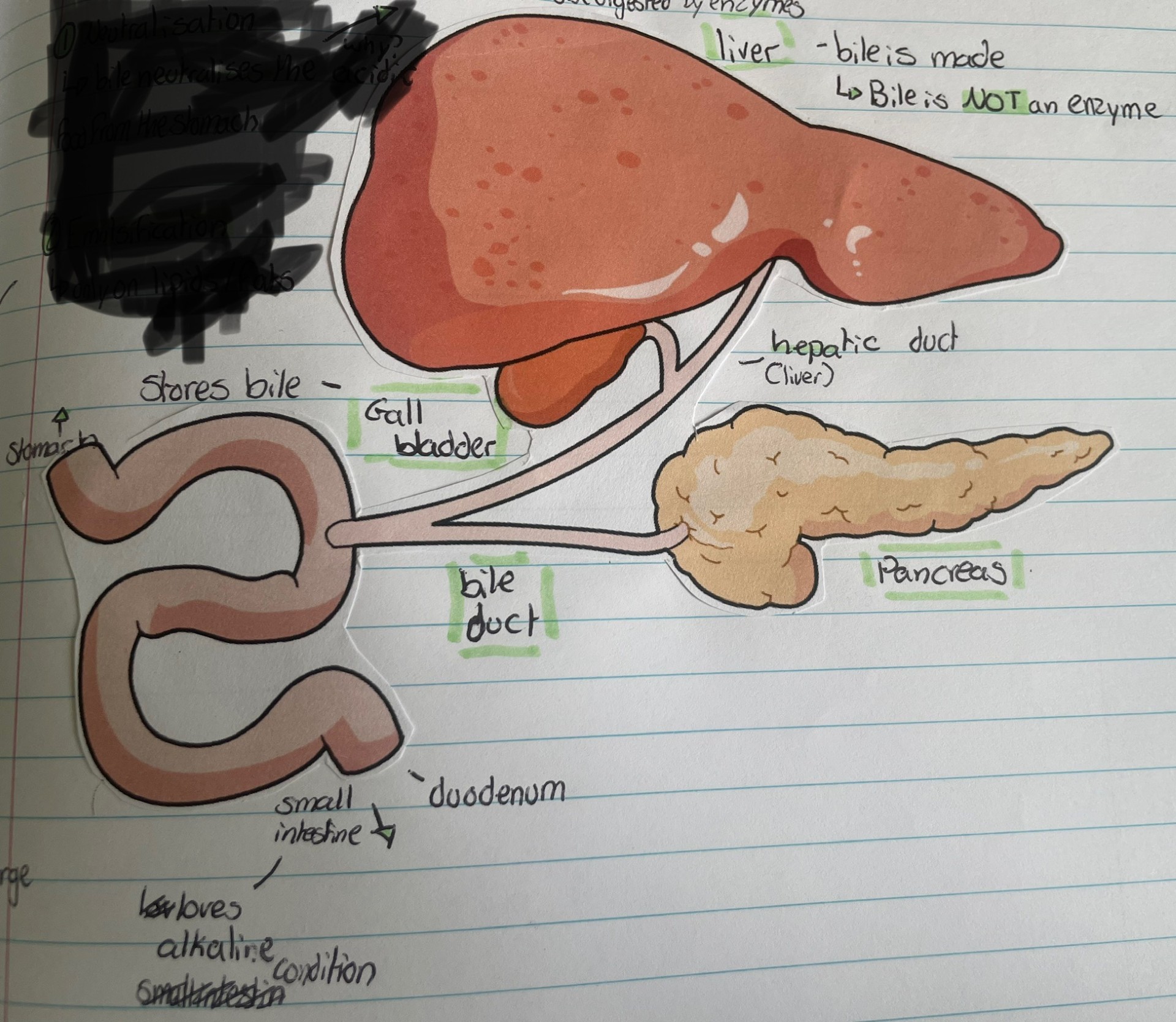
Pancreas
glandular tissue
makes enzymes e.g. carbohydrase, protease, lipase
no digestion actually occurs - contributes to chemical digestion
Liver
makes bile - not an enzyme (a substance to aid fat digestion)
Gall Bladder
stores bile
Small Intestine
absorbs nutrients into blood stream
absorbs soluble food
makes enzymes - chemical digestion
Enzymes
Metabolism - the sum of all the reaction in a cell or in the body. Different enzymes catalyse different metabolic reaction
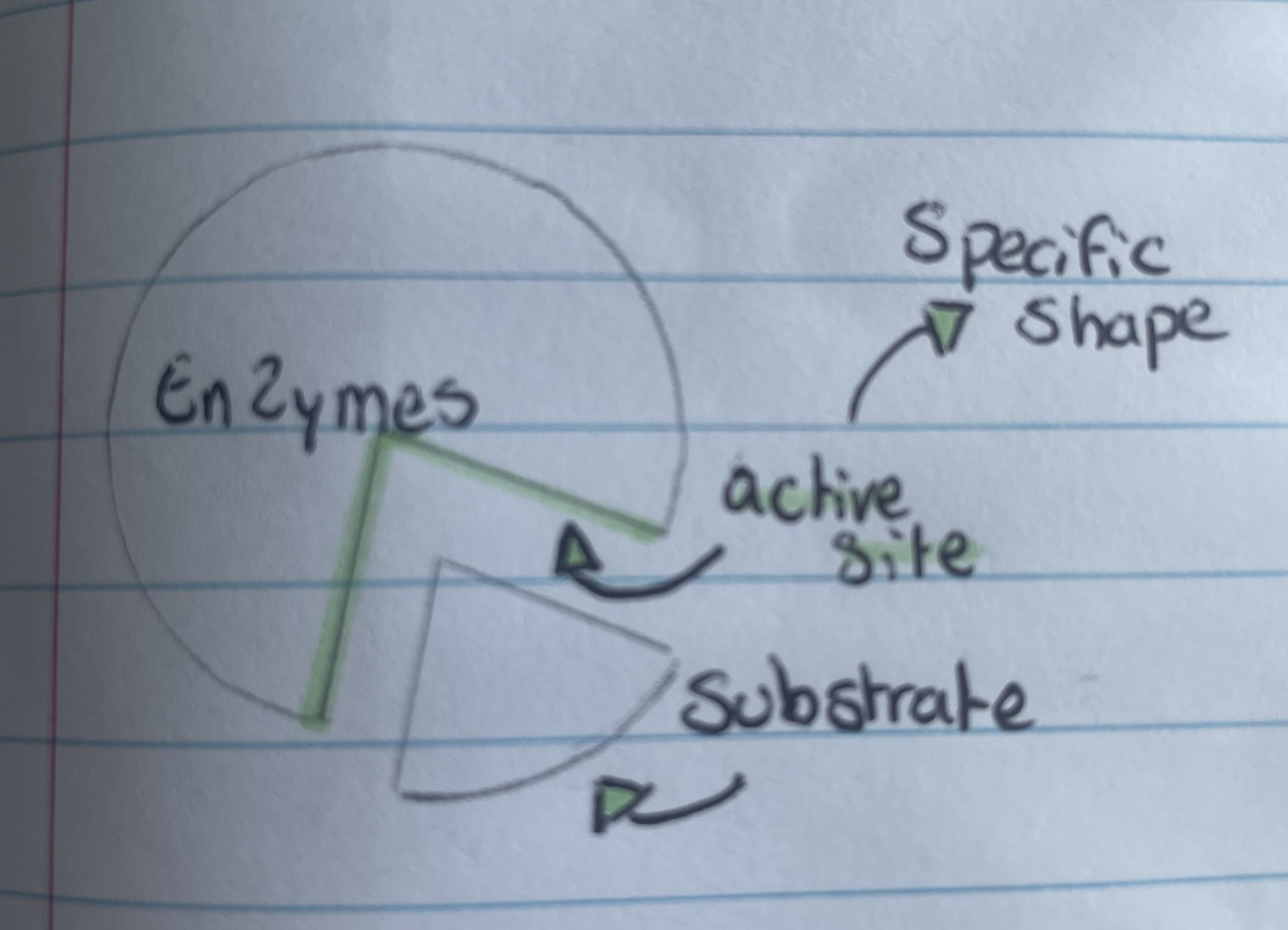
Complimentary - fits perfectly together
An enzymes job is a biological catalyst - speeds up a reaction, whilst remaining unchanged (lowers the amount of activation energy)
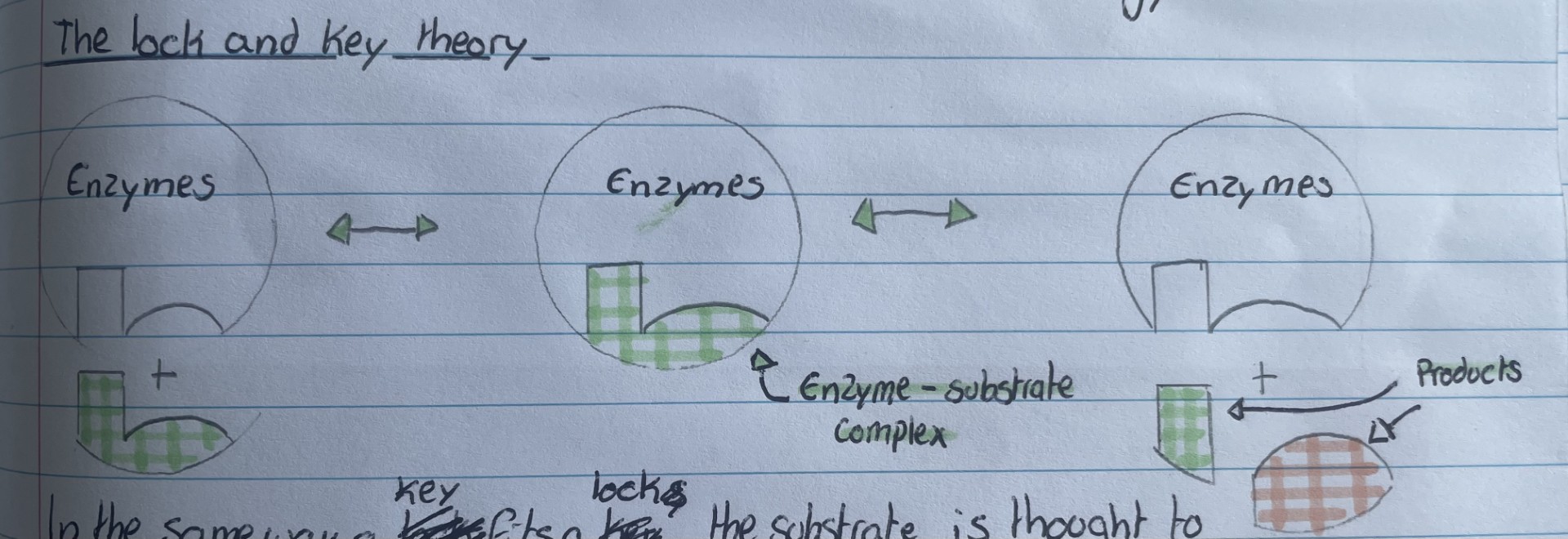
In the same way a key fits a lock, the substrate is thought to fit into an enzyme’s active site. The enzyme is the lock and the reactant is the key.
e.g. A molecule of hydrogen peroxide fits into the active site of a catalase molecule —> hydrogen peroxide breaks down into water and oxygen —> molecules of water and oxygen leave the active site of the enzyme ————————————————>
Food tests
Carbohydrate — iodine test for starch - yellow-red iodine solution turns blue-black if starch is present
Sugar — Benedict’s test for sugars - blue Benedict’s solution turns brick red on heating if a sugar, such as glucose, is present
Protein — Biuret test - blue Biuret reagent turns purple if protein is present (Biuret is very corrosive)
Lipids — ethanol test - ethanol added to a solution gives a cloudy white layer if a lipid is present. Ethanol is highly flammable and harmful.
Factors that affecting enzymes
Enzymes are not alive - they cannot die!
Colder
lower temp = less kinetic energy
enzymes and substrates move slower
less successful collisions between substrate and active site
less enzyme substrate complex
less products, therefore rate of reaction is very slow
In cold temp - enzymes doesn’t denature
Warmer
higher temp = more higher kinetic, and thermal energy
enzymes and substrates move faster
more successful collisions between substrate and active site
more enzyme substrate complex
more products, therefore rate of reaction is faster
In warm temp - enzymes doesn’t denature
Too Hot
very high temp = much more kinetic, thermal energy
enzymes and substrates move even faster
even less successful collisions between substrate and active site (active site changes shape)
even less enzyme substrate complex
even less products, therefore enzyme is denatured
In too hot temp - enzymes does denature
Small intestine
Located in your lower abdomen, just below the stomach, the small intestine is a coiled tube-like organ that is the longest part of the digestive system.
absorbs nutrients by enzymes from the pancreas and the liver
they break down the food into small molecules that can pass through the wall of the small intestine
the small intestine also extracts water and helps the food move along to the large intestine
villi along the walls increase surface area and speeds up digestion
microvilli further enhances the absorption capacity
thickness of the villi is only one cell thick
a network of blood capillaries can transport glucose and amino acids away form the small intestine
the small intestine is split up into 3 parts: duodenum, jejunum and ileum
Enzymes Required Practical
Independent variable — pH
Dependent variable — colour change (presence of starch)
Control variable(s) — time (10 seconds), temperature (25o), volume of starch and amylase
Method
Place several different starch solutions of a known volume and concentration in a water bath at 25o
Adding a buffer solution at a different pH to each solution
Setting up spotting tiles for each test solution with a drop of iodine in each well
Mixing the same volume and concentration of amylase into each tube
Starting a stop-watch as soon as the enzyme is added
Taking samples every 10 seconds using a glass rod and adding each sample to an iodine filled well
Observing and recording results that can be displayed graphically to compare the effect of pH on the rate of an amylase-catalysed reaction
How digestion works
What are carbohydrates?
Starch is a complex carbohydrates
Starch is made of small sugar molecules e.g. glucose
The small molecules from carbohydrates are used by the body to release energy and make the body work
Carbohydrates are made of - C,H,O (carbon, hydrogen, oxygen)
What are proteins?
Proteins are made of long chains of small molecules
These small molecules are called amino acids
Proteins are used by the body for growth and repair - enzymes, antibodies and hormones
Proteins are made of - O,C,H,N,(S) (oxygen, carbon, hydrogen, nitrogen, (sulphur))
What are lipids (fats)?
Fats are made up of fat molecules which contain fatty acids and glycerol
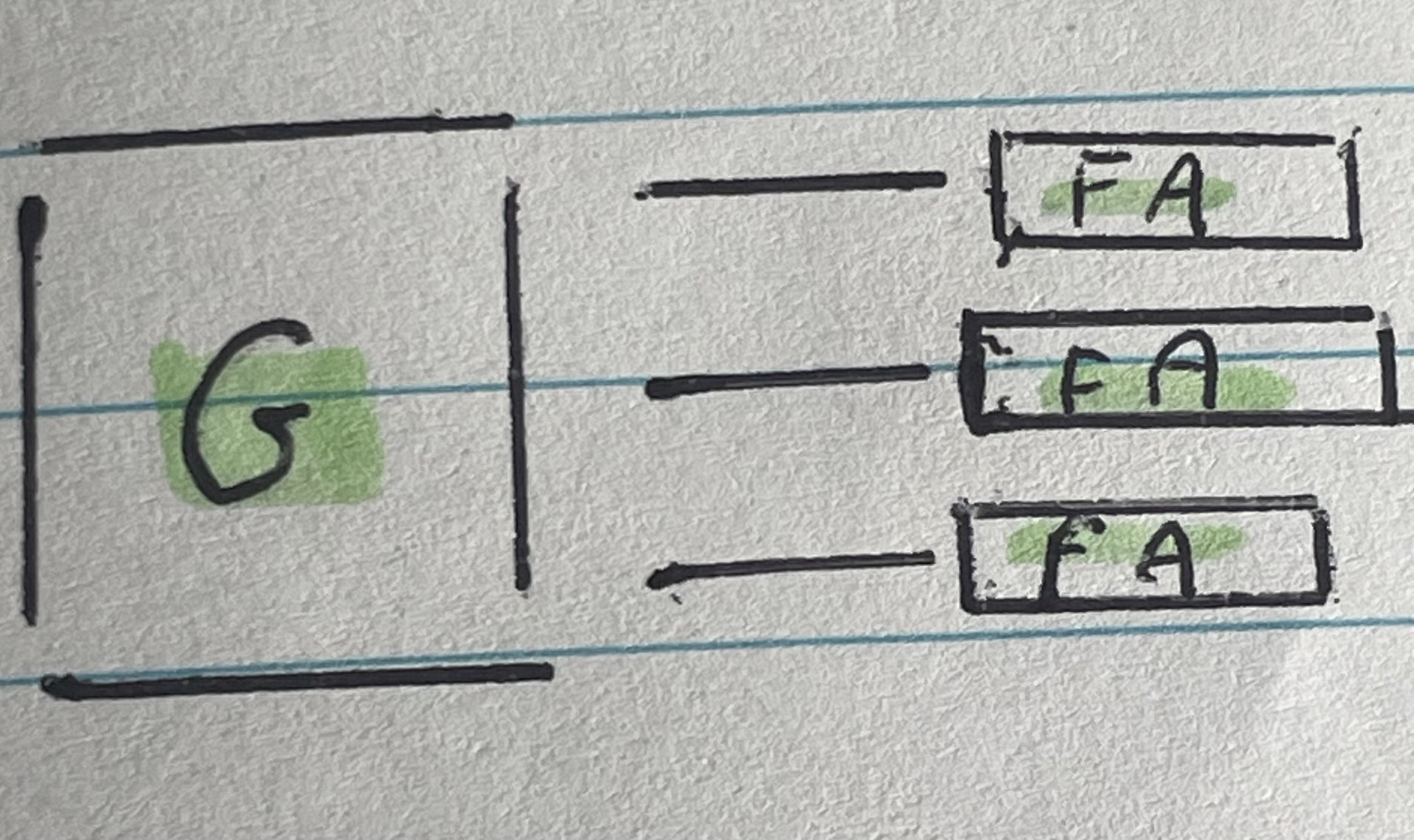
1 glycerol for every 3 fatty acid
Fat molecules must be broken down by the body so that they can be used for energy storage
Fats are also used by the body to keep heat in and make cell membranes
Lipids are made of - C,H,O (carbon, hydrogen, oxygen)
table showing all
food group (substrate) | Enzyme | Product | Enzyme made in | Enzyme acts in |
carbohydrates e.g. Starch | Carbohydrose | Simple sugars e.g. glucose | Salivary Glands Pancreas Small intestine | Mouth Small intestine |
Protein | Protease | Amino acids | Stomach Pancreas Small intestine | Stomach Small intestine |
Lipids | Lipase | 1 glycerol and 3 fatty acids | Pancreas Small intestine | Small intestine |
Speeding up Digestion
Stomach
HCl speeds up digestion —> the enzymes break down food —> better (optimum)
in acidic conditions
Liver
Bile is NOT an enzyme
Bile has 2 role:
Neutralisation —> bile neutralises the acidic food form stomach —> food needs to be alkaline to be digested by enzymes
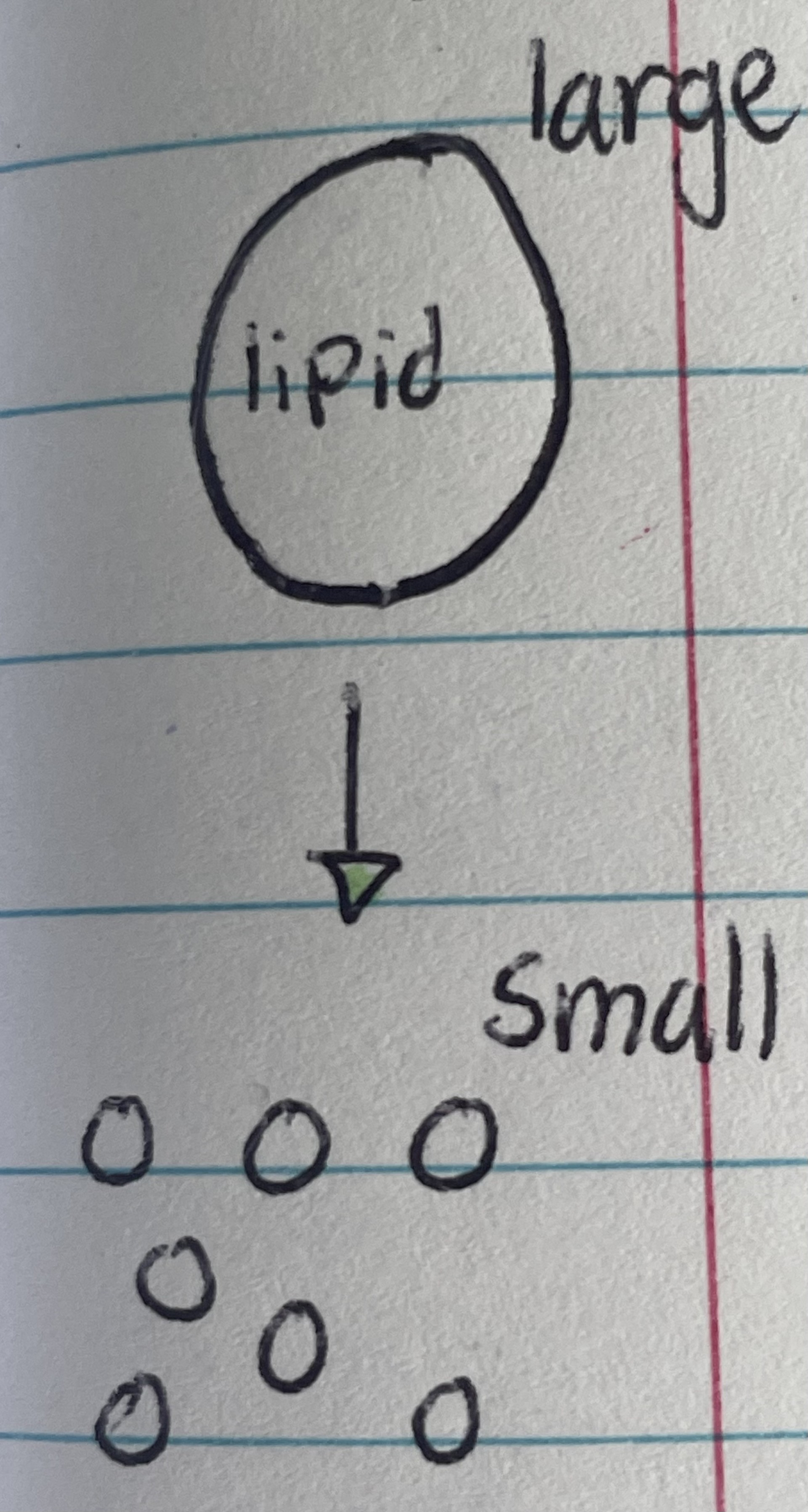
Emulsification —> only on lipids / fats —> increases surface area so lipids can digest them faster and more substrate surface to act on