civics state and local gov
CE.3a Structure and Powers of Virginia’s State Government
a) describe the structure and powers of the state government (the three branches of government)
Virginia’s state government is based on the Virginia Constitution, which explains how the government is organized and what powers each branch has.
Virginia’s government has three separate branches, just like the national government:
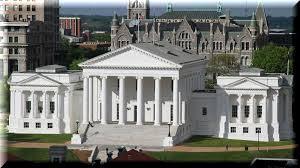
The Legislative Branch , called the General Assembly, makes the laws.
The General Assembly is bicameral. It has two parts: the House of Delegates and the Virginia Senate.
Members are elected by the people of Virginia.
The General Assembly meets annually for a fixed number of days. It creates laws, approves the state budget, and respond to issues that affect Virginians.
Executive Branch – Enforces the laws
Led by the Governor, who is elected by voters for a four-year term .
Other important officials include the Lieutenant Governor and Attorney General.
The Governor works with executive agencies and regulatory boards to carry out the laws and manage state programs like transportation, public safety, and education.
Judicial Branch – Interprets the laws
Includes the Supreme Court of Virginia
Court of appeals
Circuit courts
District courts ( including small claims courts and juvenile and domestic relations courts.
These courts make sure state laws follow the Virginia Constitution and help settle disputes.
This system separates powers so that no single branch becomes too powerful.
CE.3b The State Lawmaking Process
b) explain the state lawmaking process
Making laws in Virginia involves several steps—and it takes teamwork and cooperation. Here's how it works:
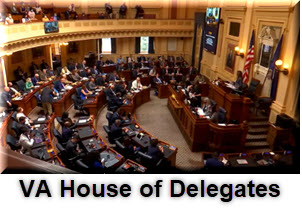
Idea – A legislator or citizen comes up with a proposal for a new law.
Introduction – A legislator introduces the idea as a bill.
Committee Work – A small group reviews and debates the bill.
Governor’s Action – The Governor can sign the bill into law or veto it..
If Vetoed – The General Assembly can override the veto with enough votes.
Compromise. is often needed to get enough support from both sides before a bill can become law.
Citizens and interest groups (like environmental groups or business organizations) can speak up to influence laws and public policy. They might contact lawmakers, testify in committee, or organize campaigns.
The primary issues in the legislative process at the state level
Education: To promote an informed and engaged citizenry (i.e., establish minimum standards for local schools)
Public health: To promote and protect the health of its citizens
Environment: To protect natural resources (i.e., improve water quality in the Chesapeake Bay)
State budget: To approve a biennial (two year) budget proposed by the governor
Revenue: To levy and collect taxes
CE.3c The Executive Branch and Regulatory Boards
c) describe the roles and powers of the executive branch and regulatory boards as they affect states
The Governor not only enforces laws but also helps shape public policy by proposing laws, preparing the budget, and working with the General Assembly.

Regulatory Boards are groups within the executive branch that help enforce rules in specific areas like health, education, or transportation.
These boards have the power to create regulations, issue licenses, and make decisions that affect businesses and individuals.
Ways the executive branch influences policymaking
Proposes biennial budget
Proposes legislation
Approves veto or line-item veto bills
The governor of Virginia exercises the formal powers granted by the Virginia Constitution.
In carrying out both the formal and informal powers of the office, the governor fills several roles, including
chief of state: ceremonial head of the state government
chief legislator: proposer of the legislative agenda
chief executive: head of the executive branch of state government
party chief: leader of the political party that controls the executive branch
chief citizen: representative of all Virginians
Cabinet secretaries and departments, agencies, commissions, and regulatory boards
administer laws and enforce laws
create regulations to monitor aspects of business and the economy
provide services.
CE.3d Federalism and the Relationship Between State and National Government
d) explain the relationship between state governments and the national government in the federal system, referencing Federalist No.10 and Federalist No.51
Virginia is part of the United States, so the state government shares power with the national (federal) government. This system is called federalism.
Here’s how federalism works:
The U.S. Constitution established a federal form of government in which the national government is supreme.
The Constitution gives certain powers to the national government—like printing money conducting foreign policy, making treaties, regulating commerce, providing for the common defense.
Powers not given to the national government are reserved for the states. Examples: running schools , holding elections, promoting health, safety and welfare.
Some powers are shared (called concurrent powers)—like collecting taxes or building roads.
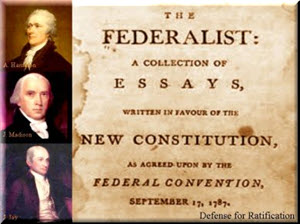
The Federalist Papers are a collection of essays written by Alexander Hamilton, James Madison, and John Jay to help people understand the principles behind the Constitution, such as separation of powers and federalism.
Federalist No. 10 (written by James Madison) explained that a strong central government was needed to control the effects of factions (groups with special interests) and keep the country stable.
Federalist No. 51 talked about the importance of separation of powers and checks and balances so that no part of the government gets too strong.
Sometimes there’s conflict between the state and national governments—especially if the federal government requires states to do something without giving them money to pay for it. This can cause tension.
CE.3e Separation of Powers and Checks and Balances at the State Level
e) explain the principle of separation of powers and the operation of checks and balances at the state level
Just like the U.S. government, Virginia separates power among the three branches:
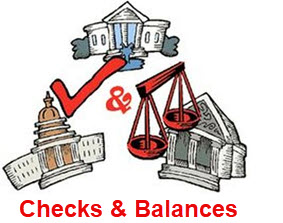
The legislative branch makes laws.
The executive branch carries them out.
The judicial branch interprets the laws.
Each branch can check the others so that no branch becomes too powerful. For example:
The Governor can veto laws passed by the General Assembly.
The General Assembly can override a veto.
The courts can rule a law unconstitutional if it goes against the Virginia Constitution.
This system of checks and balances helps protect our freedoms by keeping government power under control.

Key Concepts to Know:
Virginia has a state constitution that sets up its government.
The government is divided into three branches to balance power.
Laws are made by the General Assembly through a process of collaboration and compromise.
Citizens and interest groups can have a voice in the lawmaking process.
Virginia shares power with the national government, but also has its own powers.
Federalist Papers support a system of federalism with checks and balances to protect democracy.
CE.4a Structure and Powers of Local Government
a) describe the structure and powers of the local government and explaining the local lawmaking process;
In Virginia, local governments get their power from the state government. They can only do what the Virginia General Assembly (the state legislature) gives them permission to do.
Virginia has three types of local government:
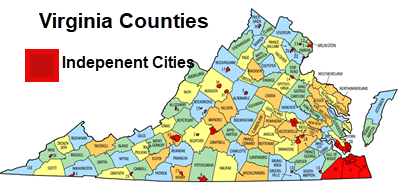
Counties (like Fairfax or Albemarle)
Cities (like Richmond or Virginia Beach);
Towns (like Herndon or Leesburg)
Each local government has:
A legislative branch: Usually a board of supervisors or city/town council that makes local laws (called ordinances)
An executive branch: Usually a mayor or county administrator who enforces the laws and manages services like police, fire, and public works
A judicial branch: Local courts (like district courts) that handle traffic tickets, small claims, and local disputes
Like the state and national governments, local governments have separation of powers and must work together to pass laws and run services.
How Local Laws Are Made
Making a local law (called an ordinance) usually goes like this:
Someone — a council member, citizen, or interest group — has an idea for a law.
The idea is discussed at public meetings.
A vote is taken by the council or board.
If it passes, it becomes an ordinance that must be followed in that locality.
This process takes teamwork and compromise, just like at the state and national levels.
CE.4b How Bigger Issues Affect Local Decisions
b) describe how state, national, and international issues and events impact local decision making
Local governments don’t operate in a bubble. They are affected by state, national, and international events. Examples:
A state law requiring all local schools to teach certain subjects will affect your local school board’s curriculum.
A national economic crisis could reduce federal funding for local programs like food assistance.
An international pandemic like COVID-19 could force local governments to make health and safety rules, provide vaccines, and support local businesses.
Local leaders have to be flexible and make policies that respond to what’s happening beyond their borders.
CE.4c Comparing Local, State, Federal, and Tribal Governments
c) compare and contrast powers and responsibilities of local, state, federal, and tribal governments including, but not limited to citizen engagement, how each is financed, and how they work together and independently.
All levels of government — local, state, federal, and tribal — have different responsibilities, but sometimes they overlap.
TRIBAL GOVERNMENTS
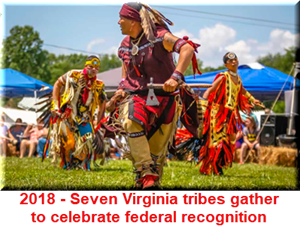
Tribal governments are not part of local or state governments. They are sovereign political entities, meaning they have the right to govern themselves.
In Virginia, seven tribes are federally recognized, including the Pamunkey and Chickahominy.
Tribal governments make laws and decisions for their members on issues like education, health care, and land use.
They work with federal, state, and sometimes local governments — but they have their own authority.
Here’s how the four levels of government compare:
| MAIN RESPONSIBILITIES | HOW IT’S FUNDED | CITIZEN INVOLVEMENT |
|---|---|---|---|
LOCAL | Schools, police, trash, zoning, parks | Local taxes (property, sales), state aid | Town halls, school boards, voting |
STATE | Roads, education, public safety, health | State income/sales taxes, federal aid | State elections, contacting reps |
FEDERAL | Military, foreign policy, immigration, money | Federal income taxes | Voting for president/Congress |
TRIBAL | Varies by tribe: culture, health, justice | Federal funds, tribal enterprises | Tribal councils, community meetings |
Key Concepts to Remember:
Virginia’s local governments are created by the state and get their power from the Virginia General Assembly.
Local governments have legislative, executive, and judicial powers.
The lawmaking process includes public meetings, proposals, voting, and often compromise.
Local decisions are shaped by events and laws at the state, national, and international levels.
Tribal governments are sovereign and have unique responsibilities.
All levels of government share power but also have distinct duties.