DAIRY PRODUCTION
Cow’s milk production in Asia (kg per capita)
Kazakhstan - 297
Turkey - 222
Iran - 129
Cow’s milk production in the European Union (kg per capita)
Ireland - 1,238
Denmark - 922
Netherlands - 738
Cow’s milk production in North & Central America (kg per capita)
United States of America - 289
Canada - 243
Mexico - 96
Cow’s milk production in South America (kg per capita)
Uruguay - 701
Argentina - 279
Brazil - 172
Cow’s milk production in Oceania (kg per capita)
New Zealand - 4,484
Australia - 412
Cow’s milk production in Africa (kg per capita)
Kenya - 84
South Africa - 56
Egypt - 50
World’s Top 10 Cow’s Milk Production Countries in 2011-2013
USA
India
China
Brazil
Germany
Russian federation
France
New Zealand
Turkey
United Kingdom
Major Producers of cow milk worldwide in 2020
European Union
United States
India
China
Russia
Brazil
New Zealand
Mexico
Argentina
Canada
Australia
Ukraine
Belarus
Japan
South Korea
Taiwan
World: Cow’s Milk Production (share per region)
Asia - 28%
EU - 24%
North & Central America - 18%
South America - 11%
Other Europe - 9%
Africa - 5%
Oceania - 5%
World Trade: Top 5 Exporters
New Zealand
EU
USA
Australia
Argentina
World: Milk Production by Species
Cow - 83%
Buffalo - 13%
Goat - 2.6%
Sheep - 1.2%
Camel - 0.4%
In the Philippines:
in 2021, 99% of milk products are imported; local milk supply declines.
Milk powder consisted 78% of imports
USA is the leading supplies (30%)
New Zealand (29%)
Belgium (6%)
Australia (5%)
Philippines export to Malaysia (38%)
Vietnam (14%)
Singapore (12%)
UAE (8%)
USA (5%)
80% of the local production are from smallholders.
Problems of the Philippine Dairy Industry
limited number of dairy type animals
low genetic potential for milk production
dependent on importations
lower price of imported milk and milk ingredients
humid climates are unfavorable for dairying.
poor quality feed resources, diseases, limited access to markets and services
Agencies Mandated to Help the Philippine Dairy Industry
Created by the National Dairy Development Act of 1995 (otherwise known as Republic Act No. 7884), the National Dairy Production Authority is mandated to ensure the accelerated development of the Philippine dairy industry through policy direction and program implementation. It is an agency attached to the Department of Agriculture.
PCC (Philippine Carabao Center)
created by virtue of Republic Act 7307 in 1992, an act to conserve, propagate and promote the carabao or native buffalo as a source of milk and meat as well as draft animal power and hide to benefit rural farmers.
PCC is active in upgrading local buffaloes through its gene pool and extension work.
has 13 regional centers
DA-PCC AT MARIANO MARCOS STATE UNIVERSITY
DA-PCC AT DON MARIANO MARCOS MEMORIAL STATE UNIVSERSITY
DA-PCC AT CAGAYAN STATE UNIVERSITY
DA-PAA AT CENTRAL LUZON STATE UNIVERSITY
DA-PCC AT UNIVERSITY OF THE PHILIPPINES LOS BANOS
DA-PCC AT VISAYAS STATE UNIVERSTY
DA-PCC AT WEST VISAYAS STATE UNIVERSITY
DA-PCC AT LA CARLOTA STOCK FARM
DA-PCC AT UBAY STOCK FARM
DA-PCC AT MINDANAO LIVESTOCK PRODUCTION CENTER
DA-PCC AT CENTAL MINDANAO STATE UNIVERSITY
DA-PCC AT UNIVERSITY OF SOUTHERN MINDANAO
DA-PCC NATIONAL HEADQUARTERS AND GENE POOL
House Bill No. 1246
Introduced by HONORABLE LUIS RAYMUND F. VILLAFUERTE, JR.
An act merging the Philippine carabao center (PCC) and the national dairy authority (NDA) into the Philippine national dairy development agency to provide greater focus on the accelerated development of the dairy industry and to increase production of dairy animals in the Philippines, providing a ruminant development fund therefore, and for other purposes.
Senate No. 139
introduced by SENATOR CYNTHIA A. VILLAR
an act to restructure and rationalize the livestock industry in order to strengthen its development, protection and regulatory functions, including the promotion of dairy and native animals, and to provide for a livestock development fund, and for other purposes.
Senate No. 119
introduced by SENATOR CYNTHIA A. VILLAR
an act to develop, protect and promote the livestock, poultry, and dairy industries and their value chain, to provide for a livestock, poultry, and dairy competitiveness enhancement fund, and for other purposes.
Dairy Production System is classified:
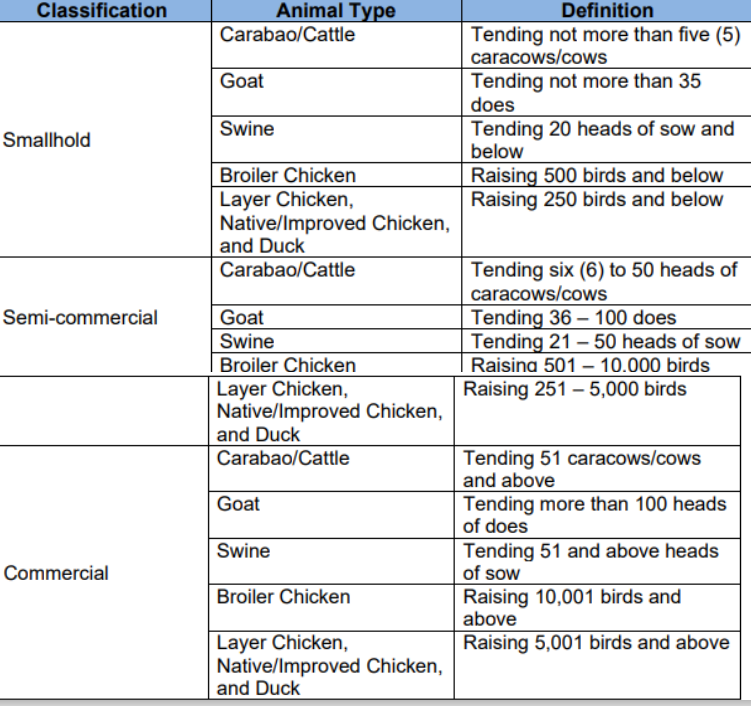
According to the number of dairy animals raised (production level).
According to utilized resources
According to milk collection practice
According to confinement
Classification according to herd population
Small hold or backyard
Semi-commercial
Commercial
According to Utilized resources
Pasture-based
Intensive farming
According to milk collection practice
traditional hand milking
machine milking
automatic milking
According to confinement
full-confinement
semi-confinement (mixed)
pastured
Dairy Production System
Rural Smallholder Dairying
dairying is often part of a mixed farming system
dairy animals are fed on grass, crop residues and cultivated fodder
supplementary feeding is practiced only when feasible
Pastoral/Agropastoral Dairying
Land-based and milk is often the most important subsistence item
Generally associated with cropping, but nomadic pastoralists practice little or no agriculture and roam the land in search of grazing grounds and water.
Landless Peri-Urban Dairying
purely market-oriented production system, close to cities
production is based on purchased inputs and may encounter problems of feed supply and waste disposal
Types of Dairy Farm in the Philippines
Individual small holder producer - consume and sell locally what they produce
Small holder cooperatives - who deliver their milk to a collection point for transport to a processing plant
Commercial farm - that who supply milk processors
Government farms - supply school and rural community feeding programs (PCC)
BIOLOGY OF MILKING
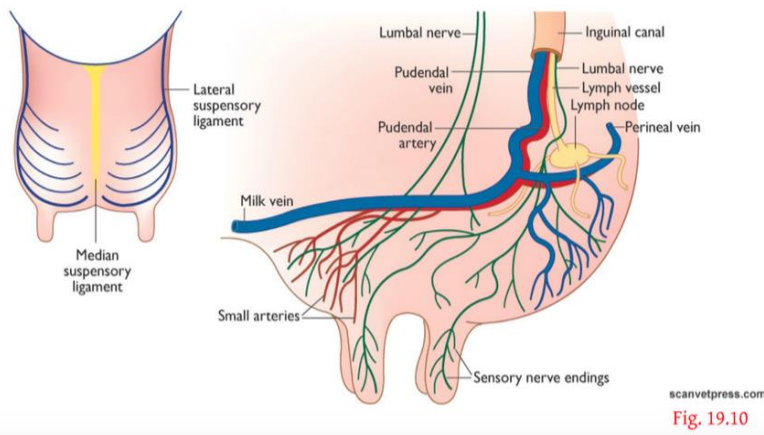
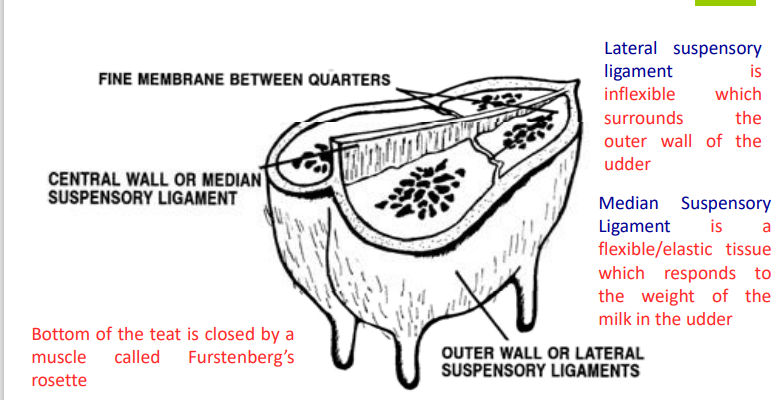
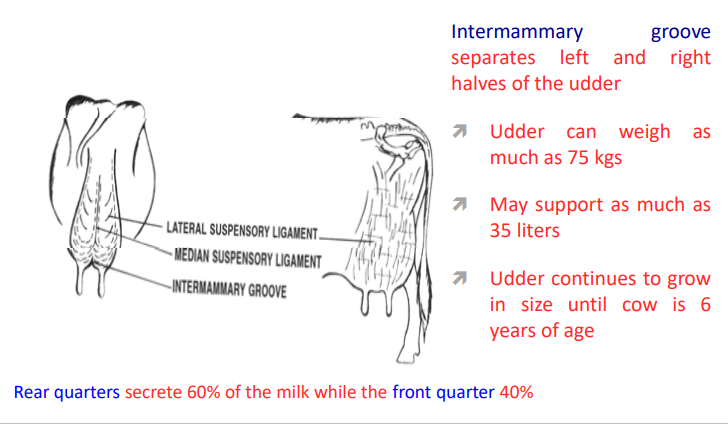
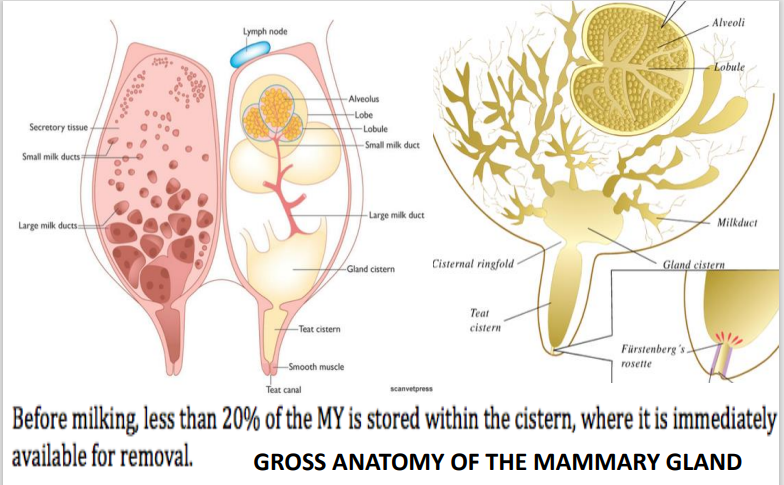
Milk Letdown Mechanism
massaging or suckling the udder are the stimuli that signals the posterior pituitary gland of the brain to release hormone “oxytocin”
Oxytocin is carried by blood to the udder which acts on small muscle cells causing them to contract
contracting pressure creates forces to expel the milk out from alveoli towards smaller duct, then larger ducts
effective time of hormone is limited, hence milking should be completed within 8 minutes.
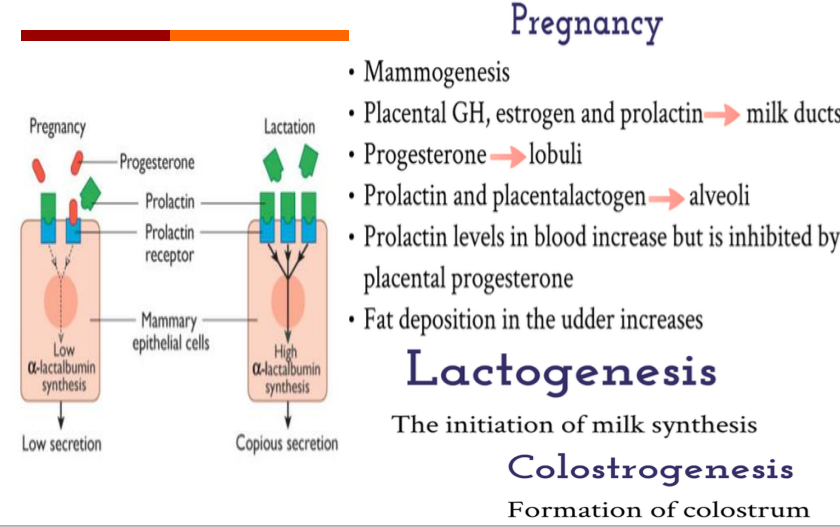
Hormones that govern mammogenesis and lactogenesis
during pregnancy, high concentration of progesterone and estrogen on plasma induces differentiation and growth of mammary secretory cells
mammogenesis is active: lactogenesis is inhibited
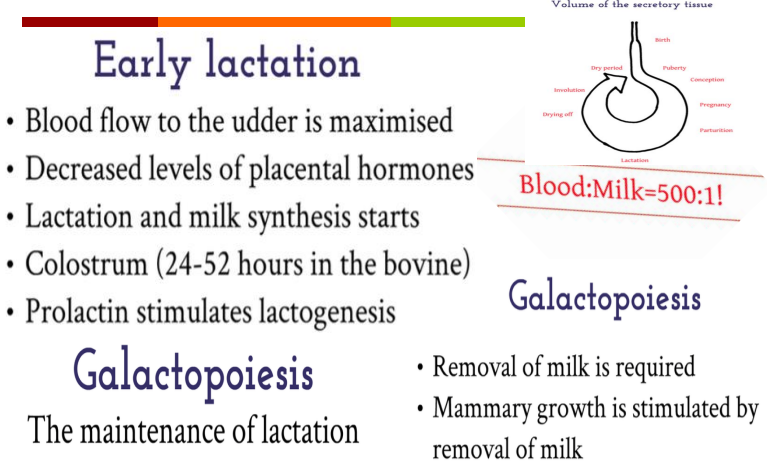
during parturition, placental progesterone levels decreases markedly since the placenta is being removed, enabling prolactin to bind its receptor which stimulates milk secretion
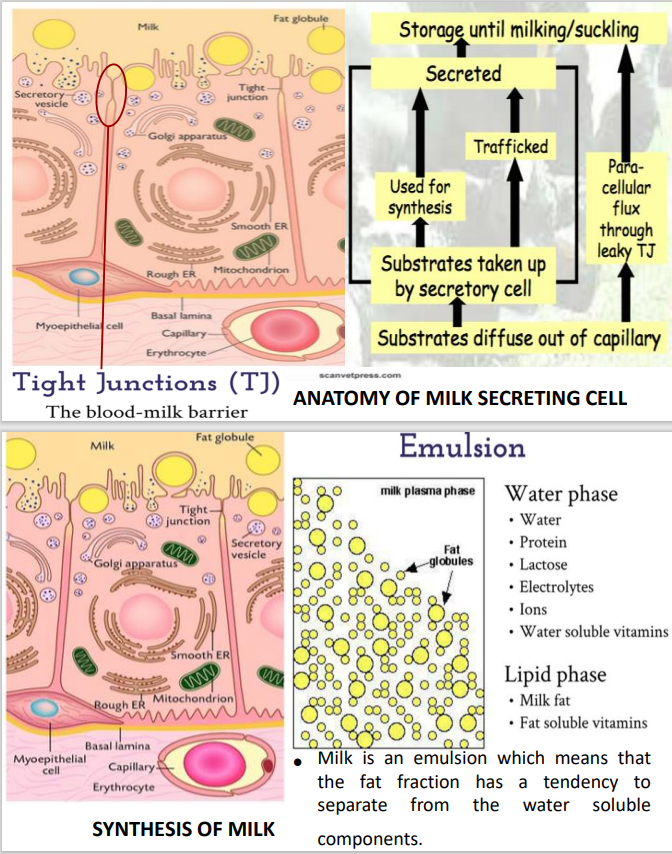
Milk Protein
micelles
caseins (80% of total protein, alpha-beta-kappa-gamma, determines cheese yield)
whey proteins (alpha-lactalbumin: lactose synthesis, beta-lactoglobulin, serum albumin, immunoglobulins)
enzymes
transport proteins
antibodies
Milk protein synthesis
amino acids
rough endoplasmic reticulum
golgi apparatus
transported with lactose
Milk lactose
major carbohydrates
disaccharide
unique for milk
major osmole
least variable
Lactose Synthesis
glucose + galactose
active transport (insulin - independent)
golgi apparatus
secretory vesicles
high osmotic gradient attracts water
exocytosis
Other Milk Components
water
vitamins - fat soluble and water soluble
minerals - Ca, P, Fe, Zn, Cu, Mo, Mn, Co, and Trace elements
Factors that influence milk composition
species
breed
lactation stage
stage of milk removal
intramammary infections
gland
day
parity
feeding and management
individuals
milk yield
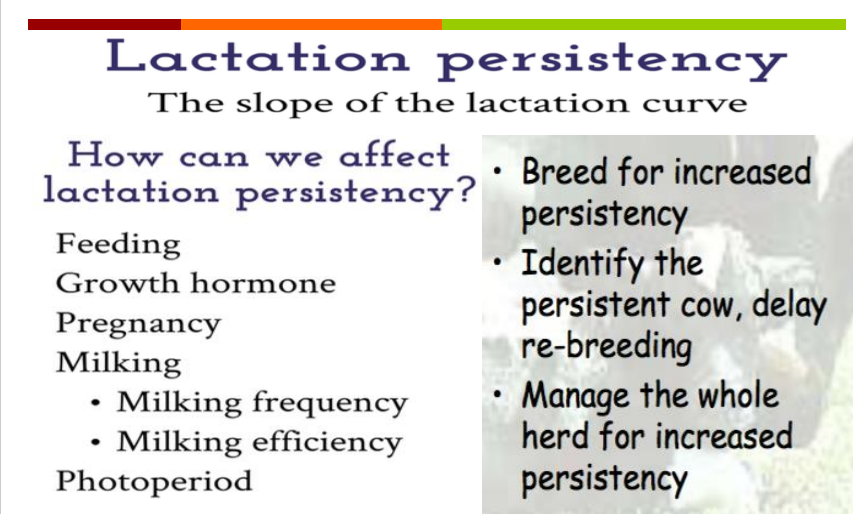
Factors that influence milk yield
Species
Breed
Lactation stage
Emptying efficiency
pre and post stimulation
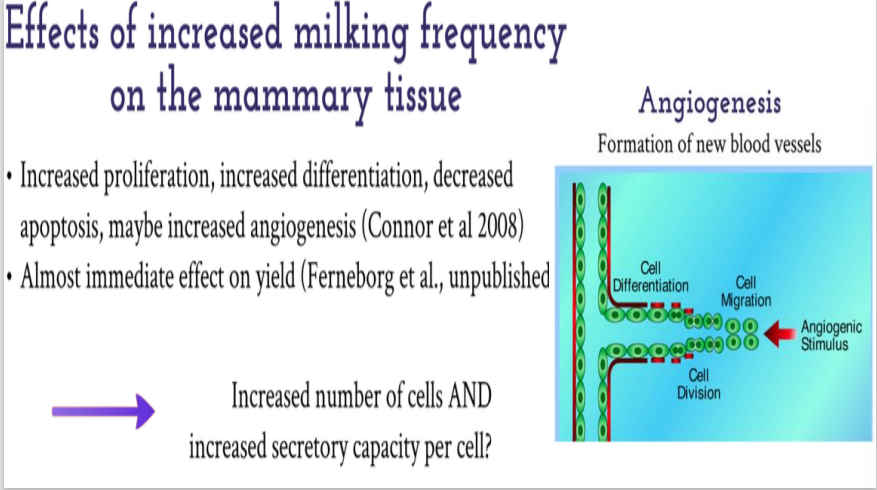
milking frequency
gland
day
parity
feeding and management
individual
milk composition
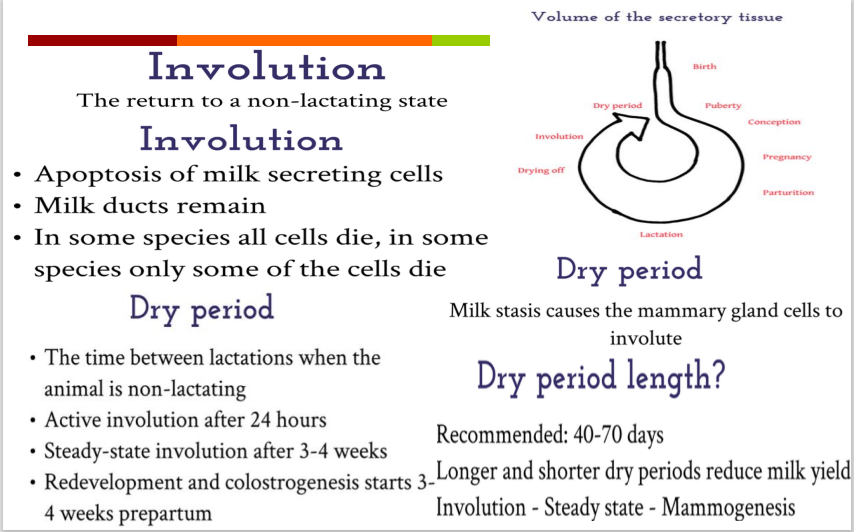
What happens during milk statis?
mainly regulated by the Feedback Inhibitor of Lactation (FIL).
FILs way of action is to compile in milk until reaching a certain critical concentration, at which time it acts as a negative feedback inhibitor leading to a decreased milk production.
Frequent removal of milk lowers the concentration of FIL in the udder, which stimulates a higher activity in the secretory tissue leading to a decreased apoptosis rate and a higher milk yield.