6A
Hydrocarbons
A hydrocarbon is an organic compound made up only of carbon and hydrogen atoms.
Types of hydrocarbons:
Alkanes (saturated, single bonds)
Alkenes (contain double bonds)
Alkynes (contain triple bonds)
Arenes (contain benzene rings)
Types of Organic Formulas
Organic molecules can be written using different formula types and you need to be comfortable using and changing between the following:
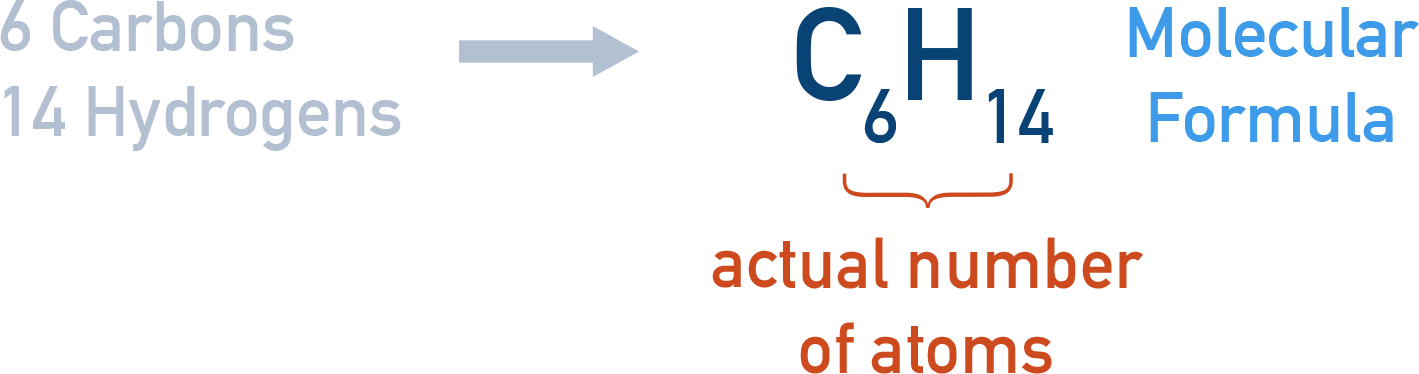
Molecular Formula – Shows the actual number of atoms in a molecule.
ExampleHexane → C6H14
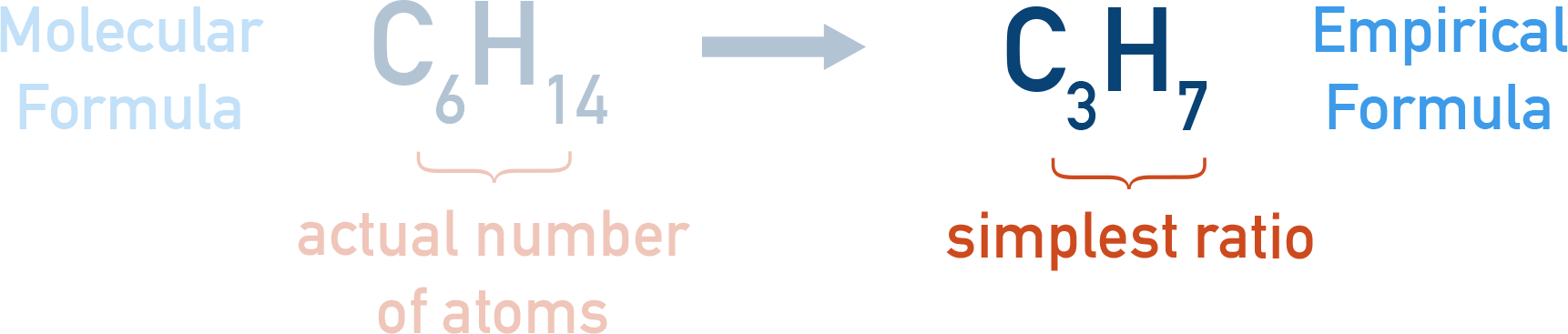
Empirical Formula – Shows the simplest whole number ratio of atoms in a compound.
Example Hexane (C6H14) → C3H7
General Formula – Represents a homologous series using an algebraic expression.
Example Alkanes → CnH2n+2

Structural Formula – Shows how atoms are arranged in a molecule without drawing bonds.
Example Hexane → CH3CH2CH2CH2CH2CH3

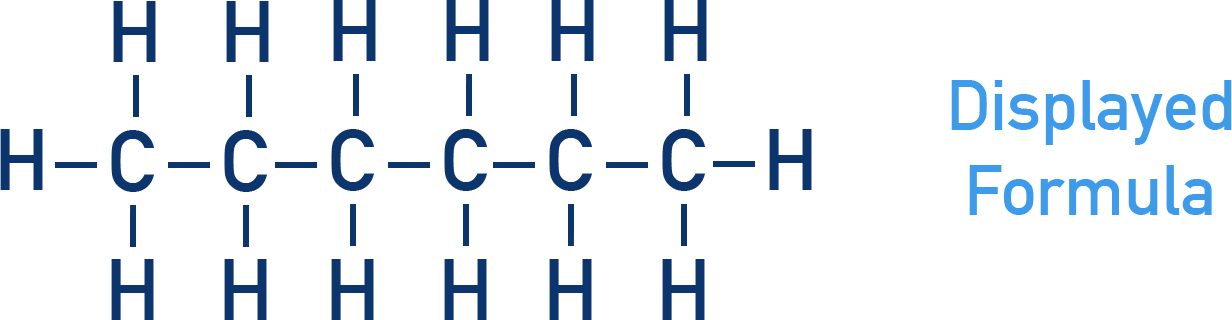
Displayed Formula – Shows all bonds and atoms.
Example Hexane
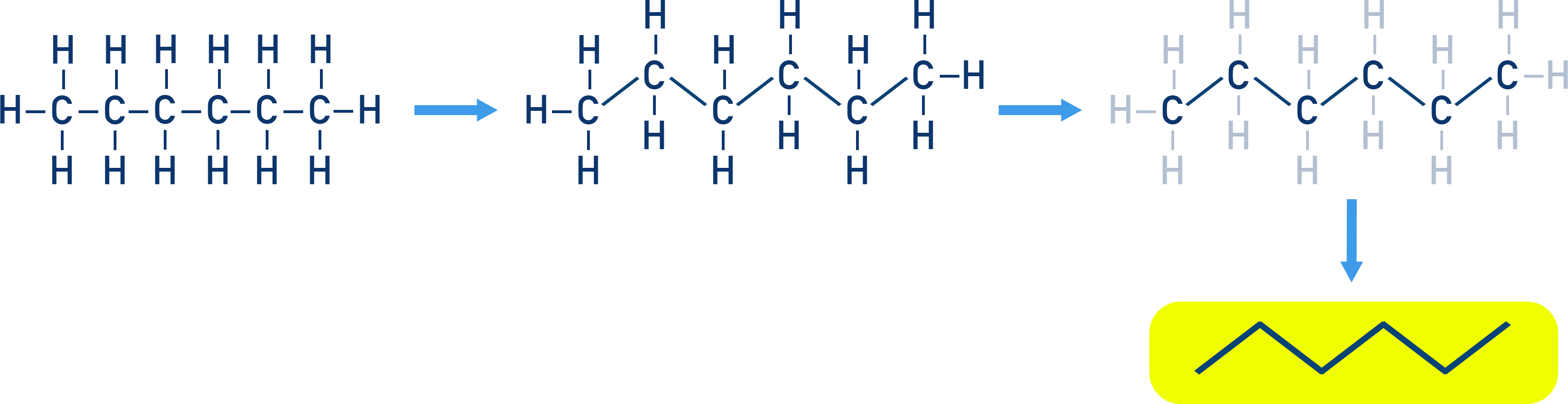
Skeletal Formula – Simplified representation where carbon atoms are at the ends and bends of lines, and hydrogens bonded to carbon atoms aren’t shown.
Example Hexane


Matt’s exam tip
Matt’s exam tip - if you find drawing skeletal formulas hard, start by drawing the displayed formula with a diagonal pattern between C-C bonds, then remove all the C-H bonds.
Homologous Series and Functional Groups
A homologous series is a family of organic compounds that:
Have the same general formula.
Contain the same functional group.
Have similar chemical properties.
Show a gradual change in physical properties (e.g., boiling points increase with chain length).
Examples of Homologous Series:
Homologous Series | General Formula | Example | Functional Group |
|---|---|---|---|
Alkanes | CnH2n+2 | Methane (CH4) | None |
Alkenes | CnH2n | Ethene (C2H4) | C=C |
Alcohols | CnH2n+1OH | Ethanol (C2H5OH) | –OH |
Carboxylic Acids | CnH2nO2 | Ethanoic Acid (CH3COOH) | –COOH |
A functional group is an atom or group of atoms within a molecule that gives the molecule its reactivity and can determine its physical and chemical properties
IUPAC Naming Rules
IUPAC (International Union of Pure and Applied Chemistry) naming rules are used to help name compounds in chemistry, including:
Chains and rings with up to six carbon atoms.
Alkanes, alkenes, alcohols, aldehydes, ketones, carboxylic acids, esters, amines, nitriles, arenes.
Steps for Naming Organic Compounds:
Find the longest carbon chain
Meth- (1C), Eth- (2C), Prop- (3C), But- (4C), Pent- (5C), Hex- (6C).Identify the main functional group (determines the suffix - see table above).
Number the carbon chain to give the lowest possible numbers to functional groups.
Identify and name side chains (alkyl groups) as prefixes.
Use commas between numbers and hyphens between letters and numbers.
Example 2-Methylpentane (C6H14)

Longest chain = pentane, with a methyl group at carbon 2.
Reaction Types
Reactions in organic chemistry can be classified into certain types. You should be confident identifying the following reaction types as the course progresses.
Addition: two molecules combine to form one (common with alkenes)
Substitution: one atom/group replaced by another (e.g. halogen swapped for –OH)
Elimination: removal of a small molecule (e.g. H2O from an alcohol to make an alkene)
Hydrolysis: water breaks a bond (e.g. ester hydrolysis)
Oxidation: gain of oxygen or loss of hydrogen
Reduction: gain of hydrogen or loss of oxygen
Polymerisation: small monomers join to make a long-chain polymer
Structural Isomerism
Structural isomers have the same molecular formula but different arrangements of atoms.
There are three types of structural isomerism you should know be able to recognise - chain isomerism, position isomerism and functional group isomerism.
Chain Isomerism
In chain isomers, the carbon chain is arranged differently.
Example C4H10 (butane, methylpropane)
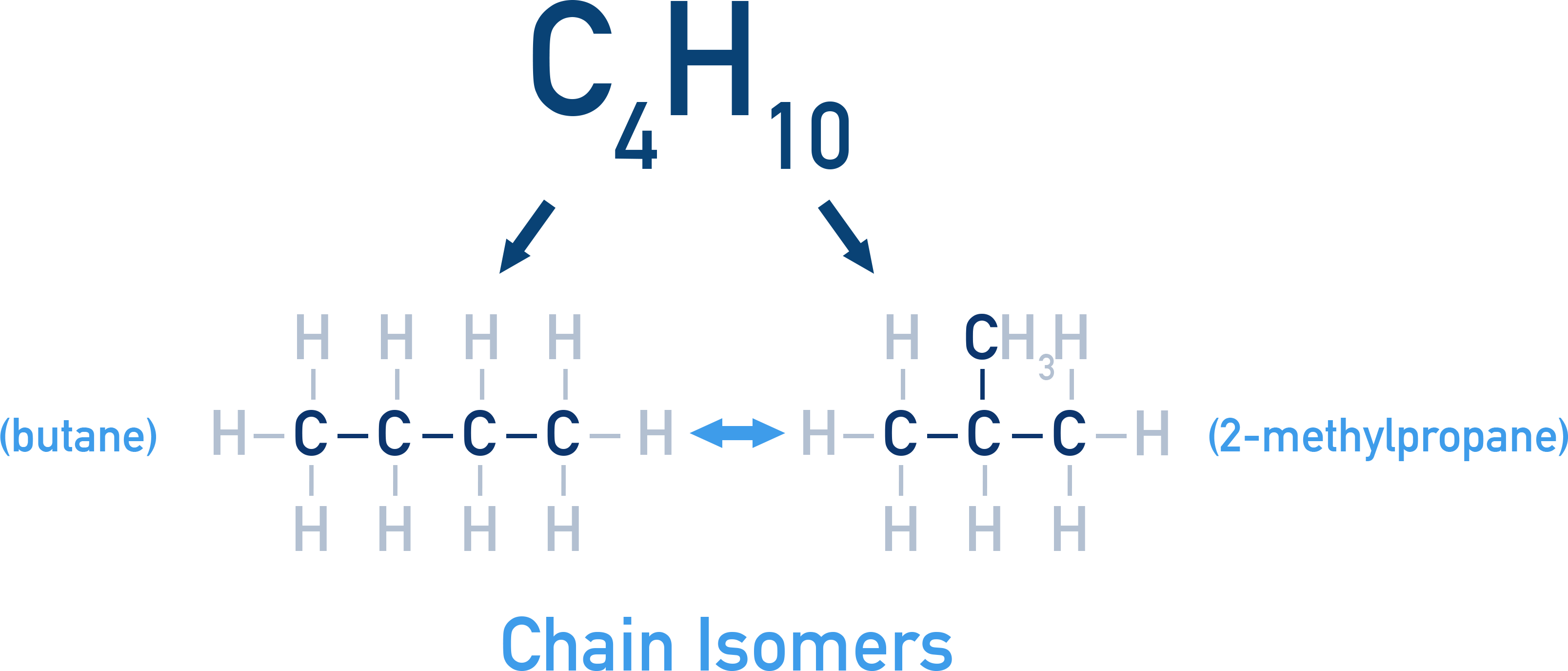
Propane: Straight chain.
2-Methylpropane: One branch.
Position Isomerism
Position isomers have the same functional group in a different position on the chain.
Example C5H11Br (Bromopentane isomers)
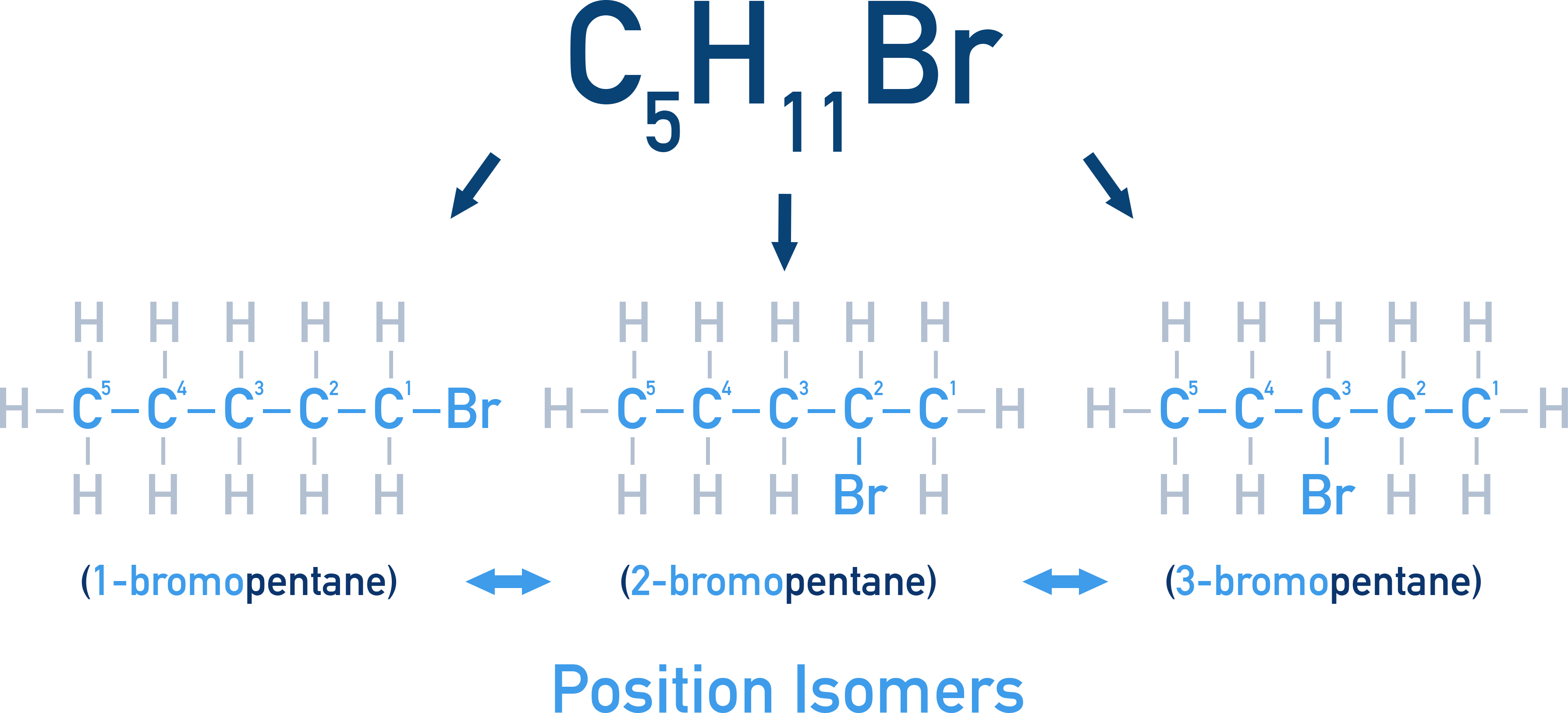
1-Bromopentane: Br on carbon 1.
2-Bromopentane: Br on carbon 2.
3-Bromopentane: Br on carbon 3.
Functional Group Isomerism
Functional group isomers have different functional groups however the same molecular formula.
Example C3H6O (Aldehyde and Ketone Isomers)
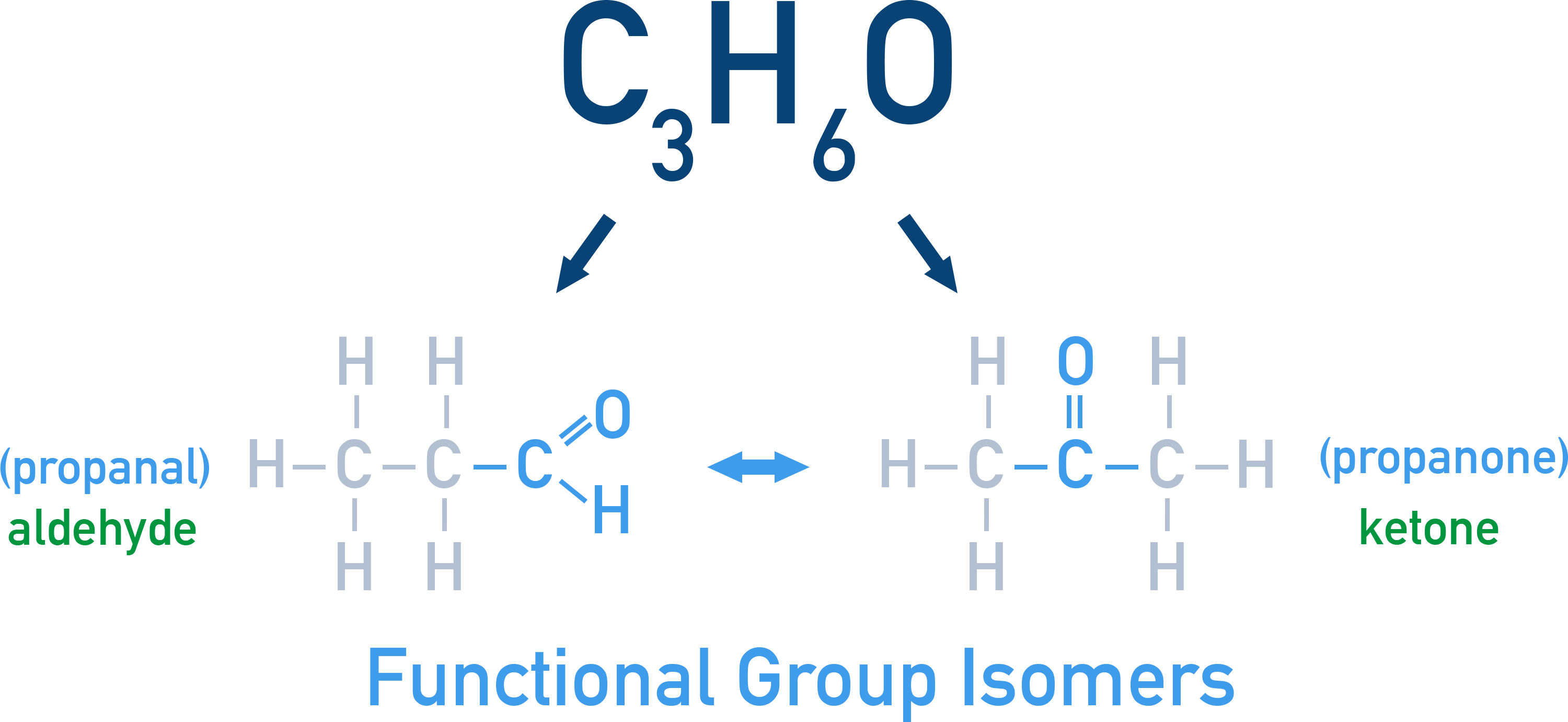
Propanal (Aldehyde, –CHO)
Propanone (Ketone, –CO– group)
Stereoisomerism and E/Z Isomerism
Stereoisomers have the same structural formula but atoms are arranged differently in space.
There are different types of stereoisomer, however at this stage you need to be confident with stereoisomerism in alkenes.
E-Z Stereoisomerism
The C=C double bond in an alkene is unable to freely rotate, it has restricted rotation.
This means atoms and groups bonded to the carbons in a double bond are ‘locked’ into position and there are two possible ways they can be arranged.
If the two atoms or groups bonded to each carbon are different, stereoisomerism exists.
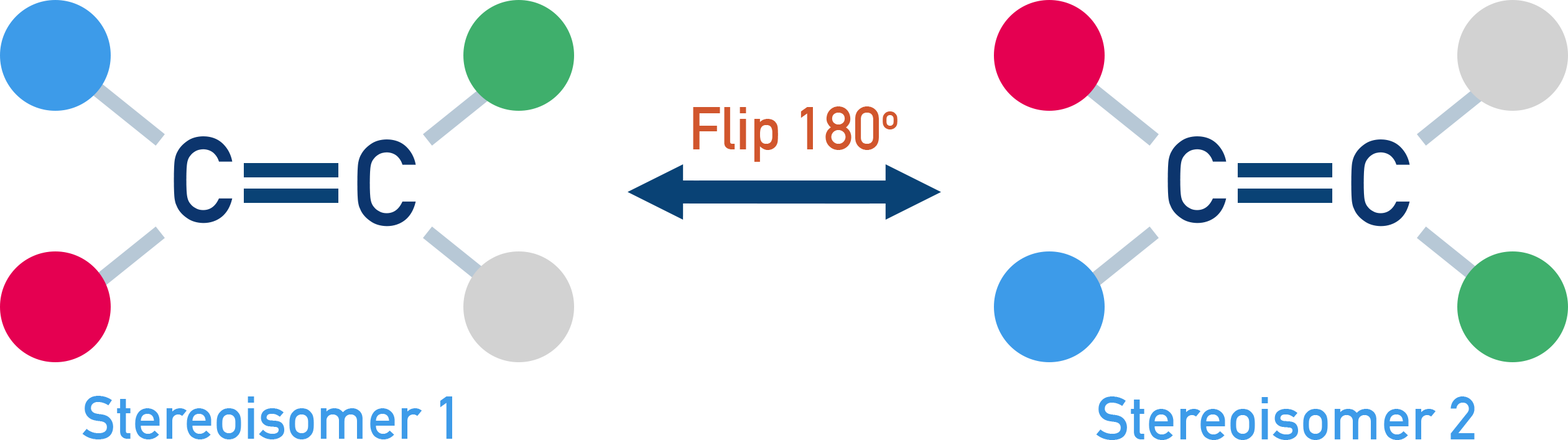
Example In 1-bromo-2-chloroethene the Br and Cl groups bonded to the C=C double bond can have two different relative positions.
To name these kinds of stereoisomers we use E and Z notation. The highest priority groups on each carbon determine the name using Cahn–Ingold–Prelog (CIP) rules (see below).
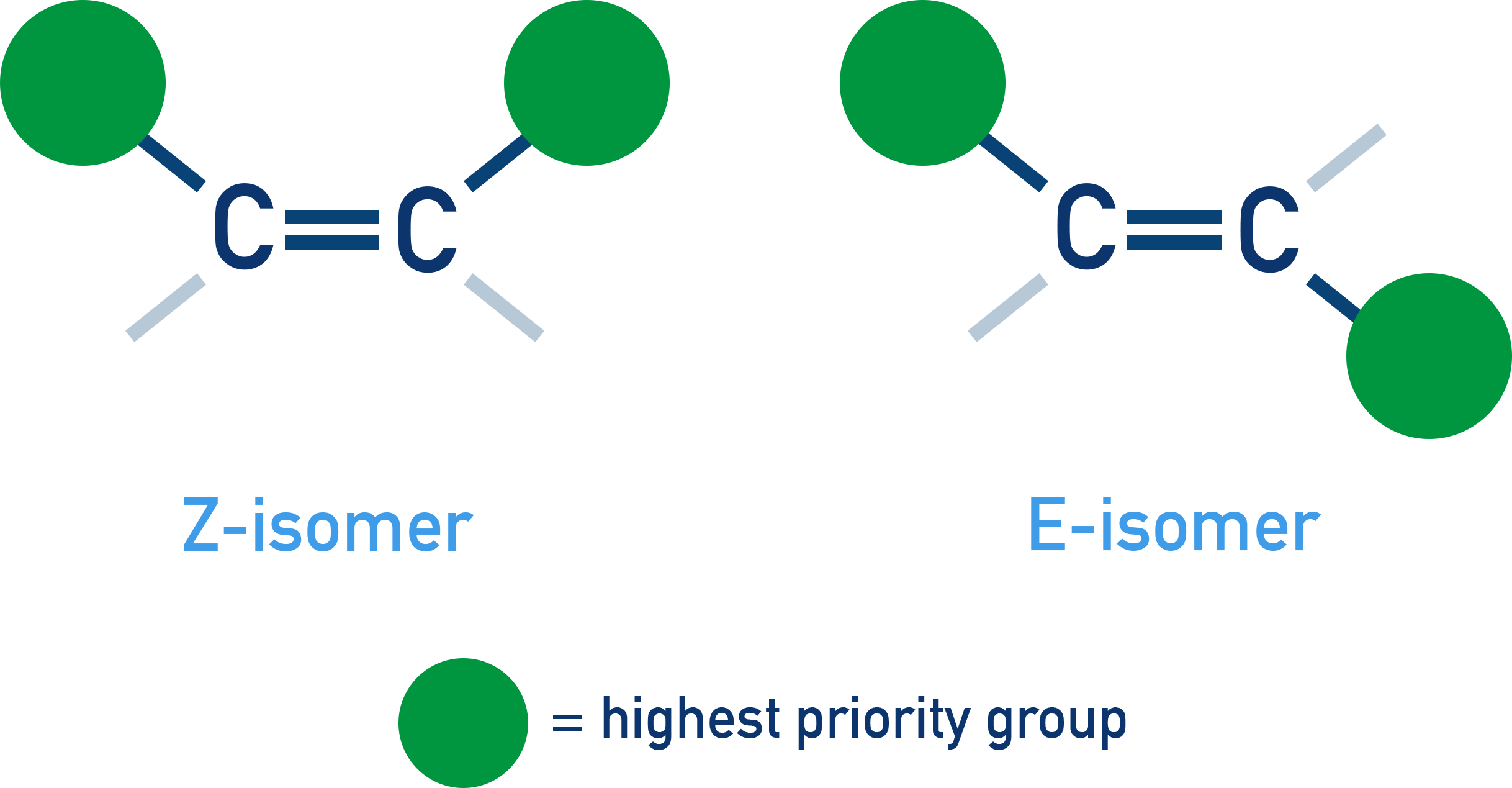
If highest priority groups are on opposite sides = E Isomer
If highest priority groups are on the same side = Z Isomer
Example But-2-ene
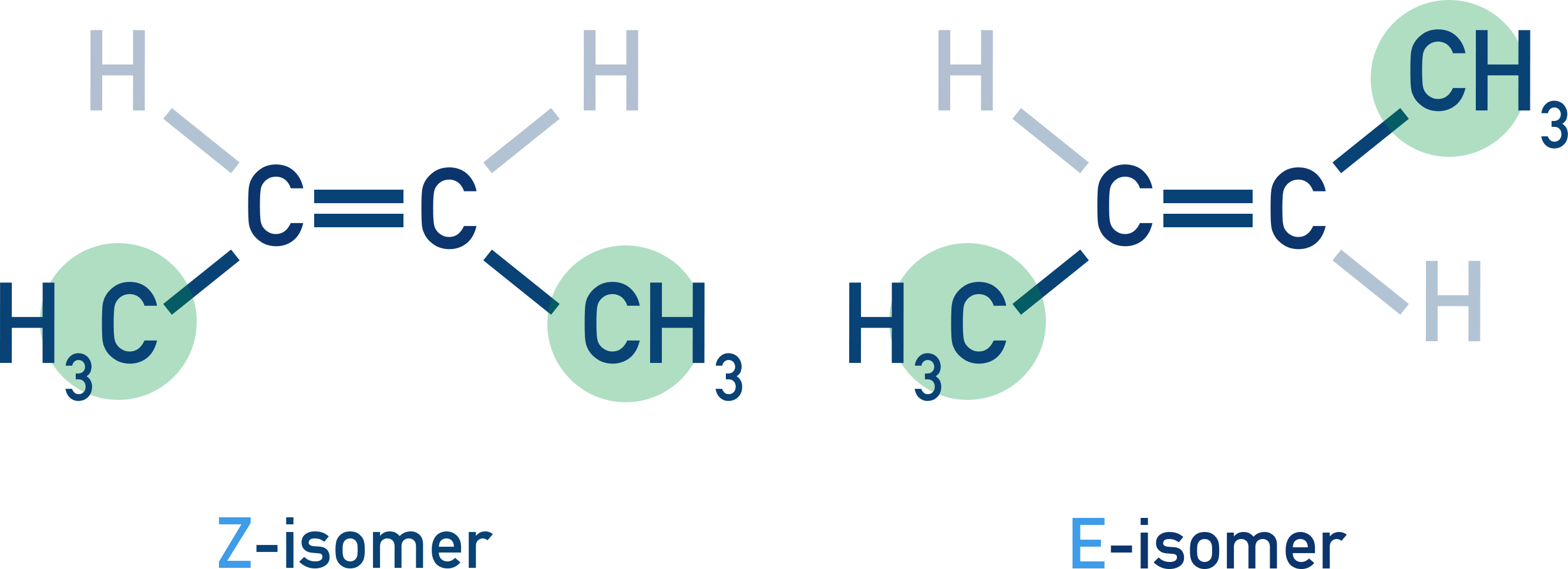
E-But-2-ene: CH3 and H on opposite sides of C=C.
Z-But-2-ene: CH3 and H on the same side of C=C.
Cahn–Ingold–Prelog (CIP) Priority Rules
Step 1: Look at the atoms directly attached to the C=C bond.
Step 2: Assign higher priority to the atom with the higher atomic number. If the highest priority atoms bonded to each carbon are the same (for example C) you then assign the highest priority of the groups bonded to that atom (for example CH2CH3 group has higher priority than CH3 group).
Step 3:
If the higher priority groups are on the same side, it is Z.
If the higher priority groups are on opposite sides, it is E.
Cis and Trans Isomerism
If two groups bonded to each carbon atom are the same, cis and trans notation can be used instead of E and Z.
Cis = the same groups on each carbon are on the same side of the double bond
Trans = the same groups on each carbon are on opposite sides of the double bond
Example But-2-ene
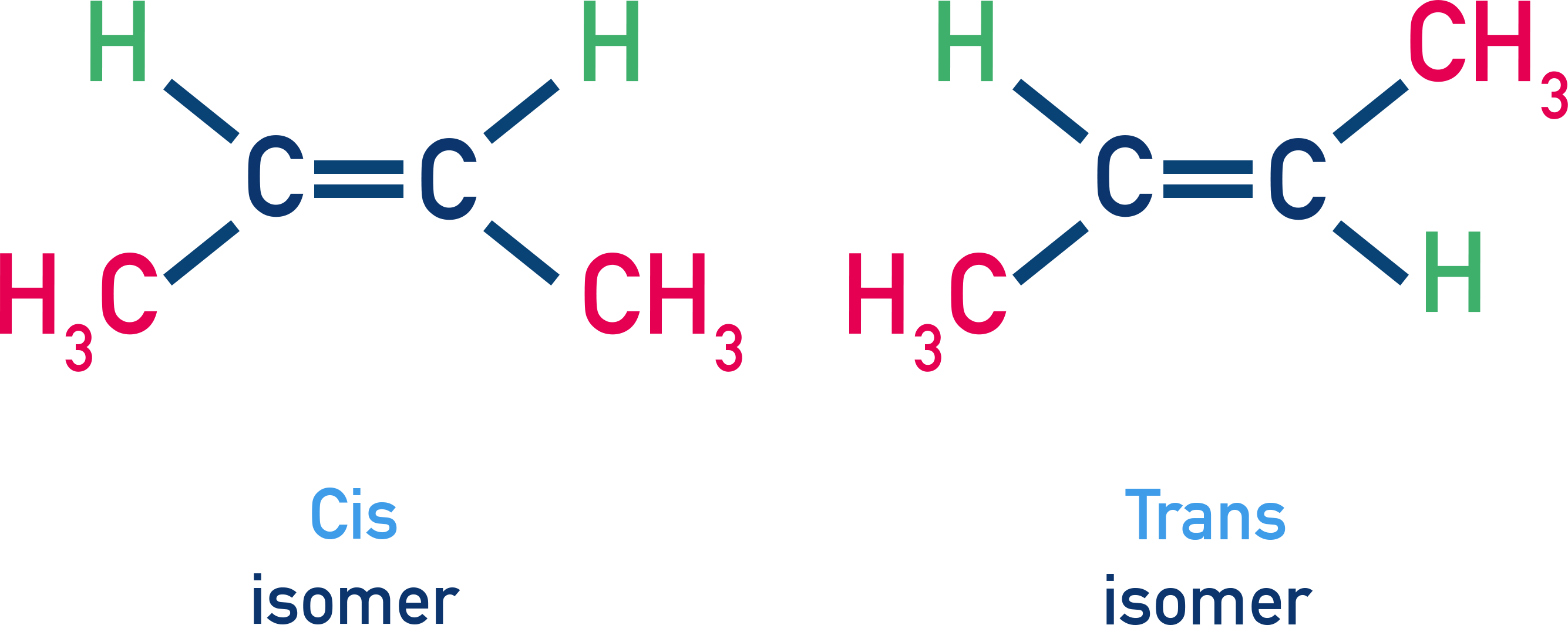
Cis-but-2-ene: CH3 groups on same side of C=C
Trans-but-2-ene: CH3 groups on opposite sides of C=C