Plant Disease
All plant diseases are caused by three (3) types of organisms: fungi, bacteria and viruses.
Fungi are microscopic, multicellular organisms. Some fungi feed off green plants, causing diseases to occur, while other fungi produce certain spores that are carried to other plants by wind or other means.
Bacteria are single-celled organisms that feed on organic matter including plants, and remain inside plants or plant debris to survive. Bacteria multiply very quickly and require moisture and warmth for reproduction.
Viruses are small particles capable of invading plant tissue and reproducing at the cost of the host plant. Viral diseases are most commonly spread by plant-eating insects.
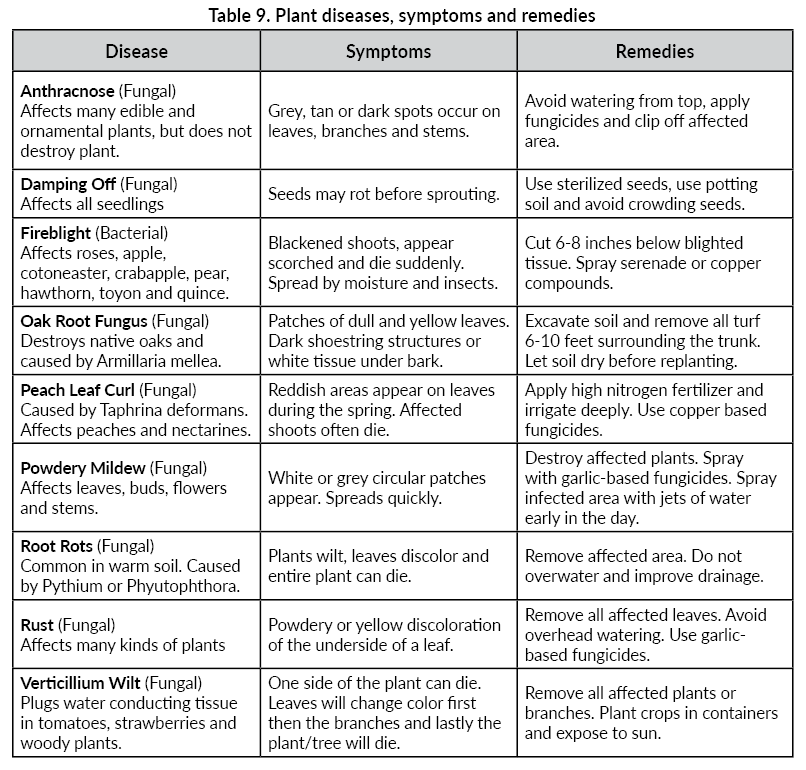
Commonly found plant diseases are listed in Table 9, along with suggested remedies.
Fungal Infections: These pathogens thrive in damp conditions and can cause significant damage to various plant species. Suggested remedies include proper sanitation, the use of fungicides, and crop rotation to prevent recurrence. Bacterial Diseases: These are caused by pathogenic bacteria that can lead to wilting, spots, and decay in plants. Effective control measures involve using resistant plant varieties, practicing good irrigation management, and applying appropriate bactericides. Viruses: Viral infections can spread quickly through insect vectors and contaminated tools, leading to stunted growth and discoloration. To manage viral diseases, it is recommended to remove infected plants promptly, practice good garden hygiene, and control insect populations. In addition to these measures, it's crucial to monitor plants regularly for early signs of disease and to implement integrated pest management strategies that combine biological, cultural, and chemical practices. Fungal Diseases: These infections can manifest as leaf spots, blights, and root rot, often thriving in damp environments. To prevent and manage fungal diseases, it is essential to ensure proper air circulation around plants, avoid overhead watering, and utilize fungicides when necessary. Bacterial Diseases: Bacterial infections are characterized by wilt, cankers, and soft rot, often occurring in warm, moist conditions. Effective management includes removing infected plant parts, avoiding working with wet foliage, and using bactericides when indicated. Viruses: Viral diseases can lead to stunted growth, yellowing leaves, and mosaic patterns on foliage, commonly transmitted by insect vectors such as aphids. To protect against viral infections, it's important to control insect populations, practice crop rotation, and use virus-resistant plant varieties.
Integrated Pest Management: This holistic approach combines cultural, biological, and chemical strategies to minimize plant diseases and pests while promoting overall plant health.