Plant Physiology 2
Photosynthetic Electron Transport Chain
There are four major protein complexes: PSII, cyt b6f, PSI, ATP synthase. There are two mobile components - plastoquinone (PQ), plastocyanin (PC). The protein complexes are buried into the thylakoid membrane. There is sidedness to the the membrane
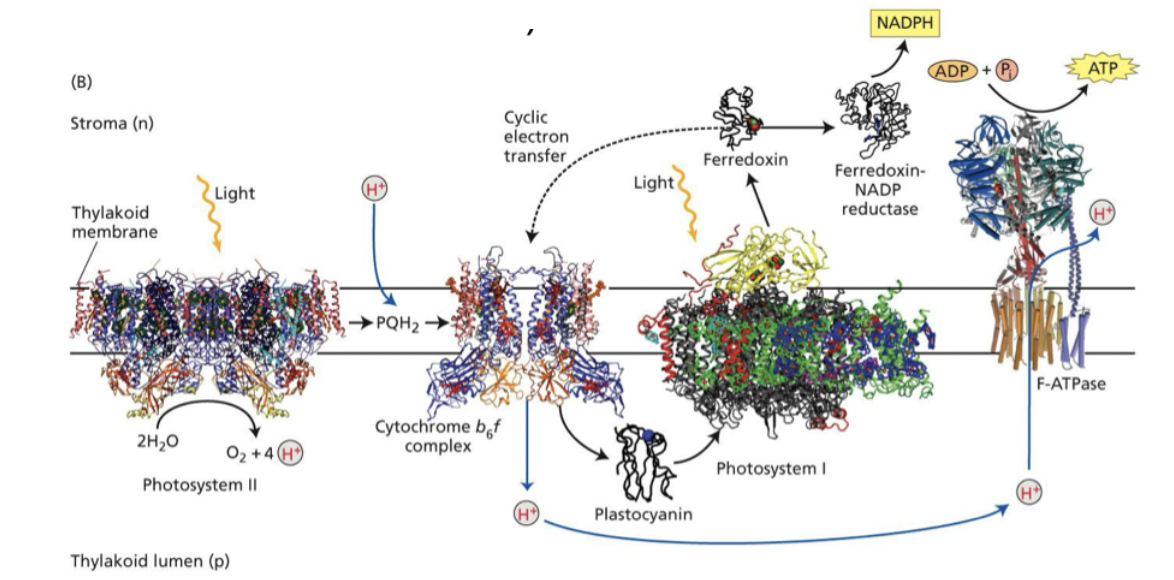
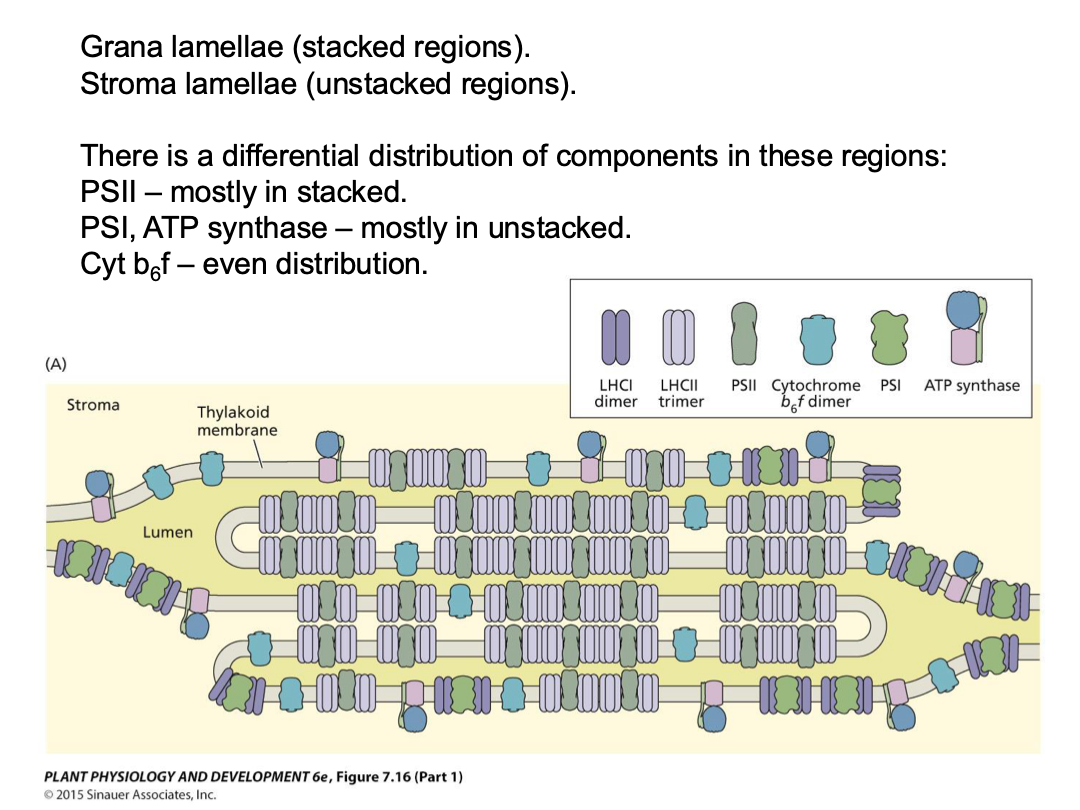
PS2 is in a stack region in grana lamella, inside stack membrane. PS1 is mainly on the membrane, facing the stroma region. Need something to connect. PQ is a hydrophobic compound, quite mobile since it is not in transmembrane, and thus can connect PS2 to others. PC (plasmocyanide) connect b6f and PS1. Outside is stroma, inside is lumen. PC is small mobile protein in stroma, helping out these lumen sides of membrane things. Connects different complexes together. In PS2, water is broken down into oxygen and protons, and passes electrons to PS2. PS2 can absorb light energy, and light energy is passed to electrons moving it to the PQ. PS2 needs to gain electrons to be replenished, gains it from water (ultimate electron donor).
Excited state has a low affinity. Producing the electrons and 4 protons. If you compare water and NADP+, water has high electron affinity - which is a major issue because you want to transfer an electron from it to NADP+. You will need external energy - coming from the light. Because you have light energy, you produce components.
This creates a Z-scheme - function of light energy produces components.
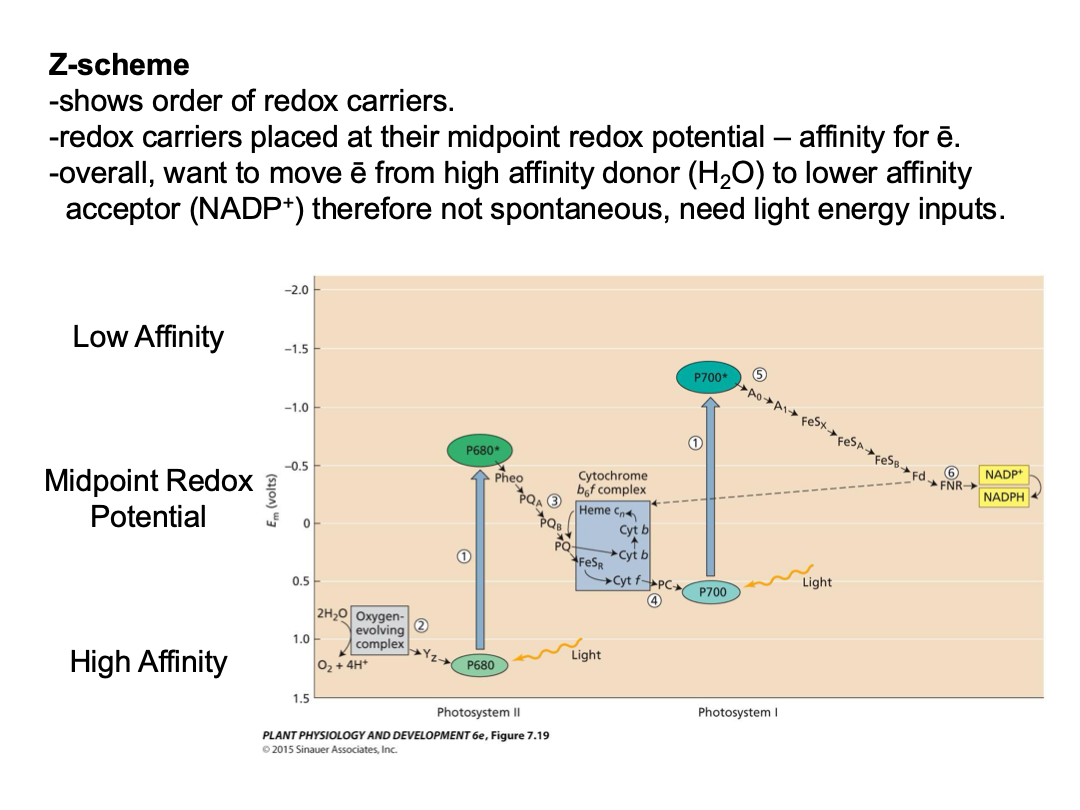
There are a lot of intermediate components, not just 5 major components. We see each complex has many intermediates.
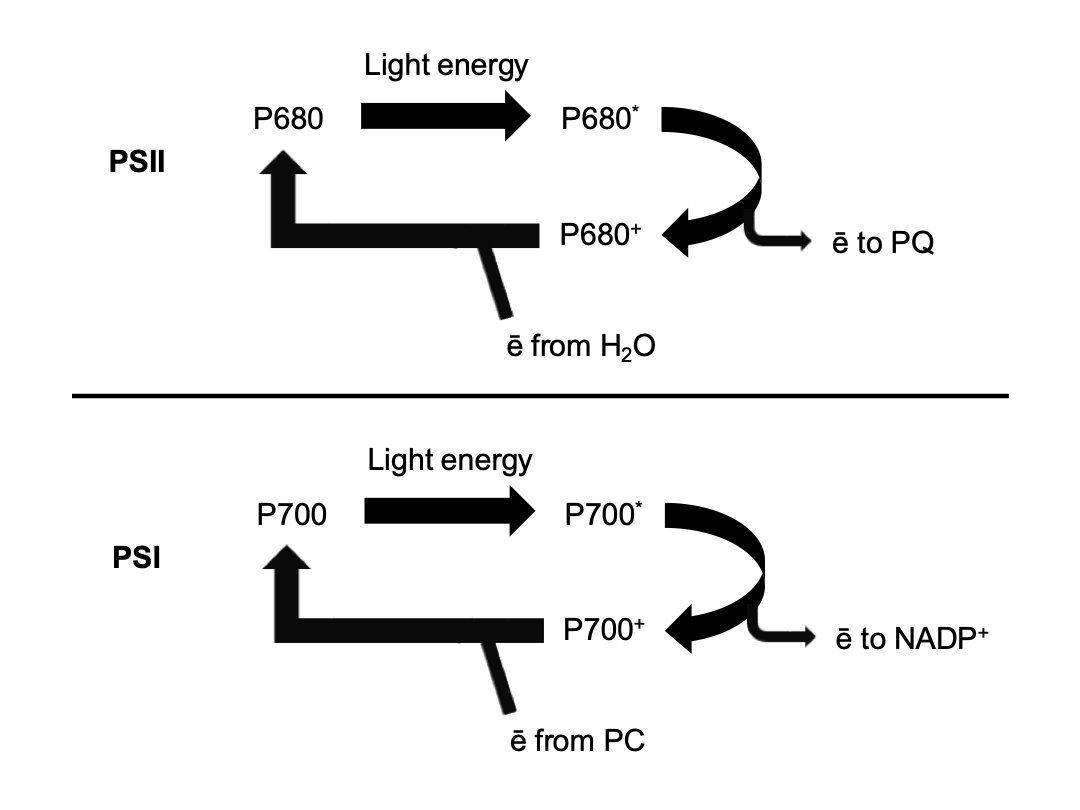
When you lose an electron, it becomes positively charged, meaning you need an additional electron. Water provides electron and then get’s excited from light energy. + means it is positive charge due to losing an electron. Electron is added to PQ, making ti PQ-. Then we add an electron and 2 H+ = PQH2
WE ONLY NEED TO KNOW PQ IS A 2 ELECTRON CARRIER, AND PC ONLY TRANSFER 1.
PS II
2 H2O + 4 photons + 2 PQ + H+ (from stroma) → O2 + 4 H+ (from water, into lumen) + 2PQH2
For one single oxygen, you need 4 electrons. Need 2 waters from one oxygen. Generates 4 protons.
2H2O = O2 + 4 H+
One photon always produces one electron. PQ is a 2 electron carrier. You need to transfer 4. Why you need to 2 PQ to get across the 4. Need to take the 4 protons in order to produce PQH2. Position of proton is very important. Taking proton from stroma side into lumen side. Increasing proton in lumen side. If I want to produce 2 oxygen - you need 4 PQ. Ring structure basically makes the PQ able to participate in the redox reaction.
Cyt b6f
2 PQH2 + 4 PC(Cu2+) → 2 PQ + 4 PC(Cu+) + 8 H+ (deposited in lumen). Plastocyanin (PC) is a 1 electron carrier.
PS I
4 photons + 4 PC(Cu+) + 4 Fd(Fe3+) → 4 PC (CU2+) + 4 Fd(Fe2+).
PC passing one ferredoxin through many component, PS1 eventually passes to ferredoxin which becomes negatively charged.
Ferredoxin-NADP reductase (FNR)
4Fd(Fe2+) + 2 NADP+ + 2 H+ → 4 Fd(Fe3+) + 2 NADPH
NADPH is one important final product to be used by the Calvin Cycle. But Calvin cycle also needs ATP - how is this obtained?
FNR - ferredoxin is the ultimate donor. NADPH needs 2 electrons. Need to produce 2, need 4 ferredoxin. Need enzymes to catalyze reaction.
Proton concentration is higher in lumen than stroma. Proton gradient across the thylakoid membrane. Drives photosynthesis. 3 major mechanism which can build up proton gradient. Proton gradient driving force. We build it up by basically producing protons in the lumen.
1) Water splits - H+ into lumen electron donor
2) PQ is reduced into PQH2 on stroma (2 H+ required). PQ is oxidized to PQ on lumen (2 H+ deposited).
3) NADP+ + H+ → NADPH on stroma
Need to understand how proton gradient is made. ATP synthase is a chanel for protons to pass through - embedded in thylakoid membranes, provides proton area to pass through membrane and provide channel. Produces ATP.
Photophosphorylation
The chemiosmotic hypothesis. An electrochemical gradient across a membrane generates a proton motive force, a source of free energy. This energy can be used to drive synthesis of ATP from ADP + Pi
Jagendorf (1960s) showed that thylakoid membranes could generate ATP in the presence of a proton gradient. By artificially establishing a proton gradient, ATP could be synthesized, even in the dark.
Proton concentration across thylakoid membrane, produces energy for proton synthesis. Proton gradient driven. Buffer pH of 4, proton not easy to pass through. Leave over night, membrane can leak. After over night, inside and outside have the same pH. Make proton gradient, changing buffer to 8 - because membrane is connected, now they are trying to change pH. pH 4 in lumen has higher proton concentration than pH 8 in the buffer.
Lumen side has a high H+ (low pH). In experiment, we are trying to simulate this. By changing pH - you generate the movement. Then they wanted to see if the protein gradient was enough to drive. They added a drop of ADP and phosphate into the buffer and measured how much ATP was produced. ATP was produced - proving the proton gradient is what drives it.
After mixing, thylakoid generates gradient. Main goal is to turn light energy and H2O into oxygen.
Chloroplast ATP synthase
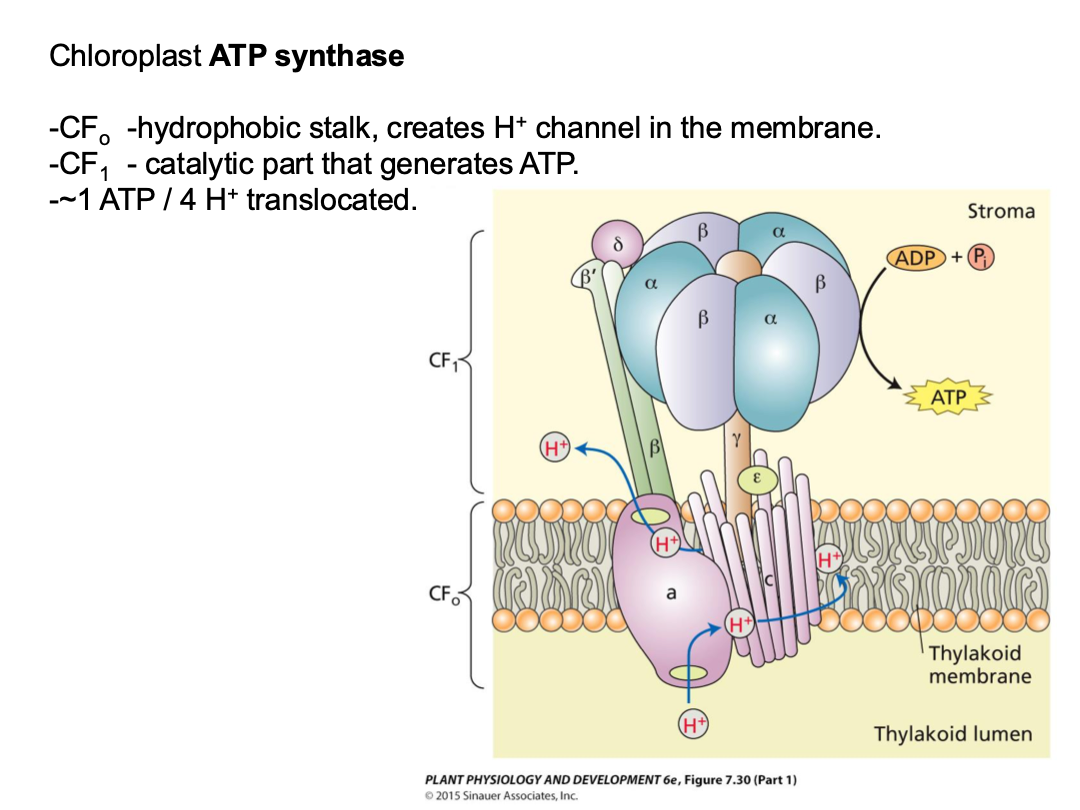
Whenever there is proton moving through the bottom component. Bottom component is hydrophobic, creating a channel that protons pass through, rotating the entire thing. Energy drives conversion of ADP to ATP with a phosphate group. CF1 components catalyze conversion.
Carbon Fixation
Dark Reaction:
Light reaction is about turning chemical energy into ATP and NADPH, while the dark reaction is about turning CO2 into sugar, using the energy produced by the light reaction (ATP and NADPH).
The Calvin cycle is made up of 3 sections: carboxylation, reduction, and regeneration
Carboxylation: 3 RuBP (5 carbon components each RuBP) + 3 CO2 → 6 3-PGA (1st stable carbon compound) (3-phosphoglycerate). This is driven by rubisco. We will see 18 carbon on each side. 18 C → 3 × 6 PGA.
Reduction: Need 6 NADPH and 6 ATP. 6 PGA → 6TP (use NADPH and ATP to drive reaction). 1 triose phosphate is escorted out to cytosol, and eventually used for starch sucrose synthesis - main source of sugar in a cell.
Regeneration: we use 5TP and regenerate it back into 3RuBP (15 C total for both) using 3 ATP. We need 9 ATP, 3 for regeneration and 6 in reduction. A single triose phosphate is 9.
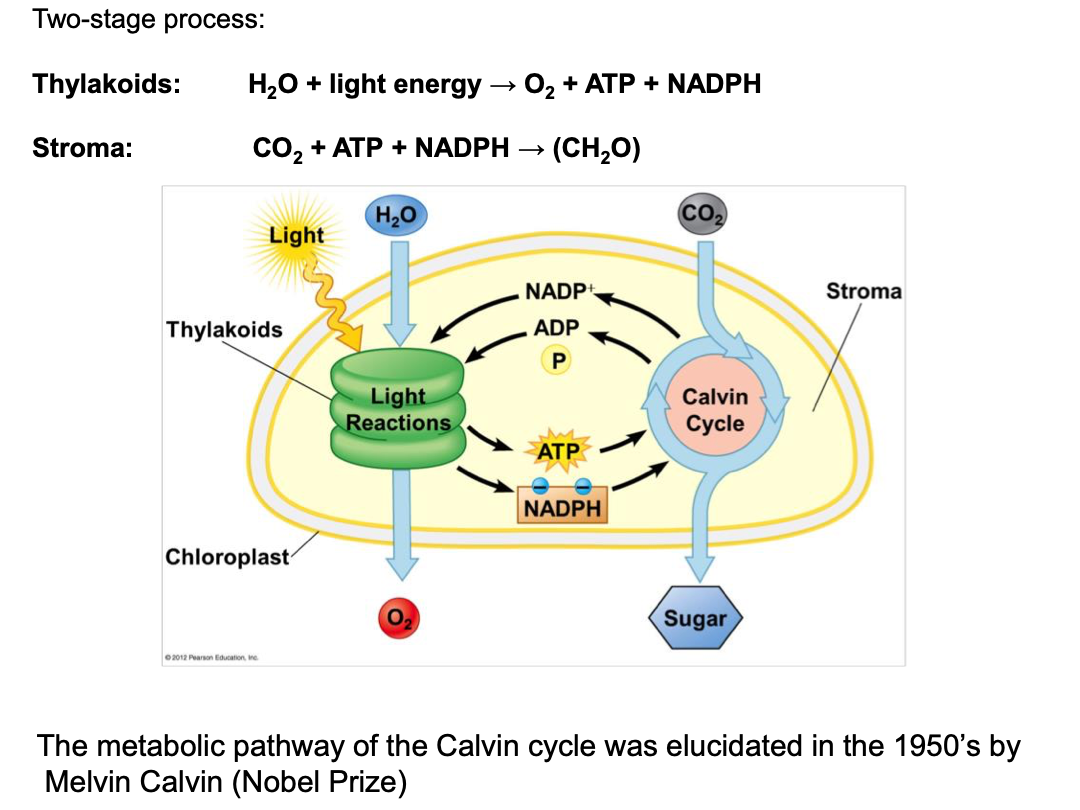
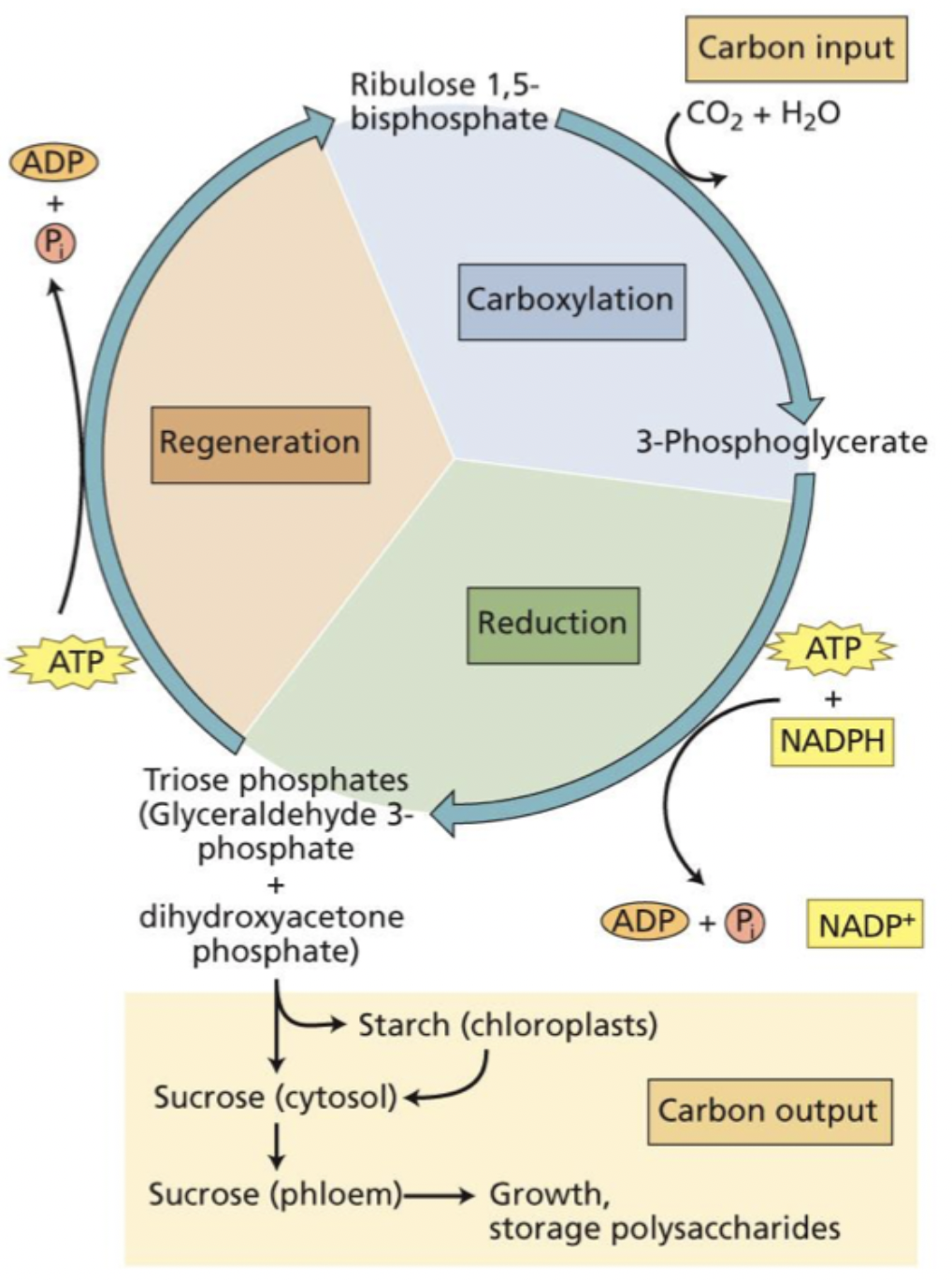
3 major phases
Adding carbon to sugar, leading 3-carbon phosphatase through
Reducing phosphoglyceraldehyde
Regenerate ADP
Carboxylation is catalyzed by Rubisco (ribulose-bisphosphate carboxylase oxygenase). Ribulose-1,5-bisphosphate (RUBP) and atmospheric CO2 as substrate. Carries out an oxygenase reaction later.
RUBP (5C) → Unstable 6C intermediate → 3-PGA (2×3C)
You can use oxygen as substrate, not just rubisco. Carboxylation. Very complex graph.
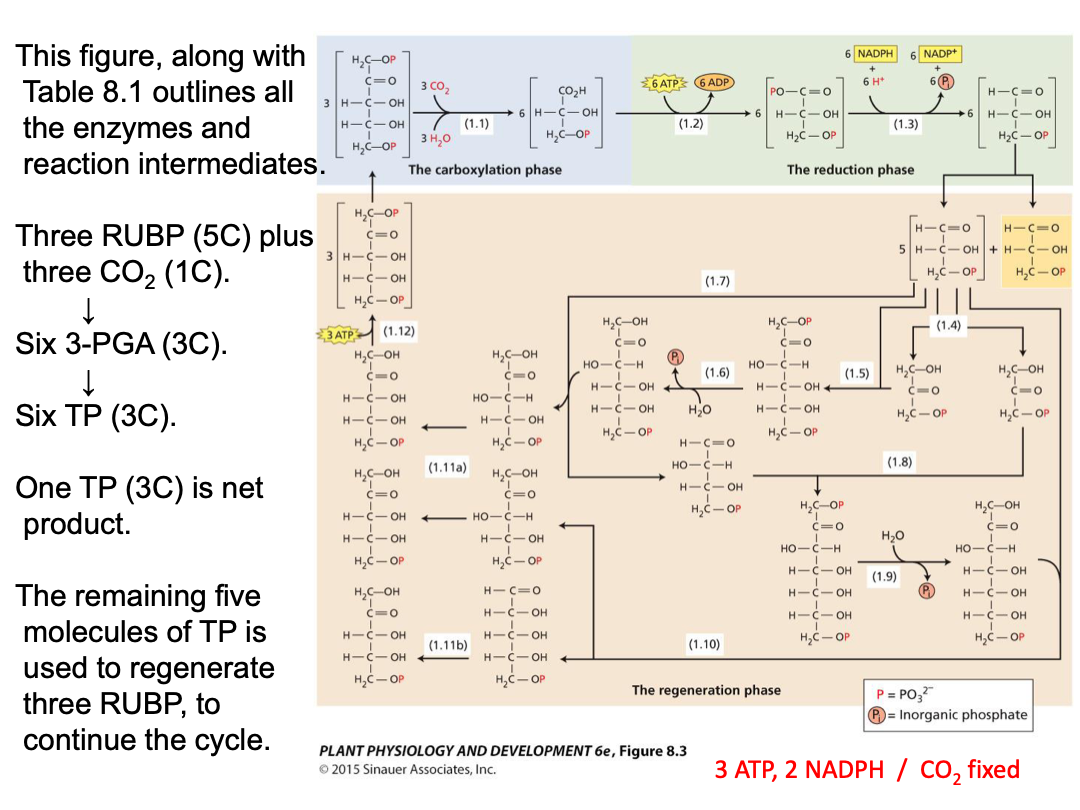
You are going to end up with 6 phosphoglyceraldehyde. It’s important to know how much carbon there is at a specific time, but regeneration intermediates are not important. Only one triosephosphate is exported out. TP used for regeneration. ATP and NADPH needed to incorporate one carbon into the thing.
Plants produce ATP in mitochondria, energy comes from sugar, to produce ATP you need sugar. Plant shuts off Calvin cycle at night - we’re interested in why.
This happens due to decreased enzyme activity during the night - namely rubisco is shut down.
Net movement of protons in from stroma to lumen keeps moving positive charge in - the lumen will eventually become trapped.
Mg2+ - if we transport 2 protons in, it’s has to come out. In the light conditions, we will keep moving protons in, in order to maintain proton gradient, we keep pumping out the magnesium. Proton concentration is going to be low. This is at the stroma site. Proton pumping determined by the electron transport chain (ETC). No light, no proton pumping. In light reaction in stroma proton concentration is low as it keeps moving in, pH higher, magnesium higher. In dark reaction in stroma, proton concentration is high as it keeps same, pH and Mg balance, rubisco and pH cofactor increase.
Biochemical control of the Calvin cycle
Why do plants shut down the Calvin cycle in the dark
Light-dependent ion movement
Stromal pH increases from 7 to 8 in the light. Several Calvin cycle enzymes are more active at pH 8 and require Mg2+ as cofactor. H+ from stroma to lumen, and Mg2+ from lumen to stroma.
Water has a much higher affinity for electrons than NADP+. Without light energy output, ETC cannot occur. No ETC, no proton movement. Depending on the protein, you may have more activity when there is a free group. For the enzyme involving calvin cycle, you want them to be more active in the light, as it’s going to be the oxidized form of the protein (active) that is a more active enzyme involving the Calvin cycle.
The light reaction will eventually produce NADPH when there’s light (electron donor). Now can become an electron donor, oxidized with abundant electrons. Why is reduced form the dominant form in dark reaction (textbook - light condition is reduced or something)
NADPH passes electron to ferredoxin, and then further passes to another protein enzyme (thioredoxin) then passes to enzyme involving calvin cycle (the reduced form). For passing from ferredoxin to thioredoxin - FT reductase does this. In light conditions, there is abundance. Donate electrons through ferredoxin.
Redox regulation (Ferredoxin-thioredoxin system)
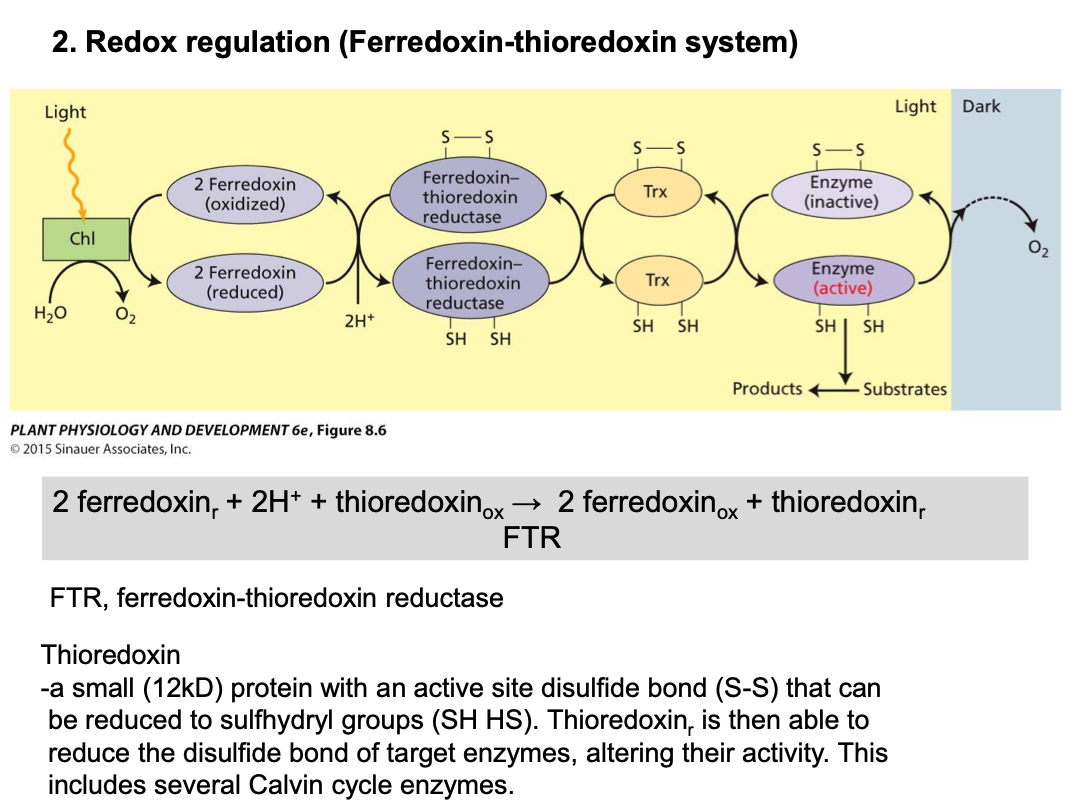
Need to understand light-dependent movement and redox regulation - enzyme activity in redox environment, not a pH environment. Eventually making it a more active enzyme.
What happens to the triose phosphate?
Starch: a glucose polymer, synthesized in the plastid, a store of carbohydrate typically built-up during day and utilized at night.
Sucrose: disaccharide (glucose-fructose), synthesized in the cytosol, the typical form of carbohydrate transported to other parts of the plant via the phloem.
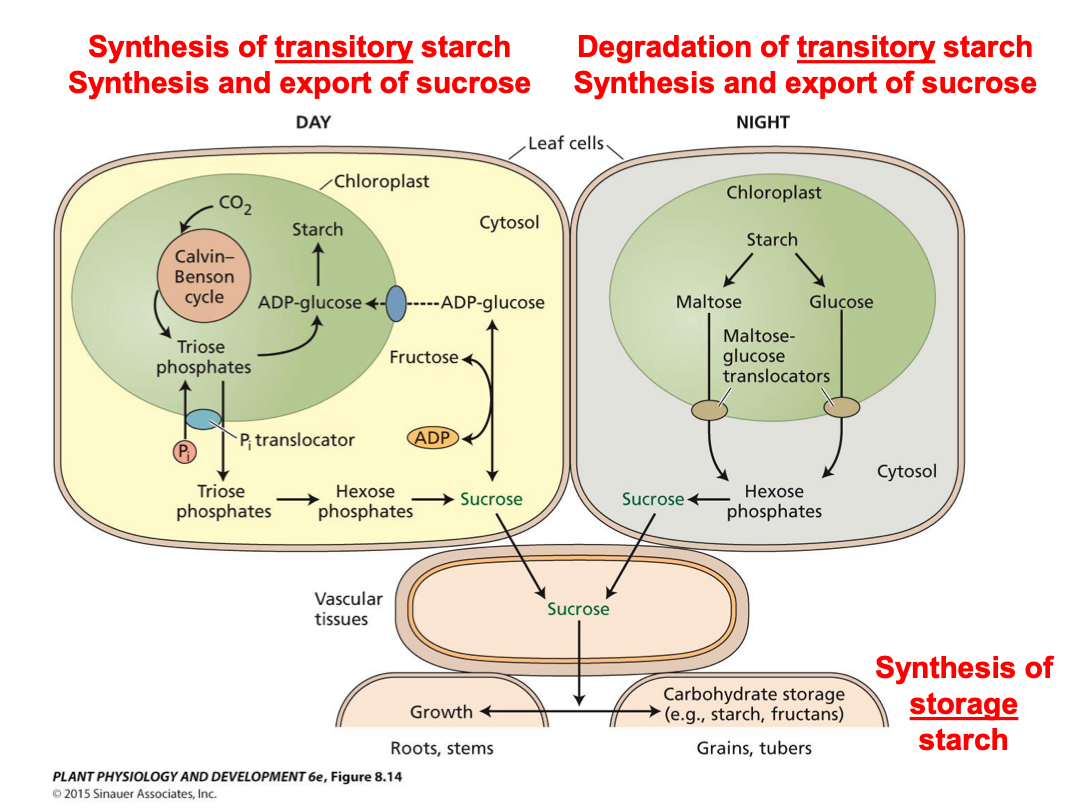
Mesophyll cells inside the leaf tissue - they have a ton of chloroplasts. Phloem is going to be the vascular tissue. Sucrose is exported out of mesophyll cell, into the phloem. Not every vascular part of the plant can do photosynthesis, whatever sugar is produced needs to be sent elsewhere for development. Shoot to elsewhere.
Synthesis of either starch or sucrose release Pi for reuse. Pi and TP can also exchange (strict counter-exchange) between stroma and cytosol. They are also important in biochemical control of starch/sucrose synthesis and degradation.
TP (inside chloroplast stroma) is used for starch synthesis. Starch is transitory - synthesized in day time, broken at night. Plants will initially use tp. Cytosol synthesizes sucrose. Difference between sucrose and starch. Sucrose is much more simple. Starch is a polymer compared to sucrose disaccharide. Still single cell.
TP in the day time, coming from chloroplast, will be the precursor for sucrose. In the night, starch is the precursor, broken down into hexose (6 carbon sugar) (glucose or maltose), and then will be exported from chloroplast to the cytosol to synthesize the sugars. Sugar source for sucrose is different from day to night.
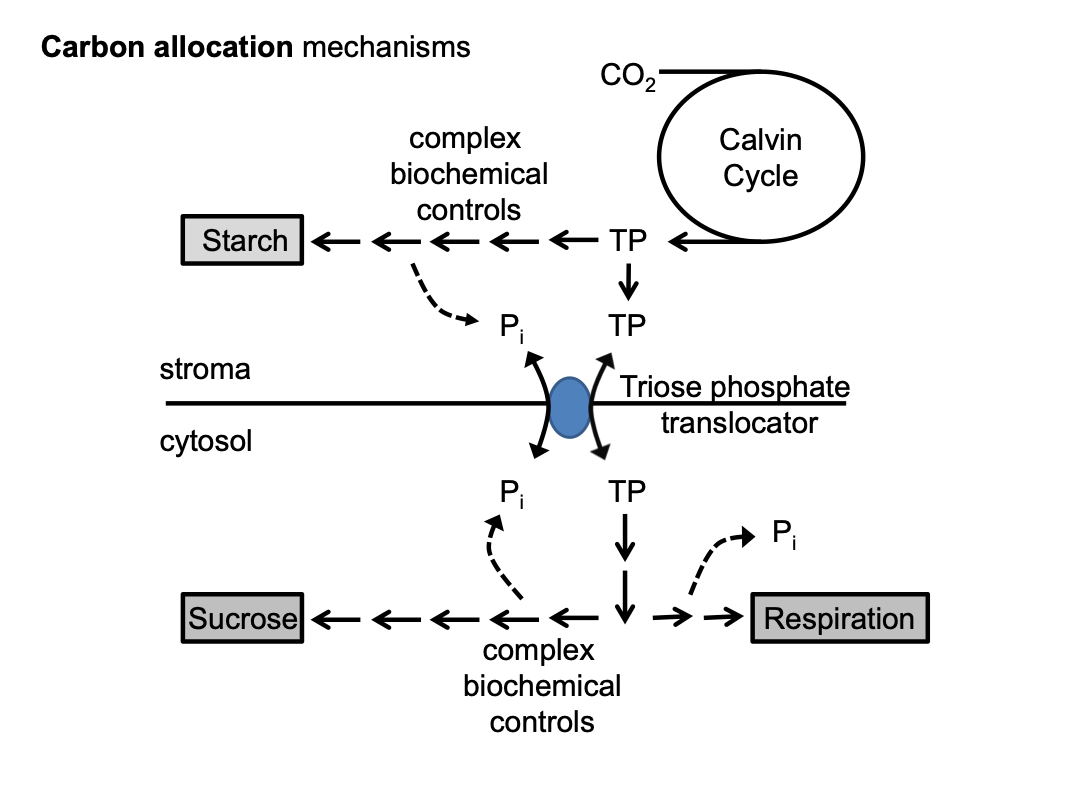
If you have 1 TP from stroma to cytosol, you need one phosphate going the opposite direction so everything is maintained (homeostasis).
Starch
Two major components
Amylose: Linease chains of glucosyl units with 1-4 linkages
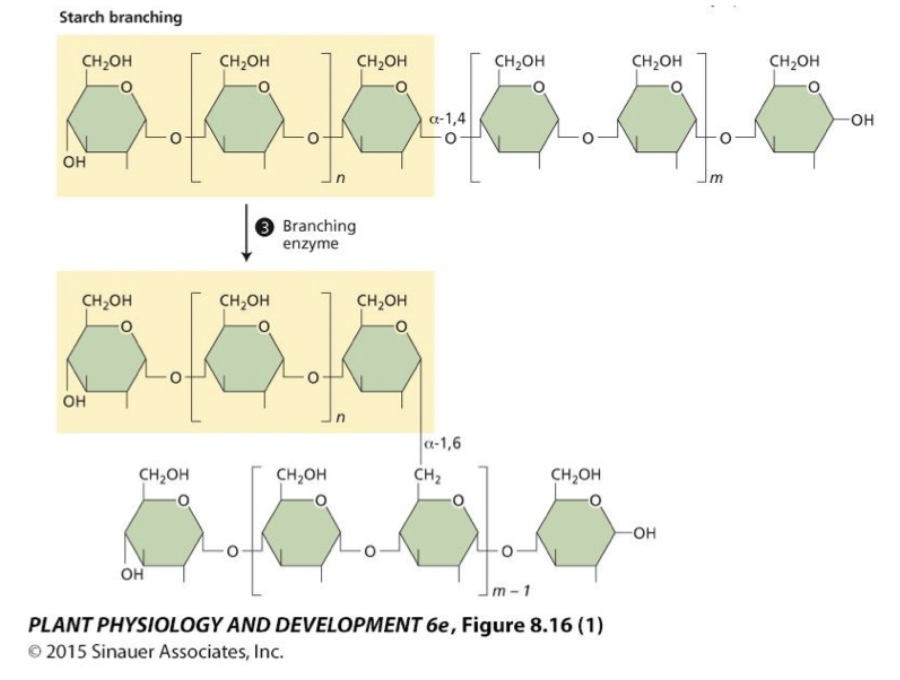
Amylopectin: Branched chains of glucosyl units with the branches due to 1-6 linkages.
Carbon number 1 and 4 are forming a glycosidic bond. Chemical bonds always used forming chemical subunits. Carbon number 1.
Amylose and amylopectin components are packed together to produce large insoluble starch granules. This allows the cell to accumulate a large amount of carbon without altering osmotic balance.
Water potential: soil potential has to be something dissolving to water potential. Affecting osmotic pressure.
Starch biosynthesis steps
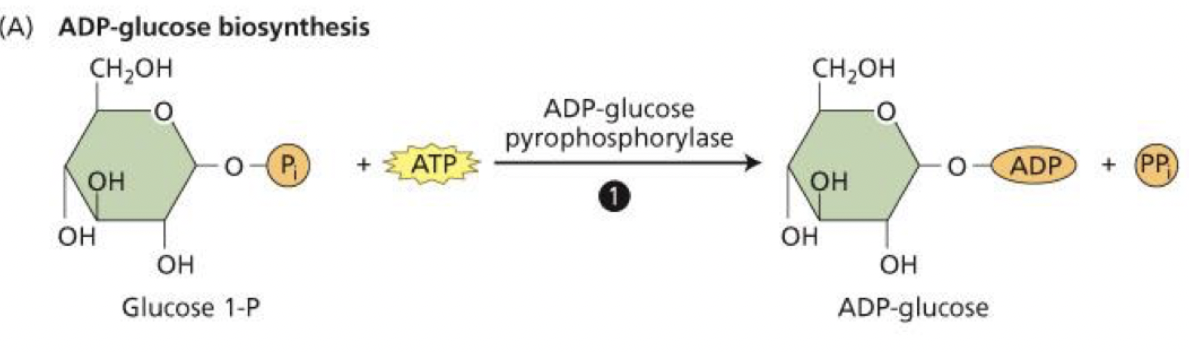
Synthesis of the sugar nucleotide ADP-glucose by ADP-glucose pyrophosphorylase
Need to add many glucose and connect
First step is to activate glucose
Instead of using ATP for energy, you’re using UDP glucose
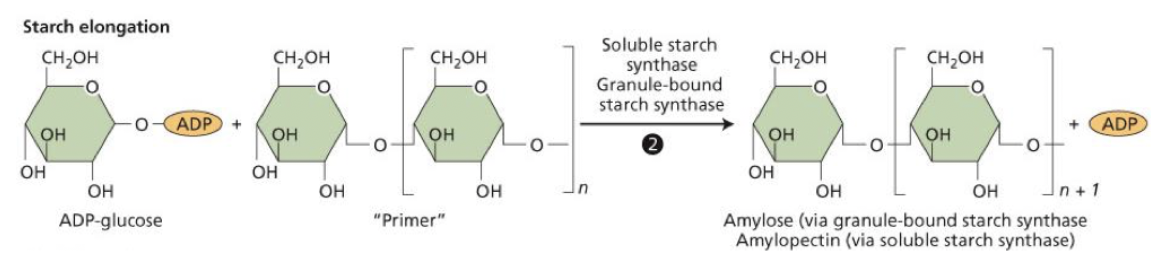
Elongation of the glucan chain by starch synthase
Add activated subunit to chain. Generating a linear tray.
Starch synthesis is mainly catalyzing. In order to catalyze, branching bad. Loss of enzyme, pack them together.
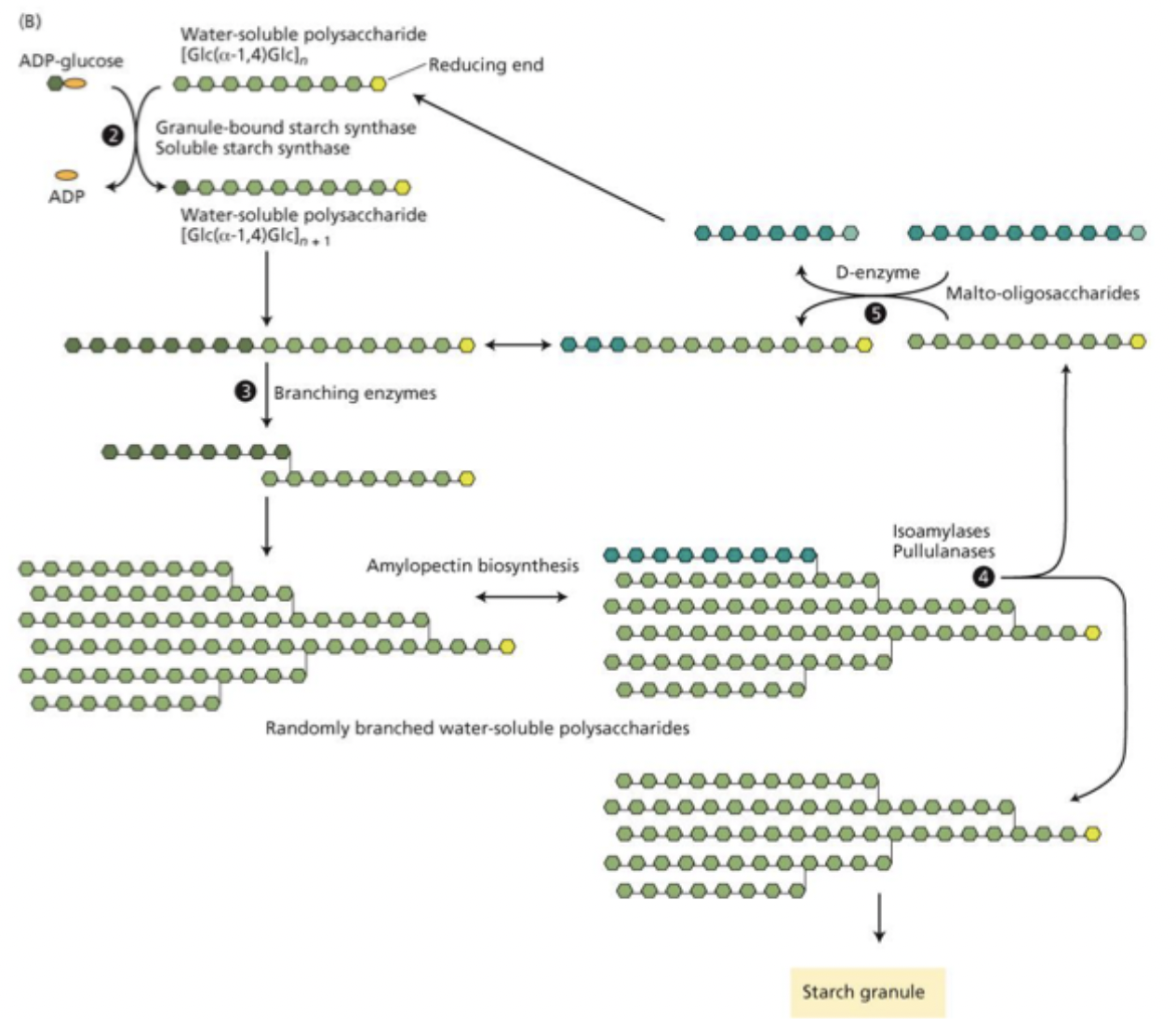
Branching enzymes are used to introduce 1-6 linkages
A range of other enzymes are used to process and pack the amylose and amylopectin into a starch granule
Main goal is synthesizing amylopectin
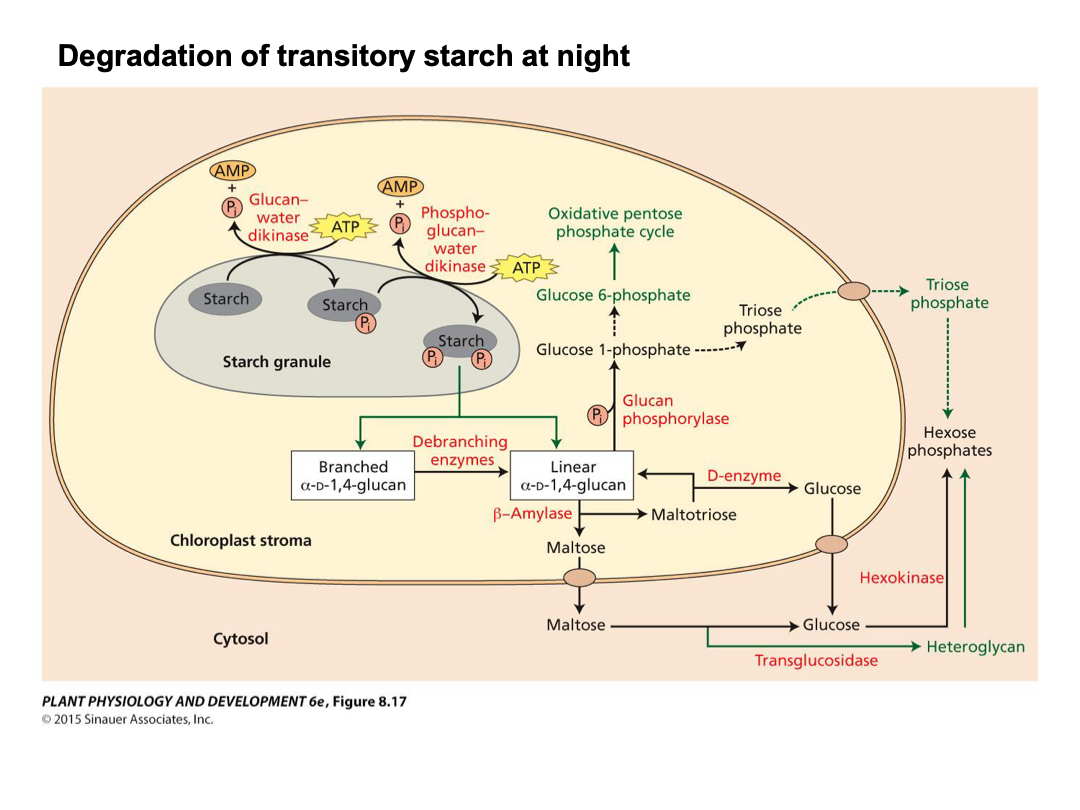
Phosphorylation is very important, regulate many processes. Regulate structure of carbohydrates. Kinase and phosphatase.
Kinase adds Pi to substrate - granule is basically adding the phosphate group. It will open the entire granule. Other enzyme cannot work on it. Adding phosphate group into the starch granule, add 2 1-4 linkage. Starch made into maltose and glucose. Phosphatase catalyzes the reverse reaction (removing).
Water dikinases: phosphorylate some of the glucosyl units within the starch granule
Debranching enzymes: release linear glucan chains
B-amylase: hydrolyzes the glucans, releasing maltose (a disaccharide made up of two glucose units)
Maltose: (and some glucose) are moved to cytosol by specific transporter. Is converted to glucose, which is then phosphorylated by hexokinase producing Glu 6-P
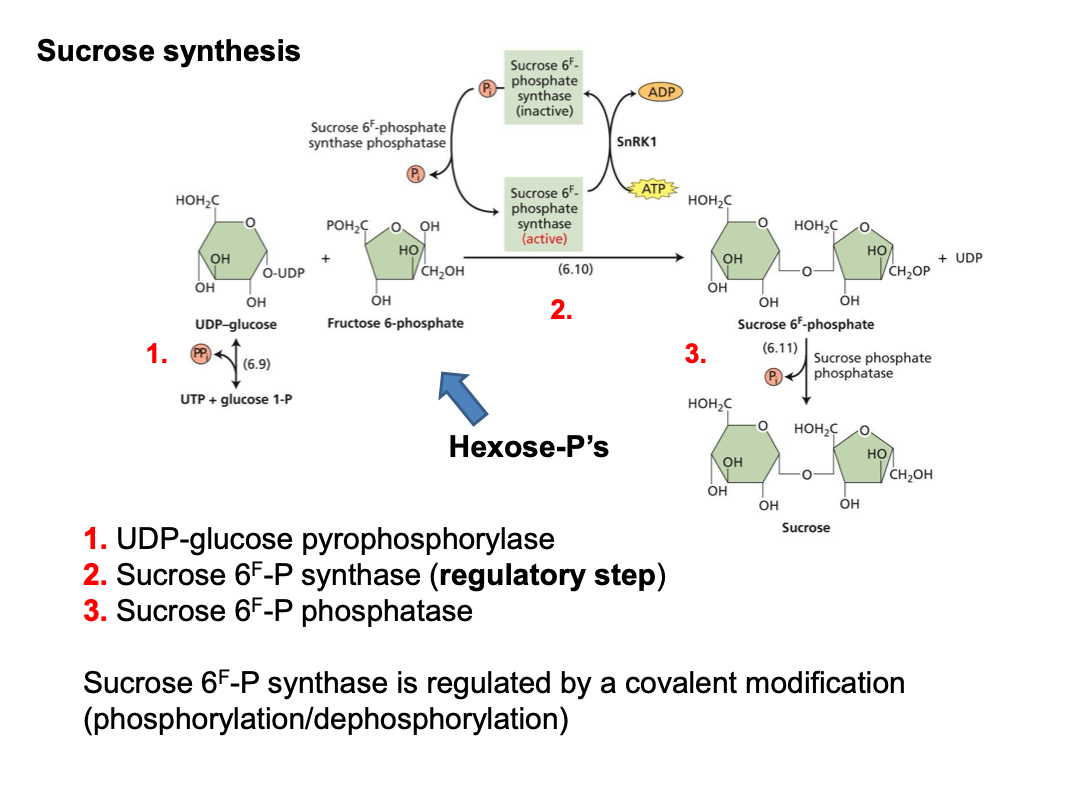
Easier, only has two components. In starch, they use ATP, and with sucrose they use UDP. UDP-glucose is activated. Catalyzed by sucrose synthase. Still have phosphate group in the end, need to remove in the last step, get final product. 3 key enzymes.
Co-factors also regulate.
Products of Photosynthesis: Phloem Transport
There are different types of vascular tissue. No certain direction for sucrose transport, usually source to sink (source is a place that produces more sucrose than needed, like mature leaf tissue / tissue that do photosynthesis) (sink is anything that can do photosynthesis that can’t do enough photosynthesis or any at all, like the root). Source to sink is generated by negative pressure, similar to water transport which pulls the water up. Main mechanism is the bulk flow, pressure gradient. Xylem is always source to sink.
High to low pressure gradient. Push photosynthesis.
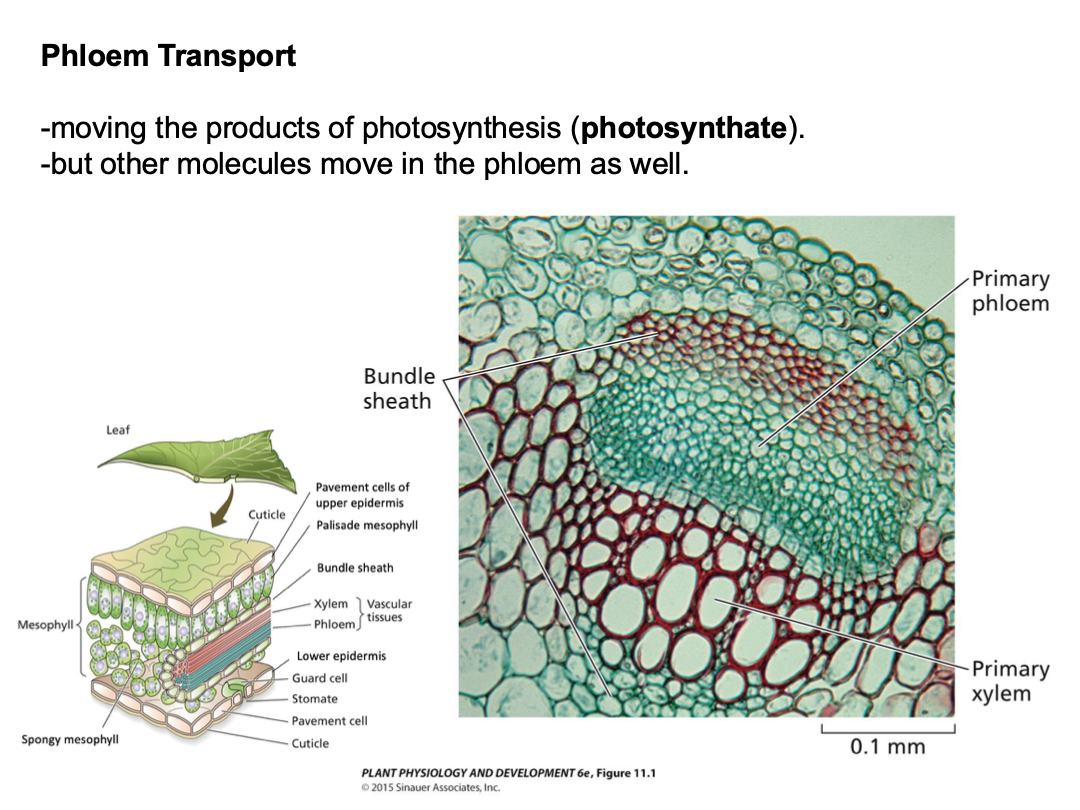
Different cell type in the leaf tissue. We have spongy mesophyll cells which contain lots of chloroplasts to do lots of photosynthesis. In order for the PS products to move from leaf elsewhere, has been transported first from mesophyll cell to phloem.
Phloem loading. Outside phloem tissue is the different cell types. Mesophyll needs to be passed around. Many different cell type to get into the phloem. Outside is the bundle sheath cells, and boundary right next to it, the phloem. Understand how sucrose is transported.
Transport occurs from source to sink.
Photosynthate exceeds local needs. A mature leaf, storage organ during exporting phase.
Sinks are areas which do not produce enough photosynthate to support their own needs for growth storage. Roots, storage organ during importing phase, developing fruits and seeds, immature leaves.
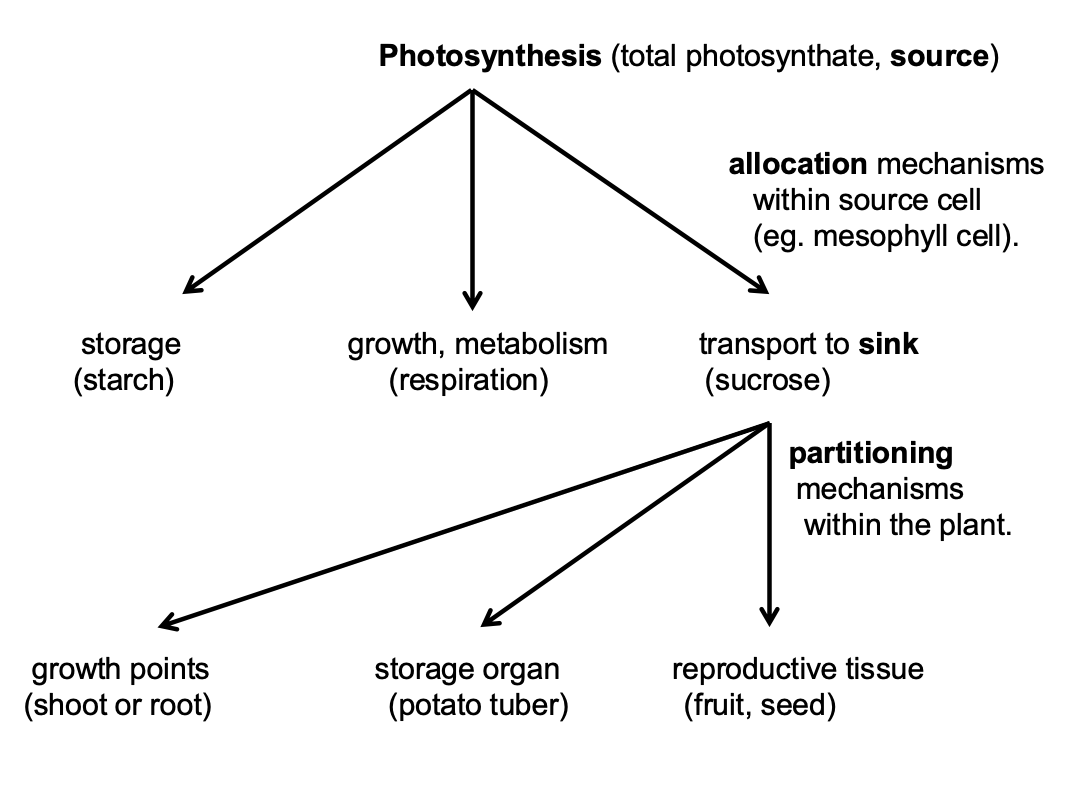
Allocation: indicate different fates of photosynthesis products. Sucrose is going to be separated into different plant cells. Whatever is allocated it can further be partitioned. Relative rem for partitioning mechanism (sink).
There are 2 cell types in the xylem. They undergo cell division and have two daughter cells, one of each.
Sieve tube elements (the cells actually carrying out the long-distance transport)
Associated companion cells
Sieve tube elements are connected 1:1, forming single sieve tube elements, for sieve tube elements, it’s dead cells at maturity. Loses a lot of intracellular components. Sieve tube elements need ribosomes to do protein photosynthesis, basically useless without.
Lives under pressure, no secondary wall (unlike xylem), lose their nuclei, tonoplast, cytoskeleton, golgi, ribosomes, remaining cell components line walls, retain PM, plastids, mitochondria, SER, has a thick primary wall, sieve plates (large pores) on end walls and sieve areas (small pores) on side walls, P-protein (phloem protein).
The sieve plate is very efficient piping system.
P-protein = phloem protein, used as main defense mechanism to fight against phloem leakage, lots of photosynthesis produces, if stem is broken or phloem gets damaged, the P-proteins aggregate and plug really big pores at sieve plate. Blocks bottom and top of sieve tube elements. P-protein is found in most angiosperms. Protects phloem against damage, such as herbivore feeding. Freely floating in the cytoplasm under normal conditions. It quickly aggregates to form a plug at the sieve plate, preventing excess loss of sap and blocking pathogen entry. Plugged with the polysaccharide callose.
Companion cells carry out critical metabolic functions for the sieve tube elements that the mature sieve tube element can no longer perform (protein synthesis, P-protein synthesis). Also has dense cytosol, numerous mitochondria, and is involved in the short-distance part of the phloem transport pathway.
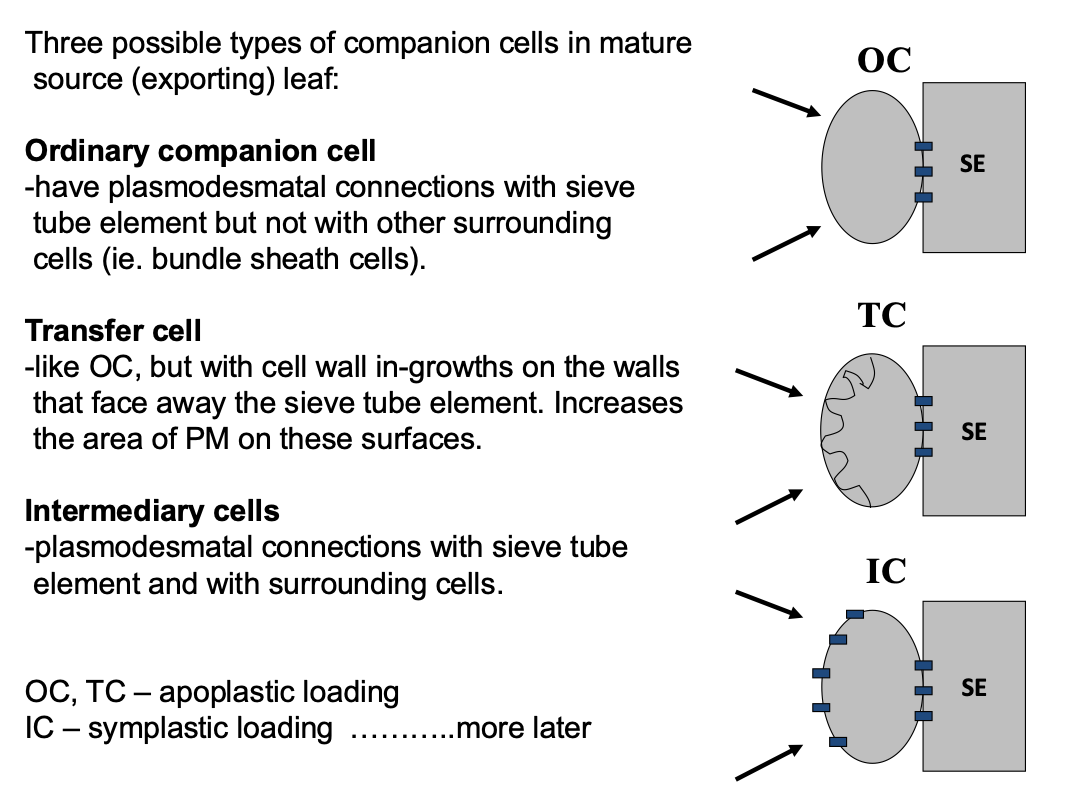
Plasmodesmata is the connection between two cells. Regardless of type, always plasmodesmata between companion cell and sieve tube elements.
IC doesn’t have them moving out through apoplastic because of its connections. IC is symplastic (stays within the cell transport). Plasmodesmata connection is with lots of surrounding tissue. Continuity with surrounding bundle sheath cells.
Radioactive tracers have established general features of transport
Provide leaves with carbon dioxide, basically conversion of CO2 into sucrose. Trace. Higher level of radioactivity - indicate top leaf 14 (medium colour) is a source,and the middle, small leaves are sinks, the ones closer made the leaves darker. Distance from source matters. Smaller tissues will take from larger closer leaf tissues. Some general rules can be concluded by this experiment.
General features of phloem transport
Source to sinks. Particular sources are preferentially supply particular sinks and depend upon such factors as…
Proximity (upper mature leaves supply immature leaves, and lower mature leaves send to roots)
Development (during reproductive phase, preference switches from vegetative to reproductive organs)
Vascular connections (more direction connections favoured over more indirect connections)
Translocation patterns are flexible. There is competition between sinks (sink strength).
Sink strength: capacity of a sink to compete with others for carbohydrate.
What the phloem transports
Sucrose (0.3-0.9 M)
Non-reducing sugars and sugar alcohols
Amino acids (glutamate, aspartate) and amides (glutamine, asparagine)
Some inorganic ions
Most plant hormones
Specific proteins and RNAs
The last two have regulatory or signalling functions in the plant, to coordinate distant processes such as development of the shoot and root.
Commonly translocated sugars:
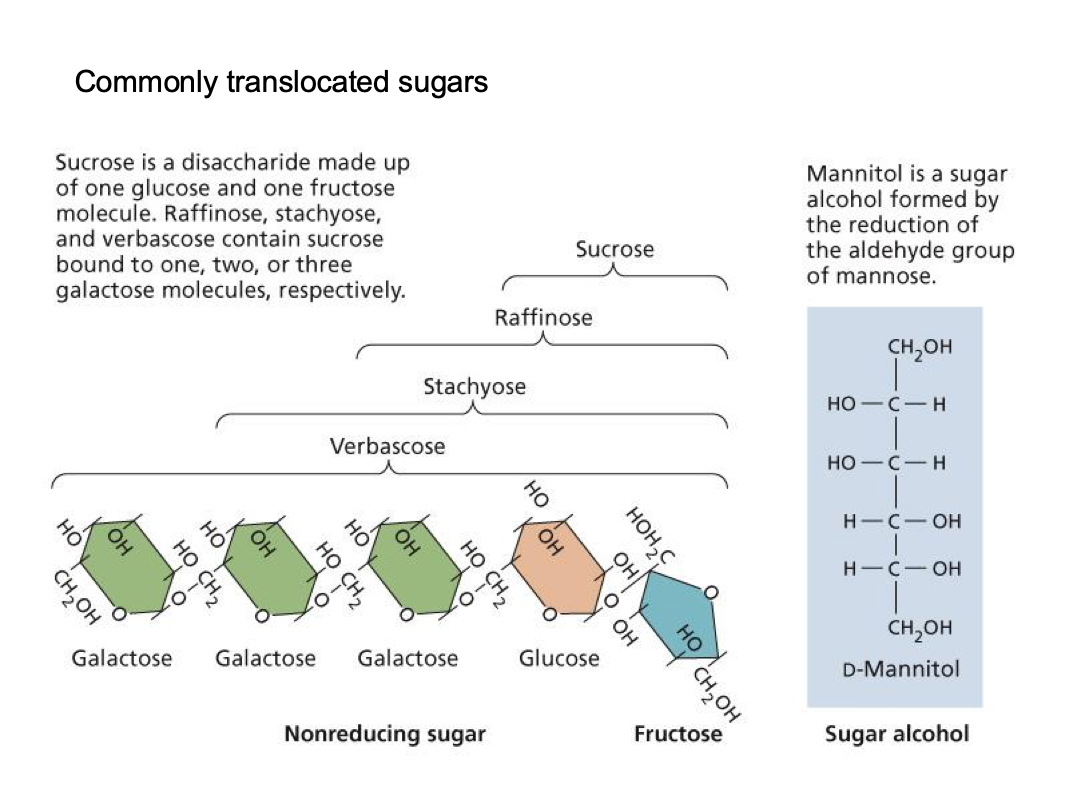
Many different types of sugars can exist in plants. Many non-reducing sugars can be found in phloem. Why can’t they just directly transport glucose or fructose.
Aldehyde and ketone groups do a redox reaction. Reducing sugars, which are not generally translocated in phloem. Aldehyde -CHO can be oxidized into COOH, or reduced into -OH. Can donate or receive electrons. That’s why plants don’t want to use these types of sugars. Too reactive or something.
Phloem transport
Phloem loading at source (export stage) (short path)
Energy dependent. Mechanisms that concentrate the sugar at the source end of the transport path.
Transport through sieve tubes from source to sink (long path)
Passive transport (pressure-flow model)
Phloem unloading at sink (import stage) (short path)
Energy dependent. Mechanisms that lower the sugar concentration at the sink end of the transport path
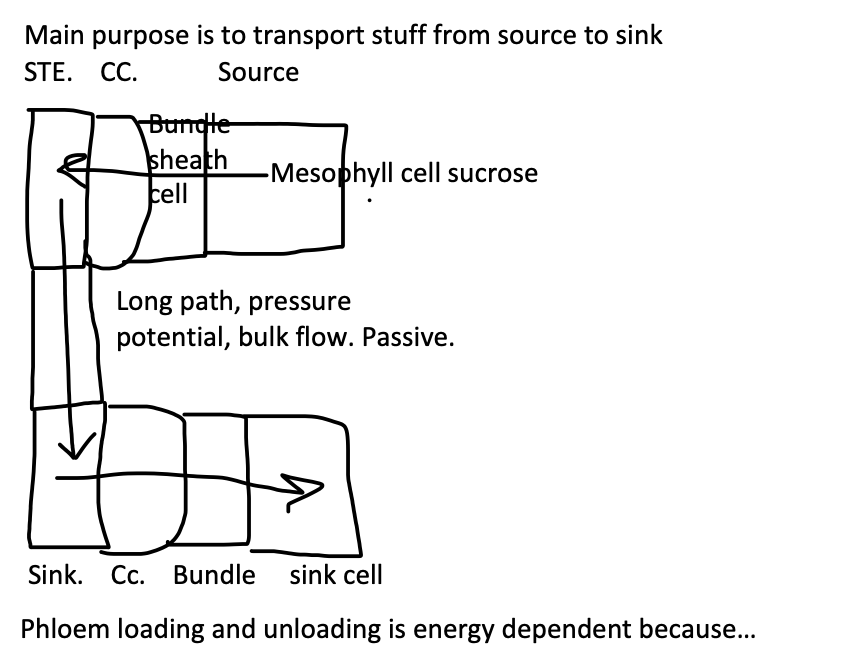
Short path accumulates a lot of sugars in phloem, decreasing water potential as sucrose dissolves. Increase sucrose concentration, and reducing water potential. This promotes water influx. Building up total pressure. Continually loading sugar is energy dependent.
The other short path (unloading) moves sucrose away from sieve tube elements, increasing water potential, water will eflux. Turgor pressure is reduced. Continually deporting sugar out, energy dependent.
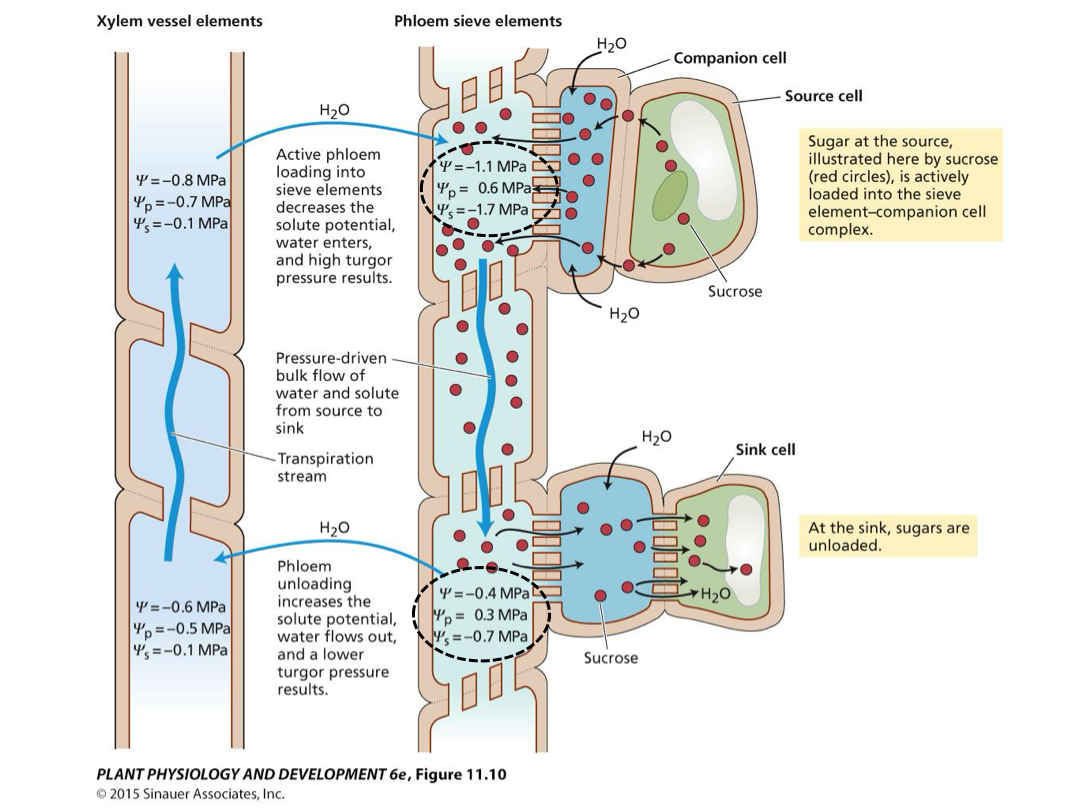
More is in the STE than the companion cell.
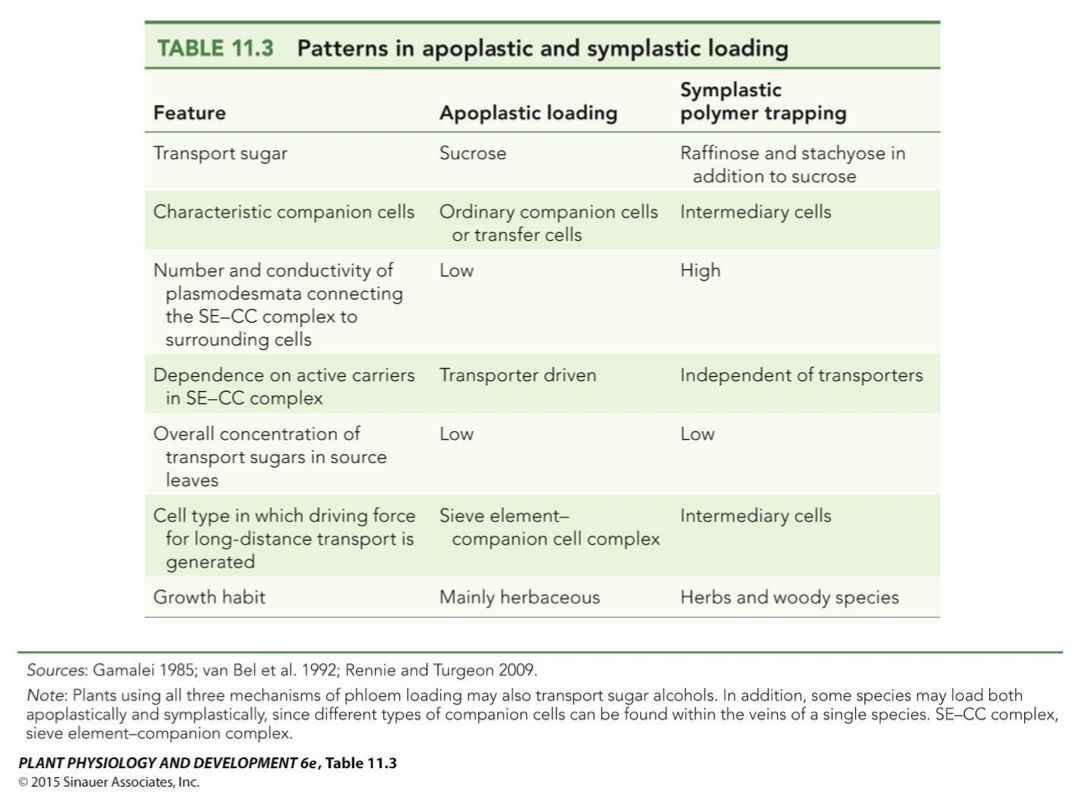
Apoplastic loading: involved sugar into the apoplast and then back in the symplast of either an ordinary companion cell or transfer cell. Once in the companion cell or transfer cell it can enter the sieve tube element through plasmodesmata.
Bundle sheath closing the phloem. Mesophyll cells are connecting with each other and producing lots of sugar, moving to bundle sheath cell. Ordinary companion cell doesn’t have plasmodesmata connections but you still need get in the cell. When sucrose is transported to bundle sheath cell no problem, there is still a problem. Everything is symplastic up until that point, to transport into the companion cell, there needs to be an apoplastic region - transporting outside the cell wall region.
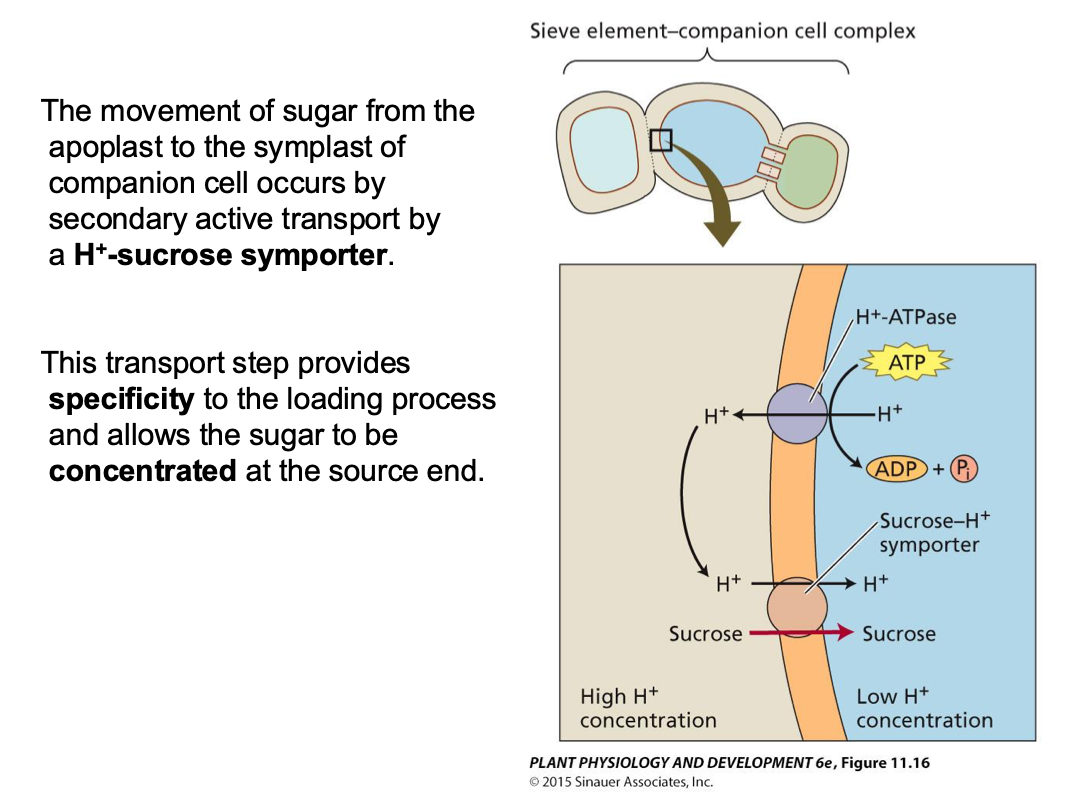
Proton sucrose symporter (2 things move in one direction, antiporter means 2 things in different directions)
Make sure sucrose is continuously building up in the companion cell. Needs energy. Where is it coming from…
Primary active transport or secondary active transport - depends on energy source
Moving from low concentration to high concentration.
Primary active transport: directly use energy coming from ATP.
Secondary active transport: they use energy coming from ion gradient → [H+] in our case
Build up proton gradient, a long waisted proton
Proton ATPase is the proton pusher. Transporting anything.
Sucrose transport pushed against gradient with proton gradient, needs energy to push the proton into the new area.
Need to get it in before they can do stuff - why they need to do apoplastic loading.
Symplastic loading: intermediary companion cells provide symplastic continuity between the surrounding cells and the phloem. These species don’t have an apoplast to symplast active transport step. Specific sugars are loaded and concentrated in phloem (not primarily sucrose). How is specificity achieved and how is the sugar concentrated without an active transport step?
Plants want to avoid backflow by changing.
These are the sugars transported in the phloem. IC has high level of enzymes that use sucrose to generate them (raffinose, stachyose, etc.)
Larger sugars can only move forward. Exit bundle sheath, get bigger, can only go to sieve element.
Phloem unloading: movement of photosynthate from sieve tube elements to the surrounding cells of the sink. The type of sinks are diverse (young leaf, root tup, seed, tuber), but general they get the photosynthate to grow, maintain, and/or storage. Overall rate of these activities determines sink strength of a particular tissue. Phloem unloading can be apoplastic or symplastic. Metabolize sucrose can get rid of it in sink, or they can lower the water concentration.
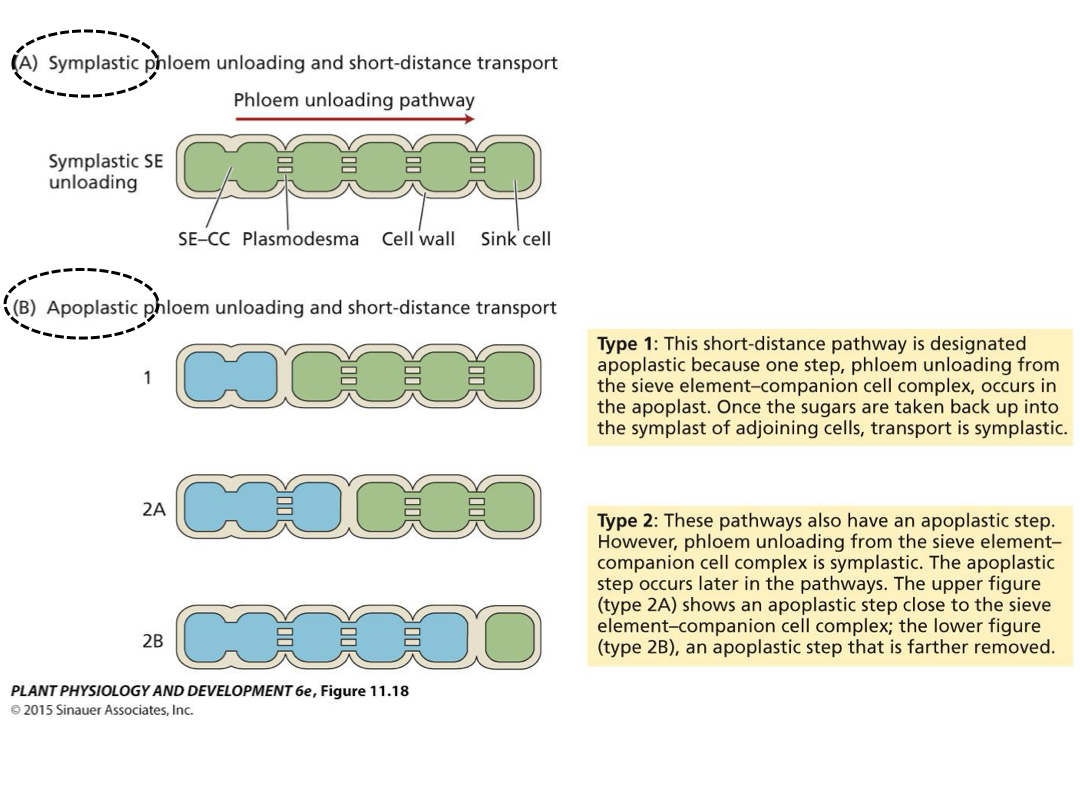
Symplastic doesn’t do much. Apoplastic does disruption.
Generalization about the type of unloading used by different types of sinks
Rapidly growing tissues (young leaf, root tip) use symplastic and maintain low sugar concentration by rapid utilization of the sugar for growth
In developing seeds, there are no symplastic connections between maternal tissue and the embryo, so an apoplastic unloading pathway is needed
Apoplastic unloading is also common in storage tissues, where an active transport step is used to concentrate the stored photosynthate in the storage tissue.
Pressure flow model: bulk flow driven by osmotically generated pressure gradient between source and sink.
Movement of water and solute in the phloem is moving toward region of higher pressure. This is not disobeying laws of thermodynamics since the transport in this system is not occuring by diffusion or osmosis, but rather bulk flow → both solvent and solute are moving en mass in response to a pressure gradient/ solute potential difference does not contribute toward water potential.
Disruption of energy metabolism along the long-distance path has little impact on transport since the process is passive. On the other hand, disruption of energy supply at the source or sink ends does disrupt loading or unloading and therby disrupts the long-distance transport as well.
Physiological aspects of photosynthesis
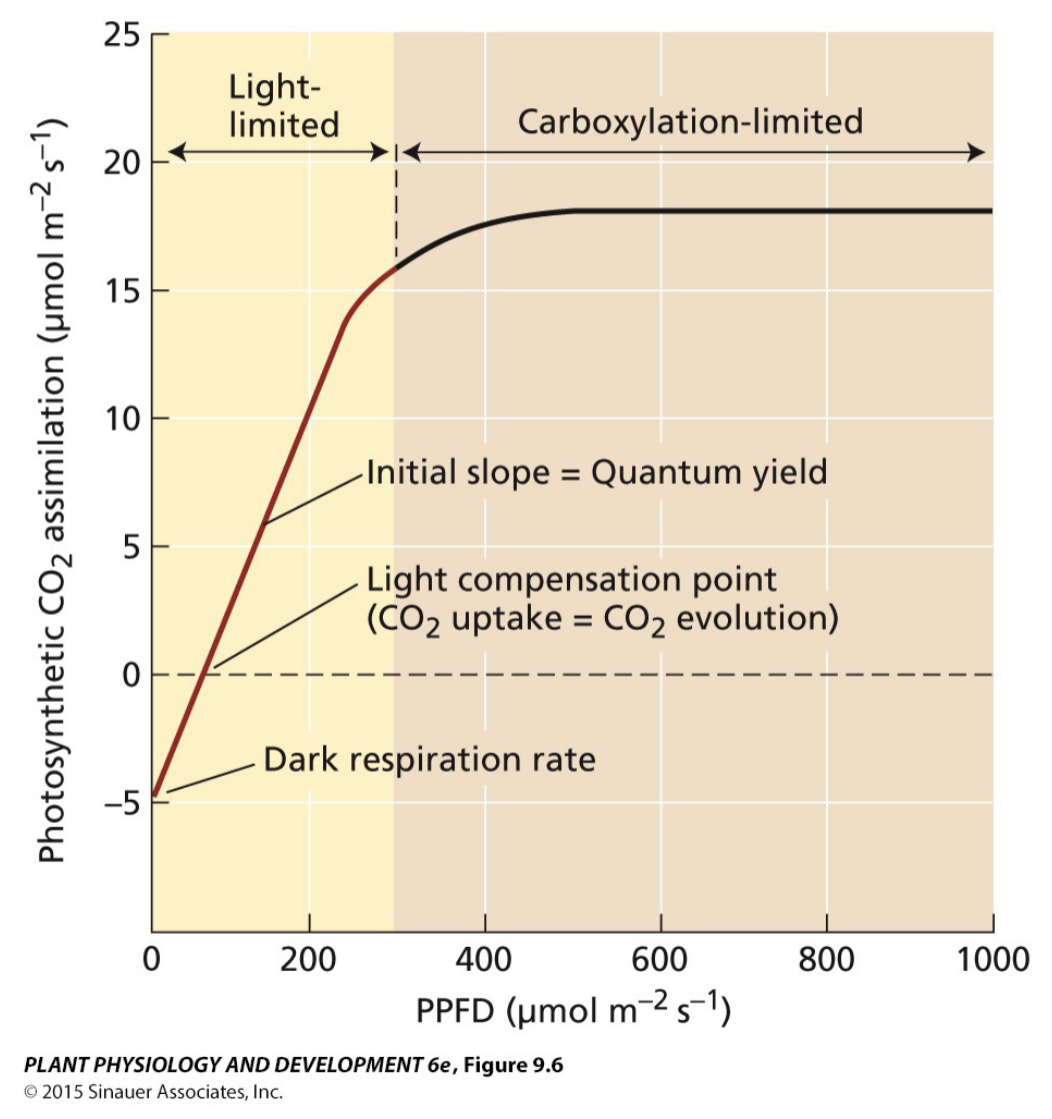
The light response curve: photosynthetic rate (CO2 uptake) as a function of light intensity.
At low light, light is the limiting factor
At high light, light is no longer the limiting factor. Commonly, carboxylation capacity of Rubisco becomes the limiting factor.
Light compensation point is light level where net CO2 exchange is zero
Dark respiration refers to experimental measures of leaf respiration in the absence of light
In natural environments, light is absorbed, reflected, and transmitted, dramatically impacting both it quantity and its quality.
In many environments, there is strong competition for light. But are also situations in which there is too much light.
Plants display many mechanisms of adaptation (genotype) and acclimation (phenotype) to light quantity and quality. Some species are strictly adapted to sun or shade environment. Leaf anatomy is acclimated to the growth conditions.
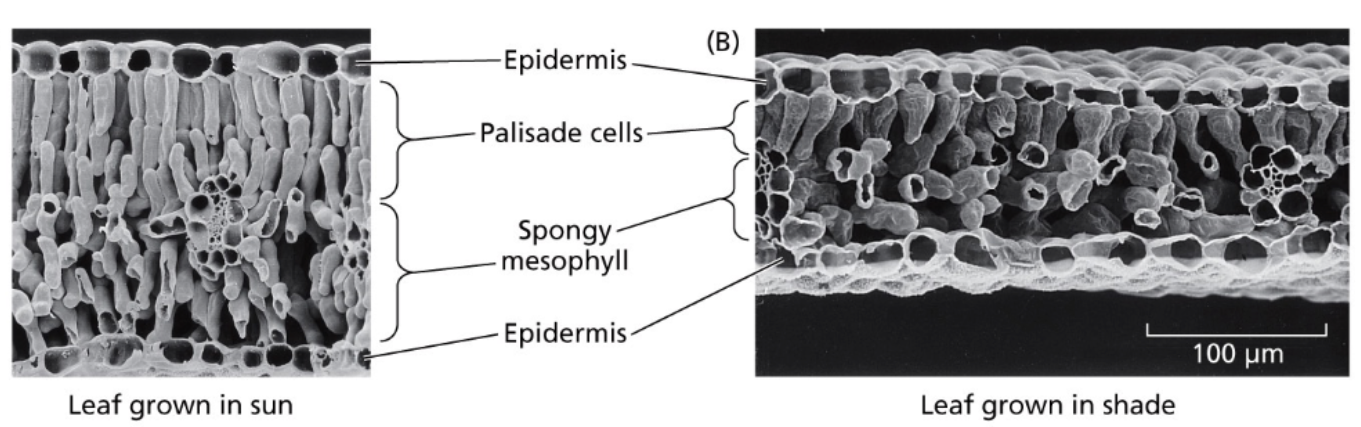
Biochemical characteristics can also differ between leaves adapted or acclimated to either sunny or shady locations.
Shade leaves: more total chlorophyll/reaction center, higher ratio of Chl b / Chl a, increased ratio of PS2 / PS1 (3:1) or more antennae chlorophyll for PS2, lower respiration rates.
Sun leaves: more Rubisco, larger pool of xanthophyll cycle components (later), lower ratio of PS2 / PS1 (2:1).
Leaf orientation: in many species, leaves track the sun (solar tracking) during the day. This is a blue-light response.
Diaheliotropic species: track to maximize light absorption
Paraheliotropic species: track to minimize light absorption
There a species that can use both depending on water status. Para with limited water, dia when water excess.
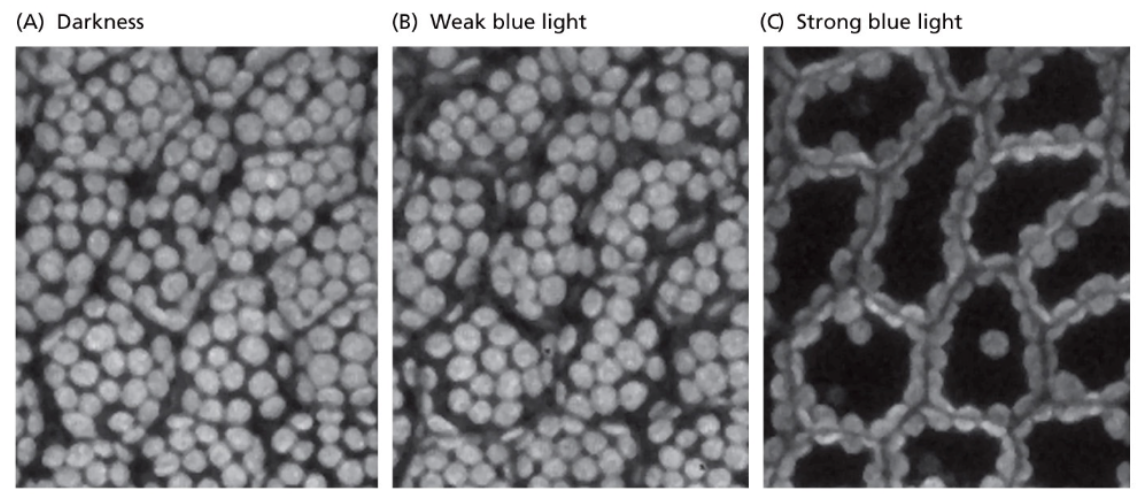
Chloroplast movement: chloroplast move using actin microfilaments as their scaffold. This a blue-light response.
Low light: oriented to maximize absorption (at cell surface perpendicular to the light)
High light: oriented to minimize absorption (at cell surfaces parallel to the light (self shading)).
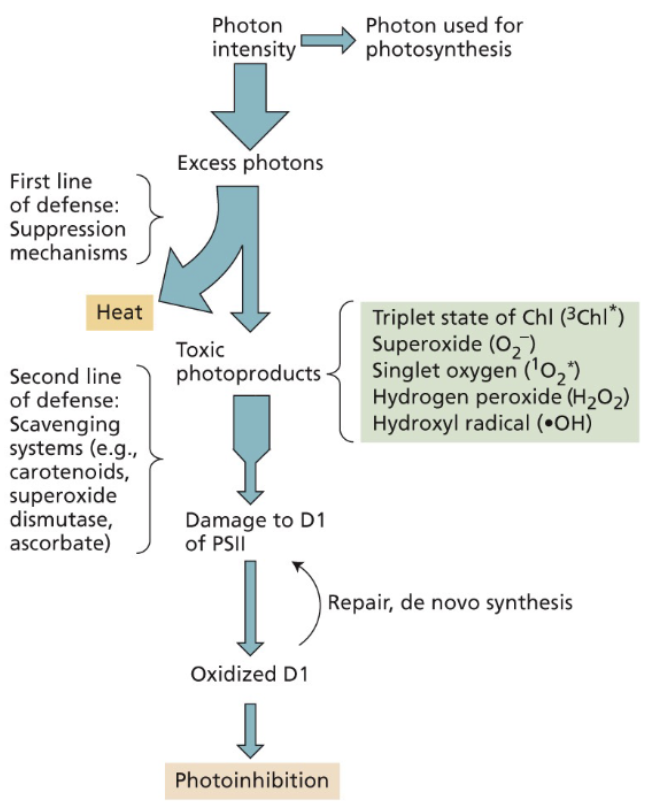
Absorption of excess light energy can be damaging (photo-damage). This photo-damage often involves the generation of reactive oxygen species (ROS). If the plant is making more NADPH than it needs, the ETC components become highly reduced. In this situation, single electrons can leak to oxygen producing superoxide (a ROS). Superoxide can then give rise to other ROS such as hydrogen peroxide and the hydroxyl radical.
The ROS species damage macromolecules (proteins, lipids, DNA). For example, the D1 protein of PS2 is highly susceptible to photo-damage.
Controlling photo-damage
Dissipate the excess light energy as heat
Scavenge the ROS that are produced (e.g. ROS-detoxifying enzymes such as superoxide dismutase and catalase)
Repair the photo-damage (e.g. active D1 replacement)
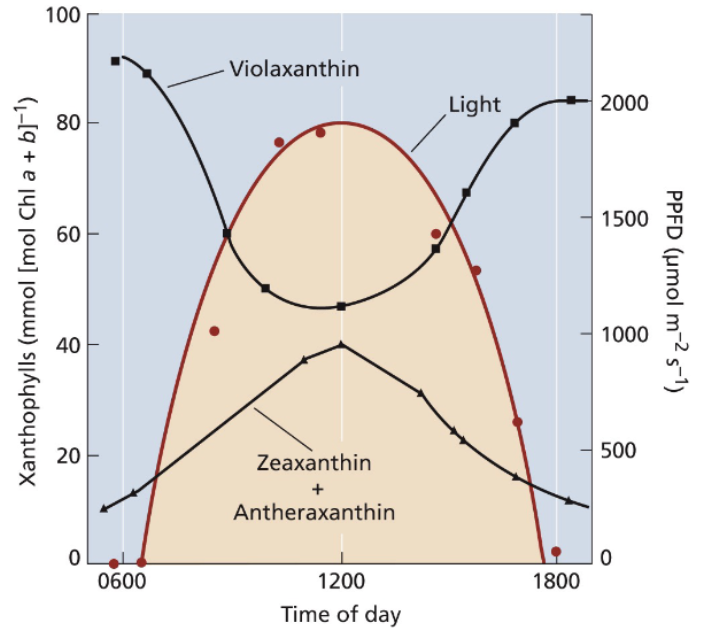
The mechanisms used to dissipate excess absorbed light energy as heat are collectively called non-photochemical quenching mechanisms. The most important of these mechanisms is called the xanthophyll cycle.
High light conditions promote conversion of the carotenoid vioxanthin to zeaxanthin. Zeaxanthin has a poorer ability to transfer absorbed light energy to chlorophyll. Instead, the absorbed energy is lost as heat.
The xanthophyll cycle is typically most active at mid-day, when light levels are highest. The xanthophyll cycle is typically of added important in stressed plants (e.g. drought, low temperature), when the Calvin cycle is less active.
We have examined a lot about light as an environmental variable impacting photosynthesis. Two other key environmental parameters impacting photosynthesis are temperature and CO2.